花卉产业

Search documents
如何推动花卉产业将降碳投入转化为品牌溢价?
Zhong Guo Huan Jing Bao· 2025-12-30 01:54
Core Viewpoint - The green transformation of agriculture is crucial for ecological security, resource sustainability, rural revitalization, and achieving common prosperity, shifting from mere pollution control to a systematic change that balances ecological and economic benefits [1][2]. Group 1: Agricultural Low-Carbon Transition - The agricultural low-carbon transition is moving from pollution control to a high-quality development orientation, addressing issues like insufficient internal motivation and imperfect economic incentive mechanisms [2]. - High-value-added specialty agriculture has inherent advantages in this transition, focusing on quality, standards, and brand as core competitive elements [2]. Group 2: Yunnan Flower Industry - The Yunnan flower industry, as China's largest fresh-cut flower production base, plays a significant role in rural economies and has structural advantages for leading low-carbon transformation [3]. - The carbon emission structure of the flower industry is relatively concentrated, allowing for effective carbon footprint accounting and management [3]. Group 3: Carbon Footprint as a Key Link - Carbon footprint serves as a crucial link between low-carbon production and market premium, providing a clear and credible value transmission mechanism [4]. - Systematic accounting of carbon emissions throughout the product lifecycle enables measurable and comparable reductions, enhancing product differentiation and competitive advantage [4]. Group 4: Policy Recommendations for Low-Carbon Development - A systematic mechanism should be established to promote low-carbon development in the Yunnan flower industry, including a carbon footprint accounting system tailored to specialty agriculture [5]. - The role of leading enterprises is vital in extending low-carbon standards to production, reducing transformation costs for decentralized operators [5]. - Integrating low-carbon elements into regional public brand construction can solidify "green low-carbon" as a core identity of the Yunnan flower brand [5].
呼和浩特这场兰花展,藏着北方花卉产业的“科技密码”!
Xin Lang Cai Jing· 2025-12-27 08:21
Core Viewpoint - The establishment of the Northern Flower Industry Research Institute marks a significant step in advancing the flower industry in northern China, focusing on the development of cold-resistant and drought-tolerant flower varieties through technological innovation [4][6]. Group 1: Establishment and Purpose - The Northern Flower Industry Research Institute has been officially established, aiming to enhance local flower industry development and address the challenges posed by cold and arid climates [3][4]. - The institute is a collaborative effort involving top research teams from various agricultural research institutions and local enterprises, focusing on innovation in cold-resistant flower varieties and the entire industry chain [4][6]. Group 2: Technological Advancements - The first major event following the institute's establishment is the Orchid Exhibition, showcasing over 150 new and superior flower varieties specifically selected for northern climates [4][5]. - The research team has introduced and evaluated 140 plant materials, resulting in the identification of 15 new superior varieties and the development of rapid propagation techniques for certain flowers, leading to two national invention patents and two plant variety rights [5][6]. Group 3: Economic Impact - The research and development efforts have already generated over 80 million yuan in direct and indirect economic benefits, supporting more than 30 flower growers and over 10 related enterprises [5]. - The institute aims to strengthen the flower industry's foundation by implementing a collaborative mechanism that connects research, transformation, and industry, thereby addressing the specific needs of the northern flower industry [6][10]. Group 4: Future Prospects - The establishment of the research institute is expected to enhance the technological innovation capabilities in the flower sector of Hohhot, contributing to the development of unique flower resources and supporting rural revitalization efforts [10]. - The initiative is seen as a pathway to create a vibrant flower industry in northern China, promoting ecological and economic benefits in the region [10].

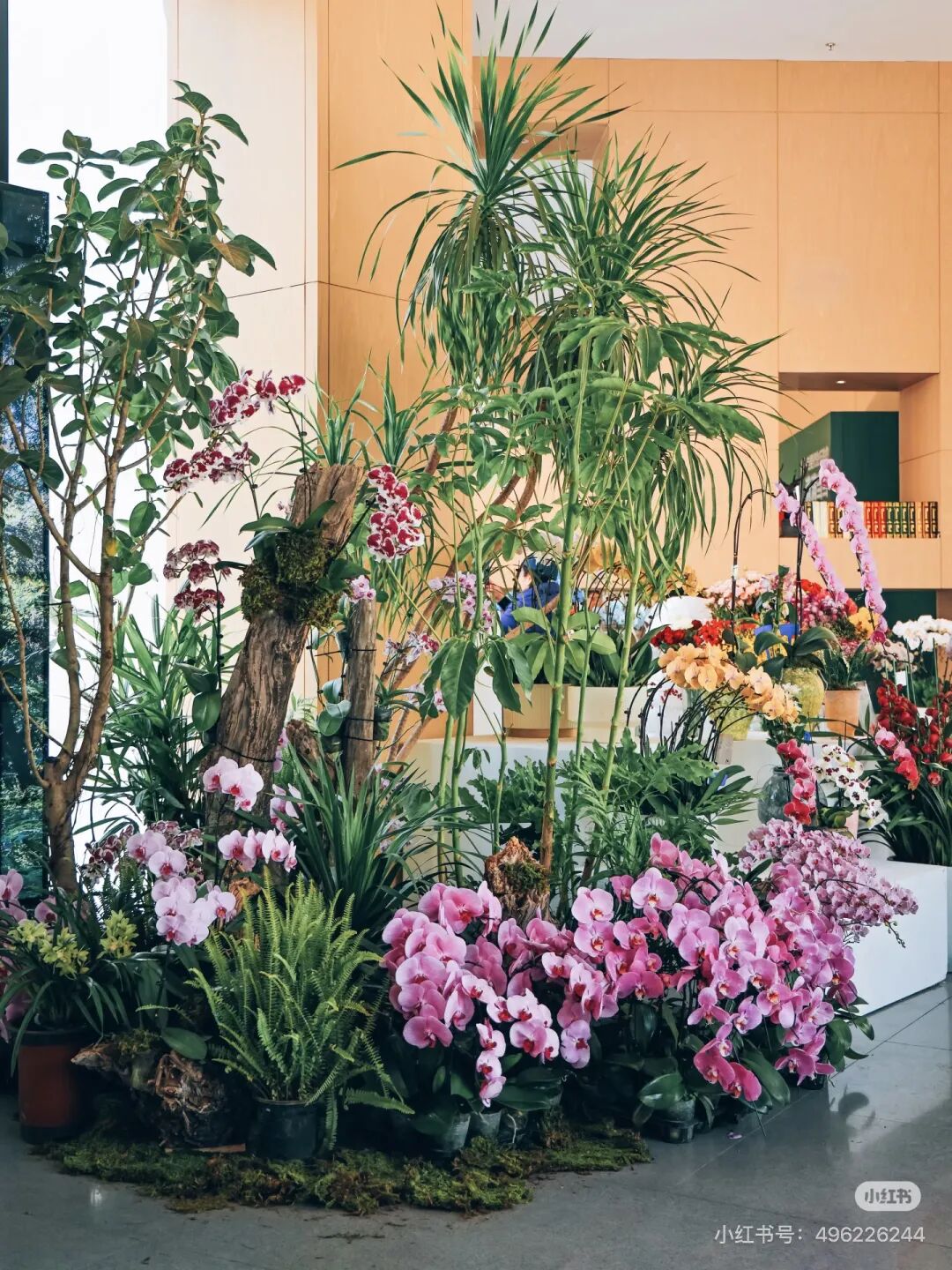
买年宵花来丰台!丰台发布冬季赏花购花地图,联动20余场游园活动
Xin Lang Cai Jing· 2025-12-26 12:55
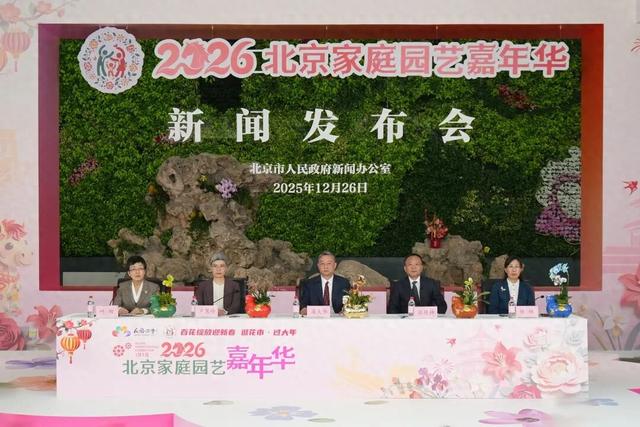
Core Viewpoint - The 2026 Beijing Family Gardening Carnival will take place on January 18, 2026, at the Beijing Flower Trading Center, focusing on enhancing the experience of flower purchasing and gardening for citizens [4][9]. Group 1: Event Overview - The event will feature a variety of activities centered around the consumption of New Year flowers, including flower exhibitions, family gardening experiences, and flower appreciation [4][5]. - This marks the third consecutive year that Fengtai District will host the main event, showcasing its commitment to becoming a hub for flower culture and commerce [4][7]. Group 2: Flower Supply and Consumer Engagement - The "Beijing Flower" app will introduce a special section for New Year flowers, offering over 200 types of flowers directly sourced from various regions, allowing citizens to conveniently purchase flowers online [5][9]. - Fengtai District will implement an integrated sales model combining online and offline channels, enhancing the convenience of flower purchasing for consumers [9]. Group 3: Interactive and Cultural Activities - The carnival will include interactive activities such as the "Flower City, I Am" competition, encouraging citizens to share their gardening experiences and creativity [10]. - Various parks and gardening stations will host immersive floral art spaces and workshops, providing opportunities for community engagement and cultural enrichment [10]. Group 4: Future Prospects - Fengtai District aims to continue expanding its flower industry, enhancing consumption scenarios, and promoting green development as part of its long-term strategy [7].
从“给优惠”到“给机会” 北京丰台以场景清单邀企业共同“解题”
Xin Lang Cai Jing· 2025-12-19 20:27
Core Viewpoint - The article discusses how Fengtai District in Beijing is transforming macro strategies into micro practices through the release of a "City Scene Opportunity List" with a total investment of 1.18 billion yuan, aimed at fostering innovation and collaboration between government and enterprises [2][6]. Group 1: City Scene Opportunity List - Fengtai District has launched a "City Scene Opportunity List" with a total investment scale of 1.18 billion yuan, covering 84 specific needs [2][7]. - The list includes 38 implementation scenarios and 46 reserve scenarios, focusing on key areas such as digital government services, urban construction, and ecological environment governance [7][10]. - The initiative has already attracted over 700 million yuan in social capital investment, demonstrating a shift from providing policies to offering real opportunities for enterprises [4][6]. Group 2: Technological Integration and Innovation - The collaboration between Fanghua Li and Senlikang Technology exemplifies how urban assets can be revitalized through technology, particularly in the field of smart elderly care [4]. - The "smart elderly care robot" project led by Senlikang Technology was selected as part of the first batch of pilot projects for intelligent elderly care service robots [3]. - Fengtai District's approach emphasizes the importance of real urban needs in driving technological innovation and creating a platform for new technologies and products [2][4]. Group 3: Government's Role and Support - The government is transitioning from being a policy maker to an innovation collaborator, providing real urban demands to co-create solutions with enterprises [6]. - The recent "Implementation Opinions" issued by the State Council aims to leverage China's large-scale market advantages to promote the open application of scene resources [5]. - Fengtai District is actively collecting and organizing demand lists from both government and enterprises to facilitate the application of new technologies in digital economy, artificial intelligence, and biotechnology [5][10]. Group 4: Financial Support and Ecosystem Development - Financial institutions are actively participating in the scene supply and demand exchange, providing on-site financial consulting and resource matching services [10]. - Customized financial support is being offered to technology enterprises in Fengtai District, with successful cases of significant loans being issued to support technology development and market expansion [10]. - The "opportunity list" serves as a bridge for new technologies to transition from laboratory to industrial application, fostering a model of demand-driven and scene-validated innovation [10][11].

【大宗周刊】创新服务模式,激活大宗商品市场发展新动能
Qi Huo Ri Bao· 2025-11-30 22:47
Group 1: Overview of the Commodity Platform Case Study - The "2025 Commodity Platform Typical Case Enterprise Investigation" event was successfully concluded, organized by Qibao Media, covering 1100 kilometers in 3 days [1] - The investigation team visited two benchmark enterprises: Kunming International Flower Auction Trading Center and Mutiant Technology Co., Ltd, providing fresh cases and practical insights for the industry [1] Group 2: Kunming International Flower Auction Trading Center - The Kunming International Flower Auction Trading Center, established in 2022, is the largest flower trading center in Asia, facilitating the export of fresh-cut flowers to over 40 countries [3][4] - The center employs an automated process that reduces flower loss to below 5%, showcasing the integration of technology in modern agriculture [2] - The auction model used is the "Dutch-style descending price auction," which reflects market supply and demand through a price index [5] Group 3: Mutiant Technology Co., Ltd - Mutiant Technology has established a comprehensive ecosystem covering over 90% of sugar industry groups and 80% of sugar distributors in China, ranking 223rd among China's service industry enterprises [7][8] - The company promotes a dual-driven model of "trading platform + supply chain comprehensive services," which has been recognized for its significant impact on industry development [8] - The company has shared valuable experiences and insights on risk management and market entry strategies with the investigation team [8][9] Group 4: Industry Insights and Future Directions - The investigation team engaged in discussions on market regulation, platform empowerment, and industry upgrades, emphasizing the need for a legal framework to support healthy industry development [9] - Qibao Media aims to enhance industry collaboration and development through more in-depth research activities and training events [9]
【西安】国际花卉产业产销对接会举办
Shan Xi Ri Bao· 2025-11-27 22:34
Core Insights - The "2025 Xi'an International Flower Industry Supply and Demand Matching Conference" concluded, focusing on upgrading the fresh-cut flower industry chain and expanding international markets [1] - The event showcased Xi'an's unique charm and development potential in the flower industry through exhibitions, industry exchanges, and supply-demand matching [1] - The conference facilitated deep integration of advanced technologies, management experiences, and market information between domestic and international stakeholders, resulting in signed orders exceeding 50 million yuan [1] Industry Overview - Xi'an is the largest flower production and sales center in Northwest China, with a comprehensive industry structure covering fresh-cut flowers, potted plants, seedlings, and ornamental seedlings [1] - The flower planting area in Xi'an has reached 20,000 acres, with a total industry output value exceeding 5 billion yuan, solidifying its leading position in the region [1] - The flower industry in Xi'an serves as a significant engine for rural economic development and increasing farmers' income [1] Future Development - The Xi'an flower industry is entering a new phase of international market expansion, with plans to deepen technological empowerment and improve service systems [2] - The local government aims to optimize industrial policies and enhance investments in areas such as flower germplasm resource innovation, high-end facility agriculture, and international cold chain logistics [2] - Xi'an is positioned to become a hub for technological innovation and trade in the flower industry, linking the western region to the national and global markets [2]
四中全会精神在基层丨云南:“幸福产业”在鲜花中绽放
Yang Guang Wang· 2025-11-21 02:33
Core Viewpoint - The article highlights the integration of artificial intelligence and digital technology in the flower industry in Yunnan, aiming to enhance quality, intelligence, and internationalization of the sector [1][3]. Group 1: Industry Development - Yunnan is actively developing digital technology to promote the flower industry towards high-quality, intelligent, and international standards [1]. - The flower industry in Kunming's Jinning District is utilizing smart greenhouses and a comprehensive information management system to precisely control key growth factors such as temperature, humidity, and light [1]. - The shift from traditional farming methods to digital empowerment is significantly impacting flower farmers, allowing them to manage their crops more effectively [1]. Group 2: Technological Innovation - Each bouquet of flowers is assigned a unique digital code that connects directly to the auction market, enhancing traceability and market access [2]. - Buyers can scan the code to access information about the flower's origin, variety, packaging specifications, and stem length, facilitating immediate sales to international buyers [2]. - The innovation in digital and smart technologies is transforming the "beautiful economy" in Yunnan, with a focus on intelligent, green, and integrated development [3]. Group 3: Future Directions - The flower industry aims to lead with breakthroughs in seed technology and the construction of modern high-standard cultivation facilities, accelerating the smart transformation of the industry [3]. - The goal is to develop the "beautiful industry" into a "happy industry" that benefits the local population [3].
聚焦大湾区农交会|“媒体+”解码珠三角地标家底:岭南乡土的产业明珠
Nan Fang Nong Cun Bao· 2025-11-14 03:00
Core Viewpoint - The upcoming 2025 Greater Bay Area Agricultural Products Trade Fair and Specialty Products Expo, scheduled for December 12-14 in Guangzhou, aims to showcase the unique agricultural products of the Pearl River Delta, highlighting their industrial value and development potential [16][95]. Group 1: Geographic Indications and Agricultural Products - As of June this year, Guangdong has approved 229 geographic indication products, ranking among the top in the country [10][13]. - Ten products, including the Xinhui dried tangerine peel, have been included in the "China-EU Geographic Indication Product Mutual Recognition and Protection List," enhancing the international profile of Guangdong's agricultural products [14][15]. - The trade fair will serve as a significant platform for showcasing these products and their unique industrial values [15][95]. Group 2: Urban Agriculture Development - Guangzhou and Shenzhen, with a combined population of nearly 37 million, are reshaping the agricultural value chain through industrialization and information technology [21][22]. - In 2024, the planting area for lychee in Zengcheng is expected to reach 200,000 mu, with a total output of approximately 50,000 tons [22]. - The trade fair will provide an important showcase for urban agricultural development [25]. Group 3: Industry Innovations and Market Expansion - The Guangdong region is seeing significant growth in its agricultural sectors, with the Xinhui dried tangerine peel industry alone generating a total output value of 26.018 billion yuan [51]. - The trade fair is viewed as a crucial opportunity for connecting with international markets [54]. - The integration of technology, culture, and health into the agricultural sector is expected to enhance the competitiveness of geographic indication products [90][92]. Group 4: Future Development and Strategic Opportunities - The construction of the Guangdong-Hong Kong-Macao Greater Bay Area presents unprecedented strategic opportunities for the geographic indication agricultural products of the Pearl River Delta [86]. - The trade fair is anticipated to elevate the brand influence and market competitiveness of these products [87]. - The future development of these products will focus on "value reconstruction," transforming them into a complex industry IP that integrates technology and global trade [90][92].

南农晨读丨药香入馔
Nan Fang Nong Cun Bao· 2025-11-03 07:05
Group 1 - The 15th National Games torch relay was successfully completed in Hong Kong, Macau, Guangzhou, and Shenzhen, marking a significant moment in Chinese sports history and showcasing the connectivity of the Guangdong-Hong Kong-Macau Greater Bay Area [4][5][6] - The first "Guanghua Red Palm" Art Festival was inaugurated in Guangzhou, aimed at promoting the high-quality development of the flower industry [9][10] - The Guangdong marine fishery is transitioning towards a socialized service system, moving away from individual operations to a more integrated service model, which includes financial support and talent cultivation [14][15][18] Group 2 - Wens Foodstuff Group has distributed a total of 30.1 billion yuan in dividends over its ten years since listing, benefiting cooperative farmers with over 92.9 billion yuan in breeding income [22][23] - The transformation of service areas into cultural tourism hubs is underway, with events promoting local specialties and cultural experiences [26][30] - The second Chaozhou Food Culture Week was held in Shenzhen, allowing visitors to experience authentic Chaozhou cuisine without traveling to Chaozhou [36][37][39] Group 3 - Agricultural technology is seen as a key driver for revitalizing rural areas, with innovations in active enzyme technology being introduced to enhance crop quality and empower farmers [42][43][44]

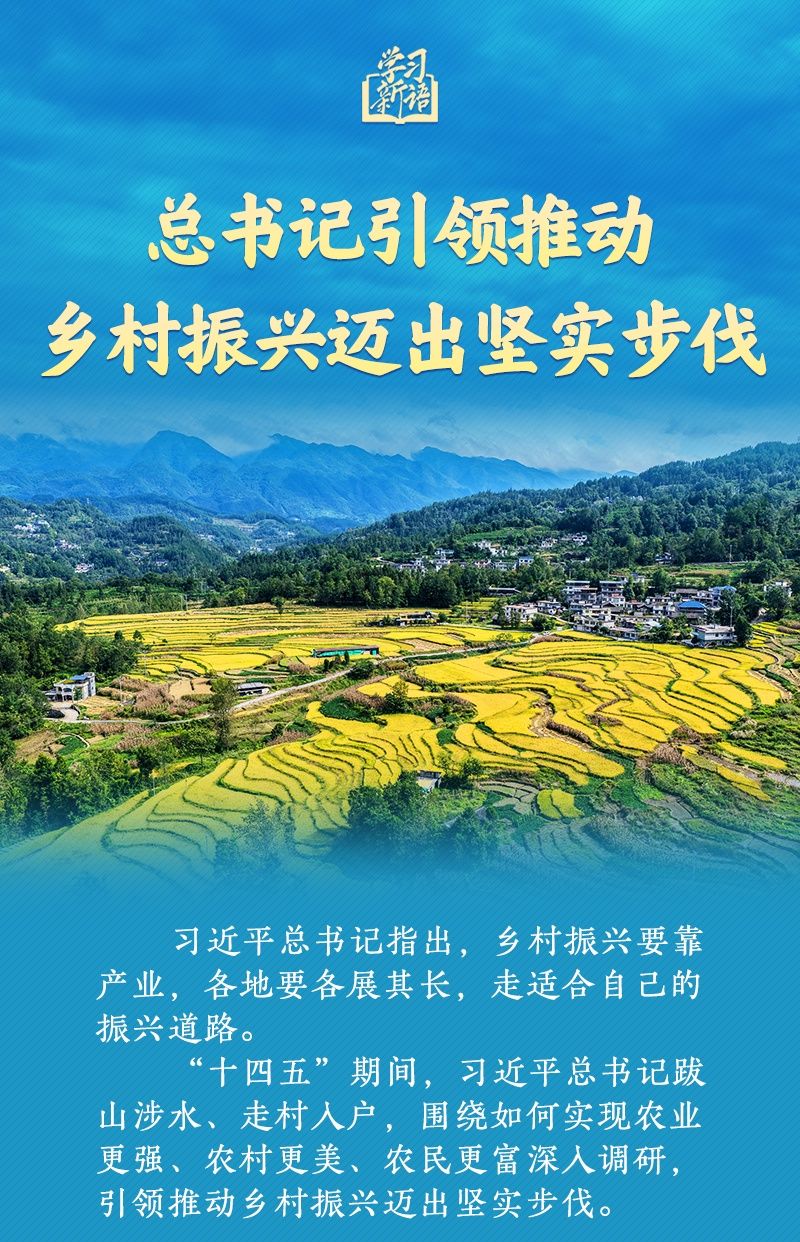
学习新语丨总书记引领推动乡村振兴迈出坚实步伐
Xin Hua She· 2025-10-19 04:21
Core Points - The article emphasizes the importance of industry in rural revitalization, highlighting that each region should develop its own unique path for revitalization [2][10][22] Group 1: Agricultural Development - Xi Jinping stresses the need for high-standard farmland construction and moderate-scale operations to enhance grain yield and quality, thereby attracting more farmers to participate in modern agriculture [13][29] - The article mentions the significance of developing the entire industrial chain in sectors like flower cultivation and pomegranate production to benefit local communities [5][19] Group 2: Tourism and Cultural Heritage - Rural tourism is identified as a significant industry, with a focus on preserving local characteristics and cultural heritage to enhance the tourism experience [7][30] - The integration of traditional village aesthetics with modern elements is encouraged to improve rural living conditions and promote happiness among residents [16][17] Group 3: Technological and Market Integration - The article highlights the necessity of modern agricultural technology promotion and training to improve productivity and sustainability in rural areas [27][34] - Emphasis is placed on the importance of market demand in guiding the development of local industries, ensuring that rural revitalization aligns with consumer needs [22][39]