食品产业

Search documents
政产学研齐聚 共话食品产业创新路径
Zhong Guo Jing Ji Wang· 2025-10-17 05:22
Core Insights - The "New Quality Productivity Empowering High-Quality Development of the Food Industry Conference" was held in Beijing, focusing on food safety and quality development through technological empowerment and smart regulation [1][2] - The conference emphasized the need for a high-level governance system in food safety, highlighting the importance of building smart platforms, improving standard systems, promoting collaborative innovation, and strengthening grassroots regulation [1] Group 1: Key Themes Discussed - The conference identified three main themes for promoting high-quality development in the food industry: strengthening quality infrastructure, establishing a full-chain smart regulatory system, and extending inspection and testing technology from safety assurance to health navigation [2] - A strategic framework called "Three Strengths and One Foundation" was proposed to systematically advance industry upgrades, focusing on quality-driven enterprises, quality-driven supply chains, quality-driven counties, and reinforcing infrastructure [2] Group 2: Participants and Contributions - The event was attended by representatives from various government departments, including the National Market Supervision Administration, Ministry of Agriculture and Rural Affairs, and the National Health Commission, as well as experts and industry representatives [2] - Keynote speeches highlighted the role of modern detection technologies in supporting precise nutritional supply and the importance of collaboration between academia and industry to ensure food safety [1]
陕西宝鸡以质量强企强链强县引领优势产业集群升级纪实
Zhong Guo Zhi Liang Xin Wen Wang· 2025-10-11 02:36
Core Viewpoint - The article emphasizes the importance of quality in driving the development of industries in Baoji, Shaanxi Province, highlighting initiatives to strengthen quality standards and enhance the competitiveness of local enterprises [1][9][10]. Group 1: Quality Strengthening Initiatives - Baoji has transformed into a modern equipment manufacturing base, with its titanium industry being the largest in China and second globally [2][3]. - The automotive industry contributes over one-third of Shaanxi Province's output, with several local companies ranking among the top 100 in China's automotive supply chain [2][3]. - Baoji Petroleum Machinery Co., Ltd. has developed advanced drilling equipment, filling several domestic gaps in technology [2][3]. Group 2: Industry Clusters and Economic Development - Baoji has established four major industrial clusters: titanium and new materials, automotive and parts, advantageous equipment, and specialty food [5][12]. - The city has been recognized as a national advanced manufacturing city and has received multiple honors for its industrial achievements [4][7]. - The industrial output value of Baoji reached 210 billion yuan, with a significant increase in the number of enterprises and production capabilities [7][12]. Group 3: Quality Standards and Certifications - Baoji has implemented a comprehensive quality management system, including the establishment of a quality consulting expert team and standardization services for local enterprises [11][13]. - The city has developed a policy framework to support quality improvement, including financial allocations for industrial development [10][12]. - Local enterprises have achieved significant advancements in product quality and innovation, with a notable increase in patent applications [12][13]. Group 4: Agricultural and Food Industry Standards - The "billion-level goat milk industry chain" project aims to enhance quality standards in agriculture, with significant investments in breeding and quality control [8]. - The kiwifruit industry in Meixian has established local standards and achieved national recognition for quality [8]. - The apple industry in Qian County has implemented comprehensive standards, contributing to significant economic output [8]. Group 5: Future Development and Strategic Goals - Baoji aims to continue enhancing its industrial ecosystem through quality-driven initiatives, focusing on technological innovation and industry upgrades [9][10]. - The city has set ambitious goals for quality improvement and industrial transformation, aligning with national strategies [10][13]. - Baoji's commitment to quality is seen as a key driver for sustainable economic growth and competitiveness in various sectors [9][13].
双节不停工!南京江宁假日建设“不打烊”
Yang Zi Wan Bao Wang· 2025-10-06 03:23
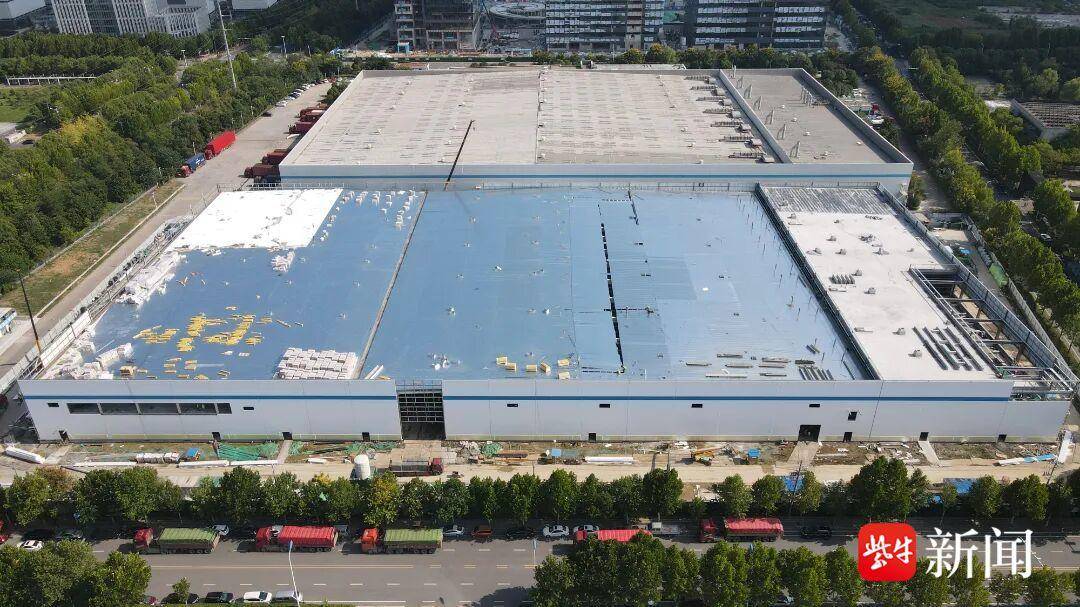
Core Viewpoint - During the National Day and Mid-Autumn Festival, the Jiangning District in Nanjing is experiencing a construction boom in major projects, contributing to the region's economic growth and high-quality development [1] Group 1: Major Projects in Jiangning District - The Xunlian Hydraulic Core Components Project, with a total construction area of approximately 52,000 square meters, aims for trial production by the end of the year, targeting an annual output of 1 million high-end hydraulic core components and an additional output value of 1 billion yuan [1] - The Kimberly-Clark expansion project for baby diapers and women's sanitary products is adding 26,500 square meters and will have a production capacity of 2.3 billion pieces annually, enhancing the competitiveness of Jiangning's consumer goods manufacturing [2] - The Lianing (East China) Food Industry Operation Center project, covering about 47,000 square meters, is nearing completion and will serve as a multifunctional platform for high-end food production and distribution [4] Group 2: Construction Progress and Workforce Commitment - The construction site of the High Jia Bian Community Phase II C Group project, covering 293,868.36 square meters, is focused on providing quality housing for relocated residents, with ongoing efforts in exterior wall and roof waterproofing [6] - The construction teams across various projects are demonstrating commitment and efficiency, ensuring safety and quality while striving to meet deadlines [6]

从养殖到餐桌:“标准·认证+”驱动全产业链升级
Jing Ji Guan Cha Wang· 2025-09-26 08:07
Core Insights - The forum emphasized that quality is the foundation of trust, trust is the currency of the modern economy, and standards serve as the bridge connecting these elements [1][3][5] - The discussions highlighted that the food industry must transition from merely ensuring safety to enhancing value and competitiveness through quality, trust, and standards [4][5] Group 1: Quality, Trust, and Standards - Quality signifies the authenticity of products and controllability of processes, while trust reflects the relationships between individuals and markets [1][2] - The forum's theme "Standards·Certification+" underscores the importance of institutional design in transforming quality into trust, trust into value, and value into sustainable competitiveness [1][3] - The relationship between quality, trust, and standards is crucial for the food industry's upgrade, moving beyond simple supply chains to interconnected trust, value, and competitiveness chains [5] Group 2: Industry Upgrades and Consumer Perception - Various case studies presented at the forum illustrated how different sectors, such as egg production and organic certification, are building trust through quality assurance systems [2][4] - The accumulation and realization of trust are essential for brand building, which is not merely about marketing but about delivering on quality promises [2][3] - Trust, once established, can circulate like currency, providing a competitive advantage in the market [3] Group 3: Implementation and Future Directions - The "Six Transformations and Three Steps" model provides a framework for achieving standardization, industrialization, branding, greening, digitization, and internationalization [4] - The forum indicated that the principles discussed are applicable not only to the food industry but also to the broader modern economy, reflecting a universal logic in social operation and economic governance [4][5] - China's ability to set standards and innovate institutional frameworks is seen as a way to enhance its international influence and competitiveness [5]
以全域党建赋能产业升级 润州激活产业链发展新动能
Zhen Jiang Ri Bao· 2025-09-21 23:40
Group 1 - The core initiative of Runzhou District focuses on enhancing industrial upgrades through comprehensive party building efforts, emphasizing organizational construction, joint party building, and the development of party member teams [1] - A new three-dimensional party building framework has been established, characterized by a collaborative approach that integrates point, block, and chain efforts to promote industrial development [1] - The "Red Chain Run Enterprise" brand has been created, leading to the establishment of four key industrial chain joint party committees and functional party branches in various industrial parks and projects [1] Group 2 - The "Digital Pioneer · Benefit Enterprise" event successfully facilitated face-to-face interactions for digital industry chain enterprises, significantly improving efficiency in addressing business needs [2] - Runzhou District has organized "chain-based" activities led by core enterprises' party organizations, focusing on resource integration and collaboration within the electronic communication, cultural tourism, and food industries [2] - The integration of fragmented policy information through the "Runxin Office" red service team has provided timely solutions to enterprises' urgent needs, enhancing support for local businesses [2] Group 3 - The "Runxin Office" red service team has been established to connect over 20 units, including government agencies and professional service firms, to deliver policies and resources directly to enterprises [3] - Eight party member investment teams have been formed to engage with local businesses, focusing on key sectors such as digital economy and intelligent manufacturing, resulting in over 200 investment trips [3] - A rapid response mechanism has been implemented to provide comprehensive support services for enterprises, leading to the signing of 28 industrial projects worth over 100 million yuan this year [3]
中国社科院食品药品产业发展与监管研究中心主任张永建:共同培育食品安全内生动力
Zhong Guo Jing Ji Wang· 2025-09-12 01:29
Group 1 - The core theme of the 16th China Food Safety Forum is "Integrity and Lawfulness in Sharing Food Safety," emphasizing the importance of social responsibility for food enterprises [1][3] - Zhang Yongjian, Director of the Food and Drug Industry Development and Regulation Research Center of the Chinese Academy of Social Sciences, highlighted that food safety investment is a significant cost for enterprises, and recovering these costs effectively from the market is crucial for fostering internal motivation for food safety [3] - The pressures faced by food enterprises in recent years are primarily from two departments: marketing, which focuses on achieving sales targets, and R&D, which requires continuous innovation [3] Group 2 - Food safety remains a perpetual theme for food enterprises, with current challenges differing from past issues such as adulteration, now including the assessment of safety impacts from new materials, technologies, and processes [4] - The need for continuous innovation is emphasized as the era of rough management and rapid growth has ended, necessitating more refined competition for future growth [3][4]
郑州、洛阳、南阳全省前三!
Sou Hu Cai Jing· 2025-07-31 06:58
Core Insights - The economic performance of Henan province in the first half of 2025 shows a positive trend, with 16 out of 17 cities surpassing the national GDP growth rate of 5.3% [1][2][3] - The overall GDP of Henan province reached 31,683.80 billion yuan, with significant contributions from key cities like Zhengzhou, Luoyang, and Nanyang [4][5] Economic Growth Performance - Henan's GDP growth rate for the first half of 2025 was 5.7%, higher than the national average of 5.3% [2] - Notable cities include: - Luoyang and Xinyang both recorded a GDP growth rate of 5.7%, aligning with the provincial average [2] - The standout performers were: - Luoyang: GDP growth of 6.8% in the secondary industry [5] - Nanyang: GDP growth of 6.3%, with equipment manufacturing showing a significant increase of 18.4% [5] Sectoral Contributions - Zhengzhou, as the leading city, achieved a GDP of 7,329.3 billion yuan, with the secondary industry contributing 2,710.2 billion yuan and growing by 5.6% [4] - The manufacturing sector in Zhengzhou saw an 8.7% increase in output, with automotive and electronic information industries growing by 25% and 11.8%, respectively [4] Consumer and Investment Trends - The total retail sales of consumer goods in Henan reached 14,201.55 billion yuan, growing by 7.2%, which is 2.2 percentage points higher than the national average [6][7] - Cities like Xuchang and Kaifeng implemented policies to boost consumption, resulting in retail sales growth of 9.3% and 8.2%, respectively [6][7] Future Economic Strategies - The provincial government has outlined strategies for the second half of 2025, focusing on expanding domestic demand, optimizing supply, and enhancing living standards [10] - Key areas of focus include: - Continuous release of consumer demand [8] - Development of emerging industries such as artificial intelligence and low-altitude economy [9] - Promotion of regional characteristic industries to drive economic growth [9]
吉林省:上半年地区生产总值6823.28亿元,同比增长5.7%
Zheng Quan Shi Bao Wang· 2025-07-24 00:51
Economic Overview - In the first half of 2025, Jilin Province's GDP reached 682.33 billion yuan, with a year-on-year growth of 5.7%, an increase of 0.2 percentage points compared to the first quarter [1] - The industrial sector showed steady progress, with the added value of above-scale industries growing by 7.8%, surpassing the national average by 1.4 percentage points [1] Agricultural Sector - The agricultural, forestry, animal husbandry, and fishery sectors saw an overall growth, with an added value of 37.48 billion yuan, reflecting a year-on-year increase of 4.3%, which is 0.4 percentage points higher than the national average [1] - Specific growth rates for major agricultural products included 7.0% for crops, 10.2% for forestry, 3.6% for animal husbandry, and 9.6% for fisheries [1] Industrial Sector - The equipment manufacturing industry experienced a significant increase, with an added value growth of 19.5%, accounting for 10.9% of the province's above-scale industrial output [2] - Key industries such as information technology, pharmaceuticals, and electricity production achieved double-digit growth rates of 21.5%, 16.8%, and 10.3% respectively [1] Service Sector - The service sector's added value grew by 5.6%, contributing 63.8% to the province's GDP, with a contribution rate increase of 11.3 percentage points compared to the first quarter [2] - The information transmission, software, and IT services sectors saw a growth of 7.2%, while scientific research and technical services grew by 13.0% [2] Investment and Consumption - Fixed asset investment (excluding rural households) increased by 1.0%, with the second industry investment rising by 8.8% and the third industry by 1.9% [3] - The total retail sales of consumer goods reached 211.72 billion yuan, marking a year-on-year growth of 4.8%, with significant increases in furniture and home appliances retail sales [3]
周红波在高淳区调研时强调
Nan Jing Ri Bao· 2025-06-27 01:52
Core Viewpoint - The article emphasizes the importance of accelerating high-quality development in Gaochun District, focusing on leveraging local advantages and enhancing development capabilities to achieve significant progress in the upcoming "15th Five-Year Plan" [1][2]. Economic and Social Development - Gaochun District has maintained a good development momentum in recent years and is recognized as a crucial part of Nanjing's coordinated development strategy [1]. - The district's economic and social development report highlights the initial considerations for the "15th Five-Year Plan" [1]. Industrial Development - The focus is on establishing a robust industrial system tailored to Gaochun's realities, with an emphasis on key industries such as automotive parts, medical devices, and food production [2]. - There is a push to cultivate emerging industries like high-end equipment manufacturing and to enhance the scale of existing industries [2]. Brand and Market Development - The strategy includes creating distinctive brands and developing new products and business models around ecological tourism, leisure, and vacation markets [2]. - The aim is to promote the integration of agriculture, culture, and tourism, enhancing the "International Slow City" brand [2]. Infrastructure and Support Mechanisms - The article calls for optimizing support mechanisms for high-quality development, particularly in major infrastructure projects and key industries [2]. - There is a need for better planning coordination and demand alignment with neighboring areas to foster coordinated development [2]. Safety and Emergency Preparedness - Emphasis is placed on the importance of flood prevention measures, particularly concerning the Shuiyang River, with a call for thorough preparation and vigilance [3].
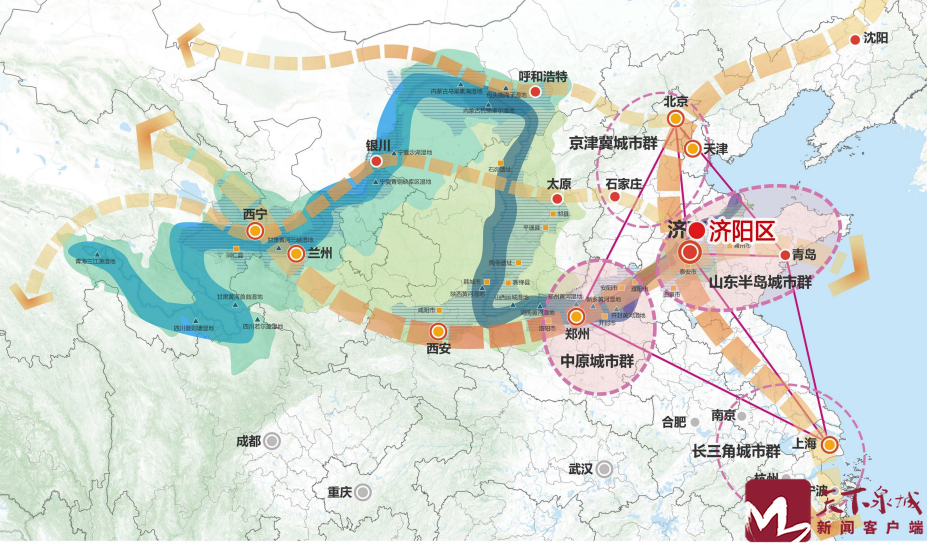
山东城市观察 | 持续擦亮“大河之上·新城济阳”城市名片 “闻韶圣地”迎来新规划
Xin Lang Cai Jing· 2025-06-24 03:45
Group 1 - The core viewpoint of the article is the approval and publication of the Jiyang District Land Spatial Division Plan (2021-2035), which aims to enhance the integration of Jiyang District with the surrounding areas and promote its development as a modern urban center [1][5] - Jiyang District is strategically located on the Beijing-Shanghai development axis and serves as the northern gateway to Jinan City, characterized by its distinct plain landscape and rich historical culture [3][5] - The district's industrial landscape is dominated by the food industry, with rapid development in pharmaceutical manufacturing and equipment manufacturing, and it hosts the first Taiwan Industrial Park in Shandong Province [3][5] Group 2 - Jiyang District is poised for new development opportunities due to the implementation of the Northward Crossing Yellow River Strategy and the establishment of the Cross-Strait New and Old Kinetic Energy Conversion Industrial Cooperation Zone [5][6] - The district aims to optimize its spatial layout by fully integrating with Jinan's central urban area and developing a comprehensive service center in the northern part of the province [5][6] - Jiyang District plans to establish a modern industrial system consisting of four leading industries: food and beverage, intelligent manufacturing, biomedicine, and new-generation information technology, along with four empowering industries: urban agriculture, cultural tourism and health, technology services, and modern logistics [8]