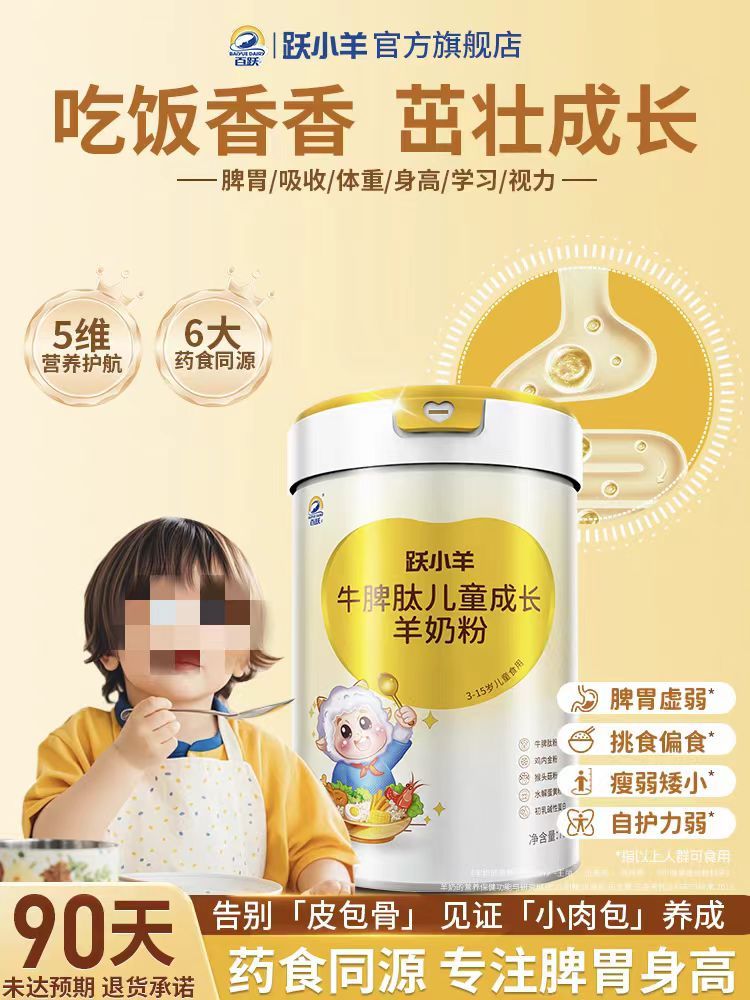
食品加工与销售

Search documents
“超级食物”网红标签下的真相
Ren Min Ri Bao Hai Wai Ban· 2026-01-29 23:15
Core Viewpoint - The rise of "superfoods" in the market has sparked discussions about their actual nutritional value versus their marketing appeal, with experts suggesting that they are often more of a marketing concept than scientifically defined foods [2][3][4]. Group 1: Definition and Popularity of Superfoods - "Superfoods" are described as nutrient-dense foods rich in antioxidants, vitamins, or minerals, but lack a standardized scientific definition [3][4]. - Consumers are willing to pay a premium for foods labeled as healthy, driving the food industry's promotion of "superfoods" [4]. - Popularity among younger consumers is evident, with many seeking these foods for perceived health benefits [3]. Group 2: Nutritional Analysis of Specific Superfoods - Kale is noted for its high nutritional value, containing vitamins K and C, calcium, iron, and significant amounts of potassium (395mg/100g) and dietary fiber (3.2g/100g) [5][6]. - Acai berry powder has strong antioxidant properties but does not stand out compared to other berries [6]. - Beetroot is rich in calcium, iron, and vitamin A, with antioxidant components beneficial for gut health [7]. - Quinoa is a good source of plant protein but lacks advantages over common grains like oats, which are more economical and beneficial for blood sugar control [8]. - Blueberries and cranberries are rich in anthocyanins, beneficial for brain and cardiovascular health, but similar nutrients can be found in other common fruits and vegetables [9]. - Chia seeds can help delay gastric emptying but require adequate hydration; their omega-3 fatty acids are less efficiently converted to DHA compared to fish sources [10]. Group 3: General Recommendations on Superfoods - While "superfoods" can offer health benefits, they should not be relied upon solely for health maintenance; a balanced diet is crucial [12]. - General populations do not need to pursue "superfoods" specifically; those with nutritional deficiencies may consider specialized foods or supplements under professional guidance [13]. - Whole, fresh foods are preferred over supplements for nutrient absorption and safety [14]. Group 4: Practical Advice for Consumers - Consumers should clarify their needs when purchasing "superfoods" and be cautious of products with high sugar content or misleading health claims [15]. - Affordable, nutrient-rich foods such as oats, soybeans, cruciferous vegetables, and eggs are recommended as part of a balanced diet [16][17][18][19][20].

袁记云饺商业版图盘点
Xin Lang Cai Jing· 2026-01-22 07:15
Core Viewpoint - Yuanji Yunjiao's parent company, Yuanji Food Group Co., Ltd., has submitted a listing application on the Hong Kong Stock Exchange, aiming to raise funds for digital transformation, overseas supply chain development, market expansion, brand building, and product research and development [1] Company Overview - Yuanji Food Group Co., Ltd. was established in April 2017, with a registered capital of approximately 120 million RMB [1] - The company is involved in food sales, food production, and internet live streaming technology services [1] - The legal representative is Yuan Lianghong, the founder of the company [1] Shareholder Information - The company is jointly held by Guangdong Yuanji Investment Co., Ltd., Yuan Lianghong, and Foshan Tanweizhi Enterprise Management Partnership (Limited Partnership) [1] Investment Information - Yuanji Food Group has made investments in 14 enterprises, with 13 currently in operation, including Guangdong Yuanshun Food Co., Ltd. and Shenzhen Yuanyu Investment Co., Ltd. [1] Executive Information - Yuan Lianghong is associated with 12 enterprises, with 10 currently operational, including Guangdong Yuanji Investment Co., Ltd. and Hunan Yuanji Cultural Tourism Development Co., Ltd., where he holds positions such as executive director and manager [1]
良品铺子连亏2年 2020年上市募4.9亿元广发证券保荐
Zhong Guo Jing Ji Wang· 2026-01-20 06:46
Group 1 - The company, Liangpinpuzi, forecasts a net profit attributable to shareholders for 2025 to be between -160 million and -120 million yuan, with a net profit excluding non-recurring gains and losses expected to be between -190 million and -150 million yuan [1] - In 2024, Liangpinpuzi reported an operating revenue of 7.159 billion yuan, a year-on-year decrease of 11.02%, and a net profit attributable to shareholders of -46.10 million yuan, compared to a profit of 180 million yuan in the previous year [1] - The net cash flow from operating activities for 2024 was 577.15 million yuan, reflecting a significant decline of 99.55% year-on-year [1] Group 2 - Liangpinpuzi raised a total of 487.90 million yuan from its initial public offering, with a net amount of 420.47 million yuan, exceeding the original plan by 117,900 yuan [2] - The funds raised are intended for projects including the construction of an all-channel marketing network, warehousing and logistics system, digital upgrade of information systems, and renovation of food research and testing centers [2] - The total issuance costs for the initial public offering amounted to 67.43 million yuan, with underwriting and sponsorship fees accounting for 42.03 million yuan [3]

又双叒叕陷入争议,“宇辉严选”不够严?
凤凰网财经· 2026-01-18 13:15
Core Viewpoint - The article discusses the recent controversy surrounding the product "Yellow Butter Hen" sold by Yuhui Tongxing, which has faced scrutiny from the Ma Huang Chicken Industry Association regarding its sourcing and claims of being "Wuxi Ma Huang Chicken" [3][5][8]. Group 1: Controversy and Response - The Ma Huang Chicken Industry Association publicly questioned the authenticity of the "Yellow Butter Hen" product, stating that they found no supply records linking it to the claimed source [8][9]. - Following the controversy, the association's president, Li Shujun, has made multiple public statements and videos challenging the product's claims, which have since been removed from social media [4][14]. - Yuhui Tongxing's customer service claimed that "Ma Huang Chicken" is a general industry term and that the product meets safety standards, providing testing reports to support their claims [5][18]. Group 2: Sales Performance and Growth - Yuhui Tongxing's live-stream sales exceeded 21 billion yuan in the previous year, marking at least a 100% increase compared to 2024 [6][34]. - The company has emphasized its quality control measures, stating that it spends nearly one million yuan monthly on product testing [23][34]. - Despite the growth in sales and audience engagement, the company has faced repeated controversies, raising concerns about its supply chain management and consumer trust [34][35]. Group 3: Industry Implications - The incident highlights the ongoing issues within the poultry industry regarding product labeling and consumer perception, particularly concerning the marketing of older hens as premium products [14][22]. - The article suggests that the controversy may lead to increased scrutiny of Yuhui Tongxing's practices and the broader implications for consumer rights and trust in the industry [35].

遭315晚会曝光保水虾仁企业等被执行7884万
Xin Lang Cai Jing· 2026-01-14 07:15
Company Overview - Zhanjiang Shangfangzhou Food Co., Ltd. was established in September 2010 with a registered capital of 5 million RMB [1] - The legal representative is Huang Yuzhu, and the company is primarily engaged in food production, food sales, wholesale and retail of aquatic products, and processing of edible agricultural products [1] Recent Legal Issues - On January 12 and 13, 2023, the company was listed as a defendant in two new enforcement cases, with a total enforcement amount exceeding 78.84 million RMB [1] - The enforcement courts involved are Zhanjiang Chikan District People's Court and Zhanjiang Potou District People's Court [1] Shareholder Information - The company is owned by Huang Yuzhu and Huang Mader, holding 90% and 10% of the shares respectively [1] Regulatory Actions - In April 2025, following the exposure of "water-retaining shrimp" by CCTV's 315 Gala, the Zhanjiang market regulatory authority imposed administrative fines and revoked the food production licenses of four involved companies, including Zhanjiang Shangfangzhou Food Co., Ltd. [1]
青海食品安全满意度连续5年提升
Xin Lang Cai Jing· 2026-01-13 19:51
Core Insights - The overall satisfaction rate regarding food safety among the public in Qinghai Province reached 89.67% in 2025, marking a continuous improvement over five years [1] Group 1: Food Safety Status - The food safety responsibility system in the province was enhanced, with a focus on comprehensive regulation and governance of key links [1] - The pass rate for food and food-related agricultural products testing remained stable at over 98%, while the pass rate for special food testing consistently stayed above 99% [1] Group 2: Regulatory Effectiveness - The 12315 platform achieved a 100% acceptance rate for food complaints and reports [1] - A total of 940 cases of food-related legal violations were investigated and handled by market regulators, with no major food safety risks reported [1] Group 3: Consumer Trust and Perception - Consumer trust in eight major food categories, including rice, flour, and oil, remained stable [1] - Large supermarkets and certain standardized agricultural markets were identified as more trustworthy by consumers, while online food delivery, mobile vendors, and remote markets were highlighted as areas of concern due to regulatory challenges [1] - Initial successes were noted in the branding and standardization of highland specialty food products [1]
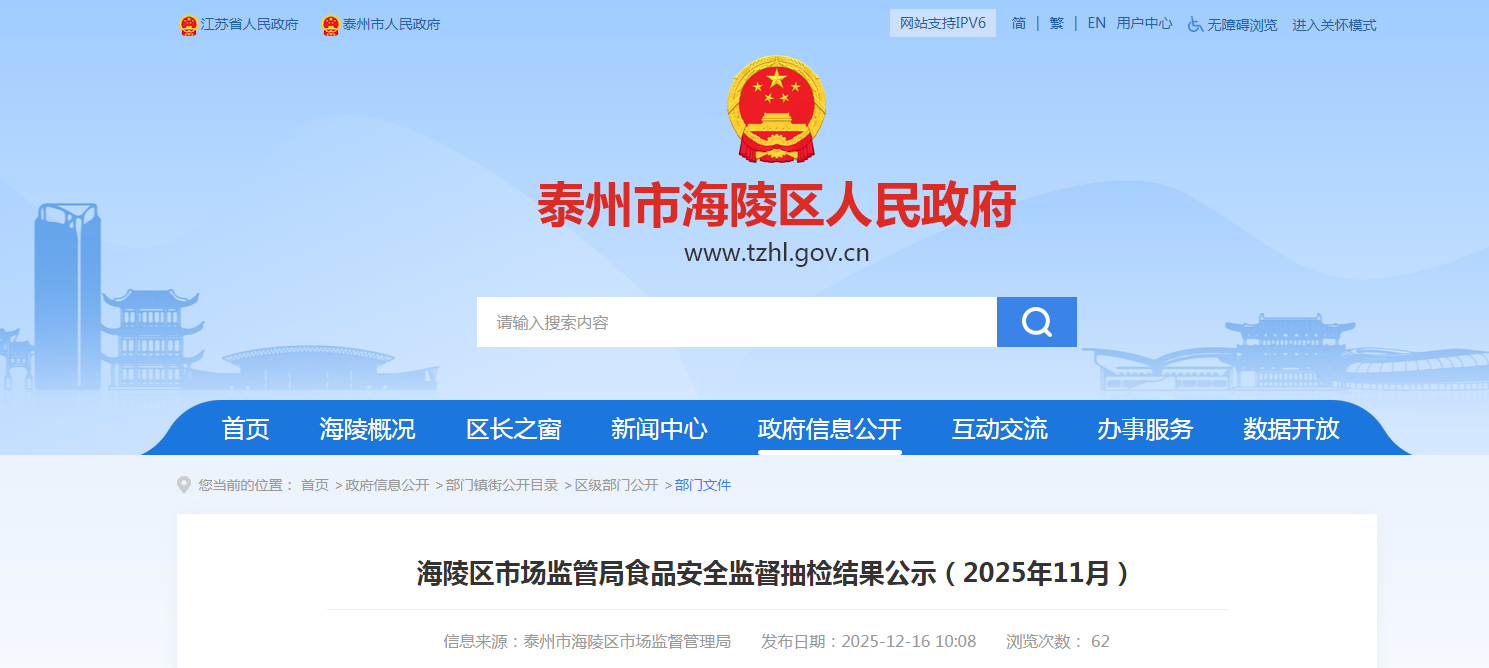
江苏省泰州市海陵区市场监管局食品安全监督抽检结果公示(2025年11月)
Zhong Guo Zhi Liang Xin Wen Wang· 2026-01-12 08:32
Summary of Key Points Core Viewpoint The food safety supervision and sampling results from the Hai Ling District Market Supervision Bureau indicate that out of 93 batches of food tested in November 2025, 90 batches were found to be compliant, while 3 batches were deemed non-compliant, which have been processed according to regulations [3]. Group 1: Sampling Results - A total of 93 batches of food were sampled, covering 14 categories including restaurant food, nuts, starch products, and beverages [3]. - 90 batches were compliant with safety standards, resulting in a compliance rate of approximately 96.8% [3]. - 3 batches were identified as non-compliant and have undergone the necessary follow-up procedures [3]. Group 2: Non-compliant Items - The non-compliant items included the presence of substances such as Mefenamic acid and Mefenamic acid manganese salt, which are broad-spectrum bactericides with low acute toxicity [4]. - The presence of Thiamethoxam, a new class of insecticide, was also noted, which is used for pest control in various crops [4]. - Dehydroacetic acid and its sodium salt, a broad-spectrum food preservative, were found in excess, which can pose health risks with long-term consumption [4].
三只松鼠:公司结合市场情况有序推进拓店计划
Zheng Quan Ri Bao Wang· 2026-01-09 13:40
Group 1 - The company is progressing its store expansion plan in an orderly manner, taking into account market conditions [1] - The company will continue to strengthen its supply chain construction and improve operational efficiency [1] - Investors are encouraged to pay attention to the company's regular reports for performance updates [1]
元旦食品抽检合格率99.53% 3问题需注意
Zhong Guo Jing Ji Wang· 2025-12-30 06:51
Core Viewpoint - The State Administration for Market Regulation conducted a special inspection of popular food items ahead of the New Year, achieving a compliance rate of 99.53%, indicating a generally good quality and safety status of various food products [1] Group 1: Inspection Overview - The inspection covered 31 provinces, focusing on high-traffic areas such as tourist attractions, large supermarkets, highway service areas, and train stations, as well as 10 online platforms including JD.com, Tmall, and Taobao [1] - A total of 634 batches of pre-packaged foods were sampled, including 10 categories of popular holiday foods and common ingredients for family gatherings like fish, shrimp, chicken, and pork [1] Group 2: Testing Focus - The inspection emphasized testing for excessive use of food additives, microbial contamination, and pesticide residues, covering 144 specific testing items [1] - No non-compliant samples were found in major food categories such as edible oils, dairy products, meat products, snack foods, and alcoholic beverages [1] Group 3: Notable Findings - Traditional foods like tangyuan and dumplings have not shown any non-compliant samples for three consecutive years [1] - Issues were identified in beverages regarding microbial contamination, soy sauce quality standards, and excessive veterinary drug residues in seawater shrimp [1] Group 4: Regulatory Actions - The State Administration for Market Regulation has urged local regulatory authorities to investigate and address the non-compliant samples found during the inspection, ensuring food safety during the holiday season [1]
普通食品宣称“疗效”,不能信丨2025消费问题高发区④
Bei Ke Cai Jing· 2025-12-29 05:21
Core Viewpoint - The article highlights the issue of ordinary food products being falsely marketed as having therapeutic effects, misleading consumers into purchasing them under the guise of nutritional benefits [1][2][5]. Group 1: Misleading Claims in Nutritional Products - Many businesses are promoting ordinary foods, such as protein powders and nutritional supplements, as having various health benefits, which is a violation of regulations [2][5]. - Products like "牛脾肽儿童奶粉" (beef peptide children's milk powder) are marketed with claims that they can help children gain weight and improve appetite, with some suggesting a weight increase of 1-5 kg after consuming 3-6 cans [2][5]. - The marketing of protein powders often includes exaggerated claims such as "gain 10 kg with one can," which are not supported by regulatory standards for health claims [5][7]. Group 2: Regulatory Framework and Violations - According to the Food Safety Law, ordinary foods cannot make health claims, and any claims must be based on approved health functions [7][8]. - The article notes that many products blur the lines between ordinary foods and health supplements, misleading consumers about their actual benefits [7][8]. - The market supervision department has previously issued warnings about the misleading marketing practices that confuse ordinary foods with health products [7][8]. Group 3: Ingredient Transparency and Consumer Awareness - Many products contain minimal amounts of claimed beneficial ingredients, leading to "conceptual additions" that do not provide the promised health benefits [8][9]. - Consumers are advised to carefully examine ingredient lists, as many products list beneficial ingredients at the end of the list, indicating low concentrations [13][14]. - The article emphasizes the importance of understanding the actual content and dosage of ingredients in nutritional products to avoid being misled by marketing claims [9][14]. Group 4: Emerging Standards and Future Directions - The upcoming national standards for elderly nutritional products aim to address the current lack of specific standards and improve product quality [10]. - New regulations will require clear labeling and prohibit misleading claims, helping to shift the market from concept-based marketing to value-based supply [10].