AI基础设施

Search documents
本轮AI股大崩盘--一场暴雨引发的全球股市惨案
华尔街见闻· 2025-12-16 04:49
Core Viewpoint - The article highlights the systemic risks facing the AI infrastructure industry, as evidenced by CoreWeave's significant market value loss and the broader impact on companies like Broadcom and Oracle, reflecting concerns over the AI bubble and delayed capital expenditures [1][5][17]. Group 1: CoreWeave's Situation - CoreWeave's market value has evaporated by $33 billion, with a decline exceeding 60%, amid fears of an AI bubble [1]. - A construction delay of approximately 60 days at a CoreWeave data center in Denton, Texas, due to severe weather has postponed the delivery of a large computing cluster intended for OpenAI [3][8]. - CEO Michael Intrator's contradictory statements during a financial call exacerbated investor panic, leading to a 16.3% drop in CoreWeave's stock price [4][10]. Group 2: Financial Challenges - CoreWeave's financial health is concerning, with a recent quarterly revenue doubling to nearly $1.4 billion, yet the company reported a loss of $110 million [12]. - The company's operating profit margin of about 4% is insufficient to cover most of its debt interest expenses, raising doubts about future profitability [12]. - CoreWeave's debt default insurance costs have surged to 7.9 percentage points, indicating increased financial risk [12]. Group 3: Industry-Wide Implications - The construction delays affecting CoreWeave have raised concerns across the entire AI infrastructure sector, impacting other companies like Oracle and Broadcom, which have also seen significant stock price declines [17][20]. - The market is increasingly questioning the timing and viability of substantial capital investments in AI, as evidenced by the reactions of major tech firms to rising capital costs [19][20]. - The situation has led to a broader trust crisis in AI infrastructure investments, with notable short-sellers like Jim Chanos publicly criticizing CoreWeave, further fueling market apprehension [15][14].


本轮AI股大崩盘:一场暴雨引发的全球股市惨案
Hua Er Jie Jian Wen· 2025-12-16 04:20
Core Insights - A severe storm has caused a significant market disruption in the AI infrastructure sector, leading to a loss of $33 billion in market value for CoreWeave and over 17% declines for Broadcom and Oracle, indicating growing concerns about an AI bubble [1][8] - The crisis originated from construction delays at a CoreWeave data center in Denton, Texas, which was set to provide 260 megawatts of computing power for OpenAI but has been delayed by approximately 60 days due to adverse weather conditions [1][2] Company-Specific Issues - CoreWeave's CEO, Michael Intrator, made contradictory statements during an earnings call, initially downplaying the impact of the delay but later acknowledging broader issues affecting multiple data center suppliers, which heightened investor anxiety [4][5] - The company's business model relies heavily on high-interest debt to acquire advanced AI chips from NVIDIA, making it vulnerable to construction delays and financial instability [3][5] Financial Performance and Debt Concerns - CoreWeave reported a revenue increase of nearly 100% to approximately $1.4 billion in the last quarter, yet it remains unprofitable, with a loss of $110 million, raising concerns about its ability to generate future profits [5][6] - The company recently completed a $2.25 billion convertible bond issuance, which, while having a lower interest rate than typical financing, poses risks of shareholder dilution and declining stock prices [6] Industry-Wide Implications - The turmoil at CoreWeave reflects broader issues within the AI sector, as rapid growth raises questions about the timing and viability of significant capital investments [7][8] - Concerns over construction delays and supply chain bottlenecks are affecting the entire industry, with major players like Oracle and Broadcom experiencing double-digit percentage declines in stock prices due to revised spending expectations [8]
申万宏源2026年美股投资策略:AI行情进入“换挡期” 悲观情形下下半年面临估值回撤风险
Zhi Tong Cai Jing· 2025-11-19 22:53
Core Viewpoint - The report from Shenwan Hongyuan indicates that under a neutral assumption, the risks associated with AI soft constraints by 2026 are manageable, with a focus on whether the penetration rate of B-end enterprises can improve and whether cash flow remains stable. Companies in the US stock market with relatively stable expansion are worth monitoring. However, hard constraints, particularly regarding power supply for computing infrastructure, will become more pronounced, necessitating higher verification requirements for ROI [1][2]. Group 1: Market Trends and AI Investment - Since 2023, the current AI market in the US has been ongoing for three years, primarily focusing on valuation increases and widespread performance in AI infrastructure and applications [2]. - The AI-related industries (technology, communication) are expected to contribute limited valuation in 2025, with increased reliance on debt financing amid unclear ROI for AI investments [2]. - Concerns about an "AI bubble" stem from the gap between the time required for new technologies to generate economic scale effects and the optimistic expectations of capital market returns [3]. Group 2: Constraints and Adjustments - Hard constraints often lead to periodic adjustments in the AI sector, with the "Buy the Dip" strategy still showing effectiveness in the US stock market. Adjustments have been triggered by macro liquidity tightening and concerns over computing power, algorithms, and electricity [4]. - The report outlines that the AI sector has faced multiple adjustments since 2023, with each decline exceeding 10% and lasting over a month, influenced by factors such as liquidity tightening and supply shocks [4]. Group 3: ROI and Financial Metrics - The report emphasizes that the ROI for AI investments is sensitive to GPU depreciation, with rising debt financing costs posing tail risks. The total AI investment commitment projected by Trump for 2025 is approximately $3.8 trillion, aimed to be completed by 2028 [6][7]. - Current AI penetration in US enterprises is around 10%, with higher rates in information-intensive sectors, expected to rise to over 30% in the next six months [6]. - The report highlights that the profitability of AI applications varies, with B-end applications showing higher margins compared to C-end applications, which generally have negative margins [6]. Group 4: Debt and Liquidity Risks - The overall debt pressure on AI infrastructure is manageable, but significant differentiation among companies is expected by the second half of 2025. Long-term debt levels related to AI hardware have been gradually increasing, with a decline in the free cash flow to debt ratio [7][8]. - The report warns that in a tightening liquidity environment, the probability of debt risks increases, particularly for companies with lower asset quality [8]. - The current static PE ratio for the US stock market is 28x, with historical data indicating a low success rate for holding stocks at this valuation over three years [10].





2026投资主线已现?华泰张继强:新开局下的三大叙事重构
Wind万得· 2025-11-19 22:43
Core Viewpoint - The year 2026 marks the beginning of a systematic restructuring rather than a simple continuation of the next cycle, with a focus on macroeconomic changes, policy logic, and asset pricing shifts [1]. Group 1: Macroeconomic Narrative - The narrative is shifting from "stabilizing growth" to "high-quality development," with a new focus on fiscal leadership and precise monetary support, emphasizing targeted investments in technology, green initiatives, and public welfare [3]. - The new paradigm features enhanced debt constraints, with local government debt resolution entering a critical phase and market-oriented transformations of city investment platforms becoming an irreversible trend [3]. - Growth drivers are transitioning, with increased resilience in exports, manufacturing upgrades, and the emergence of new energy sectors, while real estate is no longer the economic anchor [3][4]. Group 2: Industry Main Lines - Three structural opportunities are identified for asset allocation in 2026: 1. High-end manufacturing going global, transitioning from cost advantages to a dual drive of technology and brand [5]. 2. Technological self-sufficiency, supported by policies that create a long-term dividend in sectors like semiconductors and AI infrastructure [7]. 3. Green transformation and ESG financialization, where carbon trading and green bonds reshape industry valuation, leading to premium reassessment of low-carbon assets [9][10]. Group 3: Asset Allocation - In a declining interest rate environment, the focus should be on relative value rather than absolute returns, with specific strategies for different asset classes: - For interest rate bonds, attention to duration structure and policy rhythm is crucial [12]. - In credit bonds, differentiation in city investment bonds is increasing, necessitating careful evaluation of regional fiscal capabilities and debt structures [13]. - For equity assets, emphasis on profit quality, cash flow stability, and sustainable ROE is recommended, moving away from PE speculation [13]. - Alternative assets like REITs and infrastructure public funds are emerging as new opportunities for institutional allocation [13]. Conclusion - The essence of investment lies in understanding change, with opportunities in 2026 favoring those who comprehend structural transformations rather than those seeking short-term policy stimuli [17][18].

一图看懂:主动优选基金经理,在2025年3季报里都说了啥?
银行螺丝钉· 2025-11-19 13:56
Core Insights - The article provides an overview of fund managers' perspectives and strategies based on their recent quarterly reports, highlighting different investment styles and market outlooks [1][2]. Group 1: Fund Manager Perspectives - Fund managers express varying views on market conditions, with some maintaining optimism about equity assets due to low interest rates and the potential for corporate earnings recovery [17][18]. - Different investment styles are categorized, including deep value, growth value, balanced, and growth styles, each with distinct characteristics and focus areas [19][35][51]. Group 2: Deep Value Style - Deep value managers focus on low valuation metrics such as low P/E ratios and high dividend yields, primarily investing in sectors like finance, real estate, and energy [10][12]. - Historical performance shows that this style performed well in 2016-2017 and 2021-2024, while underperforming in 2019-2020 [15][16]. Group 3: Growth Value Style - Growth value managers prioritize companies with strong profitability and stable cash flows, often holding stocks for the long term [20][22]. - Concerns about market risks and valuation levels are noted, with some managers highlighting the extreme valuation disparities across sectors [22][24]. Group 4: Balanced Style - Balanced style managers seek a combination of growth and value, focusing on companies with favorable PEG ratios and exploring opportunities across various sectors [35][36]. - They emphasize the importance of maintaining a diversified portfolio while identifying high-quality investment opportunities [40][46]. Group 5: Growth Style - Growth style managers focus on high revenue and earnings growth, often investing in emerging industries such as AI, renewable energy, and technology [51][62]. - The article notes a shift in focus from technology to consumer sectors as the market stabilizes, with an emphasis on identifying companies with strong growth potential [55][58]. Group 6: Market Outlook - The overall market sentiment is cautiously optimistic, with expectations of continued structural opportunities despite potential short-term volatility [40][62]. - Fund managers are adjusting their portfolios in response to macroeconomic conditions, focusing on sectors with strong growth prospects and managing risks associated with high valuations [31][70].

美股异动 | “英伟达亲儿子”CoreWeave(CRWV.US)续跌近5% 月内暴跌45% 美媒指其为“AI泡沫的核心”
智通财经网· 2025-11-14 15:41
Core View - CoreWeave (CRWV.US) has experienced a nearly 5% decline on Friday and a 45% drop within the month, raising concerns about its business model and reliance on Nvidia [1] Business Model Concerns - A forthcoming investigative report from a U.S. tech media outlet describes CoreWeave as "the core of the AI bubble," questioning its sustainability without substantial funding and hardware support from Nvidia [1] - The report emphasizes that CoreWeave's operations may be nearly impossible without Nvidia's large-scale financial and hardware backing [1] Market Demand Fluctuations - There are doubts regarding CoreWeave's ability to maintain its business model amid fluctuations in AI demand, highlighting potential vulnerabilities in its operational strategy [1]

美股异动丨CoreWeave盘前续跌超2%,遭美媒点名为“AI泡沫的核心”
Ge Long Hui· 2025-11-14 09:45
Core View - CoreWeave (CRWV.US) continues to decline, dropping over 2% pre-market to $76.7, following a significant drop of over 8% the previous day [1] - A forthcoming investigative report from The Verge describes CoreWeave as "the heart of the AI bubble," raising concerns about its business model and heavy reliance on NVIDIA [1] - The report emphasizes that CoreWeave is unlikely to operate without substantial funding and hardware support from NVIDIA, questioning the sustainability of its model amid fluctuations in AI demand [1]
Oklo、Ionq、Coreweave、Bloom energy....,过去一个月,这些“量子、AI、能源”妖股已经“跌漏”了
Hua Er Jie Jian Wen· 2025-11-14 00:17
Core Insights - The speculative hype surrounding themes like artificial intelligence, quantum computing, and renewable energy is rapidly cooling, with a collective market value drop of approximately 33% for companies like Oklo, IonQ, and CoreWeave since mid-October [1] - The onset of the third-quarter earnings season has prompted investors to reassess the high valuations of companies with little to no profitability, as 82% of S&P 500 companies reported better-than-expected earnings, shifting funds towards fundamentally strong value stocks [2][3] - The average decline of about one-third for a group of 13 speculative stocks, which had previously surged nearly 200% from July to mid-October, highlights the stark contrast between their performance and that of larger, more stable companies [3] Market Dynamics - The iShares MSCI USA Value Factor ETF (VLUE) has risen approximately 6% since the peak of speculative stocks, indicating a shift from high-risk narrative-driven investments to solid value investments [4] - Oracle's stock experienced volatility due to concerns over its credit risk, as its reliance on a high-spending client, OpenAI, raised questions about its debt repayment capabilities [5] - Investors are increasingly demanding higher risk premiums when a company's survival depends on another high-risk startup, as seen in the bond issuance requirements for Applied Digital compared to its peers [6][7]

“比特币矿商”的“估值逻辑”:“为AI发电”数倍于“挖比特币”
美股IPO· 2025-10-19 22:59
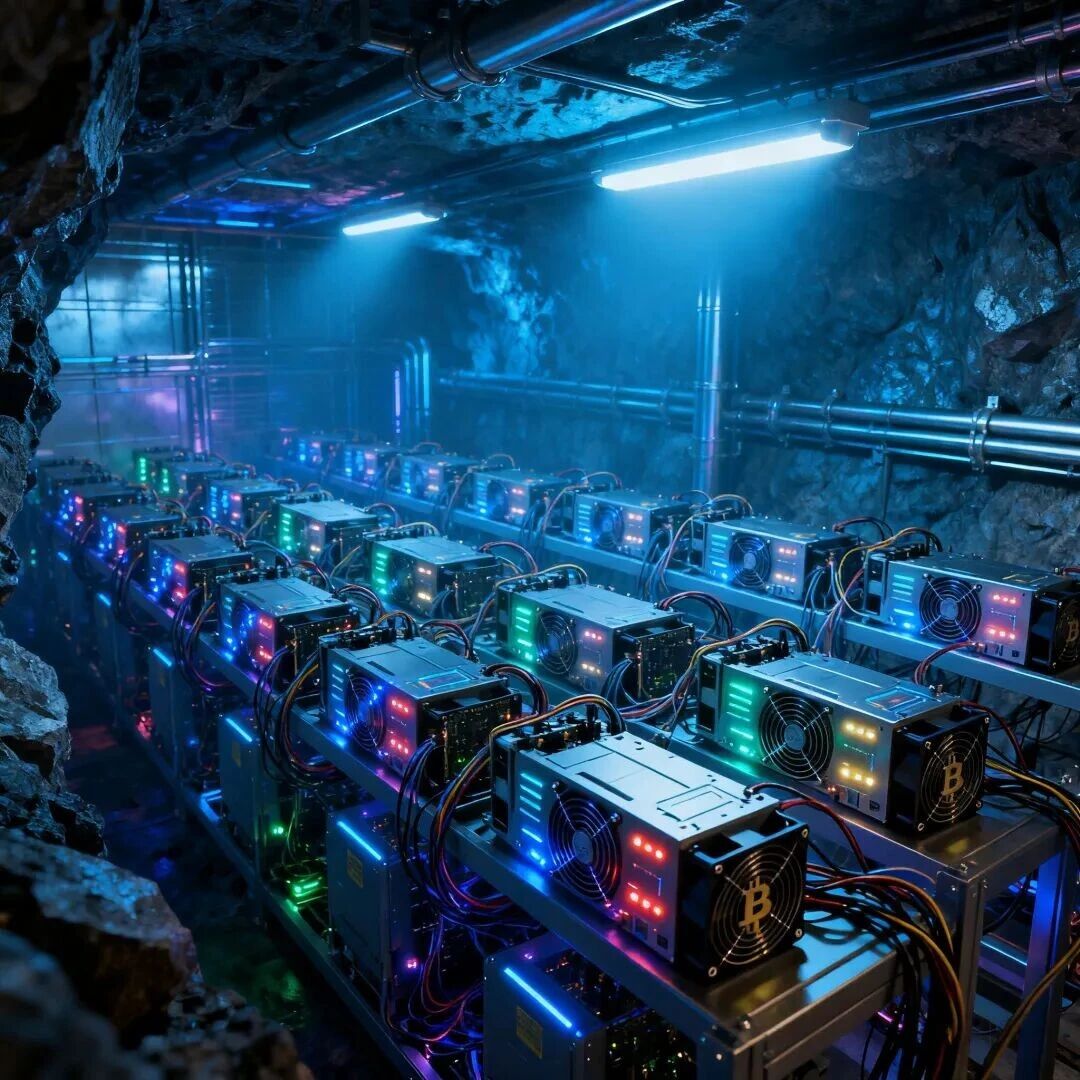
Core Viewpoint - The market is redefining the valuation of Bitcoin mining companies, shifting focus from mining revenue to their AI infrastructure value, with funds tracking listed mining companies outperforming Bitcoin itself [1][3]. Group 1: Valuation Shift - Bitcoin mining companies are transitioning into technology infrastructure providers, leveraging their existing power grid access to supply immediate power to AI data centers, thus breaking free from the cryptocurrency cycle [3][4]. - Funds tracking listed mining companies have surged over 150% this year, significantly outpacing Bitcoin's 14% increase, with companies like Cipher Mining and IREN Ltd. seeing stock price increases of approximately 300% and 500% respectively [3][4]. Group 2: Power Supply Advantage - U.S. Bitcoin mining companies possess around 6.3 GW of operational capacity and 2.5 GW under construction, making them the fastest and lowest-risk option for AI companies seeking power [4][6]. - The existing power resources of these mining companies are becoming increasingly valuable, especially as the U.S. faces a projected 45 GW power shortfall for data centers between 2025 and 2028 [4][6]. Group 3: Strategic Partnerships and Transformations - Cipher Mining signed a $3 billion hosting agreement with Fluidstack, indicating a significant blurring of lines between crypto mining and AI [5]. - Bitdeer Technologies plans to convert its major mining sites into AI data centers, projecting over $2 billion in annual revenue by 2026 [5]. Group 4: Economic Pressures and Industry Response - The ongoing deterioration of Bitcoin mining economics, exacerbated by last year's halving event, has prompted mining companies to seek alternative revenue streams [7][8]. - Companies like Riot Platforms and IREN have indicated they will not expand mining capacity, viewing AI and HPC as complementary alternatives to traditional mining [8].
SuperX与中恒电气成立合资公司,以颠覆性供电技术重塑全球AI数据中心能源格局
Sou Hu Cai Jing· 2025-09-15 14:12
Core Viewpoint - The newly established joint venture "SuperX Digital Power" aims to integrate the strengths of SuperX and Zhongheng Electric to provide high-voltage direct current (HVDC) solutions globally, addressing the high energy consumption challenges of AI computing and offering more efficient and cost-effective energy solutions for next-generation data centers [1][2]. Group 1: Joint Venture Formation - SuperX AI Technology Limited has signed a joint venture agreement with Zhongheng Electric to create SuperX Digital Power Pte. Ltd. in Singapore, focusing on HVDC solutions for global markets excluding mainland China, Hong Kong, and Macau [1][2]. - This strategic collaboration marks SuperX's vertical integration from AI infrastructure to core energy technology, targeting the exponential growth of energy consumption in the AI era [2]. Group 2: HVDC Technology Advantages - HVDC technology simplifies the power supply chain, achieving "direct current to the end," which significantly reduces energy loss and operational costs compared to traditional AC systems [3][4]. - The core advantages of HVDC include improved energy efficiency, with end-to-end efficiency rising from approximately 85-90% to over 96%, and a reduction in physical space requirements by up to 50% [5][6]. Group 3: Strategic Value for SuperX - The partnership enhances SuperX's capabilities, allowing it to offer a comprehensive "one-stop" solution that includes power supply systems, thereby increasing its competitiveness in the market [6]. - By integrating HVDC products with AI servers and liquid cooling solutions, SuperX can create a unique technology barrier, providing unmatched performance and total cost of ownership (TCO) benefits [6]. - The collaboration enables SuperX to leverage Zhongheng Electric's advanced technology to quickly respond to global demand for efficient AI data centers, helping clients gain a competitive edge [6]. Group 4: Industry Context - The increasing power demands of next-generation GPUs, such as NVIDIA's upcoming Rubin Ultra NVL576, which is expected to reach 600kW per cabinet, highlight the necessity of HVDC solutions in future AI data centers [4]. - Zhongheng Electric is recognized as a leader in HVDC technology in China, with its solutions already deployed in major data centers operated by top companies like Alibaba and Tencent, demonstrating long-term stability and reliability [4][5].