先进制造

Search documents
A股,重大调整!沪深交易所,最新发布!
券商中国· 2025-11-28 15:11
Core Viewpoint - A-shares are undergoing significant adjustments in multiple key indices, effective December 12, 2025, with changes in sample stocks for indices such as the Shanghai 50, Sci-Tech 50, Shenzhen Component Index, and ChiNext Index [1][2][12]. Index Adjustments - The Shanghai Stock Exchange and China Securities Index Co. announced changes to the sample stocks of the Shanghai 50, Shanghai 180, Shanghai 380, and Sci-Tech 50 indices, with the Shanghai 50 replacing 4 stocks, the Shanghai 180 replacing 7 stocks, the Shanghai 380 replacing 38 stocks, and the Sci-Tech 50 replacing 2 stocks [2][12]. - The Shanghai 50 index will include new stocks such as SAIC Motor, Northern Rare Earth, Huadian New Energy, and Zhongke Shuguang, while removing Poly Developments, China Mobile, China Aluminum, and CRRC [2][3]. - The Shanghai 180 index will add stocks like Guotou Capital, Zhongtian Technology, and Huadian New Energy, while removing stocks such as COSCO Shipping Energy and Nanshan Aluminum [3][4]. - The Shanghai 380 index will see 38 stocks added, including COSCO Shipping Energy and Jinfat Technology, and will remove stocks like Guotou Capital and Furuida [4][5]. - The Sci-Tech 50 index will replace Huaxi Biological and Hangcai Co. with new additions including Aojie Technology and Shengke Communication [6][7]. Shenzhen Stock Exchange Adjustments - The Shenzhen Stock Exchange will also implement sample stock adjustments for the Shenzhen Component Index, ChiNext Index, Shenzhen 100, and ChiNext 50, effective December 15, 2025 [7][8]. - The Shenzhen Component Index will add stocks such as Deep Housing A and Demingli, while removing stocks like China National Pharmaceutical and Tibet Mining [7][8]. - The ChiNext Index will include new stocks like Shuanglin Co. and Changshan Pharmaceutical, while removing stocks such as Bihui Source and Yihua Recording [8][10]. Broader Market Implications - The adjustments in sample stocks are expected to enhance the representation of sectors such as information technology, communication services, and industrials, leading to a more balanced industry allocation in the A-series indices [12][13]. - Analysts suggest that the market may experience a spring rally, with potential shifts in capital towards AI applications and sectors aligned with national policy support, such as hydrogen energy and quantum technology [14].




我国成为世界首个国内有效发明专利数量突破500万件的国家
Ren Min Ri Bao· 2025-11-28 10:23
Core Insights - China has become the first country in the world to have over 5 million valid domestic invention patents, with PCT international patent applications ranking first globally for six consecutive years [1] - The value added by patent-intensive industries reached 16.87 trillion yuan, accounting for 13.04% of GDP [1] - The brand value of Chinese brands among the global top 5000 reached 1.81 trillion USD, ranking second globally [1] - The direct output value of geographical indication products is close to 970 billion yuan, showing a good growth trend [1] Patent Statistics - As of June this year, the number of high-value invention patents per 10,000 people in China reached 15.3, exceeding the planned target [1] - The effective number of invention patents in strategic emerging industries surpassed 1.4 million, maintaining rapid growth [1] Innovation and Technology - Recent national patent awards highlight a significant number of original and leading innovative achievements in key areas such as artificial intelligence, advanced manufacturing, integrated circuits, biomedicine, and new energy [1] - China's reserve of high-value patents in critical core technology fields is continuously strengthening, transitioning from "quantity accumulation" to "quality enhancement," laying a solid foundation for achieving high-level technological self-reliance [1]
安永:2025年A股IPO平均融资额同比增超50%,港股IPO复苏强劲,A+H模式将持续火热
IPO早知道· 2025-11-28 09:58
Core Insights - The article highlights the positive trend in the IPO markets of mainland China and Hong Kong, with significant growth in both the number of IPOs and the amount raised, accounting for 16% and 33% of global totals respectively [2][9] - A-share IPOs are expected to exceed 100 companies in 2025, raising over 1,100 million RMB, driven by a focus on technology and innovation [3][8] - The average fundraising amount for IPOs in 2025 is projected to rise to 10.31 million RMB, a 53% increase from 2024, with a notable concentration in the 10-50 million RMB range [4][6] A-share Market Insights - The top ten A-share IPOs in 2025 raised a total of 464 million RMB, representing 42% of the total annual fundraising, with a year-on-year increase of 146% [6] - The industrial, technology, and materials sectors dominate the A-share IPO landscape, accounting for 86% of the total number of IPOs and 78% of total fundraising [8] - The A-share IPO market has shifted from quantity-driven to quality-focused, emphasizing technological innovation and regulatory inclusivity [9] Hong Kong Market Insights - The Hong Kong IPO market is experiencing a strong recovery, with fundraising surpassing 2,000 million HKD, marking the second-highest level in five years [9][10] - The introduction of new IPO pricing and allocation regulations has led to a significant increase in average returns, reaching 38%, with a record low first-day share price drop rate of 24% [9][10] - Over 300 companies are actively seeking to list in Hong Kong, indicating robust market activity and a shift towards a dual-driven investment structure involving both domestic and international capital [10]

中港IPO全球占比显著提升,工业科技先进制造领跑,500质量成长ETF(560500)盘中涨0.27%
Xin Lang Cai Jing· 2025-11-28 02:42
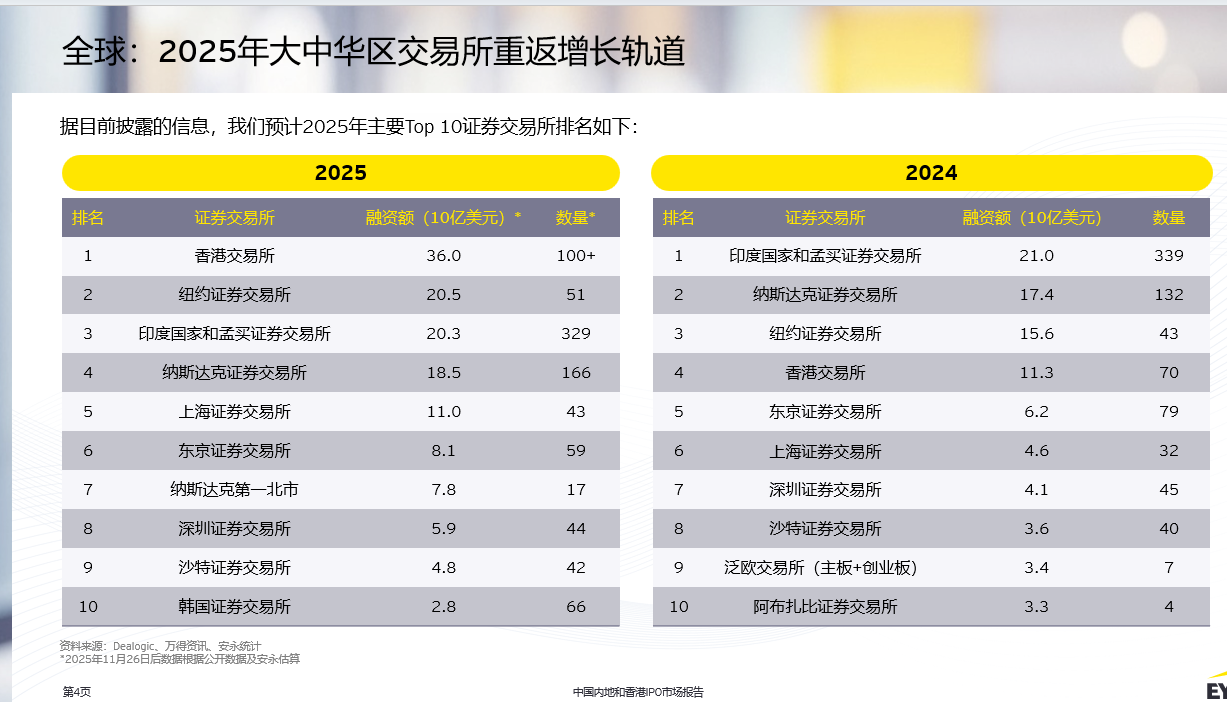
Core Insights - The report by Ernst & Young highlights a growth trend in IPO activities in mainland China and Hong Kong, with A-shares and Hong Kong markets accounting for 16% and 33% of global IPO numbers and fundraising amounts respectively [1] - Chinese companies secured five positions in the global top ten IPOs, with an increase in numbers compared to 2024, primarily in the automotive, mining, energy, and advanced manufacturing sectors [1] - The industrial, technology, and materials sectors are the top three in terms of IPO quantity [1] Market Performance - The A-share market has shown signs of recovery amidst fluctuations, with overall market confidence improving and a strong technical outlook [2] - The "14th Five-Year Plan" policies, capital market developments, and declining interest rates are positively influencing the market, indicating a phase of recovery [2] - Third-quarter reports indicate moderate improvements in fundamentals, which may drive further market recovery [2] Index and ETF Information - The CSI 500 Quality Growth Index selects 100 companies with high profitability, sustainable earnings, and strong cash flow from the CSI 500 Index, providing diverse investment options [2] - As of October 31, 2025, the top ten weighted stocks in the CSI 500 Quality Growth Index accounted for 21.64% of the index [2] - The top ten stocks include Huagong Technology, Kaiying Network, Dongwu Securities, Tianshan Aluminum, Keda Li, Crystal Optoelectronics, Shunluo Electronics, Chuangfeng Power, Changjiang Securities, and Shanghai Electric [2][4]


安永:A股和香港市场IPO筹资额占全球1/3
第一财经· 2025-11-27 15:36
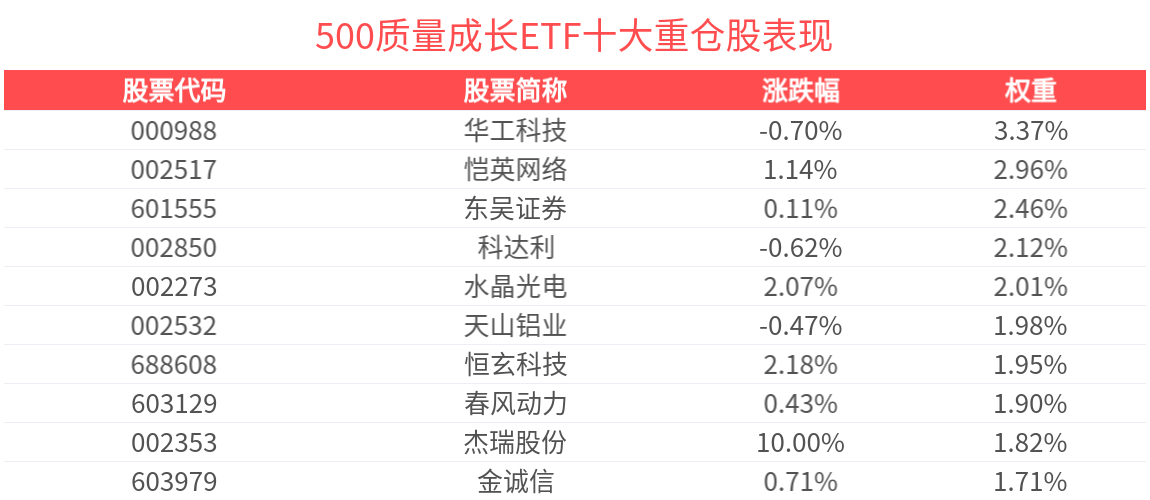
Core Insights - The report by Ernst & Young indicates a growth trend in IPO activities in mainland China and Hong Kong, with A-shares and the Hong Kong market accounting for 16% of global IPO numbers and 33% of global fundraising amounts in 2025 [3][4]. Group 1: IPO Market Overview - In 2025, the Hong Kong Stock Exchange is projected to lead globally with a fundraising amount of $36 billion, while the Shanghai Stock Exchange ranks fifth with $11 billion [3][4]. - Chinese companies occupy five positions in the global top ten IPOs, with sectors including automotive, mining, energy, and advanced manufacturing [3][4]. Group 2: A-Share Market Insights - The A-share IPO market experienced moderate growth in 2025, with 97 companies going public and raising approximately 100 billion RMB, reflecting a 53% increase in average fundraising per IPO compared to 2024 [5][6]. - The industrial, technology, and materials sectors accounted for 86% of the total IPO numbers, while these sectors also represented 78% of the total fundraising amount [5][6]. Group 3: Hong Kong IPO Market Dynamics - The Hong Kong IPO market saw a strong recovery in 2025, with fundraising exceeding 200 billion HKD, marking the second-highest level in five years [9][10]. - Mainland enterprises dominated the Hong Kong IPO market, contributing 88.5% of the number of IPOs and 83.5% of the total fundraising [9][10]. Group 4: Future Outlook - The IPO issuance in 2026 is expected to normalize, focusing on a steady pace rather than a return to rapid expansion, with an emphasis on quality and structure [11][12]. - The Hong Kong IPO market is anticipated to maintain its momentum, with a focus on A+H listings and the return of Chinese concept stocks [11][12].

安永:A股和香港市场IPO筹资额占全球1/3
Di Yi Cai Jing· 2025-11-27 11:48
Core Insights - The report by Ernst & Young indicates a growth trend in IPO activities in mainland China and Hong Kong, with A-shares and Hong Kong accounting for 16% of global IPO numbers and 33% of global fundraising amounts in 2025 [1] Group 1: IPO Market Overview - Hong Kong Stock Exchange is projected to lead global exchanges with a fundraising amount of $36 billion in 2025, while Shanghai Stock Exchange ranks fifth with $11 billion [2] - Chinese companies occupy five positions in the global top ten IPOs, with representation across automotive, mining, energy, and advanced manufacturing sectors [2] Group 2: A-share Market Dynamics - The A-share IPO market is expected to see moderate growth in 2025, with approximately 97 companies going public and raising around 100 billion RMB [3] - The average fundraising amount per IPO in A-shares has increased to 1.031 billion RMB, reflecting a 53% year-on-year rise, driven by large IPOs [4] - The automotive sector accounts for about 30% of A-share IPOs, with significant contributions from industrial, technology, and materials sectors [4] Group 3: Hong Kong IPO Landscape - The Hong Kong IPO market is experiencing a strong recovery, with fundraising surpassing 200 billion HKD, marking the second-highest peak in five years [5] - Mainland enterprises dominate the Hong Kong IPO market, contributing 88.5% of the number of listings and 83.5% of the total fundraising [5] - New consumption and hard technology sectors are identified as the dual engines driving IPO activities in Hong Kong [5] Group 4: Future IPO Trends - The IPO issuance in 2026 is expected to transition to a "new normal," focusing on a steady pace rather than a return to rapid expansion, influenced by macroeconomic conditions and the quality of prospective listings [8] - The A-share market is anticipated to gradually restore normal issuance patterns, emphasizing quality and structural optimization, particularly in strategic emerging industries [8] - The Hong Kong IPO market is expected to maintain its momentum, with a focus on A+H listings and the return of Chinese concept stocks [8]

安永:港股IPO复苏强劲 A+H模式预计持续火热
Xin Hua Cai Jing· 2025-11-27 10:00
Group 1 - The report by Ernst & Young indicates that the IPO markets in A-shares and Hong Kong are expected to show growth in 2025, with Hong Kong's exchange leading globally with a total financing amount of $36 billion [1] - A-shares are projected to experience moderate growth in the IPO market, with the average fundraising amount increasing by over 50% year-on-year to reach 1 billion yuan, driven by large IPOs [1] - The industrial, technology, and materials sectors are the top three in terms of IPO numbers, while the energy sector has risen to the top three in terms of fundraising scale [1] Group 2 - The Hong Kong IPO market is anticipated to recover strongly, with fundraising expected to exceed 200 billion HKD for the first time in four years, largely driven by large IPO projects [2] - Over 20 A-share companies are expected to debut in Hong Kong, raising a total of more than 170 billion HKD, with the industrial and retail sectors being the main contributors [2] - The capital markets of mainland China and Hong Kong are entering a phase of complementary development, with a shift from foreign capital dominance to a dual-driven model of domestic and foreign investment [2] Group 3 - The Hong Kong IPO market is expected to maintain its momentum, with a steady growth pace and structural deepening characteristics [3] - The A+H model is likely to remain popular, alongside the return of Chinese concept stocks and specialized technology companies as significant sources of listings [3] - The Hong Kong Stock Exchange is continuing to optimize its listing system to enhance overall market efficiency and competitiveness [3]
汇聚投资力量,致敬创业初心,2025厦门大学火炬创业成长营创新大会圆满落幕
Sou Hu Cai Jing· 2025-11-27 03:32
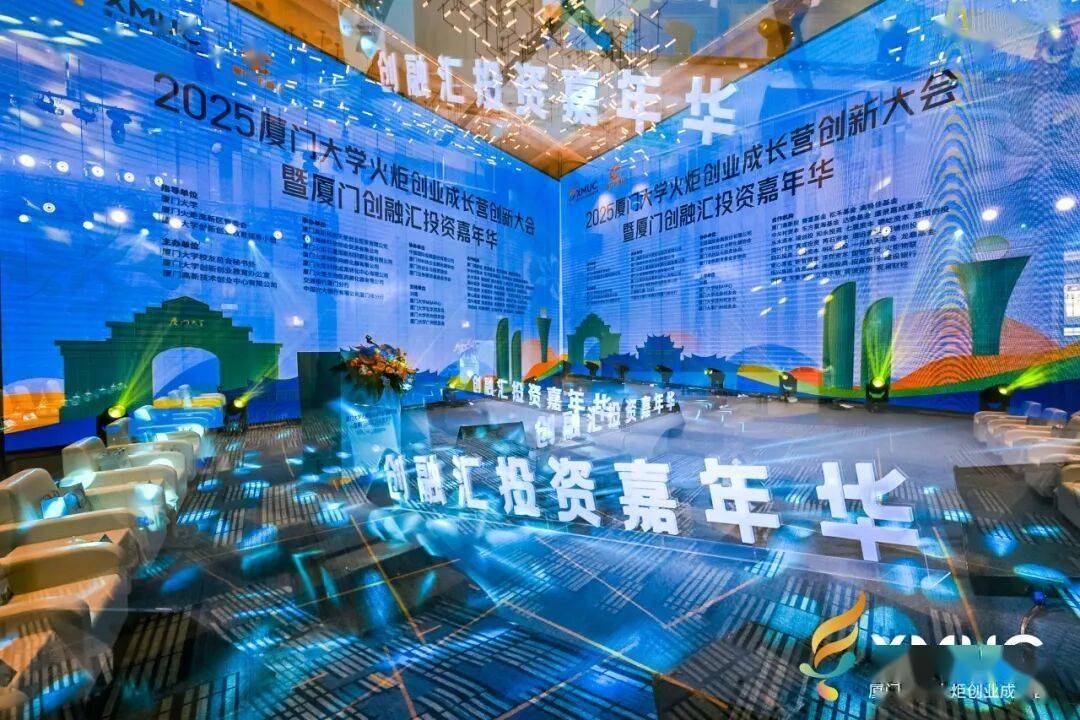
Core Insights - The 2025 Xiamen University Torch Entrepreneurship Growth Camp Innovation Conference and Xiamen Chuangronghui Investment Carnival took place in Xiamen, attracting nearly 300 hard technology projects since its launch in May 2023, with 36 high-quality projects selected from roadshows in four cities [1][3] Group 1: Event Overview - The event featured a "Technology Innovation Project Exhibition" where startup teams engaged with leading domestic institutions, showcasing projects ranging from satellite communication chips to new energy equipment [3] - The conference was attended by nearly 100 representatives from investment institutions, banks, guarantee institutions, securities firms, law firms, accounting firms, and professional service organizations [1] Group 2: Key Speeches - Wu Zhiwei, Chief Engineer of Xiamen Torch High-tech Zone, emphasized the importance of promoting university research results to the market as a key to regional innovation [6] - Chen Yundong, Deputy Secretary-General of the Xiamen University Alumni Association, expressed gratitude to various stakeholders and encouraged entrepreneurs to embody the spirit of innovation and perseverance [7] Group 3: Investment and Support Initiatives - Lin Zhichao, Chairman of Xiamen High-tech Venture Capital, highlighted the establishment of a 35,000 square meter "Technology Achievement Transformation Center" set to open before the Spring Festival next year, along with a 500 million yuan fund to support technology commercialization [10] - The fund aims to provide comprehensive financial support for high-quality hard technology projects at various development stages [10] Group 4: Project Presentations - The project roadshow featured 36 projects divided into six groups, each given one minute to present their technological barriers and business models, showcasing strong commercial potential and industrialization capabilities [14][15] - Awards were given to three companies for their growth potential, as evaluated by a panel of investors and industry experts [15] Group 5: Event Atmosphere - The event included performances by a "Chuangtou Band" composed of investment members, creating a lively atmosphere and engaging the audience [19] - The closing ceremony featured a collective singing of a song that resonated with the entrepreneurial spirit, symbolizing hope and determination [22][24] Group 6: Future Prospects - The entrepreneurship camp will continue to leverage national university talent and research advantages, along with the service ecosystem of Xiamen Chuangronghui, to facilitate systematic guidance and precise connections for projects [25]

“海链杭州”先进制造产业综合服务平台启动
Hang Zhou Ri Bao· 2025-11-27 02:43
Core Insights - The "HaiChain Hangzhou" advanced manufacturing industry comprehensive service platform was launched, facilitating connections between nearly 50 overseas buyers and 35 local procurement companies with over 400 quality manufacturing enterprises [1][2] - The platform aims to enhance global market access for foreign trade enterprises and optimize supply chain networks for domestic manufacturers [1][2] Group 1: Overseas Buyers - Overseas buyers expressed high recognition of China's manufacturing capabilities, with a representative from Suncast Polytech noting the efficiency and quality of potential partners found during the event [1] - The event allowed overseas buyers to address core pain points related to sourcing large-scale manufacturing tools, highlighting the competitive advantages of Chinese factories [1] Group 2: Domestic Buyers - Domestic buyers, such as Hangzhou Yongli Baihe Technology Co., reported successful engagements, connecting with over 20 suppliers in just one hour, indicating the efficiency of the platform [1][2] - The need for reliable suppliers has increased due to the expansion of overseas production capacity, showcasing the platform's role in meeting these demands [1][2] Group 3: Platform Features and Benefits - The "HaiChain Hangzhou" platform leverages supply chain infrastructure to create a more trustworthy, efficient, and sustainable cross-border supply-demand link [2] - The platform aims to assist quality manufacturing enterprises in exploring broader markets, with a focus on countries involved in the Belt and Road Initiative and emerging markets [2] - The platform has expanded its buyer base to 117 countries, reflecting a trend towards market diversification and providing risk assurance through partnerships with export credit insurance institutions [2] Group 4: Future Developments - The Hangzhou Municipal Bureau of Commerce plans to build a digital service matrix for supply-demand matching and regularly hold events to foster collaboration among leading enterprises in specific sectors [3]
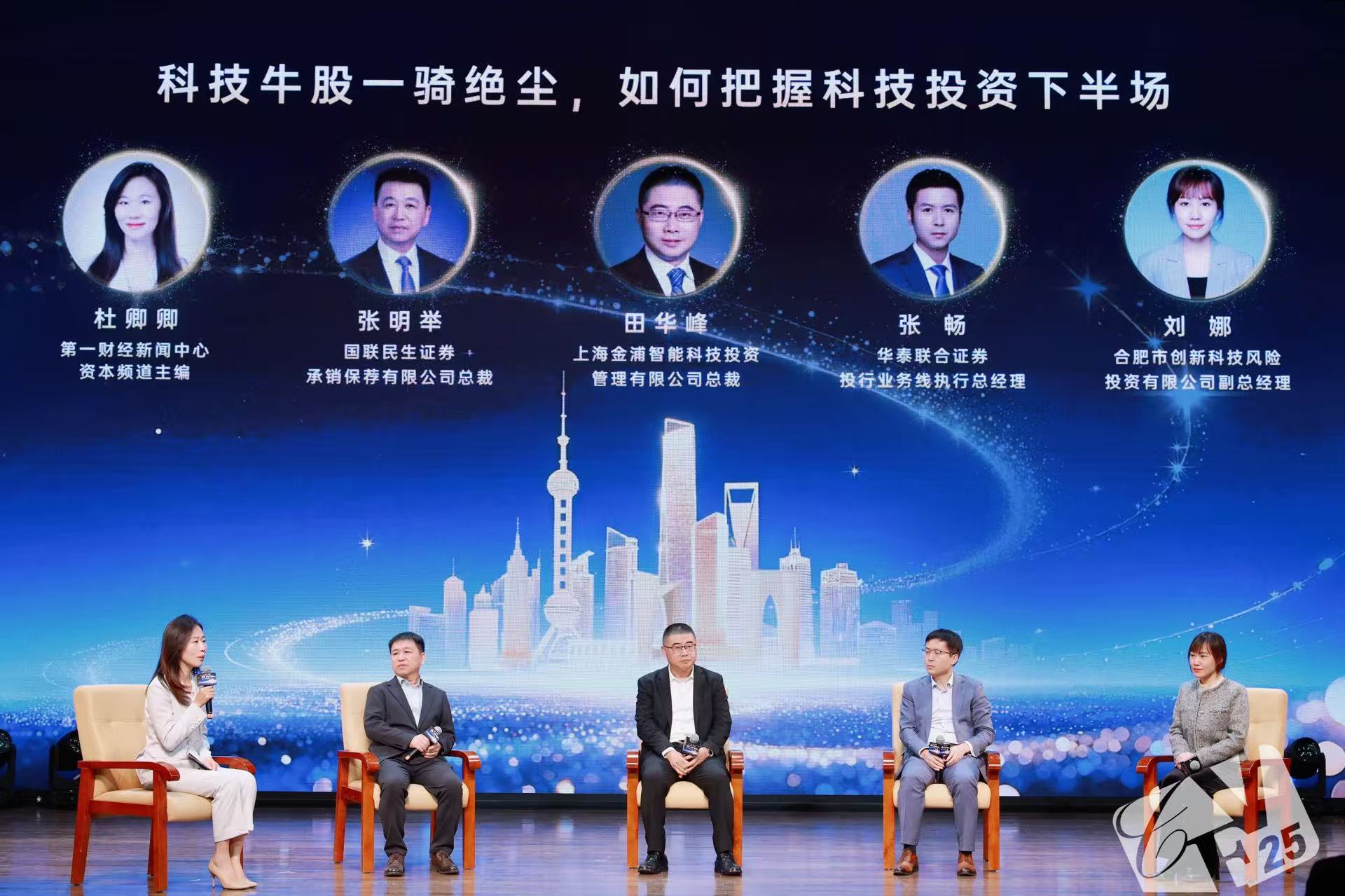
科技牛股一骑绝尘,如何把握科技投资的未来
Di Yi Cai Jing· 2025-11-26 03:25
Core Insights - The article discusses the investment opportunities and strategies in the technology sector, emphasizing the importance of building industrial ecosystems and aligning with national strategic directions [1][4][10] Group 1: Investment Strategies - Institutions should focus on selecting the right sectors according to national strategic guidelines, building industrial ecosystems, and being patient for value realization [1][7] - The capital market is increasingly supporting new productive forces, with sectors like aerospace, quantum computing, robotics, and semiconductors gaining attention [1][4] - Investment firms are encouraged to establish specialized teams to enhance their capabilities in emerging technologies [4][5] Group 2: Market Trends - The IPO market has shown signs of recovery, with technology stocks leading the upward trend in both A-shares and Hong Kong stocks [4][7] - The investment landscape has shifted, with a significant increase in state-owned capital's share in the private equity market, now exceeding 70% [7][8] Group 3: Challenges and Considerations - Investment institutions face challenges such as the tightening of A-share IPOs in the second half of 2023, but a recovery is anticipated [7][8] - The need for a diversified investor structure is highlighted to enhance market vitality and focus on the growth potential of investment targets [7][8] - The article emphasizes the importance of maintaining rationality in investment decisions amidst high valuations and market bubbles [8][9] Group 4: Future Outlook - The "15th Five-Year Plan" suggests enhancing the capital market's functionality and adaptability, focusing on both traditional industry upgrades and cutting-edge technologies [9][10] - Investment firms are encouraged to build industrial ecosystems that integrate various stakeholders, including research institutions and financial entities [9][10] - The goal is to support the globalization of Chinese technology companies and attract global investment to foster technological advancement [10][11]