
高端装备制造

Search documents
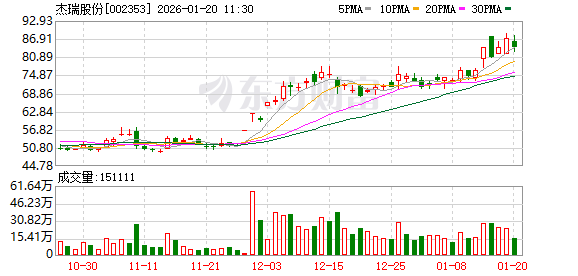
3倍牛股杰瑞股份要给员工奖励奔驰、宝马!
Zheng Quan Shi Bao Wang· 2026-01-20 04:45
资料显示,杰瑞股份共计有7098名员工(去除18位董监高),2024年度员工税前平均收入为18.91万元。除"金钥匙奖"外,杰瑞股份构建了多层次激励体 系。今年1月15日,杰瑞股份抛出了一项颇为吸睛的人才激励计划——公司拟提供不超过2000万元自有资金,为公司核心技术人才、行业专家等高端群体 提供无息借款,支持他们与公司共同投资新兴业务领域。该计划单人最高借款80万元,最长还款期限6年。 日前,杰瑞股份(002353)官微发文,该公司将举办2025年度"金钥匙奖"授车仪式,奖励包括奔驰GLB、宝马3系、奥迪A4、小鹏G7、尚界H5。 据了解,"金钥匙奖"是杰瑞股份延续17年的激励传统,该奖项已成为公司凝聚人才、践行企业文化的重要载体。 据悉,"金钥匙奖"设立于2008年,核心用于表彰为公司生产经营、管理效益及业务拓展作出突出贡献的员工。此前,该公司表示,该奖项不与年终奖叠加 发放,后者将根据员工绩效单独核算。截至2025年,该奖项已连续颁发17年,累计奖励561名员工,奖车总价值超9300万元,从早期的菲亚特车型逐步升 级至宝马等中高端车型,今年车型继续升级,加入奔驰、奥迪以及新增新能源车型。 据此前报道,2 ...


中集安瑞科交付欧洲领先半导体项目关键装备
Zheng Quan Shi Bao Wang· 2026-01-19 10:42
Core Viewpoint - The successful delivery of four high-standard, customized low-temperature storage tanks by CIMC Enric's subsidiary, CIMC Sanda, for a landmark semiconductor manufacturing project in Europe marks a significant achievement in high-end precision equipment manufacturing and sets a new benchmark in compliance with stringent European standards [1] Group 1 - CIMC Enric's subsidiary, CIMC Sanda, has completed the delivery of four customized low-temperature storage tanks [1] - This project is the first large-scale semiconductor factory built in Europe in nearly two decades [1] - The achievement demonstrates CIMC Enric's capability in high-end precision equipment manufacturing under strict EN (European Standard) systems [1]

长三角议事厅·周报|沪苏杭“人工智能+”从竞速走向协同
Xin Lang Cai Jing· 2026-01-19 10:21
Core Insights - The integration of "Artificial Intelligence+" is becoming a new competitive advantage for cities in China, particularly in the Yangtze River Delta region, with Suzhou, Shanghai, and Hangzhou each playing distinct roles in the AI industry chain [1][2][3] Group 1: City Roles in AI Development - Shanghai serves as the upstream "source" of the AI industry, with 394 AI enterprises and an industry scale of 435.49 billion yuan by the end of 2025, supported by a strong R&D investment of approximately 4.35% [2] - Suzhou acts as the "largest workshop" for AI applications, with an expected industrial output value of 4.89 trillion yuan in 2025, leveraging its dense manufacturing environment and nearly 2,500 AI-related enterprises [2] - Hangzhou functions as the "product accelerator," rapidly transforming cutting-edge technologies into marketable products, with the number of high-tech enterprises increasing from 2,844 in 2017 to 16,000 by 2024 [3] Group 2: Challenges and Bottlenecks - Shanghai faces challenges in converting strong research capabilities into market-ready products, requiring better collaboration between research institutions and enterprises [4] - Suzhou needs to evolve from strong applications to robust platform capabilities, focusing on creating reusable industrial data systems and AI models [5] - Hangzhou's limitation lies in its reliance on external support for hard technology supply chains, necessitating improvements in precision manufacturing and key component production [5] Group 3: Collaborative Framework for AI Advancement - The transition from a "division of labor" to a "collaborative network" is essential, with Shanghai needing to enhance its product transformation capabilities, Suzhou to build platform strengths, and Hangzhou to strengthen its hard technology support [6] - Effective collaboration requires institutional design to facilitate shared resources, including computational power, data flow, and talent development across cities [7][8][9]
价值判断:跌停板的投资机会和风险提示(1月16日)|证券市场观察
Tai Mei Ti A P P· 2026-01-19 06:57
Market Overview - On January 16, the A-share market opened high but closed lower, with the Shanghai Composite Index down 0.26% at 4101.91 points, and both the Shenzhen Component and ChiNext Index down 0.18% and 0.20% respectively. The total trading volume exceeded 2 trillion yuan for the 14th consecutive trading day, reaching 3.03 trillion yuan [1]. Sector Performance - The market focus was on the semiconductor industry chain, particularly in storage chips and silicon carbide, as well as power grid equipment and humanoid robots. The low-altitude economy concept saw a recovery in the afternoon, while AI applications and sectors like media and pharmaceuticals experienced significant adjustments [1]. - A total of 2371 stocks rose while 2973 fell, with 47 stocks hitting the daily limit up and 50 hitting the limit down, indicating a low short-term sentiment and a less than 30% success rate for consecutive limit-up stocks [1]. Fund Flow - Main funds saw a net inflow of over 22.2 billion yuan into the electronics sector, with significant investments in semiconductors and machinery equipment, while there was a large outflow from the computer and media sectors, amounting to 18.56 billion yuan and 10.64 billion yuan respectively [1]. - Northbound funds recorded a net purchase of about 5 billion yuan, focusing on technology consumer stocks like Luxshare Precision and Sanhua Intelligent Control [1]. Market Sentiment - The market maintained high trading volume but with slowing incremental growth. The surge in wide-based ETFs indicated a risk-averse tendency, as funds sought a balance between policy catalysts and performance certainty in sectors like consumer electronics and innovative pharmaceuticals [1]. - The overall market saw a 40% limit-down rate, with the number of stocks hitting the limit down (50) exceeding those hitting the limit up (47), reflecting increased fund divergence and a decline in risk appetite [1]. First Limit Down Stocks - Haiwang Bio (000078) faced a limit down due to high valuation and fund withdrawal, closing at 3.74 yuan with a drop of 10.10%, and showing a significant deviation of 86.04% from its intrinsic value [2][3]. - Sanwei Communication (002115) also hit a limit down as high valuation pressures emerged, closing at 17.59 yuan with a drop of 9.98%, and a deviation of 67.83% from its intrinsic value [4][5]. - Hezhu Intelligent (603011) experienced a limit down due to overall sector adjustments, closing at 28.81 yuan with a drop of 9.99%, and a deviation of 60.08% from its intrinsic value [6][7]. Continuous Limit Down Stocks - Jinyu Group (601992) saw a continuous limit down, closing at 1.9 yuan with a drop of 9.95%, and is currently undervalued by 80.69% compared to its intrinsic value, indicating potential for valuation recovery [9][10]. - Hangxiao Steel Structure (600477) also faced a continuous limit down, closing at 3.61 yuan with a drop of 9.98%, and is undervalued by 51.59% compared to its intrinsic value, suggesting a potential investment opportunity [11][12]. - Zhejiang Wenlian (600986) experienced a continuous limit down, closing at 10.04 yuan with a drop of 9.96%, and is undervalued by 36.81% compared to its intrinsic value, indicating potential for valuation recovery as market sentiment stabilizes [13][14]. Investment Strategy - The market is showing a tendency to avoid significantly overvalued stocks, focusing instead on undervalued stocks with fundamental support. Investors are advised to avoid first limit down stocks like Haiwang Bio and Sanwei Communication, while considering opportunities in continuously limit down stocks like Jinyu Group and Hangxiao Steel Structure [15][16].






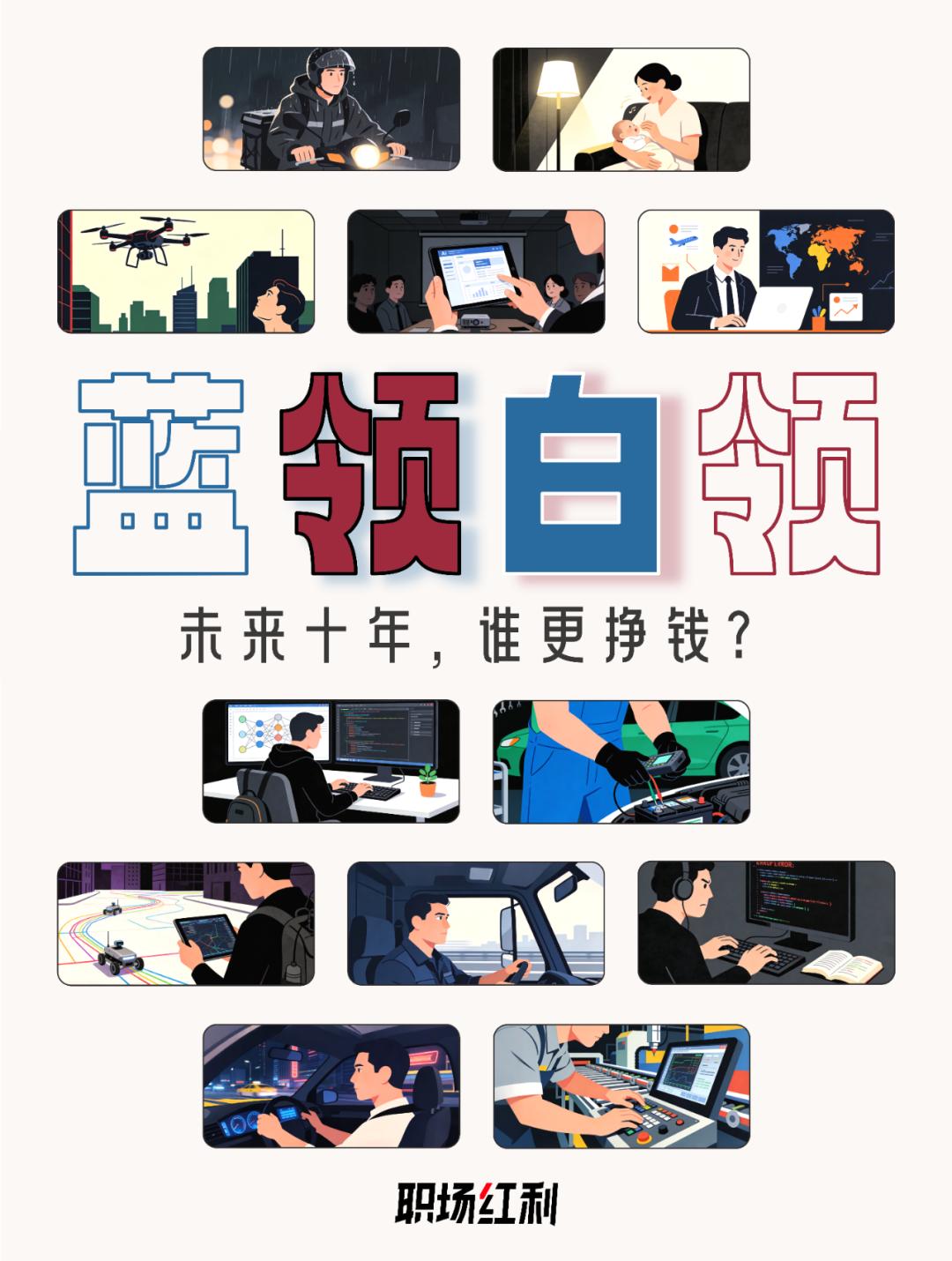
为何你曾经“看不上”的职业,现在涨薪变快了?|职场红利研报
3 6 Ke· 2026-01-19 06:47
Core Insights - The article discusses the evolving job market in China, highlighting the increasing competitiveness of blue-collar jobs compared to white-collar positions, particularly in the context of AI advancements and the integration of vocational education with traditional education [6][84] - It emphasizes the emergence of "new blue-collar" workers as a significant part of the middle-income group, with skilled manual workers expected to have better job security and income returns than typical clerical roles [6][84] Group 1: Blue-Collar Job Trends - The average monthly salary for blue-collar workers in 2024 is projected to be 6,150 yuan, with an annual growth rate of 7.2% over the past 11 years, significantly outpacing the 2.8% growth rate of white-collar workers [84] - The demand for skilled labor in sectors like home care, automotive repair, and drone operation is increasing, with specific roles such as maternity nurses and drone pilots seeing substantial salary growth and job openings [21][28][31] - The home care industry faces a labor shortage of 20 million workers, with maternity nurses being particularly in demand, as their average salary has increased by 4.24% in 2024, compared to a 1.77% increase in the overall blue-collar sector [21][18] Group 2: White-Collar Job Trends - The AI industry is experiencing a significant increase in job openings, with AI product manager positions seeing a 178% increase in demand, reflecting the sector's rapid growth [51] - Software engineers are also benefiting from a robust job market, with average monthly salaries around 20,000 yuan and a projected annual growth rate of 10%-15% in job openings [72][69] - Cross-border e-commerce roles are emerging as high-potential positions, with average monthly salaries reaching 17,000 yuan, driven by the shift from traditional B2B to DTC models [77][74] Group 3: Future Trends - The integration of AI tools into traditional workflows is becoming essential for white-collar workers to maintain job security in a rapidly changing market [84] - The demand for skilled workers in the manufacturing and service sectors is expected to continue growing, particularly in high-end equipment and new energy vehicles, with assembly engineers seeing a 67% increase in demand by 2025 [80][83] - The low-altitude economy, including drone operations, is being recognized as a strategic emerging industry, with significant growth expected in the coming years [28][31]
全球首台高空作业空箱绑扎机器人投入使用
Ke Ji Ri Bao· 2026-01-19 01:01
Core Viewpoint - The successful development and deployment of the world's first high-altitude container bundling robot by Taiyuan Heavy Machinery Group marks a significant advancement in the integration of artificial intelligence with high-altitude work platforms, ushering in a new era of intelligent port operations [1][2]. Group 1: Product Development and Features - The high-altitude container bundling robot has passed acceptance testing at Ningbo Zhoushan Port and is now in production, showcasing the company's ability to innovate in high-end equipment technology [1]. - The robot integrates a high-altitude work platform, robotic arm system, and visual recognition capabilities, enabling a transition from manual to intelligent operations [1]. - The research team overcame several key technical challenges, enhancing the machine's environmental tolerance and addressing precision issues related to arm flexibility through real-time visual feedback and adaptive force control systems [1]. Group 2: Operational Efficiency and Safety - The primary goals of the robot's development were to ensure safety, improve efficiency, and reduce costs, particularly during the typhoon season when traditional methods are time-consuming and hazardous [2]. - The robot has demonstrated over a 100% increase in operational efficiency, significantly reducing the time required for bundling from 6-8 hours to a much shorter duration [2]. - The device has proven effective during the typhoon season, maintaining high efficiency in adverse weather conditions and also serving dual purposes for port construction and maintenance [2]. Group 3: Future Directions and Impact - The deployment of the high-altitude bundling robot exemplifies Taiyuan Heavy Machinery Group's commitment to innovation-driven development and the enhancement of new productive forces [2]. - The company plans to continue advancing its transformation towards intelligent and green technologies, contributing to the high-quality development of China's manufacturing industry and the establishment of a modern industrial system [2].


虎丘区新增亿元以上项目726个
Su Zhou Ri Bao· 2026-01-19 00:31
Core Insights - The article highlights the significant progress made in the industrial optimization and upgrading of the Huqiu District over the past five years, with major industries such as new-generation information technology and high-end equipment manufacturing achieving substantial output values of 130 billion and 140 billion respectively [1][2] - The district aims to implement four major initiatives by 2025 to promote high-quality development, focusing on the integration of technological and industrial innovation, urban renewal, safety, and key project attraction [1] Group 1: Industrial Development - The output value of high-tech industries accounts for 60.2% of the total industrial output value in the district [1] - Over the past five years, the district has added 726 projects worth over 100 million and 99 projects worth over 1 billion, ranking first in the province for major projects for three consecutive years [2] - The proportion of R&D expenditure to the district's GDP increased from 4.39% to 4.85%, with 98.3% of industrial enterprises having established R&D institutions [2] Group 2: Innovation and Technology - The establishment of the Suzhou campus of Nanjing University and the approval of four national key laboratories contribute to the district's innovation landscape [2] - The district is home to 1,952 national high-tech enterprises, 95 specialized and innovative "little giant" enterprises, 95 potential unicorns, and 516 gazelle enterprises [2] - The district has received 23 China Patent Awards, with the number of valid invention patents per ten thousand people being 1.8 times the city average [2] Group 3: Future Initiatives - The district plans to implement twelve actions during the "14th Five-Year Plan" period, focusing on enhancing regional competitiveness and sustainable development [2] - Key areas of focus include the integration of production and innovation, deepening reform and opening up, strengthening regional collaboration, and promoting cultural empowerment [2] - The goal is to establish the district as a major hub for industrial science and technology innovation and a significant growth driver for new productive forces [2]
坚持务实功求实效 确保“十五五”开好局起好步——访营口市委书记姚华明
Xin Lang Cai Jing· 2026-01-18 22:34
(来源:东北新闻网) "省委经济工作会议为今年全省经济工作明确了主攻方向、绘就了清晰蓝图。我们将坚决落实省委要 求,勇担当善作为、务实功求实效,在夯实基础、全面发力中开创营口振兴发展新局面。"营口市委书 记姚华明日前接受记者采访时说。 姚华明说,全力以赴优化营商环境。以坚决整治八大突出问题、加快推进"五个环境"建设为牵引,严格 落实领导干部联系企业制度,聚焦企业融资上市、招工用工、供需对接等方面出台帮扶举措,实施"扫 码入企"执法检查,综合施策改善存贷比,深挖彻查破坏营商环境的人和事,坚持说到做到、"新 官"理"旧账",全力打造营商环境最佳口碑地级市。持续用力扩大有效需求。充分释放消费潜力,用足 用好"两新"政策,实施服务消费提质惠民行动,推进文旅体商深度融合,积极培育冰雪经济、赛事经济 等新增长点,推动热点场馆延时服务,以消费向"热"托起经济向好。努力扩大有效投资,确保建发盛海 铜冶炼一期、LNG接收站等项目按期投产,加快清洁能源高端装备产业园等项目建设进度,推动敬业 中板中厚板生产线等项目尽早开工,形成重大项目接续不断、压茬推进的生动局面。因地制宜发展新质 生产力。坚持以科技创新为引领,鼓励金辰机械、桔子 ...
本市已培育科创领域青年突击队300余支
Xin Lang Cai Jing· 2026-01-18 22:33
为给青年创新创效提供场地、设备、资金、导师等全方位支持,2012年以来,北京共青团打造了青年创 新工作站,构建了"政府引导+企业主体+高校协同"的工作模式。截至目前,全市已建成近200个青年创 新工作站,完成国家重点课题及各类标准编制980余项,获得省部级以上奖项590余个。 2015年,北京共青团等单位联合主办"中关村U30"青年创新创业品牌活动,为优秀创业青年搭建与政 府、社会以及投资机构对接和交流的平台。该项赛事以"寻找改变世界的青年创业力量"为使命,面向全 球选拔35岁以下的优秀青年创业者。11年来,该项赛事已培育出2家上市公司、90家专精特新中小企 业,其中25家为国家级"小巨人",10余家成长为独角兽或准独角兽企业,创造数万个就业岗位。 本报讯(记者 王琪鹏)北京共青团以科技创新青年突击队建设为抓手,已构建起以"青年突击队""青年 创新工作站""中关村U30"为核心的"一队一站一赛"青年科创北京方案。截至目前,北京已培育科技创新 型青年突击队300余支,在7大战略领域实现关键技术自主可控。 自1954年第一支青年突击队在北京诞生以来,青年突击队精神薪火相传。近日,北京共青团召开纪念青 年突击队成立 ...
“十五五”时期工业领域重点投资方向研究报告
中国信通院· 2026-01-18 05:46
Investment Trends - The "14th Five-Year Plan" period emphasizes investment in traditional industries focusing on high-end, intelligent, green, and integrated development, with a strong push for technological innovation and transformation[7] - Manufacturing investment growth rates from 2021 to 2024 are projected at 13.5%, 9.1%, 6.5%, and 9.2% respectively, indicating a robust investment environment despite external pressures[17] - In 2025, manufacturing investment growth slowed to 1.9%, a decline of 7.3 percentage points from 2024, highlighting a potential downturn in investment momentum[26] Structural Challenges - Investment efficiency has declined, with the incremental capital output ratio (ICOR) rising to approximately 14.9 from 13.1, indicating increased investment required for each unit of output[32] - The capacity utilization rate for major industrial enterprises was 74.6% in Q3 2025, reflecting a 0.5 percentage point decrease year-on-year, suggesting underutilization of resources[30] - Investment in high-tech manufacturing has significantly slowed, with growth rates dropping below overall manufacturing investment in 2024, indicating structural weaknesses in emerging sectors[32] Strategic Recommendations - Establish a dynamic identification system for investment directions aligned with the "14th Five-Year Plan" to enhance investment effectiveness and adaptability[9] - Focus on four key investment areas: upgrading traditional industries, fostering emerging industries, planning for future industries, and optimizing supply in weak links[44] - Emphasize the importance of human capital alongside material capital in investment strategies to enhance overall economic returns[41]