建材

Search documents
建材ETF(159745)吸金超10亿元,资金或博弈政策力度进一步加大
Sou Hu Cai Jing· 2026-02-10 01:55
Group 1 - The building materials sector has seen significant capital inflow, with the building materials ETF (159745) experiencing over 1 billion yuan in net inflows in the last 10 trading days, currently reaching a scale of over 2.3 billion yuan, ranking first among its peers [1] - Shanghai has initiated the purchase of second-hand houses for the purpose of securing rental housing, alongside various policies such as home purchase subsidies, relaxed housing fund regulations, and monetary compensation for urban renovation, which enhance expectations for demand recovery in the post-real estate cycle [1] - Although prices for cement and glass have faced short-term pressure, inventory levels are decreasing, supply-side adjustments are accelerating, and following a period of negative growth in the Producer Price Index (PPI), expectations for a recovery in the production capacity cycle are rising, indicating ample room for valuation recovery as the sector is currently at historical lows [1]
长城基金汪立:市场有望企稳,关注内需与科技两大方向
Xin Lang Cai Jing· 2026-02-09 14:08
Group 1: Market Overview - The A-share market faced overall pressure last week, with major indices generally declining, while value stocks showed stronger performance [1][6] - Industries such as food and beverage, banking, and building materials continued to rise, whereas non-ferrous metals, telecommunications, and petrochemicals turned down, and electronics, computers, and chemicals continued to decline [1][6] Group 2: Macroeconomic Analysis - Local two sessions have commenced, focusing on expanding domestic demand and strengthening technology, with growth targets being stable or slightly lowered [2][7] - Specifically, 15 provinces have reduced their 2026 GDP targets by approximately 0.5 percentage points, while 12 provinces maintained their targets from last year [2][7] - Major economic provinces like Guangdong, Henan, and Zhejiang have adjusted their GDP growth targets downwards, while Jiangsu, Sichuan, and Henan did not make adjustments [2][7] - Shanghai aims to cultivate 20 new integrated service consumption scenarios and complete major project investments of 255 billion yuan this year [2][7] Group 3: Investment Strategy - The market is expected to gradually stabilize after fluctuations, with a focus on holding stocks through the holiday [4][9] - Positive factors include the global market quickly pricing in the potential hawkish stance of the Federal Reserve, while domestic policies are shifting towards prioritizing domestic demand, which is expected to boost China's economic outlook and asset returns [4][9] - The investment focus should be on two main directions: domestic demand value and emerging technology [4][9] - For domestic demand value, sectors such as food, retail, tourism services, and hotels are expected to perform well post-Spring Festival, with low-positioned opportunities in oil, non-ferrous metals, and chemicals [4][9] - In emerging technology, competition between China and the U.S. is evolving beyond trade to production efficiency, with potential investments in internet, media, computing, robotics, electronics, military, and energy sectors [4][9]
较首轮方案溢价43%!豪掷71.5亿 安徽皖维拟入主杉杉股份
2 1 Shi Ji Jing Ji Bao Dao· 2026-02-09 13:08
Core Viewpoint - The restructuring of Suning Group has successfully progressed with new investors selected, marking a significant turnaround after previous setbacks in the restructuring process [2]. Group 1: Restructuring Agreement - On February 6, Suning Group and its subsidiary signed a restructuring investment agreement with Anhui Wanwei Group and Ningbo Financial Asset Management Company, committing up to 7.156 billion yuan for a 21.88% stake in Suning shares [2]. - Anhui Wanwei Group will acquire 13.50% of Suning shares for approximately 4.9 billion yuan, with a purchase price of 16.42 yuan per share, reflecting a 43.5% increase from the previous restructuring proposal [2][4]. - The remaining 8.38% stake will be managed as trust assets and partially liquidated to repay creditors, maintaining a coordinated relationship with the acquired shares [2]. Group 2: Investor Background - Anhui Wanwei Group, a state-owned enterprise, has a strong background in chemical and new materials manufacturing, which aligns with Suning's strategic direction towards the materials industry [4]. - The restructuring plan has received positive feedback from the capital market, indicating confidence in the new investor's ability to enhance Suning's operational credibility [4]. Group 3: Previous Restructuring Challenges - The initial restructuring plan faced difficulties due to the need for investors with good credit and industry synergy, leading to the elimination of several candidates [5]. - A previous consortium led by New Yangzi Trading was disqualified due to internal disputes, which affected the voting process and ultimately led to their exit from the restructuring [5]. Group 4: Financial Structure and Debt Management - The restructuring plan includes a "bet" with creditors, where the remaining 8.38% of shares will be treated as trust assets, allowing for immediate cash payments to creditors while retaining potential future value [7][8]. - Creditors can opt for immediate compensation at 11.50 yuan per share, with provisions for future share price increases, thus balancing the interests of both the investors and creditors [7][8]. Group 5: Future Considerations - The restructuring plan will be subject to a vote at the creditors' meeting, and its success remains contingent on the approval of the involved parties [8].


专访田轩:A股三大主线浮现 如何“擒牛”又“防坑”?
2 1 Shi Ji Jing Ji Bao Dao· 2026-02-09 11:16
Group 1 - The core consensus in the A-share market includes the recovery of cyclical sectors, rapid development of new productive forces, and the increased value of low-valuation high-dividend asset allocation [1] - Cyclical sectors such as non-ferrous metals and chemicals, as well as midstream manufacturing sectors like machinery and building materials, benefit from supply-demand restructuring and policy support, becoming the main line for capital allocation [1] - Hard technology fields like semiconductors, high-end manufacturing, and AI computing power are recognized as long-term growth engines for new productive forces, continuously attracting market interest [1] Group 2 - Low-valuation high-dividend assets are gaining attention due to dual support from policies and capital, with long-term funds accelerating entry into the market since early 2026, reinforcing their valuation support [1] - Investors are advised to rationally assess the sustainability of profits in cyclical sectors, the warming demand trend, the timeliness of policy implementation, and industry prosperity turning points to avoid simplistic extrapolation of short-term data into long-term trends [2] - Within the new productive forces sector, significant differentiation exists, necessitating careful identification of companies' technological breakthroughs and commercialization capabilities, while being cautious of the disconnect between speculative concepts and performance realization [2]
券商谈A股布局:春节效应与反弹契机,锂电半导体迎机遇
Sou Hu Cai Jing· 2026-02-09 09:54
Group 1 - The core viewpoint of the reports indicates that the A-share market experienced a decline driven by reduced risk appetite, with external macro risks being initially priced in and a notable shift in trading dynamics [1][3] - The reports suggest that the adjustment phase in the A-share market may be nearing its end, with a positive calendar effect expected in February, recommending a gradual increase in portfolio flexibility [1] - There is a significant "calendar effect" observed in the A-share market around the Spring Festival, with historical trends showing a preference for high-dividend, consumer, and defensive sectors leading up to the holiday [3] Group 2 - Investment recommendations include focusing on sectors with a high beta and relatively attractive valuations, such as the lithium battery chain, communication equipment, semiconductors, and certain building materials and chemicals [3] - The reports highlight that the recent adjustment in the A-share market is primarily driven by internal factors, with external disturbances not significantly impacting the fundamental industry landscape in China [3] - Post-Spring Festival, there is an expectation for a continuation of the spring market rally, with suggested focus areas including AI computing power, chemicals, and power equipment and storage sectors [3]

周期板块景气预期开启扩张
GOLDEN SUN SECURITIES· 2026-02-09 09:01
Quantitative Models and Construction Methods 1. Model Name: Industry Mainline Model (Relative Strength Index, RSI) - **Model Construction Idea**: This model identifies leading industries by calculating their relative strength (RS) based on historical price performance. Industries with RS > 90% are considered potential market leaders [13] - **Model Construction Process**: 1. Use 31 first-level industry indices as the configuration targets [13] 2. Calculate the price change percentages over the past 20, 40, and 60 trading days for each industry [13] 3. Rank the industries based on their price changes for each period and normalize the rankings to obtain RS_20, RS_40, and RS_60 [13] 4. Compute the average of the three rankings to derive the final RS index: $ RS = (RS_{20} + RS_{40} + RS_{60}) / 3 $ [13] 5. Industries with RS > 90% before the end of April are identified as potential leaders for the year [13] - **Model Evaluation**: The model effectively identified leading industries in 2024, such as coal, utilities, home appliances, banks, oil and gas, telecommunications, non-ferrous metals, agriculture, and automobiles. These industries aligned with the market's main themes, including high dividends, resources, exports, and AI [13] 2. Model Name: Industry Sentiment-Trend-Crowding Framework - **Model Construction Idea**: This framework provides two right-side industry rotation strategies based on market sentiment, trend, and crowding levels [17] 1. High Sentiment + Strong Trend, avoiding high crowding (aggressive and synchronized with the market) [17] 2. Strong Trend + Low Crowding, avoiding low sentiment (trend-following and user-friendly) [17] - **Model Construction Process**: 1. Use sentiment as the core metric, combined with trend and crowding levels, to identify industries with strong potential [17] 2. Historical backtesting results show the model's annualized return and risk metrics [17] - **Model Evaluation**: The model demonstrates strong performance, with an annualized return of 22.0%, an annualized excess return of 13.4%, an IR of 1.5, and a maximum drawdown of -8.0%. The monthly win rate is 67% [17] 3. Model Name: Left-Side Inventory Reversal Model - **Model Construction Idea**: This model identifies industries in a recovery phase from distress or inventory pressure, aiming to capture turnaround opportunities during restocking cycles [27] - **Model Construction Process**: 1. Focus on industries with current or past distress but showing signs of recovery [27] 2. Evaluate long-term analyst sentiment and inventory pressure to identify industries with restocking potential [27] 3. Historical backtesting results show the model's performance metrics [27] - **Model Evaluation**: The model has shown strong historical performance, with absolute returns of 13.4% in 2023, 26.5% in 2024, and 28.7% in 2025. The excess returns relative to equal-weighted industry benchmarks were 17.0%, 15.4%, and 5.6%, respectively [27] --- Model Backtesting Results 1. Industry Mainline Model (RSI) - **2024**: Industries with RS > 90% included coal, utilities, home appliances, banks, oil and gas, telecommunications, non-ferrous metals, agriculture, and automobiles. These industries aligned with the year's main themes [13] - **2025**: 17 industries showed RS > 90%, including TMT, banks, manufacturing, and some consumer sectors [13] - **2026 (up to February 6)**: 7 industries showed RS > 90%, including media, building materials, oil and gas, non-ferrous metals, basic chemicals, defense, and telecommunications [14] 2. Industry Sentiment-Trend-Crowding Framework - **Annualized Return**: 22.0% [17] - **Annualized Excess Return**: 13.4% [17] - **IR**: 1.5 [17] - **Maximum Drawdown**: -8.0% [17] - **Monthly Win Rate**: 67% [17] - **January 2026 Performance**: Absolute return of 6.5%, excess return of 0.7% [17] 3. Left-Side Inventory Reversal Model - **2023**: Absolute return of 13.4%, excess return of 17.0% [27] - **2024**: Absolute return of 26.5%, excess return of 15.4% [27] - **2025**: Absolute return of 28.7%, excess return of 5.6% [27] - **January 2026**: Absolute return of 10.4%, excess return of 4.8% [27]
安徽国资敲定入主杉杉股份,控制权变更推动股价连续涨停
Jing Ji Guan Cha Wang· 2026-02-09 08:30
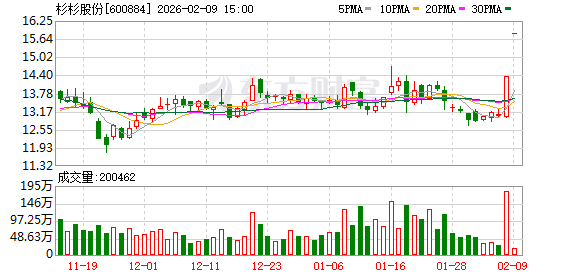
Core Viewpoint - The recent change in control of Shanshan Co., Ltd. to Anhui Wanwei Group marks a significant stabilization phase after years of governance disputes and financial turmoil, with the stock price reflecting market optimism about this transition [2][3][6] Group 1: Control Change and Market Reaction - Shanshan Co., Ltd. experienced a stock price surge, closing at 15.81 yuan per share with a daily increase of 10.02%, leading to a total market capitalization of 35.56 billion yuan following the announcement of a change in its controlling shareholder [2] - The transition of control to Anhui Wanwei Group and the actual controller to the Anhui Provincial State-owned Assets Supervision and Administration Commission is seen as a move towards stability after a tumultuous period marked by family disputes and bankruptcy proceedings [2][3] Group 2: Financial Performance and Recovery - For the first half of 2025, Shanshan Co., Ltd. reported a net profit attributable to shareholders of 207 million yuan, a staggering year-on-year increase of 1079.59%, indicating a strong recovery trajectory [3] - The company anticipates a net profit of 400 million to 600 million yuan for the full year of 2025, driven primarily by its core businesses in lithium battery anode materials and polarizers, which are expected to contribute approximately 900 million to 1.1 billion yuan in net profit [4] Group 3: New Shareholder Background and Implications - Anhui Wanwei Group, a large state-owned enterprise with total assets of 163.3 billion yuan and a net profit of nearly 4 billion yuan in 2024, is expected to provide stability and resource integration for Shanshan Co., Ltd. in the new energy materials sector [4] - The agreement stipulates that Wanwei Group will acquire 13.50% of shares at a price of approximately 4.987 billion yuan, granting it a total voting power of 21.88% [3][4] Group 4: Challenges and Investor Concerns - Despite the positive outlook from the entry of state capital, concerns remain regarding the adaptability of local state management to the fast-paced, market-driven nature of the high-tech materials industry [5] - The relatively low voting power of 21.88% raises questions about potential future control disputes, especially with the backdrop of the company's ongoing challenges in the anode materials sector and the cyclical nature of the polarizer business [5] - Investors are also wary of the quality and transparency of information disclosure, particularly following the previous failed restructuring plan, which highlighted the need for improved communication regarding risks and corporate governance [5][6] Group 5: Future Outlook - The entry of Anhui state capital is viewed as a crucial opportunity for Shanshan Co., Ltd. to regain stability after a tumultuous period, but the market will require clear evidence of improved profitability and shareholder returns to build lasting confidence [6] - The next three years will be critical for the new management to deliver on performance promises, determining whether the company can successfully navigate its recovery journey [6]

A股风格之辩:成长不只科创!
Hua Er Jie Jian Wen· 2026-02-09 08:27
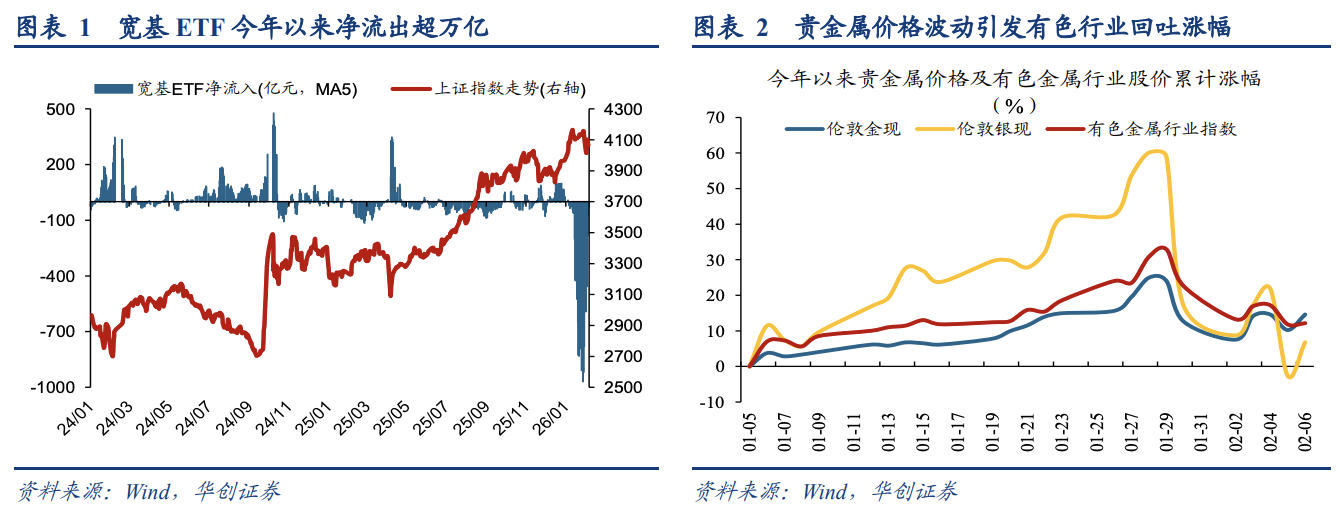
Core Viewpoint - The market has experienced a significant short-term adjustment, but a new allocation window has opened, with a focus on cyclical recovery and the real estate chain [1][11]. Market Adjustment and Liquidity - The market has undergone a sharp but brief adjustment, with a cumulative net outflow of 1.02 trillion yuan from broad-based ETFs this year and a net outflow of 58.2 billion yuan from leveraged funds over the past five trading days, marking a new high since April of last year [2][9]. - Investor sentiment indicators show that the market temperature near the 4000-point level of the Shanghai Composite Index is close to the 3800-point level from November of last year, with 130 companies hitting the daily limit down on February 2, surpassing the previous high of 107 companies on November 21 [6][9]. Investment Style Shift - A profound change in investment style is occurring, with growth stocks expected to outperform value stocks. Growth opportunities are not limited to the technology sector but also include cyclical and real estate chains [1][18]. - The remaining liquidity is expected to slow down, leading to large-cap stocks outperforming small-cap stocks. Since August 2025, large-cap stocks have significantly outperformed small-cap stocks, with the CSI 500 index rising by 31% compared to a 22% increase in the National Equity Index 2000 [23][25]. Annual Allocation Strategy - The main allocation theme for the year is expected to be driven by technology and cyclical sectors. Investors are advised to redefine the boundaries of "growth" and seek performance elasticity in cyclical and real estate chains, rather than focusing solely on the technology sector [26]. - The report highlights that the expected profit recovery for 2025 is clear, with the earnings forecast upgrade rate increasing from 65% in November last year to 96% currently [15][18]. Economic Indicators and Market Trends - The return of physical re-inflation is anticipated, with expectations of PPI turning positive, which will enhance EPS pricing and highlight the advantages of growth, profitability, and quality factors [21][22]. - The market environment is expected to shift, with valuation factors becoming less influential over the next year, and high valuations in small-cap stocks potentially reaching their limits [25].
安徽国资敲定入主杉杉股份 17.9万股东的“定心丸”还是“新赌局”?
Jing Ji Guan Cha Wang· 2026-02-09 07:59
Core Viewpoint - The recent surge in the stock price of Singshan Co., Ltd. (杉杉股份) is attributed to a significant change in control, with the controlling shareholder transitioning to Anhui Wanwei Group and the actual controller becoming the Anhui Provincial State-owned Assets Supervision and Administration Commission [1][2] Group 1: Control Change Background - The control change was initiated by the sudden death of the founder, Zheng Yonggang, in February 2023, leading to a power struggle between his son and widow [2] - In September 2025, a restructuring investment agreement was signed by a consortium led by Ren Yuanlin, but it failed to gain creditor approval, resulting in the dissolution of the agreement in November 2025 [2][3] Group 2: New Control Agreement - A new restructuring investment agreement was signed on February 6, 2026, with Wanwei Group acquiring 13.50% of shares at approximately 4.99 billion yuan, while retaining 8.38% under the restructured entity [3] - Wanwei Group will control 21.88% of voting rights and is required to pay a deposit of 1.43 billion yuan within seven working days [3] Group 3: Financial Performance and Market Position - Singshan Co. is expected to achieve a net profit of 400 to 600 million yuan in 2025, marking a turnaround from previous losses, with its core businesses contributing significantly to profits [4] - The company has established itself as a key player in the artificial graphite anode materials sector, with a strong customer base including leading battery manufacturers [4] Group 4: Implications of State Ownership - The entry of state-owned capital is anticipated to enhance creditworthiness, reduce financing costs, and introduce policy resources, but it does not guarantee a premium in market valuation [5] - The effectiveness of the new management will depend on their ability to adapt to market dynamics and provide strategic investments rather than merely stabilizing the situation [5] Group 5: Investor Considerations - Investors face challenges regarding the new governance structure, potential control disputes, and the need for transparency in information disclosure [5] - The long-term success of Singshan Co. will hinge on the new management's ability to deliver on performance promises and maintain shareholder trust through clear communication and financial results [5]
财政货币双宽松托底地产链,建材板块或迎估值修复窗口期,借道建材ETF(159745)布局顺周期龙头
Sou Hu Cai Jing· 2026-02-09 06:17
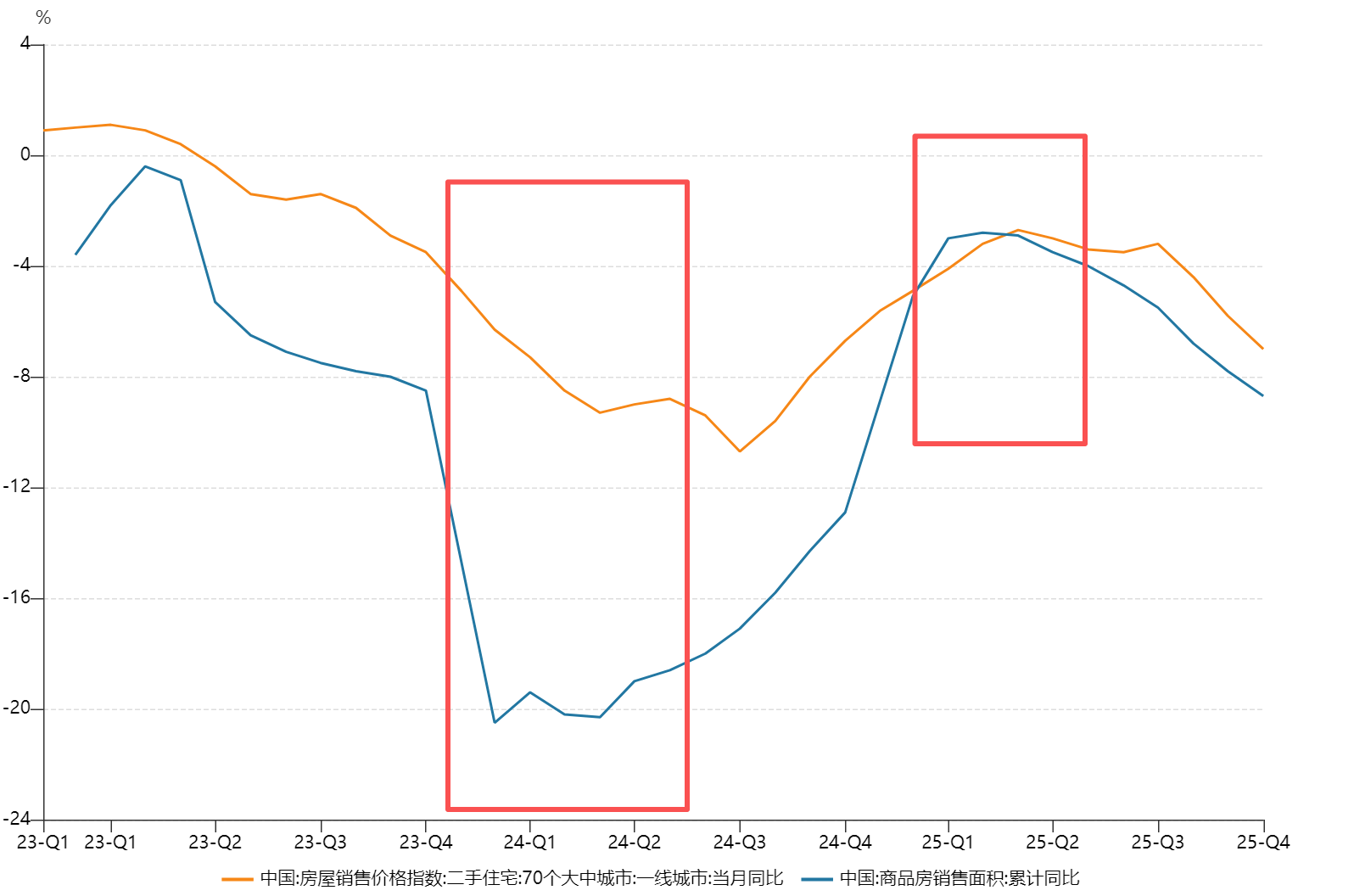
Core Viewpoint - The building materials sector is expected to experience fundamental improvement and valuation recovery due to dual drivers of policy support and real estate recovery, with a strategic window opening in 2025 [1] Policy Support - The fiscal policy for 2025 includes a record high special bond allocation of 4.4 trillion yuan, with 800 billion yuan directed towards "two major" construction and urban renewal projects, providing certainty for infrastructure demand [2] - Monetary policy is expected to maintain a moderately loose stance, with anticipated cumulative reductions in reserve requirement ratios of 150-250 basis points and interest rates by 40-60 basis points, benefiting infrastructure investment and real estate construction recovery [2] - Real estate policies aim for stabilization, with measures such as optimizing purchase restrictions and lowering down payment ratios, leading to signs of price recovery in first-tier cities; from January to May 2025, the year-on-year decline in commercial housing sales area narrowed to 2.9%, a significant improvement compared to 2024 [2] Market Trends - Starting in 2025, the sales area and prices of commercial housing are expected to rebound, particularly in the first half of the year, with a notable narrowing of overall declines [5] - The Ministry of Industry and Information Technology's "Building Materials Industry Stabilization Growth Work Plan (2025-2026)" emphasizes improving profitability and prohibits new cement clinker and flat glass capacity, promoting capacity replacement and staggered production to optimize the supply structure [5] - The real estate market in first-tier cities is projected to maintain high transaction levels post-2026, with second-tier cities like Hangzhou, Nanjing, Chengdu, and Tianjin also showing positive performance [5] Demand Dynamics - The policy to ensure housing delivery is expected to reduce the year-on-year decline in housing completion area to around 15% in the first half of 2025, directly stimulating demand for basic building materials like cement and glass [6] - The total urban housing stock in China is 37.3 billion square meters, with increasing renovation and upgrading needs driven by aging properties, leading to new growth in building material consumption; green building materials revenue is expected to exceed 300 billion yuan by 2026 [6] Investment Opportunities - The building materials sector has faced five years of decline, but positive signals are emerging, suggesting a potential recovery in the sector [8] - The Building Materials ETF (159745) tracks the CSI All Share Building Materials Index, covering leading companies across the entire industry chain, providing an efficient tool for investors to gain exposure to the building materials sector [8] - The current environment favors cyclical sectors, with the building materials industry presenting investment value due to demand recovery, supply optimization, and profitability restoration, alongside low valuations and high dividends [10]