数字金融

Search documents
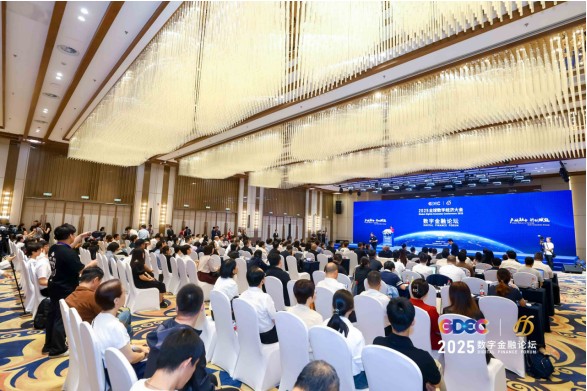
聚焦数字金融 2025全球数字经济大会数字金融论坛举办
Zheng Quan Ri Bao Wang· 2025-07-04 12:27
Group 1 - The "2025 Global Digital Economy Conference Digital Finance Forum" was held in Beijing, focusing on the current status, trends, and technological applications of digital finance [1] - China leads the world in digital finance market scale and has a vibrant digital finance market, with advancements in mobile payment technology and increasing influence of digital finance standards [1] - To further promote digital finance development, four key areas were suggested: adhering to technology neutrality, establishing a robust data security governance system, focusing on customer-centric innovation, and enhancing international cooperation in digital finance [1] Group 2 - Emerging technologies like generative AI and large models are rapidly penetrating the digital finance sector, marking the onset of an "AI moment" in the financial industry [2] - Both large and small financial institutions are encouraged to embrace and accelerate the application of AI models, with a focus on digital transformation, cultivating digital awareness, and enhancing AI talent development [2] - The future of the financial industry is expected to see trends such as highly personalized financial products, automated operational models, real-time risk control systems, open financial service ecosystems, and synchronized regulatory measures [2] - According to the "Global Financial Competitiveness Report 2025," China ranks fourth globally in financial competitiveness and third in fintech competitiveness, narrowing the gap with the United States for four consecutive years [2]
2025全球数字经济大会 数字金融论坛 在北京·银行保险产业园盛大召开
Cai Fu Zai Xian· 2025-07-04 07:08
Core Insights - The "2025 Global Digital Economy Conference Digital Finance Forum" was held in Beijing, focusing on the theme of "integration of industry and city, empowering technological innovation" with participation from various countries and sectors [1][5][30] - Beijing aims to establish itself as a global benchmark city for digital finance, with initiatives such as the establishment of a 3 billion yuan district-level mother fund to foster new productive forces [5][31] Group 1: Digital Finance Development - The digital finance market in China is the largest globally, with a significant shift from card payments to mobile payments [8] - The former Vice Chairman of the China Banking and Insurance Regulatory Commission highlighted the transformative potential of AI in the financial sector, emphasizing the need for global ethical governance [10] - The Deutsche Bank's Asia Pacific Investment Banking Chairman discussed how blockchain technology is redefining traditional asset management [12] Group 2: Innovation and Collaboration - IBM's senior partner emphasized the need for banks to integrate AI across functions and optimize efficiency through hybrid cloud solutions [14] - The Japanese economic advisor outlined a framework for digital finance that combines finance and technology to drive market transformation [16] - The CEO of EGG Technology introduced a platform for renewable energy procurement, showcasing innovative energy solutions [18] Group 3: Education and Talent Development - The University of Edinburgh's financial innovation center proposed a three-dimensional framework linking academia, industry, and education to cultivate interdisciplinary talent in financial technology [20] - The China-UK Business Development Center's president proposed a dual-circulation strategy to enhance collaboration between Chinese manufacturing and UK fintech [22] Group 4: Policy and Infrastructure - The "Global Financial Competitiveness Report 2025" indicated that China's financial competitiveness ranks fourth globally, with fintech competitiveness third [24] - Beijing UnionPay's asset management solution aims to create a comprehensive financial technology ecosystem [26] - The digital RMB initiative is expanding, with new platforms and activities to promote its use in various consumer scenarios [32]

全球金融竞争力报告发布!2024年中国排名第4位,与第一名分差连续四年缩小
Bei Jing Shang Bao· 2025-07-03 12:47
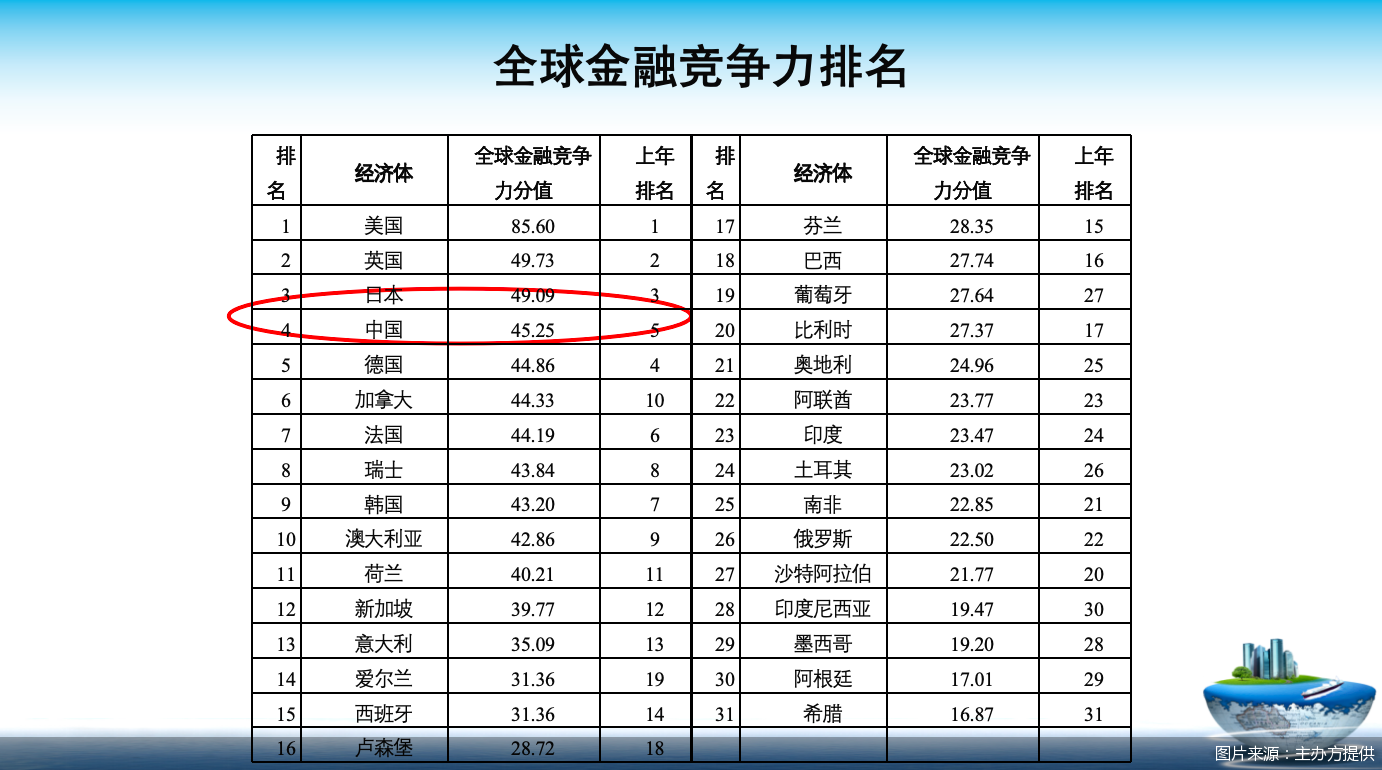
Core Insights - The "Global Financial Competitiveness Report 2025" indicates that the global financial competitiveness of China ranks 4th, improving by one position from the previous year, with a narrowing gap from the United States for four consecutive years [1][4]. Group 1: Global Financial Competitiveness Rankings - The top three economies in global financial competitiveness are the United States, the United Kingdom, and Japan, with scores of 85.60, 49.73, and 49.09 respectively [2]. - China holds the 4th position with a score of 45.25, followed by Germany and Canada in 5th and 6th places with scores of 44.86 and 44.33 respectively [2]. Group 2: Financial Technology Competitiveness - China ranks 3rd globally in financial technology competitiveness, maintaining this position for two consecutive years, with a significant increase in its score from 35.12 in 2023 to 57.25 in 2024 [4]. - The AI talent index for China improved from 8th to 4th place, while the financial technology credit level rose from 16th to 4th place [4]. Group 3: Digital Financial Market Growth - The global digital financial market is projected to exceed $4.5 trillion in 2024, with China's digital financial market reaching $3.2 trillion, making it one of the most dynamic digital financial markets globally [4][5]. - The development of digital finance in China is characterized by a shift towards intelligence and digitization, with significant applications of artificial intelligence in various financial sectors [5]. Group 4: Recommendations for Future Development - Suggestions for the future of China's digital finance include adhering to technology neutrality, enhancing data security governance, focusing on customer-centric innovation, and strengthening international cooperation in digital finance standards [5].
复旦大学“稳定币与国际金融大变局”线上研讨会成功举办,探讨数字货币新趋势
Guan Cha Zhe Wang· 2025-07-02 07:26
Core Insights - Stablecoins are emerging products in the digital finance sector, rapidly developing globally and increasingly impacting sovereign currency systems, cross-border payments, and financial stability [1] - The seminar titled "Stablecoins and the International Financial Landscape" aimed to explore the current status, impacts, and future trends of stablecoins from various academic perspectives [1] Group 1: Market Overview - As of now, the market capitalization of stablecoins is nearly $260 billion, accounting for almost 8% of the total cryptocurrency market, with a daily trading volume of $150 billion, representing 97% of total cryptocurrency trading volume [2] - 99% of stablecoins are pegged to the US dollar, such as USDT and USDC, highlighting the dominance of dollar-pegged stablecoins in the market [2] Group 2: Challenges and Risks - The rise of dollar-pegged stablecoins poses financial stability risks and contributes to global dollarization, necessitating enhanced monitoring and regulation by China [2] - Stablecoins may exacerbate the shortage of US Treasury securities, impacting global financial stability, as they do not fulfill the three essential characteristics of money: singularity, elasticity, and trustworthiness [3] Group 3: Historical Context and Future Directions - The evolution of stablecoins reflects a transition from uncollateralized cryptocurrencies to those backed by sovereign currencies, resembling money market funds [3] - The dual logic of monetary evolution and globalization suggests that stablecoins represent a new form of currency, balancing public and private interests, and centralization and decentralization [4] Group 4: Implications for the Renminbi - Stablecoins present challenges to the internationalization of the Renminbi, particularly in cross-border payments and digital ecosystem development [4] - Recommendations include promoting Renminbi-pegged stablecoins in regions like Hong Kong and Singapore, enhancing cross-border clearing mechanisms, and participating in global stablecoin rule-making to elevate the Renminbi's role in digital finance governance [4] Group 5: Conclusion and Strategic Recommendations - The seminar provided diverse insights into the essence, impact, and development trends of stablecoins, indicating a redefinition of currency functions and mechanisms [5] - China is encouraged to actively construct digital pathways, institutional frameworks, and international financial platforms to support the development of a strong financial nation [5]
2025全球数字经济大会今日开启
Bei Jing Qing Nian Bao· 2025-07-01 18:21
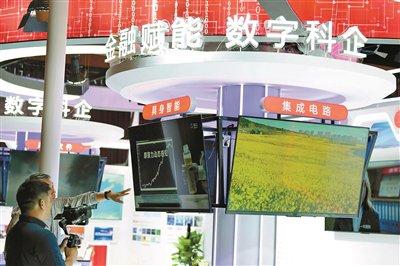
Core Insights - The 2025 Global Digital Economy Conference has commenced, showcasing Beijing's achievements in becoming a global digital economy benchmark city and establishing a "perpetual" conference model [6][7] - The conference features a "1+6+N" activity framework focusing on eight dimensions including technology, development, and citizen friendliness, with over 60 forums and activities scheduled [7] - Key themes include "digital-friendly cities" and the importance of data elements as the "core engine" of the digital economy, with a dedicated forum on accelerating data value release [7][8] Group 1: Conference Highlights - The conference aims to promote digital technology integration into urban life, creating a harmonious ecosystem between technology, people, cities, and ecology [7] - A record number of international guests, including 300+ attendees from 16 foreign delegations, will participate, enhancing global collaboration [7] - The event will introduce the "Global Digital Friendly Initiative" and the "Top Ten Benchmark Applications of Beijing's Digital Economy" [6][7] Group 2: Technological Innovations - The conference will feature a "Digital Economy Experience Center" showcasing 50 companies' technological solutions, providing immersive interactive experiences [6][8] - Innovations in various sectors such as digital finance, cybersecurity, and digital healthcare will be highlighted, with companies like Beijing Bank and OceanBase presenting their advancements [8] - The event will also focus on AI-driven security systems and the latest developments in cloud computing and database technologies [8] Group 3: International Cooperation - The conference includes an international exchange cooperation experience area, facilitating project promotion and demand matching between domestic and foreign entities [7][8] - A special focus on Southeast Asia will be part of the international cooperation forum, aiming to enhance industry interaction and project collaboration in the digital economy [7] - The conference is transitioning from an "industry exhibition" to a "global governance platform," with overseas venues promoting Beijing's digital transformation model [7]
2025年中资本市场展望
Ge Long Hui· 2025-07-01 02:35
Group 1: Global Capital Market Trends - The US stock market is experiencing strong upward momentum, with the Nasdaq and S&P 500 indices reaching all-time highs, and the Dow Jones approaching its historical peak. This positive sentiment is spreading globally, impacting European markets and even Israel's stock market, which has also hit new highs. The core driver of this rally is the exceptional performance of the technology sector, particularly companies like Nvidia, which symbolize global tech investment [1][2]. - The market has shifted focus from trade tensions to corporate earnings and innovation-driven growth prospects, setting a positive tone for the second half of the year [2]. Group 2: Chinese Capital Market Outlook - The Chinese capital market has emerged from a low point in April, with the Shanghai Composite Index and CSI 300 Index reaching new highs. This aligns with the positive trends seen in global markets. Anticipated larger economic stimulus policies from the Chinese government could inject new growth momentum into the market, suggesting a "tech bull" market in the second half of the year [3]. - The investment outlook is based on macro trends, industry upgrades, and policy direction, emphasizing the importance of understanding long-term trends over short-term price fluctuations [3]. Group 3: Investment Opportunities in Chinese Technology Sector - Key areas for investment in the technology-driven market include: 1. **Chip and Semiconductor Industry**: China is striving to catch up in the entire semiconductor supply chain, with significant growth potential indicated by Nvidia's high valuation. Mergers like the one between Zhongke Shuguang and Haiguang Information aim to create a competitive "national team" in the chip sector [4][5]. 2. **Solid-State Batteries**: Seen as a disruptive technology for next-generation batteries, solid-state batteries offer high energy density and safety. The growth of low-altitude economy and electric vehicles will provide a platform for their application, making equipment suppliers in this field a stable investment direction [6]. 3. **Vehicle-Cloud Integration and Autonomous Driving**: The rapid development of autonomous driving technology is reshaping the automotive industry. The collaborative model of smart electric vehicles, intelligent roads, and cloud services is crucial for achieving high-level autonomous driving [7]. 4. **Emerging Technology Fields**: Areas such as humanoid robots, deep-sea economy, AI, AR glasses, and large models represent the forefront of technological innovation and are expected to significantly alter human life and work [8]. Group 4: Company Case Studies - **Xiaomi Group**: Transitioning from a low-end "assembler" to a diversified ecosystem builder, Xiaomi's expansion into IoT, smart cars, and internet services has significantly increased its market valuation, particularly in the context of AI and policy support [9]. - **SMIC and BeiGene**: SMIC is a leader in advanced wafer foundry in A-shares, but its scarcity diminishes in the international market. BeiGene, despite being perceived as a Chinese company, operates as a US entity, highlighting the importance of international collaboration in the pharmaceutical sector [10][11]. - **Digital Finance and Infrastructure**: Companies like Lakala and Hengsheng Electronics are pivotal in digital finance and infrastructure, with a focus on core competitiveness and actual orders, which will ultimately be recognized by the market [12].
中国香港推进数字金融改革,稳定币政策应用场景加速拓展;蚂蚁数科Agentar获中国信通院最高评级—《投资早参》
Mei Ri Jing Ji Xin Wen· 2025-06-30 23:51
Market News - US stock indices collectively rose, with the Dow Jones up 0.63%, Nasdaq up 0.47%, and S&P 500 up 0.52%, both Nasdaq and S&P 500 hitting record closing highs [1] - The dollar index fell by 0.5% to 96.77, with a 10.79% decline in the first half of the year [1] - Spot gold increased by 0.88% to $3302.16 per ounce, while Brent crude oil slightly decreased by 0.30% to $66.60 per barrel [1] Industry Insights - The Financial Secretary of Hong Kong highlighted the potential of fintech in cross-border trade, aiming to address long-standing issues of slow payment speeds and high costs [2] - The newly released "Digital Asset Development Policy Declaration 2.0" emphasizes stablecoins as cost-effective alternatives in the traditional financial system, with regulations set to take effect on August 1 [2] - Ant Group's Agentar platform became the first financial-grade AI agent to receive the highest rating of 5 from the China Academy of Information and Communications Technology [3] - The AI industry is at a pivotal point, with expectations for AI agents to simplify user interactions through voice commands, potentially leading to a market share exceeding 50% for AI phones by 2027 [4] - Shanghai Ruijin Hospital has open-sourced its RuiPath pathology model, covering seven common cancers, marking a significant step in AI's application in healthcare [5] - The AI healthcare market in China is projected to reach 159.8 billion yuan by 2028, with a compound annual growth rate of 10.5% [5] Company Updates - Lihua Co. announced plans for major shareholder reductions, with a maximum of 2.5 million shares to be sold [6] - Jin Hong Shun is terminating its major asset restructuring plans after failing to reach an agreement on the transaction [7] - Hai Tian Rui Sheng plans to reduce its shareholding by up to 5% through various trading methods [7]
聚焦金融“五篇大文章” 上海金融法院发布重磅文件和典型案例
Zheng Quan Shi Bao Wang· 2025-06-30 13:40
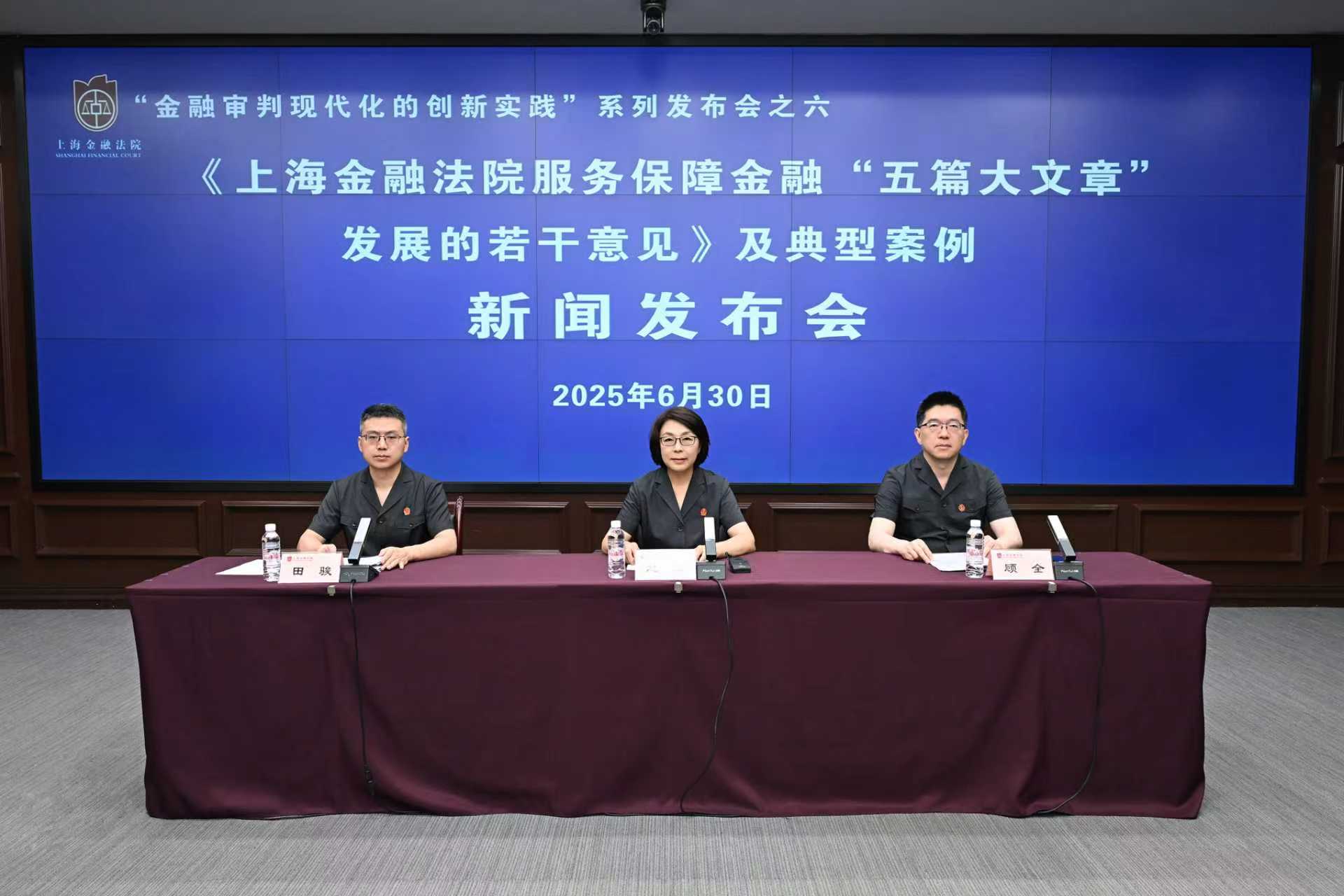
Core Viewpoint - The Shanghai Financial Court introduced the "Several Opinions on Serving and Guaranteeing the Development of Financial 'Five Major Articles'" to enhance judicial support for financial development, focusing on specific measures for various financial sectors [1][4]. Group 1: Overall Requirements - The "Several Opinions" consist of three main parts: overall requirements, specific measures, and supporting guarantees, totaling 18 articles [1]. - The document emphasizes the need to elevate judicial support capabilities, particularly in the technology finance sector, by improving the special trial mechanism for the Sci-Tech Innovation Board [1][6]. Group 2: Specific Measures - The "Several Opinions" outline specific measures for five financial sectors: technology finance, green finance, inclusive finance, pension finance, and digital finance, detailing 35 types of new financial dispute adjudication concepts and 21 actionable judicial support mechanisms [4][6]. - In technology finance, the focus is on enhancing the special trial mechanism for the Sci-Tech Innovation Board and streamlining loss assessment procedures for third-party institutions [1][6]. - In green finance, collaboration with the Shanghai Environment Energy Exchange is planned to explore new carbon trading models, ensuring maximum value realization of carbon trading products [7]. - For inclusive finance, mechanisms to incentivize trust and credit repair will be established to support small and micro enterprises in obtaining loans [7]. Group 3: Supporting Guarantees - The "Several Opinions" stress the need to improve financial trial execution mechanisms, support temporary arbitration, and enhance execution collaboration to create an optimal international financial dispute resolution environment [8]. - The document aims to balance financial innovation with risk prevention through regular publication of typical financial cases and legal risk prevention reports [8]. - It also emphasizes the importance of cultivating financial trial talent to build a highland of composite financial trial professionals [8]. Group 4: Typical Cases - Ten typical cases were released, reflecting potential risk issues in the development of the financial "Five Major Articles," particularly in technology finance where financing difficulties exist due to stringent buyback obligations [9][10]. - The cases illustrate the integration of political, legal, and social effects, showcasing innovative dispute resolution models in green finance [10].

香港财政司司长再谈稳定币,数字资产新政被“划重点”,业绩聚焦这两方面议题
Xin Lang Cai Jing· 2025-06-30 05:02
Core Viewpoint - Hong Kong's digital asset development is entering a new phase, transitioning from institutional preparation to technological integration and scenario advancement, as highlighted in the "Digital Asset Development Policy Declaration 2.0" [1][2] Group 1: Policy Framework - The "LEAP" framework proposed in the policy focuses on optimizing legal and regulatory frameworks, expanding tokenized product categories, promoting application scenarios and cross-sector collaboration, and developing talent and partnerships [1] - The policy emphasizes the importance of stablecoin regulation, with a clear timeline for implementation by August 1, 2025, positioning Hong Kong as a leading jurisdiction for stablecoin legalization and standardization [2] - Tokenization of Real World Assets (RWA) is identified as a key development direction, aiming to bridge the gap between virtual and real economies [2][3] Group 2: Market Implications - The announcement of the first tokenized securities by HashKey Chain in collaboration with GF Securities (Hong Kong) indicates immediate market activity following the policy declaration [3] - The potential for tokenization of commodities such as gold and renewable energy assets is highlighted, which could enhance Hong Kong's role in global commodity finance [3] - The global stablecoin market is projected to reach between $3.7 trillion and $3.9 trillion by 2030, indicating significant growth potential [4] Group 3: Industry Perspectives - Industry leaders express that Hong Kong's proactive approach to stablecoin application signifies its willingness to be a pioneer in financial innovation and public service optimization [5] - The clarity of regulatory design for stablecoin issuers, including reserve management and risk requirements, is expected to broaden market acceptance and integration into financial systems [5] - Future regulatory focus may include detailed guidelines for digital asset service providers and the trading rules for tokenized assets, which are crucial for market entry and liquidity [5]
全球爆火的稳定币暗藏哪些投资机会?丨智氪
36氪· 2025-06-29 09:11
36氪财经 . 36氪旗下官方账号。洞见市场,比99%的投资者更聪明。 A股新晋高弹性投资机会。 以下文章来源于36氪财经 ,作者丁卯 郑怀舟 文 | 丁卯 编辑 | 郑怀舟 来源| 36氪财经(ID:krfinance) 封面来源 | 视觉中国 本周,受益于海外中东局势降温以及国内供给端金融支持消费政策等利好的催化,市场风险偏好显著回暖, A 股迎来强势反弹, 大盘指数突破 3400 点整数关口,其他关键指数也迎可观涨幅。具体来看,周内,上证综指收涨 1.91% ;深证成指收涨 3.73% ; 沪深 300 收涨 1.95% ;创业板指收涨 5.69% ;中证 1000 指数收涨 4.62% ;科创 50 收涨 3.17% 。 从具体表现上,在上半周情绪回暖带动下指数迎来快速上涨,实现"三连阳",但下半周,受部分获利了结影响,波动性有所加 剧。不过整体市场成交仍维持在 1.5 万亿之上,显示资金活跃度较高,市场情绪乐观。 从板块来看,本周 31 个申万行业中 25 个实现上涨,涨幅前三为非银金融、计算机和通信;石油石化、煤炭、交通运输表现最 差。概念板块方面,炒股软件、金融科技、光模块和稳定币等板块录得较好 ...