智能硬件

Search documents
CES 2026揭示的AI三场变革:从眼镜到机器人、从家庭到工业
3 6 Ke· 2026-01-12 04:47
Core Insights - The CES 2026 event highlighted that AI is evolving from a mere tool to a foundational operating system in human life, with significant implications for various industries [3][5][38] - Major companies like NVIDIA and AMD are leading the charge, with NVIDIA's CEO predicting a "ChatGPT moment" for physical AI and AMD announcing a thousand-fold increase in AI chip performance over the next four years [3][5] - The event showcased a clear trend of AI integration into everyday life, with innovations in smart glasses, home automation, and personal assistants [4][6][14] AI Integration in Daily Life - AI is set to transform home life, with products like LumiMind's LumiSleep, a brainwave-controlled sleep aid, and various smart cleaning robots enhancing household efficiency [4][20][14] - Companies like BroadLink are addressing the smart home ecosystem's fragmentation, enabling seamless integration of non-smart appliances into smart home networks [26][28] Smart Glasses Revolution - The smart glasses market is poised for explosive growth, with over 50 companies showcasing innovations at CES 2026, indicating a shift away from traditional smartphones as the primary information interface [6][7] - Notable products include Rokid's AI glasses, which are lightweight and feature-rich, and INMO's GO3, which offers advanced translation capabilities [8][11][10] Industrial and Automotive Applications - AI's impact extends to transportation and industrial sectors, with companies like Black Sesame and Daotong showcasing advancements in autonomous driving and automated systems [29][34] - Black Sesame's new chips and Daotong's automated charging solutions represent significant strides in integrating AI into complex operational frameworks [29][34][35] Future Outlook - The CES 2026 event suggests that AI will redefine consumer electronics and industrial applications over the next decade, with a focus on embedding AI into physical systems rather than merely enhancing existing functionalities [5][37][38] - The participation of Chinese tech companies at CES indicates a growing influence in shaping the future technological landscape [7][38]


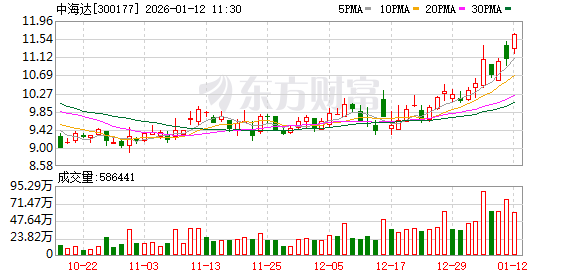
中海达:目前公司向小鹏提供位置感知相关的硬件产品
Mei Ri Jing Ji Xin Wen· 2026-01-12 04:07
中海达(300177.SZ)1月12日在投资者互动平台表示,目前公司向小鹏提供位置感知相关的硬件产品, 主要应用在智能驾驶汽车、具身智能机器人和飞行器,相关业务详情请参阅公司过往定期报告及互动易 回复。 (文章来源:每日经济新闻) 每经AI快讯,有投资者在投资者互动平台提问:烦请详细介绍下公司与小鹏在智驾汽车、飞行汽车、 人形机器人、Robotaxi等领域的具体合作产品或为其提供了哪些技术服务。 ...

为什么深圳硬件圈都在谈论千问?
雷峰网· 2026-01-12 03:34
Core Viewpoint - The article emphasizes that AI has transitioned from being a mere functional plugin to a fundamental system capability, marking a significant shift in the hardware innovation landscape as large models become the default capability in smart devices [2][9]. Group 1: AI Hardware Landscape - The AI hardware landscape is witnessing a resurgence, with over 200 mainstream hardware manufacturers participating in events like the Alibaba Cloud Tongyi Intelligent Hardware Expo and CES, showcasing a variety of AI applications [3][4]. - The integration of large models, such as Qianwen, into over 1,000 smart devices across 76 categories indicates a strong industry signal that AI is moving beyond screens into the physical world [4][12]. Group 2: Historical Challenges - The AI hardware sector has faced significant challenges over the past decade, including uncontrollable model capabilities, difficult commercial logic, and high engineering complexity, which have hindered the successful implementation of AI in hardware [8][9]. Group 3: Turning Point in AI Hardware - Recent exhibitions signal a turning point for AI hardware, shifting the focus from showcasing model capabilities to system engineering, indicating that AI is now a reliable and efficient foundational capability [9][10]. - Alibaba Cloud's development of a multimodal interaction development kit allows manufacturers to integrate core model capabilities with various interaction technologies, significantly lowering the barriers for hardware selection and adaptation [10][11]. Group 4: Qianwen as a Universal Foundation - Qianwen has emerged as a universal foundation for AI hardware, with Alibaba Cloud collaborating with all AI hardware categories, indicating a shift from single-function AI to comprehensive system capabilities [14][15]. - The comprehensive AI capabilities provided by Qianwen address key pain points in AI hardware implementation, creating a complete ecosystem from models to tools and platforms [16][21]. Group 5: Market Impact and Future Outlook - The AI hardware market in China has surpassed 1.1 trillion yuan, marking a transition from conceptual exploration to large-scale implementation [12]. - The integration of over 1,000 smart devices with Qianwen signifies a clear signal that AI is deeply connecting with the physical world, transforming hardware into intelligent systems that continuously learn and evolve [23][24].
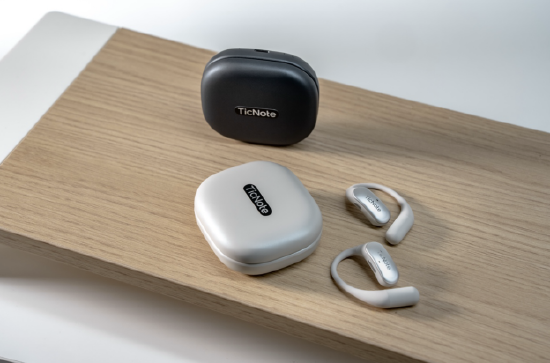
出门问问发布TicNote系列新品 联动TicNote Cloud打造团队协作新生态|直击CES
Xin Lang Cai Jing· 2026-01-12 02:30
Core Insights - During the 2026 CES, the company launched the TicNote series, which includes the first 4G AI recording earbuds, TicNote Pods, the first AI recording smartwatch, TicNote Watch, and the AI-native file collaboration platform, TicNote Cloud, all powered by the Shadow AI 2.0 engine, creating a closed-loop system of "recording-documenting-executing-collaborating" [1][5]. Group 1: Product Features - TicNote Pods, as the first 4G AI recording earbuds, operate independently without relying on a smartphone, allowing for a 50% faster upload of recordings to the cloud for AI processing compared to traditional methods. This positions the earbuds as autonomous AI terminals rather than mere accessories [1][5]. - The TicNote Watch features a dual-microphone design with a recording range of 3-5 meters and includes an "AI diary" function that organizes users' meeting schedules and health data, providing personalized suggestions [1][5]. Group 2: Shadow AI 2.0 Capabilities - The upgraded Shadow AI 2.0 can generate new files based on context or instructions, update, revise, and optimize existing files, apply changes uniformly across multiple files within a project, and create HTML landing pages and PowerPoint presentations from file content [2][6].
CES这些AI健康硬件太奇葩,能测尿的马桶,还有镜子能看寿命
3 6 Ke· 2026-01-12 00:39
Core Insights - The CES 2026 showcased a significant shift in AI technology, focusing on health management rather than just efficiency improvements [1][3] - Various AI health products were introduced, including smart rings, health applications, smart beds, and more, all aimed at monitoring and managing personal health [3][26] Group 1: AI Health Products - Ringconn Gen 2 is a smart ring that offers medical-grade health monitoring, tracking metrics like heart rate, blood oxygen levels, and sleep patterns, with a focus on sleep apnea detection [4][5][7] - Ant Financial's AI health assistant, Antifufu, integrates personal and family health data, providing insights and connecting users to medical services, thus evolving from a simple Q&A tool to a comprehensive health management system [8][10][11] - Stareep SmartSleep is an AI-driven sleep system that actively manages sleep quality by adjusting mattress support based on user movements and sleep patterns [12][14] Group 2: Innovative Health Monitoring Solutions - Vivoo Smart Toilet simplifies urine analysis by automatically collecting samples and syncing results to a mobile app, although its current capabilities are limited to hydration monitoring [15][16] - NuraLogix Longevity Mirror assesses health indicators through facial analysis, providing a longevity index and personalized health recommendations, but requires a subscription for ongoing services [19][21][22] - ThingX Nuna is an emotion-focused pendant that captures physiological signals to analyze emotional health, offering insights without requiring user interaction [23][25] Group 3: Industry Trends - The CES 2026 highlighted a trend towards "non-intrusive" health monitoring, where devices operate in the background without requiring active user participation, enhancing user experience and data accuracy [26][27] - The integration of AI in health management is shifting the focus from merely presenting data to creating actionable insights and connecting users with healthcare services [27][28]

锐明技术:公司产品中存储芯片或模组占整体物料成本的比例较低
Zheng Quan Ri Bao Zhi Sheng· 2026-01-11 13:07
Core Viewpoint - The company indicates that the proportion of storage chips or modules in its overall material costs is relatively low, allowing it to effectively pass on the rising costs of storage materials to downstream in the supply chain due to the high value-added nature of its smart hardware products [1] Group 1 - The company’s main products are categorized as high value-added smart hardware [1] - The increase in storage chip prices will not significantly impact the company's gross margin [1]

2026年,消费增量在哪里?
Xin Lang Cai Jing· 2026-01-11 10:34
Group 1: Consumer Trends - Service consumption has been a weak link in China's overall consumption, with significant potential for growth in this area [5][22] - Consumers are increasingly prioritizing spending on experiences related to health, fitness, and travel over traditional goods [19][24] - The younger generation (ages 15-25) shows a marked preference for emotional and experiential spending, indicating a shift in consumer behavior [7][24] Group 2: Policy and Economic Outlook - The central economic work conference emphasizes the need to expand domestic consumption and optimize the environment for consumer spending [21][30] - Policies are being developed to enhance service consumption and remove unreasonable restrictions in the consumption sector [6][30] - The focus is shifting from material investment to human investment, aiming to improve quality of life and consumer experience [30][31] Group 3: Technological Integration - Artificial intelligence (AI) is becoming a crucial factor in enhancing consumer products and services, leading to a transformation in consumption patterns [26][28] - The market for smart consumer electronics, such as AI glasses, is expected to grow significantly, with a projected shipment of 290.7 million units by 2025 [26][27] - AI is facilitating a shift from functional experiences to emotional connections in consumer products, creating new market opportunities [28][29] Group 4: Service Sector Growth - The service sector's share of total consumer spending is projected to reach 46.1% by 2024, indicating substantial growth potential in areas like healthcare, education, and personal services [5][22] - The government is focusing on expanding the supply of quality services, particularly in health, elderly care, and childcare sectors [6][23] - There is a consensus among industry experts that the service consumption sector has significant untapped potential that needs to be addressed [8][24]

中国手搓党,重塑创业
吴晓波频道· 2026-01-11 03:45
Core Insights - The article discusses the rise of "handmade" or "DIY" culture, particularly in the context of app development and hardware creation, highlighting how low barriers to entry and technological advancements have led to a surge in individual creativity and entrepreneurship [2][51]. Group 1: Rise of DIY Culture - A new app called "Are You Dead?" gained popularity quickly, reaching the top of the paid app charts within 48 hours, showcasing the potential for simple, creative ideas to capture market interest [3][21]. - The term "handmade" has evolved from a gaming slang to represent a culture where individuals use personal creativity and skills to turn imaginative ideas into reality [10][11]. - The popularity of "handmade" has been fueled by the COVID-19 pandemic, leading to a surge in creativity among individuals who began to create projects without relying on existing tools [14][15]. Group 2: Technological and Market Trends - The emergence of generative AI has broadened the definition of "handmade," allowing individuals with no coding experience to create applications through natural language descriptions [19][50]. - The hardware supply chain has become more accessible, enabling creators to source components easily, thus lowering the entry barriers for DIY projects [23][30]. - The "handmade economy" is generating significant revenue, with many creators monetizing their projects through social media or by developing commercially viable products [24][25]. Group 3: Impact on Industry and Investment - Companies like Jialichuang have benefited from the "handmade economy," reporting substantial revenue growth, with projected revenues of nearly 8 billion yuan and a net profit of approximately 1 billion yuan in 2024 [36]. - The trend of "handmade" is not just a hobby but is evolving into a new economic model, with many young entrepreneurs gaining attention from investors due to their innovative ideas and technical skills [31][32]. - The article suggests that the current phase of "handmade" represents a transitional period before industrialization, where individual creativity is being recognized as a valuable asset in the market [51][52].

CES现象级爆款,千亿智能割草机市场背后的卖铲人-禾赛激光雷达
Ge Long Hui· 2026-01-10 18:33
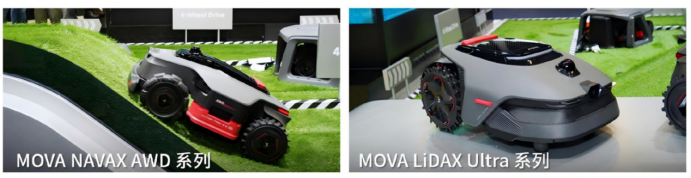
Core Insights - The global smart lawn mower market is on the verge of explosive growth, with a current market size estimated between $1.5 billion and $2.5 billion in 2023, projected to reach $60 billion to $100 billion by 2030, maintaining a double-digit compound annual growth rate (CAGR) [1][5]. Industry Trends - The lawn mower industry is experiencing a transformation, with Chinese tech companies evolving from traditional manufacturers to integrators and exporters of technological solutions, reshaping market dynamics [2]. - Traditional landscaping giants hold approximately 65% of the market share, but emerging tech companies are rapidly capturing market share through innovation and supply chain advantages [2]. - The demand for lawn care in mature markets like North America and Europe is driving rapid growth in the lawn mower market [5]. Technological Advancements - The core technology of lawn mowers has shifted from physical boundary solutions to boundary-less navigation technologies represented by RTK (Real-Time Kinematic), visual perception, and LiDAR, marking a significant industry turning point [5]. - The market share of boundary-less products is rapidly increasing, rising from 35% in 2024 to 65% in the first half of 2025 [5]. - The global shipment of boundary-less lawn mowers is expected to grow from 384,000 units in 2024 to 3.397 million units by 2029, with an average annual CAGR of approximately 54.7% [5]. Company Insights - Hesai Technology is a leader in the lawn mower sensor market, showcasing its advanced 3D LiDAR technology at CES 2026, with a significant number of new models featuring its sensors [9][10]. - Hesai's JT series 3D LiDAR has been delivered in over 200,000 units since its launch, providing essential data for positioning, navigation, and obstacle avoidance in autonomous mowers [12][14]. - The company plans to double its production capacity from 2 million units in 2025 to 4 million units in 2026, supported by its proven mass production capabilities [13][14]. Market Positioning - Hesai is strategically positioned in both the ADAS (Advanced Driver Assistance Systems) and robotics sectors, with over 1.6 million LiDAR units expected to be delivered in 2025, including 1.4 million for ADAS and over 200,000 for robotics [14]. - The company has secured production contracts with 24 OEMs for over 120 vehicle models, indicating strong market demand and growth potential [14]. - The stock of Hesai has seen a significant increase, rising 20% in a week, reflecting positive market sentiment regarding its growth prospects [16].
CES 2026「最烂」产品大赏
机器之心· 2026-01-10 07:00
Core Viewpoint - The article discusses the absurdity of certain AI innovations showcased at CES 2026, highlighting products that have received "worst product" awards due to their impracticality and privacy concerns [2][18][20]. Group 1: Smart Appliances - Samsung's Bespoke AI Family Hub refrigerator won the "worst product" award for its ineffective voice control feature, which fails in noisy environments [2][4][6]. - The refrigerator's additional features, such as food inventory tracking and recommendations, are deemed unnecessary and overly complicated [7][12]. - Other appliances, like the Wan AIChef microwave, are criticized for being over-engineered, offering features that do not enhance basic functionality [14][16]. Group 2: Privacy Concerns - Amazon's Ring doorbell camera received the "worst privacy product" award for its AI features that invade privacy, including facial recognition and third-party app integration [18][19]. - The Merach connected treadmill was criticized for its privacy policy, which does not guarantee the safety of personal data collected during use [20][23]. - The Ami AI companion, designed for emotional interaction, raised concerns about privacy despite having a physical camera cover [24][26]. Group 3: Environmental Issues - The Lollipop Star, a singing lollipop, was awarded the "worst environmental product" for creating non-recyclable electronic waste after a short usage period [34][37]. - Bosch received two "worst product" awards for adding unnecessary subscription services to its coffee machines and complicating maintenance for electric bicycles [38][41]. Group 4: Miscellaneous Innovations - The Glyde smart hair clipper claims to be the first truly intelligent hair clipper, featuring an automatic blade adjustment system based on user movement [42][44].