航空发动机

Search documents
航发控制: 2024年度权益分派实施公告
Zheng Quan Zhi Xing· 2025-06-18 09:14
Core Viewpoint - The company has announced its profit distribution plan for the fiscal year 2024, which was approved at the shareholders' meeting held on April 28, 2025, detailing the dividend payout to shareholders [1] Summary by Sections Profit Distribution Plan - The profit distribution plan includes a total of 508,181,307.37 yuan of undistributed profits carried forward to the next fiscal year, with no capital reserve fund being converted into share capital this year [1] Dividend Payout Details - The company will distribute a dividend of 1.7200 yuan per 10 shares (before tax) to all shareholders based on the total share capital of 1,315,184,001 shares. For specific categories of investors, different tax treatments apply, such as 1.5480 yuan for certain Hong Kong market investors and varying tax rates for individual shareholders based on their holding periods [1][2] Key Dates - The record date for the dividend distribution is set for June 25, 2025, with the ex-dividend date also on June 25, 2025 [2] Eligible Shareholders - The dividend will be distributed to all shareholders registered with the China Securities Depository and Clearing Corporation Limited Shenzhen Branch as of the record date [2] Distribution Method - The dividends will be directly credited to the shareholders' accounts through their respective securities companies or other custodial institutions [2]

为产业生态注入强劲动能 成都产投集团投资引领再发力
Sou Hu Cai Jing· 2025-06-18 08:40
Group 1 - The "Investment Chengdu" Global Investment Conference highlighted significant projects, including the signing of the "Star Calculation Plan" global headquarters and major funding for the aviation industry [1] - Chengdu Investment Group's investment of 1 billion yuan in the aviation engine company aims to enhance local industry capabilities and support the development of high-end aviation equipment [1] - The group has implemented over 60 major industrial projects, attracting a total investment of approximately 400 billion yuan, contributing to the modernization of the local industrial system [1][6] Group 2 - The electronic information industry is a key focus for Chengdu, with efforts to attract major companies in the semiconductor sector to address challenges in chip production [2] - Chengdu Investment Group has successfully established a Micro-LED production line, marking a significant advancement in next-generation display technology [2] - The group is actively involved in national funds to support major projects, with over 10 billion yuan expected to be reinvested in Chengdu [2] Group 3 - The equipment manufacturing sector is crucial for the economy, with Chengdu Investment Group supporting local companies in the aerospace industry and promoting the development of high-end power equipment [3] - A new manufacturing center for turbine and engine core equipment is under construction, expected to produce 100 units annually and generate over 5 billion yuan in annual output [3] Group 4 - Chengdu Investment Group is driving the green transformation of industries, focusing on lithium battery production and clean energy initiatives [5] - The group has attracted leading companies in the battery sector and is investing in hydrogen energy projects to support the development of a world-class lithium battery industry [5] Group 5 - Chengdu Investment Group has invested in various innovative projects in the low-altitude and commercial space sectors, enhancing the city's competitiveness in these emerging industries [5] - The successful launch of the world's first space computing constellation by Guoxing Aerospace signifies Chengdu's advancements in commercial space [4][5] Group 6 - The group is focused on nurturing long-term capital and has plans to establish a third phase of its industrial fund to support major industrial projects [6] - Chengdu Investment Group aims to optimize the local industrial system, promoting collaboration across various sectors and enhancing the overall economic landscape [6]


航发科技20250617
2025-06-18 00:54
Summary of the Conference Call for Hangfa Technology Industry Overview - Hangfa Technology operates in the aerospace engine component manufacturing sector, with a leading position in blades, casings, and sheet metal parts [2][3] - The Chinese aerospace engine industry is undergoing a transition, with a pressing need for domestically controlled large aircraft due to technological gaps with the U.S. [2][9] Company Performance - The company reported a profit growth rate of 43% for 2024, with a turnaround in net profit in Q1 2025 [2][7] - Both domestic and foreign trade businesses are experiencing strong growth, with foreign trade maintaining high profit margins [2][7] - The company’s internal trade business has shown signs of recovery, indicating significant future growth potential [2][7] Research and Development - Hangfa Technology invests approximately 3% of its revenue in R&D to enhance core competitiveness in both military and civilian markets [2][8] Market Potential - The domestic market is expected to be a significant source of long-term growth, driven by equipment upgrades, aftermarket maintenance, and developments in the civilian sector [2][9] - The military aerospace engine component market in China is projected to reach 800 billion yuan in the next five years, indicating substantial growth opportunities for the company [10] Foreign Trade Importance - Foreign trade is crucial for the company, with over 20 years of collaboration with major international aerospace companies like Boeing and Rolls-Royce [2][11] - The company has achieved a compound annual growth rate of 21% in foreign trade from 2002 to 2019, but entering the foreign outsourcing production system requires strict certification [11] Shareholder Structure - Hangfa Technology's controlling shareholder is Hangfa Chengfa, with a relatively dispersed ownership structure [4][5] Competitive Landscape - Hangfa Technology's subsidiary, Hangfa Ha Axis, holds a significant position in the Chinese aerospace bearing market, with a compound growth rate of 21.4% since 2013 [12] - The company is actively positioning itself in the commercial aerospace engine sector, which has immense potential [4][13] Global Market Insights - The global commercial aerospace engine market is expected to exceed 13 trillion yuan over the next 20 years, with the Chinese market estimated at around 2.6 trillion yuan [14] - The commercial aerospace engine market is highly concentrated, with six companies dominating 97% of the market share [15] Future Development - The domestic commercial aerospace engine market is characterized by a significant supply-demand mismatch, creating opportunities for domestic manufacturers [20] - Hangfa Technology is strategically developing production bases to capitalize on the growing demand for domestically produced commercial aerospace engines [20]

【掘金行业龙头】核电+航空发动机,拥有核柔性屏蔽材料和防护服产品,这家公司累计为国产航空发动机开发几十个品种
财联社· 2025-06-13 05:02
Group 1 - The article emphasizes the importance of timely and professional information interpretation in investment decision-making [1] - It highlights the company's expertise in identifying investment value from significant events, analyzing industry chain companies, and interpreting key policies [1] - The company has developed nuclear flexible shielding materials and protective clothing products, and its controllable nuclear fusion equipment has been validated [1] Group 2 - The company provides various products for all nuclear power projects in China, indicating a strong position in the nuclear energy sector [1] - It has developed dozens of varieties for domestic aviation engines, showcasing its capabilities in the aerospace industry [1] - Key clients include major players such as China National Nuclear Corporation, China General Nuclear Power Group, and Safran, reflecting the company's robust client base [1]

美国被制裁痛了,又给中国打电话求谈判
Sou Hu Cai Jing· 2025-06-07 07:39
Group 1 - The U.S. is attempting to control China's economic lifeline through various measures, but it underestimates China's response capabilities [1] - The U.S. has expressed urgency regarding China's alleged violations of trade agreements, despite its own initial actions against Huawei's chips [3] - The U.S. non-tariff sanctions have exposed its vulnerabilities, as China has the upper hand in retaliatory measures [4] Group 2 - The U.S. aims to limit China's access to technology and create a monopoly on chip usage, but the feasibility of these policies remains questionable [7] - The U.S. has issued warnings about the potential consequences of using American AI chips for Chinese AI training, and advised companies on supply chain protection [8] - China maintains a dominant position in the global rare earth supply chain, controlling over 90% of refining and separation capacity, which poses significant risks to U.S. military-related industries if disrupted [9] Group 3 - The U.S. has revoked visas for Chinese students linked to the government, which has been criticized as a discriminatory act that harms its international reputation [10] - The effectiveness of U.S. sanctions against China is diminishing, leading to a renewed urgency for negotiations from the U.S. side [10]

【投资视角】启示2025:中国航空发动机行业投融资及兼并重组分析(附投融资汇总和兼并重组等)
Qian Zhan Wang· 2025-06-07 03:10
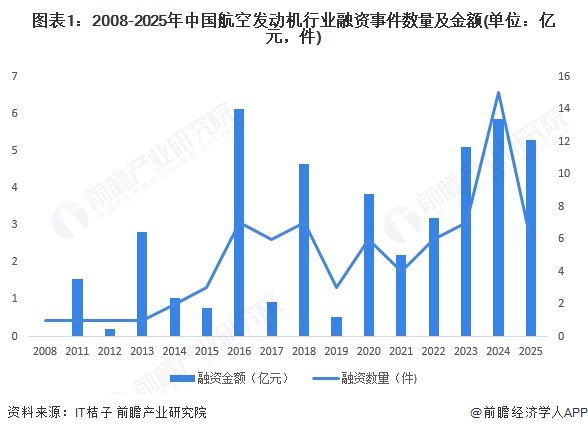
Group 1 - The core viewpoint of the article highlights the significant growth in investment and financing activities within the Chinese aviation engine industry, particularly in 2024, where financing amounts reached 586 million yuan with 15 events, indicating an increasing demand for capital support [1][3][6] - The aviation engine industry is undergoing a transformation phase, with fluctuations in single financing amounts, which generally range from several million to several billion yuan. In 2024, the single financing amount slightly decreased to 40 million yuan but rebounded to 90 million yuan in 2025, reflecting diverse financing needs across different project scales and development stages [3][6] - The financing structure of the aviation engine industry is diverse, with a significant focus on early-stage financing, particularly angel and A-round investments, which accounted for 17 and 21 events respectively. This indicates strong investor interest in startups and confidence in the industry's long-term development [6][12] Group 2 - The majority of financing activities are concentrated in technology research and production, with a notable emphasis on aviation engine components and research. From 2023 to 2025, the main financing events in the industry reflect this trend [7][10] - Mergers and acquisitions in the aviation engine industry primarily focus on horizontal integration, with over 45% of events categorized as such. This strategy aims to enhance market share and competitive advantage through collaboration among similar enterprises [12][16] - Recent investment activities by representative companies in the aviation engine sector indicate a trend towards integrating technology and capital, which can enhance operational efficiency and market competitiveness [16][18]


亚马逊准备测试人形机器人用于递送包裹;首次氢涡轮动力飞行验证完成,填补国内氢能航空动力技术空白丨智能制造日报
创业邦· 2025-06-06 03:17
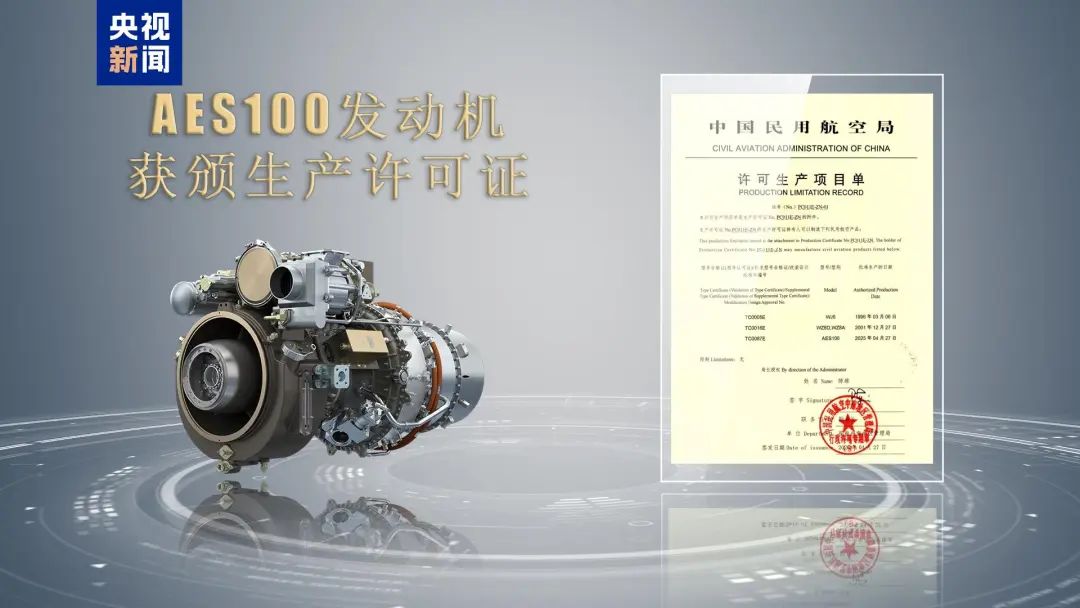
Group 1 - Amazon is reportedly preparing to test humanoid robots for package delivery, indicating a move towards automating its global delivery operations [1] - China's first domestically developed 1000 kW civil turboshaft engine, AES100, has received production licenses and signed sales contracts, marking its transition to mass production [2] - SmartSens has launched its first medical application CMOS image sensor, SC1400ME, designed for medical endoscopes, featuring high color fidelity and low power consumption [3] Group 2 - The first hydrogen turbine power flight verification in China has been successfully completed, filling a gap in domestic hydrogen energy aviation power technology [4]



我国掌握自主研制生产先进民用涡轴发动机能力 AES100发动机获颁生产许可证,可用于直升机和倾转旋翼机等
Ren Min Ri Bao· 2025-06-05 21:33
Group 1 - The AES100 engine has received a production license and signed sales contracts, marking its transition from design and development to mass production [1][2] - The AES100 engine is China's first 1000 kW class advanced civil turboshaft engine developed according to international airworthiness standards, overcoming over 200 key technologies [1] - The engine features high safety, good economy, easy maintenance, and wide environmental adaptability, suitable for 5-6 ton dual-engine helicopters and 3-4 ton single-engine helicopters, as well as tilt-rotor aircraft [1] Group 2 - The signing of sales and leasing contracts with the United Aircraft Group indicates plans to deliver the AES100 engine by 2026, which will serve as the core power unit for the 6-ton tilt-rotor unmanned transport platform "Lan Ying R6000" [2] - The achievement of a production license signifies that China has the capability to independently develop and produce advanced civil turboshaft engines, establishing a complete supply chain and industrial chain for civil turboshaft engines [1]
高毅资产吴任昊的内部分享,从航空发动机行业看“超级刀架刀片模式”
聪明投资者· 2025-06-05 07:27
Core Viewpoint - The article emphasizes the investment potential in the aviation engine industry, likening it to a "super razor-and-blade" model where initial sales are low-margin, but long-term service and parts replacement generate significant profits [4][16][22]. Group 1: Investment Insights - The aviation engine industry operates under a "triple constraint" where it must achieve high power, low fuel consumption, and extreme reliability simultaneously, making it a unique and challenging sector [10][12]. - The industry is characterized by a long product lifecycle, with significant cash flow generated from after-market services and parts replacement over decades [29][42]. - The market often misprices long-term value due to short-term fluctuations, presenting opportunities for investors who can identify these discrepancies [6][44]. Group 2: Business Model and Competition - The "super razor-and-blade" model in aviation engines involves selling engines at low margins while profiting from high-margin maintenance and parts over time [16][20]. - The CFM56 engine serves as a prime example of this model, showcasing a lengthy development and delivery cycle that creates a substantial technological moat [17][19]. - The aviation engine market is dominated by a few players, and the industry's focus on safety and compliance creates high barriers to entry for new competitors [27][28]. Group 3: Market Dynamics - The aviation industry has recently faced challenges due to supply chain disruptions, impacting the delivery of new aircraft and subsequently increasing demand for after-market services [41][42]. - The industry's reliance on a global supply chain means that any disruption can significantly affect production and service timelines, highlighting the importance of operational resilience [40][41]. - The article notes that while the aviation engine market is currently stable, the long-term outlook remains dependent on technological advancements and the ability to adapt to changing market conditions [37][39].

“我国自主研制”,拿证了!
Huan Qiu Wang· 2025-06-05 07:21
Core Viewpoint - The AES100 engine, a domestically developed 1000 kW class advanced civil turboshaft engine in China, has received a production license and signed sales contracts, marking a significant milestone in the country's aviation engine industry [1][3]. Group 1: Engine Specifications and Applications - The AES100 engine is characterized by high safety, good economy, easy maintenance, and wide environmental adaptability, suitable for 5-6 ton dual-engine helicopters and 3-4 ton single-engine helicopters, as well as tilt-rotor aircraft for various missions including transport, sightseeing, and rescue [3]. - The production license indicates that the industrial manufacturing capability of the AES100 engine has received airworthiness approval [3]. Group 2: Future Developments and Contracts - In addition to the production license, China Aviation Engine Group has signed sales and leasing contracts for the AES100 engine, which will serve as the core power unit for the 6-ton tilt-rotor unmanned transport platform "Lan Ying R6000," with delivery planned for 2026 [6]. - The industry is rapidly advancing towards a full spectrum of general aviation engines, with multiple domestically developed advanced aviation engines expected to achieve their first flights and certifications within the next year [6]. Group 3: Additional Engine Projects - Based on the AES100, researchers have developed the AEP100, a 900 kW class turboprop engine designed for 3-10 ton drones, which has completed its first flight and meets international performance standards for its class [6]. - A 200 kW class turboshaft engine, the AES20, is also under development for light aircraft, with expected first flight by the end of 2025 and airworthiness certification by 2026 [6].