
零售业

Search documents
AI应用爆了!谷歌出手 AI购物迎来重磅利好 机构扎堆盯上7只概念股
Zheng Quan Shi Bao Wang· 2026-01-12 05:22
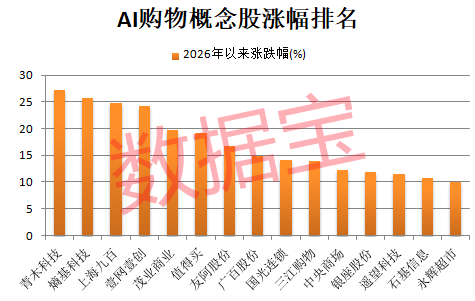
Core Insights - The retail industry is experiencing a significant transformation driven by AI technology, with major players like Walmart partnering with Google to enhance shopping experiences through AI assistants [3][4]. Group 1: AI Market Trends - The A-share market has seen a surge in AI-related stocks, with over 20 stocks hitting the "20cm" limit up, particularly in AI marketing and commercial aerospace sectors [2]. - AIGC concept stock LEO Holdings (002131) recorded the highest trading volume with a limit up, indicating strong investor interest in AI applications [2]. - AI retail concept stocks have averaged a 6.48% increase this year, with companies like Qingmu Technology and Shanghai Jiubai seeing gains over 20% [7]. Group 2: Strategic Partnerships - Walmart announced a collaboration with Google's AI assistant Gemini to streamline shopping for consumers, reflecting a shift towards AI-driven retail solutions [3][4]. - This partnership aims to meet the growing consumer demand for AI chatbots that enhance shopping efficiency and inspiration [3]. Group 3: Future Projections - Visa's global market president predicts that AI-assisted shopping will become mainstream by 2026, with significant advancements expected in the next few years [4]. - Morgan Stanley forecasts that the GMV of agent-based e-commerce could reach approximately $190 billion under baseline conditions and up to $385 billion in optimistic scenarios by 2030 [5]. Group 4: Investment Opportunities - Seven high-growth potential stocks in the AI shopping sector have been identified, with institutions predicting over 20% net profit growth for several companies in 2026 and 2027 [6][7]. - Companies like Huijia Times and Qingmu Technology are highlighted for their strong growth potential, with significant upside predicted based on institutional target prices [10].

盒马2025年营收增速超40%,我们看到了什么?
Cai Fu Zai Xian· 2026-01-12 04:57
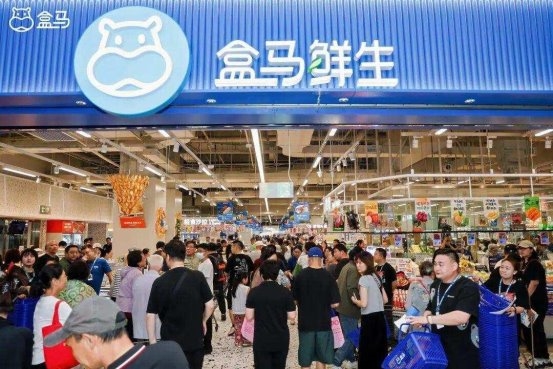
Core Insights - Hema's CEO announced a revenue growth of over 40% year-on-year for 2025, with over 1 billion consumers served through its two main business formats: Hema Fresh and Super Hema [1] - The strategic adjustment led to Hema's entry into 40 new cities and the opening of over 200 new Super Hema stores, indicating a focus on sustainable profitability [1][2] - Hema's overall GMV is projected to exceed 100 billion by the end of March 2026, following a successful transition to a profitable business model [1][3] Strategic Focus and Profitability - Hema has concentrated resources on its two main formats, Hema Fresh and Super Hema, to optimize operations and enhance efficiency [2][3] - The company has exited the membership store segment to focus on more mature and clearer return businesses, reflecting a strategic pivot in response to retail industry trends [2] - The dual-format strategy allows Hema to cater to different consumer segments while maximizing resource efficiency [3] Urban Expansion and Emerging Markets - Hema's strategy has shifted towards tapping into emerging markets, with significant expansions into second and third-tier cities, while also densifying its presence in first-tier cities [4][6] - The company has seen strong consumer demand in emerging cities, evidenced by high sales figures during store openings and holiday periods [4][6] - Hema's expansion into county-level markets is also notable, with plans to open over 20 new Super Hema stores monthly [6] Supply Chain Investment and Product Innovation - Hema is investing heavily in its supply chain to enhance resilience and improve user experience, with plans to support partners and suppliers significantly [8] - The company has established multiple supply chain centers and logistics hubs to ensure efficient product delivery, including innovations in supply chain technology [8][7] - Hema's product innovation focuses on health and quality, with successful items like the Strawberry Box Cake and HPP juice series demonstrating strong sales growth [9][11] Consumer Trends and Product Strategy - Hema is adapting to consumer trends by offering smaller packaging options and transparent nutritional information, catering to the "one-person meal" and "self-care" trends [11][12] - The company is shifting its product strategy from chasing short-term trends to focusing on stable quality and repeat purchases, indicating a long-term value approach [11][12] - Hema's commitment to reducing ingredient complexity aligns with the growing demand for clean label products, reflecting a strategic shift in its product offerings [11]
全国商务工作会议深入实施提振消费行动 推动零售业创新发展
Xin Lang Cai Jing· 2026-01-12 03:15
Group 1 - The national business conference held on January 10-11 outlined eight key tasks for the national business system by 2026, focusing on consumption, market systems, trade innovation, foreign investment, international trade rules, foreign investment management, bilateral trade cooperation, and security in openness [1] - The conference emphasized the implementation of a special action to boost consumption, aiming to create the "Buy in China" brand, enhance service consumption, and optimize policies for upgrading consumer goods [1] - The goal is to develop a modern market and circulation system, promoting a unified national market and advancing the integration of domestic and foreign trade [1] Group 2 - Trade innovation will be promoted through the "Export China" brand, with a focus on optimizing goods trade, developing service trade, and encouraging digital and green trade [2] - The strategy includes enhancing foreign investment attractiveness by expanding service sector openness and improving investment promotion and service systems [2] - Effective foreign investment management will involve guiding cross-border supply chain layouts and enhancing overseas service systems, particularly in the context of the Belt and Road Initiative [2] Group 3 - The conference aims to deepen multilateral and bilateral economic cooperation, implement global initiatives, and reform global economic governance [2] - There is a focus on risk prevention and establishing a robust security network for openness, including improving legal frameworks and trade risk management [2]
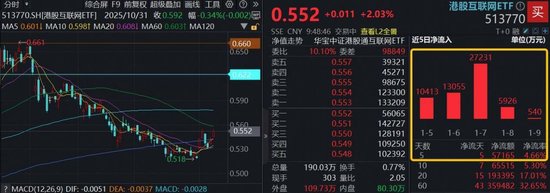
ETF盘中资讯|监管启动外卖行业反垄断调查评估,美团涨近6%!港股互联网ETF(513770)涨超3%,连日大举吸金5.72亿元
Jin Rong Jie· 2026-01-12 02:48
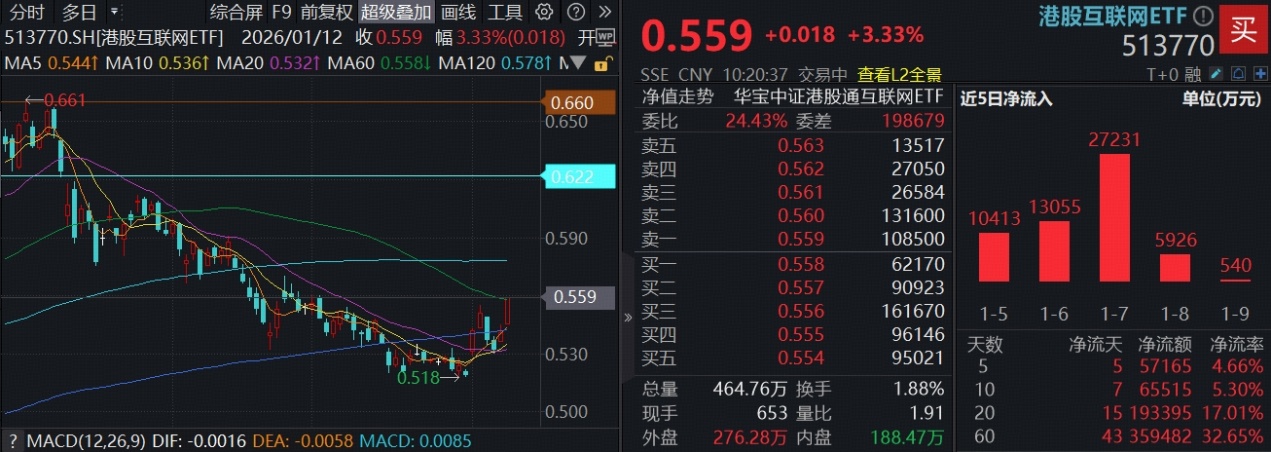
Group 1 - The Hong Kong internet sector is experiencing a strong rally, with the Hong Kong internet ETF (513770) rising by 3.33% to recover above the 60-day moving average [1] - Major internet companies such as Meituan, Bilibili, Alibaba, Kuaishou, and Tencent have all seen significant gains, with Meituan up nearly 6% and Bilibili over 4% [1] - The Hong Kong internet ETF has attracted significant capital inflow, totaling 572 million yuan over the past five days, reaching a new historical high of 13.395 billion yuan [3] Group 2 - The State Council's Anti-Monopoly and Anti-Unfair Competition Committee has announced an investigation into the competitive landscape of the food delivery platform service industry [3] - Meituan supports the investigation, highlighting issues of irrational competition in the food delivery market, such as price wars and excessive subsidies [3] - Taobao Shanguo has expressed willingness to cooperate with the investigation and emphasized the importance of maintaining a fair market environment [3] Group 3 - The AI application sector is rapidly advancing, with significant improvements in model capabilities and cost reductions, leading to accelerated commercialization in various fields [3] - The Hong Kong internet ETF passively tracks the CSI Hong Kong Internet Index, which includes major companies like Alibaba, Tencent, and Xiaomi, indicating a strong focus on AI giants [3] - The top holdings of the ETF include Tencent (15.42% weight), Alibaba (14.50%), and Xiaomi (13.11%), reflecting a diversified investment in leading tech firms [3]

监管启动外卖行业反垄断调查评估,美团涨近6%!港股互联网ETF(513770)涨超3%,连日大举吸金5.72亿元
Xin Lang Cai Jing· 2026-01-12 02:41
Group 1: Market Performance - The Hong Kong internet sector saw significant gains, with the Hong Kong internet ETF (513770) rising by 3.33%, recovering above the 60-day moving average [1][7] - Major internet companies such as Meituan-W increased by nearly 6%, Bilibili-W by over 4%, Alibaba-W and Kuaishou-W by over 3%, and Tencent Holdings by over 1% [1][7] Group 2: Regulatory Developments - The State Council's Anti-Monopoly and Anti-Unfair Competition Committee announced an investigation into the competitive landscape of the food delivery platform service industry [3][9] - Meituan expressed strong support for the investigation, highlighting issues of irrational competition characterized by price wars, subsidies, and traffic control [3][9] - Taobao Flash expressed willingness to cooperate with the investigation and emphasized the importance of maintaining a fair and orderly market environment [3][9] Group 3: AI Applications and Investment Trends - AI applications are rapidly increasing, with CITIC Securities noting that advancements in model capabilities and significant reductions in inference and long-window costs are accelerating the commercialization of AI downstream applications [3][9] - The Hong Kong internet ETF (513770) and its linked funds have attracted significant capital, with a net inflow of 572 million yuan over five consecutive days, bringing the total size to 13.395 billion yuan, a new historical high [3][9]
零售概念快速走高 三江购物涨停
Xin Lang Cai Jing· 2026-01-12 02:25
Group 1 - The retail concept is rapidly gaining traction, with Sanjiang Shopping hitting the daily limit up [1] - Maoye Commercial has achieved two consecutive trading limit increases [1] - Other companies such as Jiajia Yue, Chongqing Department Store, Dazhong Shares, Shanghai Jiubai, and Xinhua Department Store are also experiencing upward movement [1]


美国经济:就业走弱
Zhao Yin Guo Ji· 2026-01-12 02:18
Employment Data - In December, the U.S. added 50,000 non-farm jobs, below the market expectation of 70,000[6] - The October and November employment figures were revised down by a total of 76,000[6] - Private sector job growth fell significantly from 50,000 in November to 37,000 in December[6] Unemployment Rate - The unemployment rate decreased to 4.4% in December, better than the expected 4.5%[6] - November's unemployment rate was revised slightly down to 4.54%[6] - Labor force participation rate declined to 62.4%, influenced by retirements and reduced labor supply[6] Sector Performance - Job losses in the goods-producing sector totaled 21,000 in December, with construction and manufacturing losing 11,000 and 8,000 jobs respectively[6] - Service sector jobs increased from 32,000 in November to 58,000 in December, primarily in leisure and hospitality, and education and healthcare[6] Federal Reserve Outlook - The Federal Reserve is expected to cut rates by 25 basis points once in June, largely as a political statement with the new chair[6] - Economic growth is anticipated to rebound in the first half of the year due to tax cuts, despite inflation pressures from commodity prices[6] - In the second half, economic growth may slow again, with inflation potentially rising due to stabilizing oil and rent prices[6]
帝亚吉欧更换全球CEO,期待“铁腕戴夫”拯救
Sou Hu Cai Jing· 2026-01-12 02:09
Core Viewpoint - Diageo is facing significant growth pressures, with declining organic net sales and operating profits, prompting a leadership change as Dave Lewis takes over as CEO to implement cost-cutting and improve profitability [3][4][6]. Financial Performance - In the fiscal year 2024, Diageo's organic net sales decreased by 0.6% year-on-year, and organic operating profit fell by 5% [3]. - For fiscal year 2025, organic net sales saw a slight increase of 1.7%, but organic operating profit still declined by 0.7% [3]. - The first quarter of fiscal year 2026 reported flat organic net sales year-on-year, with weak demand in the Chinese baijiu and U.S. spirits markets cited as major factors [3][11]. Leadership Changes - Debra Crew, the previous CEO, left in July 2025 after two years, with CFO Nik Jhangiani serving as interim CEO until Dave Lewis's appointment [4][6]. - Lewis is recognized for his experience in cost reduction and business transformation, having previously restructured Tesco during a crisis [6][7]. Strategic Initiatives - Diageo plans to cut approximately $625 million in costs over the next three years, with asset disposals being a key strategy since 2025 [7][8]. - The company has been actively selling non-core assets, including stakes in various breweries and brands, to streamline operations [8][11]. Market Challenges - The Asia-Pacific region saw a 7.5% decline in organic net sales in the first quarter of fiscal year 2026, primarily due to weak performance in the Chinese baijiu market, which negatively impacted overall group sales by about 2.5% [11]. - Management emphasizes the need to adapt to changing consumer preferences regarding drinking habits and expectations, indicating a shift in strategic focus [11].


港股AI继续上攻,快手涨超4%,小摩称其“全球最便宜的AI股之一”!港股互联网ETF(513770)涨超2%
Xin Lang Cai Jing· 2026-01-12 01:57
Core Viewpoint - The Hong Kong stock market is experiencing a strong performance in the AI sector, with significant gains in key stocks and ETFs, particularly driven by advancements in AI applications and increased investor interest [1][3][4]. Group 1: Market Performance - On January 12, the Hong Kong stock market opened higher, with the Hang Seng Technology Index rising by 0.88% and the Hong Kong Internet ETF (513770) increasing by over 2% [1][9]. - Key AI stocks such as Kuaishou-W and Meituan-W saw gains exceeding 4%, while Bilibili-W rose over 2% [1][9]. Group 2: AI Application Growth - The "Pet Dance" AI video has gained significant traction in overseas markets, leading to a 102% increase in daily revenue for Kuaishou's Keling AI mobile platform compared to December 2025 [3][11]. - Morgan Stanley highlighted Kuaishou's leading position in generative AI, with a valuation corresponding to 12 times the expected earnings for 2026, and a projected compound profit growth rate of 21% for 2026-2027 [3][11]. Group 3: Investment Opportunities - According to Founder Securities, 2026 is expected to be a pivotal year for AI applications, with major internet companies competing to develop entry-level AI applications [4][12]. - The Hong Kong Internet ETF (513770) has attracted significant capital, with a net inflow of 572 million yuan over five consecutive days, reaching a record size of 13.395 billion yuan [4][12]. Group 4: ETF Composition - The Hong Kong Internet ETF (513770) tracks the CSI Hong Kong Internet Index, with major holdings including Alibaba-W, Tencent Holdings, Xiaomi Group-W, Kuaishou-W, and Bilibili-W, accounting for over 78% of the total weight [6][14]. - The top ten weighted stocks in the ETF include Tencent Holdings (15.42%), Alibaba-W (14.50%), and Meituan-W (12.03%) [15].

商务部:今年将优化消费品以旧换新政策实施
Yang Guang Wang· 2026-01-12 01:44
Group 1 - The core viewpoint of the article emphasizes China's commitment to enhancing consumption and trade innovation by 2026, focusing on expanding service sector openness and fostering new growth points in service consumption [1] Group 2 - In 2023, China will accelerate the cultivation of new growth points in service consumption, optimize the implementation of the old-for-new consumption policy, and promote the upgrade of goods consumption [1] - The country aims to create an international consumption environment, develop digital, green, and health consumption, and stimulate consumption in lower-tier markets [1] - The retail industry will be encouraged to innovate, and a modern market and circulation system will be established to advance the construction of a unified national market [1] Group 3 - China will promote trade innovation, enhance the export of Chinese brands, and optimize and upgrade goods trade while significantly developing service trade and encouraging service exports [1] - The focus will also be on innovating digital and green trade, promoting the integration of trade and investment, and creating new advantages for attracting foreign investment [1] - The country plans to deepen "Belt and Road" economic and trade cooperation, develop Silk Road e-commerce, and strengthen overseas project supervision and risk prevention [1] Group 4 - China will align with international high-standard economic and trade rules and push for the construction of open highlands [1] - The comprehensive implementation of the Free Trade Zone (FTZ) enhancement strategy will further improve the level of trade and investment liberalization and facilitation in Hainan Free Trade Port [1] - Multilateral economic and trade cooperation will be actively pursued to expand and enrich the FTZ network [1]