
脑机接口

Search documents
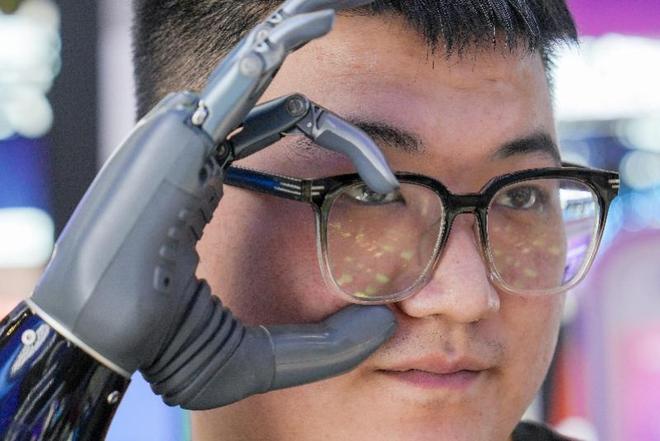
强脑科技古月现场演示脑机接口仿生手 感慨“心态及生活质量被改变”
Xin Lang Cai Jing· 2026-01-29 13:09
Core Viewpoint - The event "Praise for China's Economy - Entrepreneur Night" was held on January 29 in Beijing, highlighting advancements in technology that improve the lives of disabled individuals, particularly through the work of Zhejiang Qiangnao Technology Co., Ltd. and its CEO Han Bicheng [1][6]. Group 1: Event Overview - The "Praise for China's Economy - Entrepreneur Night" featured notable figures including Han Bicheng, the founder and CEO of Zhejiang Qiangnao Technology, who received recognition for his contributions [1][6]. - The event was attended by prominent industry leaders such as Gao Dekang, chairman of the Bosideng Group, and Yin Ye, CEO of BGI Group, who witnessed the honors presented [1][6]. Group 2: Technological Impact - The event showcased the advanced brain-machine interface technology developed by Qiangnao Technology, which has significantly transformed the lives of disabled individuals [3][8]. - Gu Yue, a beneficiary of the bionic hand technology, shared his personal experience of losing his left hand in an accident in 2018 and how he was introduced to Qiangnao's intelligent prosthetics in 2019 [3][8]. - Gu Yue demonstrated the capabilities of the bionic hand, which can be controlled intuitively without surgical implantation, allowing him to perform various tasks such as lifting weights and playing the piano [3][8]. Group 3: User Experience and Benefits - Gu Yue reported that he uses the bionic hand for daily activities like typing, cooking, and drinking, indicating a significant improvement in his quality of life [5][10]. - The technology has assisted over 10,000 individuals with upper or lower limb disabilities, enabling them to live and work normally [5][10]. - Gu Yue expressed that the most significant change has been in his mindset and quality of life, stating he now feels like a "normal person" and is no longer afraid of public scrutiny [5][10].

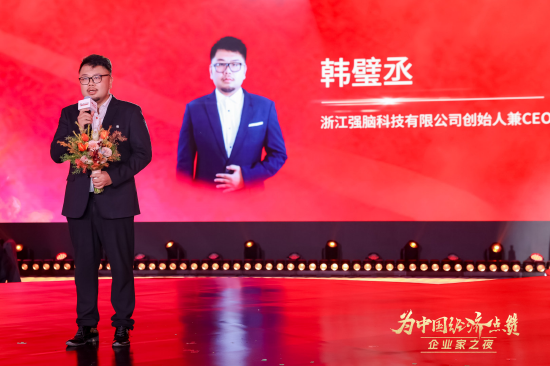
强脑科技韩璧丞:希望帮助肢体残疾人“重新长出手脚”
Xin Lang Cai Jing· 2026-01-29 13:03
Core Insights - The event "Praise for China's Economy - Entrepreneur Night" was held on January 29 in Beijing, where Han Bicheng, founder and CEO of Zhejiang Qiangnao Technology Co., was honored [1][5] Company Overview - Qiangnao Technology focuses on brain-computer interface technology, aiming to bridge the gap between advanced technology and everyday life [3][7] - The company targets approximately 5 million individuals with physical disabilities in China, many of whom have become socially isolated due to the loss of limbs [3][7] Product Development - Qiangnao Technology has developed a neural-controlled prosthetic that has successfully helped users regain functionality, exemplified by a user who, after 27 years, was able to grasp a cup [3][7] - The company has also created a sleep aid product after five years of development, which has reportedly improved sleep for users who have struggled for decades [3][7] Future Vision - The company envisions using brain-computer interface technology to assist more individuals, including helping disabled individuals walk again, enabling children with autism to speak, and aiding those with Alzheimer's to delay memory loss [3][7][8] - Han Bicheng emphasized that the goal is not to create opportunities but to restore daily life interrupted by fate [4][8]
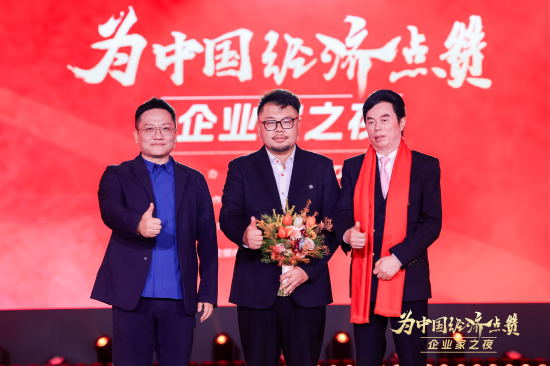
尹烨与高德康为韩璧丞见证荣誉时刻,2025企业家之夜举行
Xin Lang Cai Jing· 2026-01-29 12:17
Core Viewpoint - The event "Praise for China's Economy - Entrepreneur Night" highlighted the achievements of Qiangnao Technology, a leader in non-invasive brain-computer interface technology, and its impact on improving the lives of disabled individuals [1][8]. Group 1: Company Achievements - Qiangnao Technology, led by CEO Han Bicheng, has become a global leader in non-invasive brain-computer interface technology, breaking foreign monopolies and turning science fiction into reality through ten years of technological innovation [3][10]. - The company has developed advanced products such as intelligent bionic hands and legs, which have restored life capabilities to disabled individuals and provided hope to over a thousand children with autism [3][10]. - The company aims to use cutting-edge technology to help approximately 5 million people in China with limb disabilities regain their ability to work and live independently [4][12]. Group 2: Social Impact - The technology developed by Qiangnao is not just about high-tech solutions but focuses on restoring the lives of individuals who have faced significant challenges due to disabilities [6][13]. - A notable case involved a user who had lost a hand for 27 years, who expressed that the technology allowed him to feel as if he had his hand back after successfully using a bionic prosthetic to grasp a cup [6][13]. - The company is also working on products aimed at addressing sleep issues, highlighting the broader applications of brain-computer interface technology in improving quality of life [7][14].
科创板七载深耕启新程!金融界“科创汇”重磅启幕,赋能硬科技高质量发展
Jin Rong Jie· 2026-01-29 10:46
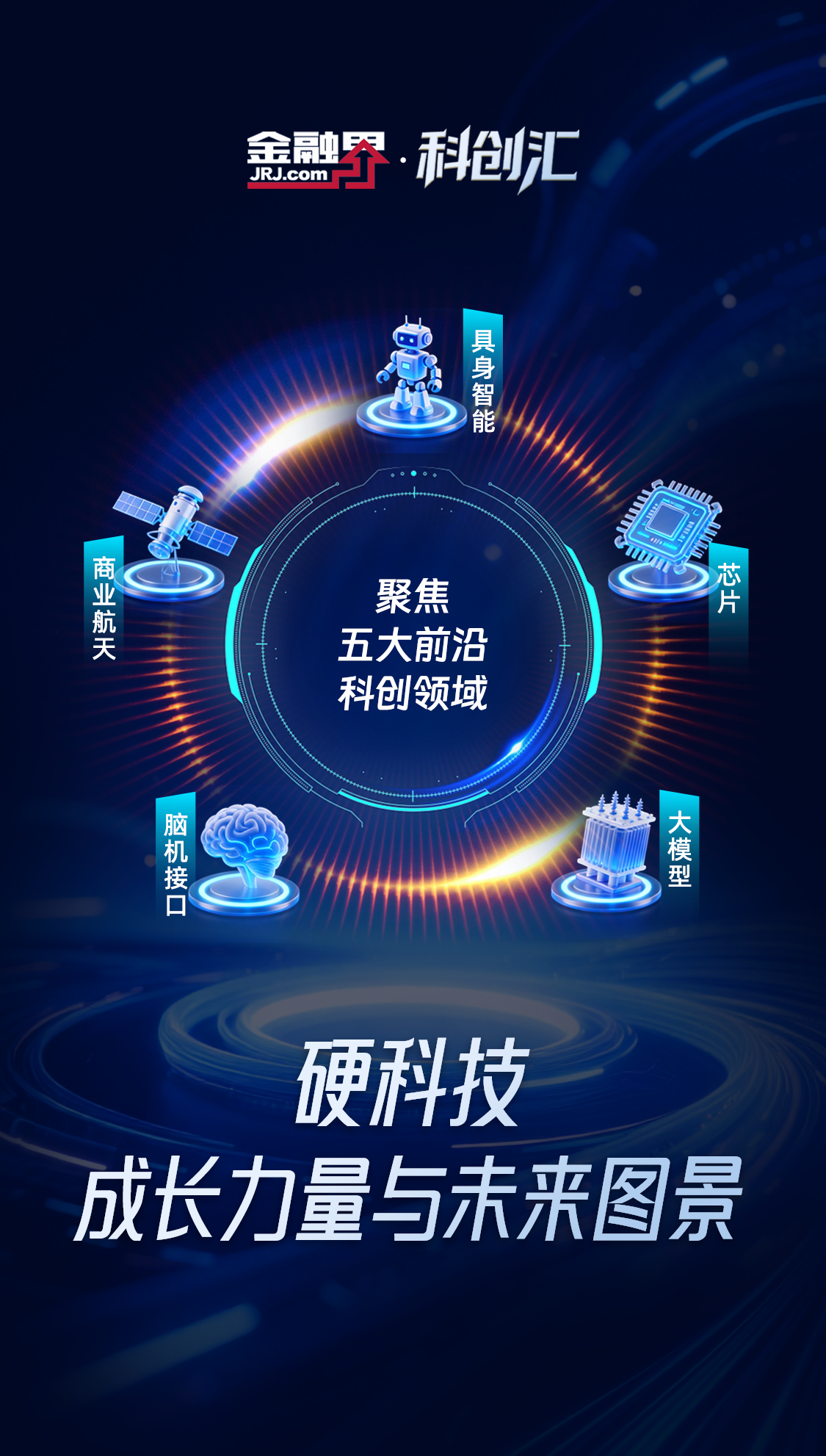
Core Insights - The Sci-Tech Innovation Board (STAR Market) has achieved significant milestones in its seven years of operation, with over 600 listed companies and a total market capitalization exceeding 10 trillion yuan, raising over 1.1 trillion yuan through IPOs and refinancing [1] - The "Sci-Tech Exchange" initiative aims to address industry development challenges and promote a virtuous cycle of technology, industry, and capital by connecting various stakeholders [1][2] Group 1: STAR Market Achievements - The STAR Market has become a core platform for nurturing new productive forces and promoting technological self-reliance, characterized by high levels of innovation, technology, and capital [1] - The board's reforms have expanded the scope of the fifth set of standards to include cutting-edge fields such as embodied intelligence, chips, large models, brain-computer interfaces, and commercial aerospace [1][5] Group 2: Sci-Tech Exchange Initiative - The "Sci-Tech Exchange" initiative focuses on four core objectives: value discovery, benchmark establishment, resource linking, and ecosystem co-construction [2] - The initiative will conduct in-depth analysis and research on five key cutting-edge fields, ensuring a comprehensive approach to industry chain integrity and technological innovation [5] Group 3: Communication and Impact - The initiative will utilize a multi-format communication strategy, including text, video, live broadcasts, and offline events, to enhance its influence and reach [6] - A comprehensive research campaign will be conducted from February to June 2026, covering major innovation hubs in China to showcase the vitality of the country's sci-tech industry [6]
融资20亿!强脑科技传赴港上市,杭州六小龙已有四家冲上市
Nan Fang Du Shi Bao· 2026-01-29 08:46
Core Viewpoint - Zhejiang Qiangnao Technology Co., Ltd. has reportedly submitted a confidential IPO application to the Hong Kong Stock Exchange, with CICC and UBS as joint sponsors, indicating a significant move towards public listing in the rapidly growing brain-computer interface (BCI) sector [1][3]. Company Overview - Founded in February 2015, Qiangnao Technology focuses on the development of non-invasive brain-computer interface technology, with products spanning smart bionics, health, and education [1]. - The company has launched several products, including a smart bionic hand, a brain-machine intelligent sleep device, and an attention training system [1]. Financing History - Qiangnao Technology completed a significant financing round in early January, raising approximately 2 billion RMB, marking it as the second-largest financing in the BCI field globally, after Neuralink [3]. - Since its inception, the company has completed six rounds of financing, including a notable $400 million Series A round in 2019 [3][4]. - The latest financing rounds include a $30 million Pre-B round and a $20 million Series B round in 2025 [4]. Market Trends - The BCI sector is experiencing rapid growth, with 26 financing events in 2025 totaling 1.778 billion RMB, a significant increase from 2024 [5]. - The global BCI market is projected to grow from approximately $2.6 billion in 2024 to $2.9 billion in 2025, with a further increase to $3.3 billion by 2026 [5]. - In China, the BCI market is expected to reach 3.8 billion RMB in 2025, up from 3.2 billion RMB in 2024 [5]. Policy Support - The Chinese government is actively promoting the BCI industry, with policies aimed at fostering innovation and establishing industry clusters by 2027 and 2030 [7]. - The national strategy includes BCI as a key area for economic growth, alongside other advanced technologies [7]. Industry Outlook - Analysts predict that the BCI industry is on the verge of significant growth, driven by commercial advancements and policy support [8]. - The transition from laboratory research to commercialization is expected to accelerate, particularly with the anticipated production scale-up by Neuralink [8].
脑机接口标准化迎新突破!两项医疗器械标准立项赋能产业升级
2 1 Shi Ji Jing Ji Bao Dao· 2026-01-29 07:36
Core Viewpoint - The recent approval of two medical device industry standards by the National Medical Products Administration (NMPA) marks a significant step towards the high-quality development of brain-computer interface (BCI) technology in China, providing essential support for the industry [1][4]. Industry Development - The BCI market in China is projected to reach 3.2 billion yuan in 2024, with a year-on-year growth of 18.8%, and is expected to grow to 5.58 billion yuan by 2027, reflecting a growth rate of 20% [3]. - As of early 2026, there are 2,041 BCI-related patents in China, with over 90% being invention patents, indicating a strong focus on innovation within the industry [3]. Standardization Efforts - The establishment of a standard system is crucial for addressing issues such as terminology confusion, fragmented technology layout, and lack of unified regulations, which currently hinder the rapid development of the BCI industry [3][4]. - The two newly approved standards specifically target medical devices for stroke and spinal cord injury rehabilitation, addressing urgent needs for regulation in the BCI medical device sector [4]. Policy Support - The "14th Five-Year Plan" identifies BCI as one of six future industries, highlighting its potential as a new engine for economic growth in China [5]. - The NMPA has prioritized the approval of implantable BCI medical devices, expediting the market entry of innovative products [6]. Market Dynamics - The BCI industry is entering a critical commercialization phase, driven by policy support, technological advancements, and clinical breakthroughs [6][7]. - The capital market shows strong interest in BCI, with significant increases in stock prices and investment events, indicating a robust growth outlook for the sector [7]. Future Directions - The future applications of BCI in the medical field are expected to expand into active scenarios for neuro-regulation, multi-modal integration, and potentially enhancing functions beyond mere rehabilitation [8].

全球脑机接口玩家奋楫争先-产业化落地谱写投资蓝图
2026-01-29 02:43
Summary of Key Points from Conference Call Records Industry Overview - The brain-computer interface (BCI) industry is in its early commercialization stage and is expected to be a major investment theme by 2026. [5] - The medical application of BCIs is predominant, accounting for 56% of the market in 2023, covering areas such as cognitive disorders, mental health issues, motor recovery, and sensory deficits. [4][13] Core Insights and Arguments - **Investment Opportunities in Pharmaceuticals**: The pharmaceutical sector is seeing significant investment opportunities, particularly in innovative drugs and related supply chains, with leading companies like WuXi AppTec, Hengrui, and Kanglong showing better-than-expected performance. [2] - **Focus Areas in Innovative Drugs**: Three main areas of interest in innovative drugs are obesity treatments, small nucleic acids, and second-line therapies, with the obesity and immuno-oncology markets reaching a scale of hundreds of billions of dollars. [3] - **Policy Support**: Government policies are crucial for the development of the BCI industry, with significant initiatives planned for 2025 to enhance public hospital engagement and pave the way for future insurance inclusion. [8] Key Technologies and Market Dynamics - **Core Technology Barriers**: The BCI industry has significant technological barriers concentrated in the upstream sector, including hardware (electrodes, chips), surgical robots, and algorithm processing. Domestic companies are accelerating the replacement of foreign suppliers. [9] - **Types of BCI Technologies**: BCIs can be categorized into invasive and non-invasive types, with invasive methods providing higher quality signals but requiring surgical procedures. [6][7] - **Neuralink's Custom ASIC Chips**: Neuralink requires custom ASIC chips to manage thousands of signal channels while controlling power consumption, focusing on amplifying, filtering, and digitizing weak neural signals. [11] Market Trends and Future Directions - **Neuroregulation Market**: The neuroregulation sector is the most mature within the BCI market, with a projected global market size of $6.1 billion by 2024, growing to $9.3 billion by 2029. [14] - **Commercialization Pathways**: The BCI technology is expected to follow a dual-track logic of rehabilitation leading to consumer validation, with serious medical applications likely to achieve scale first. [24] - **Emerging Companies**: Companies like New Wei Medical and Aipeng Medical are making rapid clinical advancements in semi-invasive BCI technologies, with promising safety profiles. [25][26] Additional Important Insights - **Challenges in BCI Development**: Companies face challenges such as the need for robust hardware stability and regulatory scrutiny, particularly for products intended for home use. [22] - **Investment Potential in Upstream Supply Chain**: Upstream companies in the BCI supply chain are experiencing increasing demand and investment potential, particularly those demonstrating long-term biocompatibility. [27]
马斯克冲刺机器人量产,果断停产特斯拉豪华车型!2026年资本支出将“非常大”
量子位· 2026-01-29 02:30
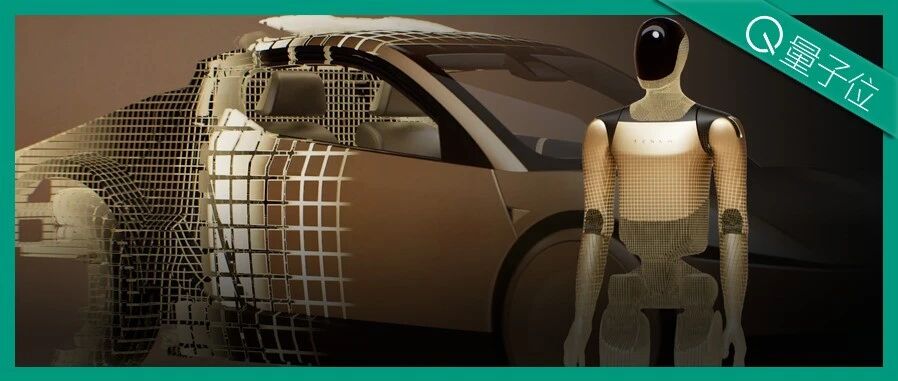
Core Viewpoint - Tesla is transitioning from a luxury car manufacturer to a robotics company, with plans to discontinue the Model S and Model X by Q2 2026 to allocate production resources for the Optimus robot [1][2][3]. Group 1: Transition to Robotics - The production lines for Model S and Model X will be repurposed for the Optimus robot, aiming for an annual output of one million units [5]. - The discontinuation of Model S and Model X is seen as a necessary step towards a future focused on autonomous driving [3][6]. - The core technologies developed for electric vehicles will be inherited by the Optimus robot, including actuators, power electronics, and AI algorithms [12][13]. Group 2: Sales and Financial Performance - In 2025, Tesla delivered approximately 1,636,129 electric vehicles, with Model S/X and Cybertruck accounting for only 50,850 units, representing about 3% of total sales, a 40.2% decline from 2024 [8]. - Tesla's Q4 2024 net income was $840 million, a 61% decrease year-over-year [10]. - Total automotive revenues for Q4 2024 were $19.798 billion, down 11% compared to the previous year [11]. Group 3: Future Investments - Tesla plans to invest $20 billion in xAI as part of its strategy to enhance AI capabilities for physical world applications [14][15]. - Capital expenditures for 2026 are expected to exceed $20 billion, more than double the $8.5 billion spent in 2025, focusing on ramping up production of humanoid robots [17].

Neuralink称临床试验参与者增至21人
Jin Rong Jie· 2026-01-29 02:05
马斯克旗下 脑机接口公司Neuralink周三表示,于正式开始人体测试两年后,公司目前在全球范围内的 临床试验中共有21名参与者,较去年9月的12人有所增加,当时该等参与者已经接受其芯片并用其通过 思维控制数位和实体工具。公司表示,正与监管机构和医院合作,为参与者提供改良的设备,并维持目 前未发生任何严重装置相关不良事件的纪录。 ...
万和财富早班车-20260129
Vanho Securities· 2026-01-29 01:59
Core Insights - The report highlights the structural opportunities in the semiconductor industry as leading companies issue price increase notices, indicating a potential shift in the supply chain dynamics [7] - The AI application landscape is accelerating with the release of new models, suggesting a growing market for companies involved in AI technologies [7] - The upcoming Brain-Computer Interface Developer Conference is expected to spotlight advancements in medical technology, particularly in the healthcare sector [7] Industry Updates - The National Energy Administration projects that by the end of 2025, the cumulative installed capacity of solar power in the country will reach 1.2 billion kilowatts, representing a year-on-year growth of 35.4% [5] - The State-owned Assets Supervision and Administration Commission is promoting strategic and professional restructuring and high-quality mergers and acquisitions [5] Company Focus - TaiLing Microelectronics plans to acquire 100% of Panqi Micro for 850 million yuan to enhance its position in the wireless IoT chip market [9] - Yingxin Development intends to acquire 60% of Changxing Semiconductor for 520 million yuan, entering the storage chip sector [9] - Zhongmu Co., Ltd. expects a net profit attributable to shareholders of 149 million to 192 million yuan for 2025, marking a year-on-year increase of 109.62% to 171.27% [9] - Jiangshan Co., Ltd. anticipates a net profit for 2025 of 480 million to 580 million yuan, reflecting a year-on-year growth of 113.90% to 158.47% [9] Market Review and Outlook - On January 28, the Shanghai Composite Index and Shenzhen Component Index experienced fluctuations, with a total trading volume of 2.97 trillion yuan, an increase of 704 billion yuan from the previous trading day [11] - The report notes a significant divergence in market performance, with cyclical stocks in metals, oil, and chemicals showing strong gains, while sectors like pharmaceuticals and photovoltaics faced declines [11] - The report suggests that despite the challenges in achieving broad market rallies, there remains a healthy rotation among hot sectors, with a focus on precious metals, semiconductors, commercial aerospace, and computing hardware [11]