蔬菜种植

Search documents
山东莘县:订单芹菜种出好“钱”景
Zhong Guo Jing Ji Wang· 2025-12-12 08:36
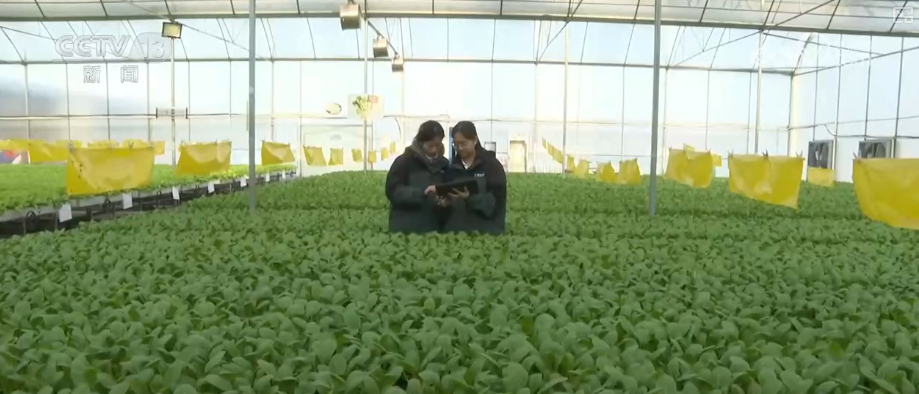
Core Viewpoint - The organic vegetable planting demonstration base in Shandong's Xincheng Town is successfully implementing a green planting model that integrates technology and sustainable practices, leading to stable prices and increased income for local farmers [1][2]. Group 1: Agricultural Practices - The base employs organic fertilizers, manual weeding, and plant-derived pest control methods, ensuring quality from the source [1]. - The cooperative model of "village collective + enterprise + farmers" allows for continuous planting throughout the year, achieving two to three harvests annually [1]. - The base consists of 300 greenhouses covering over 600 acres, with a yield of approximately 7,000 pounds per acre per harvest [1]. Group 2: Economic Impact - The price of the organic celery is stable at around 5 yuan per pound, contrasting with traditional celery prices that can fluctuate significantly [1]. - The base operates on an order agriculture model, supplying products directly to major supermarkets in cities like Shenzhen and Shanghai, ensuring steady sales and profitability [2]. - Plans are in place to expand the base to over 2,000 acres, aiming to involve more farmers in green agriculture [2]. Group 3: Community Development - The base has created over 100 jobs for local villagers, providing stable employment opportunities and an average monthly income of around 3,000 yuan [2]. - The initiative also offers free training in green planting techniques, fostering the development of new farmers who are skilled in technology and management [2]. - The focus on agricultural technology and the cultivation of leading enterprises is part of a broader strategy to enhance ecological industrialization in Xincheng County [2].
产业“抱团” 山东乡村振兴闯出新路
Zhong Guo Xin Wen Wang· 2025-12-12 08:29
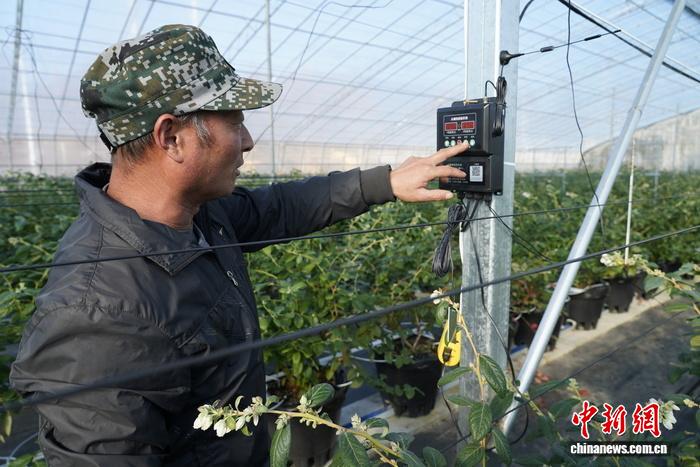
Core Viewpoint - The article highlights the collaborative development of industries in Shandong, showcasing how local governments and communities are working together to promote rural revitalization and economic growth through industry clustering and resource sharing [1][4][7]. Group 1: Industry Clustering - In Yang Caiyuan Village, the local government facilitated the expansion of the clothing industry by providing idle land and repurposing old school buildings for production, leading to increased business opportunities for local enterprises [1]. - The garment processing industry cluster in Tongxing Town has grown significantly, employing local villagers and improving their quality of life [1]. - The establishment of a standardized intelligent cotton clothing industrial park in Houying Town allows small-scale manufacturers to consolidate and scale up their operations, enhancing market access [5]. Group 2: Agricultural Innovation - In Xiwai Stone Village, the implementation of high-standard water and fertilizer integration greenhouses has transformed traditional farming practices, allowing for precise control over crop conditions [3]. - The blueberry industry in the neighboring Bu Kou Village, developed through collaboration among multiple villages, is projected to yield significant revenue, with an expected annual sales of over 400,000 yuan once fully operational [3]. Group 3: Chemical Industry Development - The Jiuye Chemical Park is creating a circular economy by linking neighboring chemical plants, where by-products from one facility serve as raw materials for another, thus optimizing resource utilization [7]. - The establishment of ten industrial chain working groups in Jiuye County aims to enhance the local chemical industry through systematic planning and supportive policies, fostering a collaborative environment among businesses [7].

多措并举“迎战”寒潮天气 各地全力保障“菜篮子”稳产稳供
Yang Shi Wang· 2025-12-12 04:13
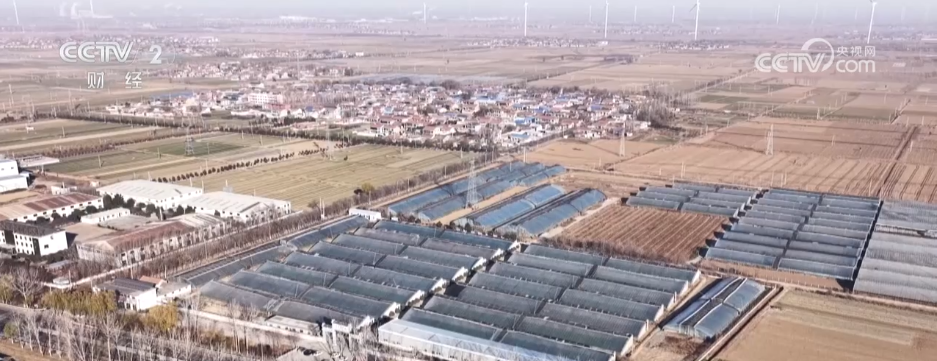
Group 1 - Shandong province is actively organizing agricultural experts to provide guidance on frost prevention and disease resistance for winter vegetable production in response to cold wave weather [1][3] - In Dongming County, various vegetables are thriving despite recent temperature drops, but challenges in temperature and humidity control, pest management, and fertilization have increased [3] - In Dingtao District, experts are advising farmers on strengthening greenhouse structures and improving insulation due to the severe cold wave [5] Group 2 - In Dongying City, farmers are employing a "harvest and protect" strategy to mitigate the impact of the cold wave on outdoor vegetables, focusing on harvesting mature cabbages and covering unharvested crops with protective materials [6][8] - In Henan province, multiple regions are implementing cold weather measures for vegetables, including reinforcing greenhouses and accelerating harvests to ensure stable supply [8][10] - In Nanyang City, farmers have preemptively installed insulation in greenhouses and are maintaining ventilation and irrigation systems to create suitable growing conditions [12][14] Group 3 - In Xinjiang, the region is facing severe challenges due to continuous heavy snowfall and low temperatures, impacting both facility agriculture and livestock farming [15][17] - Farmers in Qitai County are actively clearing snow from greenhouse roofs to prevent structural damage and are receiving guidance on temperature control and disease prevention [17] - In Fukang City, livestock farmers are ensuring feed transport remains unaffected by snow, with agricultural technicians assisting in checking heating systems and animal health [19]
多种措施应对寒潮,山东沂南全力保障蔬菜供应
Qi Lu Wan Bao· 2025-12-12 02:51
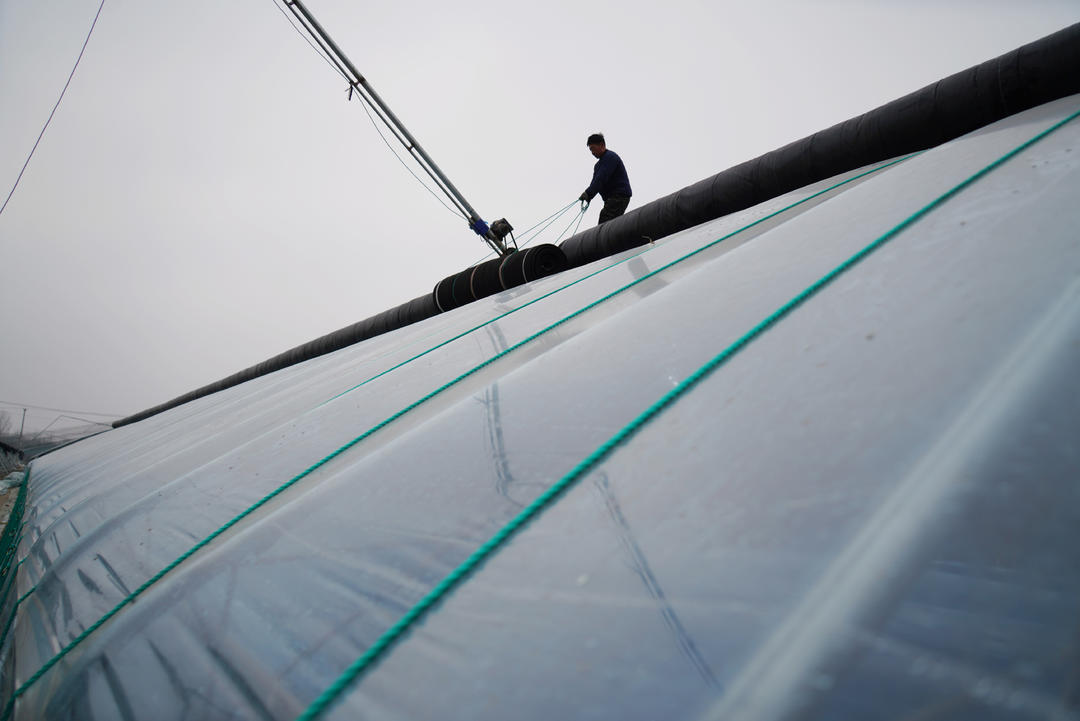
Core Viewpoint - Shandong Province's Linyi City, specifically Yinan County, is actively implementing measures to ensure vegetable supply during cold weather, with a focus on protecting crops and maintaining market availability [1]. Group 1: Measures Taken - Yinan County has planted a total of 120,000 acres of facility vegetables to secure supply during winter [1]. - Farmers are utilizing thermal insulation materials in vegetable greenhouses to maintain warmth [3]. - Heating equipment is being checked and maintained in seedling greenhouses to ensure optimal growing conditions [5]. Group 2: Specific Techniques - Water heating air conditioning systems are being employed in seedling greenhouses for effective temperature control [6]. - Farmers are covering newly grafted cucumber seedlings with insulation film to protect them from cold [8]. - Workers are engaged in grafting cucumber seedlings within the seedling greenhouses to enhance crop yield [10]. Group 3: Market Activity - Farmers in Yinan County are actively selling lettuce, indicating a focus on market supply despite adverse weather conditions [11].
村里来了蔬菜经纪人
Jing Ji Ri Bao· 2025-12-11 21:37
一直以来,周口是河南省蔬菜生产大市,全市常年瓜菜种植面积超510万亩,产量达1500万吨以上,种 植面积与产量均位居全省首位。庞大的蔬菜产量,吸引了全国多个省市的工人前来"淘金"。在盐场村蔬 菜种植基地,前来从事蔬菜产业的外地工人占比已超过用工量的半数。 "我们来这里将近6年了,这里土壤条件好,农田水利等设施完善,产出的蔬菜品质高,在市场上也走 俏。"贵州省安顺市"菜客"经纪人韦兴付说,"我们平时用工量也大,很多村民在这里边打零工边学技 术。工人最高一天能拿到五六百元呢!技术学成之后,愿意单干的村民也不在少数。" 冬日里,位于河南省周口市淮阳区曹河乡盐场村的千亩供港蔬菜种植基地内,一垄垄绿油油的广东菜心 长势喜人。 53岁的李素霞双手戴着手套,蹲在菜地里,右手用掐尖拇指刀采摘迟菜心,左手臂弯很快码了整整两 排。基地里包括李素霞在内的60余名工人穿梭在田垄间采摘,一筐筐新鲜菜心经精心采收后迅速装车外 运。"这种菜心低热量、高营养,很受市场欢迎,根本不愁卖。"曹河乡农办负责人耿守鹏说。 生态种植,加上融入现代科技元素,曹河乡打造智慧农业新模式。目前,该种植基地配备了先进的灌溉 系统,根据农作物的生长需求和土壤湿度 ...
开屏消费观|近期昆明蔬菜价格持续走高,咋回事?
Sou Hu Cai Jing· 2025-12-11 16:09
"老板,这香菜能再便宜点不?30块钱一公斤也太贵了!"12月10日上午,在昆明五里多农博广场内,市民张阿姨正和摊主讨价还价。 当日,开屏新闻记者在该市场看到,各类蔬菜整齐摆放,但价格标签上的数字较往常明显上升。"涨价最厉害的就是香菜,最高的时候卖到80元一公斤,现 在虽然降到30元一公斤,但还是比平时贵不少。"摊主李师傅告诉记者,除了香菜,茴香、小米辣、番茄等菜品价格也涨幅显著,不过近几日部分菜品已呈 现"高位回落"的趋势。 商家采购量缩减 市民抢囤土豆洋葱等耐储菜 消费端已明显感受到此轮蔬菜涨价的影响。12月11日,山了山有机蔬菜销售负责人段女士向记者介绍,这波涨价已持续了两个多月,其中佐料类菜品涨幅最 为突出。 "我们主要做社群和线上销售,能明显感受到顾客的购买意愿在发生变化。"段女士说,对于家庭日常需求量不大的顾客而言,蔬菜涨价带来的影响有限;但 餐饮商家等需求量大的客户,已明显减少采购量,部分商家还调整了菜单,减少高价蔬菜的使用量。 在广福路上的昇崧超市,一款山地菠菜标价为250克11.8元(折合47.2元/公斤),达到平时价格的3倍。正在买菜的冯女士告诉记者,自己平时不常做饭,原 本没关注菜价,直到 ...

“光伏+农业”赋能乡村振兴
Xin Hua Ri Bao· 2025-12-10 21:41
Core Viewpoint - The integration of photovoltaic (PV) technology with agriculture is emerging as a powerful driver for rural revitalization and achieving dual carbon goals in Nanjing National Agricultural High-tech Zone, showcasing innovative practices such as soil-less vegetable cultivation and fish farming under solar panels [1] Group 1: Photovoltaic and Agriculture - The "PV + agriculture" model allows for the cultivation of vegetables without soil or pesticides, with the ability to control humidity, light, and temperature, resulting in a growth cycle that is 20 days shorter than traditional farming [1] - The output from the plant factory can reach approximately 150 kilograms of vegetables and 20,000 ornamental flowers daily, generating an annual output value of around 1.8 million yuan [1] - The combination of glass and PV structures in flower-growing greenhouses enhances flower yield and optimizes land use efficiency [1] Group 2: Photovoltaic and Aquaculture - The "PV + fish farming" trend involves floating solar panels on fish ponds, which helps reduce water evaporation, suppress algae growth, and improve fish quality [1] Group 3: Environmental and Economic Impact - The synergy between "PV + agriculture" is contributing significantly to green development and rural revitalization, aligning with the dual carbon objectives [1]
(乡村行·看振兴)山西繁峙:“红韵蔬乡”定制农业助力乡村产业升级
Zhong Guo Xin Wen Wang· 2025-12-10 10:49
Core Viewpoint - The "Hongyun Vegetable Town" customized agriculture project in Shanxi Province is a significant initiative aimed at upgrading rural industries and promoting rural revitalization through a total investment of over 1.2 billion yuan [1][3]. Group 1: Project Overview - The project includes the establishment of smart vegetable greenhouses and the introduction of intelligent dehydrated vegetable production lines, creating a full-process system from market orders to base planting, standard production, and value-added processing [1][3]. - The project is supported by the Central Special Lottery Public Welfare Fund, which addresses challenges such as market fluctuations and unstable income in vegetable planting [3][4]. Group 2: Agricultural Development - The project aims to enhance production capacity and quality control to meet high-end market demands, with approximately 18,000 square meters of smart greenhouses being constructed [3][4]. - The introduction of intelligent dehydrated production lines is expected to increase fresh vegetable supply by about 50,000 tons and boost output value by over 30% [4]. Group 3: Economic Impact - The project is designed to benefit local farmers through a multi-faceted interest linkage mechanism, allowing them to earn income from land leasing, construction operations, and order-based planting [8][9]. - It is projected that the collective economic income of the project area will increase by approximately 1.28 million yuan annually, with farmers expected to see an average annual income increase of about 12,000 yuan [9]. Group 4: Integration of Sectors - The project integrates primary, secondary, and tertiary industries, promoting a circular economy model that includes planting, processing, livestock farming, and returning organic fertilizers to the land [5][6]. - The initiative also enhances the synergy between red tourism and modern agriculture, improving visitor experiences and extending their stay, which in turn boosts local agricultural product consumption [6][8].
曾经火遍全网的曹县,现在怎样了?
Zhong Guo Xin Wen Wang· 2025-12-10 08:49
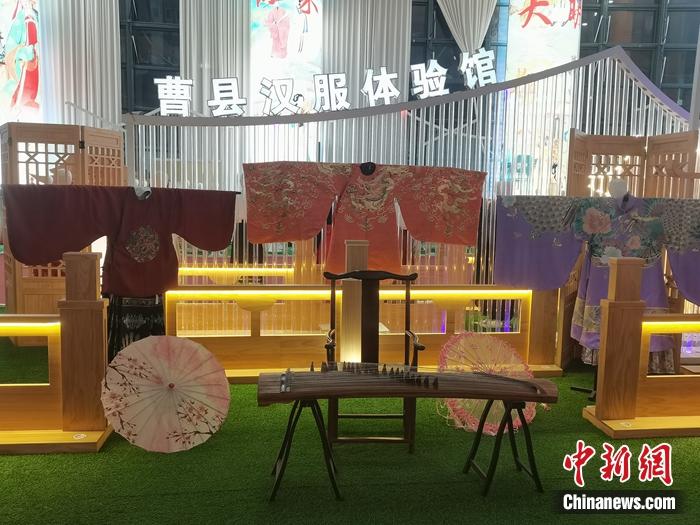
曾经火遍全网的曹县,现在怎样了? 中新网菏泽12月10日电(记者 上官云)几年前,一个网络热梗带火了曹县,这个中国北方的小城迅速在社 交平台走红,曾被网友戏称为"宇宙中心"。 如今,曹县是什么样子?从被调侃为"宇宙中心",到凭借马面裙出圈,它为何能持续吸引关注度?近 日,记者跟随"沿着水网看山东"采访团,来到山东曹县,探访城市背后的故事。 "互联网+电商",弯道超车 曹县隶属于山东省菏泽市,位于山东省西南部,鲁豫两省八县交界处,地处黄河冲积平原,古时又 称"曹州"。 现场展示的一些服饰。中新网记者 上官云 摄 "我们孙庄村以前也是靠传统的农业种植为生,后来尝试过产业转型升级,也曾去山东寿光考察,尝试 过盖大棚、种蔬菜,2013年瞅准时机,做起了电商。"孙学平说道。 据孙学平介绍,目前,村里拥有网店2600多个、表演服饰企业160余家,去年整体的电商销售额突破了5 亿元,已经形成了比较完备的产业链条。 资金投入助力产业发展 值得注意的是,水库移民后期扶持资金在孙庄村的发展中发挥了重要作用。 有资料显示,这些年来,曹县水利移民服务中心投入资金,在孙庄村建设标准化厂房、移民活动中心等 基础设施。这为电商产业的发展提 ...
农业科普·品尝舌尖上第一口“鲜” 解锁反季节蔬菜背后高科技“密码”
Yang Shi Wang· 2025-12-10 07:16
Core Viewpoint - The article addresses misconceptions about off-season vegetables, clarifying that they are produced using modern agricultural technologies and do not inherently lack nutrition or safety [1][3][15]. Group 1: Definition and Types of Off-Season Vegetables - Off-season vegetables are defined as agricultural products that are grown outside their traditional harvest periods through modern technology, allowing for year-round supply [3]. - There are three main categories of off-season vegetables: those grown in different geographical locations, emergency reserves using preservation techniques, and those cultivated in greenhouses [4]. Group 2: Nutritional Value and Quality - Misconceptions about off-season vegetables lacking nutrition stem from perceived differences in taste and texture, which do not equate to a lack of nutritional value [6][7]. - While growing conditions can affect the flavor and texture of vegetables, the fundamental nutritional components remain stable [10]. - The use of cold chain logistics and immediate pre-cooling after harvest can significantly reduce nutrient loss and maintain freshness [12]. Group 3: Safety and Pesticide Use - Claims that off-season vegetables contain high pesticide residues are misleading; modern agricultural practices involve strict management of pesticide use [15][17]. - The majority of pesticides used today are biodegradable and subject to safety testing before products reach the market [17]. Group 4: Technological Innovations in Off-Season Vegetable Production - Advanced technologies in greenhouse farming allow for the production of off-season vegetables, with controlled environments ensuring optimal growth conditions [22][30]. - In a specific intelligent greenhouse in Shandong, the temperature is maintained above 15°C during winter, and automated systems monitor humidity and temperature to support vegetable growth [26][28]. - The use of LED grow lights compensates for reduced sunlight in winter, enhancing the growth of off-season crops like cucumbers, achieving yields comparable to summer production [31].