
信用评级

Search documents
穆迪分析:受关税影响,日本工资增速料放缓
news flash· 2025-06-05 04:47
Core Insights - Moody's analysis indicates that Japan's wage growth is expected to slow down due to the impact of increased tariffs on production and shipping [1] - In April, Japan's inflation-adjusted wages fell by 1.8% compared to the previous year, highlighting the ongoing challenges faced by households [1] - Persistent inflation is putting pressure on consumer spending and creating policy challenges ahead of the upcoming upper house elections in July [1] Economic Impact - The increase in tariffs is anticipated to hinder wage growth in Japan, leading to a more difficult economic situation in the coming months [1] - The decline in real wages, as evidenced by the 1.8% drop, suggests that households are experiencing reduced purchasing power [1] - The combination of stagnant wage growth and ongoing inflation is likely to complicate economic conditions further [1]
信用赋能科技企业走向资本市场——东方金诚“信用赋能产业发展”系列沙龙活动(成都场)成功举办
Xin Lang Cai Jing· 2025-06-03 09:34
近日,由成都龙泉驿区财政局、龙泉驿区新经济和科技局、东方金诚国际信用评估有限公司、成都中小企业融资担保有限责任公司联合举办的"信用赋能 科技企业走向资本市场"沙龙活动在四川省成都市成功举办。本次活动邀请龙泉驿区科技型上市公司、专精特新企业共同探讨科技企业资本市场融资新思 路,为成都龙泉驿区产业发展和升级注入新活力。 未来,东方金诚将继续秉持服务国家战略的初心,积极践行金融"五篇大文章",凭借评级专业技术积淀和全国范围内的丰富实践经验,持续通过信用赋能 助力科创企业走向资本市场,为科创企业高质量发展注入专业动能。 活动现场,东方金诚立足龙泉驿区区域及产业特点,结合东方金诚赋能成都市科创企业走向资本市场的实践案例,深度解析了科技创新型企业信用评级方 法与模型,并为受邀企业积极探索债券市场直接融资进行了针对性的分析。另外,成都中小企业融资担保有限责任公司也介绍了其担保的科创债落地案例 和助力科创企业的各项举措。 近年来,东方金诚立足国有信用评级机构专业优势,积极响应国家关于支持科技创新企业各项政策和制度安排,发布了科技创新型企业信用评级方法和模 型,并积极在全国多地开展科创债专题活动,持续为推动科创企业高质量发展贡 ...


评级不变 中国经济抗住了
Zhong Guo Xin Wen Wang· 2025-05-31 13:37
近日,国际评级机构穆迪发布报告,决定维持中国主权信用评级A1不变。 报告指出,中国经济体量巨大、充满活力,且具备创新能力。从近期的趋势来看,其增长质量持续提 升,经济韧性不断增强。 中国财政部有关负责人也表示,此次评级决定"是对中国经济向好前景的正面反映"。 回到4月初,美国一系列加征关税的贸易政策搅动全球,国际评级机构惠誉虽认可中国的经济增长前景 和全球贸易关键地位,但仍将中国主权信用评级由A+调降至A。 在这一轮不确定性情绪传导中,中国经济的韧性面临考验。但两个月过去,市场没有见到所谓的"崩 溃",而是看到一个顶住压力、实现稳定增长的中国。 最新数据显示,4月份,中国规模以上工业增加值同比增长6.1%,服务业生产指数同比增长6.0%,货物 进出口总额同比增长5.6%。工业生产、服务业加快回升,进出口保持平稳,给市场带来信心和预期支 撑。 中国经济应变克难稳定运行,靠的是什么? 首先是内需的支撑力在增强。 内需加创新的组合拳,正成为中国经济重要驱动力。4月份,中国规模以上高技术制造业增加值、数字 产品制造业增加值均同比增长10.0%。 "各地都在因地制宜推动传统产业的数字化、绿色化、高端化改造升级,新兴产业 ...
成批黄金直运黄金,特朗普突然发现情况不妙,中国还防了他一手
Sou Hu Cai Jing· 2025-05-30 10:20
Core Insights - China's gold imports surged to 127.5 tons in April, a 73% month-on-month increase, marking an 11-month high, while simultaneously reducing its U.S. Treasury holdings by $18.9 billion to $765.4 billion [1][3] - The reduction in U.S. Treasury holdings reflects a broader trend of decreasing confidence in U.S. creditworthiness, exacerbated by rising national debt, which has reached $36.1 trillion, and a growing fiscal deficit [1][3] - The increase in gold imports indicates a shift towards safer assets amid global economic instability, with central banks globally purchasing over 1,000 tons of gold annually from 2022 to 2024, significantly higher than the average of 473 tons from 2010 to 2021 [3][5] Economic and Trade Relations - The U.S. credit risk is impacting the attractiveness of U.S. Treasuries, with the Trump administration's erratic economic policies and trade protectionism contributing to a decline in investor confidence [3][5] - China's strategy of reducing U.S. Treasury holdings while increasing gold reserves is a response to uncertainties in U.S.-China trade relations, aiming to mitigate potential losses from unfavorable U.S. economic measures [5][9] - China is actively diversifying its trade partnerships, notably strengthening ties with ASEAN, which includes completing negotiations for a new version of the China-ASEAN Free Trade Area, thereby reducing reliance on the U.S. market [8][9] Market Dynamics - The price of gold has been on an upward trend, driven by ongoing global monetary easing and geopolitical tensions, which enhance its appeal as a safe-haven asset [5] - The shift in Australia's trade policy, emphasizing its partnership with China over the U.S., reflects China's growing significance in the global economic landscape and challenges the U.S.'s strategy to isolate China [8][9] - Overall, China's actions in reducing U.S. debt holdings and increasing gold investments are part of a broader strategy to safeguard its economic interests amid a complex international environment [9]

东方金诚荣获第十一届中国资产证券化论坛 “年度杰出机构”及多项产品奖
Xin Lang Cai Jing· 2025-05-30 09:30
东方金诚获奖情况: 交易所市场企业资产证券化年度嘉勉(上交所、深交所) 杰出奖 国家电投-黄河公司能源基础设施投资中型水电绿色资产支持专项计划 交易所市场企业资产证券化年度嘉勉(上交所、深交所) 优秀奖 近日,由上海高金金融研究院与中国资产证券化论坛(CSF)主办的"2025第十一届中国资产证券化论坛年会"在京隆重开幕。在本次中国资产证券化论坛 颁奖典礼上,东方金诚荣获"年度杰出机构奖"。同时,东方金诚承做项目中,共有9个项目分别荣获"交易所市场企业资产证券化年度嘉勉(上交所、深交 所) 杰出奖" "交易所市场企业资产证券化年度嘉勉(上交所、深交所) 优秀奖" "交易所市场企业资产证券化年度嘉勉(上交所、深交所) 新锐奖" "信贷资产证 券化年度嘉勉(银行间市场)杰出奖" "信贷资产证券化年度嘉勉(银行间市场)十佳奖"和"结构性融资年度嘉勉(银登中心、中保登、北交所等)杰出奖"。 中誉至诚系列不良资产支持证券 信贷资产证券化年度嘉勉(银行间市场)十佳奖 建欣2024年系列不良资产支持证券 结构性融资年度嘉勉(银登中心、中保登、北交所等)杰出奖 国家电投-海南电力清洁能源绿色碳中和乡村振兴资产支持专项计划(革命 ...

S&P Global Inc. (SPGI) CEO Martina Cheung presents at Bernstein's 41st Annual Strategic Decisions Conference (Transcript)
Seeking Alpha· 2025-05-29 21:01
Group 1 - The company is undergoing a significant transition with the recent appointment of Martina Cheung as CEO, who has a strong background in various senior leadership roles within the organization [3][4] - The CEO has announced the spin-off of the Mobility division, indicating a strategic shift in the company's focus and operations [3] - There is a strong emphasis on building and maintaining trusted relationships with clients globally, which is seen as a key driver for future growth [4] Group 2 - The company is experiencing considerable policy and macroeconomic volatility, which presents both challenges and opportunities for strategic decision-making [3] - The CEO expresses optimism about the company's growth potential across its divisions and the overall enterprise, highlighting the excitement generated from customer interactions and feedback [4]


美国借款人迎来借贷成本高企时代
财富FORTUNE· 2025-05-29 11:44
Core Viewpoint - The recent tax reduction measures proposed in the Republican "Big and Beautiful" bill are prompting investors to sell U.S. Treasuries, reminiscent of the 2007 market behavior, indicating a potential long-term rise in borrowing costs for U.S. borrowers [1][3]. Group 1: Bond Yield Trends - The 10-year U.S. Treasury yield, a benchmark for various loans, has seen a significant rise, with the 30-year yield surpassing 5% for the first time in nearly two years, reaching its highest level since spring 2007 [3][6]. - Morgan Stanley's Jim Caron suggests that interest rates are unlikely to return to historical lows, indicating a need to adapt to a steeper yield curve and persistent inflation [3][8]. Group 2: Economic Implications - The rise in bond yields is attributed to the Federal Reserve's actions to combat inflation, which have diminished the attractiveness of existing bonds compared to newly issued ones [5][6]. - Concerns over rising inflation and federal deficits, exacerbated by tax cuts and tariffs, are driving up interest rates, with the Congressional Budget Office projecting a federal deficit of $1.9 trillion for FY2025, representing 6.2% of GDP [6][7]. Group 3: Political and Fiscal Dynamics - The "Big and Beautiful" bill is expected to increase the deficit by $3.8 trillion by 2034, raising concerns among investors about the sustainability of such fiscal policies [7]. - The potential for a unified Republican government to maintain large deficits poses risks, as highlighted by Moody's recent downgrade of U.S. debt ratings due to deficit concerns [7][8]. Group 4: Global Economic Factors - Caron emphasizes that the current rise in yields is not a temporary phenomenon, contrasting with the declining trend of borrowing costs since the 1980s, which was largely due to low inflation rates influenced by globalization [8][11]. - The ongoing concerns about U.S. debt and shrinking global trade may weaken demand for U.S. Treasuries, further pushing up bond yields [11][12].

中方抛189亿美债,美本土陷入危机,特朗普喊话:要来中国!
Sou Hu Cai Jing· 2025-05-29 01:22
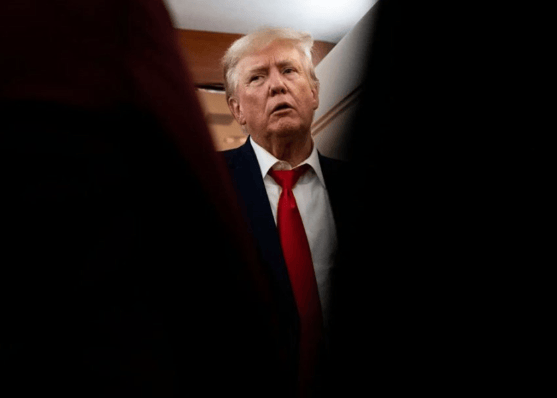
特朗普(资料图) 不仅如此,国际评级机构穆迪宣布将美国主权信用评级从Aaa下调至Aa1,同时将美国主权信用评级展望从"负面"调整为"稳定"。这不是 美国第一次被降级。此前,标准普尔和惠誉分别在2011年和2023年将美国主权信用评级调至Aaa以下。美国最高信用评级接连失守,不 仅暴露出其国内经济治理的深层缺陷,更折射出全球治理体系变革的紧迫性。穆迪此次调降评级,源于美国政府债务与利息支出的持续 攀升。数据显示,美国联邦政府债务总额目前已超过36万亿美元,仅今年6月份就有6.5万亿美元的国债到期。 在此背景下,5月16日播出的福克斯新闻节目中,特朗普一顿吹嘘称,这些国家曾被中国极力拉拢,打算靠拢中国,但这种情况不会发生 了。他"确信"自己已经改变了这一局面。有美国学者指出,除投资和人工智能、安全等问题的合作外,特朗普也希望看到海湾国家降低 与中国之间的关系,"但实际上不太可能发生这样的情况"。特朗普在采访中多次提到了中国。当被问及是否希望访问中国时,特朗普回 答:"我当然愿意。"他补充道,中美关系"至关重要"。 据环球时报援引美国财政部发布的最新数据,截至3月底,中国持有的美国国债已经较上个月减少了约189亿美 ...
FICC策略:美债收益率破5,会持续多久?
Guotai Junan Securities (Hong Kong)· 2025-05-28 09:41
Core Insights - The report discusses the recent rise in long-term US Treasury yields, with both 20-year and 30-year yields surpassing 5% and remaining above this level since late May 2023 [3][4][8] - The downgrade of the US credit rating by Moody's from Aaa to Aa1 on May 16 is identified as a primary factor contributing to the increase in yields, leading to a disappointing auction for 20-year bonds on May 21, where the final yield was 5.047%, up 24 basis points from April [4][6] - Concerns regarding the US debt ceiling have resurfaced, particularly following the passage of the "Beautiful Bill" on May 22, which allows for a $4 trillion increase in the debt ceiling, suggesting a return to expansionary fiscal policies [4][6][7] - Market fears of inflation and delayed interest rate cuts are also contributing to the sustained high yields, with the report indicating that the Federal Reserve's reluctance to lower rates could keep yields elevated for an extended period [8] Summary by Sections Recent Yield Trends - Long-term US Treasury yields have recently risen above 5%, with specific reference to the 20-year and 30-year bonds [3][5] - The yields have been influenced by a combination of credit rating downgrades, debt ceiling issues, and inflation concerns [4][8] Credit Rating Impact - The downgrade by Moody's has led to increased market volatility and higher yields, as all three major rating agencies have now rated US debt below the highest level [4][6] - The immediate effect was seen in the auction results, which reflected a significant increase in yield compared to previous months [4][6] Debt Ceiling Concerns - The passage of the "Beautiful Bill" has raised expectations of increased debt supply, which could further pressure yields upward [4][6][7] - Historical context is provided, noting that after previous debt ceiling resolutions, yields have tended to rise, indicating a potential pattern [6][7] Inflation and Interest Rate Outlook - The report highlights that inflation fears and the Fed's cautious stance on rate cuts are likely to maintain high yield levels [8] - The probability of a rate cut in June has dropped significantly, indicating a shift in market expectations regarding monetary policy [8][11]
香港回应信用评级:具备稳定前行韧性
Xin Hua Wang· 2025-05-27 23:40
新华社香港5月27日电 评级机构标普及穆迪27日分别发表报告,维持香港的信用评级。香港特区政 府发言人当日回应表示,最近三家评级机构——惠誉、标普及穆迪,分别确认香港的评级,并一致给予 香港"稳定"的评级展望,反映香港在全球经济和金融不确定性增加之际,具备稳定前行的韧性。 发言人表示,特区政府注意到标普维持香港"AA+"的信贷评级和"稳定"的评级展望,而穆迪在维持 香港"Aa3"信贷评级的同时,将评级展望由"负面"调升为"稳定"。标普及穆迪均对香港的信用基本面作 出相当正面的评价,包括庞大的财政缓冲和外汇储备、强健的对外资产负债表以及较高人均收入水平 等。 发言人说,最近的数据充分显示,香港的金融体系保持稳健,银行存款持续增长、资本市场表现活 跃、新股市场畅旺,这些都反映环球投资者对香港的信心。 发言人说,香港经济在今年首季稳健增长,尽管关税战持续影响全球经济,但随着国际贸易摩擦近 期稍为缓和,外围环境的不利因素和不确定性会略为减轻。内地持续推进高水平对外开放,经济稳中有 进,也有充足的政策空间和政策工具应对和化解各种风险挑战;加上在科技创新、绿色转型和数字经济 等方面不断有所突破并加速发展,是香港经济发展的 ...