光电子

Search documents
转型闯关,武汉不失速
Chang Jiang Ri Bao· 2025-07-23 00:46
Core Viewpoint - Wuhan is undergoing a significant transformation, achieving a GDP of 2 trillion yuan in 2023, making it the first city in Central China to reach this milestone, with a projected GDP growth rate of 5.2% in 2024 and 5.4% in the first quarter of 2025 [2][3][10] Economic Stability and Growth - Wuhan's industrial investment growth rate was 12.1% from January to May 2023, marking 18 consecutive months of double-digit growth [6] - The city has seen a 22.3% year-on-year increase in imports and exports, surpassing 210 billion yuan in the first half of the year [6] - The consumer market is thriving, with a continuous rise in core CPI over three months [7] New Industries and Innovations - In the first half of 2023, Wuhan's production of new energy vehicles exceeded 168,000 units, a 152% year-on-year increase [8] - The optical electronics industry achieved a production value of 205.3 billion yuan, growing by 31.2% [8] - The city is advancing in high-tech sectors, with significant breakthroughs in semiconductor and laser technologies [9][10] Dual-Track Development Strategy - Wuhan is pursuing a "two-legged" approach to development, balancing innovation with traditional industries [15][20] - The city is enhancing its manufacturing base while fostering new technologies, such as domestically produced chips and advanced robotics [19][21] Quality and Efficiency in Development - The focus is on high-quality growth, with initiatives like the "robot valley" promoting local production of key components [21][24] - The city is implementing strategies to optimize land use and increase economic value, such as the "upstairs economy" and eco-friendly projects [22][23]

武汉打造500余家上市“后备军” 多项举措助推鄂企赴港融资
Chang Jiang Shang Bao· 2025-07-21 22:59
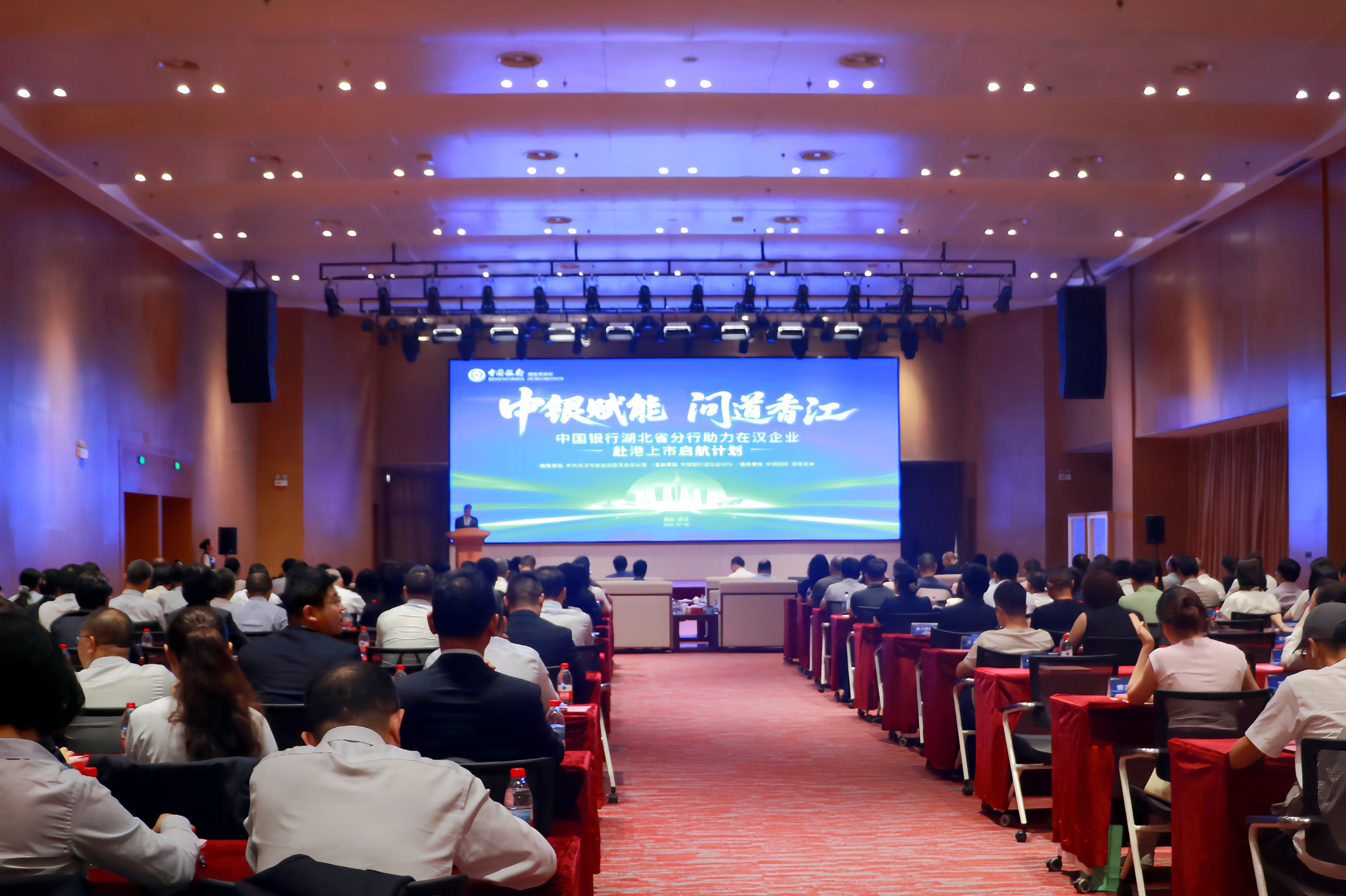
长江商报消息 ●长江商报记者 刘倩雯 近日,在助力武汉企业赴港上市政策宣讲会上,武汉市宣布已建立由500余家企业组成的上市"后备 军",并推出多项扶持政策,加速企业对接国际资本市场。据了解,2025上半年,港股IPO募资额超千 亿港元,重登全球榜首,为武汉企业赴港融资提供了契机,武汉元光科技、大众口腔两家企业在港交所 成功挂牌上市。武汉市政府联合金融机构,通过政策支持、梯度培育和全链条服务,计划5年内推动50 家优质企业登陆港股,进一步强化武汉作为中部金融枢纽的地位。 梯度培育助力鄂企上市 近年来,武汉把推动企业上市作为增强区域经济竞争力的重要抓手。武汉市委金融办相关负责人在会上 介绍,目前武汉市已构建由536家"金种子""银种子"企业组成的梯度培育库,建立35家企业的在辅在审 库,形成了市级统筹、区级联动、政银协同的上市培育格局。 2025上半年,武汉企业元光科技和大众口腔在港交所成功挂牌,成为本地企业拓展境外融资路径的典型 案例。特别是在当前港股IPO市场回暖、上半年募资额重返全球首位的大背景下,为武汉企业赴港上市 创造了有利环境。 为推动更多企业顺利迈入国际资本市场,政银联手搭建常态化对接平台,制定了 ...
支持赴港上市 武汉建立500余家上市企业“后备军”
Chang Jiang Ri Bao· 2025-07-20 00:43
Core Viewpoint - Wuhan is enhancing the cultivation and guidance of companies preparing for listing, establishing a reserve of over 500 companies to improve listing services [1][3] Group 1: IPO Environment - In the first half of this year, Hong Kong's IPO fundraising exceeded HKD 100 billion, regaining the top position globally after four years, providing a favorable environment for Wuhan companies to raise funds in Hong Kong [3] - Two companies from Wuhan, Yuan Guang Technology and Dazhong Dental, successfully listed on the Hong Kong Stock Exchange in the first half of the year [3] Group 2: Supportive Policies - Wuhan has established a gradient cultivation database of over 500 "gold seed" and "silver seed" companies, along with a library of 35 companies under review [3] - The government and banks are collaborating to create a regular communication platform and implement the "Eqi Enterprise Hong Kong Stock Listing Assistance Plan," aiming to promote 50 quality companies to list in Hong Kong over five years [3] Group 3: Listing Services - A "5-day response closed-loop mechanism" has been established to prioritize support for key reserve companies, including land, talent apartments, and procurement orders for innovative products [3] - There is a focus on enhancing listing guidance and conducting cross-border investment and financing roadshows in sectors such as optoelectronics, new energy, biomedicine, and high-end equipment [3] Group 4: Financial Support - The Bank of China Hubei Branch plans to collaborate with professional institutions to provide a one-stop solution for companies listing in Hong Kong, covering cross-border financing, financial advisory, and listing services [3] - Training sessions have been conducted by experts from Bank of China International, sharing key points on the IPO process, pricing strategies, and investor communication [3] Group 5: Current Listing Status - Currently, Wuhan has a total of 109 listed companies and 536 city-level reserve "gold seed" and "silver seed" companies [4]
陕西:育好科创“生态林” 孵出产业“金凤凰”
Shan Xi Ri Bao· 2025-07-17 00:09
Group 1: Technology Innovation and Transformation - The transformation of scientific achievements from the laboratory to production lines is significantly supported by investment and technology platforms, leading to faster commercialization of technology [1][2] - As of mid-June, 554 hard technology companies have been incubated with a total market valuation of 679.6 billion yuan, indicating a robust growth in the hard technology sector [2] - The establishment of a market-oriented common technology pilot platform has provided comprehensive technical services to over 100 companies, facilitating the conversion of multiple technological achievements [2] Group 2: Industry Upgrading and Development - Various regions in Shaanxi are experiencing accelerated industrial upgrades, showcasing unprecedented vitality and potential [5] - Companies like Shaanxi Beiren Printing Machinery Co., Ltd. have shifted from traditional printing to modern manufacturing, investing 6% of their revenue annually in R&D, resulting in over 80% market share in high-end flexographic printing machines [6] - The establishment of the Xuanyuan Technology Innovation Center has enabled local e-commerce companies to diversify their product offerings, leading to significant sales growth [7] Group 3: Ecological Optimization and Industrial Chain Development - Shaanxi is leveraging the "chain leader system" to advance its energy and chemical industries towards high-value chains, with new industrial chains rapidly forming [8] - The optical electronics industry has emerged as a promising sector, with the implementation of the "Chasing Light Plan" leading to the establishment of a comprehensive industrial chain in Cuiping [8] - The collaboration between Yulin Zhongke Environmental Technology Group and the Chinese Academy of Sciences aims to address the utilization of coal gangue, converting it into eco-friendly products [9]
金融活水润泽三秦大地 科技繁花结出更多产业硕果
Zhong Guo Zheng Quan Bao· 2025-07-14 20:55
Group 1 - Shaanxi is becoming a significant source of original innovation in China, supported by its rich educational and scientific resources [1] - Financial institutions in Shaanxi are shifting their service concepts to support technology-driven enterprises, focusing on long-term partnerships and diversified services [1][6] - The development of technology finance in Shaanxi is characterized by a collaborative ecosystem involving banks, enterprises, and government policies [1][6] Group 2 - Xi'an Inno Aviation Technology Co., Ltd. is a representative example of a successful technology enterprise emerging from Shaanxi, focusing on drone technology for energy inspection and smart city applications [2] - The company has achieved a high accuracy rate of over 95% in identifying anomalies during pipeline inspections using drones [2] - The development of intelligent robots for hazardous environments is exemplified by Xi'an Zhongke Optoelectronic Precision Engineering Co., Ltd., which focuses on welding robots to enhance safety and efficiency [2][3] Group 3 - The concept of "embodied intelligence" was included in the government work report for the first time in 2025, indicating a growing recognition of its commercial potential [3] - Financial support is crucial for emerging technology enterprises, as many are asset-light and face challenges in securing traditional financing [3][5] - Long-term capital support is necessary for new industries, as highlighted by the National Development Bank's provision of 500 million yuan in credit to support the photonics industry in Shaanxi [5] Group 4 - The "Darwin's Dead Sea" metaphor illustrates the challenges faced by startups in transitioning from research to market-ready products, emphasizing the importance of pilot testing [4] - Many startups struggle to find platforms for pilot testing, which is essential for validating the industrial potential of their technologies [4] - The Shaanxi Optoelectronic Pilot Institute aims to provide comprehensive technical services for the photonics industry, including product development and testing [5] Group 5 - Financial institutions are adapting their lending practices to better serve technology enterprises, which often do not fit traditional credit assessment models [6] - Innovative financial products, such as the "Aviation Enjoy Loan," are being developed to address the unique needs of technology companies lacking traditional collateral [5][6] - As of May 2023, Postal Savings Bank of China in Shaanxi has served over 3,200 technology enterprises, with total loans exceeding 45.6 billion yuan, reflecting a growth of over 50% since the beginning of the year [6]
【立方早知道】两大稀土巨头宣布涨价/仕佳光子拟购买福可喜玛82%股权/A股零食巨头或易主
Sou Hu Cai Jing· 2025-07-11 01:44
Focus Events - In 2025, the basic pension for retirees will be increased by 2% starting from January 1, 2025, for those who retired before the end of 2024 [1] Industry Dynamics - Two major rare earth companies, Northern Rare Earth and Baotou Steel, announced an increase in the price of rare earth concentrate for the third quarter of 2025 to 19,109 yuan/ton (excluding tax) [3] - The Chinese Ministry of Commerce has initiated a special action to combat the smuggling and illegal export of strategic minerals, including antimony and gallium [5][6] Company Focus - Sijia Photon plans to acquire 82.3810% equity of Fokexima through a combination of share issuance and cash payment, with stock resuming trading on July 11, 2025 [10] - Liangpin Shop announced a potential change in control due to significant matters being negotiated by its controlling shareholder, leading to a temporary suspension of trading [12] - Sailyus expects a net profit increase of 66.20% to 96.98% for the first half of 2025, projecting a profit of 2.7 billion to 3.2 billion yuan [17] - WuXi AppTec anticipates a 44.43% year-on-year increase in adjusted net profit for the first half of 2025, estimating around 6.315 billion yuan [18] - China Shipbuilding Industry Corporation forecasts a net profit growth of over 180% for the first half of 2025, estimating a profit of 1.5 billion to 1.8 billion yuan [19] - Tianbao Infrastructure expects a staggering increase in net profit for the first half of 2025, projecting a profit of 90 million to 130 million yuan, representing an increase of 1581.80% to 2329.27% [20][21] - Yaoshi Technology's employee stock ownership platform plans to reduce its holdings by 5.4047 million shares [22] - Qin'an Co. plans to acquire 99% equity of Yigao Optoelectronics, with stock resuming trading on July 11, 2025 [23] - Forest Packaging Group's stock surged 77.30% over six consecutive trading days, with the company clarifying that it does not operate in the food-grade paper sector [24]

【铜川】着力打造光电子产业集群
Shan Xi Ri Bao· 2025-07-09 23:56
Core Viewpoint - The development of 5G and the ongoing research into 6G technologies are heavily reliant on key materials, with indium phosphide emerging as a crucial component in the semiconductor industry, particularly in China’s efforts for domestic substitution [1][2]. Group 1: Company Overview - Shaanxi Yinjie Semiconductor Co., Ltd. has developed a complete set of production equipment, processes, and control systems for indium phosphide with independent intellectual property rights, addressing the technical challenges in the synthesis and preparation of indium phosphide materials [1][2]. - The company successfully produced its first indium phosphide polycrystalline rod in 2021, achieving a purity level above 99.9999% (6N grade) and meeting international standards for electronic mobility and carrier concentration [2][3]. - The production capacity of indium phosphide materials is now sufficient, providing stable quality and high batch consistency, which ensures reliable material supply for downstream enterprises [2][3]. Group 2: Industry Development - The research and development expenditure of Shaanxi Yinjie consistently exceeds 15%, resulting in 19 patents and 5 software copyrights, indicating a strong commitment to innovation [3]. - The company is currently focused on developing large-size indium phosphide crystal synthesis technology, which is expected to reduce material costs across the entire industry chain by over 15% [3]. - The copper industry is transitioning towards a focus on the optoelectronic industry, with the establishment of the Optoelectronic Integrated Industry Park, which has attracted over 30 high-tech enterprises, forming a complete industrial chain [4]. - The copper optoelectronic industry is projected to achieve a production value of 1.394 billion yuan in 2024, reflecting a year-on-year growth of 26.8% and an increase in added value of 39.2% [4].
南京:高能级平台引领科技创新“打头阵”
Huan Qiu Wang Zi Xun· 2025-07-03 14:05
Group 1: Optical and Photonic Technology Development - The Nanjing Advanced Optoelectronic Integration Technology Research Institute has provided technical support to over 300 enterprises and established a common technology research platform for "thin-film lithium niobate + X" heterogenous integration [1] - Nanjing University and Nanjing Jiangbei New Area have signed an agreement to co-create a national innovation platform for "optoelectronic chips," aiming to promote the transformation of cutting-edge optical science achievements [1] Group 2: 6G Technology and Innovation Platforms - The Zijinshan Laboratory has unveiled the world's first 6G intelligent sensing fusion outdoor test network, which will enhance the speed and sensing capabilities of future 6G networks [4] - Since its establishment in 2018, the Zijinshan Laboratory has published nearly 30 major original innovation achievements and won the National Technology Invention Award [4] Group 3: Technology Transfer and Application - Nanjing is exploring new models for deepening industry-university-research cooperation to address low technology transfer rates, establishing new R&D institutions and pilot platforms [6] - The "Wen Tian 1" brain-like supercomputer developed by the Nanjing Intelligent Technology Research Institute has successfully simulated approximately 500 million neurons, achieving breakthroughs in various fields [6] Group 4: R&D Institutions and Economic Impact - In 2024, Nanjing has 358 municipal-level new R&D institutions, employing around 12,000 research and management personnel, and has applied for over 22,000 patents [8] - The advanced inorganic fiber and composite materials pilot platform at the Nanjing Fiberglass Institute has served 68 enterprises, with a technology contract transaction amount of 230 million yuan, a 62% increase [8] Group 5: Government Policies and Market Dynamics - Nanjing has implemented several policies to support the construction of regional technology transfer centers and enhance the market for technology elements, with technology output transaction amounts increasing from 8.988 billion yuan in 2020 to 11.505 billion yuan in 2024 [9]
5连板大牛股,突发!
中国基金报· 2025-06-27 04:31
Market Overview - On June 27, the A-share market experienced a mixed performance, with the Shanghai Composite Index down by 0.21% and the Shenzhen Component Index up by 0.85% [2][3] - The total market turnover reached 1.01 trillion yuan, showing a slight increase compared to the previous day [4] Sector Performance - The sectors that performed well included non-ferrous metals, communications, electronics, and semiconductors, with significant gains in optical modules, GPUs, optical chips, and high-speed copper connections [4][5] - Conversely, the banking sector saw a notable decline, with 40 out of 42 bank stocks falling [15][17] Stock Highlights - Optical module, GPU, and optical chip stocks surged in the morning session, with notable individual stock performances such as Lian Te Technology and Yuan Jie Technology, which rose over 10% [11][12] - New Tonglian's stock exhibited extreme volatility, opening at a limit-up price and quickly dropping to a limit-down price, resulting in a decline of 8.71% by midday [20] Industry Insights - According to CITIC Securities, the trend in system-level products from leading computing companies suggests that system-level computing may become the next frontier for AI development, with domestic GPU companies likely to catch up with overseas products [13] - Minsheng Securities forecasts that the banking sector's revenue growth is expected to stabilize by 2025, with potential for valuation recovery as macroeconomic conditions improve [18]


擎画“科技-产业-金融”新蓝图 书写科技金融的“深圳答卷”
Nan Fang Du Shi Bao· 2025-06-26 23:12
Core Viewpoint - Shenzhen is accelerating the construction of a globally influential industrial technology innovation center, driven by significant R&D investments and a strategic focus on high-quality development [2][3]. Group 1: R&D Investment and Innovation - Shenzhen's R&D investment reached 223.66 billion yuan in 2024, with a growth rate of 18.9%, marking nine consecutive years of double-digit growth [2]. - The city's strategic emerging industries accounted for over 42.3% of the regional GDP in 2024, with advanced manufacturing as a core driver of high-quality development [3]. Group 2: Financial Support for Technology Enterprises - The Industrial and Commercial Bank of China (ICBC) Shenzhen Branch has restructured its technology financial services to support the growth of "hard technology" enterprises, focusing on long-term capital injection [3][4]. - By May 2025, the financing balance for technology enterprises at ICBC Shenzhen exceeded 160 billion yuan, with over 5,000 credit clients, reflecting a robust growth in its professional service system [4]. Group 3: Innovative Financing Mechanisms - ICBC Shenzhen has shifted its credit evaluation from traditional asset-based assessments to a focus on future value indicators, such as talent structure and R&D capabilities [6]. - The bank has developed a unique "three-in-one" evaluation mechanism that emphasizes the potential of technology enterprises rather than current financial metrics [6]. Group 4: Comprehensive Product Offerings - ICBC Shenzhen has created a diverse product matrix that supports technology enterprises throughout their lifecycle, including products for R&D investment and mergers and acquisitions [8]. - The bank has successfully implemented cross-border intellectual property pledge financing, facilitating the flow of technology resources between Hong Kong and mainland China [8]. Group 5: Ecosystem Development - ICBC Shenzhen is actively building a "technology innovation ecosystem" that connects government, capital markets, and industry resources, enhancing the integration of innovation, industry, and finance [9]. - The bank has organized over 20 investment roadshows, helping more than 120 small and medium-sized technology enterprises connect with national investment institutions [9]. Group 6: Digital Transformation - ICBC Shenzhen has developed a digital platform that enhances operational efficiency and supports technology enterprises in obtaining financing and tailored financial solutions [10]. - Since its launch, the digital platform has efficiently approved over 130 cutting-edge technology enterprises, showcasing the bank's commitment to leveraging technology in financial services [10].