快餐

Search documents
麦当劳,涨价|首席资讯日报
首席商业评论· 2025-12-16 04:17
Group 1 - McDonald's has increased prices for various menu items by 0.5 to 1 yuan, including a 1 yuan increase for the Big Mac and Double Fillet-O-Fish [2] - Hong Kong's visitor numbers reached approximately 45 million in the first 11 months of the year, surpassing the total for the previous year, with a 12% year-on-year increase [3] - Douyin E-commerce updated its content governance regulations to ensure that creators adhere to scientific evidence and industry standards when publishing content related to counterfeiting and product reviews [4] Group 2 - The National Bureau of Statistics reported a steady expansion in consumer spending, with a focus on enhancing employment and income, and emphasized the need to boost consumer confidence [5][7] - GuoXia Technology's IPO in Hong Kong received over 1800 times oversubscription, raising more than 130 billion HKD, indicating strong interest from global long-term funds [6] - Meituan announced the suspension of its "Tuan Hao Huo" business to focus on exploring new retail formats, reflecting a strategic shift in response to market trends [10] Group 3 - SpaceX is reportedly planning to go public in the second half of next year, with a target valuation of approximately 1.5 trillion USD, which could make Elon Musk the world's first trillionaire [11] - SK Hynix has ordered new thermal compression bonding machines from ASMPT to support the production of HBM4, with a total contract value estimated at around 30 billion KRW [13] - The U.S. chip policy remains inconsistent, as recent approvals for NVIDIA to sell AI chips to China are juxtaposed with legislative efforts to restrict such sales, highlighting ongoing tensions in the semiconductor sector [14]

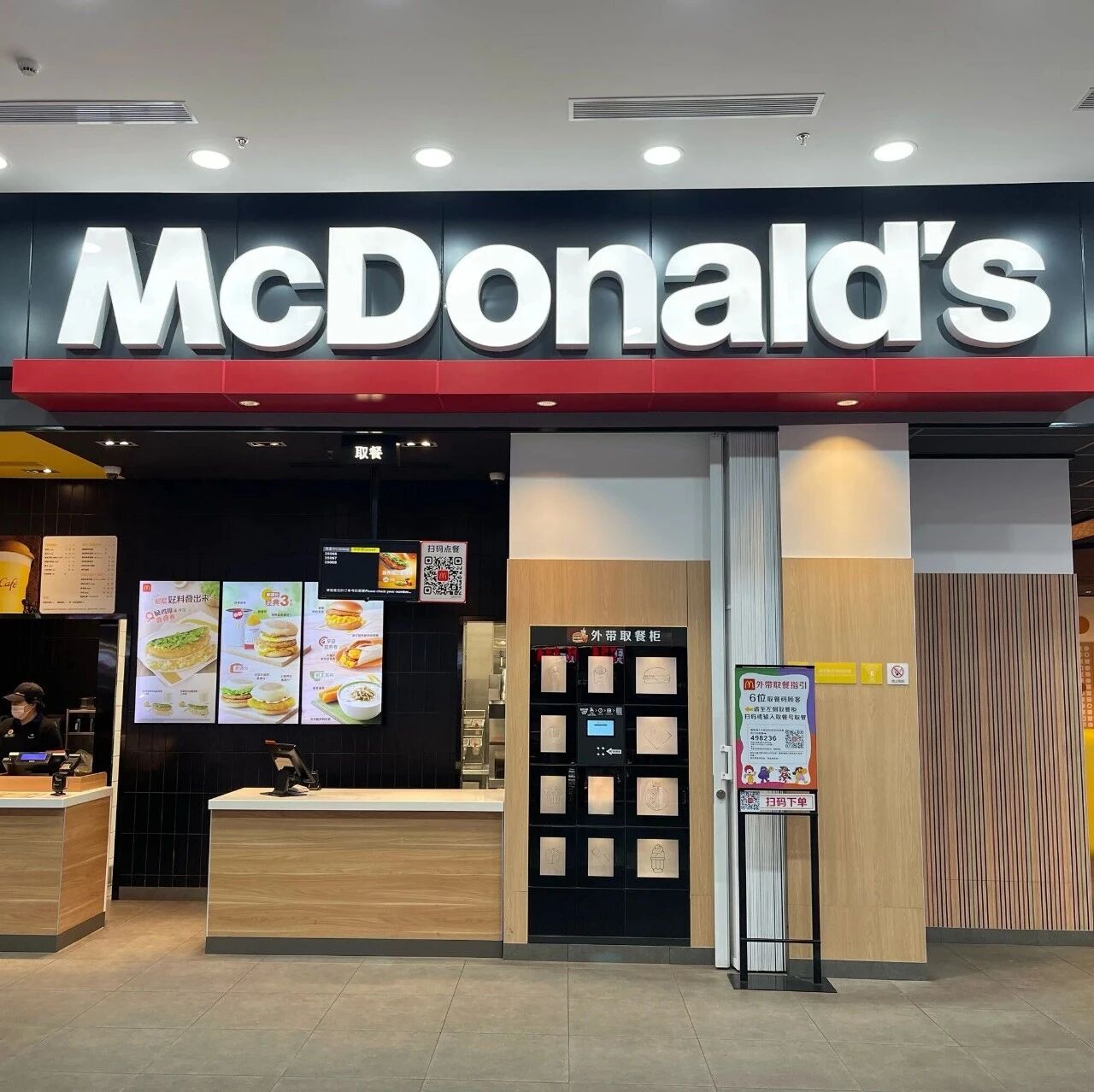
快餐业竞争加剧,外企转变策略拓展在华市场
Huan Qiu Shi Bao· 2025-12-16 03:37
Core Insights - The Chinese fast food market, valued at over 5 trillion yuan, is experiencing rapid growth and intense competition, particularly among foreign brands adapting to local tastes [1][8] - Recent moves by international brands like McDonald's and Burger King to increase local partnerships indicate a strategic shift towards localization rather than withdrawal from the market [1][6] Company Developments - Burger King plans to expand its store count in China from approximately 1,200 to over 4,000 within the next decade, following a significant investment from Chinese capital [2][3] - McDonald's has successfully increased its store count from 2,000 to over 8,000 since partnering with CITIC Capital in 2017, showcasing the effectiveness of local partnerships [3] - Starbucks has also engaged in similar partnerships to enhance its market presence in China, reflecting a broader trend among foreign brands [6] Market Dynamics - The fast food sector in China is characterized by a growing number of local brands like Tasting and Wallace, which are rapidly gaining market share and challenging established foreign brands [4][5] - As of mid-2023, the fast food market comprises over 4.18 million outlets, with Chinese fast food accounting for approximately 401.8 million, while Western fast food holds around 16.9 million [5] - The competition is not only between Western fast food brands but also includes a significant rise in local Chinese fast food options, which are increasingly appealing to consumers [4][5] Consumer Trends - Chinese consumers are shifting preferences towards local brands that offer better value for money and align more closely with local tastes, impacting the growth of foreign brands [5][8] - The focus on cost-effectiveness and cultural relevance is becoming a defining characteristic of the fast food market in China, as younger consumers prioritize these factors over brand origin [5][8] Future Outlook - The fast food industry in China is expected to continue expanding, with a projected increase in restaurant registrations indicating strong market attractiveness [7][8] - The competitive landscape is evolving, with a notable emphasis on value and innovation as key drivers for success in the fast food sector [8]


中国业绩大增,lululemon为何换帅?
2 1 Shi Ji Jing Ji Bao Dao· 2025-12-16 02:26
Core Viewpoint - Lululemon is undergoing significant changes, including the resignation of CEO Calvin McDonald, amid criticism regarding brand value erosion and declining stock performance [1][2]. Financial Performance - In the latest fiscal quarter ending November 2, 2025, Lululemon's net revenue in the Americas decreased by 2% to $1.7 billion, accounting for 68% of total revenue, with comparable sales down by 5% [3]. - Conversely, Lululemon's revenue in China grew by 46% to $465.4 million, representing 18% of total revenue, with comparable sales increasing by 24% (25% growth in constant dollars) [4]. - Other international markets saw a 19% increase in revenue to $367.2 million, making up 14% of total revenue, with comparable sales up by 9% [4]. Market Competition - The competitive landscape in China is challenging, with Li Ning experiencing a mid-single-digit decline in retail sales, while Nike's revenue in Greater China fell by 10% to approximately $1.512 billion [5]. - The potential impact of Lululemon's struggles in its home market on its performance in China is a point of concern [6]. Management and Strategy - Chip Wilson, the founder of Lululemon, expressed dissatisfaction with the board's support for McDonald, citing a 62.8% drop in LULU's stock value over the past two years and a lack of accountability for product innovation [2]. - Wilson emphasized the need for accelerated adjustments within the company to regain shareholder value [7].

负债35亿元!扫地机器人巨头宣布破产,被中国代工厂收购;麦当劳回应涨价,网友:谁允许了;我国首批L3级自动驾驶车型进入准入目录
雷峰网· 2025-12-16 00:33
Group 1 - iRobot, the pioneer of robotic vacuum cleaners, has filed for bankruptcy protection with debts of 3.5 billion yuan and only 175 million yuan in cash, leading to its acquisition by Shenzhen Shanjun Robotics [5][6] - The acquisition is expected to help Shenzhen Shanjun transition from an OEM to a self-branded company and reshape the U.S. market landscape [5] - iRobot's market value has plummeted from a peak of 3.56 billion USD in 2021 to approximately 140 million USD, primarily due to its failure to keep pace with industry developments during the pandemic [6] Group 2 - McDonald's has raised prices on many menu items by 0.5 to 1 yuan, with the company stating its commitment to providing high-quality meals [9][10] - The number of McDonald's stores globally is projected to increase from 41,822 in 2023 to 43,477 in 2024, with significant growth in China, contributing to about 70% of new international franchise openings [10] Group 3 - Wall Street's Wall Street technology company, Biran Technology, is preparing for an IPO in Hong Kong, having raised over 5 billion yuan in funding [12][13] - Biran Technology aims to provide integrated solutions for intelligent computing and has seen rapid fundraising success due to its strong founding team [12] Group 4 - China's first L3-level autonomous driving vehicles have received approval from the Ministry of Industry and Information Technology, marking a significant step towards regulatory compliance in the autonomous vehicle sector [14][15] - The approved models include Changan's SC7000AAARBEV and BAIC Blue Valley's BJ7001A61NBEV, which can operate under specific conditions on designated roads [14] Group 5 - Maserati's recent price cuts have led to a rapid sell-out of its Grecale model, with discounts reaching up to 54% [25][26] - The aggressive pricing strategy is aimed at clearing inventory affected by delays in vehicle arrivals due to the pandemic [26] Group 6 - Ant Group has upgraded its AI health application AQ to "Ant Afu," focusing on health management and achieving over 15 million monthly active users [28][29] - The app aims to provide personalized health services and has become the leading AI health management app in China [28] Group 7 - Huawei has announced the launch of its nova 15 series, featuring the Kirin 8 and 9 series chips, with a focus on high-capacity batteries and advanced camera technology [35][36] - The nova 15 series is set to be officially released on December 22, 2025, with pre-orders already available [36]


8点1氪丨麦当劳多款餐品涨价;深圳一地厕所安装“吸烟会变透明”玻璃;纳斯达克称申请将工作日交易时长延长至23小时
3 6 Ke· 2025-12-16 00:08
Group 1 - The price of breakfast set at 7.9 yuan from Mixue Ice City has been criticized as expensive, with consumers comparing it to cheaper options from street vendors and convenience stores [6][7] - Mixue Ice City staff stated they have not received any notification regarding price adjustments, indicating a lack of awareness about consumer dissatisfaction [6][7] - The breakfast set includes pre-packaged items rather than freshly made food, contributing to perceptions of low value [6] Group 2 - Nasdaq has submitted a proposal to extend trading hours from 16 to 23 hours on weekdays, aiming for nearly round-the-clock trading [5] - The proposal includes three trading sessions: pre-market, regular market, and after-hours trading [5] Group 3 - The UK housing market has seen a 1.8% decline in property prices due to uncertainties surrounding tax policies, with the average listing price dropping to 358,128 pounds [15] - The total cost of obtaining a bachelor's degree in the US is approaching 280,000 yuan, with some institutions like Wellesley College estimating annual expenses to exceed 100,000 dollars [7][8] Group 4 - The first batch of L3-level autonomous driving vehicles in China has received approval for commercial testing, marking a significant step towards the commercialization of autonomous driving technology [8] - A new group standard for gold exchange services has been established, aiming to enhance the professionalism and transparency of the industry [11] Group 5 - Several companies, including "因克斯" and "君跻基因," have recently completed significant funding rounds to support their technological advancements and market expansion [18][19][20]

【财经观察】快餐业竞争加剧,外企转变策略拓展在华市场
Huan Qiu Shi Bao· 2025-12-15 23:01
Core Viewpoint - The Chinese fast food market, valued at over 5 trillion yuan, is experiencing rapid growth and intense competition, prompting foreign brands to adapt their strategies through local partnerships and increased store presence [1][6]. Group 1: Market Dynamics - The fast food industry in China is dominated by local brands, with KFC leading with 12,288 stores, followed by McDonald's with 8,145, and Burger King with approximately 1,200 [2][3]. - The introduction of local capital into foreign brands like Burger King and Starbucks reflects a strategic shift towards localization to better compete in the Chinese market [3][6]. - The market is characterized by a significant presence of local brands such as Tasting and Wallace, which are rapidly expanding and challenging foreign competitors [4][5]. Group 2: Competitive Landscape - The competition is not only among Western fast food brands but also includes a growing number of Chinese fast food brands that cater to local tastes and preferences [4][5]. - The number of fast food outlets in China has surpassed 4.18 million, with Chinese fast food accounting for approximately 401.8 million, while Western fast food represents about 16.9 million [5]. - The shift in consumer preferences towards value and local flavors is reshaping the competitive landscape, with younger consumers favoring local brands over foreign ones [5][8]. Group 3: Future Outlook - Burger King aims to increase its store count in China from 1,200 to over 4,000 in the next decade, indicating a cautious yet optimistic growth strategy [3][7]. - The fast food industry is expected to continue expanding, with a projected increase in restaurant registrations to nearly 3.6 million by 2024, highlighting the market's attractiveness [7][8]. - The ongoing competition and evolving consumer preferences suggest that foreign brands must innovate and adapt to maintain relevance in the Chinese market [6][8].
巨无霸、麦乐鸡贵了1元
Di Yi Cai Jing Zi Xun· 2025-12-15 11:24
Group 1 - McDonald's has increased the prices of several menu items by 0.5 to 1 yuan, including classic burgers and snacks, effective from December 15 [2] - The company reported third-quarter revenue of $7.078 billion, a year-on-year increase of 3%, and a net profit of $2.278 billion, up 1% year-on-year [2] - Fluctuations in the prices of agricultural products such as rice, meat, and vegetables have posed challenges for fast-food companies in cost control and risk management [2] Group 2 - KFC also implemented a price increase on December 24, 2024, marking its first adjustment in two years, with an average increase of 2% and specific adjustments ranging from 0.5 to 2 yuan [3] - The price adjustment by KFC aims to better adapt to market cost changes and ensure sustainable and healthy development of the business [3]
麦当劳今起全面涨价,网友:“快乐没了”
Sou Hu Cai Jing· 2025-12-15 10:50
Core Viewpoint - McDonald's in China announced a price increase for certain menu items, effective December 15, 2025, with increases ranging from 0.5 to 1 yuan [4][13]. Price Changes - The price of the Big Mac will increase by 1 yuan, the Double Filet-O-Fish will also rise by 1 yuan, and the McFish will see a 1 yuan increase [4]. - Other items experiencing price hikes include: - McNuggets: up by 1 yuan - Chicken Fillet: up by 1 yuan - Spicy Crispy Chicken: up by 0.5 yuan - Medium Fries: up by 0.5 yuan - Crispy Fries: up by 0.5 yuan - Corn Cup: up by 0.5 yuan - McFlurry and Sundae: up by 0.5 yuan [4][5]. Consumer Reactions - Consumers expressed dissatisfaction on social media, with comments highlighting concerns over rising prices and perceived reductions in portion sizes [13][15].
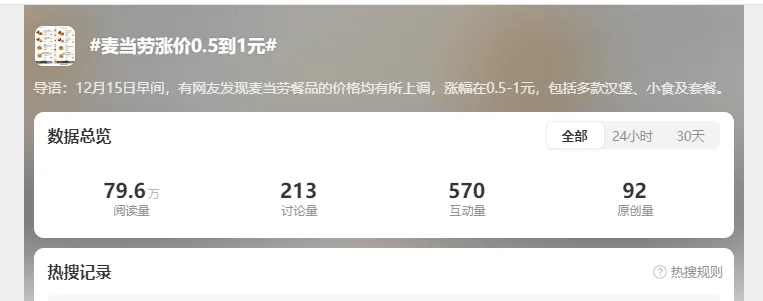
麦当劳悄悄涨价!全线上调1元,“穷鬼套餐”成最后避风港?
Sou Hu Cai Jing· 2025-12-15 10:50
Group 1 - McDonald's has raised prices on several menu items, including a 1 yuan increase on main burgers and a 0.5 to 1 yuan increase on popular snacks, leading to an overall increase of 3-5 yuan per meal for consumers [1][3] - The "1+1 Flexible Combo" package, popular among price-sensitive consumers, has not seen a price change, but some lower-cost options have been replaced with higher-cost items, resulting in a form of "hidden price increase" [3][6] - The primary reason for the price increase is the rising cost of raw materials, including chicken, beef, cooking oil, and packaging logistics, which have collectively increased by over 8% since the second half of 2024, along with pressures from labor and rent costs [3][6] Group 2 - The timing of the price increase at the end of the year serves to test consumer elasticity and reserve profit margins for the 2026 Spring Festival [6] - Public reaction to the price increase has been mixed, with some consumers joking about the minimal increase while others express concern over the rising cost of meals amid inflation and consumption downgrade [6] - The 1 yuan price increase reflects consumers' appreciation for "certainty in happiness," emphasizing that despite rising prices, the taste of familiar products like the Big Mac should remain unchanged [6]
巨无霸、麦乐鸡贵了1元
第一财经· 2025-12-15 10:34
Core Viewpoint - McDonald's has raised prices on several menu items by 0.5 to 1 yuan, citing the need to maintain high-quality offerings while adapting to market conditions [3]. Summary by Sections Price Adjustments - McDonald's has increased the prices of various items, including classic burgers and snacks, with specific examples such as the Big Mac and Double Fillet-O-Fish seeing a 1 yuan increase [3]. - The price adjustments are part of a broader trend in the fast-food industry, with KFC also raising prices by an average of 2% in late 2024, indicating a response to market cost changes [3]. Financial Performance - McDonald's reported third-quarter revenue of $7.078 billion, reflecting a 3% year-on-year growth, while net profit reached $2.278 billion, up 1% [3]. Market Conditions - The fast-food sector faces challenges due to fluctuations in the prices of agricultural products such as grains, meat, and vegetables, impacting cost control and risk management for companies [3].