
高端制造

Search documents
紧握年末政策窗口,掘金A股跨年行情
市值风云· 2025-12-12 10:25
Core Viewpoint - The article discusses the upcoming investment opportunities and risks in the A-share market as the year-end approaches, highlighting the significance of fundamental factors and policy directions for the next year [3][4]. Group 1: Cross-Year Market Logic and Historical Review - The A-share market exhibits seasonal characteristics, with a "cross-year market" being a notable investment window, showing over 70% probability of gains from November to January since 2010, with an average increase of 11.5% for the Shanghai Composite Index and 14.9% for the ChiNext Index during this period [5][6]. - The cross-year market typically lasts about 44 trading days, with historical data indicating varying performance based on previous year's market conditions [6][7]. - Factors contributing to this phenomenon include increased bank credit issuance at year-end, which enhances market liquidity, and positive signals from key policy meetings that boost market expectations [7][8]. Group 2: Special Background for 2024-2025 Cross-Year Market - The current macroeconomic environment presents unique conditions for the upcoming cross-year market, particularly with a moderate internal economic recovery and anticipated liquidity improvements from the Federal Reserve's interest rate cuts [13][14]. - The Federal Reserve has cut rates by 75 basis points throughout the year, signaling a potential end to the rate-cutting cycle, which may ease pressure on the RMB exchange rate [15][17]. - As the first year of the "14th Five-Year Plan," there is heightened policy expectation focusing on technological innovation and new productivity, which may lead to early market movements and increased volatility [17]. Group 3: Investment Opportunities Selection - The article suggests a positive outlook for the new year, emphasizing that internal economic recovery, policy support, and valuation corrections provide a solid foundation for A-shares [18]. - Recommended investment themes include the AI industry, globally competitive high-end manufacturing, and industries benefiting from supply-side optimization [18][20]. - Specific ETFs are highlighted for investment, such as those focusing on AI trends, advantageous manufacturing, and sectors experiencing supply-side improvements, providing efficient tools for investors to participate in the cross-year market [21][26][29].


百亿级战新产业基金集群落地龙华
FOFWEEKLY· 2025-12-12 10:00
Core Insights - The first Shenzhen Longhua District Industrial-Financial Integration High-Quality Development Conference was held on December 9, announcing significant financial cooperation achievements, including the establishment of a low-altitude economy industry fund, Pre-REITs fund, and two AIC funds, along with a comprehensive credit line of 100 billion yuan [1][2] Group 1: Financial Initiatives - Longhua District launched a cluster of industrial funds totaling over 10 billion yuan, notably the Shen Capital Jianxin Longhua AIC Fund and the Shen Dan Agricultural Bank Longhua AIC Fund, each with a scale of 2 billion yuan, focusing on the "20+8" industrial cluster and the "1+2+3" industrial system in Shenzhen, targeting sectors like digital economy, new energy, high-end medical devices, integrated circuits, and artificial intelligence [1] - The Shen Dan Agricultural Bank Longhua AIC Fund signed its first batch of intended investment projects at the conference, achieving efficient operation with immediate announcements, including companies like Angpai Technology, Guihua Intelligent, and Jingtai Da, which focus on high-end manufacturing sectors such as liquid cooling, precision laser equipment, and automated testing devices [1] Group 2: Strategic Goals - Longhua District aims to continue deepening industrial-financial collaboration and enhancing digital empowerment to support the growth of more technology startups into industry giants, promoting a high-quality development path that integrates industry and finance [2]

聚焦多个核心领域,郑州航空港科创投资集团向险资抛出“橄榄枝”
Sou Hu Cai Jing· 2025-12-12 09:41
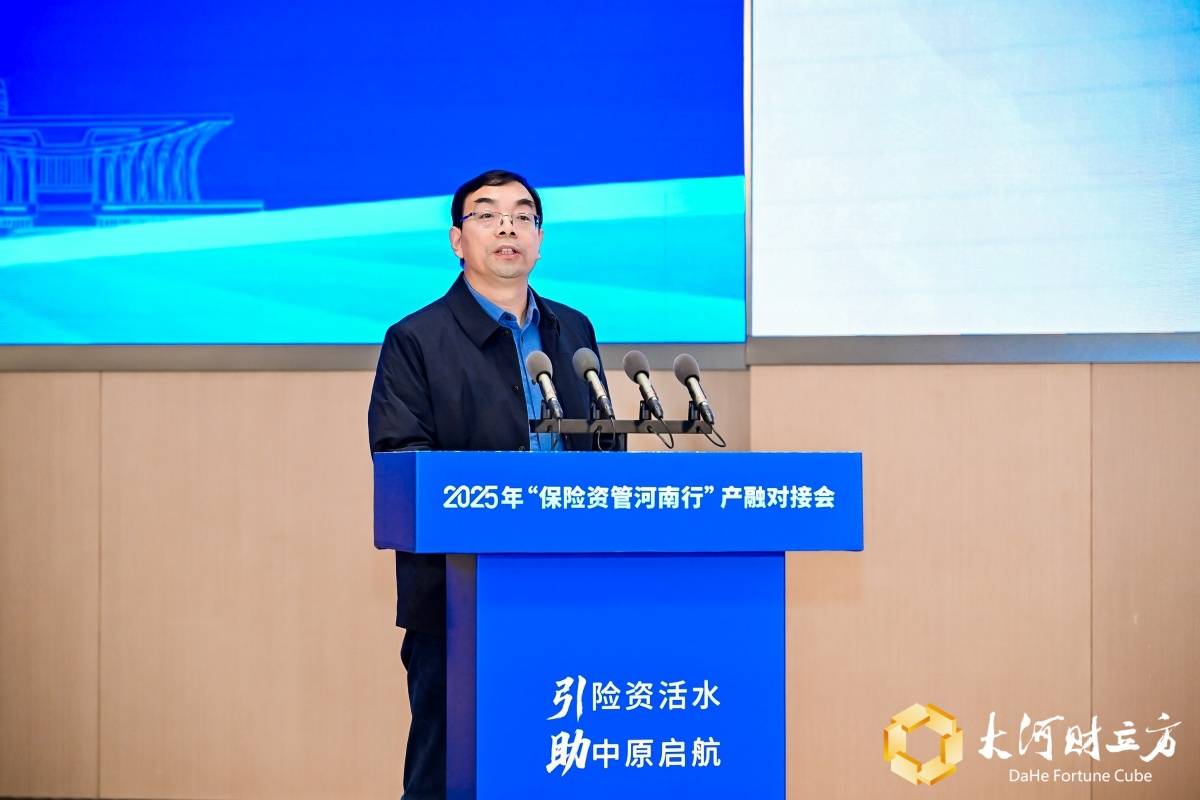
【大河财立方 记者 孙凯杰 文 朱哲 洪昊旸 摄影】12月11日,2025年"保险资管河南行"产融对接会在郑州航空港区举行。活动现场,郑州航空港科创投资集 团有限公司党委委员、副总经理吴志超代表集团作了专题推介,展示了他们在航空物流、高端制造、城市更新、产业园区等领域的重点项目。 作为郑州航空港经济综合实验区管委会下属的国有独资企业,科创集团自2022年完成集团化改组和战略转型以来,已迅速成长为区域产业投资与城市运营的 重要平台。截至2025年10月底,集团合并资产总额达482.6亿元,参控股企业143家,主体信用评级稳居AA+。 吴志超介绍,在航空物流领域,航空货运综合服务产业园依托京东集团全产业链资源,围绕"智能化、集约化、绿色化"理念,旨在打造集仓储、分拣、配 送、增值服务于一体的新一代智慧物流枢纽。项目一期占地面积约299.1亩,总建筑面积 25.83万平方米,周边交通及产业集聚优势明显,周边有顺丰、大河 申通、进出口冷链等多个物流领域项目,形成规模效应和协同网络,为打造产业集聚区提供了坚实基础。 高端制造方面,推动海马新能源工厂焕发生机。通过对原有产线全面升级,该基地将具备产品覆盖燃油车、新能源车及 ...
走访上市公司 推动上市公司高质量发展系列(三十)
证监会发布· 2025-12-12 08:49
丨 来源:每日经济新闻 2025-12-05 一家运输行业公司负责人表示,针对公司提出的在持续改善资本结构、拓展国内外业务、 提升服务水平等工作中遇到的问题,深交所研究提出具体举措,持续加强日常沟通、规则解答 和培训交流,积极做好支持服务,帮助公司更好解决难题、积极应对风险与挑战。接下来,公 司将依法依规高质量做好信息披露工作,主动维护投资者关系,积极参与投资者交流活动,促 进形成正向循环,努力提升投资者回报。 已办理落实400多项上市公司诉求建议 深交所高度重视上市公司高质量发展。本轮走访活动开展以来,主要负责同志多次带队深 入公司一线,累计走访调研140余家次上市公司,专题调研产业链协同、海外布局配套、资金 保障等难点问题。为积极回应公司诉求,深交所组建工作专班,加强动态跟踪,强化分类施 策,切实推进解决调研中反映的实际问题。 截至目前,深交所已办理落实400多项诉求建议,涉及信息披露、并购重组、再融资、股 权激励、培训与行业交流等方面,为公司提供更精准的服务支持。同时,深交所重视反馈闭 环,通过走访现场答复、书面答复、回访等方式,切实回应公司每一项诉求建议,实现"件件 有着落、事事有回音"。 提高上市公 ...

闫萍:坚持投资于物和投资于人紧密结合
Jing Ji Ri Bao· 2025-12-12 00:17
Core Viewpoint - The integration of investment in physical assets and human capital is a significant enhancement of China's investment philosophy, aimed at optimizing investment structure and stimulating economic growth during the high-quality development phase [1] Group 1: Current Economic Context - China's economy is undergoing a critical transition in development methods, economic structure optimization, and growth momentum conversion, making the integration of investment in physical and human capital highly relevant and urgent [2] - Investment in both physical and human capital is essential for overcoming key technological bottlenecks and achieving self-reliance in technology, requiring funding for both infrastructure and talent development [2] - The shift from traditional comparative advantages to new advantages based on quality and brand necessitates a collaborative approach to investment in physical and human capital for industrial transformation and upgrading [3] Group 2: Domestic Circulation and Consumption - Enhancing human capital through education and skills training directly increases labor income, thereby boosting consumer confidence and laying a solid foundation for expanding consumption [3] - A strong domestic consumption market encourages enterprises to invest in technology and brand development, creating a dynamic balance between supply and demand [3] Group 3: Social Equity and Common Prosperity - Investment in infrastructure and public services is crucial for achieving social equity and promoting common prosperity, while human capital investment plays a significant role in reducing income disparities [4] - Developing a high-quality labor force through human capital investment enhances overall productivity and innovation capabilities, contributing to a larger and more equitably distributed economic "cake" [4] Group 4: Systematic Approach to Investment - The relationship between investment in physical and human capital is inherently unified, requiring a systematic approach to optimize the structure of existing capital and promote a virtuous cycle of economic development and improved livelihoods [5] - Both forms of investment are interdependent; physical capital provides the platform for human capital to realize its value, while human capital enhances the effectiveness and technological advancement of physical capital [5] Group 5: Long-term Mechanisms and Policy Framework - Establishing long-term mechanisms to improve the quality and efficiency of investments in both physical and human capital is essential for sustainable economic growth [8] - Coordinated development strategies should be integrated into national economic and social development plans, ensuring that policies for human capital development accompany industrial policies [8] - A collaborative evaluation system should be established to assess the contribution of human capital to the efficiency of physical capital, preventing disconnection between the two [8] Group 6: Investment Structure Optimization - Maintaining a reasonable scale of physical capital investment while optimizing investment layout is crucial, with increased focus on new infrastructure and advanced manufacturing [9] - Precision and effectiveness in human capital investment should be enhanced, with targeted training programs to meet the demands of new productive forces [9] - Encouraging diverse stakeholders through fiscal and financial policies can stimulate investment in advanced equipment and employee training [9] Group 7: Comprehensive Policy System - A comprehensive policy framework should address the entire lifecycle of human capital needs, from early childhood education to elderly care, ensuring continuous accumulation and quality improvement of human capital [10] - Investments should focus on enhancing educational quality, improving labor market matching, and providing adequate healthcare and housing support [10]
先锋电子:公司持续寻找具有核心技术、自主知识产权的优质企业进行投资布局
Zheng Quan Ri Bao Wang· 2025-12-11 09:51
Core Viewpoint - The company is focusing on integrating its core business with industrial chain mergers and acquisitions while expanding into the Internet of Things (IoT) and high-end precision manufacturing sectors, aiming for dual development centered around "smart gas" and foundational hard technology [1] Group 1 - The company is committed to maintaining a strong core business alongside industrial chain mergers and acquisitions [1] - The future strategy includes integrating the "smart gas" industry chain with foundational hard technology and high-end precision manufacturing [1] - The company is actively seeking investment opportunities in high-quality enterprises with core technologies and independent intellectual property rights [1] Group 2 - The goal is to extend into high-end manufacturing, ultimately forming a synergistic effect that contributes to the company's industrial upgrade [1] - The company aims to become a high-tech enterprise with core technological competitiveness and a broader range of product applications [1]

山东济南:以项目提升强产业暖民生
Xin Hua Wang· 2025-12-11 01:51
Core Insights - Jinan's project enhancement year is characterized by high-quality development driven by quality projects, focusing on industrial empowerment and improving people's livelihoods [1] - The city has 136 provincial key projects with a total investment of 503.54 billion, achieving an annual investment completion rate of 106.5% for 127 implementation projects, ranking first in the province [1] - The service industry projects are creating new spaces for consumption and industrial development, with 551 municipal key projects totaling approximately 1.19 trillion, and an annual investment completion rate of 108.4% for 511 implementation projects [1] Group 1: Industrial Projects - The humanoid robot data training center in Pingyin County is set to be the largest in Shandong, providing customized training services for industries like vehicle manufacturing and mechanical processing [2] - Jinan's industrial projects are focusing on key technological breakthroughs, with the Industrial Software Building aiming to incubate or introduce 50 research teams and achieve over 20 major technology transfer results within five years [2] - High-end manufacturing projects in Jinan are breaking technological barriers, with significant advancements in laser equipment, biomedicine, and new materials, including a 22-meter diameter forging machine [3] Group 2: Green and Sustainable Development - Jinan's industrial development is increasingly oriented towards green and low-carbon initiatives, with companies like Ilite reducing material waste and energy consumption by 20% and 30% respectively [3] - The Longqing District's green manufacturing project has introduced 18 automated production lines, enhancing production efficiency by over 20% and filling gaps in the local pressure vessel industry [3] Group 3: Cultural and Community Projects - The activation of old buildings in Jinan is transforming them into modern cultural spaces, such as the French Pompidou Center-themed store and various cultural and creative industry parks [4] - The revitalization of historical sites is expected to generate significant revenue, with projects combining cultural, commercial, and tourism elements to enhance urban experiences [4] - The Tai Kang Home project in the High-tech Zone provides high-quality elderly care services, addressing the demand for premium elderly care in the eastern district [5] Group 4: Health and Wellness Initiatives - Jinan is expanding its healthcare and wellness infrastructure with projects like the Silver Wind Medical Plaza and International Medical Center, enhancing health security for residents [6] - The city is also focusing on ecological leisure spaces and quality consumption scenarios, contributing to improved health, leisure options, and overall quality of life for citizens [6]
截至10月底,济南市省市级实施类项目年度投资计划均超额完成
Da Zhong Ri Bao· 2025-12-11 01:28
截至10月底,济南市省市级实施类项目年度投资计划均超额完成 以项目提升强产业暖民生 济南市项目提升年热潮涌动,优质项目作为城市发展的核心引擎,以产业赋能、民生提质为方向, 勾勒高质量发展轮廓——工业项目提速突破,为产业升级注入澎湃动能,推动产业链向新向高向绿转 型;服务业项目精准发力,为市民生活绘就幸福图景,打开消费与产业双向发展新空间。 今年,济南市共有省级重点项目136个,总投资5035.4亿元,截至10月底,127个实施类项目年度投 资完成率达106.5%,居全省首位;共安排市级重点项目551个,总投资约1.19万亿元,截至10月底,511 个实施类项目年度投资完成率108.4%,超时间进度节点。 用项目激活产业动能 走进平阴县乐聚(济南)人形机器人数据训练中心,未来感扑面而来——工程师正训练机器人精准 完成分拣、抓取、搬运等动作。 该项目一期2025年6月开工、11月试运行,是山东省最大、济南市首个人形机器人训练场。项目建 设3C制造、新能源汽车等12大类训练场景,还配套主题体验中心,不仅能为济南车辆制造、机械加工 等产业提供定制化机器人训练服务,更可输出智能化升级方案,为工业企业数字化转型添翼。 除 ...
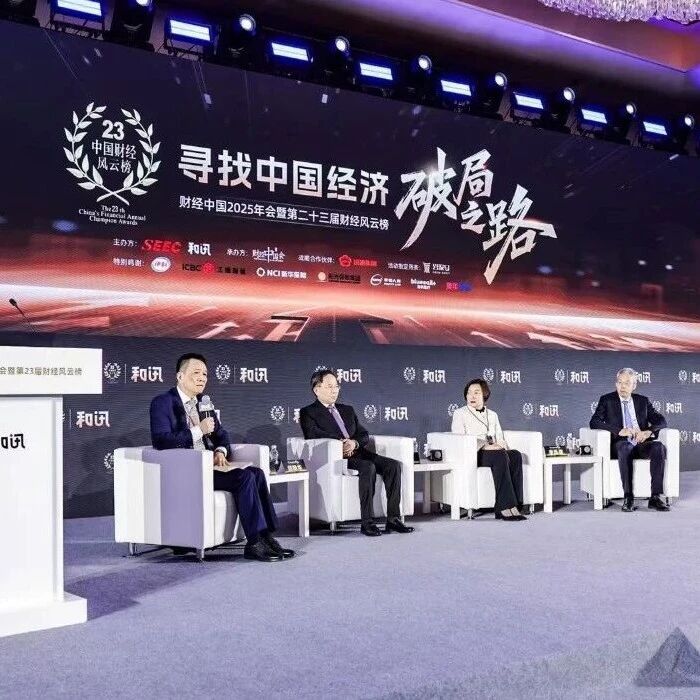
姚洋、邱晓华、梁红、李迅雷眼中的2026年投资机会
和讯· 2025-12-10 09:47
Group 1 - The core strategy of the "14th Five-Year Plan" emphasizes building a modern industrial system, achieving high-level technological self-reliance, and expanding domestic demand as the three main strategic tasks for China's economic breakthrough [3][4]. - Manufacturing upgrades and technological innovation are identified as the driving forces of development, determining what can be supplied, while domestic demand serves as the strategic foundation, influencing whether there is a broad market for these supplies [3][4]. - The current economic environment shows a need for a balance between manufacturing upgrades and boosting domestic demand, with a focus on strengthening the real economy and addressing external uncertainties through domestic circulation [4][10]. Group 2 - In 2025, China's economy demonstrated resilience and structural changes despite a complex domestic and international environment, with innovation and resilience being key themes [5][7]. - The GDP growth rate for 2025 is projected to be around 5%, supported by proactive fiscal policies and moderate monetary policies aimed at stabilizing investment and consumption [7][10]. - Significant changes in the market include breakthroughs in technology, particularly in artificial intelligence and high-end manufacturing, which reflect China's innovative capabilities [8][10]. Group 3 - Looking ahead to 2026, investment opportunities are expected to arise from the ongoing technological revolution, with sectors like artificial intelligence, new energy, and biomedicine poised for significant growth [11][12]. - The external environment is anticipated to become more favorable, with expected easing policies from the U.S. and Europe, which could support China's economic growth [11][12]. - The market structure is shifting, with a historical transition in asset allocation from real estate to financial assets, indicating a change in investment strategies among Chinese residents [13][14].
关注科技成长主线增配机会,创业板ETF(159915)、科创创业ETF(159781)助力捕捉潜在反弹空间
Mei Ri Jing Ji Xin Wen· 2025-12-10 06:30
Core Viewpoint - The market has experienced fluctuations but has shown a strong upward trend in technology growth sectors since the end of the previous correction on November 23, with significant gains in the ChiNext Index and the Sci-Tech Innovation 50 Index [1] Group 1: Market Performance - From November 24 to December 9, the ChiNext Index rose by 9.9%, and the Sci-Tech Innovation 50 Index increased by 12.4%, while the Shanghai Composite Index only gained about 2% [1] - Analysts attribute this rally to advancements in industries such as optical modules, photovoltaics, and consumer electronics, as well as investors' early pricing in of the positive fundamentals for technology growth in the coming year [1] Group 2: Earnings Expectations - Consensus among analysts indicates that the earnings growth rate for the ChiNext Index is expected to be around 30% next year, maintaining a significant gap compared to the earnings growth of value sectors [1] Group 3: Index Composition and Focus - The ChiNext Index consists of 100 stocks with large market capitalization and good liquidity, focusing on strategic emerging industries, with upcoming adjustments including leaders in high-end manufacturing, new energy, and biomedicine [1] - The Sci-Tech Innovation 50 Index is selected from the ChiNext and Sci-Tech boards, focusing on large-cap, liquid stocks in emerging industries, covering sectors such as semiconductors, new energy, and biomedicine [1] Group 4: ETF Information - The latest sizes of the ChiNext ETF (159915) and the Sci-Tech Innovation ETF (159781) are approximately 100 billion yuan and 12 billion yuan, respectively, making them the largest ETFs for their respective indices [1] - Both ETFs have the lowest management fee rate of 0.15% per year, which can help investors seize opportunities in the technology growth sector [1]
