
保健品

Search documents
汤臣倍健:未来公司将围绕主要核心品类、结合不同渠道的需求特性进行产品研发创新,为消费者提供更加多样化的产品选择
Zheng Quan Ri Bao Zhi Sheng· 2025-12-09 14:08
Core Viewpoint - The company,汤臣倍健, acknowledges the increasing diversification and personalization of consumer demand, leading to a greater need for product iteration [1] Group 1 - The company plans to focus on its main core categories while considering the unique characteristics of different distribution channels for product development and innovation [1] - The goal is to provide consumers with a more diverse range of product options in response to evolving market demands [1]

2025 Swisse斯维诗合作伙伴大会启幕新征程
Zheng Quan Ri Bao Wang· 2025-12-09 13:48
Core Insights - Swisse has celebrated its 10th anniversary in the Chinese market, emphasizing its commitment to exploring new opportunities in the health sector with partners [1][4] - The company has successfully transitioned through three phases of market engagement, adapting to consumer needs and market trends [2][3][4] Group 1: Company Growth and Strategy - Swisse entered the Chinese market in 2015 and has since maintained a strong focus on local consumer health trends, promoting a brand ethos centered on "movement, nutrition, and mindfulness" [1][3] - The brand capitalized on the rise of cross-border e-commerce and the trust in overseas products, launching popular items that resonated with young consumers, leading to significant growth from 2016 to 2018 [2][3] - In 2019, Swisse began its localization transformation, launching multiple sub-brands to cater to diverse consumer needs, achieving the top position in the online VHMS market in China [3][4] Group 2: Market Position and Future Outlook - In 2023, Swisse introduced the "Swisse Mega Brand" strategy, marking its entry into a multi-brand and multi-category development phase, achieving over 1 billion AUD in global sales [4][5] - The brand has become the top nutrition brand in China by mid-2025, reflecting its dual growth in both global and Chinese markets [4] - The leadership of H&H Group emphasizes ongoing product innovation driven by consumer insights and a commitment to quality and compliance, aiming for high-quality development in the health sector [5]
网购的维生素“不含维生素”?检测报告显示关键成分“消失”,涉事网店由海外企业运营
Xin Lang Cai Jing· 2025-12-09 13:26
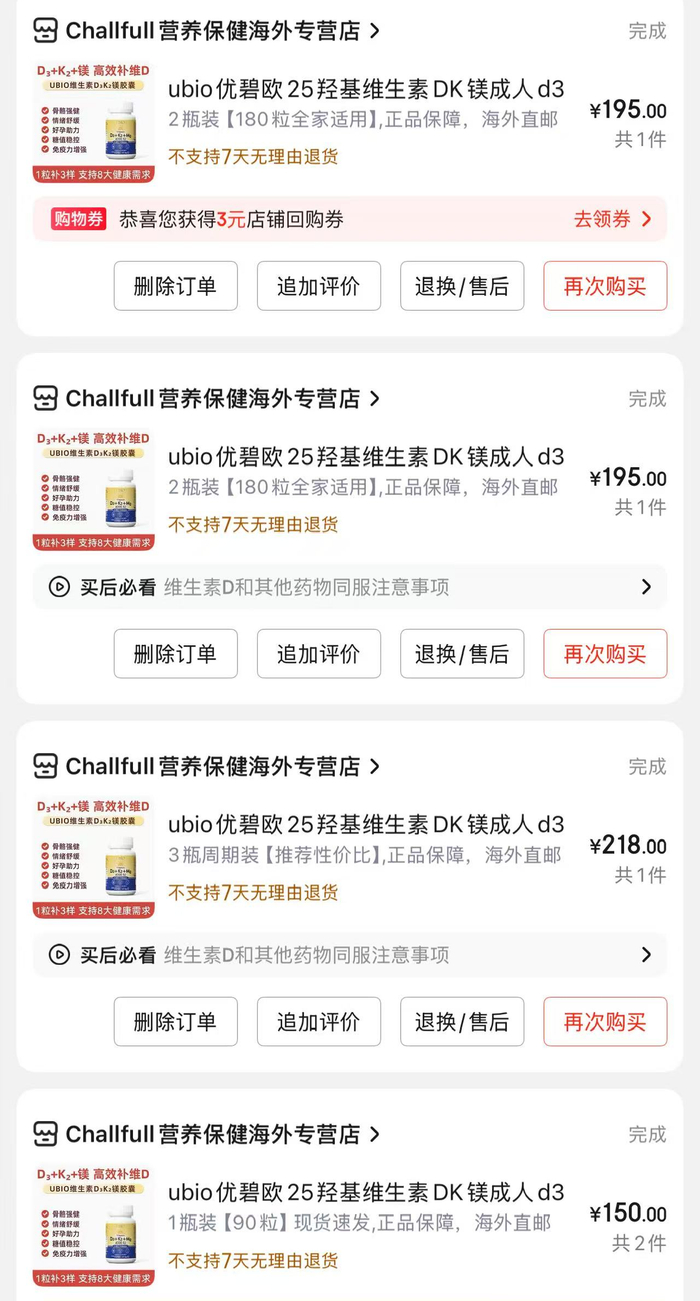
为了健康,何先生在做足功课后在京东平台的Challfull营养保健海外专营店买了相关保健品,但在服用 了几个月后,他才发现自己买的产品有问题。 何先生提供的检验报告显示,该产品未检出维生素K₂、维生素D₃和镁等成分。 12月4日,何先生告诉红星资本局,现在他正在寻找能做重金属检测的相关机构。如果检测出该产品有 毒、有害,他会走法律流程,根据相关情况决定是否起诉该商家。 京东客服告诉红星资本局,针对上述问题,他们会进一步调查。如果商家有违规,平台会严惩不贷。 购买三合一保健品 由受访者提供 "我不光自己买,还给父母、朋友都买了。"何先生称,他之所以选择在这家网店购买,是因为在搜索关 键词后,它的产品在搜索结果的前列,且评价都很好。 何先生告诉红星资本局,他对抗衰、保健品等相关领域长期保持关注。在今年11月左右,他在某社交平 台刷到了ubio品牌相关旗舰店的直播。在直播中,主播对真假产品进行了对比。 与其他渠道产品对比有较大差异 何先生告诉红星资本局,在研究了相关保健品的成分后,从今年7月起,他在电商平台Challfull营养保 健海外专营店购买ubio品牌的保健品——维生素D₃、K₂、镁三合一胶囊。 订单截图显 ...

食品饮料2026投资策略:估值切换为抓手,三维布局2026
Soochow Securities· 2025-12-09 12:59
Core Insights - The report emphasizes a shift in valuation as a key strategy for investment in the food and beverage industry, with a relatively optimistic outlook for 2026 despite ongoing uncertainties [5][31][40] - The report identifies five key areas for stock selection to capture investment opportunities in 2026, focusing on health products, leading snack brands, quality retail chains, beverage leaders, and the recovery of the liquor and dairy sectors [5][40] Industry Trends - Consumer spending has been under pressure for an extended period, with CPI and retail sales growth remaining low, indicating a challenging environment for the food and beverage sector [5][16][23] - The overall revenue growth for the food and beverage sector has declined significantly from +14.5% in 2019 to +0.2% in the first three quarters of 2025, with net profit growth turning negative at -4.6% [23][26] - The report notes that the liquor sector is experiencing a significant downturn, with revenue and profit declines observed for the first time since 2017, highlighting the need for a recovery phase [23][26] Investment Strategy - The report advocates for a focus on certainty in investment, utilizing valuation shifts as a primary strategy, with an emphasis on continuous growth and the reversal of challenging conditions as key drivers for valuation recovery [5][31][32] - The report outlines that the recovery in consumer sentiment and spending is expected to be gradual, with specific attention to the liquor sector's potential for recovery in 2026 [5][22][39] Stock Selection - Five key areas for stock selection are identified: 1. Health products and wellness as a core growth area 2. Leading snack brands benefiting from supply chain improvements 3. Quality retail chains with expansion potential 4. Beverage leaders with long product life cycles 5. Liquor and dairy sectors poised for recovery [5][40] - The report highlights specific companies within these categories, such as Eastroc Beverage and Yili Group, which are expected to perform well in the upcoming period [5][40]
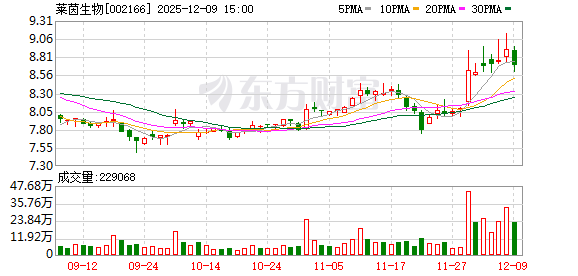
002166,突发公告!明起停牌!
Zheng Quan Shi Bao· 2025-12-09 12:30
本次交易完成后,北京金康普将成为公司的控股子公司,纳入合并财务报表范围。本次交易不构成重大 资产重组及重组上市。 本次交易将北京金康普纳入上市公司体系,双方将充分发挥业务上下游的协同效应。上市公司在食品饮 料、保健品领域的配方研发能力与核心竞争力将得到进一步提升,同时更精准地覆盖终端消费品牌,提 高业务附加值;北京金康普可依托上市公司获得天然原料供应保障和全球市场营销体系协同赋能,最终 实现双方优势资源互补、合作共赢的发展格局。 莱茵生物表示,公司控制权变更、发行股份及支付现金购买资产并募集配套资金事项目前处于筹划阶 段,尚存在重大不确定性,敬请广大投资者注意投资风险。 明起停牌。 莱茵生物(002166)12月9日晚间公告,公司于2025年12月8日收到控股股东、实际控制人秦本军的通 知,秦本军正在筹划公司控制权变更事宜。公司股票自2025年12月10日开市起停牌,预计停牌时间不超 过10个交易日。 公告显示,秦本军及公司已与本次交易的主要交易对方广州德福营养投资合伙企业(有限合伙)(简 称"广州德福营养")、德福金康普控股有限合伙企业、厦门德福金普投资合伙企业(有限合伙)分别签 署了《控制权变更意向协议》 ...

汤臣倍健(300146) - 2025年12月9日投资者关系活动记录表
2025-12-09 10:22
Group 1: Product Development and Market Strategy - The company plans to innovate product development based on diverse consumer demands and channel characteristics, focusing on core categories [2] - The pharmacy channel's professional service capabilities are irreplaceable, and the company aims to enhance operational capabilities through digital infrastructure and new delivery models [2] - The company will strengthen partnerships with high-potential supermarket chains to explore offline growth opportunities [2] Group 2: Online Sales and Revenue Distribution - Douyin accounts for approximately 20% of online sales, while Tmall and JD.com together account for about 60% [3] - The main brand contributes over 50% of total revenue, with Jianliduo and Lifespace each accounting for over 10% [3] - The company has seen significant repurchase rates for new SKUs launched online, particularly among high-consumption demographics [3] Group 3: Distributor Management and Market Position - The reduction in the number of distributors is attributed to business adjustments and optimization efforts [3] - The company is focused on long-term quality development and enhancing investor returns through stable dividend policies and share buybacks, with cumulative cash dividends exceeding 70% of net profit since listing [3] Group 4: Financial Performance Insights - The company's net profit in the fourth quarter is typically lower due to sales expense timing, bonus accruals, and expense settlements [3] - Ongoing digital strategy projects are aimed at improving sales management and data analysis capabilities, alongside organizational structure optimization for better management quality [3]
交大昂立:12月8日召开董事会会议
Mei Ri Jing Ji Xin Wen· 2025-12-08 09:35
Group 1 - The core viewpoint of the article highlights the announcement by Jiaoda Onlly (SH 600530) regarding its board meeting held on December 8, 2025, which discussed the appointment of an accounting firm [1] - For the fiscal year 2024, the revenue composition of Jiaoda Onlly is as follows: health products account for 48.45%, medical care for 45.33%, real estate for 5.01%, other businesses for 1.03%, and miscellaneous for 0.19% [1] - As of the report, Jiaoda Onlly has a market capitalization of 5.9 billion yuan [1]

安利(中国)总裁余放:用三个“不变”总结安利在华30年
Jing Ji Wang· 2025-12-08 09:10
Core Viewpoint - Amway (China) celebrates its 30th anniversary and the opening of the "Amway Beautiful Life Square" in Guangzhou, marking a significant milestone in its development and commitment to the local community [1][2]. Group 1: Investment and Development - Amway has initiated a five-year investment plan totaling 2.1 billion RMB, with allocations for upgrading its Guangzhou production base, enhancing digital infrastructure, and expanding its experience centers across China [2][8]. - The investment includes 700 million RMB for upgrading the Guangzhou production base, 400 million RMB for digital infrastructure, and 500 million RMB for enhancing over 100 experience centers [8]. Group 2: Community Engagement and Health Initiatives - The "Amway Beautiful Life Square" serves as a vibrant outdoor space promoting health and wellness, featuring facilities like the Amway Dock and fitness trails [2]. - Amway actively participates in community initiatives, including the "2025 Guangzhou International Sports Carnival" and the establishment of a volunteer service park, demonstrating its commitment to public health and community support [5]. Group 3: Strategic Partnerships and Urban Development - Amway has been recognized as a "Strategic Partner" in Guangzhou's "City Partner" initiative, focusing on health industry development and enhancing the quality of life for residents [3]. - The partnership aims to promote a healthy ecosystem in Guangzhou, aligning with national strategies such as "Healthy China" and "Beautiful Life" [3][11]. Group 4: Innovation and R&D - Amway has established a localized R&D system in China, with a new research center and health-sharing laboratory aimed at fostering innovation and collaboration in the health sector [12]. - The company has developed a significant plant variety resource library and has engaged in partnerships with leading Chinese research institutions to advance its product development [13]. Group 5: Long-term Commitment to China - Amway views China as a market of immense potential, having consistently increased its investment even during challenging times, such as post-SARS and post-pandemic [8][17]. - The company emphasizes its long-term commitment to the Chinese market, focusing on sustainable practices and contributing to the country's economic development [16][17].
天目药业:12月5日召开董事会会议
Mei Ri Jing Ji Xin Wen· 2025-12-05 10:00
Company Overview - Tianmu Pharmaceutical (SH 600671) announced on December 5 that its 17th meeting of the 12th Board of Directors was held, where the proposal for the reappointment of the accounting firm was reviewed [1] Financial Performance - For the year 2024, Tianmu Pharmaceutical's revenue composition is as follows: health products account for 31.37%, pharmaceutical circulation products for 21.97%, service-related for 19.74%, raw materials for 12.64%, and traditional Chinese medicine for 11.84% [1] - As of the report date, Tianmu Pharmaceutical has a market capitalization of 2.1 billion yuan [1]

青木科技(301110):公司拟2.12亿元控股挪威VITALIS
Xin Lang Cai Jing· 2025-12-05 00:41
中国总代理权(持股100%): Vitalis 旗下Noromega 品牌在国内的总代理权。①挪威高端膳食补充剂品 牌,核心主打北极圈原生态天然原料,核心成分包含海豹油、鱼油、虾青素、辅酶Q10 等,②王牌单品 海豹油胶囊、虾青素胶囊,已连续五年蝉联天猫国际海豹油、虾青素类目的 Top1。 投资建议:本次重磅收购Vitalis,获得品牌全供应链及中国区的总代理权,品牌孵化管理业务再进一 步;当前品牌孵化管理业务已有覆盖女性护理&保健品的多品牌矩阵,同时公司已与Dermofarm 正式签 署战略合作协议,关注后续双方有望进一步深化合作带来的增量变化。同时公司作为AI首批生态Agent 合作服务商重点投入已有成效落地,AI+应用有望助力公司提升份额&降本增效提升盈利水平,关注公 司品牌管理孵化与AI+应用双轮驱动经营拐点的机会。 风险提示:新品牌放量不及预期;消费复苏不及预期;行业竞争加剧 事件:公司公告全资子公司青木新加坡拟合计斥资3 亿挪威克朗(约2.12 亿元人民币)收购Vitalis 65.83%股权并成为其控股股东:以1.5亿NOK 收购股权49.07%及1.5 亿NOK 认购新股32.8%方式;股权 ...