
可再生能源

Search documents
通用电气取得风力涡轮构件一体化维护系统专利
Jin Rong Jie· 2026-01-07 04:24
Group 1 - The core point of the article is that General Electric Renewable Energy Spain has obtained a patent for an integrated system and method for maintaining wind turbine components, with the patent announcement number CN114087140B and an application date of August 2021 [1] Group 2 - The patent acquisition indicates General Electric's commitment to innovation in the renewable energy sector, particularly in wind energy technology [1] - The patent may enhance operational efficiency and maintenance processes for wind turbines, potentially leading to cost savings and improved performance [1] - This development reflects the growing trend of technological advancements in the renewable energy industry, which is crucial for meeting global energy demands and sustainability goals [1]

新交所证券市场欢迎协合新能源集团有限公司在主板上市
Sou Hu Wang· 2026-01-06 10:41
Core Viewpoint - Concord New Energy Group Limited (CNE) has successfully completed its secondary listing on the Singapore Exchange (SGX), marking a significant milestone in its global business development strategy [1] Group 1: Company Overview - CNE is headquartered in Singapore and was originally listed on the Hong Kong Stock Exchange in 2007 [1] - The company focuses on providing high-quality clean energy and professional services, with operations in investment, development, and operation of wind, solar, and energy storage assets [1] - CNE currently has an operational capacity of over 5 GW [1] Group 2: Strategic Importance of Listing - The secondary listing on SGX is seen as a key step for CNE in enhancing its governance and integrating into the international capital market [1] - Singapore is positioned as a strategic hub for advanced artificial intelligence, next-generation energy systems, and global capital markets [1] Group 3: Market Impact - The listing highlights the role of global capital markets in promoting the scaling of renewable energy infrastructure and supporting the transition to sustainable energy [1] - SGX aims to provide an international platform for CNE to expand its diverse global network of investors, clients, and partners, thereby accelerating the clean energy transition [1]
专家团队研判宏观经济形势 预计2026年中国经济稳中有进
Sou Hu Cai Jing· 2026-01-06 08:07
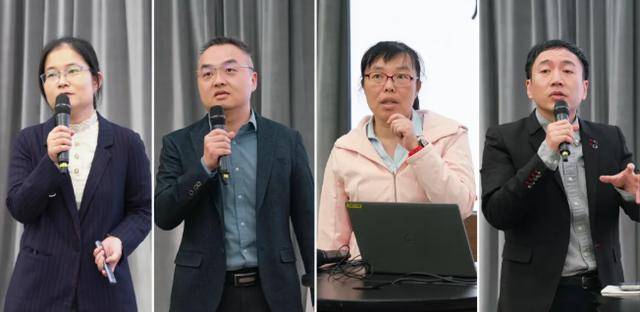
Core Viewpoint - The macroeconomic analysis conference hosted by Peking University HSBC Business School focuses on the economic outlook for China and trade dynamics in Southeast Asia and the Middle East for the fourth quarter of 2025, aiming to provide forward-looking economic analysis and decision-making references [1]. Economic Outlook for China - The GDP growth rate for 2025 is projected to be 5.1%, with a slowdown in economic growth in the fourth quarter attributed to fluctuating fiscal spending [4]. - Exports in the fourth quarter exceeded expectations due to China's transition of electromechanical products to higher-end segments of the global value chain, indicating sustainable high growth in future exports [4]. - The outlook for 2026 includes the potential end of the inverted interest rate spread between China and the U.S., which could benefit domestic asset prices, and opportunities for revitalizing real estate and local state-owned assets [4]. Economic Situation in the Guangdong-Hong Kong-Macao Greater Bay Area - The economic situation in the Greater Bay Area is characterized by stable industrial production, moderate recovery in exports, and pressure on domestic investment, with an expected growth rate of about 4.0% in the fourth quarter of 2025 [5]. - External trade continues to grow, particularly in non-U.S. regions, although the decline in export price indices is squeezing profit margins for export companies [5]. - Fixed asset investment is expected to decline further, presenting a significant challenge, while strategies to expand domestic demand are anticipated to support consumption growth [5]. Southeast Asia Economic Dynamics - Private consumption in Southeast Asia remains robust, with moderate inflation and strong exports from countries like Vietnam and Singapore [5]. - The active trade between China and ASEAN, along with the signing of the upgraded version of the China-ASEAN Free Trade Area agreement, is expected to inject strong momentum into regional economic integration [5]. - The economic growth rate in ASEAN is projected to continue leading globally, benefiting from the restructuring of global supply chains and accelerating renewable energy transitions over the next five years [5]. Economic Dynamics with the Middle East - The Middle East economy is experiencing moderate recovery, with an expected GDP growth rate of 2.7% for the year, driven primarily by non-oil sectors [6]. - Bilateral trade shows divergence, with significant increases in exports from China to Qatar and imports from Egypt [6]. - Future strategies for Chinese enterprises should focus on a diversified competitive landscape that includes stable oil and gas sectors, non-oil growth, and high-tech projects [6]. General Economic Trends - China's economy has crossed the L-shaped inflection point, entering a stable growth phase that aligns with the 2035 development goals [8]. - The shift towards new and improved economic development is changing the dynamics of equity and debt markets, suggesting a growing emphasis on equity market opportunities [8]. - Structural issues in the economy include the need for improved domestic consumption and the urgency of upgrading traditional industries, with new growth drivers emerging in high-tech and digital sectors [9].

能源强国建设“大家谈”︱读懂建设能源强国的发展逻辑、思想力量和制度优势
国家能源局· 2026-01-06 01:49
读懂建设能源强国的发展逻辑、思想力量和制度优势 能源是经济社会发展的重要物质基础和动力源泉。 习近平总书记指出:"能源的饭碗必须端在自己手里。""加快建设新型能源体系,注重传统能源与新能源多能互补、深度融合。" "加快建设新型能源体系""建设能源强国"写入"十五五"规划建议;中央经济工作会议提出"制定能源强国建设规划纲要,加快新型能源体系建设, 扩大绿电应用"……一系列顶层设计为我国能源事业发展指明方向、提供遵循。 当前,世界百年未有之大变局加速演进,人类社会同时进入第六次科技革命、第四次工业革命和第三次能源革命"三大革命"叠合发展期,各国把能 源摆在了更加重要的战略位置,全球能源版图越来越深刻影响世界地缘格局。 全球最大能源生产国、能源消费国、能源进口国,全球最大新能源生产国和利用强国……放眼全球,中国已是毋庸置疑的能源大国。 从1949年中国一次能源生产总量仅0.2亿吨标准煤,到2024年达到49.8亿吨标准煤,增长249倍。 从1949年全国发电43亿千瓦时,到2024年超10万亿千瓦时,创造全球单一国家发电量的新纪录。 党的十八大以来,我国万元GDP能耗累计下降27.2%,是全球能耗强度降低最快的国家 ...

金观平:绿电发得出更要用得好
Jing Ji Ri Bao· 2026-01-06 00:12
Core Viewpoint - The article emphasizes the urgency of expanding green electricity (green power) applications in China to achieve carbon neutrality goals and enhance global competitiveness in manufacturing [1][2]. Group 1: Importance of Green Electricity - China has established the world's largest renewable energy system, but the challenge lies in effectively utilizing green electricity [1]. - The European Union's carbon border adjustment mechanism, effective from January 1, 2026, will require Chinese companies to provide clear proof of green production for products like steel and cement to avoid high tariffs [1]. - The reliance on green electricity is becoming a new standard in international trade, impacting China's manufacturing competitiveness [1]. Group 2: Challenges in Green Electricity Application - The intermittent nature of wind and solar energy creates significant challenges for the power grid, leading to wasted green electricity due to insufficient grid capacity [2]. - Despite the reduction in costs for solar panels and wind turbines, the overall system costs for green electricity remain high, necessitating substantial investments in storage facilities and flexible coal power modifications [2]. - The current market mechanisms for green electricity are underdeveloped, with complexities in certification and trading, leading to difficulties for companies in purchasing and verifying green electricity [2]. Group 3: Solutions for Expanding Green Electricity Use - To expand green electricity applications, there is a need for technological innovation and improved market mechanisms, including the development of energy storage technologies and smart grids [3]. - Establishing a unified national electricity market and simplifying green electricity trading processes are essential for making green electricity more accessible [3]. - Implementing policies that incentivize the use of green electricity for companies can create a win-win situation, benefiting both consumers and producers [3].
第15届阿联酋国际投资峰会暨中阿能源项目交流对接会新闻发布会即将举办
中国能源报· 2026-01-05 10:22
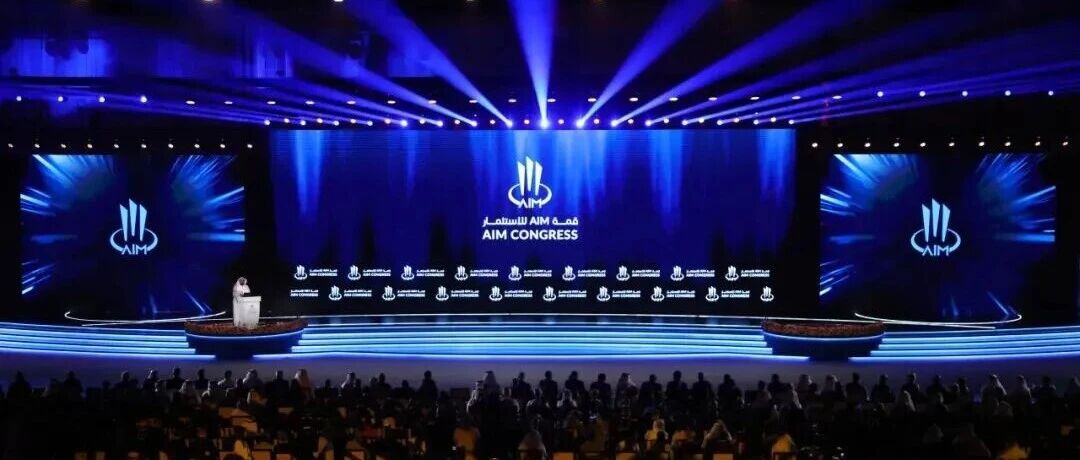
邀请函 全球领先的多边经贸合作盛会——第15届阿联酋国际投资峰会,将于2026年4月13—15日在迪拜 世界贸易中心举行。本届峰会由阿联酋外贸部、迪拜商会、AIM 全球基金会联合主办,主题为 ——重塑全球繁荣:开启投资新路径,迈向可持续与包容的未来。 为进一步推动中国与阿联酋在能源领域,特别是油气、可再生能源、电力、能源转型等方面的投 资与合作,中国能源报、AIM全球基金会将于第15届阿联酋国际投资峰会期间,联合主办中阿能 源项目交流对接会,打造能源领域集政策沟通、项目合作、技术交流与资本对接的高端实效对话 合作平台。 第15届阿联酋国际投资峰会暨中阿能源项目交流对接会新闻发布会拟定于2026年1月27日下午, 在北京·人民日报社·新媒体大厦举行。 诚邀全球新能源企业500强、中国能源企业500强及国家/地方专精特新企业出席本次新闻发布会, 齐聚产业核心力量与创新活力,共谱中阿合作新篇章。 发布会流程 第15届阿联酋国际投资峰会暨中阿能源项目交流对接会新闻发布会 主题:技术赋能・资本聚力 新闻发布环节 15:15-15:35 第15届阿联酋国际投资峰会暨中阿能源项目交流对接会介绍 互动问答 15:35-15: ...
中国社会科学院国家全球战略智库:在开放合作中推动全球绿色发展
Jing Ji Ri Bao· 2026-01-05 10:21
Core Viewpoint - Green development has become a global consensus, emphasizing the need for cooperation in promoting low-carbon transitions amidst climate change and economic challenges [1] Group 1: Historical Context and Development - Environmental issues have transitioned from the periphery to the mainstream agenda since the 1960s, with significant milestones such as the publication of "Silent Spring" in 1962 and the 1972 UN Conference on the Human Environment [2] - The concept of sustainable development was first articulated in the 1987 report "Our Common Future," leading to frameworks like the 1992 UN Conference on Environment and Development [2] - From the early 2000s to 2015, green trade and clean energy investments surged, with emerging market economies playing a crucial role in global climate negotiations [3] Group 2: Current Trends in Green Development - A comprehensive green low-carbon policy framework is being established globally, with countries setting carbon neutrality goals and developing carbon markets [4] - The scale of green investments is expanding, with global renewable energy investments projected to reach $807 billion in 2024, including solar investments exceeding $554 billion [4] - Green trade is emerging as a new growth point, with exports of solar and wind products expected to reach $443 billion and $245 billion respectively in 2024 [5] Group 3: Regional Practices and Innovations - Different regions are exploring diverse paths for green transformation, with the EU focusing on a market-driven approach and the Asia-Pacific region emphasizing industrial upgrades and financial collaboration [6][7] - Africa is leveraging its renewable energy resources through initiatives like the African Green Energy Initiative, with clean energy investments projected to reach $40 billion in 2024 [8] - Latin American countries are implementing green development plans based on their resource endowments, with Argentina's lithium exports expected to grow by 26% in 2024 [9] Group 4: China's Role in Global Green Development - China is committed to a green low-carbon development path, actively participating in global green governance and contributing to sustainable development [10] - The country has established a comprehensive carbon reduction policy framework and is enhancing its international cooperation in green technology and standards [11] - China's green investment initiatives, such as the "Belt and Road" initiative, are aimed at supporting global green infrastructure and energy projects [12] Group 5: Future Opportunities and Challenges - The urgency of climate change and rising consumer awareness are driving demand for green products, with new growth points emerging in green technology services and carbon trading [13][14] - The transition to a low-carbon economy is expected to increase investment needs across various sectors, including renewable energy and smart transportation [14] - However, international competition in the green sector is intensifying, with trade protectionism and geopolitical tensions posing challenges to global green development [15]
欧股2026年展望:机构高喊还有上涨空间 看好银行、可再生能源与德国刺激受益股
智通财经网· 2026-01-05 09:09
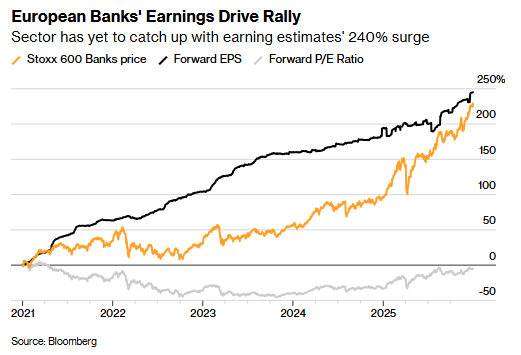
智通财经APP获悉,经历了自2021年以来表现最佳的一年之后,分析师和策略师们预测,欧洲股市在 2026年仍有进一步上涨空间。 具体来看,去年表现出色的板块普遍被认为将继续走强。作为2025年迄今为止表现最佳的板块,银行业 被看好将再度交出亮眼成绩单,摩根士丹利和巴克莱银行均将其列入首选推荐。围绕国防开支增加、可 再生能源及电气化的看涨主题预计也将延续。 众多券商在新年选股策略中还特别指出,受益于德国经济刺激政策的企业将是另一大投资亮点,而具备 清晰自我改善策略的公司同样备受关注。 以下为分析师们在新一年度力荐的欧洲热门标的精选: 摩根士丹利 由Marina Zavolock领导的策略师认为,2026年欧洲股市有望借力"美国经济复苏范围扩大"的东风持续走 高。美国市场贡献了欧洲企业约23%的加权营收,随着美国企业盈利增长超市场预期,叠加利好的税收 与监管政策,欧洲企业将从中显著受益。 摩根士丹利2025年最看好的欧洲板块中,银行业位居榜首,烟草与国防板块紧随其后。个股层面的核心 推荐标的包括桑坦德银行、劳埃德、西门子能源、森特理克集团、费森尤斯集团、荷兰国际集团、 Prosus NV、莱茵金属、ENGIE S ...


战略制胜 百年变局谋未来——二○二五年世界科技发展回顾·科技政策篇
Xin Lang Cai Jing· 2026-01-03 23:23
Group 1: Global Technology Trends - The year 2025 sees significant advancements in technology, with AI, quantum computing, gene editing, and renewable energy leading the way in transforming various industries and improving societal conditions [1] - AI is advancing across all sectors, pushing society from information-based to intelligence-based systems [1] - Renewable energy has become the largest source of global electricity, contributing to environmental restoration [1] Group 2: Russia's Technology Policy - Russia's technology policy emphasizes "technological sovereignty," banning foreign software in critical infrastructure sectors and mandating local alternatives [2][3] - The introduction of the "Technology Policy Law" establishes a framework for long-term technology development, including budget support and incentives for domestic technology developers [2] - Russia's "National Project" initiative focuses on key technology areas such as automation, materials chemistry, and healthcare [2][4] Group 3: France's Technological Strategy - France aims to enhance its technological competitiveness through strategic investments in AI, energy transition, and research sovereignty [5][6] - The "France 2030" investment plan supports key sectors like health, agriculture, and low-carbon energy, seeking technological breakthroughs [5] - France's national AI strategy focuses on building a comprehensive ecosystem and attracting top talent to strengthen its position in AI [6] Group 4: United States' AI Development - The new U.S. administration is prioritizing AI development by revoking previous regulatory orders and launching significant funding initiatives [7][8] - The "Genesis Project" aims to leverage federal scientific data to accelerate research breakthroughs using AI [7] - The U.S. Department of Energy is investing $625 million to establish national quantum information science research centers [8] Group 5: United Kingdom's Innovation Policies - The UK government is actively promoting AI applications across various sectors, including defense and healthcare [10] - Significant investments are being made in quantum technology, supercomputing, and hydrogen energy infrastructure [10] - The UK is focusing on attracting global talent to enhance its research capabilities [10] Group 6: Germany's Strategic Focus - Germany's technology policy concentrates resources on AI, quantum technology, and hydrogen economy, with a budget of approximately €22.3 billion for 2025 [11][12] - The "High-Tech Agenda Germany" aims to ensure technological sovereignty and innovation in key strategic areas [11] - Germany plans to invest €5.5 billion in AI "super factories" to enhance applications in health and industrial sectors [12] Group 7: South Korea's Research Investment - South Korea is expanding its budget for strategic technologies, with a focus on AI, quantum, and biotechnology, allocating approximately 6.8 trillion KRW (around $49 billion) for R&D [14][15] - The government is integrating humanoid robotics and aircraft engine components into its national strategic technology framework [14] - South Korea aims to achieve advanced levels in AI and humanoid robotics by 2027 through systematic support [15] Group 8: South Africa's Innovation Initiatives - South Africa is implementing several key technology innovation policies, including the second phase of its national AI strategy [16][17] - The country is focusing on sustainable energy transitions and digital sovereignty through a new comprehensive technology policy framework [16] - South Africa is launching a national hydrogen energy roadmap to align with its energy transition goals [16] Group 9: Japan's Comprehensive Innovation Strategy - Japan's "Comprehensive Innovation Strategy 2025" addresses structural issues in its research and innovation system, emphasizing stable funding and reducing competition [19][20] - The strategy highlights the importance of technological security in key areas such as semiconductors, AI, and quantum technology [20] - Japan aims to enhance its research capabilities and societal impact through long-term investments in foundational research [19]
美股异动|拿下重大风电合同GE Vernova股价劲升3.98%引投资者瞩目
Xin Lang Cai Jing· 2026-01-03 01:12
来源:市场资讯 对于投资者来说,GE Vernova近期的行动表明其在全球能源转型中的地位变得愈发重要。在可再生能源 方面的持续投入为公司发展提供了强劲的动力,也为股价带来了积极的影响。投资者在考虑投资时,可 以关注GE Vernova在可再生能源领域的长远规划及其项目进展情况,这或将成为未来股价增长的重要推 动力。 总的来看,随着全球对环保和可持续发展的日益重视,GE Vernova在陆上风电领域的拓展策略无疑将为 其带来更大的市场份额和收益。不过,投资者仍需关注全球经济数据、行业趋势以及公司财报,以便在 不确定的市场环境中做出明智的投资决策。 新年伊始,股市行情热烈开场。1月2日,ge vernova的股价强劲上涨了3.98%,成为投资者关注的焦点。 GE Vernova近期在欧洲及北美地区取得了多项重大陆上风电合同,彰显出公司在可再生能源领域的实 力。根据消息显示,GE Vernova在西班牙的Teruel项目中,将提供125台×6.1-158机组,总规模约为 760MW,合同价值超过7亿欧元。同时,罗马尼亚雅洛米察的项目规模也不容小觑,计划交付42台 ×6.1MW机组,合计252MW。尽管这些项目预计 ...