
家具

Search documents
小红书上的双11,藏着中国消费的秘密
阿尔法工场研究院· 2025-12-02 00:07
Core Insights - The article highlights a significant increase in consumer engagement and spending on the Xiaohongshu platform during this year's Double 11 shopping festival, with discussions around purchasing strategies and product recommendations surging by 600% year-on-year, reaching over 20 billion exposures [1] - Xiaohongshu's e-commerce transactions saw a 77% increase in the number of buyers and a 140% increase in transaction amounts compared to the previous year, indicating a robust commercial ecosystem driven by community discussions [1][17] - The article emphasizes a shift in consumer behavior towards more rational and meaningful purchases, moving away from the frantic low-price mentality of previous years, reflecting a new phase of "rational self-pleasure" in shopping [4][7] Group 1: Consumer Behavior Trends - The Double 11 shopping event has entered a new phase characterized by consumers seeking products that provide value and meaning rather than just low prices, indicating a more mature consumption mindset [4][7] - Consumers are increasingly focused on quality and aesthetics, with Xiaohongshu serving as a platform for discovering high-quality products that resonate with individual tastes and preferences [12][15] - The community-driven nature of Xiaohongshu allows for authentic consumer feedback, which influences brand development and product offerings, creating a cycle of demand and supply that caters to evolving consumer needs [27][28] Group 2: Xiaohongshu's E-commerce Ecosystem - Xiaohongshu has successfully integrated a "grass-planting direct" feature that connects users directly to e-commerce platforms, facilitating seamless transactions and enhancing brand visibility [19][20] - The platform has become a fertile ground for both established and emerging brands, with many brands achieving significant sales milestones during Double 11, such as Haier's washing machine series generating nearly 200 million in sales [19][20] - Xiaohongshu's community engagement and content-driven approach have established a unique ecosystem where brands can thrive by aligning with consumer interests and preferences, leading to a more efficient and effective sales process [27][28]


*ST亚振:拟变更子公司出资方式并划转资产增资至1.9亿元
Xin Lang Cai Jing· 2025-12-01 14:51
Core Viewpoint - *ST Yazhen announced a change in the investment method for its wholly-owned subsidiary, Jiangsu Yazhen, shifting from cash contributions to asset transfers [1] Group 1: Investment Method Change - The company plans to transfer furniture-related businesses, assets, liabilities, and personnel to Jiangsu Yazhen [1] - Non-monetary assets will be valued at appraisal value, while monetary assets will be valued at book value for the capital contribution [1] - The initial registered capital of 30 million yuan will be paid in, with the remaining amount being new contributions [1] Group 2: Capital Structure Post-Investment - After the capital increase, the estimated registered capital of Jiangsu Yazhen will reach 190 million yuan [1] - The company will maintain a 100% ownership stake in Jiangsu Yazhen following the capital increase [1] Group 3: Approval Process - The capital increase does not involve related party transactions or major asset restructuring [1] - The proposal has been approved by the board of directors and is pending approval from the shareholders' meeting [1]

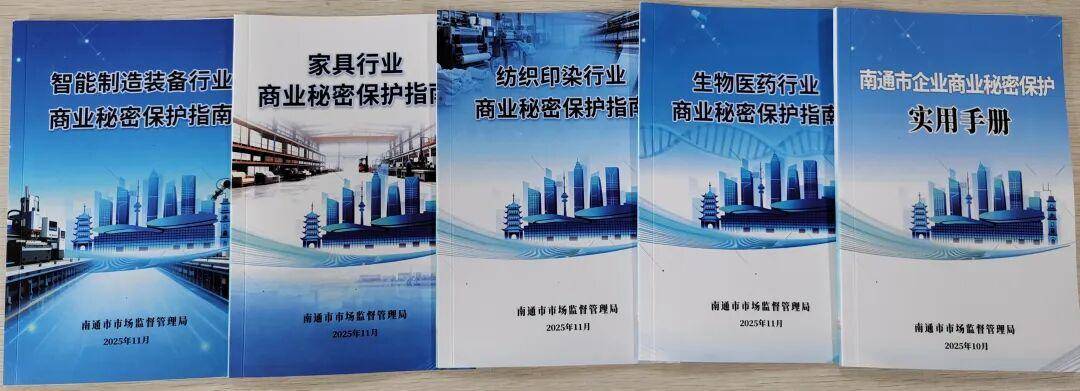
企业商业秘密保护必备!南通市场监管局推出“一手册+四指南”
Yang Zi Wan Bao Wang· 2025-12-01 12:58
Core Points - Nantong Market Supervision Administration has updated and launched practical guidelines for the protection of trade secrets in four industries: biomedicine, textile dyeing, furniture, and intelligent manufacturing equipment [2] - The first specialized learning and exchange meeting for the "Biomedicine Industry Trade Secret Protection Guide" was held on November 19, with 46 companies participating to foster a safer and more regulated innovation environment [2] Industry-Specific Summaries - **Biomedicine Industry**: The guidelines address the industry's characteristics of high investment, long cycles, high risks, and technology intensity, providing a comprehensive path for trade secret protection [2] - **Textile Dyeing Industry**: The guidelines consider the long supply chain, multiple technical links, high dependence on foreign trade, and frequent information exchange, outlining the risks and management strategies for trade secrets [2] - **Furniture Industry**: The guidelines highlight the numerous innovation stages and the hidden, dispersed risks of information leakage, offering strategies for effective trade secret management [2] - **Intelligent Manufacturing Equipment Industry**: The guidelines focus on the industry's capital and technology intensity, high innovation activity, and close industry chain collaboration, detailing the protection measures for trade secrets [2] Future Actions - Nantong Market Supervision Administration plans to focus on key industries and continue enhancing trade secret protection through mechanisms, platforms, and service optimizations to support enterprise innovation and fair market competition [2]
尚品宅配:12月1日召开董事会会议
Mei Ri Jing Ji Xin Wen· 2025-12-01 09:11
Group 1 - The core viewpoint of the article highlights that Shangpin Home Collection (SZ 300616) held its 11th meeting of the 5th board of directors on December 1, 2025, to discuss the reappointment of the accounting firm and other documents [1] - For the first half of 2025, the revenue composition of Shangpin Home Collection shows that the furniture industry accounted for 85.24%, while other businesses made up 14.76% [1] - As of the report, the market capitalization of Shangpin Home Collection is 3.1 billion yuan [1]

“不在中国也会在其他市场跟中企交锋,留下来才能紧跟创新步伐”
Guan Cha Zhe Wang· 2025-12-01 08:14
Core Insights - The article highlights the challenges faced by Western companies in the Chinese market, which has shifted from being a lucrative opportunity to a competitive battleground due to the rise of local brands and changing consumer behavior [1][2]. Group 1: Market Dynamics - China's consumer market is maturing, leading to more rational spending habits among consumers, which has intensified competition from local brands [1][5]. - Western companies are increasingly viewing China as an "innovation testing ground" and a "competitive gym" to adapt their strategies [1][11]. - A significant number of foreign brands are adjusting their strategies to cater to local tastes, accelerate product development, and lower prices to remain competitive [2][12]. Group 2: Competitive Landscape - Starbucks has sold a majority stake in its China operations to a local private equity firm, losing market share to local competitors like Luckin Coffee, which has surpassed Starbucks in sales and store numbers [5][12]. - A survey by the American Chamber of Commerce in Shanghai indicated that 63% of respondents identified local competition as their primary challenge, with local brands able to bring products to market more quickly [5][11]. - In the automotive sector, local brands like BYD have overtaken established foreign brands such as Volkswagen, which saw a 7% year-on-year decline in deliveries in China [5][9]. Group 3: Strategic Adjustments - Volkswagen is implementing a "China for China" strategy, focusing on developing products specifically for Chinese consumers, with a new model taking 30% less time to develop compared to previous efforts [9][10]. - Procter & Gamble has reported significant progress in its China operations after refocusing on products designed for local consumers, showcasing a whitening toothpaste specifically for the market [14]. - IKEA plans to lower prices on over 150 popular items and invest more than $22 million in the Chinese market, while also introducing over 1,600 new products tailored for local consumers [12][13]. Group 4: Success Stories - Some companies have managed to thrive despite the competitive landscape, with Ralph Lauren reporting over 30% year-on-year sales growth in China, and Estée Lauder seeing a 9% increase in revenue in the mainland [14]. - 3M has identified China as its fastest-growing region, launching a new product in just 10 months to keep pace with local demand [14].
涉及敏感个人信息、电商服务、新能源汽车安全等 12月1日起一批国家标准实施
Jing Ji Guan Cha Wang· 2025-12-01 06:15
Group 1 - A series of important national standards will be implemented starting December 1, which include sensitive personal information processing, e-commerce platform services, and green packaging for toys and children's products [1] - These standards aim to promote the healthy development of emerging and future industries, create a favorable consumption environment, and ensure the safety of people's lives and property [1] - Specific areas covered by the new standards include industrial instrument intelligence levels, urban furniture, ceramic tile quality grading, furniture recycling transactions, agricultural product wholesale market classification and grading, business entity credit, in-depth investigation of road traffic accidents, dynamic monitoring and early warning of new energy vehicle operational safety performance, and remote service and management systems for electric vehicles [1]
政策问答·回应关切丨如何增强消费品供需适配性
Ren Min Ri Bao· 2025-11-30 04:06
Core Viewpoint - The implementation plan aims to enhance the adaptability of supply and demand in the consumer goods market, addressing the mismatch between what consumers want to buy and what is available for sale [1][2]. Group 1: Supply and Demand Adaptability - The plan emphasizes the need for consumer goods production to actively adapt to changing consumption trends, ensuring dynamic and precise matching of diverse consumer demands in terms of quality, structure, and utility [1]. - The initiative is expected to maximize consumption potential and promote smooth economic circulation by aligning what consumers desire with what companies produce [1]. Group 2: Consumer Goods Market Overview - China currently has a total of 230 million types of consumer goods, with over 100 categories, including home appliances, furniture, and clothing, leading the world in production [2]. - The strong manufacturing capability allows consumer goods companies to quickly respond to technological upgrades and subtle changes in consumer preferences, facilitating continuous product iteration and innovation [2]. Group 3: Specific Measures in the Implementation Plan - On the supply side, the plan includes accelerating the application of new technologies, expanding the supply of unique and new products, and focusing on sectors like smart connected vehicles and smart home devices [2]. - On the demand side, the plan aims to activate domestic demand by creating a favorable development environment, addressing differentiated needs across age groups, and enhancing consumer financial products and services [2]. Group 4: Future Market Potential - The implementation plan focuses on supply-side structural reforms, aiming to stimulate the multiplier effect and structural dividends of China's vast domestic market, with the potential to create trillions of yuan in new consumer markets by 2027 [3].
中国经济持续回升向好 增长动能逐步优化
2 1 Shi Ji Jing Ji Bao Dao· 2025-11-28 22:31
Economic Growth - China's GDP grew by 5.2% year-on-year in the first three quarters of 2025, laying a solid foundation for achieving the annual growth target of around 5.0% [1] - The strong performance of external demand effectively offset the temporary shortfall in domestic demand, with contributions to GDP from final consumption expenditure, gross capital formation, and net exports at 53.5%, 17.5%, and 29% respectively [1] Consumer Market - The consumer market is expected to continue its moderate recovery, driven by the "trade-in" policy which significantly boosted retail sales of automobiles, home appliances, and furniture [2] - Retail sales of durable goods are showing strong recovery, with signs of improvement in service consumption such as dining [2] Manufacturing Sector - China's manufacturing value added accounts for 26.2% of GDP, highlighting its status as a manufacturing powerhouse [2] - Technological advancements in AI, big data, and biomanufacturing are accelerating the development of the digital economy and smart manufacturing, which will enhance overall productivity in the manufacturing sector [2] Real Estate Market - Policies aimed at stabilizing the real estate market are accelerating the inventory reduction process, with the area of unsold commercial housing decreasing from 800 million square meters in February 2025 to 760 million square meters by the end of September [3] - The reduction in mortgage rates and down payment ratios is expected to further stimulate demand in the real estate sector [3] Infrastructure Investment - Infrastructure investment is expected to improve marginally due to ongoing debt reduction efforts and the introduction of new policy financial tools [3] - Fiscal support for infrastructure remains strong, providing incremental investment power [3] Export Performance - China's export growth rate reached 6.1% year-on-year in the first three quarters, driven by the expansion into emerging markets and the advantages of its industrial chain [4] - The diversification of markets, particularly in Europe, ASEAN, and Latin America, has mitigated risks from reliance on a single market [4] Future Outlook - The Chinese economy is expected to continue its recovery, with growth momentum gradually optimizing due to proactive policies, technological empowerment in manufacturing, and the release of consumer market potential [4] - The combination of precise macro policies and deep structural reforms is anticipated to lead to qualitative improvements and reasonable quantitative growth in the economy [4]
“十四五”头四年广东外贸进出口年均增长6.5%
Zhong Guo Xin Wen Wang· 2025-11-28 05:43
Core Insights - Guangdong's foreign trade has shown resilience and vitality during the "14th Five-Year Plan" period, with an average annual growth rate of 6.5% in imports and exports over the first four years, maintaining the top position in the country for 39 consecutive years [1][2] - The province's foreign trade reached significant milestones, surpassing 8 trillion yuan in 2021 and 9 trillion yuan in 2024, with a total of 7.8 trillion yuan in imports and exports from January to October this year, reflecting a year-on-year growth of 3.7% [1] - The diversification of foreign trade markets has been notable, with average annual growth rates of 7.8% in trade with the EU, 7.5% with ASEAN, and 8.1% with countries involved in the Belt and Road Initiative, with the latter accounting for 38.3% of the province's total trade [1] Group 1 - The cross-border e-commerce sector in Guangdong has experienced robust growth, with an average annual increase of 44.1% over the first four years of the "14th Five-Year Plan," reaching a total of 746.2 billion yuan last year, which accounts for nearly 40% of the national total [2] - Exports of "new three items" including lithium batteries, electric vehicles, and photovoltaic products have seen an average annual growth of 33.1% [2] - Guangdong has successfully cultivated several export industry clusters, including two trillion-yuan clusters (electronic information and modern light industry), one 500 billion yuan cluster (AI products), and eight hundred billion yuan clusters across various sectors [2] Group 2 - The province has made efforts to balance imports, establishing six major import bases for commodities, electronic components, aircraft, automobiles, agricultural products, and mid-to-high-end consumer goods, along with three national import demonstration zones [2] - These initiatives have effectively reversed the long-standing weakness in Guangdong's import sector [2]
经济观察|破解“供需错配”,中国多部门合力促消费
Zhong Guo Xin Wen Wang· 2025-11-28 04:12
Core Viewpoint - The Chinese government is addressing the "supply-demand mismatch" in the consumer market through a new implementation plan aimed at enhancing the adaptability of consumer goods supply to meet diverse consumer needs [1][2]. Group 1: Market Overview - China's consumer market has become the second largest globally, with a total of 230 million types of consumer goods, leading in over 100 categories such as home appliances, furniture, and clothing [1]. - The rapid response of Chinese enterprises to technological upgrades and subtle changes in consumer demand is supported by strong manufacturing capabilities [1]. Group 2: Supply-Demand Mismatch - The "supply-demand mismatch" is identified as a key bottleneck for consumption upgrades, with issues such as overproduction of some products and insufficient high-quality supply in sectors like jewelry and cosmetics [2]. - Specific consumer needs, such as personalized products for the elderly and students, are not being adequately met, highlighting gaps in product functionality and safety [2]. Group 3: Implementation Plan Goals - The implementation plan sets two main targets: to establish three trillion-yuan-level consumption sectors and ten hundred-billion-yuan-level consumption hotspots by 2027, and to achieve a high-quality development pattern of positive interaction between supply and demand by 2030 [2]. Group 4: Key Measures - The plan includes five key measures: expanding new technology applications, increasing the supply of unique products, precisely matching different demographic needs, creating new consumption scenarios, and optimizing the development environment [2]. - The Ministry of Industry and Information Technology will promote the integration of new technologies like artificial intelligence into the consumer goods industry [3]. Group 5: Government Initiatives - The National Development and Reform Commission will focus on three areas: enhancing technological leadership, improving brand standards, and addressing public needs through infrastructure development [3]. - The Ministry of Commerce will implement policies to boost sales through trade-in programs and organize promotional activities to stimulate consumption [3]. - The Ministry of Culture and Tourism will support the introduction of quality cultural and tourism products and enhance consumer experiences through innovative activities [3]. Group 6: Market Regulation - The State Administration for Market Regulation emphasizes the importance of maintaining market order through enhanced supervision and enforcement actions, particularly in the safety of children's and student products [4].