先进制造业

Search documents
广东最新发布!含金量极大
Shang Hai Zheng Quan Bao· 2025-12-08 05:17
Group 1 - The core viewpoint of the article is the outline of Guangdong's future development blueprint, aiming to achieve socialist modernization within 13 years and double the economic output, reaching the GDP per capita level of moderately developed countries [1][5] Group 2 - The "15th Five-Year Plan" sets eight main goals for Guangdong's economic and social development, emphasizing high-quality growth, improved productivity, and increased domestic consumption [3] - Significant advancements in new-type industrialization, information technology, urbanization, and agricultural modernization are expected, with a focus on integrating into the national market [3] - The plan aims to enhance self-reliance in technology, with a collaborative innovation community in the Guangdong-Hong Kong-Macao Greater Bay Area and breakthroughs in key technologies [3] Group 3 - The proposal emphasizes the need for comprehensive reforms to modernize governance systems and enhance the socialist market economy [4] - It highlights the importance of cultural confidence and the promotion of socialist core values to improve social civilization [4] - The quality of life for residents is expected to improve, with synchronized growth in income and economic output, and a more optimized distribution structure [4] Group 4 - The ecological construction in Guangdong is projected to show significant results, with a focus on green production and living practices, achieving carbon peak goals, and reducing pollution [4] - The safety foundation for development is expected to be strengthened, with improved national security systems and risk management [4] Group 5 - The plan includes fostering more trillion-yuan and hundred-billion-yuan industrial clusters, focusing on advanced manufacturing as the backbone of the modern industrial system [7][9] - It aims to cultivate emerging and future industries, including new energy, new materials, and commercial aerospace, while promoting innovation and technology development [9] Group 6 - The proposal stresses the importance of deepening the digital economy and advancing smart economic development through data, computing power, and algorithms [12] - It calls for optimizing the consumption environment and enhancing consumer protection, while also expanding effective investment in infrastructure and public services [14] Group 7 - The plan advocates for the high-quality development of multi-level capital markets, enhancing the role of state-owned enterprises and supporting the growth of private enterprises [16][17] - It emphasizes the need for strategic cooperation with domestic and international financial institutions to strengthen Guangdong's financial system [17]

利好来了!刚刚,多地重磅发布!
Zheng Quan Shi Bao Wang· 2025-12-08 02:08
全国各省市的"十五五"规划建议正在赶来! 规划建议明确,加快打造人工智能应用高地。构建高能级人工智能创新平台,高水平建设重庆人工智能 学院、重庆通用人工智能研究院,引育一批人工智能领军人才,加快突破基础软件、模型算法、群体智 能等领域核心技术。聚焦医疗、金融、教育、科研等领域打造一批垂类大模型、端侧大模型和智能体。 建设"人工智能+"市域开源新生态,迭代完善人工智能政策体系,打造集聚共享语料、模型服务等一站 式综合服务的人工智能创新孵化空间,加快建设人工智能开源社区。 重庆"十五五"规划建议提出,在加快构建具有国际竞争力的现代化产业体系方面,规划建议提出,打造 具有全球影响力的智能网联新能源汽车之都。强化龙头引领、数智驱动、品牌铸魂、生态聚能,整体推 进整车、零部件、后市场重塑升级,构建世界级智能网联新能源汽车产业集群。聚力做强领军链主企 业,全面提升汽车产业链主导力控制力。建设国家汽车芯片产业基地,拓展"车路云网图"一体化应用场 景。锚定高端定位构建先进质量管理体系,构建国际化营销服务网络,培育世界级高端汽车品牌。支持 领军企业牵头组建"人工智能+汽车"生态联盟,布局超快充、换电站、加氢站等设施网络,提速打 ...
中共河南省委关于制定河南省国民经济和社会发展第十五个五年规划的建议
He Nan Ri Bao· 2025-12-07 23:45
Core Viewpoint - The 11th Committee of the Communist Party of China in Henan Province emphasizes the importance of the "14th Five-Year Plan" achievements and outlines strategies for the "15th Five-Year Plan" to achieve socialist modernization in Henan, focusing on high-quality development and addressing challenges in the current global and domestic landscape [2][3][4]. Group 1: Achievements During the 14th Five-Year Plan - Henan has made significant progress in economic and social development, including the establishment of a modern industrial system and the development of emerging pillar industries [2]. - The province has effectively responded to major risks and challenges, including the COVID-19 pandemic and severe weather events, while promoting high-quality development and governance [2]. - Key achievements include the construction of the National Biological Breeding Industry Innovation Center and the approval of the Zhengzhou Metropolitan Area plan [2]. Group 2: Challenges and Opportunities in the 15th Five-Year Plan - The current global landscape presents unprecedented challenges, with both strategic opportunities and risks for Henan, a major population and economic province [3]. - Despite challenges such as low per capita levels and insufficient innovation capacity, the overall outlook for Henan remains positive, with opportunities outweighing challenges [3]. - The implementation of national strategies for ecological protection and high-quality development will benefit Henan's modernization efforts [3]. Group 3: Overall Requirements and Goals for the 15th Five-Year Plan - The plan emphasizes adherence to Marxist principles and the importance of high-quality development, innovation, and meeting the people's needs [6][7]. - Key goals include significant progress in high-quality development, effective governance, and the establishment of a modern industrial system [9][10]. - The focus will be on improving living standards, enhancing social governance, and promoting ecological protection [11]. Group 4: Economic Development Strategies - The plan advocates for a strong emphasis on the real economy, promoting intelligent, green, and integrated development [12]. - It aims to consolidate and expand the real economy, enhance traditional industries, and foster strategic emerging industries [12][13]. - The integration of modern services with advanced manufacturing is a priority, along with the promotion of digital economy initiatives [13]. Group 5: Financial and Investment Strategies - The plan calls for the development of a robust financial system that supports diverse services and enhances capital market functions [14]. - It emphasizes the importance of investment in new productive forces and infrastructure to drive economic growth [25]. - The strategy includes expanding foreign investment and promoting trade innovation to enhance economic resilience [26][28]. Group 6: Agricultural and Rural Development - The plan prioritizes agricultural modernization and rural revitalization, ensuring food security and increasing farmers' incomes [29][30]. - It aims to develop a modern agricultural industry and enhance agricultural technology and equipment support [31]. - The focus will be on improving rural living conditions and promoting sustainable rural development [32]. Group 7: Urbanization and Regional Development - The plan promotes coordinated urban-rural development and the integration of urban functions to enhance regional competitiveness [33][34]. - It emphasizes the importance of urban renewal and infrastructure improvement to support sustainable urban growth [37]. - The strategy includes fostering regional cooperation and optimizing land use to promote balanced development across urban and rural areas [36].
国际机构看中国经济 关键词亮了
Yang Shi Xin Wen Ke Hu Duan· 2025-12-07 09:04
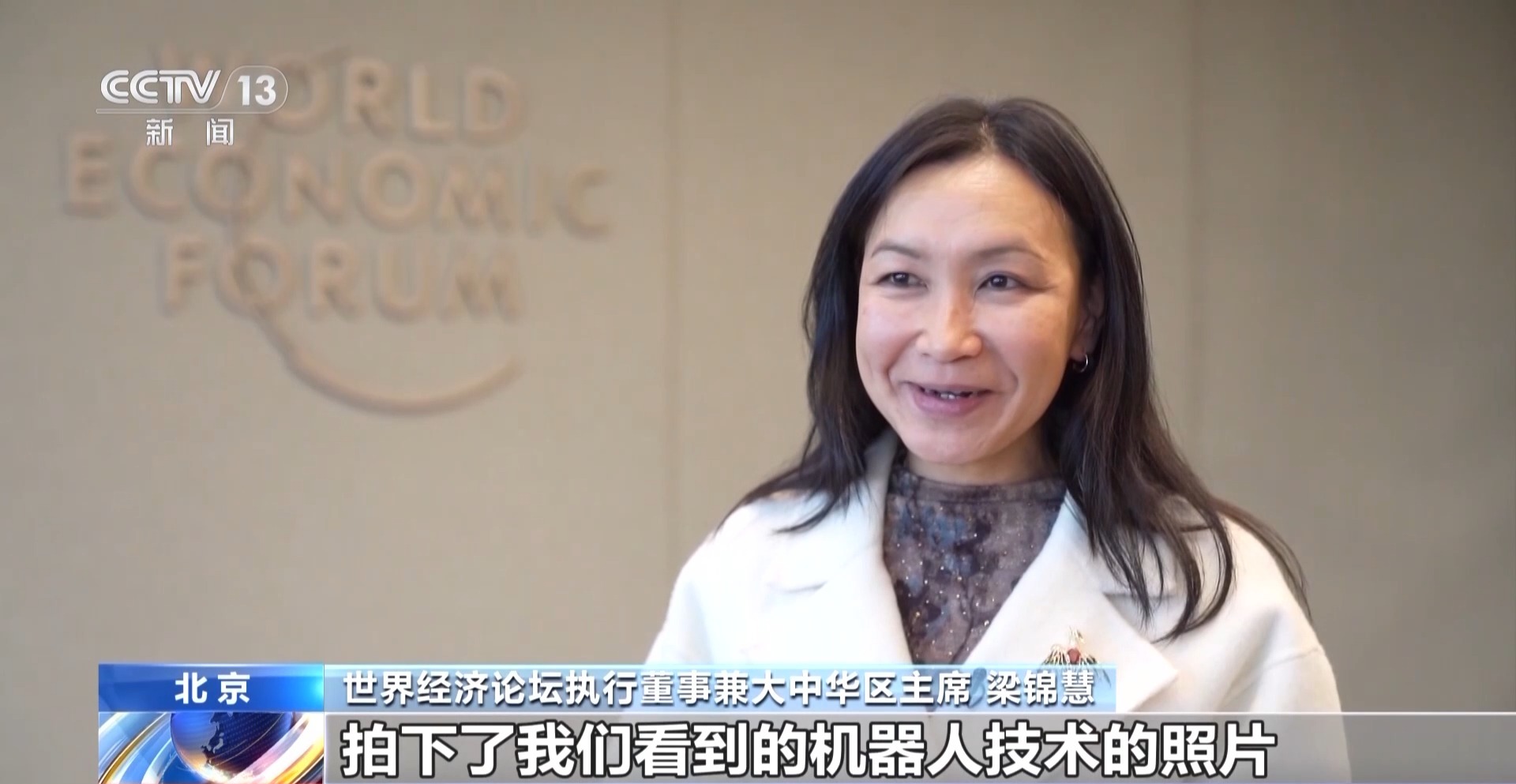
Group 1: Key Insights from the World Economic Forum - The core theme for China's economy in 2025 is technology and capability, with significant advancements in robotics and AI applications in manufacturing processes [3][7] - Over 40% of the global lighthouse network members are located in China, highlighting the country's leadership in advanced manufacturing and productivity enhancement [5][7] - Nearly 50% of best practices in artificial intelligence are being implemented in China, showcasing the country's competitive edge in various industries [7] Group 2: Key Insights from the Asian Development Bank - The keywords for China's economy in 2025 are resilience, adaptability, and foresight, particularly in trade relations with ASEAN and global markets [8][10] - China's third-quarter economic growth was 4.8%, with a year-to-date growth rate of 5.2%, indicating strong export performance and resilience against external uncertainties [12] - The adaptability of enterprises and supply chains is crucial, with a diversification of export destinations and an increase in high-quality product exports [14] Group 3: Key Insights from the OECD - The OECD has raised its economic growth forecast for China in 2025 to 5%, attributing this to the country's resilience, transformation, and vitality [15][17] - Significant technological innovations are driving transformative changes across various industries, with emerging fields like low-altitude economy showing promising developments [19] - China remains a key contributor to global economic growth, actively engaging in global economic integration and contributing to technological advancements in green transformation [25]
专家汇聚通州湾研讨海洋经济发展
Xin Hua Ri Bao· 2025-12-06 21:52
Core Viewpoint - The conference held on December 6 focused on promoting high-quality development in Jiangsu's coastal areas during the "14th Five-Year Plan" period, emphasizing the importance of marine economic development and innovation [1] Group 1: Marine Economic Development - The "14th Five-Year Plan" aims to enhance marine capabilities and promote high-quality development of the marine economy, aligning with the goals set by the 20th National Congress of the Communist Party of China [1] - Experts from various universities and think tanks discussed diverse pathways and regional explorations for marine economic development, including marine technology innovation and advanced manufacturing clusters [1] Group 2: Jiangsu Coastal Development Initiatives - A new research and practice base was established by Nantong University and the Jiangsu Provincial Tongzhou Bay Integrated Development Demonstration Zone to study marine economic development in Jiangsu [1] - The Tongzhou Bay Integrated Development Demonstration Zone has seen significant growth, with over 3,200 tax-paying enterprises, including 12 central enterprises and 28 listed companies [1]
大湾区大学正式成立
21世纪经济报道· 2025-12-06 06:13
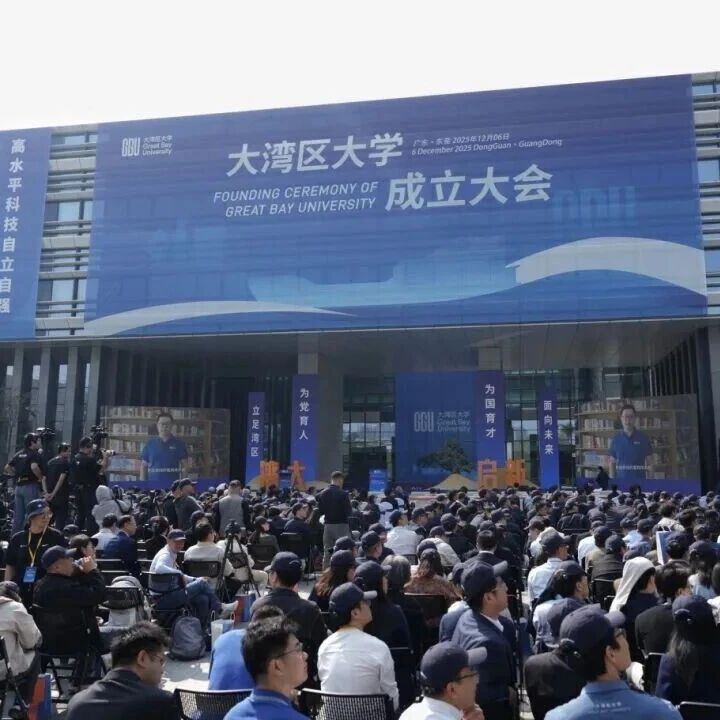
Core Viewpoint - The establishment of the Greater Bay Area University (GBAU) aims to cultivate high-quality research talents in response to the region's development needs, focusing on six key fields: material science, advanced engineering, life sciences, information technology, natural sciences, and financial management [2]. Group 1: University Establishment and Structure - The GBAU was officially approved by the Ministry of Education on June 19, marking a rapid transition from planning to establishment, with the first cohort of 80 students enrolled from 53 high schools across 16 cities in Guangdong [2]. - The university adopts an innovative educational model, allowing students to explore their interests in the first year before selecting their majors in the second year, with options including mathematics, physics, computer science, materials science, industrial engineering, artificial intelligence, and future robotics [4]. Group 2: Faculty and Research Team - GBAU has assembled a high-level faculty team of over 300 research teachers, all holding PhDs, with more than 70% having overseas study or work experience, including 10 academicians and 78 national-level talents [4]. Group 3: Collaborative Innovation Model - Located in Dongguan, the GBAU is developing a "University + Collaborative Innovation" model, partnering with major scientific facilities and leading enterprises like Huawei and OPPO to enhance technology innovation and talent development [6]. - The university provides each student with academic mentors and industry mentors from leading companies to cater to personalized development needs [6]. Group 4: Future Development and Goals - GBAU aims to integrate education with scientific research and industry, supporting the development of new productive forces in Dongguan and the Greater Bay Area, thereby contributing to technological innovation and emerging industry growth [6].
聚焦稳增长三大主线 积极财政政策加力护航
Shang Hai Zheng Quan Bao· 2025-12-05 19:08
Group 1: Tax-Free Policy and Consumption - The Ministry of Finance and four other departments announced a notification at the end of October, stating that from November 1, 2025, the tax-free shop policy will be improved, leading to a comprehensive upgrade from products to services and the business environment [1] - The new tax-free shopping policy in Hainan has shown significant results, with customs monitoring tax-free sales amounting to 1.325 billion yuan as of November 17, representing a year-on-year increase of 28.52% [1] - The expansion of tax-free shops and policies like trade-in incentives are expected to inject strong momentum into year-end consumption, focusing on accurately activating demand [1] Group 2: Support for Technological Innovation - Fiscal policy has become an important support for the development of technological innovation, with structural tax reductions and fee cuts being key measures to strengthen the role of enterprises in innovation [2] - In the first eight months of this year, tax reductions, fee cuts, and refunds supporting the manufacturing sector reached 1.2925 trillion yuan [2] - Local governments are actively establishing investment funds to support innovation, with the Jiaxing municipal government planning to set up a 10 billion yuan investment mother fund to create a comprehensive fund matrix [2] Group 3: Investment in People's Livelihood - The central government has allocated 1.16 billion yuan in subsidies for elderly care service consumption to support pilot projects in regions like Liaoning, Zhejiang, and Chongqing [4] - The central government has also provided a 3,600 yuan subsidy for childcare to families, reflecting a strong commitment to improving living standards [4] - In the first ten months of this year, the national general public budget expenditure reached 22.6 trillion yuan, with social security, education, and health expenditures growing faster than the average growth rate of 2% [4] Group 4: Focus on People's Livelihood in Fiscal Policy - The Minister of Finance emphasized the need to combine investment in material goods with investment in people to meet diverse public needs and stimulate domestic demand [5] - The "14th Five-Year Plan" highlights the importance of increasing fiscal spending on people's livelihood, addressing issues in education, healthcare, elderly care, and childcare to enhance residents' happiness and consumption capacity [5]
坚定不移推动高质量发展——五论学习贯彻省委十四届十次全会精神
Xin Hua Ri Bao· 2025-12-05 00:03
绿色发展是高质量发展的鲜明底色。"十四五"期间,我省在习近平生态文明思想指引下,各地深入 践行"绿水青山就是金山银山"理念,美丽江苏建设取得积极成效,一幅人与自然和谐共生的现代化画卷 正徐徐展开。江苏的绿色发展之路,正迎来更加广阔的未来。"十五五"期间,我们要以碳达峰碳中和为 牵引,进一步协同推进降碳、减污、扩绿、增长,增强绿色发展动能。坚持先立后破,持续提高新能源 供给比重,推进化石能源安全可靠有序替代,加快构建清洁低碳能源体系。落实好碳排放双控制度,深 入实施节能降碳改造,大力发展绿色低碳产业,加快经济社会发展全面绿色转型。 作为经济大省,江苏将坚定信心、知重负重、主动作为,把中央要求转化为"施工图""任务书",以 扎实的工作确保在高质量发展上继续走在前列,为谱写"强富美高"新江苏现代化建设新篇章不懈努力, 为全国大局作出新的更大贡献。 今年是"十四五"规划收官之年。这五年,是江苏发展极不平凡的五年,也是面对愈发复杂多变的国 际环境,坚定信心、稳中有进,高质量发展的五年。省委十四届十次全会强调要"坚定不移推动高质量 发展",就是要以新发展理念引领发展,促进经济结构优化升级,推动经济实现质的有效提升和量的合 ...
推动先进制造业集群“强而优”
Jing Ji Ri Bao· 2025-12-04 23:57
推进数智绿色转型,培育发展新动能。数字化、智能化与绿色化的深度融合,是先进制造业集群提 质增效的必由之路,既能大幅提升生产效率,更能塑造可持续的长期竞争优势。要深入实施"人工智能 +制造"行动,分行业布局制造业数字化转型促进中心,推动集群内企业智改数转网联。实施绿色集群 行动计划,新培育一批绿色工厂、绿色供应链,开展零碳园区建设,推动传统产业通过技术改造实现节 能降碳。 扩大开放合作,融入全球产业网络。开放合作是打造世界级先进制造业集群的必答题,唯有主动融 入全球产业网络,才能提升全球资源配置能力,增强国际竞争力。要用好RCEP等自贸协定,支持集群 内企业"组团出海",拓展海外市场渠道和研发合作。推动技术专利化、专利标准化、标准国际化,提升 在国际标准制定中的话语权,培育具有全球影响力的"链主"企业。 (本文来源:经济日报 作者:王琛伟 公丕明 作者分别系国家发展和改革委员会经济体制与管理研 究所研究员、副研究员) 经过多年发展,我国制造业已经进入从"规模扩张"向"质量提升"转型的关键阶段,先进制造业集群 已经具备规模优势和生态基础,形成链式协同、技术引领、区域集聚的鲜明特征。首先,产业链形 成"链主引领+配 ...
21评论丨着力扩大内需 增强经济持续向好态势
2 1 Shi Ji Jing Ji Bao Dao· 2025-12-04 22:40
Core Viewpoint - The upcoming Central Economic Work Conference will set the development tone for 2026, focusing on expanding domestic demand and addressing insufficient effective demand while maintaining economic stability and growth potential [1] Group 1: Domestic Demand Expansion - The primary task of macroeconomic policy is to comprehensively expand domestic demand, with a focus on boosting consumption and increasing effective investment [3] - To enhance consumption, policies will emphasize both quantity and quality, including measures like promoting trade-in programs and improving subsidy processes to unlock market potential [3] - Investment will focus on improving efficiency, targeting major national strategies and key areas such as infrastructure and digital economy, while also optimizing the business environment to attract more private investment [3] Group 2: Supply-Side Policies - Supply-side policies will center on technological innovation to cultivate new productive forces, enhancing the quality and momentum of economic growth [4] - The core driving force for economic growth will shift towards a modern industrial system characterized by advanced manufacturing, strategic emerging industries, and a deep integration of the digital economy with the real economy [4][5] - Efforts will be made to optimize traditional industries and foster new industries, creating clusters in sectors like renewable energy and aerospace to generate new growth drivers [5] Group 3: Risk Prevention and Financial Stability - Ensuring safety in key areas and effectively preventing risks is crucial for solidifying economic foundations, with a focus on stabilizing the real estate market and managing local government debt [5] - Fiscal policy is expected to maintain an expansionary stance, optimizing expenditure structures to support strategic emerging industries and enhance social safety nets [5] - Monetary policy will likely continue a moderately loose tone, closely coordinating with fiscal policy to support key sectors like technology and green transformation [6]