智能硬件

Search documents
CES2026年前瞻:家庭场景中的AI智能消费产品加速落地
HTSC· 2026-01-07 05:18
Investment Rating - The report maintains a "Buy" rating for several companies, including Stone Technology, Eufy, Anker Innovation, Ecovacs, Ugreen Technology, and XGIMI, with target prices set for each [9][13]. Core Insights - The report highlights the rapid advancement of AI and robotics technologies in consumer electronics, particularly in smart home devices, cleaning appliances, and wearable technology, indicating a significant investment opportunity in the tech consumer sector for 2026 [1][6]. - The CES 2026 event is identified as a crucial observation point for AI applications in consumer products, with expectations for innovative product launches across various categories [1][6]. Summary by Sections Smart Cleaning Appliances - The robotic vacuum cleaner industry is transitioning into a phase of micro-innovation, with notable product launches such as the G-Rover by Stone Technology, which features dual mechanical legs for enhanced cleaning capabilities [2]. - Other companies like Ecovacs and Chase are also introducing advanced models with improved obstacle avoidance technology and multifunctional capabilities [2]. Garden Robots - The CES showcased numerous new products aimed at garden maintenance, including robotic lawn mowers and pool cleaning robots, with companies like Ninebot and MOVA presenting models that cover various residential and commercial applications [3]. Smart Hardware - The traditional 3C accessories market is experiencing competition, but companies like Ugreen and Anker are carving out niches by innovating and enhancing product offerings, such as the new AI NAS products and security devices [4]. AI Glasses - AI glasses are emerging as a significant wearable technology, with Chinese manufacturers leading the lightweight trend. Notable products include Alibaba's Quark AI Glasses S1 and Rokid's offerings, which feature functionalities like translation and scene guidance [5]. Investment Opportunities - The report emphasizes that AI-driven product innovation will be a key growth driver for tech consumer companies in 2026, with recommendations for investment in companies that are well-positioned to capitalize on these trends [6].




Coosea酷赛智能的下一站:聚焦核心技术,剑指智能硬件百万台增量市场
Jin Tou Wang· 2026-01-07 04:36
Core Insights - Coosea Intelligent Technology Co., Ltd. is positioning itself as an industry leader in the expanding global smart hardware market, targeting a future market of millions of units and reinforcing its leading position in global smart terminal solutions [1][3]. Market Potential - From 2020 to 2024, the shipment volume of smart hardware from local brands is projected to rise from 190.9 million units to 276.4 million units, with expectations to further increase to 388.2 million units by 2029, indicating strong market potential and structural growth opportunities [3]. - Coosea is currently the second-largest end-to-end solution provider for local smartphone brands globally and is expected to reach the top position in shipment volume by the first quarter of 2025 [3]. Strategic Focus - The company has placed a strong emphasis on AI functionality development as a core part of its growth strategy, increasing investments in artificial intelligence, customized operating systems, and modular platform construction, with over 530 million RMB invested in R&D over the past three years [3][6]. - Coosea holds over 100 patents and actively participates in drafting national standards, aiming to provide competitive and differentiated smart products for local brands, particularly in emerging markets and niche sectors [3][6]. Global Expansion and Supply Chain - Coosea is accelerating its global sales network, currently covering over 70 countries and regions, and has established stable partnerships with top global telecom operators [5]. - The company leverages a robust domestic industrial chain and a controllable supply chain system to create an efficient, flexible, and transparent material and production management system, enabling rapid response to customer demands and supporting large-scale customized deliveries [5]. Future Outlook - Coosea aims to deepen its AI and smart technology layout, consolidating its one-stop service advantage to empower more local brands to rise in the global market [6]. - With the ongoing demand for smart devices in emerging markets such as South Asia, the Middle East, and Latin America, along with the steady increase in the share of local brands in global shipments, Coosea is well-positioned for sustainable and high-quality growth in the new growth cycle of smart hardware [6].


港科大教授实测AI眼镜“作弊”:30分钟碾压95%的学生,把传统教学评估体系整破防了
猿大侠· 2026-01-07 04:11
Core Viewpoint - The article discusses a recent experiment at Hong Kong University of Science and Technology where an AI-powered glasses equipped with ChatGPT-5.2 took a final exam, achieving a score of 92.5, outperforming over 95% of human students, raising questions about the validity of traditional educational assessment methods [1][4][6]. Group 1: Experiment Overview - The AI glasses, developed by a team led by Professors Zhang Jun and Meng Zili, were designed to "cheat" in a controlled exam environment for the course "Computer Network Principles" [7][8]. - The AI glasses utilized a combination of hardware and software, including a camera for capturing exam questions and a cloud-based model for generating answers [13][12]. - The experiment aimed to evaluate the performance of AI in a traditional academic setting, highlighting the potential challenges to existing educational evaluation systems [5][6]. Group 2: Performance Metrics - The AI glasses scored 92.5, with perfect scores in multiple-choice and single-page short answer questions, and a high score in multi-page short answer questions [14]. - The performance demonstrated strong reasoning capabilities, even in complex questions that required contextual understanding [14][15]. - The experiment revealed that the AI could effectively complete the reading, understanding, and answering process, raising concerns about the relevance of traditional assessment methods [22][23]. Group 3: Implications for Educational Assessment - The success of the AI in the exam challenges the effectiveness of current educational assessments that focus primarily on standardized answers [22][33]. - The article suggests that traditional assessments may not adequately measure critical skills such as problem-solving, creativity, and understanding, which are essential in real-world scenarios [39][43]. - There is a growing need to shift the focus of educational evaluations from merely providing correct answers to assessing the reasoning processes and understanding behind those answers [40][48].

CES 2026 最疯狂的 25 个脑洞,全在这里了
3 6 Ke· 2026-01-07 02:50
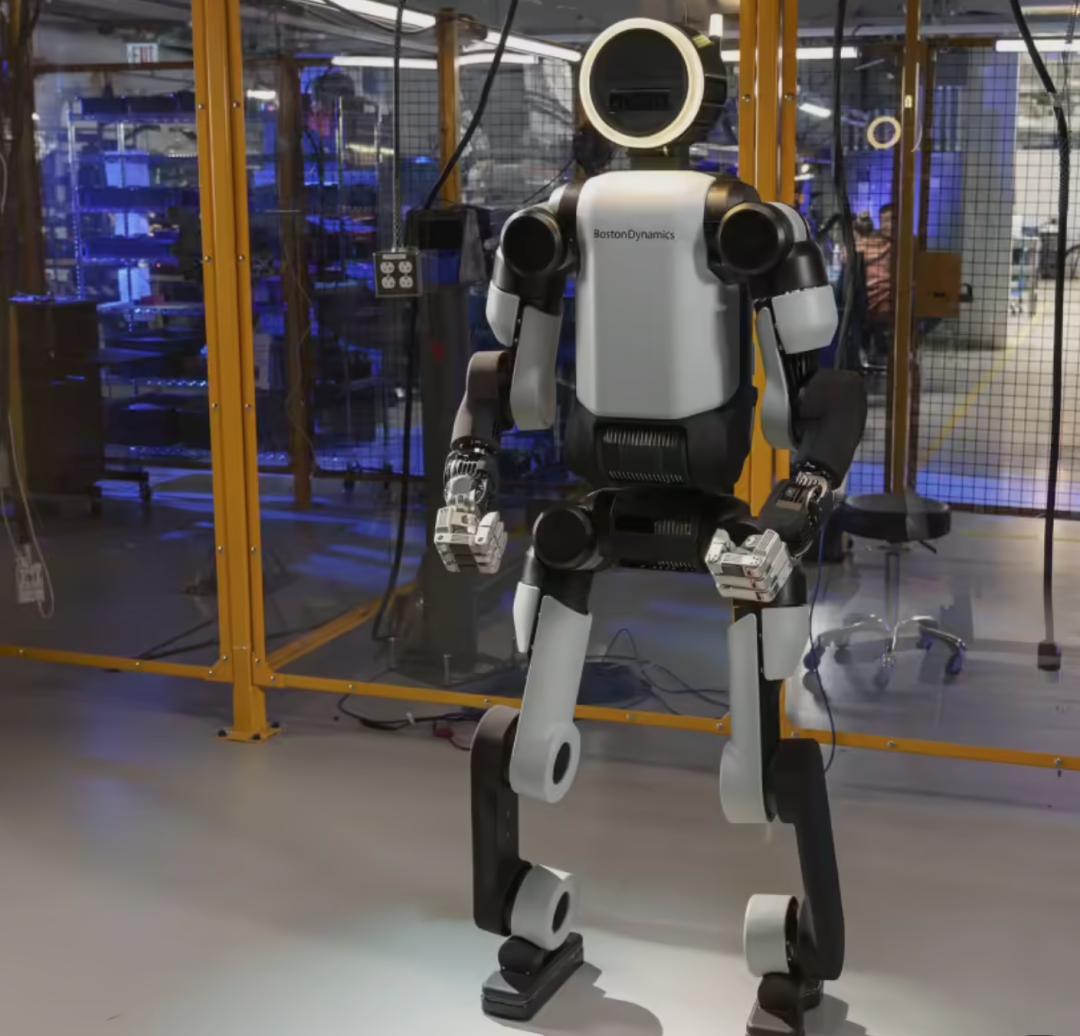
Core Insights - CES 2026 showcases a significant shift in AI integration, moving from software applications to physical world applications through various hardware innovations [1][2] - The event features over 4,100 exhibitors and is expected to attract more than 150,000 attendees, indicating a full recovery and heightened interest in technology [1] - The focus is on four key areas: robotics and embodied intelligence, smart vehicles, AI hardware, and innovative tech, which are seen as the main drivers of innovation this year [1] Robotics and Embodied Intelligence - CES 2026 marks a turning point for robotics, with a dedicated exhibition hall for embodied intelligence, indicating a shift from novelty to practical applications in manufacturing, transportation, and healthcare [4] - Chinese companies dominate the robotics sector, with over half of the exhibitors showcasing advancements in embodied intelligence, highlighting the competitive landscape [4] - Boston Dynamics' Atlas robot demonstrates its evolution from a prototype to a functional industrial product, set to perform real manufacturing tasks [5][7] AI Hardware - AI is becoming seamlessly integrated into everyday products, moving beyond mere automation to enhance functionality and user experience [27] - The trend of AI companionship is evolving, with products tailored to different life stages, emphasizing emotional support and interaction [27] - The recording technology sector is becoming increasingly competitive, with innovations aimed at capturing and processing information more effectively [27] Smart Vehicles - The automotive sector at CES 2026 presents a stark contrast between the vibrant Chinese market and the subdued American presence, reflecting a shift in global automotive dynamics [42] - Nvidia's Alpamayo introduces advanced logical reasoning capabilities for autonomous driving, marking a significant advancement in vehicle intelligence [43][45] - Strutt's Ev1 smart electric wheelchair enhances user independence by incorporating advanced navigation technology, showcasing the potential for smart mobility solutions [46][48] Innovative Products - The NuraLogix "longevity mirror" offers health monitoring capabilities without invasive procedures, representing a shift towards proactive health management [67][69] - Withings' Body Scan 2 smart scale provides comprehensive health assessments, aiming to transform daily health monitoring into a routine practice [70][72] - Mui Lab's wooden sleep monitoring board exemplifies a blend of technology and natural materials, offering a non-intrusive way to track sleep quality [73]

万和财富早班车-20260107
Vanho Securities· 2026-01-07 02:09
Core Insights - The report highlights the strong performance of the Chinese stock market, with expectations of a 15% to 20% annual increase in 2026 and 2027, as suggested by Goldman Sachs [6] - The report emphasizes the emergence of innovative applications in the technology sector, particularly with the launch of AI initiatives by major companies [8] Domestic Financial Market - The Shanghai Composite Index closed at 4083.67, up by 1.5%, while the Shenzhen Component Index rose by 1.4% to 14022.55 [4] - The trading volume on January 6 reached 280.65 billion yuan, with 3843 stocks rising and 1201 falling, indicating a bullish market sentiment [11] Industry Developments - The world's first mass-producible all-solid-state battery has been developed, indicating a strong potential for commercial applications, with related stocks including Xianlead Intelligent (300450) and Naconor (920522) [8] - WeChat has launched an AI mini-program growth plan, fostering innovation in the tech sector, with related stocks such as Zhiyuan Interconnect (688369) and Tuolisi (300229) [8] Company Focus - Sentai Co., Ltd. (301429) plans to invest up to 140 million yuan in a new production base for high-performance wood-plastic composite materials in Vietnam [10] - Hanshuo Technology (301275) has signed an agreement with Australia's Woolworths to deliver 10,800 smart shopping cart systems to approximately 300 stores [10] - Lingyi Technology (002600) is collaborating with Beijing E-Town to establish a super factory with an annual production capacity of 500,000 humanoid robots [10] Market Review and Outlook - The report notes a strong upward trend in the market, with significant inflows into sectors such as securities and autonomous driving, while some sectors like data centers and chips experienced outflows [11] - The report suggests that the commercial aerospace sector remains a key focus, with high tolerance for mid-to-high priced stocks, while caution is advised regarding potential market corrections [13]
上市公司军团展示中国智造新成果
Zheng Quan Shi Bao· 2026-01-06 18:20
Group 1: Robotics and Intelligent Hardware - Chinese companies showcased their advancements in robotics and intelligent hardware at CES 2026, highlighting innovations across various core sectors [1] - Lingyi iTech presented its full-stack capabilities in embodied intelligence, demonstrating multiple robotic systems and a plan for an annual production of 500,000 units [2] - Aobi Zhongguang introduced new 3D camera products for humanoid and outdoor autonomous robots, enhancing visual solutions for precise operations [2][3] - Meige Intelligent and Yimai Intelligent launched new micro AI robot products, while Ninebot unveiled a new lawn mowing robot to expand its product matrix [3] Group 2: Smart Glasses and AI Integration - The smart glasses sector is experiencing intense competition, referred to as the "hundred glasses battle," driven by advancements in AI and human-computer interaction [4] - Companies like Thunderbird and Rokid showcased their latest AR and AI-integrated smart glasses, enhancing user experience through innovative designs [4] - GoerTek presented a comprehensive XR solution, including lightweight 4K MR designs and advanced acoustic technologies, aimed at optimizing visual and auditory experiences [4] Group 3: Display Technology - Hisense Visual officially launched its next-generation RGB-Mini LED display technology, achieving a color gamut of 110% BT.2020 and winning a CES 2026 Honor Award [5] - The flagship Hisense UX series, featuring advanced backlight technology, is set to debut in the Chinese market in March 2026 [5] Group 4: Computing and Storage Solutions - The demand for computing and storage infrastructure is rapidly increasing due to the growth of edge AI applications [6] - Companies like Lens Technology introduced a full-stack liquid cooling solution and high-precision cabinets aimed at reducing AI computing costs by over 30% [7] - JIANGBO Long launched a co-branded storage product line, while Bawei Storage showcased its Mini SSD solutions, emphasizing high performance and modular design [7] - Rockchip revealed its RK3588 products, which are widely used in various robotic applications, demonstrating strong AI support and efficiency [7]
扑朔迷离的豆包眼镜
Bei Jing Shang Bao· 2026-01-06 15:52
Core Viewpoint - The news highlights the cautious approach of ByteDance regarding its "Doubao AI Glasses," which are set to enter the shipping phase with a planned quantity of 100,000 units and a starting price below 2,000 yuan, although there are conflicting reports about sales plans and product details [1][2]. Group 1: Product Development and Strategy - ByteDance's "Doubao AI Glasses" are developed in collaboration with Longqi Technology, with the latter responsible for the underlying UI and ByteDance for the app development [2]. - The first generation of Doubao AI Glasses is primarily aimed at Doubao's loyal users and is not intended for public sale [2]. - The second generation of Doubao AI Glasses is currently in development, with no mass production yet, and the decision on whether to open sales to ordinary consumers will take months to determine [2]. Group 2: Technology and Market Positioning - The glasses utilize the Qualcomm AR1 chip instead of the previously rumored Hengxuan 2800 chip with an external ISP chip [2]. - ByteDance's focus is not solely on the hardware but on establishing a new interactive entry point that integrates terminals, models, and ecosystems [1][2]. - The company aims to transition AI from passive responses to proactive services through visual recognition, spatial awareness, and contextual understanding, positioning Doubao AI as a default option for human-computer interaction in the AI era [2]. Group 3: Competitive Landscape - The competitive landscape for AI hardware is intensifying, with major companies like Meta, Apple, Huawei, Xiaomi, Baidu, and Alibaba entering the market, offering a variety of products from audio glasses to AR headsets [2]. - IDC forecasts that the shipment volume of smart glasses in China will reach 2.9 million units by 2025, representing a year-on-year growth of over 120% [2].
跨界进军可穿戴领域 极米科技发布AI眼镜品牌MemoMind
Zheng Quan Ri Bao Wang· 2026-01-06 13:09
Company Overview - XGIMI Technology Co., Ltd. has launched a new AI smart glasses product line named MemoMind at the 2026 International Consumer Electronics Show, indicating a strategic expansion from smart projection and automotive displays into the wearable technology sector [1] - The MemoMind brand represents a significant extension of XGIMI's product offerings, leveraging over a decade of optical technology and industrial design expertise to create a new independent AI hardware brand [1] Product Features - The MemoMind AI glasses product line includes a spectrum of offerings from comprehensive to lightweight options, with MemoMind One being a standout product designed for consumer-level AI display needs, expected to be released in late 2026 [1] - The MemoMind Air series showcases two new technological directions: MemoMind Air Display focuses on lightweight display technology, while another variant emphasizes AI experience without visual display, offering audio versions [2] Market Position and Investment - The operational entity for the MemoMind brand is Shenzhen Qilai Innovation Intelligent Technology Co., Ltd., a subsidiary of XGIMI, which recently raised 50 million yuan in funding, increasing its valuation to 770 million yuan [3] - The investment aims to enhance R&D and operational capital for the mass production and market promotion of MemoMind AI glasses, supporting XGIMI's strategic transition from large-scale projection to intelligent personal devices [3] Industry Trends - The AI glasses market is transitioning from generic products to scenario-based solutions, positioning itself as a core interaction medium for the future, with IDC predicting that global shipments of smart glasses will exceed 23.687 million units by 2026 [3] - The Chinese smart glasses market is expected to surpass 4.915 million units, driven by strategic positioning, economic experimentation, and advancements in AI capabilities [3] - Industry experts highlight ongoing innovations in display technology, emphasizing the pursuit of higher resolution, lighter weight, and lower power consumption, alongside enhanced AI functionalities and interoperability with other smart devices [4]
氪星晚报|国产AI芯片公司太初元碁获评国家高新技术企业;脑机接口“独角兽”强脑科技完成20亿元融资;2026年全国广播电视工作会议:推动微短剧精品化发展
3 6 Ke· 2026-01-06 12:07
Group 1: Company News - WeChat's official statement denies the existence of any new account suspension rules, labeling rumors about "Tencent WeChat new regulations" as false [1] - Taichu Yuanqi, a domestic AI chip company, has been recognized as a national high-tech enterprise by Jiangsu Province [2] - Alibaba's AI model, DAMO PANDA, has been reported to effectively assist in early screening of pancreatic cancer, having analyzed over 180,000 CT scans [3] - Weimob Group has announced a strategic cooperation with Alibaba's Taobao Flash Purchase to enhance local retail digitalization [4] - YHLO has signed a strategic cooperation framework agreement with Brain Machine Starlink to develop brain-computer interface products [5] - T3 Mobility has successfully migrated its entire business to Tencent Cloud, marking the largest and most complex cloud migration in the industry [6] Group 2: Investment and Financing - Qiang Brain Technology, a brain-computer interface "unicorn," has completed approximately 2 billion RMB in financing, making it the second-largest financing in the field after Neuralink [7] Group 3: Product Launches - Qianli Zhijia and Geely jointly launched a new advanced driving assistance brand, G-ASD, at CES 2026 [8] - XGIMI unveiled its AI glasses brand, MemoMind, at CES, with over 1.5 billion RMB invested in R&D since its listing [9] Group 4: Industry Insights - AMD's CEO, Lisa Su, predicts that the AI industry will grow to over 5 billion daily users within five years [10] - The National Data Bureau plans to introduce over 30 national standards in the data field by 2026, focusing on emerging areas [10] - The State Administration of Foreign Exchange aims to optimize trade foreign exchange management and expand high-level cross-border trade pilot programs [10]

豆包眼镜扑朔迷离,字节入口步步为营
Bei Jing Shang Bao· 2026-01-06 11:58
Core Insights - The news highlights the ongoing developments regarding ByteDance's "Doubao AI Glasses," which have reportedly entered the shipping phase with a planned quantity of 100,000 units and a starting price below 2,000 yuan [2][3] - There is ambiguity surrounding the sales strategy, with indications that the first generation of Doubao AI Glasses may not be publicly sold, targeting instead experienced Doubao users [3] - The company is focusing on creating a comprehensive ecosystem that integrates hardware, models, and user interaction, rather than solely on the glasses themselves [4] Product Development - The Doubao AI Glasses are developed in collaboration with Longqi Technology, with Longqi responsible for the underlying UI and ByteDance for the app development [3] - The glasses utilize the Qualcomm AR1 chip instead of the previously rumored Hengxuan 2800 chip, indicating a shift in hardware strategy [3] Market Context - The competitive landscape for AI hardware is intensifying, with major companies like Meta, Apple, Huawei, Xiaomi, Baidu, and Alibaba entering the market [4] - IDC forecasts that the shipment volume of smart glasses in China will reach 2.9 million units by 2025, representing a year-on-year growth of over 120% [4]