生物制造

Search documents
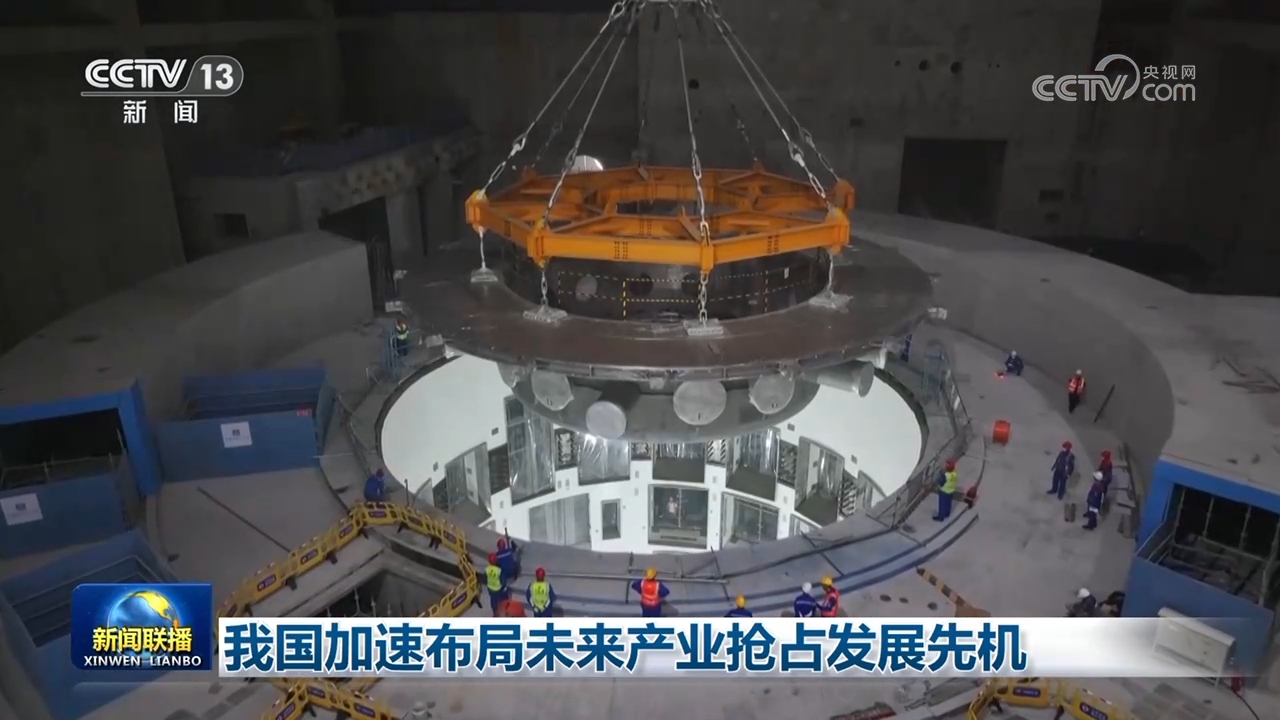
我国加速布局未来产业抢占发展先机
Yang Shi Wang· 2025-12-18 12:32
Core Insights - The "14th Five-Year Plan" emphasizes the strategic development of six future industries, including quantum technology, biomanufacturing, hydrogen energy, and nuclear fusion energy, with a focus on transitioning from laboratory research to real-world applications [1][3] Group 1: Industry Development - A compact fusion energy experimental device (BEST) has entered the assembly phase, aiming for commercial application of fusion energy during the "14th Five-Year Plan" [3] - Significant breakthroughs in core technologies have been achieved, with several quantum sensors developed and applied in precision equipment across various fields [5] - The "artificial ocean carbon cycle system" in Shenzhen has operated stably for over 500 hours in real seawater, achieving over 70% CO2 capture efficiency, converting seawater CO2 into green raw materials for plastic production [7] Group 2: Market Potential - The market for embodied intelligence is expected to exceed 5 billion yuan by 2025, while the brain-computer interface market is projected to surpass 3.8 billion yuan, and the biomanufacturing industry is anticipated to approach 1 trillion yuan in total scale [11] Group 3: Policy and Support - The government will continue to strengthen policy support, focusing on the core tracks of the six future industries, creating development clusters, and nurturing specialized and innovative enterprises to form new trillion-yuan industry tracks [12]

2025年度武汉投资促进大会举行
Chang Jiang Ri Bao· 2025-12-18 12:31
Group 1 - The 2025 Wuhan Investment Promotion Conference was held with the theme "Invest in Wuhan, Win the Future," attracting around 240 representatives from Fortune 500 companies, large multinational corporations, and technology innovation enterprises [1] - The conference focused on three key industries: artificial intelligence, biomanufacturing, and digital economy, featuring four specialized matchmaking activities [1] - A total of 160 projects were signed at the conference, with a total signing amount of 110.97 billion yuan [1] Group 2 - The Secretary of the Municipal Party Committee, Sheng Yuechun, welcomed guests and expressed gratitude to enterprises for their contributions to Wuhan's development, highlighting the city's rising status and expanding functional positioning [4] - Sheng emphasized the importance of collaboration with entrepreneurs in areas such as technological innovation, industrial transformation, urban renewal, and opening up to drive more landmark projects in Wuhan [4] - The Mayor, Xiong Zhengyu, reiterated the commitment to high-quality development and invited businesses and talents to share new opportunities in industrial transformation and urban quality enhancement [5] Group 3 - Various city departments presented on topics such as building a national technology innovation center, creating an international consumer center city, and promoting urban renewal [7] - Notable speakers included executives from leading companies such as Union Medical Group, Greentown China, and Starbucks, who shared insights during the conference [7]

对话嘉必优董秘:锚定30万亿美元生物制造,一家中国企业的变与不变
Jing Ji Guan Cha Wang· 2025-12-18 11:47
Core Insights - The article emphasizes the strategic importance of biomanufacturing, which is projected to create a $30 trillion market, comparable to the significance of chip manufacturing [3] - Biomanufacturing is not merely a replacement for traditional chemical processes but a transformative engine that redefines the underlying logic of industries, impacting the entire supply chain from raw materials to end products [3][4] Company Overview - Jia Bi You has been proactive in the biomanufacturing sector, establishing a robust business model that has evolved significantly since its listing on the STAR Market six years ago [4] - The company reported a revenue increase from 312 million yuan in 2019 to 555 million yuan in 2024, achieving a compound annual growth rate of 12.2% [4] Market Positioning - The implementation of new national standards for infant formula in February 2023 has created a favorable market environment for Jia Bi You, allowing it to efficiently release production capacity [10] - The expiration of DSM's core patents has enabled Jia Bi You to penetrate international markets and establish stable partnerships with major companies like Nestlé and Danone [12] Strategic Growth - Jia Bi You's revenue structure has diversified, with the human nutrition segment's share decreasing from over 95% to around 80%, while the health sector now contributes nearly 20% [13] - The company maintains a high R&D investment rate of 8%-10%, which has supported its innovation and technological advancements [15] Technological Innovation - The company has developed a comprehensive technology system based on synthetic biology, which includes bioinformatics, AI, and other interdisciplinary fields [15][16] - Jia Bi You aims to leverage AI to enhance its research and application processes, creating a specialized biological database to optimize product development and personalized nutrition solutions [18][19] International Expansion - Jia Bi You's international revenue share has increased from less than 10% to nearly 40%, with products now available in over 30 countries [24] - The company adopts a flexible internationalization strategy, focusing on technology cooperation and customized supply rather than aggressive expansion [25] ESG Commitment - Jia Bi You places significant emphasis on ESG practices, having initiated social responsibility reports since 2019 and implementing sustainable practices such as replacing coal boilers with natural gas [27][28] - The company has received recognition for its ESG efforts, highlighting its commitment to environmental, social, and governance standards [30] Future Opportunities - The upcoming "15th Five-Year Plan" presents multiple opportunities for Jia Bi You, including favorable policies for biomanufacturing and increased demand for infant nutrition products [33][34] - The company believes that its internal capabilities and technological advancements will be the primary drivers of growth, rather than external trends [35]

华熙生物:深植合成生物中试转化平台,以全球领先科技布局衰老干预新未来
Huan Qiu Wang· 2025-12-18 04:50
Core Viewpoint - Chinese biotechnology companies, exemplified by Huaxi Biological, are competing on a global scale through hard-core innovation in the fields of aging intervention and tissue regeneration, leveraging a leading synthetic biology pilot transformation platform to support global health and beauty initiatives [1][2]. Group 1: Company Overview - Huaxi Biological, established in 2000, has evolved beyond being a traditional raw material supplier to focus on aging intervention and tissue regeneration [1][2]. - The company has achieved a global leading position in the production of hyaluronic acid and other bioactive substances, driven by technological innovation [2]. Group 2: Technological Advancements - Huaxi Biological has developed a comprehensive system for aging intervention, focusing on key bioactive substances such as hyaluronic acid, ergothioneine, ectoine, and bird's nest acid, which are interconnected through a rapid research and development mechanism [3]. - The company emphasizes that sugar biology is a core area of focus, with significant advancements in key glycosaminoglycans like hyaluronic acid, chondroitin sulfate, and heparin, where it holds a leading global position [3]. Group 3: Pilot Transformation Platform - The synthetic biology pilot transformation platform, built with an investment of 3 billion yuan in Tianjin, features fermentation systems ranging from 500 liters to 10,000 liters and aims to address scaling challenges in biomanufacturing [7][8]. - This platform has been recognized as a national-level facility, contributing to the overall improvement of China's biomanufacturing capabilities and serving as a public innovation platform for the industry [8]. Group 4: Sustainability and Global Standards - Huaxi Biological has established a "green factory" in line with Industry 4.0 standards, achieving national certification and recognition for its sustainable practices, including energy recycling through photovoltaic power and biogas utilization [10]. - The company has received high ratings in international assessments for its application of synthetic biology and circular economy practices, positioning itself among the top 15% globally [10]. Group 5: Industry Impact - Huaxi Biological's development practices set a benchmark for innovation and upgrading in the Chinese biotechnology sector, creating a complete closed-loop from R&D to pilot transformation and industrialization [11]. - The company's platform-based approach addresses the "valley of death" in biomanufacturing, facilitating cross-material system capabilities and serving as a public innovation carrier for the industry [11].

夯实创新基石 抢占产业高地
Shang Hai Zheng Quan Bao· 2025-12-17 19:19
Core Viewpoint - Nantong is positioned to play a strategic role in the Yangtze River Delta's innovation landscape through structural breakthroughs in innovation chains, technological advancements, talent optimization, and system platform development [1] Group 1: Strategic Positioning - Nantong has the potential to become a significant player in key sectors such as energy equipment, future materials, biomanufacturing, and third-generation semiconductors [1] - The organic combination of "strategic capital" and "top-tier ecosystems" will more effectively discover, cultivate, and empower potentially world-changing, disruptive technologies [1] Group 2: Technological Advancements - AI has significantly lowered the technical barriers for strategy implementation, leading many investors to apply their investment logic and frameworks to AI tools [1] - The future of the financial services industry is expected to become more "networked," enabling cross-institutional and cross-disciplinary collaboration through standardized MCP (Model Context Protocol), algorithm engines, or routing services [1]
十五五,攻坚牛——2026年度策略
2025-12-17 15:50
Summary of Key Points from Conference Call Records Industry and Company Overview - The conference call discusses the Chinese economy and its growth prospects during the "Fifteen" period, aiming to surpass 70% of the US GDP by 2026, with industrial added value reaching 1.6 times that of the US, driven by R&D investment and industrial system construction [1][3][5]. Core Insights and Arguments - **Economic Growth and Challenges**: The US faces increasing debt and fiscal deficit challenges, with a potential long-term economic growth rate of only 1.2%. Concerns over US debt security are prompting foreign investors to reduce US debt holdings, while central banks are increasing gold purchases [1][3]. - **Investment Opportunities**: The next five years will focus on industrial upgrades, technological innovation, and consumption enhancement. High R&D investment and a complete industrial system provide a solid foundation to counter external technological blockades [1][5]. - **Export Performance**: China's export share is at a record high, with reliance on the US dropping below 10%. This diversification strategy enhances export resilience and leads to a continuous trade surplus, indicating improved competitiveness [1][9]. - **Consumer Spending**: To address weak consumption, China aims to increase the resident consumption rate, optimize "two new" policies, and strengthen stimulus measures to support domestic demand [1][11]. Additional Important Content - **Financial Market Reforms**: The 2025 financial market reforms aim to shift fund management from scale-oriented to benefit-oriented, with a tighter IPO schedule and low levels of share reduction expected to continue into 2026 [2][14][17]. - **Investment Focus for 2026**: Key investment opportunities include high-growth export chains, cyclical stocks, and sectors benefiting from a consumption rebound, with a focus on retail sales and CPI indicators to validate trends [2][18]. - **Emerging Industries**: Significant attention is directed towards emerging industries such as quantum technology, biomanufacturing, hydrogen energy, nuclear fusion, and brain-computer interfaces, which align with national strategic goals [1][10][19]. - **Domestic Economic Dynamics**: Enhancing domestic circulation's endogenous power and reliability through investment in both goods and human resources is crucial for sustainable economic growth [13]. This summary encapsulates the essential insights and projections from the conference call, highlighting the strategic focus areas for China's economic development and investment landscape.
为企业上市画龙点睛!宁乡市携手北交所、湖南股交所,助力优质公司进军资本市场
Sou Hu Cai Jing· 2025-12-17 12:47
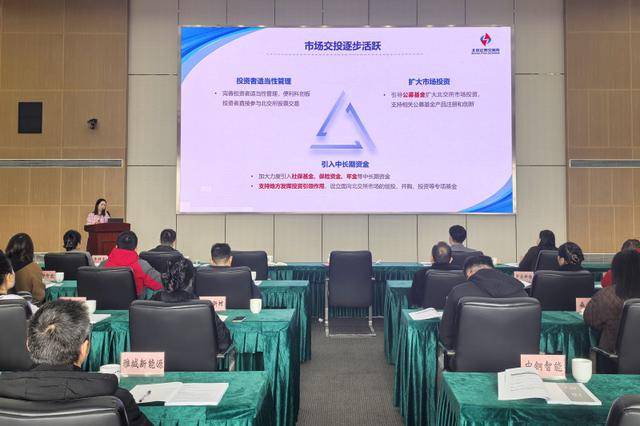
Group 1 - The core message of the event is to provide tailored training for companies preparing for IPOs, with experts from the Beijing Stock Exchange and Hunan Equity Exchange sharing insights and strategies to boost local enterprises' confidence in accessing capital markets [1][3] - The successful IPO of Zuxing New Materials serves as a benchmark for local companies, highlighting the robust industrial foundation in Ningxiang, which has over 2,000 industrial enterprises and 30 national-level specialized and innovative "little giant" companies [3][4] - Ningxiang has established a clear tiered structure for companies preparing for IPOs, with 12 first-tier companies ready to go, and 10 second-tier companies accelerating their efforts, showcasing a strong pipeline of potential listings [3][4] Group 2 - The Beijing Stock Exchange has seen significant growth, with 286 listed companies and a total market value of 8,600 billion, emphasizing its role as a core platform for nurturing new productive forces [4] - Hunan Equity Exchange acts as a supportive incubator for companies, providing a full-service chain from incubation to funding, facilitating many enterprises' progression to higher levels of capital markets [5] - The local government is actively supporting companies in their IPO journey, having resolved over 660 issues through initiatives like "Secretary Direct Line" and "Mayor Enterprise Reception Day," and aims to achieve a target of 10 listed companies [7]
谭天伟院士揭秘生物制造:30万亿美元未来产业的三大挑战和趋势
合成生物学与绿色生物制造· 2025-12-17 07:49
Core Viewpoint - The article emphasizes that China is poised to play a significant role in the future of biomanufacturing, which is expected to create an economic value exceeding $30 trillion by 2050, marking it as a core driver of the next industrial revolution [2][7]. Summary by Sections What is Biomanufacturing? - Biomanufacturing transforms living organisms, such as microorganisms and cells, into "smart factories" that produce various substances needed by humans. This process marks a fundamental shift from traditional manufacturing, which relies on fossil resources, to using renewable resources like sugar, straw, and carbon dioxide [2][3]. Importance of Biomanufacturing - Biomanufacturing is crucial for achieving carbon neutrality as it significantly reduces carbon emissions by utilizing renewable resources instead of fossil fuels. It allows for a broader range of raw materials and a greener manufacturing process, making factories resemble ecosystems [3]. - The potential for programmable manufacturing is immense, as scientists can design microorganisms to produce specific molecules, akin to writing code, thus unlocking vast possibilities [3]. Impact on Daily Life - In the food sector, cell-cultured meat and new food ingredients like microbial proteins are becoming mainstream. - The fashion industry is seeing innovations such as bio-silk from bacteria and biodegradable textiles from algae and fungi. - In construction, "bio-bricks" made from fungal mycelium can self-repair and absorb carbon dioxide, potentially transforming buildings into "green life forms." - Transportation is advancing with the production of aviation fuel from carbon dioxide, and biomanufacturing is also contributing to greener lubricants and tire rubbers. - In healthcare, biomanufacturing can streamline drug synthesis, enabling personalized medicine and potentially allowing hospitals to "print" drugs and organs [4]. Challenges and Future Trends - Biomanufacturing faces challenges such as the need for improved foundational capabilities in gene editing and enzyme engineering, difficulties in scaling from lab to industrial production, and the lack of a comprehensive policy and standards framework [5]. - Future trends include the integration of artificial intelligence in biomanufacturing, enabling rapid strain improvement, carbon cycling in manufacturing processes, and cross-industry collaborations that will create new industrial ecosystems [6]. Opportunities for China - China has advantages in fermentation capacity, industrial scale, and engineering experience. The government is actively promoting biomanufacturing as a new growth engine, positioning the country to take a leading role in this transformative industry [7].

国投集团锚定新质蛋白赛道,构建央企生物制造产研融合发展新模式
Di Yi Cai Jing· 2025-12-16 03:49
Core Insights - The National Investment Group has invested in 118 projects in the biomanufacturing sector, amounting to 22.5 billion yuan, which has driven investments exceeding 100 billion yuan [1][4] - The "14th Five-Year Plan" emphasizes the need for forward-looking layouts in future industries, positioning biomanufacturing as a new economic growth point [1] Investment and Development - The National Investment Group's Biomanufacturing Innovation Research Institute signed a share transfer agreement with Dongsheng Biotechnology, initiating a new protein industrialization project [2] - This collaboration aims to establish a complete chain of "technology research and development + industrial implementation" in the new protein sector, enhancing the role of state-owned enterprises in technology leadership and industrial promotion [2][5] - The new protein industry, based on synthetic biology technology, aims to reform traditional protein acquisition methods through industrial microbial fermentation [2] Market Potential - The biomanufacturing industry is expected to grow from 16 trillion yuan in 2025 to 30 trillion yuan by 2030, indicating a significant market expansion [2] - New protein concepts have emerged in the context of food security and sustainable development, aiming to reduce reliance on traditional livestock farming [2] Strategic Initiatives - The State-owned Assets Supervision and Administration Commission launched initiatives focusing on 15 key industries, including biomanufacturing, to accelerate the development of emerging industries [4] - The National Investment Group is the leading entity in cultivating the biomanufacturing industry, with a registered capital of 6 billion yuan for its innovation research institute [4] - The investment strategy combines direct investment and fund management to accelerate the growth of the biomanufacturing sector [4] Industry Leadership - The National Investment Group has invested in 98 projects in the biopharmaceutical sector, totaling 18.4 billion yuan, which has attracted over 108.6 billion yuan in social capital [4] - Companies like Innovent Biologics and Kelun-Biotech, backed by the National Investment Group, have become industry leaders [4] - Dongsheng Biotechnology is recognized as a leading global enterprise in glutaminase transaminase, with a 60% market share in China and products exported to 43 countries [4]

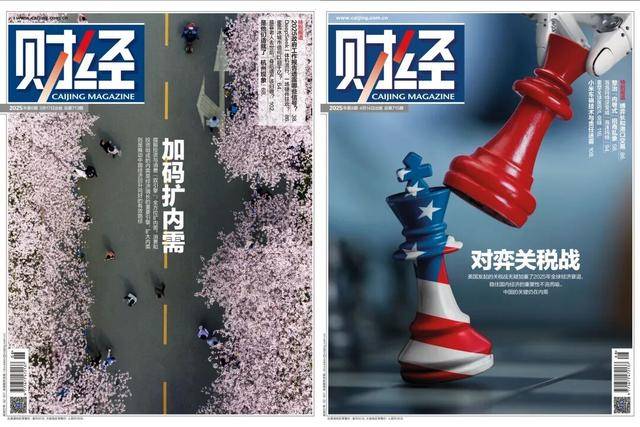
冷暖之间,淬炼底气与韧性 | 年度对话×财经年会2026前瞻
Sou Hu Cai Jing· 2025-12-15 13:42
文|齐元 2025年,北方的冬天比往年来得要早一些,京西门头沟的初雪下在十月中旬,早早入了冬;直到两个月 后,城区才正式飘了雪。上海的金秋刚刚被一场小雨送走,千里之外的大湾区,全运会的运动员们仍在 赛场上身着短袖,挥汗如雨。 大江南北的人们,体感温度是如此不同。经济,亦如这天气。 有人在行业调整与成本压力中直面严寒,有人在政策红利与技术革新中感受热浪;一面是卷到冒烟的职 场,一面是方兴未艾的赛场;红海与蓝海伴游,展期与展望同在。经济的冷暖抽象又具体,宏大又微 茫,迭代疾快却周期漫长,丝丝缕缕渗透到每个行业的肌理,兜兜转转最终落到每个人的肩上。 从白山黑水到南海之滨,从东部沿海到西部内陆,区域的"温差"同样呈现出丰富层次——有的区域正在 转型调整中感受经济周期转换的凉意,有的区域则在创新驱动下展现持续升温的活力——多元景象的背 后,是中国经济高质量发展的不同维度。 那些感到"寒意"的地方,其感知源于内外双重压力的叠加。宏观层面,内需的信心尚待提振,外部关税 博弈又频频袭来,共同构成了当前经济周期的核心挑战。映射到具体地域,则是传统产业区与资源型城 市正经历的"刮骨疗毒"。它们要摆脱"靠山吃山"的路径依赖,转向创 ...