财富管理

Search documents
2025中金财富1018发布会圆满结束:聚势而行启新局,进而有为筑未来
Di Yi Cai Jing· 2025-10-18 13:22
Core Insights - The wealth management industry is undergoing significant transformation, shifting from a product-selling approach to a service-oriented model, which lays a solid foundation for the growth of the client-centered buy-side advisory model [3][5][7] - China International Capital Corporation (CICC) Wealth Management is actively enhancing its buy-side advisory capabilities, achieving a scale of over 120 billion in assets under management, with its flagship product "China 50" generating over 10.1 billion in cumulative client returns since its launch [2][3][4] Group 1: Buy-Side Advisory Development - CICC Wealth Management's buy-side advisory model has seen its assets under management surpass 120 billion, reflecting a successful six-year development of its investment methodology [3][4] - The "China 50" product has provided positive returns for over 98% of its clients, with an average holding period of approximately 2.5 years [3][4] - The "5A Configuration Model" has been established to enhance asset allocation capabilities, focusing on client preferences, asset allocation, strategy attribution, alpha generation, and risk assessment [4] Group 2: Market Adaptation and Client Support - In response to increasing market uncertainties and changing wealth allocation, CICC Wealth Management is committed to helping investors navigate the low-interest-rate environment through comprehensive asset allocation strategies [5][6] - The company has developed over 11,000 different strategy lines across equity, alternative, and global assets to support client investment needs [5] - CICC Wealth Management emphasizes a long-term partnership with clients, aiming to enhance investor satisfaction and adapt to the evolving landscape of wealth management [5][6] Group 3: Internationalization and Global Asset Allocation - CICC Wealth Management is focused on facilitating global asset allocation for investors, addressing challenges such as information asymmetry and the lack of appropriate investment tools [7][8] - The company aims to serve as a bridge for international investors to access the Chinese capital market while assisting Chinese enterprises in expanding their global reach [8][9] - The international asset management scale has reached 2.2 billion USD, establishing CICC as a professional benchmark in the field [8] Group 4: AI Integration in Wealth Management - CICC Wealth Management is leveraging AI technology to enhance client experiences and improve service efficiency, marking a significant shift in the industry [10][11] - The introduction of AI-driven tools aims to provide personalized investment solutions and streamline advisory processes, enhancing the overall client engagement [10][11][12] - The company's digital platforms are being upgraded to incorporate AI capabilities, allowing for tailored investment strategies based on real-time market conditions [11][12] Group 5: Commitment to Inclusive Finance - CICC Wealth Management is dedicated to promoting inclusive finance by providing accessible investment products and enhancing financial literacy among investors [13][14] - The company is actively developing passive investment products like ETFs and index funds to attract long-term capital and share economic growth benefits with investors [13][14] - Collaborations with academic institutions aim to further research and implement strategies that enhance financial health and accessibility for a broader audience [15]

金融监管总局肖远企:AI对金融的促进与影响可能是重大而根本性的
Zheng Quan Shi Bao Wang· 2025-10-18 08:58
Group 1 - The core viewpoint is that technological advancements, particularly artificial intelligence, are significantly impacting the financial sector, leading to potential fundamental changes in financial services [1] - In the context of financial supply, AI is expected to drastically reduce the costs of developing, transforming, and producing financial products, making it economically feasible to reach remote customers and cater to previously overlooked niche demands, resulting in a "long tail effect" [1] - Large financial institutions possess vast amounts of diverse, real-time historical transaction data, which enables them to create more accurate predictive and risk management models, potentially creating competitive barriers for smaller institutions [1] Group 2 - Financial regulation is encouraged to support the use of the latest technologies by financial institutions to optimize services, reduce operational costs, and enhance management efficiency while ensuring risk management and stability [2] - There is a need for a dynamic balance between concentration and decentralization, uniqueness and homogeneity, as well as safety and efficiency in the financial system [2] - Financial regulation must also increase resource investment, improve regulatory methods and processes, and enhance regulatory technology capabilities to keep pace with the evolving applications of AI in finance [2]
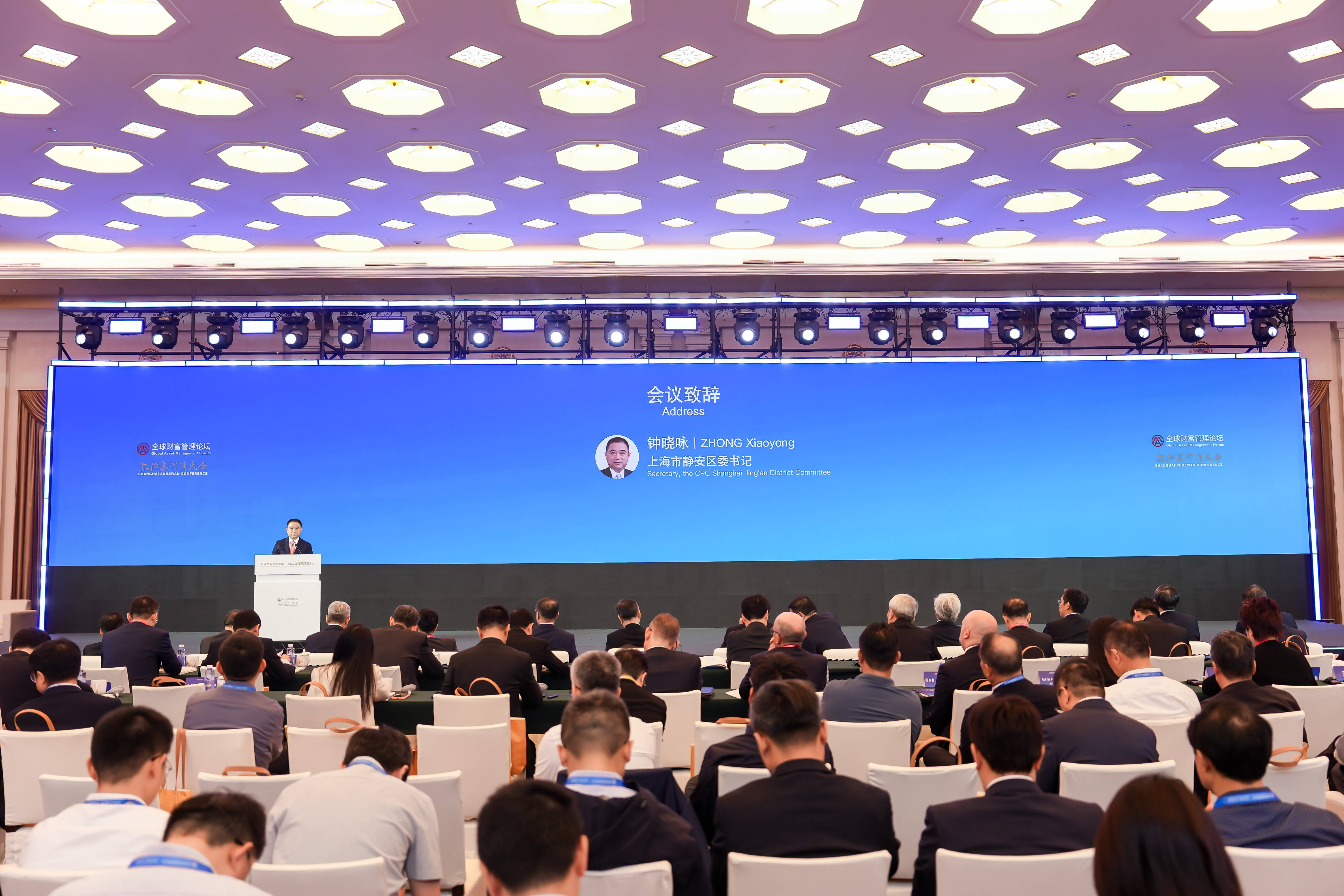
上海市静安区委书记钟晓咏:静安将全力打造全球资本高地 努力成为数字金融发展标杆
Sou Hu Cai Jing· 2025-10-18 07:39
Core Insights - Shanghai's Jing'an District aims to enhance its role as a global capital allocation hub and promote high-level financial openness [4] - The district is focusing on the integration of finance, technology, and industry to drive innovation and high-quality financial development [4] - Jing'an is positioning itself as a benchmark for digital financial development and is accelerating the establishment of an innovative equity investment hub [4] Financial Landscape - Jing'an is one of the most concentrated areas for financial resources in Shanghai, housing over 800 financial market entities [4] - The district has a strong presence of licensed headquarters and active private equity investment, making it a key location for international asset management institutions [4] - The ongoing global economic transformation is being influenced by emerging technologies such as artificial intelligence and blockchain, reshaping the financial industry ecosystem [4]

拥抱AI大时代 第二届21世纪金牌投顾案例征集正式启动
2 1 Shi Ji Jing Ji Bao Dao· 2025-10-17 11:16
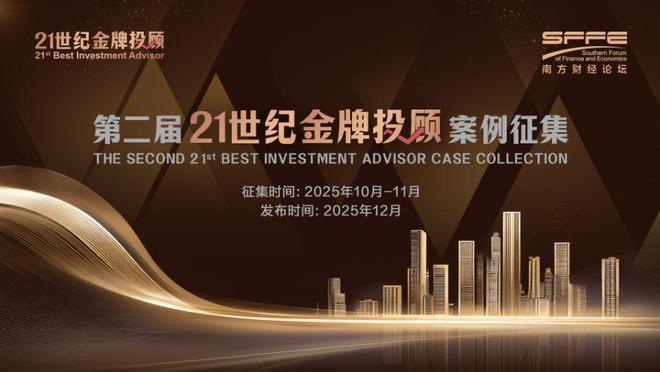
Core Insights - The "Second 21st Century Gold Medal Investment Advisor" project has officially launched, focusing on the buy-side advisory sector and introducing a new category for "AI Advisory" to explore the development trends in wealth management [2][5] - The project aims to transition the wealth management industry from scale expansion to high-quality development, emphasizing the importance of professional and warm advisory teams [2][3] Group 1: Project Overview - The project includes the collection of "Excellent Fund Advisory Cases" and the "21st Century Gold Medal Investment Advisor" awards, evaluated based on multiple dimensions such as business structure, team building, investor behavior improvement, and customer service [2][3] - The evaluation process will be supported by Shanghai Securities, ensuring fairness and compliance, with participation from organizations like the Shenzhen Stock Exchange and Guangzhou Investment Advisory Academy to enhance credibility [2][6] Group 2: Industry Context - Recent policy changes, including the new "National Nine Articles" and public fund fee reduction reforms, are reshaping the market and industry ecology, indicating a new chapter for the advisory sector [3][4] - The buy-side era is emerging, with various types of institutions expected to enter the market, accelerating brand building among fund advisory firms [3][4] Group 3: AI Advisory Focus - The introduction of the "AI Advisory" category aims to encourage institutions that successfully integrate AI technology into advisory practices, enhancing service efficiency and user experience [5][6] - The project will feature forums and closed-door seminars to discuss the latest developments and future trends in fund advisory, showcasing excellent cases and sharing experiences [5][6] Group 4: Communication and Impact - The project will leverage the South Finance Media Group's extensive media resources for broad and deep dissemination, ensuring maximum impact and audience reach [6][7] - A series of high-quality content, including in-depth reports and exclusive interviews, will be produced to help audiences understand the current state and future trends of the advisory industry [6][7] Group 5: Project Timeline - The registration period for the project is from now until November 25, with the evaluation results to be announced in late November and the awards ceremony scheduled for December [9]
第二届中信财富管理大会召开 共探财富管理行业转型路径与全球配置新机遇
Zhong Zheng Wang· 2025-10-17 07:41
Group 1 - The second CITIC Wealth Management Conference was held in Beijing, focusing on the theme "Integration and Development: Co-creating New Value in Wealth Management" [1] - The conference attracted over 200 participants from 42 leading institutions, including public funds, wealth management, insurance, and global asset management [1] - CITIC Group's leadership emphasized the historical opportunities in the wealth management industry due to the deepening transformation of the asset management sector and the increasing demand for wealth preservation and appreciation among residents [1] Group 2 - CITIC Financial Holdings aims to align with national strategies such as technological innovation, green low-carbon initiatives, and rural revitalization, directing financial resources to key areas of social development [2] - The investment strategies of asset management institutions are evolving from single asset focus to "fixed income plus," multi-asset strategies, and overseas allocations [2] - A collaborative ecosystem among public funds, securities asset management, insurance asset management, trusts, and wealth management institutions is accelerating [2]



中国成为全球第二大财富管理市场
2 1 Shi Ji Jing Ji Bao Dao· 2025-10-17 06:39
Core Insights - The Chinese wealth management market is experiencing a historic opportunity driven by economic development and wealth accumulation [2][4] - The demand for wealth management is entering a high-growth phase as the middle-income group expands and total investable assets exceed 300 trillion yuan [4][5] - The second "CITIC Wealth Management Conference" highlighted the importance of wealth management institutions in bridging the gap between the real economy and residents' wealth [2][4] Industry Scale and Growth - The asset management scale in China surpassed 170 trillion yuan as of June 2025, making it the second-largest wealth management market globally [4][8] - CITIC Group has adopted a differentiated approach in wealth management, leveraging its comprehensive financial licenses and multi-field collaboration [4][5] - CITIC's subsidiaries have impressive core data, with CITIC Bank's personal wealth management scale nearing 5 trillion yuan and CITIC Securities' asset management scale reaching 1.56 trillion yuan [5] Cross-Border Investment Trends - Cross-border investment has shifted from an optional choice to a necessity for wealth management, with significant participation in cross-border financial products [7][8] - As of July 2025, the "Cross-Border Wealth Management Connect" attracted 164,600 individual investors, with cross-border remittance amounts exceeding 120 billion yuan [7] - Institutions are actively building service systems to meet the growing demand for cross-border investment, with CITIC focusing on "interconnectivity" to link domestic and international markets [7] Future Outlook - The collaboration among different asset management institutions is evolving, driven by the increasing scale of the asset management market and the rising investable assets [8] - The next phase of growth in the wealth management industry will be fueled by cross-institutional collaboration, technological integration, and cross-border expansion [8]

2025中信财富管理大会:共创全球资产配置新生态
Zheng Quan Shi Bao Wang· 2025-10-17 06:34
Core Insights - As of June 2025, China's total asset management scale exceeds 170 trillion yuan, making it the second-largest wealth management market globally, with an average annual growth rate of approximately 8% over the past five years [1] - The "Great Wealth Management Era" is characterized by the integration and development of various financial sectors, driven by the need for wealth preservation and growth amid global economic uncertainties [1][2] - The second "CITIC Wealth Management Conference" highlighted the role of wealth management institutions in bridging the gap between the real economy and residents' wealth [1][2] Group 1: Industry Overview - The wealth management chain includes wealth management, asset management, and investment banking, with CITIC Financial Holdings leveraging its comprehensive financial licenses to carve a unique path in the wealth management sector [2] - CITIC Financial Holdings has a total wealth management scale of 31 trillion yuan and an asset management scale of 9.8 trillion yuan, serving over 200 million individual and corporate clients [3] - The Chinese middle-income group is the largest globally, with total investable assets exceeding 300 trillion yuan, indicating a growing demand for wealth management services [4] Group 2: Strategic Initiatives - CITIC Financial Holdings aims to align with national strategies such as technological innovation and green development, directing financial resources to key areas of social development [3] - The industry is shifting from a scale-oriented approach to a capability-oriented one, focusing on customer-centric services and risk management through collaboration among leading asset management institutions [5][6] - The introduction of the "Xincheng Growth" charity platform aims to leverage the product creation capabilities of various CITIC financial institutions to support educational initiatives, with over 10 million yuan donated this year [8] Group 3: Global Market Expansion - Cross-border investment has become essential for wealth management, with the "Cross-Border Wealth Management Connect" attracting 164,600 investors and facilitating over 120 billion yuan in cross-border transactions by July 2025 [7] - CITIC is enhancing its cross-border asset management services, focusing on mutual recognition funds, QDII funds, and opportunities in the Belt and Road Initiative and green finance [7] - The company is committed to optimizing global asset allocation for investors, seeking the best risk-return ratios through collaboration with various asset management institutions [9]
私募排排网高净值用户突破350万!以科技与信任构建财富管理新生态!
私募排排网· 2025-10-17 03:36
Core Viewpoint - The article highlights the rapid growth of the private equity industry in China, particularly through the advancements in technology and the strategic positioning of the platform "Private Equity Ranking Network" as a key player in wealth management for high-net-worth individuals, achieving over 3.5 million registered users [2][5]. Industry Growth - The increase in high-net-worth users aligns with the overall acceleration of the private equity sector, with private securities investment funds reaching a scale of 5.93 trillion yuan by August 2025, showcasing continuous expansion and diversification of strategies [5]. - The average return rate for private securities products in the first three quarters of this year is 25.00%, significantly outperforming major market indices, with 90% of products yielding positive returns, making them attractive for high-net-worth investments [5]. Technological Empowerment - Technology is identified as a key driver for enhancing service efficiency and user experience in wealth management, with the platform focusing on technological innovation to meet the higher demands of high-net-worth investors for intelligent research, precise allocation, and compliance [6]. - Since its establishment in 2004, the platform has committed to a mission of "customer-centric, technology-enabled," providing comprehensive services including data services, research support, transaction execution, and risk management [6]. Service Diversification - The platform has developed a flexible and multi-layered service system to cater to the increasingly diverse needs of high-net-worth investors, focusing on the entire lifecycle of user needs [8]. - For individual investors, the platform offers an "Advanced Analysis" intelligent research platform and a "Direct Chat with Private Equity" service to enhance communication and decision-making efficiency [9]. - For institutional clients, a one-stop fund investment trading platform is available, integrating transaction execution, research support, and operational management [10]. - Customized services such as "FOF Fund Customization" are provided to create personalized investment portfolios based on users' return goals and risk preferences [11]. Collaboration and Ecosystem - The platform has established long-term partnerships with nearly 70% of the billion-yuan private equity managers in China, including well-known firms, contributing to a robust fundraising ecosystem [7]. - The platform has collaborated with over 2,000 roadshow institutions, hosting more than 8,000 live roadshows, serving over 3,000 users daily, thus becoming a vital link between high-net-worth investors and professional managers [12]. Conclusion - The platform is reinforcing its competitive position in high-net-worth wealth management through continuous innovation and professional development, supported by a strong foundation in data, technology, service, and compliance [13].
中信携手42家资产管理机构 共建财富管理新生态
Zheng Quan Ri Bao Zhi Sheng· 2025-10-17 00:57
Core Insights - The conference "Integration and Development: Co-creating New Value in Wealth Management" was held in Beijing, focusing on global asset allocation and social responsibility in wealth management [1] - CITIC Group's wealth management total scale is approximately 31 trillion yuan, with asset management reaching 9.3 trillion yuan, serving over 200 million individual and corporate clients [2] - The asset management market in China has surpassed 170 trillion yuan, making it the second-largest wealth management market globally, with an annual growth rate of 8% over the past five years [3] Group 1 - The conference was attended by over 200 representatives from leading asset management institutions, emphasizing the importance of wealth management in serving the real economy and promoting common prosperity [1][2] - CITIC Group aims to enhance professional capabilities and expand global perspectives in wealth management by collaborating with leading asset management institutions [2] - The investment strategies of asset management institutions are evolving towards multi-asset and overseas allocations, reflecting a shift in market opportunities [3] Group 2 - As of June 2025, CITIC Bank's personal wealth management scale is nearly 5 trillion yuan, ranking second among peers, while CITIC Securities' asset management scale exceeds 1.56 trillion yuan, holding a market share of 12.8% [4] - The collaboration among various asset management institutions is evolving, creating a complementary ecosystem that enhances service offerings [3][4] - CITIC Financial Holdings and its subsidiaries are positioned to seize historical opportunities in the transformation and upgrading of the wealth management industry [4]
疯狂!黄金继续暴涨,创新高
Zhong Guo Ji Jin Bao· 2025-10-16 22:34
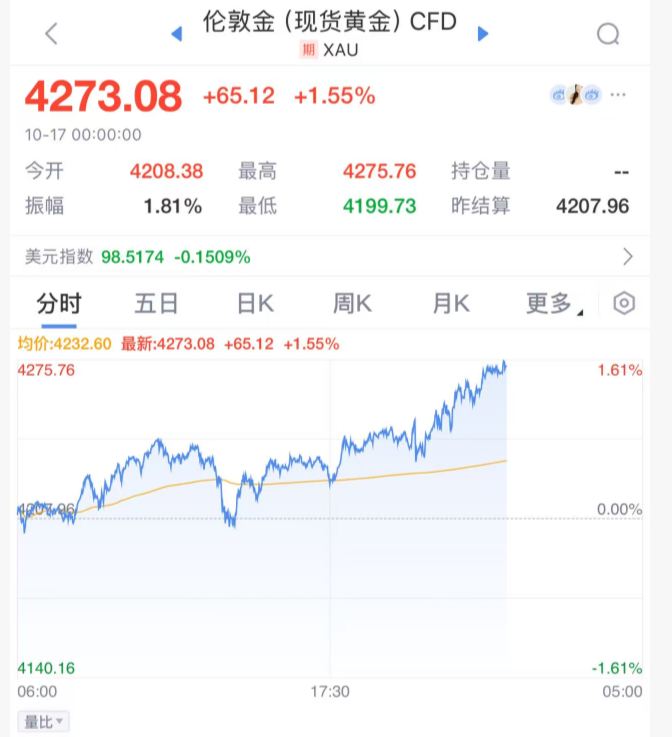
Group 1: Gold Market Insights - Spot gold surged to $4,275 per ounce, increasing approximately 1.5% in a single day, driven by expectations of a 25 basis point rate cut by the Federal Reserve and a decline in U.S. Treasury yields [1] - Rising risk aversion due to new trade threats from Trump against China has enhanced gold's appeal as a safe-haven asset, alongside concerns over U.S. government shutdown risks and fiscal deficit [1] - Central bank purchases are a significant driver of gold price increases, with analysts noting that physical buying is largely responsible for the current gold rally [1] Group 2: U.S. Stock Market Dynamics - The U.S. stock market showed mixed performance, with major indices fluctuating amid rising volatility, particularly due to escalating U.S.-China trade tensions [3] - The Cboe Volatility Index (VIX), known as Wall Street's "fear gauge," hovered around 20, indicating increased market uncertainty [3] - Analysts suggest that the ongoing government shutdown is limiting access to key economic data, forcing investors to rely on corporate earnings reports for short-term narratives [4] Group 3: Investment Strategy Considerations - Concerns about over-reliance on "AI trading" for market gains highlight the risks associated with a concentrated market driven by a few dominant stocks [2] - The current stock market may enter a more volatile phase due to renewed focus on U.S.-China trade issues, with a recommendation to prioritize investments in large-cap and high-quality companies [4] - Despite no immediate signs of recession, a cooling labor market and slowing economic growth could pose challenges for lower-quality, unprofitable companies that have rebounded since April [4]