
资本市场

Search documents
深圳:“十四五”期间深圳企业直接融资超2.8万亿元
Zheng Quan Shi Bao Wang· 2025-11-24 02:39
Core Viewpoint - During the "14th Five-Year Plan" period, Shenzhen has made significant progress in financing for technology enterprises and small and medium-sized innovative companies, achieving breakthroughs in multiple dimensions such as financing scale, market vitality, and risk prevention [1] Financing Achievements - The capital market in Shenzhen has cumulatively achieved over 400 billion yuan in equity financing, with IPOs from the Sci-Tech Innovation Board and the ChiNext accounting for over 80% of the total IPOs in Shenzhen during the same period [1] - Direct financing for Shenzhen enterprises exceeded 2.8 trillion yuan during the "14th Five-Year Plan," representing an increase of over 50% compared to the "13th Five-Year Plan," securing the third position among major cities in China [1] Economic Impact - The continuous enhancement of direct financing capabilities in Shenzhen's capital market over the past five years has provided ample "ammunition" for the development of the real economy [1]
尹艳林:把握“十五五”机遇 构建科技金融良性循环生态
证券时报· 2025-11-24 00:48
11月18日,第二十届中国经济论坛平行论坛——2025大湾区科技与金融创新发展大会在广州南沙成功举办。第十四届全 国政协委员尹艳林发表主旨演讲。他强调,科技金融作为"五篇大文章"之首,在金融强国建设和社会主义现代化进程中 地位举足轻重,"十五五"时期我国科技金融发展机遇与挑战并存,需聚焦重点方向破解发展难题,构建科技产业与金融 的良性循环。 尹艳林首先回顾了"十四五"时期我国科技金融取得的显著成就。商业银行充分发挥间接融资主渠道作用,5年来科技贷款 增长30%,截至今年上半年规模超40万亿元,制造业长期贷款增速尤为突出。此外,贷款加权平均利率低至2.9%,100多 万家科技企业获得贷款服务,"小巨人"示范企业获贷率高达80%,"贷款难、贷款贵"问题显著缓解。 资本市场支持力度持续加码,科创板设立及注册制改革深化,设置科创成长层,启动第五套标准,截至4月底已有500多 家科创企业上市,占沪市企业总数的41%,新上市企业中70%为科技企业,市值占比30%以上。 版权声明 同时,科创债等创新产品推出,债券市场"科技板"正式启动;创业投资、科技保险蓬勃发展,推动7地设立科创金融改革 试验区,跨境金融便利化政策持续优化 ...


北京“十四五”建设筹集67万套保障房
Bei Jing Shang Bao· 2025-11-23 15:32
Group 1: Housing Supply and Urban Renewal - During the "14th Five-Year Plan" period, Beijing has constructed and collected over 670,000 units of various types of affordable housing, with 430,000 units completed [1] - A total of 78 million square meters of old residential area have been renovated, achieving a 98% implementation rate [5] - The city has initiated the reconstruction of 1.04 million square meters of dilapidated housing and has fully advanced the resolution of D-grade dangerous buildings [1][5] Group 2: Public Rental Housing - The public rental housing registration family guarantee rate has reached 85.5%, up from 42.5% in 2020, meeting the target set for the end of the "14th Five-Year Plan" [3] - Over the past five years, 240 batches of public rental housing allocations have been conducted, providing approximately 136,000 units [3] - A total of 33 billion yuan in market rent subsidies and 24 billion yuan in public rental housing rent subsidies have been distributed to enhance the rental burden capacity of beneficiaries [3] Group 3: Affordable Rental Housing for New Citizens - Since 2022, Beijing has actively developed affordable rental housing to meet the needs of new citizens and young people, exceeding the target of 400,000 units set for the "14th Five-Year Plan" [4] - The city has utilized collective construction land to build nearly 130,000 units of affordable rental housing, the largest total in the country [4] Group 4: Financial Sector Development - The financial sector's added value in Beijing increased from 6,804.1 billion yuan at the end of 2020 to 8,154.2 billion yuan by the end of 2024, contributing significantly to the city's economic stability [8] - The financial industry contributes approximately 20% to the city's GDP, local public budget revenue, and local tax revenue, with a 40% contribution to total tax revenue [7][8] Group 5: Risk Management in Financial Sector - Over the past five years, the disposal of non-performing loans in Beijing has increased by 1.4 times compared to the "13th Five-Year Plan" period, with a non-performing loan rate of 0.7% [10] - The capital adequacy ratio of banks in Beijing stands at 16.58%, exceeding the national average by 1.22 percentage points [10]

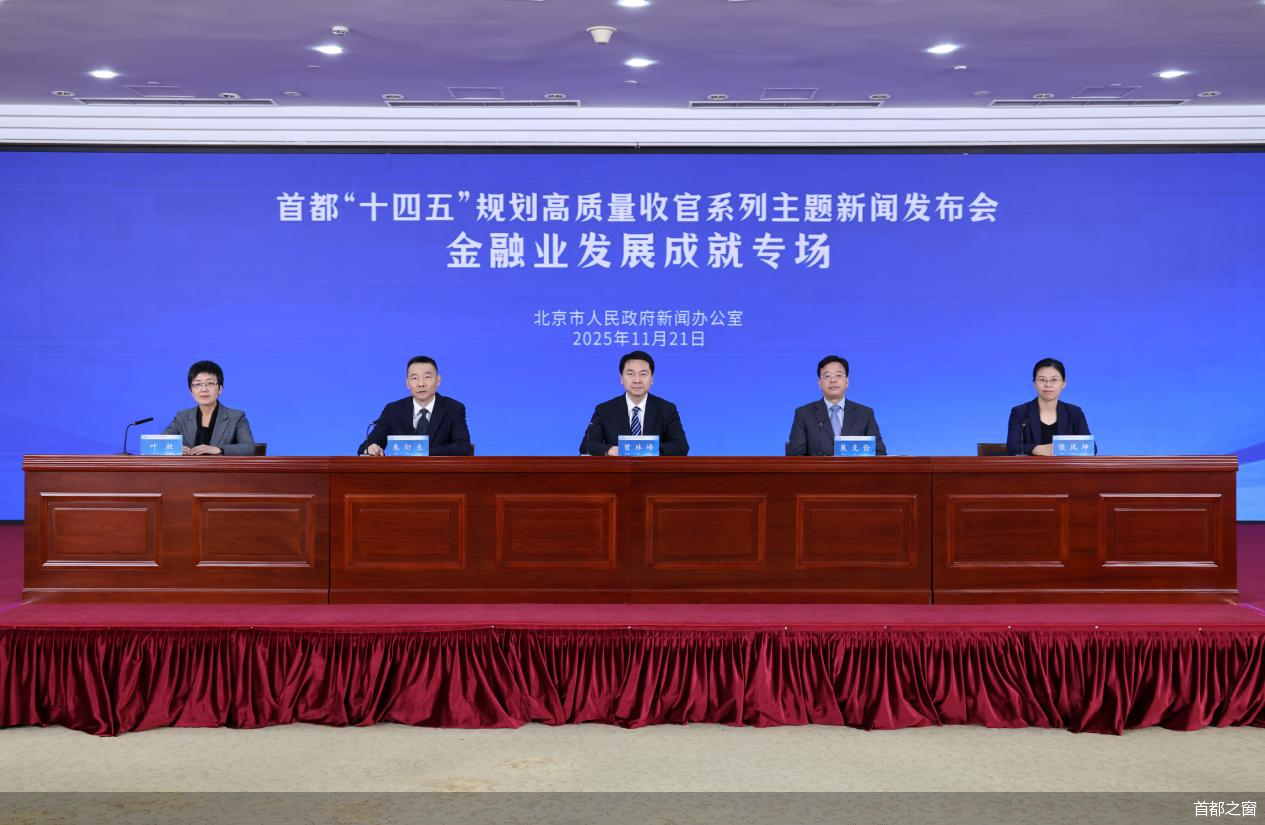
全市金融业增加值突破8100亿元,首都金融业答卷“十四五”
Bei Jing Shang Bao· 2025-11-21 15:01
Core Insights - The financial sector in Beijing has shown significant growth during the "14th Five-Year Plan" period, with the financial value added exceeding 810 billion yuan, contributing approximately 20% to the city's GDP, local public budget revenue, and local tax revenue, and around 40% to total tax revenue [4][5]. Financial Sector Growth - The financial value added in Beijing increased from 680.41 billion yuan at the end of 2020 to an estimated 815.42 billion yuan by the end of 2024, providing strong financial support for the stable operation and quality improvement of the capital's economy [5]. - The social financing scale in Beijing has increased by nearly 1 trillion yuan annually from 2021 to 2024, with RMB loans growing at an average rate of 9.2%, outpacing the city's GDP growth by 4 percentage points [5]. Banking and Insurance Sector Performance - By the end of Q3 2025, the total assets of Beijing's banking sector reached 38.3 trillion yuan, a 33.3% increase from the end of the "13th Five-Year Plan," while the insurance sector's total assets grew by 110% to 2.3 trillion yuan [5]. - The non-performing loan disposal amount in Beijing increased by 1.4 times compared to the "13th Five-Year Plan," with a non-performing loan rate of 0.7%, and a capital adequacy ratio of 16.58%, which is 1.22 percentage points higher than the national average [6]. Capital Market Development - As of September 2025, the number of listed companies on the Beijing Stock Exchange reached 277, with a total market capitalization of 91.746 billion yuan, and the region's enterprises achieved direct financing exceeding 5.6 trillion yuan during the "14th Five-Year Plan" [6]. Financial Risk Management - The financial management departments in Beijing have effectively prevented and mitigated financial risks, establishing a comprehensive financial risk prevention and disposal system, resulting in a low overall risk profile for the industry [6][7]. Support for the Real Economy - Beijing's financial management departments have innovated policies and mechanisms to address challenges faced by the real economy, including long-term funding for technological innovation and financing difficulties for small and micro enterprises [7][8]. Future Financial Development Plans - The financial sector in Beijing aims to continue its growth trajectory into the "15th Five-Year Plan," focusing on becoming a core hub for national financial strategy implementation and enhancing its role in international financial governance [10][11].
着力提升资本市场的韧与稳
Sou Hu Cai Jing· 2025-11-19 23:01
近日,证监会主席吴清表示,抓紧研究谋划"十五五"时期资本市场战略任务和重大举措,着力推动市场 更具韧性、更加稳健,制度更加包容、更具吸引力。 可以期待,随着推动市场更具韧性、更加稳健的改革举措落地见效,一个筋骨强健、活力充盈及更具包 容性和适应性的资本市场有望加快建成,更好服务实体经济,赋能科技创新,培育新质生产力。(作 者:李华林 来源:经济日报) 此次提出推动资本市场更具韧性、更加稳健,强调的是一个"更"字,是立足当下的必然选择,更是着眼 长远的关键之举。当前,世界百年变局加速演进,不确定不稳定风险因素增多。更重要的是,我国高质 量发展扎实推进,现代化产业体系加快建设,需要一个更具强大韧性和稳健特质的资本市场,来有效承 载资源配置、风险定价的核心功能,为科技创新、产业升级注入充足的金融活水。 市场韧性之强,在于理性力量的不断汇聚。一个富有韧性、不惧外部纷扰的市场,必是投融资协调、多 方力量长期坚守的市场。这就要大力培育理性投资的"定盘星",强化长周期考核,引来养老金、保险资 金等长钱稳钱,更好发挥中长期资金"稳定器"作用;要壮大专业力量的主力军,打造一流投行和投资机 构,着力提升机构投资者专业能力,让理性 ...
调研报告:近半数投资者股票资产集中在1-2个行业
3 6 Ke· 2025-11-19 11:22
Group 1 - The report indicates that nearly 70% of respondents have a good level of financial health, but there are shortcomings in financial control, money management, investment future capabilities, and risk prevention among some residents [1][2] - The survey shows that a significant portion of residents exhibit behavioral biases in investment, such as over-trading, short-term holding, and concentrated asset allocation, which are attributed to insufficient financial literacy and investment experience [2][3] Group 2 - The report emphasizes the importance of diversifying asset allocation through participation in equity markets to enhance residents' financial health, as the traditional asset allocation has been heavily weighted towards real estate [2][3] - It is noted that the proportion of property income in disposable income for Chinese residents is only 8.1%, compared to about 20% in the US, indicating a need for greater exploration of equity products [3] Group 3 - Recommendations for improving financial health include enhancing financial literacy, seeking professional support, optimizing asset allocation, and strengthening financial management for small and medium-sized enterprises [4]
专访许正宇:打造国家“国际资产保管箱” 香港金融现新棋局
2 1 Shi Ji Jing Ji Bao Dao· 2025-11-18 23:17
Core Insights - Hong Kong's financial markets have shown significant growth, with the Hang Seng Index rising over 30% and the Hang Seng Tech Index nearly 40% this year, outperforming major global markets [1] - The Hong Kong government is leveraging its unique "One Country, Two Systems" advantage to explore new growth areas in asset management, fintech, and commodity markets, aligning with national strategies [1] Financial Technology and Digital Assets - Hong Kong has risen to the top position in the Global Financial Center Index (GFCI) for fintech, reflecting a clear focus on empowering the real economy rather than speculative activities [2] - The government successfully priced its third batch of digital green bonds at 10 billion HKD, marking the largest issuance of tokenized government bonds globally [2] - The government is cautious about stablecoins, emphasizing their role in addressing real economic issues rather than speculation, with limited initial licensing planned for next year [3] Capital Market Reforms - The implementation of T+1 settlement is a key reform aimed at enhancing market efficiency, with plans to transition from T+2 to T+1 by next year [4] - The Hong Kong Stock Exchange anticipates that by 2027, 88% of global stock markets will adopt T+1 or T+0 settlement cycles, which will improve synergy with A-shares [4] - The government is working on optimizing the dual-class share structure to balance international market integration and protection for small investors [4][17] Asset Management and Global Capital - As of the end of 2024, Hong Kong manages over 4 trillion USD in assets, with approximately 60% from overseas, highlighting its role as a global asset custodian [5] - The government is actively attracting family offices and optimizing tax exemption policies to enhance its appeal as a financial hub [11] Commodity Market Development - Hong Kong has made significant strides in the commodity market, including being integrated into the London Metal Exchange's global delivery network and achieving over 8000 tons of metal storage in just nine months [6] - The government plans to increase gold storage capacity to 2000 tons and is working on a central clearing system for gold, aiming to enhance its influence in the global gold market [7][15] Supporting Mainland Enterprises - Hong Kong is increasingly becoming a platform for mainland enterprises to expand internationally, with a record number of companies registered in Hong Kong for overseas operations [8] - The government is consolidating various agencies to create a one-stop platform to support mainland companies in their overseas ventures [8] Legal and Regulatory Framework - Recent legal revisions allow companies registered abroad to re-domicile in Hong Kong, with nearly 20 applications received, including from large international firms [9] - The government is focused on creating a secure environment for global operations, enhancing Hong Kong's attractiveness as a stable financial center [13]
聚焦发展新质生产力 资本市场助推深圳打造产业金融中心
Zhong Guo Zheng Quan Bao· 2025-11-18 20:24
Core Insights - Shenzhen's capital market has demonstrated resilience and vitality during the "14th Five-Year Plan" period, significantly contributing to the high-quality development of the real economy [1][2] Financing and Market Performance - The direct financing scale of Shenzhen enterprises reached approximately 2.8 trillion yuan, representing a growth of over 50% compared to the "13th Five-Year Plan" period, ranking third among major cities in China [2] - Over 80% of IPOs in Shenzhen during this period were from the ChiNext and STAR Market, with more than 200 companies listed on these boards, accounting for over half of the listed companies in the region [2] - Shenzhen's enterprises achieved over 2.4 trillion yuan in bond financing during the "14th Five-Year Plan" period, with significant contributions from public REITs [2] Innovation and Investment Ecosystem - Shenzhen has established a robust innovation ecosystem, with private equity and venture capital fund sizes nearing 1.37 trillion yuan, investing in over 13,800 small and medium-sized enterprises and over 11,100 high-tech companies [3] - The city has seen 497 mergers and acquisitions involving over 90 billion yuan since the introduction of the "M&A Six Guidelines" [2] Company Performance and Contributions - As of now, Shenzhen has 424 A-share listed companies, a 35% increase since the end of 2020, with a total market capitalization exceeding 11 trillion yuan, ranking second among major cities [4] - In the first three quarters of 2025, Shenzhen's listed companies reported cumulative revenues of 5.20 trillion yuan and net profits of 457.8 billion yuan, reflecting year-on-year growth of 7.36% and 3.98% respectively [4] - The total cash dividends distributed by Shenzhen listed companies during the "14th Five-Year Plan" period approached 990 billion yuan, significantly exceeding the equity financing amount [4] Financial Services and Sectoral Development - Shenzhen's securities firms have led in green finance, underwriting and managing over 200 billion yuan in green bonds, the highest in the country [5] - The city has provided services to over 20,000 industrial clients through futures companies, with transaction volumes exceeding 100 trillion yuan [5] - In the pension finance sector, public funds managed over 2 trillion yuan in various pension schemes, ranking second nationally [5] Future Development Plans - For the "15th Five-Year Plan" period, Shenzhen's capital market will focus on developing new productive forces, deepening reforms, and enhancing investor protection [6][7] - The strategy includes guiding capital towards innovative sectors, promoting the registration system for stock issuance, and enhancing cross-border regulatory cooperation [6][7]
资本市场助推深圳打造产业金融中心
Zhong Guo Zheng Quan Bao· 2025-11-18 20:04
Core Insights - Shenzhen's capital market has demonstrated resilience and vitality during the "14th Five-Year Plan" period, significantly contributing to the high-quality development of the real economy [1][2][3] Group 1: Direct Financing and Market Structure - During the "14th Five-Year Plan," Shenzhen's direct financing scale reached approximately 2.8 trillion yuan, representing over a 50% increase compared to the "13th Five-Year Plan" period, ranking third among major cities in China [1] - The number of IPOs on the Shenzhen Stock Exchange's ChiNext and Sci-Tech Innovation Board accounted for over 80% of the total IPOs in Shenzhen during the same period, with more than 200 companies listed on these boards [1][2] Group 2: Mergers, Acquisitions, and Financial Innovation - Since the introduction of the "Mergers and Acquisitions Six Articles," Shenzhen listed companies have executed 497 mergers and acquisitions, involving over 90 billion yuan [2] - Shenzhen's enterprises achieved over 2.4 trillion yuan in bond financing during the "14th Five-Year Plan," and the public REITs fundraising reached a total of 32.726 billion yuan, maintaining a leading position nationally [2] Group 3: Company Performance and Contributions - As of now, Shenzhen has 424 A-share listed companies, a 35% increase since the end of 2020, with a total market capitalization exceeding 11 trillion yuan, ranking second among major cities in China [3] - In the first three quarters of 2025, Shenzhen listed companies reported cumulative revenues of 5.20 trillion yuan and net profits of 457.797 billion yuan, reflecting year-on-year growth of 7.36% and 3.98%, respectively [3] Group 4: Financial Services and Innovations - By the end of October 2025, Shenzhen's futures companies served over 20,000 industrial clients with transaction volumes exceeding 100 trillion yuan, and provided hedging services to 616 enterprises amounting to 8.47 trillion yuan [4] - In the pension finance sector, Shenzhen managed over 2 trillion yuan in various pension funds, ranking second nationally, with 58 products included in the personal pension fund catalog [4] Group 5: Future Development Plans - Shenzhen's capital market aims to focus on developing new productive forces, deepening capital market reforms, and enhancing investor protection during the "15th Five-Year Plan" period [5][6] - The strategy includes guiding capital towards new productive sectors, promoting innovative allocation of production factors, and enhancing the multi-tiered capital market structure [5]
提升资本市场功能 更好服务做强国内大循环
Shang Hai Zheng Quan Bao· 2025-11-18 18:42
Core Viewpoint - The article emphasizes the importance of strengthening the domestic circulation as a strategic move for sustainable economic development, particularly in the context of increasing external uncertainties and the need for a robust domestic market [2][3][4]. Group 1: Strengthening Domestic Circulation - Strengthening domestic circulation is essential for addressing external shocks, enhancing internal stability, and ensuring long-term growth amidst global uncertainties [4][5]. - The domestic market's role is highlighted as a key driver for high-quality development, with a focus on expanding domestic demand and optimizing supply structures [5][6]. - The integration of domestic and international circulations is necessary to leverage global resources while enhancing domestic market efficiency [6]. Group 2: Capital Market's Role - The capital market is positioned as a crucial hub for facilitating the efficient operation and quality enhancement of the domestic circulation [9]. - Capital markets can support the integration of technology and industry by providing comprehensive pricing mechanisms that reflect various business factors [10]. - The capital market's resource allocation capabilities can enhance the vitality of domestic circulation by directing resources to high-quality enterprises [11][12]. Group 3: Policy Recommendations - The article suggests that capital market reforms should align with the broader goal of strengthening domestic circulation, emphasizing cross-departmental collaboration [16][17]. - It advocates for the development of diverse financing channels, particularly for technology innovation enterprises, to improve service capabilities across the entire lifecycle [17]. - The establishment of specialized funds by local governments is recommended to enhance long-term capital allocation to quality enterprises [17].