劳动密集型产业

Search documents
如何看待我国4月出口韧性超预期?|宏观经济
清华金融评论· 2025-05-10 10:31
Core Viewpoint - In April 2025, China's exports grew by 8.1% year-on-year, exceeding the 5.8% growth in the first quarter, despite the impact of new U.S. tariffs implemented on April 2 [2][6] Export Performance Analysis - The resilience in exports can be attributed to a 21.0% year-on-year decline in exports to the U.S., which, while significant, was better than expected. Exports to ASEAN, India, Africa, and Latin America saw year-on-year growth rates of 20.8%, 21.7%, 25.3%, and 17.3%, respectively, effectively offsetting the decline [2][8][10] - Major export categories showed mixed results, with labor-intensive products like textiles, bags, clothing, and toys experiencing a combined year-on-year decline of 0.8%. Electronics, particularly mobile phones, were significantly affected by tariffs, with year-on-year declines of 21.4% for phones and 1.7% for automatic data processing equipment. Home appliances and furniture also saw low growth rates of -2.9% and -7.8%, respectively. However, automotive exports increased slightly by 4.4%, surpassing the first quarter's 2.2% [2][12][15][16] Competitive Advantage of Chinese Manufacturing - April's export data highlighted the competitiveness and resilience of "Made in China" products. China's manufacturing sector has both scale and efficiency advantages, as evidenced by its global manufacturing value added share of approximately 31% in 2021, compared to the U.S. at 16% and Japan at 6%. The Competitive Industrial Performance (CIP) index shows China ranked second globally in 2021, up from 35th in 1990 [3][17] Caution on Tariff Impact - There is a need for vigilance regarding the impact of tariffs, as the effects may become more pronounced in the coming months. Historical data from 2018 indicates that significant tariff implementations led to delayed impacts on export growth, with a notable decline occurring several months after tariffs were enacted. The April PMI data showed a 4.3-point month-on-month decline in export orders, particularly in textiles, chemicals, and midstream equipment manufacturing, indicating a potential lag in the transmission from orders to delivery [3][18][19] Economic Growth Dynamics - The relationship between growth momentum and stabilization efforts is likened to a seesaw, with current economic conditions suggesting a continued focus on counter-cyclical policies. Despite a strong actual growth rate in the first quarter, nominal growth remains low, with tax revenue and profits from large enterprises showing declines. The government is expected to leverage recent policy measures to stimulate domestic demand and address the ongoing pressures from tariffs [4][20]

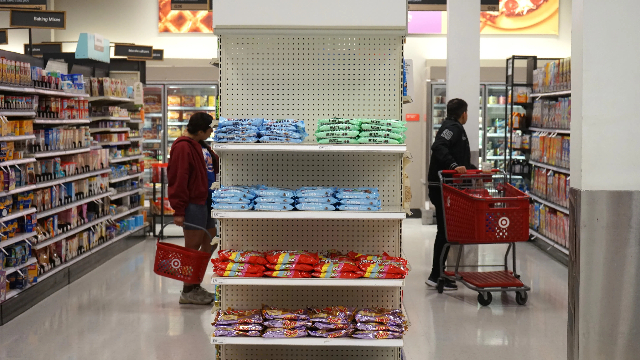
中国出口美国的商品主要有哪些?受关税影响如何?
Sou Hu Cai Jing· 2025-05-06 08:53
Core Viewpoint - The article highlights the resilience of China's trade with the United States amidst domestic economic challenges, emphasizing the significant role of exports, particularly in consumer electronics and labor-intensive products, in driving economic growth [2][3]. Group 1: Trade Dynamics - China's direct and indirect trade with the U.S. may exceed $1 trillion, with a potential surplus of over $500 billion [2]. - The structure of exports to the U.S. is dominated by industrial products, particularly electromechanical products, which account for over 40% of total exports [2]. Group 2: Consumer Electronics - In 2024, China's export of consumer electronics to the U.S. reached 787.5 billion RMB, making up 21.1% of total exports to the U.S. and maintaining its position as the largest export category for eight consecutive years [3]. - Key categories within consumer electronics include smartphones (250.15 billion RMB), laptops (179.87 billion RMB), tablets (92 billion RMB), and smart home devices (18.9 billion RMB) [3]. - Chinese consumer electronics dominate the U.S. market, with market shares of 62% for smartphones, 58% for laptops, 67% for tablets, and 41% for smart home devices [3]. Group 3: Tariff Implications - Despite ongoing trade tensions, the U.S. has exempted certain Chinese consumer electronics from a 125% tariff, indicating a reliance on Chinese products [3]. - Major companies like Apple and Dell are unlikely to sever ties with Chinese supply chains in the short term due to this dependency [3]. Group 4: Labor-Intensive Products - Labor-intensive products, including textiles, furniture, toys, and plastic products, account for approximately 25% of China's exports to the U.S. [5]. - Despite rising domestic labor costs, China maintains competitive advantages in these sectors due to its complete and coordinated industrial system [5]. Group 5: Market Shares of Labor-Intensive Products - In the U.S. market, Chinese exports of clothing (including sports and casual shoes) account for 42.3% of the apparel market, textiles for 32.4%, furniture for 44.1%, and toys for 66.3% [6]. - Daily necessities and packaging materials have an export value of $42.19 billion, representing 8.0% of the U.S. market [7]. Group 6: Overall Export Landscape - The overall export landscape shows that high-value electromechanical products, particularly consumer electronics, are less affected by tariffs, while low-value labor-intensive products face significant pressure due to their substitutability [7]. - Core components like chips still rely on U.S. imports, highlighting a mixed dependency in the trade relationship [7].

美国供应链资深专家答一财:特朗普“对等关税”或致全球面临二战以来最大经济挑战
Di Yi Cai Jing· 2025-04-18 04:23
Core Viewpoint - The article discusses the negative impact of Trump's tariffs on the U.S. economy, highlighting concerns over rising prices and inflation for both businesses and consumers [1][3]. Group 1: Impact on U.S. Economy - California has become the first state to sue the Trump administration over tariffs, claiming they are illegal and causing economic chaos [1]. - Professor Nick Vyas warns that the tariffs will increase the cost of imported goods, leading to price and inflation pressures on U.S. businesses and consumers [1][3]. - The World Trade Organization (WTO) reports that U.S. tariffs are severely deteriorating global trade prospects, with a projected 0.2% decline in global goods trade by 2025, and a 12.6% drop in North American exports [3]. Group 2: Manufacturing and Labor Market - Vyas expresses skepticism about the return of labor-intensive industries to the U.S. due to high labor costs, even in the medium to long term [3][4]. - He suggests that capital-intensive industries, such as electronics and pharmaceuticals, are more likely to thrive in the U.S. due to their reliance on advanced manufacturing and technology [3]. Group 3: Global Supply Chain Effects - Tariffs are not only affecting the U.S. economy but also have profound implications for global supply chains, with some Chinese goods facing tariffs as high as 245% [5]. - Vyas indicates that sustained high tariffs could lead to significant challenges for global economic growth, potentially being the largest challenge since World War II [6]. - The "friend-shoring" policy introduced during the Biden administration aims to limit supply chain outsourcing to trusted countries, but the current tariff situation undermines this strategy [6]. Group 4: Regional Economic Impact - Southeast Asian countries are particularly affected by the tariffs, with Vietnam facing a 46% tariff and Cambodia even higher at 49% [6]. - Vyas notes that high tariffs will weaken global competitiveness and force companies to seek new trade routes or relocate production [7].
经观季度调查 |2025年一季度经济学人问卷调查:“稳增长”与“防风险” 再平衡 保持关税冲击下的增长韧性
Jing Ji Guan Cha Bao· 2025-04-14 15:01
Group 1 - The core challenges facing the economy include the restructuring of global trade, deep adjustments in the real estate market, and long-term pressure from insufficient domestic demand [1] - 68% of economists predict that the GDP growth rate in Q1 2025 will be between 5.0% and 5.2%, while 24% expect it to be between 4.7% and 4.9% [3][4] - The stability of wage and property income is crucial for residents' spending willingness, with income being the primary influencing factor for consumption at 81% [1][6] Group 2 - Economists emphasize the need for macroeconomic policies to balance "stabilizing growth" and "preventing risks," with a stronger focus on growth while also addressing risk prevention [1][14] - The impact of U.S. tariffs is expected to create significant challenges for labor-intensive industries and consumer electronics, necessitating policy adjustments [12][13] - The survey indicates that 72% of economists believe China may initiate cuts in reserve requirements and interest rates in April to counteract the effects of U.S. tariffs [13] Group 3 - The current economic environment necessitates a focus on stabilizing employment, with 48% of economists identifying stimulating market vitality as a key strategy [10] - The need for increased fiscal support in areas such as consumption, livelihood, and broad infrastructure is highlighted as essential for achieving the 5% growth target [14] - The anticipated expansionary fiscal policy for 2025 is projected to reach 8 trillion yuan, reflecting the need to address external influences and employment pressures [13]
国家外汇管理局:外需波动加大对我国货物贸易顺差造成扰动
券商中国· 2025-03-29 07:35
Core Viewpoint - The article discusses the growth of China's goods trade surplus and current account surplus, highlighting the impact of economic structure optimization, competitive manufacturing, and recovering external demand on these surpluses [2]. Group 1: Goods Trade Surplus Growth - China's goods trade surplus is a result of deep participation in global industrial division and cyclical fluctuations in external demand [3]. - The long-term surplus is influenced by the global shift in industrial chains, with labor-intensive industries moving to developing countries, while developed nations focus on higher-end products and services [3]. - In 2024, China's goods trade surplus is projected at $768 billion, with foreign-invested enterprises accounting for 27% of total exports, and processing trade surplus contributing 21% to the overall trade surplus [3]. Group 2: External Demand Fluctuations - External demand has shown significant volatility, influenced by global economic developments and international financial market fluctuations [4]. - From 2020 to 2022, major developed economies' quantitative easing led to a 12% annual growth in China's exports, while tightening monetary policies in 2023 resulted in a 5% decline [4]. - A rebound in global manufacturing and semiconductor consumption is expected to drive a 7% increase in exports in 2024 [4]. Group 3: Current Account Balance - The current account is a comprehensive indicator of a country's internal and external economic balance, considering factors like service trade and investment income [6]. - China's current account surplus is projected at $423.9 billion in 2024, reflecting a 45% reduction compared to the goods trade surplus alone [6]. - The current account surplus to GDP ratio is expected to be 2.2% in 2024, indicating a stable economic balance compared to other countries like Japan and Germany [7]. Group 4: Future Outlook - The development of trade surpluses is closely linked to domestic economic adjustments, global supply chain layouts, and changes in internal and external demand [8]. - With ongoing policies to stabilize foreign trade and domestic demand, China's exports and imports are anticipated to maintain steady growth, keeping trade and current account surpluses within reasonable ranges [8].