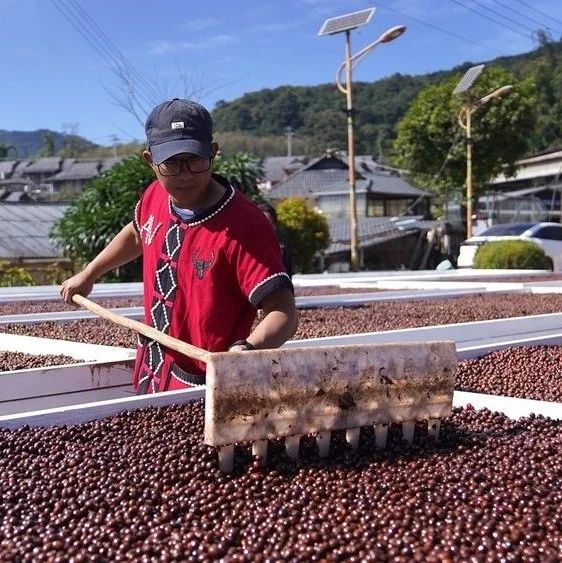
咖啡加工

Search documents
从“原料供应”→“品牌输出” 亮眼数据彰显我国咖啡产业迎来发展黄金期
Yang Shi Wang· 2025-09-26 09:54
Core Insights - Yunnan is the largest coffee-producing province in China, with significant growth in coffee exports in the first half of the year, targeting 34 countries and regions including the Netherlands, Germany, and Vietnam [1] - The price of Yunnan coffee beans has risen sharply, influenced by international coffee prices reaching a 50-year high, with prices increasing from 40 yuan/kg at the end of last year to around 66 yuan/kg in May this year [3] - The coffee industry in Yunnan is experiencing a boom, with a reported export value of over 770 million yuan in the first eight months of the year, making it the largest coffee exporter in China [7] Production and Market Dynamics - Yunnan's coffee production capacity is expanding due to increasing domestic consumption and overseas orders, with a daily production of about 2 tons of roasted beans in a processing facility [1][3] - The coffee planting area in Yunnan is projected to reach 1.267 million acres by the end of 2024, with an expected production of 146,000 tons and an agricultural output value of nearly 5 billion yuan, reflecting a 13% year-on-year growth [12] - The coffee industry is transitioning from raw material supply to brand output, with a focus on quality improvement and technological innovation [13] Export Trends and Opportunities - The demand for Yunnan coffee is increasing, with overseas orders driving industry upgrades and a shift towards exporting processed coffee products such as roasted beans and instant coffee [18] - The global coffee market is projected to grow significantly, with estimates of reaching 840.23 billion yuan in 2024 and 1,107.82 billion yuan by 2030, indicating a compound annual growth rate of 4.72% [16] - The coffee industry in Yunnan is enhancing its production processes to meet the evolving demands of international markets, including the introduction of modern production lines for cold brew coffee [14]

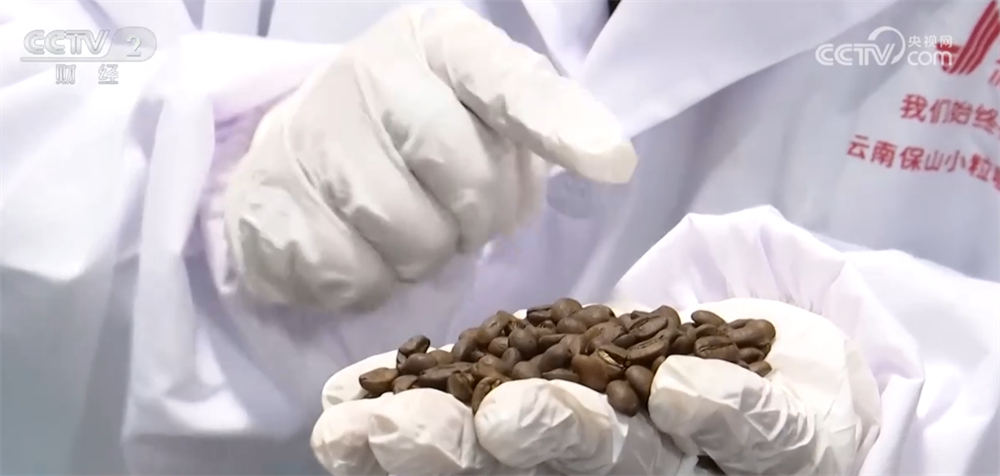
以时代风尚坚定技能“信仰” ——“技能照亮前程 豫见精彩未来”系列观察之三
He Nan Ri Bao· 2025-09-16 23:29
Group 1 - The upcoming National Skills Competition in Zhengzhou highlights the growing recognition of skilled trades as a valuable career path, encouraging youth to pursue vocational skills for personal and national pride [1][2] - There is a notable increase in enrollment at vocational schools in Henan, with the Zhengzhou Technical College seeing a rise from a planned 350 students to over 600 in the new energy vehicle maintenance program, indicating a shift in societal attitudes towards vocational education [2][3] - The importance of skills is increasingly acknowledged in society, with a growing belief that every profession offers opportunities for success, leading to a surge in interest in skill-based careers [2][3] Group 2 - The skills talent pool in Henan is expanding, with improvements in structure and quality, as well as successful participation in skill competitions, which supports the province's transition from a populous region to a strong human resource base [3] - The recognition of skills as a pathway to a balanced life and stable employment is reshaping educational perspectives, with many young people viewing vocational training as a viable route to success [3] - Experts emphasize the need for ongoing promotion of skilled professions to enhance their attractiveness and quality, aiming to establish skills as a respected and rewarding career choice for the youth [3]
云台会吸引台胞台企抢抓RCEP机遇
Ren Min Ri Bao Hai Wai Ban· 2025-08-13 23:05
Group 1 - The 13th Yuntai Conference in Kunming, Yunnan, aims to promote cross-strait cooperation and attract more Taiwanese youth to invest in the region, highlighting the potential for a "cross-strait symbiotic forest" [1] - The conference theme "Sharing RCEP New Opportunities and Promoting New Development of Yuntai Integration" emphasizes the benefits of RCEP policies for Taiwanese businesses, particularly in accessing the South Asian and Southeast Asian markets [2][3] - Yunnan's unique resources and active port economy provide a strong foundation for collaboration with Taiwanese industries in sectors like electronics, precision manufacturing, and biotechnology [2] Group 2 - Taiwanese entrepreneurs in Yunnan share their success stories, such as the establishment of avocado plantations and the integration of health and wellness projects into local communities [3][5] - The supportive business environment and warm services in Yunnan are significant factors for Taiwanese companies choosing to stay and invest in the region [5] - The Yunnan provincial government has approved 1,247 Taiwanese-funded enterprises, with actual utilized capital reaching $2.176 billion, showcasing the ongoing investment trend [7]

海南自贸港首单咖啡豆加工增值业务落地万宁
Xin Hua Wang· 2025-08-12 05:54
Core Viewpoint - The successful customs clearance of Panama Arabica coffee beans processed by Hainan Zhuoran Coffee Co., Ltd. marks the first coffee bean processing value-added business in Hainan Free Trade Port, injecting new momentum into the local coffee industry [1] Group 1: Company Developments - Hainan Zhuoran Coffee Co., Ltd. is among the first batch of enterprises in Wanning City to benefit from the processing value-added policy of the free trade port, which reduces operating costs and creates favorable conditions for expanding into international markets [1] - The company plans to leverage policy benefits to expand its global procurement of high-quality coffee beans and improve its industry chain layout, contributing to the upgrade of Hainan's coffee industry [1] Group 2: Industry Insights - Currently, there are nine enterprises in Wanning City approved for the processing value-added pilot program, with seven of them being coffee bean processing companies [1] - Wenchang Customs has implemented measures such as on-site guidance for enterprises to install monitoring equipment and handle online declarations, collaborating with local business and technology departments to establish a comprehensive policy service system to ensure enterprises fully enjoy policy benefits [1]
七批110个新职业,折射经济发展新动能 “新饭碗”里有多少料?
He Nan Ri Bao· 2025-07-28 23:21
Core Viewpoint - The emergence of new professions driven by the new economy reflects the changing dynamics of economic development and offers new employment opportunities for the younger generation [11][16]. Group 1: New Professions and Economic Trends - The Ministry of Human Resources and Social Security, along with other departments, has released the seventh batch of new professions, including 17 new occupations and 42 new job types, highlighting the shift in economic development dynamics [11][16]. - The introduction of new professions such as coffee processing workers, elderly service workers, and drone flight planners indicates a response to the evolving job market and the increasing demand for diverse skills [16][17]. - The recognition of these new professions is expected to attract talent and support the development of emerging industries, creating a symbiotic relationship between employment and industrial growth [17][21]. Group 2: Individual Experiences in New Professions - Coffee processing worker Liu Shifei emphasizes the importance of mastering the entire coffee bean processing workflow to ensure quality and consistency in the final product [12][13]. - Elderly service worker Li Hankan focuses on providing personalized health management for seniors, reflecting the growing demand for specialized care in the aging population [14][16]. - Drone training instructor Xu Fusen highlights the increasing interest in drone operation and the need for skilled trainers in this rapidly expanding industry [15][18]. Group 3: Challenges and Opportunities - The coffee industry is projected to grow significantly, with the market size expected to reach 369.3 billion yuan by 2025, indicating a promising future for coffee processing workers [20]. - Despite the potential of new professions, challenges such as market competition and public perception remain, as seen in the experiences of individuals in the drone and two-dimensional culture sectors [19][20]. - The government is actively promoting vocational training programs to enhance the skills of young people, particularly in fields like big data, artificial intelligence, and smart manufacturing, to better align with industry needs [22].

海南注册公司能享受哪些免税?
Sou Hu Cai Jing· 2025-07-15 14:36
Core Viewpoint - Hainan Free Trade Port offers a comprehensive tax incentive system, including zero tariffs, low tax rates, and simplified tax regulations, effective from 2025, aimed at attracting businesses and fostering economic growth [1]. Group 1: Corporate Income Tax - Hainan's corporate income tax policy features "universal applicability + special care," with core policies extended until the end of 2027, providing long-term tax stability for businesses [3]. - A unified corporate income tax rate of 15% will apply to all registered companies in Hainan, significantly lower than the mainland's 25% standard rate, with additional exemptions for certain industries [4]. - Companies in encouraged industries can enjoy further tax benefits if their main business revenue exceeds 60% of total income, including exemptions on overseas direct investment income [4]. Group 2: Import Taxation - The zero-tariff list has expanded to 453 items, allowing companies to import raw materials without tariffs, VAT, or consumption tax, significantly reducing production costs [7]. - Companies producing goods with over 30% added value from imported materials can also benefit from tariff exemptions when selling to the mainland [9]. - The zero-tariff policy for transportation and tourism-related imports has been optimized, continuing to support the industry [10]. Group 3: Personal Income Tax - Hainan's personal income tax system offers dual-track incentives for high-end talent and ordinary residents, making it one of the most competitive in the country [12]. - High-end talent earning over 300,000 yuan annually can have their effective tax burden capped at 15%, significantly reducing their tax liabilities compared to the mainland [13]. - Ordinary residents will be taxed at a lower progressive rate of 3%, 10%, and 15%, compared to the mainland's higher rates [14]. Group 4: Specific Industry Incentives - Hainan has introduced a combination of "zero tariffs + special subsidies + facilitation measures" for key industries such as tourism, high-tech, and biomedicine [15]. - The medical tourism pilot zone allows for zero tariffs on imported drugs and medical devices, significantly reducing costs for patients [16]. Group 5: VAT Transition and Sales Tax Reform - 2025 marks a critical year for tax reform in Hainan, with transitional VAT policies and plans for a simplified sales tax system post-closure [17]. - The sales tax will combine various taxes, potentially lowering rates, requiring businesses to adapt their operational models accordingly [20]. Group 6: Policy Applicability and Compliance - To benefit from Hainan's tax incentives, companies must meet "substantive operation" requirements, avoiding the status of "shell companies" [22]. - Companies must apply for zero-tariff qualifications through the "Hainan International Trade Single Window," with tax benefits subject to verification by tax authorities [23]. Group 7: Case Studies - A cross-border e-commerce company utilized the zero-tariff policy on imported raw materials, achieving a significant reduction in overall tax burden [24]. - A biopharmaceutical company registered in Hainan benefited from reduced corporate income tax and R&D expense deductions, leading to substantial tax savings [24].

第九届南博会闭幕:国内外新老客商齐聚 外贸订单纷至沓来
Zheng Quan Ri Bao· 2025-06-24 16:31
Group 1: Event Overview - The 9th China-South Asia Expo concluded successfully, attracting 2,510 domestic and international exhibitors, a 14.7% increase compared to the previous year [1] - A total of 153 trade contracts were signed during the event, with foreign trade contract value reaching 8.479 billion yuan, and visitor attendance exceeding 500,000 [1] Group 2: Business Engagement - The expo showcased a vibrant market atmosphere with both returning and new exhibitors, facilitating active communication and negotiations [2] - Yunnan Bowen Technology Co., Ltd. participated for the first time, aiming to promote its coffee industry achievements on an international platform [2] - A trade contract worth approximately 25 million yuan was signed between Bangladeshi buyers and Yunnan Bingyu Kun International Trade Company, covering various sectors [3] Group 3: Technological Innovations - The expo highlighted advancements in green trade, digital trade, and service trade, attracting significant visitor interest [4] - Southern Power Grid showcased VR projects from Southeast Asia, demonstrating its international cooperation in the Mekong River region [4] - Companies like iFlytek presented AI technologies, including a multilingual AI translation screen, enhancing the visitor experience [4][5] Group 4: Health and Cultural Integration - AI-based traditional Chinese medicine diagnostic tools were introduced, achieving over 80% accuracy in health assessments [5] - The establishment of interactive experience zones aimed to promote traditional Chinese medicine culture and enhance public engagement [5]
我在云南建高端「咖啡庄园」,被人调侃躺着收钱
36氪· 2025-05-06 12:59
Core Viewpoint - The article highlights the growth and potential of the coffee industry in Pu'er, Yunnan, emphasizing the shift towards high-quality coffee production and tourism integration, driven by a new generation of coffee farmers known as the "third generation" [5][19][36]. Group 1: Coffee Market Dynamics - The coffee market in Pu'er is experiencing significant growth, with the price of C-type coffee futures in the US rising from 247 cents per pound in April 2024 to 340 cents per pound in April 2025, an increase of over 37% [7]. - Local coffee farmers are seeing substantial profits, with one farmer reporting a net profit of over 500,000 yuan from 100 acres of coffee land in the past year [5]. Group 2: Tourism and Coffee Experience - Coffee estates in Pu'er are evolving into integrated tourism destinations, offering experiences such as "coffee + homestay" and "coffee + culture," attracting a growing number of visitors [8][9]. - The Wild Duck Valley Coffee Estate has seen over 60,000 visitors annually, with a focus on high-end family tourism [11]. Group 3: The Role of the "Third Generation" - The "third generation" of coffee farmers, who have inherited land from their parents, are innovating by creating coffee parks and enhancing the coffee experience for tourists [8][15]. - Young farmers like Yang Hongjian and Mei Zi are investing heavily in upgrading their estates, with Mei Zi's estate planning to charge 1,200 yuan per night for accommodations [11][26]. Group 4: Historical Context and Development - The coffee industry in Pu'er has roots dating back to 1988 when Nestlé began collaborating with local farmers, leading to the establishment of a coffee cultivation and processing center in 2016 [17][26]. - As of now, Pu'er has 680,000 acres of coffee plantations and 252 coffee shops, positioning it as a significant center for coffee processing in China [19]. Group 5: Demographic Shifts and Cultural Impact - There is a notable trend of young people returning to rural areas, with a report indicating that rural returnees exceeded urban migrants for the first time in 2023 [36]. - The coffee culture is becoming more accessible to local residents, with many now enjoying coffee rather than just cultivating it [27].

咖啡豆价格狂飙,云南豆商却在赔钱
虎嗅APP· 2025-02-27 13:21
Core Viewpoint - The coffee bean market is experiencing unprecedented volatility, driven by a significant increase in prices due to supply constraints, particularly from Brazil, which has led to a surge in coffee futures prices to historical highs [1][4][14]. Group 1: Price Dynamics - Coffee futures prices have risen dramatically, reaching a peak of 440 cents per pound, up over 62% from 270.72 cents per pound in November of the previous year [1]. - In Yunnan, the purchase price for coffee beans has soared to 64.5 yuan per kilogram, nearly doubling compared to the previous harvest season [2]. - The price of fresh coffee cherries has increased to 11 yuan per kilogram, compared to only 1.2-1.3 yuan six years ago, reflecting a broader trend of rising costs in the coffee supply chain [14]. Group 2: Market Challenges - The coffee processing trade is facing significant pressure, with farmers and processing plants raising prices while buyers are reluctant to increase their purchase prices, leading to a squeezed margin for traders [3][4]. - The market is characterized by a rapid turnover of transactions, with companies needing to adapt quickly to fluctuating prices, often resulting in losses on contracts due to rising costs [5][6][16]. - The domestic demand for coffee has outstripped supply, leading to a reduction in exports and a shift in focus towards local consumption, which has further exacerbated price increases [12][13]. Group 3: Supply Chain Issues - The coffee production cycle is affected by environmental factors, with a significant reduction in yield expected this year due to adverse weather conditions, potentially leading to a 30% decrease in output [14]. - The processing time for coffee beans has increased, with companies facing longer cash flow cycles due to the need for upfront payments and the rising costs of raw materials [19]. - The competition for sourcing coffee beans has intensified, with companies needing to actively seek out suppliers rather than relying on traditional procurement methods [19][21]. Group 4: Future Outlook - The rising prices of coffee beans are making it increasingly difficult for brands to maintain low-priced products, with estimates suggesting that a cup of coffee could cost around 1.7 yuan just for the coffee powder alone, not accounting for other costs [28]. - Companies are adjusting their procurement strategies, often reducing order sizes to mitigate risks associated with price volatility, which could lead to supply shortages in the future [23][29]. - The long-term sustainability of the coffee market may be at risk if supply begins to exceed demand in the coming years, potentially leading to a price collapse [29].