基建工程

Search documents
基本面高频数据跟踪:有色上涨,黑色下跌
GOLDEN SUN SECURITIES· 2025-12-29 13:13
1. Report Industry Investment Rating No relevant content provided. 2. Core View of the Report The report updates the high - frequency fundamental data from December 22, 2025, to December 28, 2025. The Guosheng fundamental high - frequency index is stable, but the year - on - year increase has narrowed, and the long - short signal of interest - rate bonds has been adjusted down. Most sub - indices show changes in growth rates, including narrowing year - on - year increases or expanding decreases [9]. 3. Summary by Related Catalogs 3.1 Total Index: Fundamental High - Frequency Index Stable - The Guosheng fundamental high - frequency index is 129.3 points (previous value: 129.2 points), with a year - on - year increase of 6.1 points (previous value: 6.2 points), and the year - on - year increase has narrowed. The long - short signal of interest - rate bonds is adjusted down, with a signal factor of 3.2% (previous value: 3.4%) [9]. 3.2 Production:开工率多数回落 (Most Operating Rates Decline) - The industrial production high - frequency index is 127.8 (previous value: 127.7), with a year - on - year increase of 4.9 points (previous value: 5.0 points), and the year - on - year increase has narrowed. Operating rates such as electric furnace, polyester, semi - tire, full - tire, PTA, and PX have changed, with most showing a decline [9][11][16]. 3.3 Real Estate Sales:商品房成交面积小幅上升 (Slight Increase in Commercial Housing Transaction Area) - The commercial housing sales high - frequency index is 40.7 (previous value: 40.8), with a year - on - year decrease of 6.5 points (previous value: 6.4 points), and the year - on - year decline has expanded. The transaction area of commercial housing in 30 large and medium - sized cities is 41.4 million square meters (previous value: 34.9 million square meters), and the land premium rate of 100 large and medium - sized cities is 1.2% (previous value: 1.7%) [9][11][29]. 3.4 Infrastructure Investment:石油沥青开工率回升 (Recovery of Asphalt Operating Rate) - The infrastructure investment high - frequency index is 122.0 (previous value: 122.1), with a year - on - year increase of 8.3 points (previous value: 8.5 points), and the year - on - year increase has narrowed. The operating rate of asphalt is 31.3% (previous value: 27.6%) [9][11][39]. 3.5 Export:运价指数小幅上行 (Slight Increase in Freight Rate Index) - The export high - frequency index is 143.7 (previous value: 143.7), with a year - on - year increase of 0.3 points (previous value: 0.4 points), and the year - on - year increase has narrowed. The CCFI index is 1146.7 points (previous value: 1124.7 points), and the RJ/CRB index is 300.6 points (previous value: 293.9 points) [9][11][46]. 3.6 Consumption:日均电影票房回升 (Recovery of Daily Average Movie Box Office) - The consumption high - frequency index is 121.1 (previous value: 121.1), with a year - on - year increase of 3.3 points (previous value: 3.4 points), and the year - on - year increase has narrowed. The daily average movie box office is 10,811 million yuan (previous value: 9,836 million yuan) [9][11][56]. 3.7 CPI:水果、鸡肉价格上涨 (Increase in Fruit and Chicken Prices) - The CPI monthly - on - monthly forecast is 0.0% (previous value: 0.0%). The average wholesale price of 7 key - monitored fruits is 7.8 yuan/kg (previous value: 7.6 yuan/kg), and the average wholesale price of white - striped chickens is 17.9 yuan/kg (previous value: 17.8 yuan/kg) [10][11][63]. 3.8 PPI:铜铝现货、原油价格上涨 (Increase in Copper, Aluminum Spot, and Crude Oil Prices) - The PPI monthly - on - monthly forecast is 0.1% (previous value: 0.1%). The spot settlement price of LME copper is 12,088 US dollars/ton (previous value: 11,739 US dollars/ton), the spot settlement price of LME aluminum is 2,916 US dollars/ton (previous value: 2,855 US dollars/ton), and the futures settlement price of Brent crude oil is 62 US dollars/barrel (previous value: 60 US dollars/barrel) [10][11][69]. 3.9 Transportation:客运量全面上涨 (Comprehensive Increase in Passenger Volume) - The transportation high - frequency index is 133.9 (previous value: 133.7), with a year - on - year increase of 11.0 points (previous value: 11.0 points), and the year - on - year increase remains unchanged. The passenger volume of subways in first - tier cities is 3,905 million person - times (previous value: 3,863 million person - times), the highway logistics freight rate index is 1052 points (previous value: 1051 points), and the number of domestic flights is 12,353 (previous value: 12,172) [10][11][80]. 3.10 Inventory:纯碱库存小幅回落 (Slight Decline in Soda Ash Inventory) - The inventory high - frequency index is 163.7 (previous value: 163.6), with a year - on - year increase of 7.4 points (previous value: 7.4 points), and the year - on - year increase remains unchanged. The inventory days of PTA are 3.6 days (previous value: 3.8 days), and the soda ash inventory is 146.9 million tons (previous value: 151.6 million tons) [10][11][87]. 3.11 Financing:地方债融资由正转负 (Local Government Bond Financing Turns Negative) - The financing high - frequency index is 245.9 (previous value: 245.2), with a year - on - year increase of 30.9 points (previous value: 30.9 points), and the year - on - year increase remains unchanged. The net financing of local government bonds is - 3200 million yuan (previous value: 28100 million yuan), and the net financing of credit bonds is 40800 million yuan (previous value: 57500 million yuan) [10][11][98].
基建从业者的“黄金时代”,和政策共舞|我们的四分之一世纪
Jing Ji Guan Cha Wang· 2025-12-29 07:22
Core Insights - The article reflects on the career of Jiang Weidong, CEO of Dayue Consulting, highlighting the evolution of China's infrastructure financing and investment landscape over the past 25 years [2][12] - Jiang's career trajectory aligns closely with the shifts in infrastructure investment models in China, transitioning from government-led investments to market-oriented approaches like PPP (Public-Private Partnership) [2][12] Group 1: Career Development - Jiang Weidong graduated from Lanzhou University in 1996 and began his career at China Railway Construction Corporation (CRCC), where he participated in various infrastructure projects [2][3] - His early experiences included working on highway projects in remote areas, which provided him with valuable insights into project management and contract administration [3][4] - A significant career shift occurred in 1999 when he was seconded to China International Engineering Consulting Corporation (CIECC) to work on the Shenzhen Metro Line 1, marking his entry into urban rail transit projects [4][5] Group 2: Infrastructure Investment Evolution - Over the years, China's infrastructure investment model evolved from government-led initiatives to a more diversified approach, including land finance and PPP models [2][8] - The introduction of the PPP model in 2004, particularly with the Beijing Metro Line 4 project, represented a pivotal moment in the marketization of infrastructure financing [8][12] - The period from 2015 to 2017 was identified as the "golden years" for the PPP industry, characterized by a surge in project opportunities and high consulting fees, leading to significant growth for Dayue Consulting [16][17] Group 3: Market Challenges and Changes - After the initial boom, the PPP market faced regulatory tightening starting in 2017, leading to the elimination of non-compliant projects and a decline in new opportunities [17][18] - The COVID-19 pandemic further impacted the industry, although Jiang's team managed to maintain stability through a balanced project portfolio across various provinces [17][18] - By 2023, the introduction of new guidelines for government and social capital cooperation indicated a new phase in the market, with a noticeable decrease in project numbers compared to previous years [18]


浙江交科:12月26日召开董事会会议
Mei Ri Jing Ji Xin Wen· 2025-12-26 12:07
Group 1 - The company Zhejiang Jiaokao (SZ 002061) announced that its 9th Board of Directors meeting was held on December 26, 2025, via telecommunication to review the proposal for increasing the budget for external donations in 2025 [1] - For the first half of 2025, the revenue composition of Zhejiang Jiaokao is as follows: 89.44% from the infrastructure engineering sector, 9.43% from the highway maintenance sector, and 1.13% from other businesses [1] - As of the report date, the market capitalization of Zhejiang Jiaokao is 10.8 billion yuan [1]

金改前沿 | 2025年超万亿险资入市,开启37万亿险资配置新局
Xin Hua Cai Jing· 2025-12-24 08:25
Core Insights - Insurance capital has seen a significant increase in stock investments, with a record high of 39 instances of shareholding announcements in 2025, marking a nine-year peak [2] - The total insurance fund scale has surpassed 37 trillion yuan, indicating a robust restructuring of investment strategies in the capital market [1][4] - Regulatory policies have been increasingly favorable, encouraging long-term investments and facilitating the entry of insurance funds into the stock market [5][6] Group 1: Shareholding Trends - In 2025, insurance companies have collectively made 39 shareholding announcements, involving 14 insurance institutions and 28 listed companies, with a notable focus on high-dividend stocks in sectors like banking and infrastructure [2] - The majority of the shareholding targets are H-shares, with 32 out of 39 instances, and over 30% of the announcements pertain to banking stocks [2] - Companies like Ping An Life have made multiple announcements for the same targets, reflecting a strategic focus on high-yield investments [2] Group 2: Investment Scale and Composition - As of the third quarter of 2025, the balance of insurance company funds reached 37.46 trillion yuan, with equity investments amounting to 5.59 trillion yuan, a significant increase from the previous year [4] - The proportion of equity investments in total investments has risen to 14.92%, up from 12.8% in 2024, indicating a growing preference for stock investments [4] - The stock investment scale alone has reached 3.62 trillion yuan, reflecting a substantial increase of 1.19 trillion yuan since the beginning of the year [4] Group 3: Regulatory Environment - In 2025, several regulatory measures have been introduced to promote long-term capital market participation, including adjustments to the equity asset allocation ratios for insurance funds [5] - The implementation of policies aimed at encouraging insurance funds to invest in the stock market has led to a significant influx of over one trillion yuan in new capital [6] - The expansion of long-term investment trials for insurance funds has resulted in a total of 222 billion yuan allocated for stock market investments [6] Group 4: Future Outlook - Analysts predict that insurance funds will continue to seek stable dividend returns while also exploring growth opportunities in emerging industries [7] - The anticipated increase in equity investments is expected to reach 1.15 trillion yuan in 2026 and 1.45 trillion yuan in 2027, with equity asset allocation projected to rise to 23.6% and 24.6% respectively [7] - The low interest rate environment is likely to further drive insurance companies to increase their allocation to equity assets, particularly high-dividend stocks within the CSI 300 index [7][8]

中国交建:公司在海南设有多家下属子公司及项目公司
Zheng Quan Ri Bao· 2025-12-23 13:47
Group 1 - The company has multiple subsidiaries and project companies in Hainan, covering infrastructure construction, cultural tourism development, and marine engineering [2] - These local operations provide support for the company's projects in ports, highways, cultural tourism, and marine economy in Hainan [2] - The company plans to continue leveraging its local subsidiaries to deepen its market presence in Hainan [2]

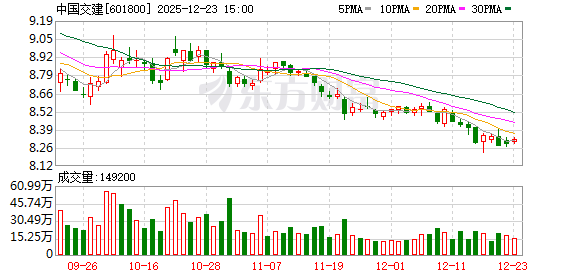
中国交建:先后参与海南自贸港多个重点基建项目的规划与建设
Ge Long Hui· 2025-12-23 08:04
Group 1 - The company, China Communications Construction Company (CCCC), has a long-term commitment to the Hainan market, achieving significant results in infrastructure construction [1] - CCCC has participated in the planning and construction of multiple key infrastructure projects in the Hainan Free Trade Port, focusing on areas such as port channels, highways, bridges, and marine economy [1]
中国交建(601800.SH):先后参与海南自贸港多个重点基建项目的规划与建设
Ge Long Hui· 2025-12-23 07:52
Core Viewpoint - China Communications Construction Company (CCCC) has made significant achievements in infrastructure construction in Hainan, focusing on port channels, highways, bridges, and marine economy projects, and has participated in the planning and construction of several key infrastructure projects in the Hainan Free Trade Port [1] Group 1 - The company has a long-term commitment to the Hainan market [1] - CCCC has achieved notable performance in various infrastructure sectors [1] - The company has been involved in multiple key infrastructure projects in Hainan Free Trade Port [1]
险资年内举牌39次 超八成标的为H股公司
Zheng Quan Ri Bao· 2025-12-22 16:17
险资举牌是指保险公司持有或与其关联方及一致行动人共同持有上市公司5%股权,以及之后每增持达 到5%时需依规披露的行为。 四川路桥公告显示,2025年12月17日,中邮人寿通过二级市场买入股票的方式增持该公司11.43万股股 票,占该公司总股本的0.0013%。买入股票后,中邮人寿总共持有四川路桥股份约4.35亿股,占该公司 总股本的5.00%。 举牌行为或常态化 近日,四川路桥(600039)建设集团股份有限公司(以下简称"四川路桥")发布公告称,中邮人寿保险股 份有限公司(以下简称"中邮人寿")增持其股票11.43万股,增持后持股比例达到5%,触及举牌线。 今年以来,险资举牌热情高涨。据记者统计,截至目前,险资年内合计举牌次数已达39次,涉及14家保 险机构和28家上市公司。该数据仅低于2015年举牌62次的历史峰值。 受访专家表示,险资今年举牌热情高涨,受政策引导、市场信心恢复、提升投资收益、平滑利润波动等 因素影响。 资金来源为自有资金 根据公告,此次投资是中邮人寿基于自身发展投资需求和支持上市公司持续健康发展的规划安排进行长 期投资,资金来源为自有资金。 天职国际金融业咨询合伙人周瑾对《证券日报》记者 ...

中邮保险39亿增持四川路桥年内四次举牌 投资收益超95亿股票配置两年半增12倍
Chang Jiang Shang Bao· 2025-12-21 23:21
长江商报消息 ●长江商报记者 徐佳 险资再次出手加仓A股。 日前,沪市主板上市公司四川路桥(600039.SH)公告,中邮人寿保险股份有限公司(以下简称"中邮保 险")买入四川路桥股票,持股升至5%,达成举牌。 长江商报记者注意到,近十个月内,中邮保险累计耗资38.91亿元买入四川路桥。截至12月19日收盘, 中邮保险所持四川路桥股份市值约为42.98亿元,账面浮盈约4.07亿元。 至此,2025年中邮保险已举牌四家上市公司,其中包括两家A股上市公司和两家H股上市公司。而2025 年以来,险资共计39次出手举牌上市公司,数量创近十年最高。 作为中国邮政下属全国性寿险企业,中邮保险在政策引导下,坚定长期投资理念,落实耐心资本实践, 充分发挥保险资金优势,服务实体经济和产业发展。 截至2025年6月末,中邮保险的股票配置规模已达到494.62亿元,较2022年末的37.39亿元增长超过12 倍,占投资资产的比例也由0.85%大幅提升至7.24%。 2025年前九月,中邮保险实现营业总收入283.05亿元,净利润90.97亿元。其中,投资收益95.78亿元, 公允价值变动收益1.15亿元。 举牌四川路桥已浮盈超4亿 ...
研报掘金丨申万宏源研究:首予中国铁建“增持”评级,港股股息率更具吸引力
Ge Long Hui· 2025-12-16 07:11
Core Viewpoint - The report from Shenwan Hongyuan Research indicates that industry investment is expected to stabilize in 2026, supported by total investment levels. Despite a slowdown in fixed asset investment growth this year, with pressures in infrastructure, manufacturing, and real estate, the orderly progress of local government debt resolution and the implementation of central "dual" projects are anticipated to stabilize investment in 2026. Certain sub-sectors may gain higher investment elasticity aligned with national strategies [1] Group 1: Industry Investment Outlook - Fixed asset investment growth has slowed down year-to-date, with infrastructure, manufacturing, and real estate facing pressures [1] - The orderly progress of local government debt resolution and the implementation of central "dual" projects are expected to support investment stability in 2026 [1] - Certain sub-sectors may benefit from higher investment elasticity due to alignment with national strategies [1] Group 2: Company-Specific Insights - China Railway Construction has seen marginal improvement in new orders, with an optimized structure and sufficient backlog to ensure long-term stable growth [1] - The company's balance sheet is continuously improving, with enhanced cash flow and optimized accounts receivable aging structure [1] - The H-shares are significantly discounted, and the dividend yield in the Hong Kong market is more attractive [1] Group 3: Valuation and Investment Recommendation - Using the price-to-earnings (PE) valuation method, comparable companies such as China Railway, China Communications Construction, and China Energy Construction have an average PE of 3.8X for 2025 and 3.6X for 2026 [1] - Given that 2025 financial data does not fully reflect company value, 2026 data is used for valuation reference, assuming a PE of 3.6X for China Railway Construction, corresponding to a market value of RMB 77.9 billion, or HKD 85.8 billion [1] - The current market value is HKD 74.8 billion, indicating an upside potential of 14.7%, leading to an initial coverage with an "Accumulate" rating [1]