
海事

Search documents
钟声:全球产供链安全稳定需要共同维护
Ren Min Ri Bao· 2025-10-19 05:09
Core Viewpoint - The ongoing trade tensions between China and the U.S. are characterized by the U.S. imposing high tariffs and export controls, which are deemed ineffective for managing relations with China. China is enhancing its export control system as a legitimate exercise of sovereignty, urging the U.S. to adopt a rational and pragmatic approach to maintain global supply chain stability [1][2][3][4]. Group 1: U.S. Trade Measures - The U.S. has implemented multiple trade restrictions against China, including adding several Chinese entities to export control lists and expanding the scope of these controls, affecting thousands of Chinese companies [1][2]. - The U.S. has ignored China's concerns and continued to enforce measures against China's maritime, logistics, and shipbuilding industries, which has negatively impacted bilateral trade discussions and disrupted international trade rules [1][2]. Group 2: China's Export Control Justification - China argues that its export controls on rare earths and related items are necessary for national security and international obligations, particularly in the context of global peace and regional stability [2]. - The number of items on China's export control list is approximately 900, while the U.S. has over 3,000 items, indicating a disparity in the application of export controls [2]. Group 3: China's Response to U.S. Actions - China maintains a clear stance against U.S. threats, asserting readiness to respond firmly while remaining open to dialogue and cooperation based on mutual respect and equality [3][4]. - The Chinese government emphasizes the importance of maintaining a healthy international trade order and global supply chain stability, urging the U.S. to engage sincerely in dialogue [4]. Group 4: Public Sentiment and Future Outlook - A recent survey indicates that a majority of American respondents perceive the U.S. as becoming more protectionist, with many viewing protectionist policies as a significant barrier to trade [4]. - There is a strong public desire for reduced tariffs and increased trade liberalization, suggesting that the U.S. should align its policies with public sentiment to foster a more stable economic relationship with China [4].
中国驻美大使谢锋:关税战、贸易战打不得 不会有赢家
Zheng Quan Shi Bao Wang· 2025-10-15 06:03
Core Viewpoint - The trade and tariff wars between China and the U.S. are detrimental, with no winners emerging from such conflicts, as emphasized by China's Ambassador to the U.S., Xie Feng [1] Summary by Relevant Sections Trade Relations - Over the past five months, China and the U.S. economic teams have held four meetings, reaching positive consensus to stabilize bilateral economic relations, providing relief to both nations and the global community [1] - Despite these discussions, the U.S. has continued to impose restrictions on Chinese entities, including adding multiple Chinese firms to export control lists shortly after the Madrid talks [1] Economic Impact - The U.S. has implemented measures that significantly harm China's legitimate rights and interests, disrupting international trade and maritime order, and threatening the stability of global supply chains [1] - Following threats from the U.S. to increase tariffs on China, U.S. stock and currency markets reacted negatively, causing global market panic and casting a shadow over the world economy [1] Call for Dialogue - The experience from both sides indicates that trade wars lead to mutual losses, and the only viable solution to disputes is through equality, respect, and reciprocity [1] - China expresses a willingness to avoid conflict but will not tolerate damage to its rights or the disruption of international trade rules, urging the U.S. to return to rationality and resolve issues through dialogue based on mutual respect and equal negotiation [1]
今日起开展6000亿买断式逆回购;京东广汽宁德联合造车……
Guan Cha Zhe Wang· 2025-10-15 05:04
Group 1: Trade Relations and Government Actions - The Chinese Ministry of Commerce announced countermeasures against the U.S. for implementing restrictions on China's maritime, logistics, and shipbuilding sectors based on the Section 301 investigation results [1] - China has placed five U.S. subsidiaries of Hanwha Marine on a countermeasure list as part of its response to U.S. actions [1] Group 2: Monetary Policy - The People's Bank of China will conduct a 600 billion yuan reverse repurchase operation to maintain liquidity in the banking system, marking the fifth consecutive month of increased reverse repurchase operations [2] - This operation will add 100 billion yuan to the existing 500 billion yuan of six-month reverse repos maturing in October [2] Group 3: Automotive Industry Developments - JD.com, GAC Group, and CATL are collaborating to launch a new vehicle on November 9, targeting the mass market with prices ranging from 50,000 to 300,000 yuan [3] - The vehicle aims to meet over 90% of daily commuting needs and will feature innovations in safety, battery technology, and user services [3] Group 4: Smart Terminal Industry Growth - Shanghai aims to grow its smart terminal industry to over 300 billion yuan by 2027, with plans to develop influential consumer brands and leading enterprises [4] - The action plan includes enhancing AI computing capabilities and expanding production capacity for AI smartphones and robotics [4] Group 5: Battery Production and Sales - In September, China's production of power and other batteries reached 151.2 GWh, a year-on-year increase of 35.4% [5] - Cumulative production for the first nine months of 2025 was 1,121.9 GWh, reflecting a 51.4% year-on-year growth [5] Group 6: Electric Vehicle Battery Installations - In September, the installation of power batteries in vehicles reached 76.0 GWh, with a year-on-year increase of 39.5% [6] - Lithium iron phosphate batteries accounted for 81.8% of the total installation volume, showing a significant growth trend [6] Group 7: Data Center Energy Demand - Goldman Sachs revised its forecast for global data center electricity demand in 2030 to a 175% increase compared to 2023, indicating a substantial rise in energy consumption [7] - The report highlights that AI applications are driving this demand, with predictions that AI-focused data centers will see a fourfold increase in energy needs [7] Group 8: Investment Opportunities in Energy Sector - Goldman Sachs suggests investors focus on reliability, availability, and efficiency in the energy sector, particularly in power generation, equipment, and demand-side management [8] - The "6P framework" is proposed to identify investment opportunities related to AI and energy consumption [8]


商务部:美对华造船等行业限制措施损人不利己
Yang Shi Xin Wen· 2025-10-14 08:02
Core Viewpoint - The U.S. has implemented unilateral and protectionist measures against China's maritime, logistics, and shipbuilding industries, which are seen as discriminatory and harmful to China's industrial interests [1][2]. Group 1: U.S. Measures and China's Response - The U.S. has officially imposed port fees and other restrictions on China's maritime and shipbuilding sectors based on the results of a Section 301 investigation [1]. - China strongly opposes these measures, viewing them as a violation of WTO rules and the U.S.-China Maritime Agreement, which undermines fair competition [1]. - In retaliation, China announced on October 10 that it would impose special port fees on vessels with U.S. elements, including those flagged, built, or owned by U.S. companies [1]. Group 2: Impact on Global Trade and U.S. Industry - The U.S. measures are expected to disrupt global supply chains, significantly increase international trade costs, and contribute to rising inflation in the U.S. [1]. - There are concerns that these actions will harm the competitiveness and employment levels at U.S. ports, as well as affect the resilience of the U.S. supply chain [1]. - There is notable opposition from the U.S. industry regarding these measures, indicating that they may be counterproductive to the development of the U.S. shipbuilding sector [1]. Group 3: China's Further Actions - In order to protect its industrial interests, China has placed certain companies that assisted the U.S. investigation on a countermeasure list and will investigate actions that threaten the safety and development of its maritime and shipbuilding industries [2]. - China emphasizes a commitment to conducting investigations in an open, fair, and just manner, ensuring the rights of all stakeholders are protected [2]. - China maintains a clear stance on the issue, indicating readiness to engage in dialogue while also preparing to respond firmly to U.S. actions [2].
美对华造船等行业301调查限制措施落地 商务部最新回应
智通财经网· 2025-10-14 07:47
Core Viewpoint - The U.S. has implemented port fee restrictions on China's maritime, logistics, and shipbuilding sectors based on the results of a Section 301 investigation, which China strongly opposes as unilateral and protectionist behavior that violates WTO rules and the U.S.-China Maritime Agreement [1][2][3] Group 1: U.S. Measures and China's Response - The U.S. measures are seen as discriminatory against China's shipping and shipbuilding industries, providing unfair competitive advantages to other countries' shipping and shipbuilding enterprises [1][2] - In response, China announced on October 10 that it would impose special port fees on vessels associated with U.S. flags, U.S. construction, or U.S. ownership [1][2] - The U.S. actions are expected to disrupt global supply chain stability, significantly increase international trade costs, and negatively impact U.S. inflation and port competitiveness [2] Group 2: China's Countermeasures - To protect its industries, China has placed certain companies that assisted the U.S. investigation on a countermeasure list and initiated investigations into actions that threaten the safety and development of its shipping and shipbuilding sectors [3] - China emphasizes a commitment to open, fair, and just enforcement and investigation processes while safeguarding the rights of all stakeholders involved [3] - China's stance is clear: it is prepared to engage in conflict if necessary but remains open to dialogue and negotiation to resolve mutual concerns [3]
中方:对韩华海洋株式会社5家美国相关子公司实施反制
财联社· 2025-10-14 04:18
商务部新闻发言人就对韩华海洋株式会社5家美国相关子公司采取反制措施答记者问。 商务部公告,美国对中国海事、物流和造船业开展301调查并采取措施,严重违反国际法和国际关系基本准则,严重损害中国企业合法权益。 韩华海 洋株式会社在美相关子公司协助、支持美国政府相关调查活动,危害我国主权、安全、发展利益。 依据《中华人民共和国反外国制裁法》第三条、第四条、第六条、第九条、第十条、第十五条,《实施〈中华人民共和国反外国制裁法〉的规定》 第三条、第五条、第八条、第十条规定,经国家反外国制裁工作协调机制批准,中方决定将韩华海洋株式会社5家美国相关子公司 HanwhaShippingLLC、HanwhaPhillyShipyardInc.、HanwhaOceanUSAInternationalLLC、HanwhaShippingHoldingsLLC和HSUSAHoldingsCorp.列入 反制清单,并采取以下反制措施: 禁止我国境内的组织、个人与其进行有关交易、合作等活动。 商务部新闻发言人就对韩华海洋株式会社5家美国相关子公司采取反制措施答记者问 有记者问: 近日,商务部宣布对韩华海洋株式会社5家美国相关子公司实施反 ...

突发特讯!中方回应美威胁对华加征100%关税,罕见措辞引爆国际舆论
Sou Hu Cai Jing· 2025-10-13 01:25
Core Viewpoint - The recent escalation in the US-China trade conflict is marked by China's announcement of export controls on rare earth materials, followed by the US threatening to impose 100% tariffs and export controls on key software [1][3]. Group 1: China's Position on Export Controls - China emphasizes that the export controls on rare earths are a legitimate action as a responsible major power, not an economic weapon [3][6]. - The Chinese government has communicated its measures to relevant parties through bilateral dialogue before the announcement, countering US claims of sudden aggression [3][5]. - The application of rare earths in military contexts is acknowledged, and China's actions are framed as fulfilling international obligations for non-proliferation [3][9]. Group 2: US Double Standards - China highlights the US's double standards by comparing the number of controlled items: over 3,000 by the US versus around 900 by China [3][6]. - The US's use of "minimum content rules" is criticized, showcasing a disparity in how both countries apply export controls [3][6]. Group 3: Implications for International Relations - The timing of the trade conflict coincides with a critical period of global supply chain restructuring, with traditional US allies like the EU and Japan heavily reliant on Chinese rare earths [9]. - China offers to facilitate applications for civilian use, indicating a strategy to divide potential US-led sanction alliances [9]. - The trade confrontation represents a clash of international order perspectives, with China advocating for a rules-based multilateral system against unilateral power dynamics [9].
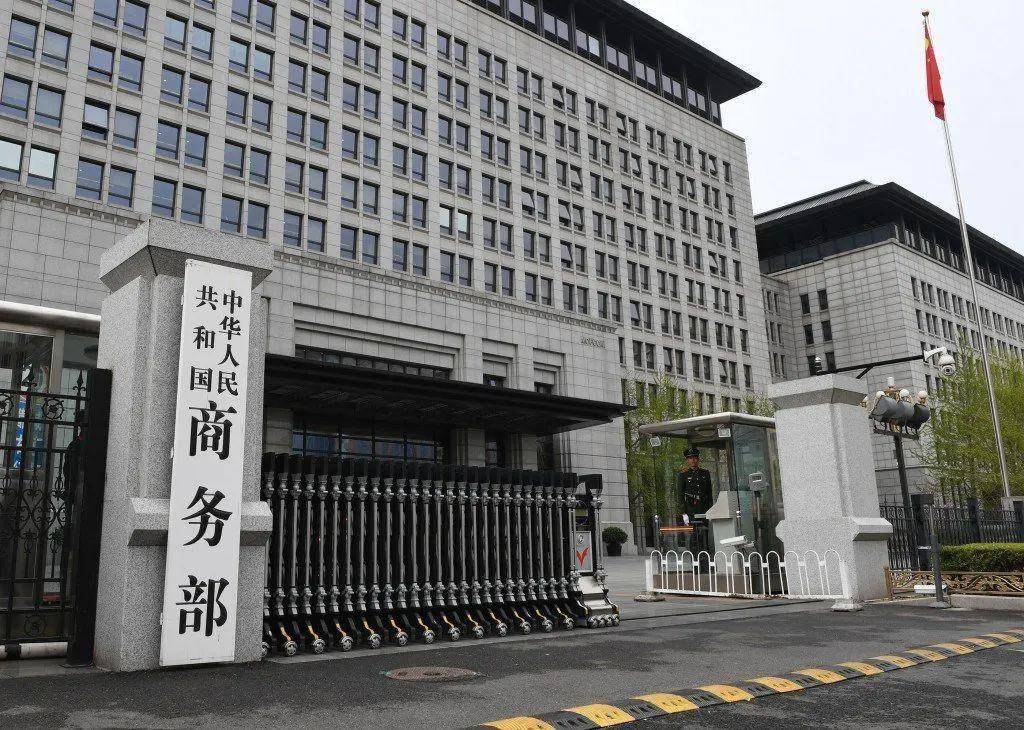
商务部回应近期推出多项经贸政策措施: 出口管制不是禁止出口 符合规定的申请将予以许可
Zheng Quan Shi Bao Wang· 2025-10-12 23:31
Core Viewpoint - The Chinese Ministry of Commerce emphasizes that recent export controls on rare earths and related items are not a ban on exports, but rather a legal measure to enhance its export control system, ensuring compliance with regulations [1][3]. Group 1: Export Control Measures - On October 9, the Ministry of Commerce announced two measures to strengthen export controls on rare earth-related items and technologies, including five types of heavy rare earths, lithium batteries, and artificial graphite anode materials [1]. - The Ministry clarified that applications meeting the regulations will be approved, indicating that the export controls are not prohibitive but regulatory [1][3]. Group 2: U.S. Trade Policies - The U.S. has been criticized for its extensive use of export controls, with over 3,000 items on its control list compared to China's 900, which the Ministry claims disrupts international trade and supply chain stability [2]. - The U.S. has recently implemented additional restrictions on Chinese entities, including listing several on export control lists and imposing high tariffs, which China views as a form of unilateralism [2][4]. Group 3: Response to U.S. Measures - In response to the U.S. imposing port fees on Chinese vessels, China has decided to implement countermeasures, including special port fees for U.S.-owned or operated ships, citing the need to protect its legitimate rights and interests [4][5]. - The Ministry of Commerce has stated that these countermeasures are necessary defensive actions aimed at maintaining fair competition in the international shipping and shipbuilding markets [5].
事关近期中方相关经贸政策措施!刚刚,商务部回应四大关切!
天天基金网· 2025-10-12 02:53
Group 1 - The Chinese government has implemented export controls on certain rare earth items to enhance its export control system, citing the importance of these materials in military applications and the need to maintain global peace and regional stability [3][4]. - The export controls are not a ban on exports; applications that meet the regulations will be approved, and the government is open to facilitating compliant trade through various measures [4][6]. - The U.S. has announced a 100% tariff on Chinese rare earth items in response to China's export controls, which China views as a double standard and a violation of international trade norms [5][6]. Group 2 - Following recent U.S. restrictions, China has expressed strong opposition, emphasizing that such actions damage bilateral trade relations and disrupt the atmosphere for economic talks [6][7]. - China has taken countermeasures against U.S. shipping fees imposed on Chinese vessels, asserting that these actions violate WTO rules and the principles of mutual benefit [7][8]. - The Chinese government remains committed to maintaining its legitimate rights and interests while advocating for dialogue and cooperation to resolve trade disputes [6][7].

就近期中方相关经贸政策措施情况,商务部答记者问
Zhong Jin Zai Xian· 2025-10-12 02:29
答:中方发布了关于稀土等相关物项的出口管制措施,这是中国政府依据法律法规,完善自身出口管制 体系的正当做法。当前世界局势动荡不安,军事冲突时有发生,中方注意到中重稀土相关物项在军事领 域有重要应用。中国是负责任大国,依法对相关物项实施出口管制,目的是更好维护世界和平与地区稳 定,履行防扩散等国际义务。 中国的出口管制不是禁止出口,对符合规定的申请将予以许可。在措施公布前,中方已通过双边出口管 制对话机制向各有关国家和地区作了通报。中方愿与各国加强出口管制对话交流,更好维护全球产业链 供应链安全稳定。 智通财经10月12日讯,商务部新闻发言人就近期中方相关经贸政策措施情况答记者问。 1、有记者问:10月9日,商务部、海关总署发布公告,对相关稀土物项实施出口管制。请问中方有什么 考虑? 特别是9月中美马德里经贸会谈以来,短短20多天时间,美方持续新增出台一系列对华限制措施,将多 家中国实体列入出口管制实体清单和特别指定国民清单;通过穿透性规则任意扩大受管制企业范围,影 响中方数千家企业;无视中方关切和善意,执意落地对华海事、物流和造船业301措施。美方的行为严 重损害中方利益,严重破坏双方经贸会谈氛围,中方对此坚 ...