
可再生能源

Search documents
科技热潮推动能源需求 绿色股票成为大赢家
Xin Lang Cai Jing· 2025-12-22 03:42
Core Insights - Contrary to expectations that green stocks would perform poorly due to Trump's "Big Oil" agenda, the sector has thrived, driven by AI-induced demand for various energy sources [1][2][3] Group 1: Market Performance - In 2025, the S&P Global Clean Energy Transition Index rose by 44%, significantly outperforming the S&P 500's 16% increase and the S&P Global Oil Index's 11% rise [3] - Initial investor concerns about Trump's potential abandonment of green policies led to a sell-off of solar and wind stocks, which has since reversed [3] Group 2: Policy and Investment Trends - Despite some U.S. measures to reform energy policy, other countries like Germany are investing billions in grid development and energy transition infrastructure, supporting the clean energy sector [3] - Lower interest rates have improved the outlook for highly leveraged green stocks, which remain undervalued compared to historical averages [3] Group 3: Future Outlook - BlackRock's Evy Hambro noted a resurgence of investor interest in the clean energy sector after years of stagnation [3] - Aneeka Gupta from WisdomTree highlighted a revival in renewable energy, with BloombergNEF predicting a fourfold increase in electricity demand for AI training and services over the next decade [4] - Helen Jewell from BlackRock suggested that Trump may need to reconsider his stance on renewable energy due to rising energy demands, potentially boosting already strong-performing stocks [4]
国际能源署发布《可再生能源2025》报告
Zhong Guo Hua Gong Bao· 2025-12-22 03:29
Group 1 - The International Energy Agency (IEA) released its annual flagship report "Renewable Energy 2025," assessing the global energy transition, indicating strong growth in renewable energy despite policy adjustments and market fluctuations [1] - By 2024, renewable energy generation is expected to account for 32% of total global electricity generation, increasing to 43% by 2030, with variable renewable energy's share rising from 15% in 2024 to 28% in 2030 [1] - Global renewable energy capacity additions are projected to reach 683 GW in 2024, climbing to nearly 890 GW by 2030, with an estimated 4600 GW added from 2025 to 2030, doubling the previous five-year period [1] Group 2 - Solar photovoltaic and wind power are expected to contribute 96% of global renewable energy capacity additions over the next six years, with distributed solar showing strong performance [1] - Onshore wind capacity additions are projected to reach 732 GW from 2025 to 2030, a 45% increase compared to the previous period, while offshore wind forecasts have been downgraded [1] - Hydropower growth is expected to slightly exceed the previous period, with over 154 GW of new capacity anticipated from 2025 to 2030 [1] Group 3 - The report identifies key drivers for large-scale renewable energy growth, with auction and bidding mechanisms expected to contribute 57% of the incremental growth, making them the primary policy tool [2] - Corporate Power Purchase Agreements (CPPAs) are projected to account for 16%, while fixed feed-in tariffs and premiums will contribute 9%, highlighting the role of competitive procurement and market-based contracts in driving deployment [2] - Despite strong growth trajectories, there remains a gap between current national plans and commitments to achieve the 2030 target of over 11,000 GW of renewable energy capacity, necessitating stronger actions in policy certainty, grid investment, supply chain resilience, and financing channels [2]
雷普索尔叫停西班牙绿氢项目
Zhong Guo Hua Gong Bao· 2025-12-22 03:29
Core Viewpoint - Repsol, in collaboration with partners, has officially announced the cancellation of the planned 200 MW renewable hydrogen project in the Melamar region of northwest Spain due to economic infeasibility [1] Project Overview - The project was intended to be built on the site of the former Melamar coal power plant owned by the Spanish gas company, aiming to supply green hydrogen to Repsol's La Coruña refinery [1] - The decision to halt the project was made after a comprehensive evaluation by the three parties involved [1] Key Reasons for Cancellation - Lack of essential renewable energy infrastructure for the green hydrogen project, which was supposed to rely on an on-site wind farm to ensure competitive electricity pricing; however, the surrounding renewable energy facilities were found to be insufficient, leading to increased electricity procurement costs [1] - Significant cost overruns, with capital expenditures (CAPEX) rising by over 50% since the subsidy application in 2022, compounded by additional costs for constructing pipelines to transport green hydrogen to the La Coruña industrial area, resulting in a loss of market competitiveness for the project [1]
越南加入国际可再生能源机构
Zhong Guo Hua Gong Bao· 2025-12-22 03:23
Core Viewpoint - Vietnam has officially joined the International Renewable Energy Agency (IRENA), marking a significant step in the country's international integration in the energy sector [1] Group 1: Vietnam's Membership in IRENA - The Vietnamese Ministry of Industry and Trade's Deputy Minister Nguyen Hoang Long stated that joining IRENA is an important advancement in the international integration process of the energy sector [1] - IRENA praised Vietnam's energy policies, indicating that membership will provide opportunities for practical cooperation in policy support, project development, and funding mobilization [1] Group 2: Benefits of Joining IRENA - Through the IRENA framework, Vietnam will have better access to global trends in renewable energy development data and analysis [1] - Vietnam plans to deepen connections with international financial institutions and investors to accelerate investments in offshore wind, solar energy, green hydrogen, and energy storage [1] Group 3: About IRENA - IRENA, established in April 2011, aims to promote the widespread and sustainable use of renewable energy, with 170 countries and regions, including the European Union, as members [1] - IRENA plays a core role in supporting national policy formulation, providing technology, data, and analysis, and facilitating international cooperation and investment [1]
让更多中国力量闪耀全球科技榜单
Xin Lang Cai Jing· 2025-12-21 19:39
Group 1: Renewable Energy Breakthrough - The core viewpoint of the article highlights that "Global Renewable Energy Growth is Unstoppable" has been recognized as the top scientific breakthrough of 2025 by the journal Science, indicating a significant shift where renewable energy production will surpass traditional energy in multiple sectors, primarily led by China [1] - China's renewable energy sector has achieved significant technological breakthroughs in hydropower, wind power, photovoltaics, biomass energy, and new energy storage technologies, leading to a continuous expansion of installed capacity and progress in building a new energy system [1] - During the 14th Five-Year Plan period, China's renewable energy generation capacity share increased from 40% to approximately 60%, with annual new installed capacities for wind and solar power surpassing 100 million and 200 million kilowatts respectively, providing crucial support for the green and low-carbon development of China's economy and society [1] Group 2: Global Technological Influence - The article notes that China's technological influence is on the rise, with the country entering the top ten of the global innovation index for the first time and the "Shenzhen-Hong Kong-Guangzhou" innovation cluster ranking first among global innovation clusters [2] - The year 2025 is marked by multiple scientific achievements from China, including notable figures being recognized in the global scientific community, reflecting the vibrant technological innovation landscape in the country [2] - The upcoming 15th Five-Year Plan emphasizes the strategic role of technological innovation in national development, showcasing a strong commitment to seizing technological leadership [2] Group 3: Innovation Ecosystem - The article emphasizes the need to leverage China's institutional advantages to consolidate resources for research and development, talent, technology, and funding to tackle key core technologies [3] - It advocates for closer collaboration among universities, research institutions, enterprises, and financial institutions to promote deep integration of technological and industrial innovation, facilitating the transformation of scientific achievements into productive forces [3] - To foster a conducive environment for innovation, it suggests increasing R&D investment and implementing systems that encourage researchers to focus on their work, thereby transforming external pressures into motivation for technological self-reliance [3]
《中华考工记》能源装备篇 以千年智慧照见绿色未来
Sou Hu Cai Jing· 2025-12-21 09:02
Group 1 - The first large-scale industrial cultural program "Chinese Craftsmanship" will air on December 21, focusing on innovation and practice in China's energy equipment sector [1] - The program features discussions on ancient craftsmanship wisdom and modern industrial beauty, led by various experts and actors [1] Group 2 - The program highlights the historical use of natural energy sources like wind, light, and water by ancient craftsmen, showcasing a blend of technology and poetic civilization [2] - A performance titled "Energy Source" will explore the ingenious applications of solar, water, and wind energy by ancient Chinese scientists [2] Group 3 - The largest single-unit photovoltaic power station in China, located in Xinjiang, generates approximately 6.9 billion kilowatt-hours of clean electricity annually and contributes to ecological restoration through a "photovoltaic sand control" model [4] - The program also discusses the development of wind power technology, including self-stabilizing wind turbines that can meet the electricity needs of millions of households [4] Group 4 - The evolution from traditional wooden sails to modern intelligent wing sails represents a significant advancement in sailing technology, emphasizing efficiency and ease of use [5][6] - The modern sails utilize carbon fiber and aerodynamic design, allowing for automated adjustments based on wind conditions [5] Group 5 - The "Light Storage Direct Flex" system enhances the safety and efficiency of clean electricity usage, allowing for real-time energy management and storage [7] - This system has been implemented in significant events and locations, demonstrating its practical applications [7] Group 6 - China is exploring advanced energy solutions, including a fusion device that extracts fuel from seawater, aiming for completion by 2027 [8] - A green methanol project has begun production, converting agricultural waste into clean fuel, with an annual output sufficient to support a large vessel's global journey [8]

“碳路”绿色转型与实践 新京报零碳研究院绿色发展论坛向绿求智
Xin Jing Bao· 2025-12-21 05:11
当今,绿色发展已然成为中国式现代化的鲜明底色。为充分释放媒体型绿色智库的研究力、传播力,汇 聚推动绿色转型的社会合力,2025年12月18日,以"绿色转型,智创未来"为主题的2025新京报零碳研究 院绿色发展论坛在北京举办。 这是新京报零碳研究院绿色发展论坛连续第四年举办。汇聚政、产、学、研各方智慧,深入探讨新型能 源体系建设、碳市场机制优化、产业低碳转型等核心议题,分享前沿实践与创新成果,为构建人与自然 和谐共生的现代化贡献智慧与方案。 2025新京报零碳研究院绿色发展论坛在京举办。 我国在可再生能源领域取得巨大成就 企业可持续发展呈现出商业价值 在论坛上,财政部原副部长朱光耀,生态环境部环境规划院政策所所长董战峰,北京绿色交易所有限公 司董事长王乃祥分别围绕"以双碳目标为引领,推动中国经济高质量发展""'十五五'绿色低碳激励政策发 展重点方向的思考""推进自愿碳市场建设助力'双碳'目标实现"等主题进行了演讲。 朱光耀表示,我国在新发展理念的指引下,大力推动绿色经济发展,在可再生能源领域取得了巨大成 就。这些成就首先服务于自身发展,满足我国人民对美好生活的追求,同时也在重塑国际能源体系。在 当前的数字经济时 ...
“十五五”绿色转型提速 能源结构、产业创新进入新阶段
2 1 Shi Ji Jing Ji Bao Dao· 2025-12-20 13:41
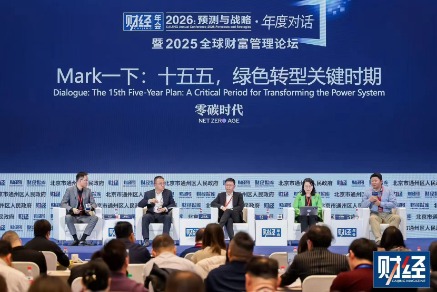
Group 1 - The "15th Five-Year Plan" will implement a comprehensive evaluation of carbon peak and carbon neutrality, emphasizing the importance of carbon dual control in project assessments to optimize industrial structure and promote a green transition in economic and social development [1] - The roundtable discussion hosted by Caijing magazine focused on the pathways for green transition during the new planning period, highlighting the need for substantial breakthroughs in power system flexibility, market mechanism improvement, and the shaping of green lifestyles to support carbon peak goals [1] Group 2 - Beijing aims to become an international benchmark for green economy by reducing the use of refined oil and natural gas while increasing the share of green electricity, with plans to import over 40 billion kilowatt-hours of green electricity by 2025 [2] - The application of green technologies is expanding, with companies like CATL providing battery solutions for over 900 electric vessels, indicating a growing market for battery applications beyond electric vehicles and energy storage [2] - Systemic reforms in China's green transition, particularly in the green electricity sector, have led to the establishment of a national unified electricity market framework, positioning China as a leader in the global renewable energy system [3] Group 3 - The design of electricity market mechanisms is crucial for the development of a new power system, with the need for market-driven price signals to guide long-term investment decisions and influence consumption behavior [5] - The traditional energy system, based on a planned pricing mechanism, will evolve to rely on market signals to determine investment in renewable energy projects and adjust production and consumption patterns [5]
“十五五”绿色转型提速,能源结构、产业创新进入新阶段
2 1 Shi Ji Jing Ji Bao Dao· 2025-12-20 09:27
21世纪经济报道记者雷椰 北京报道 (原标题:"十五五"绿色转型提速,能源结构、产业创新进入新阶段) "十四五"规划即将收官、"十五五"规划正待开启序幕。近日,2026年全国能源工作会议明确,按照党中 央,国务院部署,"十五五"将实施碳达峰碳中和综合评价考核,各地要将碳双控作为项目评估的重要依 据,调整优化产业结构,推动经济社会发展全面绿色转型。 12月19日,《财经》杂志举办"Mark一下:'十五五',绿色转型关键时期"圆桌对话,聚焦新一轮规划周 期中绿色转型的推进路径,围绕新型能源体系、电力市场化改革、国际合作以及经济社会全面绿色转型 等议题展开深入讨论。与会专家认为,在"十四五"已建成全球最大可再生能源体系的基础上,未来五年 需在电力系统灵活性、市场机制完善和绿色生活方式塑造等方面取得实质性突破,以支撑碳达峰目标的 实现。 从地方实践来看,区域能源结构调整成为绿色转型的重要落脚点。北京市节能环保中心党委书记、主任 张望才介绍了北京在加快建设国际绿色经济标杆城市的重点方向。他表示,北京每年约96%的能源消费 来自外地调入。未来几年,北京将持续压减成品油和天然气使用规模,进一步提高绿电占比。2025年, 北 ...

中国宏观经济研究院原副院长毕吉耀表示:今年发展主要目标有望圆满完成
Zhong Guo Zheng Quan Bao· 2025-12-20 01:28
Group 1 - The core viewpoint of the articles emphasizes China's economic resilience and growth, projecting a 5.2% increase in GDP during the first three quarters of 2025, driven by innovation and high-quality development [1][2] - The macroeconomic policies are described as increasingly proactive, contributing to a stable economic recovery amidst complex international challenges and domestic reform tasks [1] - The construction of a modern industrial system is progressing, with significant achievements in risk mitigation in key areas, indicating a harmonious and stable social environment [1] Group 2 - High-quality development in China is yielding new results, with continuous enhancement in the role of technological innovation and an increase in R&D investment intensity [2] - The manufacturing sector is undergoing rapid transformation, particularly in high-tech and intelligent manufacturing, with emerging technologies like artificial intelligence playing a crucial role in industrial upgrades [2] - Despite existing challenges such as the "strong supply and weak demand" contradiction, the long-term positive fundamentals of China's economy remain unchanged [2]