外贸

Search documents
1至8月成都规上工业增加值同比增长7.8%
Xin Hua Cai Jing· 2025-09-22 09:28
Economic Growth - Chengdu's industrial added value increased by 7.8% year-on-year from January to August [1] - The product sales rate of industrial enterprises above designated size in Chengdu was 96.4% during the first eight months [1] Industrial Performance - State-owned enterprises' added value grew by 5.0%, while private enterprises saw an increase of 11.1% [1] - Out of 37 major industries, 23 experienced growth in added value [1] - The automotive manufacturing industry grew by 20.9%, computer, communication, and other electronic equipment manufacturing increased by 15.8%, and electrical machinery and equipment manufacturing rose by 10.2% [1] Key Industrial Products - Production of new energy vehicles surged by 283.3%, smartwatches increased by 91.6%, and lithium-ion batteries grew by 38.6% [1] Fixed Asset Investment - Fixed asset investment in Chengdu (excluding rural households) increased by 3.3% year-on-year from January to August, with private investment growing by 6.6% [1] - Investment in the primary industry rose by 19.0%, while the secondary industry saw a growth of 21.3%, with industrial investment increasing by 21.7% [1] Consumer Market - Chengdu's total retail sales of consumer goods reached 739.28 billion yuan, a year-on-year increase of 6.2% [2] - Restaurant income was 90.42 billion yuan, growing by 4.9%, while commodity retail reached 648.86 billion yuan, increasing by 6.4% [2] - Notable growth in hot products included gold and silver jewelry at 42.9%, home appliances and audio-visual equipment at 23.7%, and sports and entertainment products at 25.9% [2] Foreign Trade - Chengdu's foreign trade import and export totaled 566.98 billion yuan, a year-on-year increase of 4.9% [2] - Exports amounted to 328.86 billion yuan, growing by 10.6%, while imports reached 238.12 billion yuan [2]
前八个月辽宁出口总值达2676.7亿元 同比增长11.6
Ren Min Wang· 2025-09-22 02:47
Core Viewpoint - Liaoning's foreign trade has shown resilience and growth in the first eight months of the year, with exports reaching a historical high, indicating a positive trend in the province's economic recovery and competitiveness in the global market [1][2]. Trade Performance - The total foreign trade value of Liaoning reached 501.94 billion yuan, with a year-on-year growth of 0.1% [1]. - Exports amounted to 267.67 billion yuan, marking an 11.6% increase year-on-year, achieving the highest export value for the same period in history [1]. - General trade dominated the trade methods, accounting for 64.8% of the total, while processing trade and bonded logistics made up 19.2% and 14.8%, respectively [1]. Enterprise Contribution - Private enterprises led the foreign trade sector with an import and export value of 259.78 billion yuan, a year-on-year increase of 11.1%, representing 51.8% of the total foreign trade value [1]. - Foreign-invested and state-owned enterprises contributed 174.78 billion yuan and 66.67 billion yuan, accounting for 34.8% and 13.3% of the total, respectively [1]. Trade Partners - ASEAN emerged as the largest trading partner for Liaoning, with a trade volume of 81.63 billion yuan, reflecting a significant year-on-year growth of 33.6% [1]. - Trade with the EU, although declining, remained substantial at 77.88 billion yuan [1]. Export Composition - Mechanical and electrical products dominated exports, totaling 135.65 billion yuan, a 9.4% increase, constituting 50.7% of total exports [2]. - Key products included electrical equipment and auto parts, with exports of 13.03 billion yuan and 9.79 billion yuan, growing by 14.6% and 10.6%, respectively [2]. - Steel exports reached 25.69 billion yuan, up 5.7%, while agricultural and labor-intensive products also showed positive growth [2]. Import Trends - Imports were affected by fluctuations in commodity prices, particularly for crude oil and metal ores, but some categories like organic chemicals saw positive growth [2]. Economic Outlook - The positive growth in foreign trade amidst a complex global economic landscape highlights Liaoning's economic resilience and signals a recovery trend [2].
前八个月辽宁出口总值达2676.7亿元 同比增长11.6%
Zheng Quan Shi Bao Wang· 2025-09-21 01:55
Core Insights - The total foreign trade import and export value of Liaoning Province reached 501.94 billion yuan in the first eight months of this year, reflecting a year-on-year growth of 0.1% [1] - The export value of the province amounted to 267.67 billion yuan, marking a significant year-on-year increase of 11.6%, which is the highest export value recorded for the same period historically [1] - Mechanical and electrical products dominated the export category, accounting for 135.65 billion yuan in exports, which represents a year-on-year growth of 9.4% and constitutes 50.7% of the total export value for the province during the same period [1]
今年前8个月深圳进出口规模同比增长0.3% 保持“内地外贸第一城”地位
Mei Ri Jing Ji Xin Wen· 2025-09-18 09:27
Core Insights - Shenzhen maintained its position as the leading city for foreign trade in mainland China, with a total import and export scale of 2.96 trillion yuan in the first eight months of the year, reflecting a year-on-year growth of 0.3% [1] Trade Performance - The total export value reached 1.79 trillion yuan, while imports amounted to 1.17 trillion yuan, with imports growing by 9% year-on-year [1] - In August alone, the import and export volume was 379.85 billion yuan, marking a year-on-year increase of 2.8%, and this growth has been consistent for three consecutive months [1] Trade Characteristics - General trade accounted for over half of the total trade, and bonded logistics saw an increase of over 10% [1] - Private enterprises contributed nearly 70% of the total import and export volume, with foreign-invested enterprises also experiencing rapid growth [1] - The combined import and export volume with the top ten trading partners increased to 2.31 trillion yuan [1] Sector Performance - Traditional electronic information industries and emerging industries maintained a strong competitive advantage in exports [1] - The application of artificial intelligence technology has accelerated, leading to a rapid increase in the import of related electronic components, with imports of electromechanical products reaching 949.16 billion yuan, a year-on-year growth of 12.5% [1]
烟台海关推出“智慧混铜”监管模式,为企业节约成本近2.5亿元
Qi Lu Wan Bao Wang· 2025-09-17 10:20
Core Insights - Yantai Customs has made significant progress in facilitating customs clearance, contributing to the growth of foreign trade from 324.31 billion to 472.34 billion from 2020 to 2024, representing an increase of over 40% [1] - The implementation of various service measures and initiatives has enhanced the precision of policy support for local enterprises, including the development of the "E Station" service application [1] - Yantai has pioneered several customs regulatory models, including the first national pilot for bonded copper mixing and a new model for bonded crude oil blending, which have collectively saved enterprises approximately 250 million [2] Focus on Key Projects - Yantai is establishing itself as a global bonded mineral product mixing center, leading the nation in innovative customs supervision models [2] - The introduction of a "smart copper mixing" regulatory model has significantly reduced customs clearance times by over two days [2] - The city has also initiated the first cross-border e-commerce tax guarantee insurance reform in the country, supporting the development of a national distribution center for Japanese and Korean consumer goods [2] Focus on Mode Reform - New regulatory models such as "classified supervision + pre-emptive cargo handling + centralized inspection" have improved inspection efficiency by 25% [2] - The construction of a "vehicle logistics base" and the launch of a cross-border sea-rail intermodal train service have positioned Yantai as a leader in international vehicle transshipment [2] Focus on Efficiency and Environment Optimization - The introduction of batch inspection reforms has improved operational efficiency by 90%, with successful experiences replicated nationwide [3] - The establishment of a local laboratory for oil product testing has reduced testing times from 10 working days to 48 hours [3] - The implementation of a "one-to-many" manifest verification model has saved logistics time by over two days and reduced costs for enterprises by approximately 1.5 million annually [3] Future Directions - Yantai Customs aims to continue enhancing the business environment for foreign trade and import-export enterprises, contributing to the city's goal of becoming a model for green, low-carbon, high-quality development [3]
1至8月四川外贸进出口6832亿元 同比增长2.5%
Xin Hua Cai Jing· 2025-09-16 08:15
Core Insights - Sichuan's goods trade import and export reached 683.2 billion yuan from January to August, ranking eighth nationwide, with a year-on-year growth of 2.5% [1] - Exports amounted to 410.05 billion yuan, increasing by 5.3%, while imports totaled 273.15 billion yuan [1] - The province's foreign trade demonstrated resilience amid complex external conditions, achieving a historical high for the same period, with exports surpassing 400 billion yuan for the first time, contributing over 20 billion yuan to foreign trade growth [1] Trade Performance - The number of enterprises engaged in import and export activities exceeded 8,500, marking a 9.2% increase [1] - Advanced certification enterprises accounted for 332.62 billion yuan in imports and exports, growing by 9.8%, outpacing the overall growth rate by 7.3 percentage points [1] - Chengdu played a pivotal role, with imports and exports totaling 566.98 billion yuan, a growth of 4.9%, contributing 4 percentage points to Sichuan's foreign trade growth [1] Emerging Trade Dynamics - Traditional advantages in foreign trade, such as integrated circuits and computers, continued to be solidified, with import and export scales exceeding 200 billion yuan and 120 billion yuan, respectively [2] - New trade drivers emerged, with "new three samples" products exporting 20.11 billion yuan, a significant increase of 77.6%, including solar products and lithium-ion batteries, which grew by 277.8% and 1170.9% respectively [2] - Consumer goods imports reached 12.81 billion yuan, growing by 7.8%, with notable increases in imports of fresh shrimp and ice-fresh salmon, which rose by 175.9% and 17% respectively [2]
“苏大强”是怎样炼成的?
Jin Rong Shi Bao· 2025-09-15 13:42
Core Insights - Jiangsu Province is positioned as a key hub in the "Belt and Road" initiative, showcasing significant growth in foreign trade and investment, with a total import and export value exceeding 5 trillion yuan, ranking second nationally for 22 consecutive years [1][2] - The province has maintained the highest actual foreign investment in China for seven years, with a projected foreign investment of 19.05 billion USD in 2024, cumulatively reaching 103.74 billion USD over four years, accounting for 16.2% of the national total [1][7] - Jiangsu's cities, particularly Nanjing and Suzhou, are emerging as new centers for service trade innovation, focusing on digital culture, traditional Chinese medicine, and intellectual property [1] Foreign Trade and Investment - Jiangsu has optimized its foreign trade structure, emphasizing new growth drivers while maintaining scale, with exports to emerging markets increasing to 59.9% in the first seven months of the year, up 12.6 percentage points from 2020 [3] - The province has achieved full coverage of cross-border e-commerce pilot zones, supporting the development of 30 cross-border e-commerce industrial belts [3] - Foreign enterprises contribute significantly to the national economy, accounting for one-third of imports and exports, one-fourth of industrial added value, and one-seventh of tax revenue, creating over 30 million jobs [5] Economic Environment - Jiangsu has established a market-oriented, law-based, and international business environment, with nearly 43,000 foreign enterprises contributing 46.6% of the province's export value and 19.2% of total tax revenue [7] - The province has seen a substantial increase in foreign investment from countries like Germany, Japan, and Switzerland, with investment growth exceeding 90% [7] - Jiangsu's free trade zone, despite occupying only 0.1% of the province's area, accounts for 10% of its total imports and actual foreign investment [8][9] Business Ecosystem - The province has been recognized for five consecutive years as having the best business environment, implementing a new round of actions to enhance this environment [9] - Jiangsu has reduced the ratio of social logistics costs to GDP to 12.8%, promoting market-oriented reforms in data elements and social credit systems [9] - The province's focus on optimizing the business environment includes supporting foreign enterprises in equipment upgrades and promoting a stable, fair, transparent, and predictable development environment [9]
今年四季度会再迎来一轮“924”般的增量政策吗?
经济观察报· 2025-09-15 12:20
Group 1: Macroeconomic Policy Outlook - The fourth quarter may see new incremental measures in macroeconomic policy, focusing on increased fiscal efforts, interest rate cuts by the central bank, and stronger initiatives to stabilize the real estate market, which will help counteract external demand slowdown and curb economic decline, ensuring a target growth rate of around 5.0% for the year [1][4]. Group 2: Economic Performance Indicators - In August, exports grew by 4.8% year-on-year, marking six consecutive months of positive growth; however, retail sales of consumer goods increased by only 3.4%, with a declining growth rate over three months [2]. - Fixed asset investment (excluding rural households) saw a year-on-year increase of just 0.5% in the first eight months, a decline of 1.1 percentage points compared to the previous seven months [2]. Group 3: Trade Dynamics - Despite a challenging global trade environment, China's total import and export value increased by 3.5% year-on-year in the first eight months, with exports rising by 6.9%. Machinery and electronics exports were the primary growth drivers, with a notable increase in integrated circuits and automobiles [6][7]. - ASEAN has become China's largest trading partner, with trade value reaching 4.93 trillion yuan, a growth of 9.7% [6]. Group 4: Consumer and Investment Trends - Consumer and investment growth rates have been declining since mid-year, with retail sales growth dropping from 6.4% in May to 3.4% in August, indicating a trend of reduced consumer spending [9][10]. - Real estate development investment has significantly decreased, contributing to a drop in overall investment growth, with private fixed asset investment down by 2.3% in the first eight months [11]. Group 5: Policy Recommendations - To stabilize the real estate market and improve household balance sheets, it is suggested to expand the scale of special long-term government bonds and increase public investment in infrastructure, which could lead to sustained growth in enterprise orders and employment [12].


打通小微企业融资“最后一米”
Ren Min Ri Bao· 2025-09-15 01:08
Core Viewpoint - The mechanism for supporting small and micro enterprises' financing has shown significant effectiveness in addressing the challenges of financing difficulties and high costs, leveraging a coordinated approach and adhering to financial market principles [1][2][3] Group 1: Mechanism Effectiveness - As of the end of June, the mechanism has visited over 90 million small and micro enterprises, resulting in an increase of 23.6 trillion yuan in credit for recommended entities and 1.78 trillion yuan in new loans [1] - The mechanism, established in October last year, has quickly demonstrated results by identifying key focus areas to bridge the financing gap for small and micro enterprises [1][2] Group 2: Collaborative Approach - The mechanism enhances the financial service ecosystem for small and micro enterprises through central-local collaboration, ensuring policy consistency while allowing local flexibility [1][2] - Local governments have utilized data from various departments to engage with enterprises at the grassroots level, facilitating a comprehensive understanding of their operational status and financing needs [2] Group 3: Precision in Financing - A notable 32.8% of the new loans issued under the mechanism are credit loans, indicating a shift towards reducing reliance on collateral for financing small and micro enterprises [2][3] - The mechanism aims to optimize the credit structure by directing resources towards key sectors such as foreign trade, private enterprises, technology, and consumption [2] Group 4: Data Empowerment and Policy Efficiency - The mechanism emphasizes the importance of building local credit data platforms to provide financial institutions with accurate enterprise credit information, thereby reducing financing risks [3] - Policies related to small and micro enterprises are integrated into the mechanism framework to enhance execution efficiency, including measures to address loan renewal issues [3] Group 5: Business Environment Improvement - The mechanism not only focuses on financing but also aims to improve the overall business environment for small and micro enterprises by providing support in areas such as credit repair and financial management [3][4] - The ongoing implementation of the financing coordination mechanism is expected to boost the confidence of small and micro enterprises and stimulate new momentum for high-quality development [4]
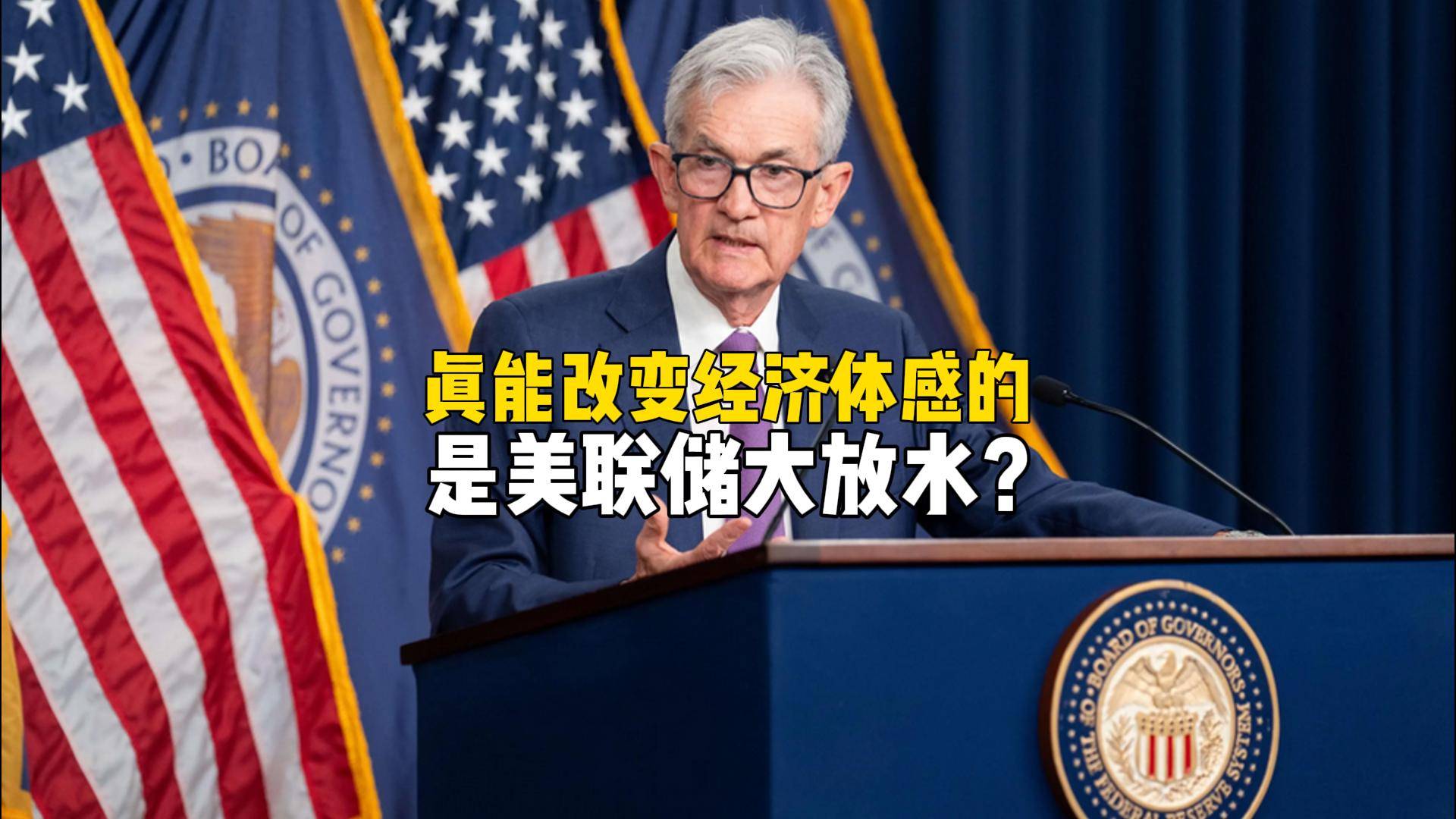
真能改变我们体感的,是美联储的即将开始的大放水?
Sou Hu Cai Jing· 2025-09-14 03:31
Group 1 - The core argument suggests that the upcoming monetary easing by the Federal Reserve may improve the economic sentiment in China, despite the country's strong GDP growth and technological advancements [2][9] - The disparity between economic data and personal experience is largely attributed to the real estate market, where over 60% of household assets are tied up in property [2][4] - The decline in the real estate market since 2022 has led to weakened consumer spending, as people feel less secure about their financial future [4][6] Group 2 - To break the negative cycle affecting consumer confidence, it is essential to stabilize the real estate market and restore expectations regarding asset income [6][7] - The current downward trend in the housing market is driven by negative expectations, causing potential buyers to hesitate and sellers to panic [7][9] - A significant monetary easing by the Federal Reserve, potentially led by Trump, could serve as a catalyst for reversing the current housing market trend [9][11] Group 3 - If a substantial amount of capital returns to China due to lower U.S. interest rates, it could positively impact the housing market and restore consumer confidence [11][13] - A stabilized or rising housing market would reinstate the asset safety net effect, leading to increased prosperity across various sectors and improved economic sentiment [13]