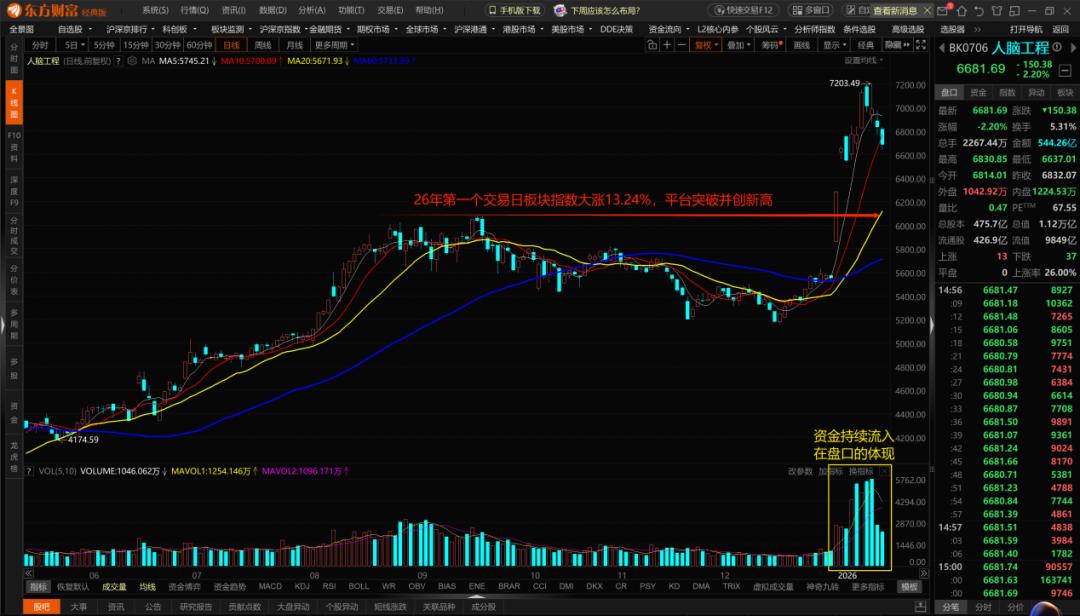
脑机接口

Search documents
这家脑机公司比马斯克先盈利了,何时登陆资本市场?
阿尔法工场研究院· 2026-01-20 00:08
Core Viewpoint - Strong Brain Technology is set to achieve its first profitable year in 2025, with significant revenue contributions from products aimed at the mass consumer market [4][17]. Group 1: Company Overview - Strong Brain Technology, founded by Han Bicheng in 2015, operates offices in Hangzhou, Shenzhen, and the US (Boston and Austin), with a peak employee count of around 300-400 [9]. - The company has recently gained attention due to favorable market conditions, including the influence of Musk and supportive domestic policies, positioning it prominently among the "Hangzhou Six Dragons" [9][31]. - In January 2026, Strong Brain completed a record-breaking financing round of 2 billion yuan, the largest single financing in the "Six Dragons" group, and has secretly applied for an IPO in Hong Kong [10][20]. Group 2: Product Lines and Market Strategy - Strong Brain has three main product lines: intelligent bionic series (prosthetics), intelligent health series (sleep aids, attention training), and intelligent education [20]. - The company’s bionic hands can be priced at tens of thousands of dollars in overseas markets, contributing nearly half of its total revenue, while domestic products are offered at significantly lower prices to accommodate local purchasing power [23]. - The company’s consumer products include a wearable brainwave device and a smart sleep aid, which have gained popularity despite some controversy regarding their effectiveness and privacy concerns [24][26]. Group 3: Industry Context and Competition - The brain-computer interface (BCI) sector is experiencing rapid growth, with 16 financing events in 2025 totaling 983 million yuan, a nearly fourfold increase from 2024 [16]. - Strong Brain's approach focuses on non-invasive technology, which is seen as a more practical and commercially viable path compared to invasive methods [20]. - The global competition in the BCI field is intensifying, with significant developments from companies like Neuralink, which is expected to start large-scale production of BCI devices in 2026 [34][35]. Group 4: Future Aspirations and Challenges - Strong Brain aims to help 1 million disabled individuals regain mobility and reintegrate into society within the next five to ten years, supported by its recent funding for core technology development and product scaling [31]. - Despite the promising outlook, the BCI industry faces challenges such as technological breakthroughs, ethical reviews, and the construction of commercial closed loops, which could hinder progress [36].


国有企业质量效益全面提升
Sou Hu Cai Jing· 2026-01-19 23:16
Core Viewpoint - The meeting held by the State-owned Assets Supervision and Administration Commission (SASAC) highlighted the significant improvements in the quality and efficiency of state-owned enterprises (SOEs) during the 14th Five-Year Plan period, with total assets of regulated enterprises increasing from 235 trillion yuan to 387 trillion yuan, reflecting an average annual growth of 10.5% [1] Group 1: Enhancements in Enterprise Competitiveness - By November 2025, local regulated enterprises achieved a value-added of 6.9 trillion yuan and completed fixed asset investments of 5.3 trillion yuan, contributing positively to economic growth and public welfare [2] - SASAC Director Zhang Yuzhuo emphasized the continuous strengthening of technological innovation within SOEs, with 16 local SASACs establishing evaluation systems for R&D input and output [2] - Traditional industries are undergoing quality upgrades while emerging industries are being nurtured, with provinces like Henan and Shandong implementing strategic plans for transformation and development [2] Group 2: Reform and Governance Improvements - The deepening of SOE reforms has led to optimized governance structures and improved market mechanisms, with local governments actively promoting reform initiatives [3] - The effectiveness of state asset supervision has been enhanced, with the establishment of a national property information database and comprehensive coverage of property registration systems [3] - Over the past five years, SOEs have seen increased vitality and competitiveness, contributing significantly to national strategies and infrastructure development [3] Group 3: Focus on Quality and Efficiency - The quality and efficiency of SOEs are crucial for the overall economic and social development of China, with a focus on creating value and improving operational metrics [4] - Key objectives for the 15th Five-Year Plan include enhancing value creation, technological innovation, and industrial upgrading capabilities [4][5] - Emphasis is placed on reform breakthroughs, strengthening party leadership, and ensuring effective governance to support high-quality development [5] Group 4: Future Development Directions - For 2026, SOEs are expected to focus on quality enhancement and steady growth, with initiatives to create new consumption scenarios and implement key projects to stimulate demand [6] - Strengthening the role of SOEs in technological innovation and optimizing the economic layout and structure are prioritized [6][7] - Local SASACs are urged to implement further reforms and improve market-oriented operational mechanisms while preventing systemic risks [7]
财经观察:科技巨头竞争从AI迈向脑机接口
Huan Qiu Shi Bao· 2026-01-19 22:40
Core Insights - OpenAI's investment in Merge Labs signals a competitive shift towards brain-computer interface (BCI) technology, indicating it may become a central focus in the next tech race [1][6] - The BCI market is projected to grow significantly, with estimates suggesting it could exceed $10 billion by 2030 [10] Investment and Company Developments - Merge Labs has raised $252 million in funding, led by Bain Capital, with OpenAI as the largest investor, bringing its valuation to $850 million [3][4] - The company aims to develop non-invasive BCI technologies that connect humans and AI without the need for surgical implants [4][9] Competitive Landscape - The competition between OpenAI and Neuralink, founded by Elon Musk, highlights a personal rivalry that may elevate public interest in the BCI sector [4][7] - Other startups like Paradromics, Precision Neuroscience, and Synchron are also actively developing BCI technologies, indicating a broader competitive environment beyond just two companies [7] Technological Implications - AI is expected to enhance BCI development by enabling systems that can understand user intent and operate reliably, potentially making Merge Labs a key player in integrating AI with BCI [5][9] - Current BCI technologies allow paralyzed patients to control devices, but future advancements could enable more complex tasks, marking a significant technological paradigm shift [8] Market Trends and Future Outlook - The global BCI market is anticipated to reach approximately $1.27 billion by 2025, with significant investments already made in both invasive and non-invasive technologies [10][14] - China's rapid development in the BCI field, supported by government initiatives, positions it as a strong competitor to the U.S., particularly in non-invasive applications [12][13]
“十四五”时期国资系统监管企业资产总额年均增长10.5% 国有企业质量效益全面提升
Sou Hu Cai Jing· 2026-01-19 22:38
Core Viewpoint - The meeting held by the State-owned Assets Supervision and Administration Commission (SASAC) highlighted the significant improvements in the quality and efficiency of state-owned enterprises (SOEs) during the 14th Five-Year Plan period, with total assets of regulated enterprises increasing from 235 trillion yuan to 387 trillion yuan, reflecting an average annual growth of 10.5% [1] Group 1: Enhancements in Enterprise Competitiveness - By November 2025, local regulated enterprises achieved a value-added of 6.9 trillion yuan and completed fixed asset investments of 5.3 trillion yuan, contributing positively to economic growth and public welfare [2] - SASAC Director Zhang Yuzhuo emphasized the continuous strengthening of technological innovation in SOEs, with 16 local SASACs establishing evaluation systems for R&D input and output [2] - Traditional industries are undergoing quality upgrades while emerging industries are being nurtured, with provinces like Henan and Shandong implementing strategic plans for industrial transformation and development [2] Group 2: Reform and Governance Improvements - The deepening of SOE reforms has led to optimized governance structures and improved market mechanisms, with local governments actively promoting reform initiatives [3] - The effectiveness of state asset supervision has been enhanced, with the establishment of a national property information database and comprehensive coverage of property registration systems [3] - Over the past five years, SOEs have seen increased vitality and competitiveness, contributing significantly to national strategies and infrastructure development [3] Group 3: Focus on Quality and Efficiency - The quality and efficiency of SOEs are crucial for the overall economic and social development of China, with a focus on creating value and improving operational metrics [4] - Key objectives for the 15th Five-Year Plan include enhancing value creation, technological innovation, and industrial upgrading capabilities [4][5] - Emphasis is placed on reform breakthroughs, strengthening party leadership, and ensuring that governance aligns with the new missions of SOEs [5] Group 4: Future Development Directions - For 2026, SOEs are expected to focus on quality enhancement and steady growth, with initiatives to create new consumption scenarios and implement key projects to stimulate demand [6] - The role of SOEs in technological innovation will be reinforced, with support for leading technology enterprises and the establishment of a favorable innovation ecosystem [6] - There will be a push for optimizing the layout and structure of the state economy, promoting the high-end, intelligent, and green development of traditional industries [6] Group 5: Implementation of Reform Plans - Local SASACs are urged to implement further reforms to modernize the corporate governance of SOEs and enhance market-oriented operational mechanisms [7] - There is a focus on professional, systematic, legal, and efficient supervision of state assets, alongside measures to prevent systemic risks [7]
脑机接口第一股来了,「DeepSeek时刻」还没来
Xin Lang Cai Jing· 2026-01-19 13:16
Group 1 - The core idea of the article is that the brain-computer interface (BCI) sector is gaining significant attention and investment, with major developments from companies like Neuralink and Qiangnao Technology, indicating a potential commercial breakthrough in the near future [1][30][11] - Neuralink plans to begin large-scale production by 2026, while Qiangnao Technology has completed a financing round of 2 billion yuan and submitted an IPO application to the Hong Kong Stock Exchange [1][30][11] - The BCI technology is not new, having been conceptualized as early as 1973, but recent advancements have made it more viable for applications such as movement reconstruction and cognitive enhancement [1][31][36] Group 2 - Neuralink has made significant progress in invasive BCI technology, reducing the time to implant a single electrode from 17 seconds to 1.5 seconds and conducting 12 clinical studies with over 10,000 patients waiting for treatment [5][36] - Qiangnao Technology is pursuing a non-invasive approach, which allows for brain signal collection without surgery, potentially expanding its applications to entertainment and gaming [7][39][41] - The market for BCIs is projected to reach $400 billion in the U.S. medical sector by 2045, with the overall market expected to exceed $1 trillion [12][43] Group 3 - Both Neuralink and Qiangnao Technology face significant challenges, including the immaturity of the technology, high costs, and privacy concerns [15][47][56] - The technology is still developing, with current methods only able to record signals from a limited number of neurons, and invasive methods face risks of infection and device failure [49][50] - The costs associated with BCI technology, including device and surgical expenses, are currently high, which could limit accessibility and market growth [21][53][55] Group 4 - Companies are seeking capital to expand production and reduce costs, with Neuralink raising $650 million in its Series E funding and Qiangnao Technology securing 2 billion yuan in its Pre-IPO round [24][56] - Qiangnao Technology aims to assist 1 million individuals with mobility impairments and 10 million patients with cognitive disorders over the next 5 to 10 years [26][58] - Privacy issues surrounding data collection from BCIs need to be addressed, as the data could involve sensitive personal information [26][60]


强脑科技比马斯克脑机先盈利 揭秘最神秘杭州“六小龙”
Xin Lang Cai Jing· 2026-01-19 13:16
Core Insights - Strong Brain Technology has achieved its first annual profit in 2025, marking a significant milestone in the brain-computer interface industry [1][2] - The company has capitalized on favorable market conditions, including the positive perception of the "Hangzhou Six Dragons," global interest sparked by Elon Musk, and supportive domestic policies [1] - Unlike invasive competitors like Neuralink, which took eight years to generate revenue and is not expected to commercialize until 2030, Strong Brain Technology has found success through consumer-oriented products [1] Group 1 - Strong Brain Technology's profitability is attributed to its consumer market products, particularly those related to meditation and sleep, which have become important revenue sources [2] - The company has effectively leveraged the current market environment to enhance its visibility and growth potential [1] - The challenges faced by invasive brain-computer interface technologies highlight the innovative approach taken by Strong Brain Technology in achieving early profitability [1]
18亿融资入场!奥特曼超声脑机公司Merge Labs,与马斯克Neuralink竞逐脑机赛道
机器人圈· 2026-01-19 10:55
Core Viewpoint - The competition between Elon Musk's Neuralink and OpenAI's Merge Labs marks a significant shift in the brain-computer interface (BCI) sector, with both companies pursuing different technological paths to enhance human capabilities and interaction with AI [2][3]. Group 1: Funding and Investment - Merge Labs recently completed a seed round financing of $252 million (approximately 1.8 billion RMB), significantly exceeding the early funding amounts typical in the neurotechnology sector [2]. - OpenAI is the largest investor in this round, indicating a strategic integration of OpenAI's core algorithms with Merge Labs' BCI technology [2]. Group 2: Technological Approaches - Merge Labs aims to develop non-invasive brain-computer interfaces, utilizing technologies like ultrasound for neural signal transmission, contrasting with Neuralink's invasive approach that requires surgical implantation of electrodes [3]. - Sam Altman has publicly expressed skepticism about invasive technologies, emphasizing the desire for a system that allows interaction with AI through thought alone [3]. Group 3: Market Growth and Trends - The global BCI market is projected to grow from approximately $2.62 billion in 2024 to $12.4 billion by 2034, indicating a robust growth trajectory [6]. - In China, the BCI market is expected to increase from 3.2 billion RMB in 2024 to 5.58 billion RMB by 2027, with a compound annual growth rate of about 20% [6]. Group 4: Industry Dynamics - The competition between invasive and non-invasive technologies may lead to a complementary relationship, where advancements in medical applications can enhance consumer-grade devices and vice versa [7]. - The ongoing rivalry between Musk and Altman is seen as a catalyst for industry progress, potentially ushering in a new era of human-computer interaction [7].

华福证券:OpenAI押注超声路线 Merge Labs开辟脑机新赛道
智通财经网· 2026-01-19 07:14
智通财经APP获悉,华福证券发布研报称,近期,超声脑机接口公司MergeLabs完成约2.5亿美元种子轮 融资,此次融资由OpenAI领投。不同于主流脑机接口技术,MergeLabs聚焦超声为核心的非侵入或极 低侵入式路线。MergeLabs的超声路线试图在非侵入式(安全但分辨率有限)与植入式(信号清晰但有外科 风险、伦理监管问题)之间寻找平衡,其超声的深部穿透能力与"软接口"设想具备独特潜力。但该技术 目前仍处于实验室研究阶段。 当前脑机接口主要分为非侵入式、植入式及低侵入式三类路径,MergeLabs的超声路线试图在非侵入式 (安全但分辨率有限)与植入式(信号清晰但有外科风险、伦理监管问题)之间寻找平衡,其超声的深部穿 透能力与"软接口"设想具备独特潜力。但该技术目前仍处于实验室研究阶段,面临分子信号稳定性、超 声空间分辨率与安全窗口、低信噪比下神经状态反推等多重未解决的难题,复杂性不亚于植入式系统。 "十五五"重点赛道,脑机接口市场规模有望快速增长 根据Precedence research,2024年全球脑机接口市场规模约为26.2亿美元,预计2025年将达到29.4亿美 元,到2034年有望增长至1 ...
华金证券:政策引领叠加技术突破 脑机接口商业化可期
智通财经网· 2026-01-19 06:46
智通财经APP获悉,华金证券发布研报称,据中研普华产业研究院预测,2022年中国脑机接口市场规模 约为10亿元人民币,年均复合增长率约为21%,市场发展潜力巨大。近期,脑机接口相关政策密集落 地,从聚焦技术路径来看,非侵入式技术以其"安全性高、成本低、易于普及"的特性,迅速从实验室走 向市场,推动医疗康复与消费场景的逐步落地,侵入式/半侵入式技术则凭借高精度信号采集的优势, 深耕高价值医疗应用,已在脊髓损伤、脑卒中等患者中实现初步运动功能重建,临床进展逐步推进。 华金证券主要观点如下: 脑机接口产业快速发展,国产厂商加速布局 据中研普华产业研究院预测,2022年中国脑机接口市场规模约为10亿元人民币,年均复合增长率约为 21%,市场发展潜力巨大。按照技术路径来看,非侵入式因技术难度相对较低,商业化较快,市场占比 最高,半侵入式市场占比居中,侵入式因技术难度较高,仍处于技术转临床阶段,市场占比相对较低。 政策不确定性风险、在研产品上市不确定性风险、研发进展不及预期风险等。 政策引领叠加技术突破,脑机接口商业化可期 脑机接口相关政策密集落地,七部门联合发布《关于推动脑机接口产业创新发展的实施意见》确立产业 战略蓝 ...
意念控物成真,脑机接口产业化爆发,这波机会别错过
3 6 Ke· 2026-01-19 02:30
Core Viewpoint - The brain-computer interface (BCI) technology is advancing rapidly, with significant support from government policies, clinical trials, and capital investment, positioning it as a key growth sector with potential applications across various industries [2][5][17]. Policy Support - The Chinese government has included BCI in its key development list for future industries, with concentrated policy support expected to accelerate clinical trials and market activity by 2025 [2][5]. - Local governments are establishing special funds and action plans to facilitate the development of the BCI industry, particularly in major cities like Beijing and Shanghai [5]. Clinical Advancements - By 2025, the number of clinical trials for BCI in China is projected to increase significantly, with breakthroughs in invasive, semi-invasive, and interventional technologies [5]. - The first global interventional BCI human trial has been completed, and advanced devices featuring "fully implanted, fully wireless" capabilities are being developed [5][10]. Capital Investment - In the first 11 months of 2025, there were 24 financing events in the BCI sector in China, marking a 30% year-on-year increase, supported by government funds and market capital [5][6]. - Notable financing rounds include several companies raising millions to billions in funding, indicating strong investor interest [6]. Industry Growth - The BCI sector is evolving into a trillion-yuan market, with major players like Neuralink preparing for large-scale production of devices, while domestic companies are making significant technological advancements [4][5]. - The industry is witnessing a robust influx of capital, with a strong willingness among investors to lock in shares, indicating confidence in the sector's stability and growth potential [4]. Technological Breakthroughs - BCI technology is categorized into invasive, semi-invasive, and non-invasive types, with invasive methods providing the best signal quality for capturing neural activity [7][10]. - Domestic advancements include breakthroughs in electrode arrays and decoding algorithms, achieving over 90% accuracy in Chinese character writing recognition [10]. Application Scenarios - BCI technology is being applied in various fields, including medical rehabilitation for paralysis and neurological disorders, as well as in industrial safety, aerospace, and entertainment [12][10]. - Specific applications include fatigue monitoring in industrial settings, cognitive health assessments in aerospace, and training aids in sports and education [12]. Industry Chain Opportunities - The BCI industry's growth is supported by a comprehensive supply chain, with opportunities in upstream components like electrodes and chips, midstream systems and algorithms, and downstream applications in healthcare and consumer products [13][16]. - Companies focusing on core components, clinical applications, and those with established market channels are well-positioned to benefit from the industry's expansion [16]. Investment Recommendations - Investors are advised to focus on three key areas: technology-leading companies, clinical application firms, and those with strong industry chain collaborations, as the BCI sector transitions from clinical validation to large-scale implementation [17].