汽车

Search documents
董明珠换车,李书福亲自出马
盐财经· 2026-03-21 09:56
Core Viewpoint - The choice of domestic luxury cars by prominent business figures like Dong Mingzhu indicates a growing acceptance and preference for Chinese brands in the high-end consumer market, suggesting a significant shift in the luxury car consumption landscape in China [5][8]. Group 1 - Dong Mingzhu, the chairwoman of Gree Electric, has been spotted using the domestic luxury car model Zeekr 009, confirming her shift to a Chinese brand [5]. - The choice of Zeekr 009 by Dong Mingzhu is seen as a reflection of the increasing popularity and acceptance of domestic luxury vehicles among top-tier consumers, contrasting with the previous trend where high-profile entrepreneurs preferred foreign luxury brands [8]. - The Zeekr 009 has quickly gained market traction, outperforming foreign competitors and achieving top sales rankings in both domestic and international markets shortly after its launch [9].


美股“炸”了!股债金三杀,资金疯狂抛售!
格隆汇APP· 2026-03-21 09:28
Market Overview - The U.S. stock market experienced significant declines, with the Dow Jones falling by 0.96% and the S&P 500 dropping by 1.51%, marking the longest consecutive weekly decline since February 2023, with a total drop of 2.11% for the week [2][3] - The technology sector was particularly hard hit, with major tech companies collectively losing over $400 billion in market value in a single day [6] Key Stock Movements - Notable declines included Nvidia down 3.12%, Tesla down 3.08%, and both Google and Meta down over 2% [6][8] - The market capitalization of major tech companies such as Nvidia and Google was reported at $4.2 trillion and $3.64 trillion respectively [8] Gold and Bond Market Reactions - COMEX gold futures fell by 2.47% to $4492 per ounce, with a weekly decline of 11.26%, the largest since 1981 [8] - U.S. Treasury bonds also saw a significant drop, with yields rising over 10 basis points across various maturities, indicating a severe sell-off in the market [9] Market Sentiment and External Factors - The ongoing conflict in the Middle East has been identified as a key trigger for the market turmoil, with escalating tensions leading to fears of higher oil prices [12][15] - Goldman Sachs warned that if the conflict persists, oil prices could exceed $180 per barrel, which would increase inflationary pressures on consumers and businesses [14][15] Federal Reserve Policy Impact - The Federal Reserve's recent shift in policy expectations, including an increase in inflation forecasts and a delay in anticipated interest rate cuts, has contributed to market panic [15][20] - The market is now pricing in a 50% chance of rate hikes by 2026, reversing previous expectations of rate cuts [15] Technical Market Dynamics - The "Quadruple Witching" event, where multiple derivatives expire simultaneously, exacerbated market volatility, with a record nominal value of $5.7 trillion in options expiring [17] - The S&P 500 index is approaching critical support levels, and a breach could trigger further selling pressure from various funds [19] Institutional Outlook - Analysts from Goldman Sachs and JPMorgan have expressed concerns that the current market volatility may not be over, particularly if geopolitical tensions and high oil prices persist [18][20] - Despite the current turmoil, the underlying fundamentals of the U.S. economy remain resilient, suggesting that the market adjustment may be a correction rather than a fundamental shift [21][23]




跨境出海周度市场观察:行业环境头部品牌动态投资运营产品技术营销活动-20260321
Ai Rui Zi Xun· 2026-03-21 08:32
Investment Rating - The report does not explicitly provide an investment rating for the industry Core Insights - The report highlights various trends and opportunities for Chinese companies expanding overseas, focusing on sectors such as fashion, technology, and beverages. It emphasizes the importance of localization and cultural adaptation in successful market entry strategies. Industry Trends - Southeast Asia is identified as a prime market for Chinese short dramas, with a projected market size of $390 million by 2025, driven by local production and cultural similarities [1] - Chinese liquor exports are increasing in volume but decreasing in price, with a 25.87% rise in export volume and a 9.9% drop in average price, indicating a "thin profit, high sales" model [1] - Chinese fashion brands are adopting two main strategies for international expansion: scaling up through brands like Urban Revivo and focusing on niche markets with brands like Zhihe [3] - The ongoing conflict in the Middle East poses logistical and market demand challenges for Chinese automotive companies, but they can leverage their supply chain and local partnerships to adapt [4] - The financial sector is transitioning from product export to value export, with a focus on the internationalization of the Renminbi [5] - Domestic AI model companies are accelerating their global expansion, with significant revenue growth from international markets [6] - The industrial robot sector is experiencing a 48.7% increase in exports, marking China as a net exporter for the first time [6] - The token economy is emerging as a new form of digital trade, with Chinese models dominating global token consumption [6] - The Middle East is becoming a strategic market for Chinese brands, with 80% of new brands already established there [7] - The report outlines twelve key trends for Chinese companies going global in 2026, emphasizing a shift from product output to global capacity layout [8] Brand Dynamics - 361° is targeting the Southeast Asian Gen Z market through partnerships with NBA stars and local store openings [13] - Luckin Coffee has successfully expanded into Singapore, Malaysia, and the U.S., with a focus on digital operations [16] - MiniMax has demonstrated the potential for Chinese AI companies to succeed globally, achieving significant revenue growth and improved profit margins [19] - Didi's international business has shown strong growth, with a 31% increase in GTV for its international operations [20] - BGI Genomics is shifting its business model from product output to technology licensing, enhancing its financial performance [21]
奇瑞汽车(09973):Q4业绩符合预期,多品牌协同拓展增长边界
Soochow Securities· 2026-03-21 07:07
Investment Rating - The investment rating for Chery Automobile is "Buy" (maintained) [1] Core Insights - The Q4 performance of Chery Automobile met expectations, with total revenue of 85.45 billion yuan, showing a year-on-year increase of 17% [8] - The company achieved a total sales volume of 752,000 units in Q4, with an average selling price (ASP) of 114,000 yuan, reflecting a year-on-year increase of 7% [8] - The gross margin for Q4 was 14.0%, with a year-on-year improvement attributed to an increase in export sales [8] - Chery's five brands cater to diverse market needs, with over 52.4% of revenue coming from markets outside China in 2025 [8] - The forecast for net profit for 2026 and 2027 is 21.2 billion yuan and 25.3 billion yuan, respectively, with an expected net profit of 30 billion yuan in 2028 [8] Financial Projections - Total revenue projections for Chery Automobile are as follows: - 2024: 269.9 billion yuan - 2025: 300.3 billion yuan (11.26% YoY growth) - 2026: 335.5 billion yuan (11.73% YoY growth) - 2027: 388.8 billion yuan (15.89% YoY growth) - 2028: 428.3 billion yuan (10.15% YoY growth) [1] - Projected net profit figures are: - 2024: 14.1 billion yuan - 2025: 19.0 billion yuan (34.55% YoY growth) - 2026: 21.2 billion yuan (11.64% YoY growth) - 2027: 25.3 billion yuan (19.37% YoY growth) - 2028: 30.1 billion yuan (18.61% YoY growth) [1]
奇瑞汽车:2025年报点评:Q4业绩符合预期,多品牌协同拓展增长边界-20260321
Soochow Securities· 2026-03-21 05:24
Investment Rating - The investment rating for Chery Automobile is "Buy" (maintained) [1] Core Views - The Q4 performance of Chery Automobile met expectations, with total revenue of 85.45 billion yuan, showing a year-on-year increase of 17% [8] - The company achieved a total sales volume of 752,000 units in Q4, with an average selling price (ASP) of 114,000 yuan, reflecting a year-on-year increase of 7% [8] - The gross margin for Q4 was 14.0%, with a year-on-year improvement attributed to an increase in export sales [8] - Chery's diversified brand strategy effectively covers various market demands, with over 52.4% of revenue coming from markets outside China [8] - The forecast for net profit for 2026 and 2027 is 21.2 billion yuan and 25.3 billion yuan, respectively, with an expected net profit of 30 billion yuan in 2028 [8] Financial Projections - Total revenue projections for Chery Automobile are as follows: - 2024: 269.9 billion yuan - 2025: 300.3 billion yuan (11.26% YoY growth) - 2026: 335.5 billion yuan (11.73% YoY growth) - 2027: 388.8 billion yuan (15.89% YoY growth) - 2028: 428.3 billion yuan (10.15% YoY growth) [1] - Projected net profit figures are: - 2024: 14.1 billion yuan - 2025: 19.0 billion yuan (34.55% YoY growth) - 2026: 21.2 billion yuan (11.64% YoY growth) - 2027: 25.3 billion yuan (19.37% YoY growth) - 2028: 30.1 billion yuan (18.61% YoY growth) [1] - The latest diluted EPS projections are: - 2024: 2.43 yuan - 2025: 3.27 yuan - 2026: 3.66 yuan - 2027: 4.36 yuan - 2028: 5.18 yuan [1]
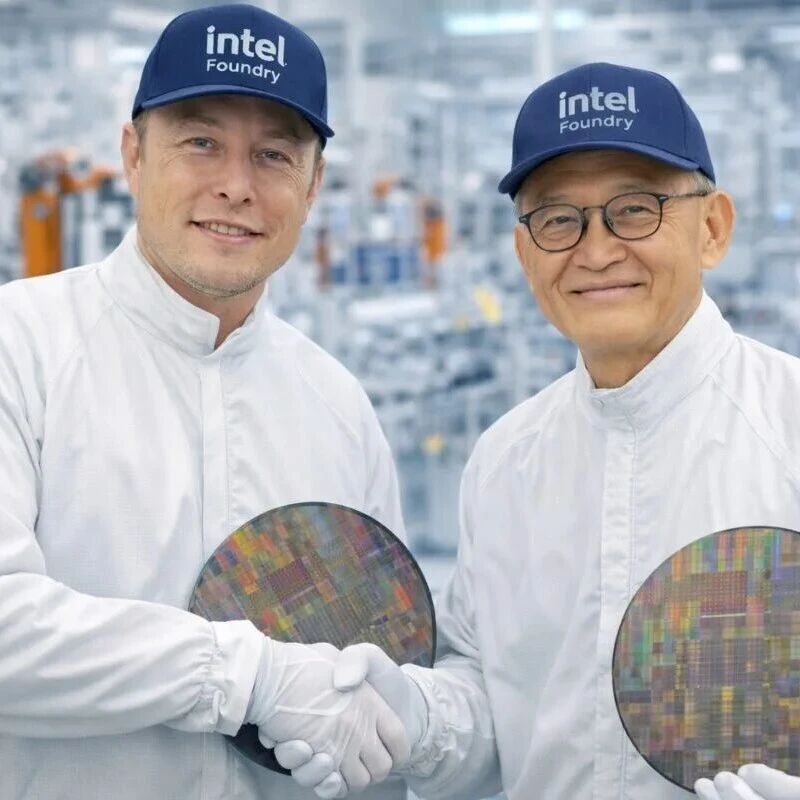
马斯克能否拯救美国的芯片制造业?
半导体行业观察· 2026-03-21 02:53
Core Viewpoint - Intel has faced three consecutive years of declining revenue, with a reported loss of $18.76 billion in 2024, despite receiving substantial government funding. The underlying issue is cultural rather than technical, characterized by slow decision-making and risk aversion, contrasting sharply with TSMC's efficient operations [2][4]. Group 1: Intel's Challenges - Intel's decline is attributed to a cultural shift from data-driven decision-making to political decision-making, leading to a lack of accountability and a failure to address problems effectively [5][6]. - The company has been criticized for spending as much on stock buybacks as on capital expenditures for wafer fabs, indicating a focus on financial engineering rather than manufacturing [5][6]. - The organizational failures at Intel mirror those seen in other companies like General Motors and Samsung, where a culture of avoiding problems has led to significant operational issues [5][14]. Group 2: Elon Musk's Potential Impact - Elon Musk's approach to revamping the Fremont factory demonstrates a successful cultural transformation, emphasizing rapid decision-making and accountability, which could be applied to Intel or similar manufacturing challenges [4][6]. - Musk's experience in turning around a failing factory into a leading automotive production site suggests he could replicate this success in the semiconductor industry, particularly in addressing cultural issues [7][16]. - The current labor market conditions, with Intel cutting its workforce significantly, may provide Musk with a talent pool to draw from for any potential semiconductor ventures [8][16]. Group 3: Competitive Landscape - The semiconductor industry is witnessing aggressive moves from global competitors, with TSMC and Samsung leading in advanced manufacturing capabilities, while Japan is investing heavily in new fabs [10][11]. - TSMC's operations in Arizona and Samsung's factory in Texas highlight the ongoing challenges in establishing a competitive U.S. semiconductor manufacturing base, as these facilities are still reliant on foreign operational cultures [12][13]. - The structural issues within companies like Samsung, where problems are hidden rather than addressed, reflect a broader trend that could hinder U.S. competitiveness in the semiconductor sector [14][15].
32G内存条涨至3800元,周五沪指跌破4000点 | 财经日日评
吴晓波频道· 2026-03-21 02:48
Monetary Policy - The People's Bank of China has kept the one-year Loan Prime Rate (LPR) at 3% and the five-year LPR at 3.5% for ten consecutive months, indicating a stable monetary policy stance amid economic fluctuations [2][3] - The average corporate loan interest rate is approximately 3.2%, down 2.4 percentage points from the peak in late 2018, reflecting a low financing cost environment [2] Oil Prices - Domestic gasoline prices are expected to rise to the "9 yuan era" due to an increase in international oil prices, with a projected increase of about 2000 yuan per ton [4] - The rise in oil prices could lead to higher costs for various industrial products, potentially causing widespread inflation [5] Memory Prices - The price of 32GB memory modules has surged from 800 yuan to 3800 yuan due to increased demand from AI applications, impacting the prices of storage devices and leading to higher costs for consumer electronics [6][7] - The memory price increase is driven by a significant demand from AI data centers, with supply constraints expected to persist in the short term [7] Tesla's Procurement - Tesla plans to procure approximately 29 billion USD (around 200 billion yuan) worth of photovoltaic manufacturing equipment from Chinese suppliers to support its goal of adding 100GW of solar manufacturing capacity in the U.S. [8][9] - This procurement highlights the competitive advantage of China's photovoltaic supply chain and its ability to meet large-scale demands efficiently [8] Alibaba's Financial Performance - Alibaba reported a 2% year-on-year revenue growth in Q4, with total revenue reaching 284.84 billion yuan, while net profit fell by 67% to 16.32 billion yuan [10][11] - The growth in revenue was primarily driven by Alibaba Cloud, which saw a 36% increase in revenue, and AI-related products that have maintained triple-digit growth for ten consecutive quarters [10][11] Pig Farming Industry - The average price of live pigs has dropped below 10 yuan per kilogram, indicating a significant decline in profitability for pig farmers, with many facing losses [14][15] - The industry is experiencing overproduction despite regulatory efforts to control pig production capacity, leading to a challenging market environment for pig farming [14][15] Stock Market Trends - The Shanghai Composite Index fell below the 4000-point mark, reflecting a weak market sentiment with significant declines in small and mid-cap stocks [16][17] - The market has shown low trading enthusiasm, with most sectors experiencing adjustments, while the energy sector, particularly related to Tesla's procurement, showed some resilience [16][17]

七巨头齐挫,美股连跌四周
财联社· 2026-03-21 02:14
Core Viewpoint - The article discusses the impact of geopolitical tensions in the Middle East on the U.S. stock market, highlighting significant declines in major indices and concerns over rising oil prices due to military actions and potential U.S. troop deployments [1][4][5]. Market Performance - On March 20, U.S. stock indices opened lower and closed down, with the S&P 500 falling by 1.51% to 6506.48 points, the Nasdaq Composite down 2.01% to 21647.61 points, and the Dow Jones Industrial Average down 0.96% to 45577.47 points, marking the lowest closing prices since October of the previous year [1][2]. - For the week, the Dow fell 2.11%, the S&P 500 dropped 1.9%, and the Nasdaq declined 2.07%, with all three indices experiencing four consecutive weeks of decline [2]. Geopolitical Impact - The Dow and Nasdaq indices entered a "correction zone," being down 10% from their historical highs, influenced by reports of the U.S. military increasing its presence in the Middle East [4]. - Brent crude oil futures rose by 3.26% to $112.19 per barrel due to concerns over oil field operations in Iraq being affected by "force majeure" measures [4]. Analyst Commentary - Baird investment strategist Ross Mayfield indicated that if the conflict escalates to ground troop deployments, there could be several weeks of rising oil and gas prices, suggesting that the market has not yet fully reflected the potential for further declines [5]. - Art Hogan, chief market strategist at B. Riley, noted that a 10% correction in any index is not uncommon in uncertain environments, with the S&P 500 showing a smaller decline due to its broader and more diversified composition [7]. Stock Performance - Major tech stocks, referred to as the "Seven Giants," all experienced declines: Nvidia down 3.28%, Apple down 0.39%, Google down 2.27%, Microsoft down 1.84%, Amazon down 1.63%, Meta down 2.15%, and Tesla down 3.24% [7][8]. - The Philadelphia Semiconductor Index fell by 2.45%, with only three of its 30 components gaining, while several storage and optical communication stocks saw significant declines [9][10]. Company News - Amazon is reportedly planning to launch a new smartphone, marking its return to the market after over a decade, aimed at integrating with its Alexa voice assistant [13]. - Eightco announced an additional $40 million investment in OpenAI, bringing its total investment to $90 million, which now constitutes about 30% of Eightco's total holdings [14]. - Xiaopeng Motors' CEO announced plans for mass production of the new IRON humanoid robot by the end of 2026, with a monthly production target of over a thousand units [15]. - Tencent has disbanded its AILab, reallocating personnel to other departments, indicating a strategic shift in its AI research focus [16].

纳指跌超400点,美股科技股、芯片股集体重挫,中概股普跌,黄金跌破4500美元
21世纪经济报道· 2026-03-20 23:39
Market Overview - The US stock market experienced a collective decline, with the Dow Jones falling by 0.96%, marking a total drop of 2.11% for the week, the longest consecutive weekly decline since February 2023 [1] - Major European indices also closed lower, with Germany's DAX 30 down by 2%, France's CAC40 down by 1.82%, and the UK's FTSE 100 down by 1.44% [1] Major Indices Performance - The Dow Jones Industrial Average closed at 45,577.47, down 443.96 points [2] - The Nasdaq Composite fell to 21,647.61, down 443.08 points [2] - The S&P 500 index ended at 6,506.48, down 100.01 points [2] Technology Sector - Major tech stocks saw significant declines, with Nvidia and Tesla dropping over 3%, while Meta and Google fell more than 2% [2] - Storage-related stocks also faced sharp declines, with SanDisk down over 8% and Western Digital down over 7% [2] - The Philadelphia Semiconductor Index decreased by 2.45%, with Intel down 5% and TSMC nearly 3% [2] Chinese Stocks - The Nasdaq Golden Dragon China Index fell nearly 3%, with notable declines in companies like Xpeng Motors down over 8% and Bilibili down about 4% [3] - Major Chinese tech firms also saw declines, with Xiaomi down 7.88% and Baidu down 4% [3] Commodity Prices - Gold prices fell sharply, with spot gold dropping 3.42% to $4,491.67 per ounce, while silver fell 6.8% to $67.89 per ounce [3] - International oil prices continued to rise, with NYMEX crude oil at $98.09, up 2.66%, and Brent crude at $104.41, up 0.61% [5] Cryptocurrency Market - The cryptocurrency market showed mixed results, with Bitcoin at $70,625, up 0.62%, and Ethereum at $2,155.37, up 0.66% [7][8] Federal Reserve Insights - Federal Reserve officials indicated a potential for three interest rate cuts this year, although market expectations are leaning towards a rate hike in December [9]



美股全线低开,超4100股下跌!英伟达跌1.6%,特斯拉跌超2%,超微电脑跌超27%!中概股普跌,金价、银价再跳水|美股开盘
Mei Ri Jing Ji Xin Wen· 2026-03-20 15:05AI Processing
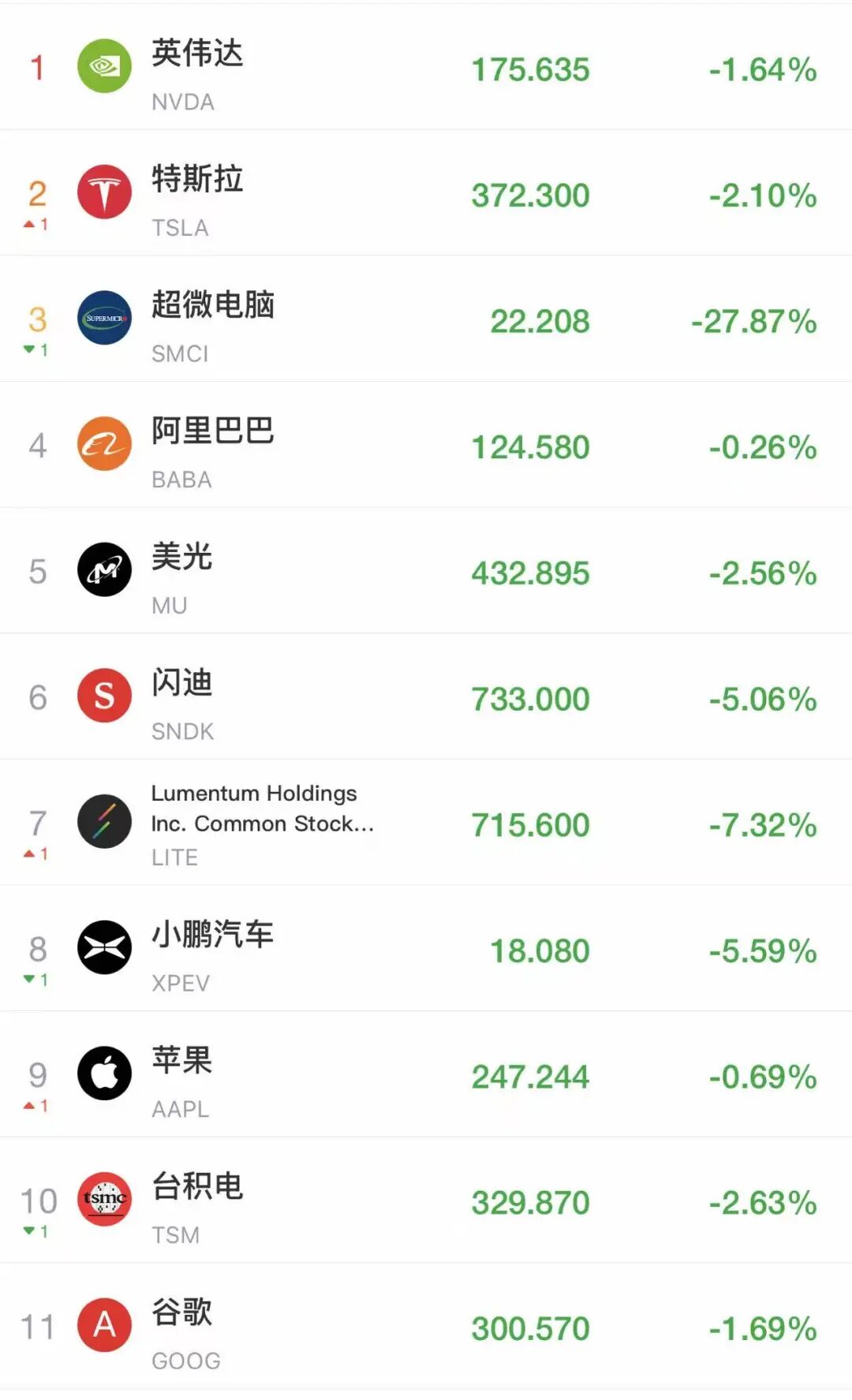
每经记者|杜波 每经编辑|段炼 记者|杜波 编辑|段炼 易启江 校对|张益铭 当地时间3月20日,美股全线低开,截至发稿,道指跌1.13%,纳指跌0.53%,标普500指数跌0.8%。全市超4100股下跌。 科技股普跌,英伟达跌1.64%,特斯拉跌2.1%,谷歌跌1.69%,苹果跌0.69%,超微电脑跌27.87%。存储股也跳水,闪迪跌超5%,美光科技跌2.56%。 中概股普跌,纳斯达克中国金龙指数跌超1.6%。小鹏汽车、蔚来跌超5%,搜狐、哔哩哔哩跌超2%,金山云跌超10%。 国际金银价格再次跳水,截至发稿,现货黄金再次跌破4600美元,日内跌超1.5%。现货白银再次跌破70美元大关,日内跌超4.5%。 根据花旗集团可追溯至1996年的数据,当地时间3月20日,将有大约5.7万亿美元名义价值、与美国个股、指数和交易所交易基金挂钩的期权到期,这也将 是历年来规模最庞大的3月到期价值,这一季度性事件长期以来被交易员们称为"四巫日"。 (免责声明:本文内容与数据仅供参考,不构成投资建议,使用前请核实。据此操作,风险自担。) 封面图片:视觉中国(图文无关) | 1 | | 英伟达 | 175.635 | -1.64 ...