
汽车制造

Search documents
广汽集团:高域科技飞行汽车完成核心区域首次场景飞行演示
Bei Ke Cai Jing· 2026-03-20 14:09
Group 1 - The core point of the article is that GAC Group has announced the successful flight demonstration of its first mass-produced multi-rotor flying car, GOVY AirCab, which is set to achieve airworthiness certification and start mass production by the end of 2026 [1] - GAC Group's newly launched Southern (Shaoguan) Intelligent Connected New Energy Vehicle Testing and Inspection Center, referred to as the "Southern Test Field," is officially operational [1] - The Southern Test Field is designed to meet testing needs across multiple fields, including intelligent connected new energy vehicles and low-altitude aircraft, leveraging an integrated framework of "low-altitude + test field + laboratory" [1]

【2025年报业绩点评/零跑汽车】Q4业绩符合预期,新品周期强势
东吴汽车黄细里团队· 2026-03-20 13:30
Core Viewpoint - The company achieved significant revenue growth and profitability in Q4 2025, driven by new vehicle launches and effective cost management [2][3]. Financial Performance - Q4 2025 revenue reached 21.03 billion yuan, with a year-on-year increase of 56.3% and a quarter-on-quarter increase of 8.1% [2]. - The net profit attributable to equity holders for Q4 was 360 million yuan, reflecting a quarter-on-quarter increase of 136.9% [2][3]. - The overall sales volume for Q4 was 201,000 units, representing a year-on-year increase of 66.3% and a quarter-on-quarter increase of 15.6% [3]. - The average selling price (ASP) for Q4 was 105,000 yuan, showing a year-on-year decrease of 4.8% but a quarter-on-quarter increase of 5.4% [3]. Profitability Metrics - The gross margin for Q4 was 15.0%, with a year-on-year increase of 1.7 percentage points and a quarter-on-quarter increase of 0.5 percentage points [3]. - The company generated approximately 500 million yuan in revenue from carbon credit trading in Q4 [3]. Cost Management - The selling, general, and administrative expense ratios for Q4 were 6.2%, 2.5%, and 5.6%, respectively, with minor fluctuations compared to previous periods [3]. Expansion and Market Presence - By the end of December 2025, the company had established a sales and service network covering 295 cities with 950 locations [3]. - In Q4, the company exported 29,000 vehicles, marking a quarter-on-quarter increase of 38% [3]. - The company has over 900 overseas service points, with significant growth in Europe and plans for local production capacity in Spain [3]. Future Outlook - The company revised its net profit forecasts for 2026 and 2027 to 2.6 billion yuan and 4.5 billion yuan, respectively, due to increased competition and rising raw material costs [4]. - The company maintains a strong product cycle with new models set to launch in 2026, supporting a "buy" rating [4].


追梦者,自有主场 梅赛德斯-奔驰与索尼电影联合呈现动画电影《奇迹梦之队》
Yang Zi Wan Bao Wang· 2026-03-20 12:53
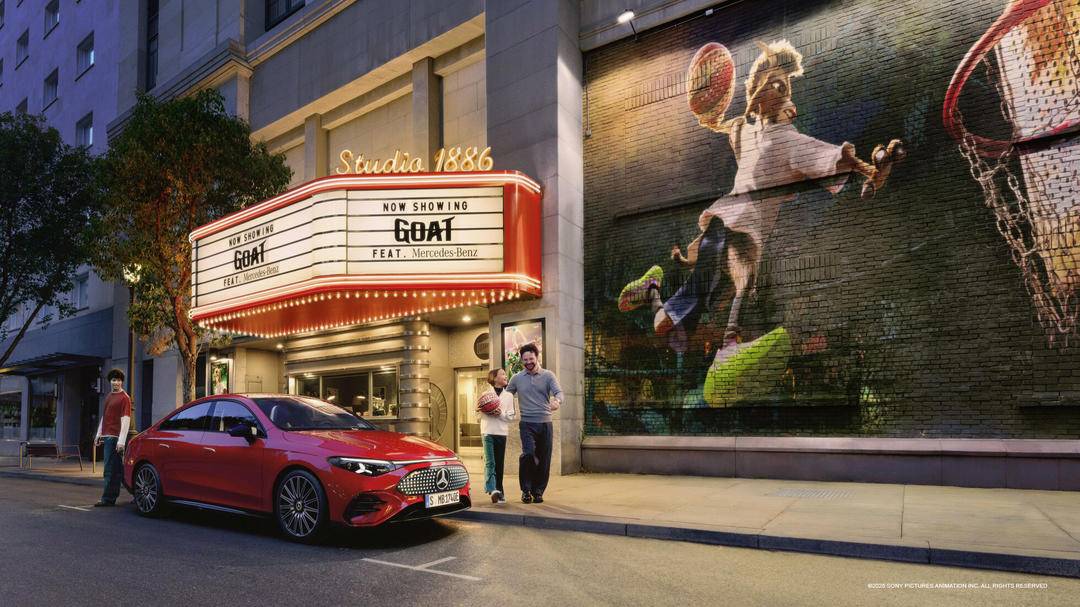
Group 1 - The animated film "GOAT," co-presented by Mercedes-Benz and Sony Pictures, officially premiered nationwide on March 14, showcasing the journey of a goat named Will who pursues his dreams of becoming a professional player [1] - The film's theme, "Dreamers have their own stage," aligns with Mercedes-Benz's 140-year legacy of innovation and boundary-pushing, emphasizing the belief that anything is possible with passion [3] - The film features various Mercedes-Benz vehicles, including the new all-electric CLA and GLC SUV, providing reliable and comfortable transportation for the protagonist [3] Group 2 - The new all-electric CLA embodies the beauty of Mercedes-Benz coupes, offering a fresh experience in design, efficiency, intelligence, and safety [5] - It boasts a unique electric dual-speed transmission achieving an energy consumption of 10.9 kWh/100 km and a solid range of 866 km under CLTC conditions [5] - The CLA is equipped with an AI-powered smart cockpit and advanced driving assistance systems, tailored for Chinese customers, and has undergone extensive safety testing, earning multiple safety certifications [5]
南方试验场正式启用 广汽集团筑牢高质量研发底座
Zheng Quan Ri Bao Wang· 2026-03-20 11:59
Core Viewpoint - The Southern (Shaoguan) Intelligent Connected New Energy Vehicle Testing and Inspection Center has officially opened, marking a significant step in the integration of intelligent connected vehicles and low-altitude economy in the Guangdong-Hong Kong-Macao Greater Bay Area [1][2]. Group 1: Project Overview - The Southern Testing Center is the first large-scale comprehensive testing facility in China approved for airspace use, covering approximately 8,600 acres with a total investment exceeding 3.6 billion yuan [1]. - The center is co-constructed by China Automotive Research, GAC Group, and three other parties, and it has been recognized as a low-altitude economic pilot platform [1]. Group 2: Technological Advancements - The testing center supports a wide range of testing needs for intelligent connected new energy vehicles and low-altitude aircraft, featuring complex road conditions, extreme environments, and integrated testing capabilities [2]. - GAC Group aims to enhance its verification capabilities across the entire chain of vehicle development, ensuring product quality and reliability through systematic testing [2]. Group 3: Future Directions - GAC Group plans to leverage the Southern Testing Center to foster collaborative innovation with industry partners, universities, and research institutions, accelerating the transition of technological achievements from validation to application [2]. - The focus will be on creating safer, more reliable, and higher-quality travel experiences while contributing to the high-quality development of the Chinese automotive industry [2].
长城汽车董事长魏建军:三大路径促进行业公信力建设
Zhong Zheng Wang· 2026-03-20 11:32
Core Viewpoint - The chairman of Great Wall Motors, Wei Jianjun, emphasizes the importance of building credibility as a core strategy for the high-quality development and globalization of the automotive industry in China, which is transitioning from being a major player to a strong player in the global market [1] Industry Insights - China has established itself as the world's largest automotive producer and seller, but becoming a strong automotive nation requires excellence in technology innovation, industry globalization, product quality, and brand culture [1] - The shift in focus should be from product exports to industrial and cultural exports, aiming to build lasting trust in larger markets [1] Current Challenges - The automotive industry faces issues such as damaged trust in quality and zero-sum games within the supply chain, which pose significant credibility concerns [1] Recommendations - Companies should return to value creation by focusing on technology research and quality improvement [1] - It is essential to uphold safety and quality standards to restore consumer confidence [1] - Promoting symbiotic relationships within the supply chain is crucial for establishing a solid foundation of trust [1] - Localization of overseas operations should be prioritized to transition from merely entering markets to establishing a strong presence [1] Credibility as a Core Barrier - Credibility is identified as a key barrier to long-term industry development and a critical factor in reducing transaction costs, as technology can be caught up with, but credibility is difficult to replicate [1] Paths to Establish Credibility - Great Wall Motors proposes three main paths to build credibility: - Establishing trust with users by maintaining quality and being accountable [1] - Building trust within the industry by promoting collaboration and mutual benefit [1] - Enhancing global credibility through the localization of the entire supply chain to gain recognition from various stakeholders [1]

从 55 万颗芯片到统一架构:蔚来在赌什么?
美股研究社· 2026-03-20 11:09
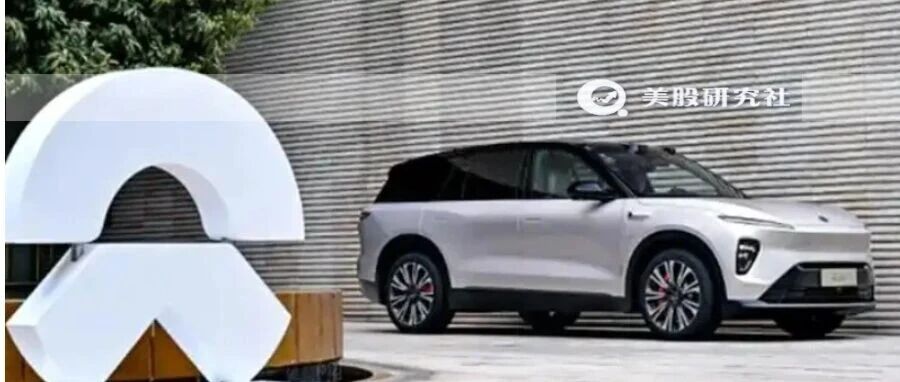
Core Viewpoint - The automotive industry is undergoing a transformation where companies are shifting from being mere manufacturers to becoming architects of their own systems, indicating a redistribution of control within the industry [1][13]. Group 1: Chip Development and Industry Dynamics - NIO has produced over 550,000 self-developed chips, which, while not large in the context of the global automotive semiconductor market, signifies a strategic shift from merely having chips to controlling the chip ecosystem [2][5]. - The rapid evolution of smart vehicles has led to an explosion in the variety of chips and a fragmented architecture, resulting in increased hidden costs and reduced control for automakers over product definitions [3][5]. - NIO aims to reduce chip specifications to under 400 types, transitioning from a "hardware stacking" approach to a "unified architecture" strategy, which will enhance development efficiency and shorten vehicle iteration cycles [5][10]. Group 2: Challenges and Strategic Responses - The automotive industry faces three main challenges: surging computing power demands, fragmented systems, and supply chain volatility, all pointing to a need for automakers to regain control over computing power [7][8]. - NIO's strategy is not about completely replacing external chips but rather creating a controllable hybrid system through self-developed chips and standardization, allowing for flexibility and cost-effectiveness [8][10]. Group 3: Future Competitiveness and Market Positioning - NIO's goal of achieving a 35%-40% localization rate for automotive semiconductors by 2027 is not just about cost but about building capabilities that integrate chips, operating systems, and vehicle software [10][11]. - The competition will increasingly focus on efficient power management and system coordination rather than just hardware performance, with NIO's SkyOS serving as a core component of this strategy [10][12]. - As NIO transitions towards a platform-based model, the market's perception of automakers may shift from traditional manufacturing to technology-driven companies, potentially leading to higher valuations [11][14].

零跑汽车(09863):Q4业绩符合预期,新品周期强势
Soochow Securities· 2026-03-20 10:05
Investment Rating - The investment rating for the company is "Buy" (maintained) [1] Core Views - The Q4 performance of the company met expectations, with a strong product cycle. The company achieved a total revenue of 21.03 billion yuan in Q4, representing a year-on-year increase of 56.3% and a quarter-on-quarter increase of 8.1%. The net profit attributable to shareholders for Q4 was 360 million yuan, with a quarter-on-quarter increase of 136.9% [8] - The company has launched new models, including the LEFA5, which contributed to a total sales volume of 201,000 vehicles in Q4, reflecting a year-on-year increase of 66.3% and a quarter-on-quarter increase of 15.6%. The average selling price (ASP) for Q4 was 105,000 yuan, showing a year-on-year decrease of 4.8% but a quarter-on-quarter increase of 5.4% [8] - The gross margin for Q4 was 15.0%, with improvements attributed to economies of scale, cost control, and high-margin carbon credit transactions. The company’s sales, management, and R&D expense ratios were stable [8] - The company has expanded its sales and service network to cover 295 cities with 950 locations. It also exported 29,000 vehicles in Q4, marking a quarter-on-quarter increase of 38% [8] - The company has revised its net profit forecasts for 2026 and 2027 to 2.6 billion yuan and 4.5 billion yuan, respectively, due to increased competition and rising raw material costs. The net profit forecast for 2028 is 6.9 billion yuan, corresponding to P/E ratios of 21, 12, and 8 times for the respective years [8] Financial Summary - Total revenue projections for the company are as follows: 32.16 billion yuan for 2024, 64.73 billion yuan for 2025, 109.93 billion yuan for 2026, 130.56 billion yuan for 2027, and 139.12 billion yuan for 2028, with year-on-year growth rates of 92.06%, 101.25%, 69.83%, 18.76%, and 6.56% respectively [1] - The net profit attributable to shareholders is projected to be (2.82) billion yuan for 2024, 538.39 million yuan for 2025, 2.62 billion yuan for 2026, 4.50 billion yuan for 2027, and 6.94 billion yuan for 2028, with year-on-year growth rates of 33.10%, 119.09%, 386.38%, 72.01%, and 54.03% respectively [1] - The latest diluted EPS is projected to be (1.98) yuan for 2024, 0.38 yuan for 2025, 1.84 yuan for 2026, 3.17 yuan for 2027, and 4.88 yuan for 2028 [1]

大船掉头:吉利全面押注AI科技
虎嗅APP· 2026-03-20 09:32
Core Viewpoint - The article contrasts the contrasting fates of Stellantis and Geely, highlighting Stellantis's significant losses due to misjudging the speed of energy transition and Geely's successful transformation into a technology-driven company focused on AI and autonomous driving [2][29]. Group 1: Stellantis's Challenges - Stellantis reported a staggering loss of over €19 billion (approximately ¥155 billion) in the first half of the year, leading to a 26% drop in stock price and the suspension of all dividends until 2026 [2]. - The CEO of Stellantis admitted that the losses stemmed from overestimating the speed of energy transition and investing heavily in high-cost electric vehicles that the market did not accept [2]. - Stellantis's struggle reflects broader issues in the automotive industry, such as path dependence and organizational inertia, which hinder the ability to adapt to new market realities [2]. Group 2: Geely's Successful Transformation - Geely completed a significant transformation in just over 200 days, unifying its autonomous driving efforts under the new brand "Qianli Haohan" and achieving EU certification for its advanced driver assistance system [3][4]. - The company has shifted from being a traditional automaker to a technology company with AI as its core capability, focusing on user experience and self-developed solutions [4][6]. - Geely's strategy involved consolidating its autonomous driving teams, which improved efficiency by 20-30% and accelerated product development, leading to the rapid release of the Qianli Haohan G-ASD [9][12]. Group 3: Investment in R&D and Data - Over the past five years, Geely has invested over ¥100 billion in R&D, totaling more than ¥250 billion over 11 years, demonstrating a serious commitment to developing its technology [12]. - Geely has built a substantial data pool with 8.5 million vehicles equipped with autonomous driving systems, accumulating over 10 billion kilometers of driving data, which enhances its model training capabilities [12][13]. - The company possesses a significant computational power of 23.5 EFLOPS, allowing for efficient training of AI models compared to competitors [13][25]. Group 4: Leadership and Culture - The integration of Geely's autonomous driving teams under the leadership of Chen Qi, a former Huawei executive, has been pivotal in driving the company's strategic direction and execution [15][16]. - Chen Qi emphasizes safety in autonomous driving, which has led to increased user trust and higher usage rates of Geely's autonomous driving features [16][30]. - Geely's corporate culture promotes long-term thinking and a focus on user experience, which has guided its strategic decisions and investments [12][29]. Group 5: Future Prospects and Market Position - Geely's autonomous driving system, Qianli Haohan G-ASD, has achieved a high user experience rating of 9.8, leading the industry and showcasing its technological advancements [22]. - The company plans to expand its autonomous driving technology to more mainstream models, indicating a strategy to democratize advanced driving features [24]. - Geely is positioning itself as a leader in the next generation of smart mobility, focusing on an open ecosystem rather than a closed system, which could redefine user interaction with smart vehicles [26][30].


吉利汽车(00175):2025年业绩点评:2025年核心净利润高增,高端化+出口双轮驱动
Guohai Securities· 2026-03-20 08:35
Investment Rating - The investment rating for the company is "Buy" (maintained) [1][12] Core Insights - The company reported a total delivery volume of 3.025 million vehicles in 2025, representing a year-on-year increase of 39.0%. The total revenue for the year was 345.23 billion yuan, up 25.1% year-on-year, with a net profit attributable to shareholders of 16.85 billion yuan, a slight increase of 0.2% year-on-year. The core net profit reached 14.41 billion yuan, marking a significant increase of 35.8% year-on-year [6][11] - The company is expected to achieve a revenue of 421.84 billion yuan in 2026, with a growth rate of 22%. The net profit attributable to shareholders is projected to be 21.45 billion yuan, reflecting a growth rate of 27% [10][11] Recent Performance - In Q4 2025, the company delivered 854,000 vehicles, a year-on-year increase of 24.4% and a quarter-on-quarter increase of 12.3%. The single-quarter revenue exceeded 100 billion yuan, reaching 105.75 billion yuan, with a year-on-year growth of 22.4% [8] - The gross profit margin for Q4 was 16.9%, showing a year-on-year decrease of 0.5 percentage points but an increase of 0.3 percentage points quarter-on-quarter [8] Product Development and Market Expansion - The company plans to launch multiple new models in 2026, including the Zeekr 8X, which has shown strong pre-sale performance, and the Galaxy M7, targeting the mainstream SUV market. The Galaxy V900 has already been launched, focusing on family users [8] - The export volume for January-February 2026 reached 121,000 vehicles, a remarkable year-on-year increase of 129.4%. The company aims to achieve an annual export target of 640,000 vehicles and expand its overseas channels to over 2,000 [8] Financial Projections - The company is expected to achieve net profits of 25.82 billion yuan and 29.17 billion yuan in 2027 and 2028, respectively, with growth rates of 20% and 13% [10][11] - The projected earnings per share (EPS) for 2026, 2027, and 2028 are 1.98 yuan, 2.38 yuan, and 2.69 yuan, respectively [10][11]
浩物股份:公司曲轴产品主要为国内外众多主机厂配套,包括奇瑞、理想汽车、东风小康(赛力斯)、比亚迪等
Mei Ri Jing Ji Xin Wen· 2026-03-20 08:05
Group 1 - The company, Haowu Co., Ltd. (000757.SZ), has partnerships with various domestic and international manufacturers, including Chery, Li Auto, Dongfeng Xiaokang (Seres), BYD, Dong'an Power, Wuling Liuji, Beiqi Foton, GAC, Jianghuai Automobile, Changan, Kubota, Mitsubishi Japan, Proton, and Geely [1] - The company's crankshaft products are primarily supplied to numerous main engine manufacturers [1] - The company's automotive sales and service business mainly includes brands such as SAIC Volkswagen, FAW Volkswagen, FAW Toyota, Dongfeng Nissan, as well as new energy vehicle brands like Xiaomi, Avita, and Roewe [1]

