半导体制造

Search documents
A股2025年收官:沪指全年涨18.41% 创业板指涨幅近50% CPO板块全年涨幅高达304.91%
Xin Lang Cai Jing· 2025-12-31 07:20
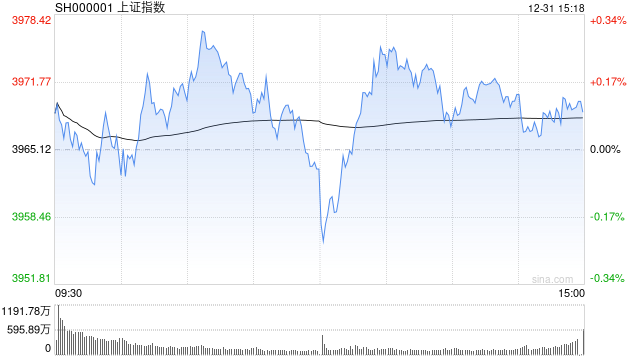
Core Viewpoint - The A-share market is expected to rise above 4000 points in 2026, with institutions generally optimistic about the market's performance [1][15]. Market Performance - The three major stock indices showed mixed results, with the Shanghai Composite Index closing at 3968.84 points, up 0.09%, while the Shenzhen Component Index fell by 0.58% to 13525.02 points, and the ChiNext Index dropped 1.23% to 3203.17 points [3][14]. - In 2025, the A-share market exhibited characteristics of a "structural bull market," with the ChiNext Index leading with a 49.57% annual increase, and the Shanghai Composite Index breaking the 4000-point barrier for the first time in nearly a decade, rising 18.41% overall [3][14]. Sector Highlights - The technology growth sector was the core theme throughout the year, with the CPO (Co-Packaged Optics) AI computing infrastructure sector leading with a remarkable annual increase of 304.91% [4][16]. - The small metals and precious metals sectors also performed well, with increases of 99.88% and 97.19% respectively, while zinc and lead metals saw gains of 85.40% and 83.32% [4][16]. Investment Outlook - Looking ahead to 2026, most institutions believe the market will transition from a "structural bull" to an "index bull," with a focus on AI application implementation, humanoid robot mass production, and deepening mergers and acquisitions [4][15]. - The pharmaceutical sector is expected to benefit from strong policy support for innovative drug companies, with increasing attention on companies that can demonstrate profitability [22]. - The computer sector's fundamentals are anticipated to improve, with institutions holding historically low positions, suggesting potential future growth opportunities [22].


股票市场概览:资讯日报:中国提前下达625亿元超长期特别国债支持以旧换新-20251231
Guoxin Securities Hongkong· 2025-12-31 06:23
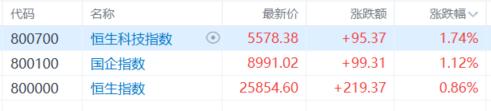
Market Overview - The Hang Seng Index closed at 25,855, down 0.86% for the day but up 28.89% year-to-date[1] - The Hang Seng Technology Index rose 1.74% to 5,578, with a year-to-date increase of 24.85%[1] - The Hang Seng China Enterprises Index increased by 1.12% to 8,991, with a year-to-date rise of 23.34%[1] Sector Performance - Baidu's stock surged nearly 9% due to advancements in AI and smart cloud business, with significant growth in its self-developed AI chip and smart driving orders[7] - The semiconductor sector saw strong gains, with InnoTek rising over 15% and SMIC up more than 4% following Nvidia's announcement of partnerships for a new power architecture[7] - Robotics stocks were active, with Yujing Technology up over 13% and Sanhua Intelligent Control up over 12%, supported by a significant increase in industrial robot production[7] Oil and Entertainment - Oil stocks continued to perform well, with CNOOC rising nearly 4% as international oil prices increased due to geopolitical tensions[7] - The entertainment sector saw a boost, with Emperor Culture Industries rising nearly 9% as the 2025 New Year box office surpassed 5.3 billion yuan, a near eight-year high[7] Economic Indicators - The WTI crude oil price surpassed $58 per barrel, while Brent crude approached $62 per barrel, driven by rising geopolitical risks[7] - The US Federal Reserve indicated potential future interest rate cuts if inflation continues to decline, as noted in the December meeting minutes[11]




港股收评:25年收官!恒指今日跌0.87%年涨27.77%,科技股弱势,假期概念股走强
Xin Lang Cai Jing· 2025-12-31 04:17
盘面上,昨日拉升助力大市上涨的大型科技股集体低迷,京东、快手、阿里巴巴、小米、腾讯均下跌, 唯独百度再涨1.39%;2026年汽车以旧换新补贴细则发布,汽车股呈现高开低走行情,"蔚小理"等皆转 跌;美政府已颁发许可证,批准韩企向中国出口芯片制造设备,昨日拉升的半导体股走低,家电股、保 险股、风电股、煤炭股纷纷表现弱势。 格隆汇12月31日|受元旦假期影响,港股下午开始休市,三大指数上午盘集体收跌,且呈现高开低走行 情,收官日表现低迷。截止收盘,恒生指数跌0.87%报25630点,国企指数跌0.86%报8913点,恒生科技 指数跌1.12%报5515点。25年收官:恒指、国指、恒生科技指数分别上涨27.77%、22.27%、23.45%。 来源:格隆汇APP 注:2026年元旦假期将至,港股12月31日(周三)半天市,下午开始休市,1月1日(周四)休市,共1.5天假 期,周五正常开市。(格隆汇) 另一方面,元旦假期旺季来临,航空股、影视股等受益于相关板块走势活跃,尤其是三大航空股皆强 势,猫眼娱乐等上涨;铜价创十余年最佳年度表现,铜业股是唯一上涨的有色金属股,其中江西铜业股 份再创历史新高。 ...
突破“存储墙”,三路并进
3 6 Ke· 2025-12-31 03:35
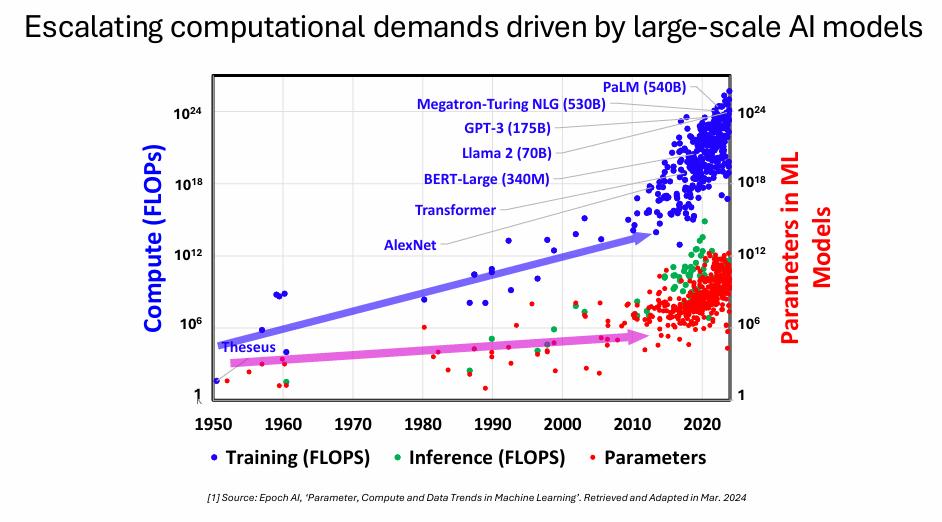
Core Insights - The explosive growth of AI and high-performance computing is driving an exponential increase in computing demand, leading to a significant challenge known as the "storage wall" [1][2] - The competition for AI and high-performance computing chips will focus not only on transistor density and frequency but also on memory subsystem performance, energy efficiency, and integration innovation [1][4] Group 1: AI and Computing Demand - The evolution of AI models has led to a dramatic increase in computational requirements, with model parameters rising from millions to trillions, resulting in a training computation increase of over 10^18 times in the past 70 years [2][4] - The growth rate of computational performance has significantly outpaced that of memory bandwidth, creating a "bandwidth wall" that limits overall system performance [4][7] Group 2: Memory Technology Challenges - The traditional memory technologies are struggling to meet the unprecedented demands for performance, power consumption, and area (PPA) from various applications, including large language models and edge devices [1][4] - The average growth of DRAM bandwidth over the past 20 years has only been 100 times, compared to a 60,000 times increase in hardware peak floating-point performance [4][7] Group 3: TSMC's Strategic Insights - TSMC emphasizes that the future evolution of memory technology will revolve around "storage-compute synergy," transitioning from traditional on-chip caches to integrated memory solutions that enhance performance and energy efficiency [7][11] - TSMC is focusing on optimizing embedded memory technologies such as SRAM, MRAM, and DCiM to address the challenges posed by AI and HPC demands [11][33] Group 4: SRAM Technology - SRAM is identified as a key technology for high-speed embedded memory, offering low latency, high bandwidth, and low power consumption, making it essential for various high-performance chips [12][16] - The area scaling of SRAM is critical for optimizing chip performance, but it faces challenges as technology nodes advance to 2nm [12][17] Group 5: Computing-in-Memory (CIM) - CIM architecture represents a revolutionary approach that integrates computing capabilities directly into memory arrays, significantly reducing energy consumption and latency associated with data movement [21][24] - TSMC believes that DCiM (Digital Computing-in-Memory) has greater potential than ACiM (Analog Computing-in-Memory) due to its compatibility with advanced processes and flexibility in precision control [26][28] Group 6: MRAM Technology - MRAM is emerging as a viable alternative to traditional embedded flash memory, offering non-volatility, high reliability, and durability, making it suitable for applications in automotive electronics and edge AI [33][35] - TSMC's N16 FinFET embedded MRAM technology meets stringent automotive requirements, showcasing its potential in high-performance applications [39][49] Group 7: System-Level Integration - TSMC advocates for a system-level approach to memory technology breakthroughs, emphasizing the need for 3D packaging and chiplet integration to achieve high bandwidth and low latency [50][54] - The future of AI chips may see a blurring of boundaries between memory and computation, with innovations in 3D stacking and integrated voltage regulators enhancing overall system performance [60][61] Group 8: Future Outlook - The future of storage technology in AI computing is characterized by a comprehensive innovation revolution, with TSMC's roadmap focusing on SRAM, MRAM, and DCiM to overcome the "bandwidth wall" and energy efficiency challenges [62] - The ability to achieve full-stack optimization from transistors to systems will be crucial for leading the next era of AI computing [62]

商务部:荷方切勿一意孤行 应立即纠正错误
Zhong Guo Xin Wen Wang· 2025-12-31 03:34
Core Viewpoint - The Chinese Ministry of Commerce urges the Netherlands to correct its erroneous stance regarding ASML and emphasizes the need for responsible actions to stabilize the global semiconductor supply chain [1] Group 1: China's Position - The Chinese government has repeatedly highlighted that the Netherlands' inappropriate administrative intervention in ASML's internal affairs has contributed to a global semiconductor supply chain crisis [1] - The Ministry of Commerce criticizes the Netherlands for being unresponsive to global industry concerns and for not demonstrating a responsible attitude towards the security of the semiconductor supply chain [1] Group 2: Call to Action - The Chinese Ministry of Commerce calls on the Netherlands to avoid unilateral actions and to immediately rectify its mistakes to clear obstacles for restoring stability and security in the global semiconductor supply chain [1]
商务部新闻发言人就荷兰经济大臣卡雷曼斯接受采访答记者问
Shang Wu Bu Wang Zhan· 2025-12-31 02:21
Core Viewpoint - The Chinese government emphasizes that the Netherlands must take full responsibility for its inappropriate administrative intervention in the internal affairs of ASML, which has led to a global semiconductor supply chain crisis [1] Group 1: China's Response - The Chinese side has repeatedly highlighted the negative impact of the Netherlands' actions on the global semiconductor supply chain [1] - There is confusion regarding the Netherlands' indifference to global industry anxiety and its stubborn stance without showing responsibility for the security of the semiconductor supply chain [1] - China calls for the Netherlands to correct its mistakes and remove obstacles to restore stability and security in the global semiconductor supply chain [1]
中国汽车销量或超日本登顶,中国初创企业被Meta收购 | 财经日日评
吴晓波频道· 2025-12-31 00:30
Group 1: Automotive Industry - Chinese automotive manufacturers are expected to surpass Japanese manufacturers in global new car sales by 2025, with an estimated 17% year-on-year growth in 2023, reaching approximately 27 million vehicles sold [2] - Japan's automotive sales are projected to remain flat compared to last year, slightly below 25 million vehicles, indicating a significant shift in market leadership [2] - In 2023, China became the world's largest automotive exporter with 4.91 million vehicles exported, marking a pivotal moment in the global automotive landscape [2][3] - The rise of Chinese domestic brands is attributed to increased recognition both domestically and internationally, alongside intense competition within the Chinese automotive industry [2] Group 2: Aviation Industry - 吉祥航空 and 春秋航空 announced orders for a total of 55 Airbus A320 series aircraft, valued at approximately $8.2 billion, to be delivered between 2028 and 2032 [4] - The orders are seen as a coordinated purchase strategy to secure better pricing, reflecting a trend in the aviation sector towards bulk purchasing [4] - The domestic aviation market is characterized by high passenger load factors but low ticket prices, aligning with the operational strategies of 吉祥航空 and 春秋航空 [5] Group 3: AI Industry - Meta has acquired AI startup Manus for several billion dollars, marking its third-largest acquisition to date [6] - Manus focuses on practical AI applications, providing tools for tasks such as resume screening and travel planning, which enhances user experience in AI applications [6][7] - The acquisition is expected to bolster Meta's capabilities in AI product applications, an area where it has previously been less competitive [7] Group 4: Robotics Industry - 宇树科技 opened its first offline store in Beijing, allowing customers to experience and purchase robotic products directly [8] - The store aims to reduce consumer apprehension towards complex technology by providing hands-on experiences and facilitating immediate purchases [8][9] - The offline presence is part of a broader strategy to explore various business models, including rentals and experiences, as the robotics market matures [9] Group 5: Semiconductor Industry - 中芯国际 plans to acquire 49% of 中芯北方 for approximately 40.6 billion yuan, aiming to enhance asset quality and business synergy [12] - The acquisition reflects a trend of consolidation within the Chinese semiconductor industry, focusing on high-quality development rather than mere scale [12][13] - Full control over 中芯北方 is expected to stabilize cash flow and improve operational efficiency for 中芯国际 [12] Group 6: Precious Metals Market - Silver prices experienced a significant intraday drop of 16%, while gold and palladium also saw notable declines, despite strong annual performance [14][15] - The fluctuations in precious metal prices are attributed to speculative trading in the Chinese futures market, impacting global prices [14] - Industrial demand has driven silver prices up throughout the year, with both gold and silver expected to achieve their best annual performance since 1979 [15]


江苏长电科技股份有限公司第九届董事会第一次会议决议公告
Shang Hai Zheng Quan Bao· 2025-12-30 19:49
江苏长电科技股份有限公司 一、董事会会议召开情况 第九届董事会第一次会议决议公告 本公司董事会及全体董事保证本公告内容不存在任何虚假记载、误导性陈述或者重大遗漏,并对其内容 的真实性、准确性和完整性承担法律责任。 登录新浪财经APP 搜索【信披】查看更多考评等级 证券代码:600584 证券简称:长电科技 公告编号:临2025-054 (二)审议通过了《关于选举公司第九届董事会专门委员会委员的议案》 江苏长电科技股份有限公司(以下简称"公司")于2025年12月30日召开2025年第二次临时股东大会,选 举产生第九届董事会非职工董事成员。根据《公司董事会议事规则》,经第九届董事会全体董事同意, 豁免本次会议的通知期限。公司以邮件方式预通知各董事候选人于2025年第二次临时股东大会结束后, 以现场+通讯方式召开第九届董事会第一次会议。本次会议应参会董事12人,实际参会董事12人,高级 管理人员列席会议,与会董事一致推选周响华女士主持会议。会议的召集和召开符合《中华人民共和国 公司法》(以下简称《公司法》)和《公司章程》的有关规定。 二、董事会会议审议情况 本次会议表决通过了相关议案,形成决议如下: (一)审议通 ...

港股收评:三大指数齐涨!半导体、机器人概念股强势,风电股低迷
Ge Long Hui· 2025-12-30 08:49
Market Overview - The Hong Kong stock market saw all three major indices rise, with the Hang Seng Technology Index increasing by 1.74%, the Hang Seng Index by 0.86%, and the National Enterprises Index by 1.12% [1][2]. Technology Sector - Major technology stocks collectively rose, with Baidu surging nearly 9%, and NetEase and Xiaomi both increasing over 2%. Other notable gains were seen in JD.com, Tencent, Alibaba, and Meituan [5][6]. - Semiconductor stocks also experienced significant gains, led by InnoCare, which rose over 15%, while major players like SMIC increased by over 4% [7][8]. New Listings - Six new stocks were listed on the Hong Kong market, with notable increases including InnoSilicon up 24.66%, and Wuyiyi Vision up 29.9% [3]. Energy Sector - Oil stocks strengthened, with CNOOC rising nearly 4% as international oil prices surged due to heightened geopolitical risks. WTI crude surpassed $58 per barrel, and Brent approached $62 per barrel [14]. Entertainment Sector - The film and entertainment sector was active, with Emperor Culture Industries rising nearly 9%. The 2025 box office has already surpassed 5.3 billion yuan, marking a new high in recent years [13]. Wind Power Sector - Wind power stocks fell sharply, with Goldwind Technology dropping nearly 11%, alongside declines in other related companies [16][17]. AI and Robotics Sector - AI application companies like MaiFusTech saw significant gains, rising over 11% after announcing strategic partnerships with major tech firms [18][21]. - Robotics stocks also performed well, with Sanhua Intelligent Control increasing over 12% [11]. Investment Outlook - Analysts suggest that the Hong Kong market may continue to trend upward due to supportive domestic policies and a weaker US dollar. There is a focus on technology growth and high dividend strategies as potential investment opportunities [23].




百度、京东、阿里、小米,集体上涨
第一财经· 2025-12-30 08:44
12月30日,香港恒生指数收涨0.86%,恒生科技指数涨1.74%。 | 代码 | 名称 | 现价 | 涨跌 | 涨跌幅 | | --- | --- | --- | --- | --- | | મંદા | 恒生指数 | 25854.60 | 219.37 | 0.86% | | HSTECH | 恒生科技 | 5578.38 | 95.37 | 1.74% | | HSBIO | 恒生生物科技 | 14379.73 | -61.14 | -0.42% | | HSCEI | 恒生中国企业指数 | 8991.02 | 99.31 1.12% | | | HSCI | 恒生综合指数 | 3934.64 | 25.23 | 0.65% | 半导体、机械、石油石化、有色金属、银行等板块涨幅居前,耐用消费品、环保、纺织服装、医疗设备等板块跌幅居前。 半导体板块大涨,英诺赛科涨超15%,中芯国际涨超4%,华虹半导体涨近4%。 黄金板块下跌,珠峰黄金跌超6%,老铺黄金跌超5%,六福集团、万国黄金集团跌超2%。 1 E10/ 10 100 科网股普涨,百度集团涨近9%,此前申万宏源上调公司评级至"买入";网易、携程、小米集 ...