博物馆

Search documents
天津:国家海洋博物馆“双节”上新 多维活动引客探寻海洋文化
Zhong Guo Xin Wen Wang· 2025-09-26 12:01
Core Viewpoint - The National Ocean Museum in Tianjin is launching a series of diverse activities during the National Day and Mid-Autumn Festival holidays to attract visitors and promote marine culture [1][2] Group 1: Activities and Exhibitions - The museum will feature 11 permanent exhibitions covering themes such as marine nature, culture, and technology, alongside multiple temporary exhibitions [1] - Notable temporary exhibitions include "The Beauty of Nature - William Morris and the British Arts and Crafts Movement," "The Light of the Nation - Special Exhibition on the Historical Investigation of the Southwest United University during the War," and "Awakening the World - Immersive Light and Shadow Art Exhibition of Sanxingdui" [1] - Additional exhibitions include "Chinese Marine Ethnic Culture Exhibition" and "The Dawn of the Cambrian - Chengjiang Biota and the Origin of Life Diversity" [1] Group 2: Interactive and Thematic Activities - The museum has introduced a themed stamp collection activity where visitors can collect stamps to exchange for cultural and creative gifts [2] - The "Ancient Shu Kingdom Knowledge Challenge" and public lectures will provide insights into historical artifacts like the bronze mask and golden staff during the immersive exhibition [2] - The Mid-Autumn themed activity "Moon Full Star River - Exploring the Moon" will combine traditional culture with modern lunar exploration technology [2] Group 3: Additional Events - Other activities include "Sea Breeze Music Festival," "Listening to the Sea - Reciting the Nation" performances, and a themed market and photography exhibition [2] - The museum will also host public activities and lectures such as "A Journey Through Time," "Morris's Beauty of Nature," and "Where Are the Amazing Marine Animals" to deepen visitors' understanding of marine culture [2]
三亚市博物馆全力冲刺2026年开馆
Hai Nan Ri Bao· 2025-09-26 01:29
Core Points - The Sanya Museum is set to open in the second half of 2026, aiming to become an important cultural landmark in Hainan and significantly boost the cultural development of Sanya [2] - The museum will be located in the Yiyang District, covering over 23,000 square meters with a building area of more than 53,000 square meters, making it the second largest museum in the province [2] - The museum is designed to accommodate an annual visitor capacity of 3 million, indicating its potential as a leading comprehensive museum in the region [2] Collection and Donations - As of this year, the Sanya Museum has received 647 pieces of confiscated cultural relics from the provincial tourism and cultural department and 123 pieces from social donations [2] - Notable individuals and institutions have contributed to the museum's collection, including descendants of historical figures and local artists, with donations covering historical artifacts, folk items, and artworks [2][3] - The museum has officially launched a public collection initiative, seeking items across eight categories, including natural history, ancient history, modern history, ethnic customs, revolutionary history, Sanya cultural characteristics, intangible cultural heritage, and Hainan-specific cultural artifacts [3]
相约博物馆 | 万方乐奏有于阗
Zhong Yang Ji Wei Guo Jia Jian Wei Wang Zhan· 2025-09-26 00:21
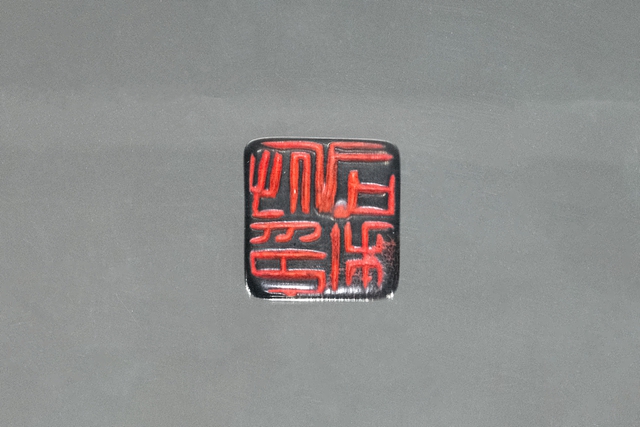
Core Viewpoint - The news highlights the cultural and historical significance of the Hetian region and its archaeological findings, particularly focusing on the ancient city of Niya and its artifacts, which illustrate the deep-rooted connections between this area and the broader Chinese civilization [4][5][6]. Group 1: Archaeological Discoveries - The discovery of the Eastern Han "Sihefu Seal" at the Niya site serves as evidence of agricultural institutions established by the Han dynasty in the region [6]. - The Hetian Museum showcases a national treasure, the "Five Stars Rising in the East" brocade, which reflects the advanced weaving techniques of the time and is believed to have been produced by Shu artisans for the Han court [5][6]. - The Niya site, located in the Taklamakan Desert, has revealed various artifacts, including food containers and wooden utensils, which provide insights into the daily life and customs of the ancient residents [7]. Group 2: Cultural Significance - The Hetian region, historically known as Yutian, was a crucial hub on the southern Silk Road, facilitating trade and cultural exchanges with the Central Plains of China [8][9]. - The region's jade, particularly Hetian jade, has been highly valued since ancient times, with artifacts found in royal tombs indicating its importance in trade and cultural identity [9]. - The introduction of sericulture to Yutian from the Central Plains during the 3rd century significantly boosted the local silk industry, leading to the development of unique textiles still cherished today [10]. Group 3: Artistic Influence - The Tang dynasty's governance over the region led to a flourishing of local arts, including painting and music, which were influenced by Central Asian styles [11][12]. - Notable artists from Yutian contributed to the Tang court, bringing unique techniques and themes that enriched the artistic landscape of the time [12]. - The cultural exchanges along the Silk Road are exemplified by artifacts such as a carpet depicting the Epic of Gilgamesh, showcasing the interconnectedness of different civilizations [13].

坚定文化自信 建设文化强国 | 共答“文化+科技”时代命题
Zhong Yang Ji Wei Guo Jia Jian Wei Wang Zhan· 2025-09-26 00:21
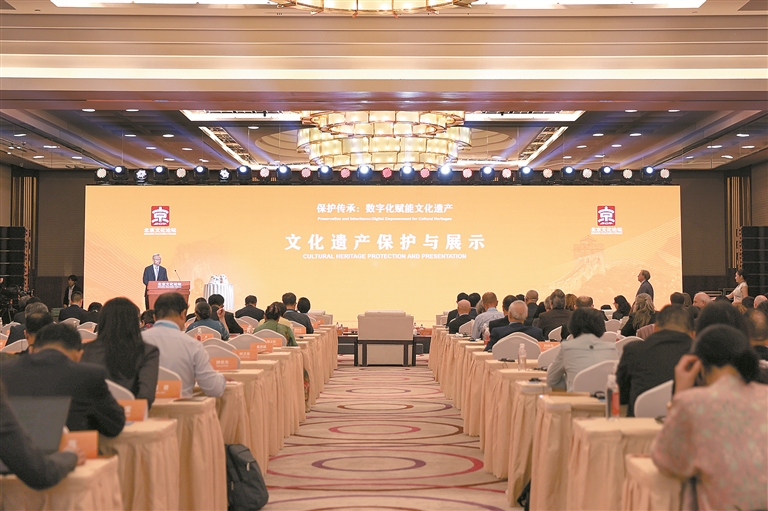
Group 1 - The 2025 Beijing Cultural Forum successfully held discussions on the integration of culture and technology, emphasizing their mutual promotion and deep fusion as essential for cultural prosperity and technological innovation [3][4][10] - The forum featured over 800 domestic and international guests, with multiple parallel forums and professional salons focusing on themes like "cross-boundary symbiosis" and "two-way empowerment" [3][4] Group 2 - Digitalization is highlighted as a crucial preventive measure for cultural heritage protection, with the Palace Museum having digitized over 1 million artifacts out of a total of 1.95 million, aiming to complete the digitization in the next 10 to 20 years [5][6] - The Dunhuang Academy has completed digitalization for 300 caves, with over 500TB of data processed, showcasing the importance of digital technology in preserving cultural heritage [6][8] Group 3 - The launch of the Chinese Ancient Books Intelligent Service Platform aims to provide open access to over 12,000 types and 120,000 volumes of digitized ancient books, enhancing public access to cultural resources [7][8] - The integration of digital technology in cultural exhibitions, such as the Shanghai Museum's immersive "Landscape Jiangnan" exhibition, demonstrates the potential for enhancing visitor engagement through virtual and augmented reality [8][9] Group 4 - The rapid development of artificial intelligence is reshaping artistic creation and cultural industries, with examples like the animated film "Nezha" achieving over 10 billion in box office revenue, showcasing the intersection of culture and technology [12][13] - AI technology is being increasingly adopted in the film industry, streamlining production processes and enhancing creative capabilities, as seen in the film "Only This Green" [13][14]
老字号博物馆的创新消费密码
Bei Jing Shang Bao· 2025-09-25 16:53
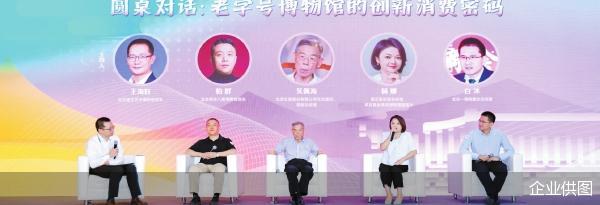
Group 1: Core Insights - The salon focused on the theme of "finding the consumption power of time-honored brands," highlighting the transition of these brands from product innovation to cultural systematization [1] - The concept of "living heritage" is emphasized as a key differentiator for time-honored brands operating museums, which leverage unique products, deep cultural roots, and craftsmanship [3][4] - The integration of cultural and commercial attributes in museums presents both opportunities and challenges for time-honored brands [6] Group 2: Museum Strategies - The Yanjing Eight Wonders Museum has established two registered museums and three venues, hosting over 100 cultural events annually, showcasing the importance of active cultural engagement [3] - The "museum-store integration" model adopted by Cai Bai Gold Jewelry Museum allows for a seamless connection between cultural experiences and consumer engagement [7][8] - The One-Character Pavilion aims to enhance brand storytelling and promote consumption through innovative approaches, including customized products and modern packaging designs [9]
江苏推出超4200项文旅活动迎“超长黄金周”,全省89家博物馆将延时开放
Yang Zi Wan Bao Wang· 2025-09-25 15:22
Core Points - The 2025 National Day and Mid-Autumn Festival will coincide, creating an 8-day "super golden week" with over 4,200 cultural and tourism activities planned across Jiangsu Province [1][2] - The provincial cultural and tourism department aims to enhance local cultural experiences by integrating various art forms and organizing performances in towns and cities [2][3] - A significant focus on non-material cultural heritage will be highlighted through 155 events and over 620 activities, promoting traditional customs and arts [3][4] Group 1: Cultural Activities - Over 4,200 activities will be organized, including 25 performances of excellent stage art and folk art in towns [2] - Major events include the Wuxi Taihu Water Music Fireworks Festival and the Xuzhou Han Culture Tourism Festival, covering diverse experiences such as nature sightseeing and culinary tourism [2][3] - The province will host 464 commercial performances, with expectations of over 600,000 attendees [2] Group 2: Nighttime Cultural Consumption - 89 museums will extend their operating hours during the holidays, with some open until 22:00, enhancing nighttime cultural experiences [4][5] - Events like the "Night Tour" at museums will combine traditional culture with modern technology to attract visitors [4] - Various districts will promote "events + cultural tourism" integration, enriching nighttime consumption scenarios [4][5] Group 3: Discounts and Promotions - The province will launch over 150 measures for public benefit, including ticket discounts and free transportation services [6][7] - Specific initiatives include 800 million online consumption subsidies in Xuzhou and free public transport for tourists in Changzhou [6][7] - Additional measures will include free parking and ticket exemptions for visitors with specific names during the holiday [7]
机器人能舞能诗超会玩 数智赋能解锁博物馆新玩法
Yang Shi Wang· 2025-09-25 13:39
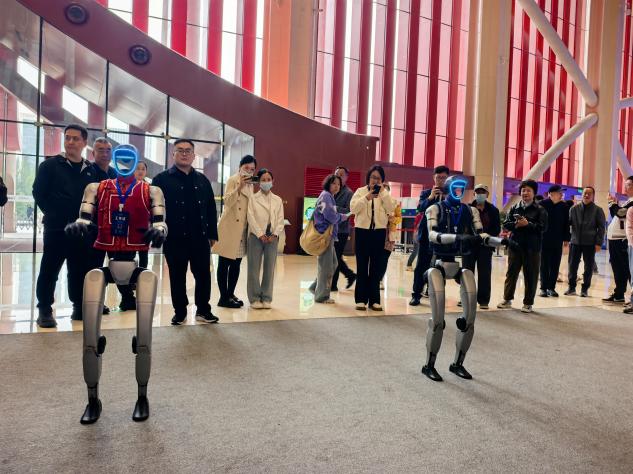
Core Insights - The integration of AI and technology in museums enhances visitor engagement and understanding of cultural heritage Group 1: AI and Robotics in Museums - The Inner Mongolia Museum features two robots, "Bateer" and "Gaowa," that perform traditional dances and provide informative narratives about artifacts using AI technology, making history more accessible to visitors [1][3] - An AI guide named "Hongger" uses holographic projection to interact with visitors, answering questions and summarizing knowledge points in a poetic manner, further enriching the visitor experience [1] Group 2: Interactive and Immersive Experiences - The museum offers interactive experiences such as learning ethnic dances, simulating traditional instrument performances, and engaging with a digital knowledge map that connects various artifacts [2] - The Baotou Museum showcases six permanent exhibition halls covering diverse themes, with regular updates to incorporate new technologies, ensuring a dynamic visitor experience [4] - The "Digital Magic Wall" allows visitors to explore artifacts in a digital format, including 3D models and VR experiences that immerse them in historical scenes, making the exhibits more engaging [6]

延长营业时间、推行免预约,如何做好“文博消费”文章?
Xin Hua Wang· 2025-09-25 05:27
Core Insights - The article discusses the increasing popularity of cultural consumption, particularly in museums, driven by a growing public interest in historical and cultural heritage [1][2] - Recent policies aim to enhance service consumption by extending operating hours and optimizing reservation systems for popular cultural venues [1][3] Group 1: Policy Measures - The government has proposed measures to extend operating hours for popular cultural venues and encourage no-reservation policies to meet the diverse cultural needs of the public [1][3] - Specific examples include the Sanxingdui Museum extending its closing time from 18:00 to 20:00 during holidays, and the Shanghai Museum implementing no-reservation policies starting in September [1][3] Group 2: Economic Impact - Optimizing reservation methods is expected to enhance user experience and stimulate local economies, including ticket sales, cultural products, and dining [2][3] - The Shanghai Museum's recent exhibition attracted 2.77 million visitors and generated revenue of 760 million yuan, contributing over 35 billion yuan to the city's overall consumption [2] Group 3: Innovation in Cultural Exhibitions - The article emphasizes the need for innovative exhibition methods and collaboration with social forces to develop cultural products and digital offerings [3][4] - The number of museums achieving annual sales of over 100 million yuan in cultural products is increasing, with several museums reporting sales between 200 million and 500 million yuan [3] Group 4: Future Trends - The integration of modern technology with traditional and contemporary culture is expected to enhance visitor experiences and rejuvenate tourism destinations [4] - Cultural consumption is anticipated to expand beyond urban areas and popular venues, becoming a significant part of mass tourism [4]
文化·视点丨延长营业时间、推行免预约,如何做好“文博消费”文章?
Xin Hua Wang· 2025-09-25 03:13
Core Insights - The article discusses the increasing popularity of cultural consumption, particularly in museums, driven by a growing public interest in historical and cultural heritage [1][2] - Recent policies aim to enhance service consumption by extending operating hours and promoting no-reservation entry at popular cultural venues [1][3] Group 1: Policy Measures - The government has introduced measures to extend operating hours for popular cultural venues and optimize reservation systems, encouraging no-reservation entry [1][2] - Specific examples include the Sanxingdui Museum extending its closing time from 18:00 to 20:00 during holidays, and the Shanghai Museum implementing no-reservation entry starting September [1][3] Group 2: Economic Impact - The cultural consumption sector is seen as a significant growth point for the integration of culture and tourism, with potential to boost local economies and night-time economies [2][3] - The "Pyramid Peak: Ancient Egyptian Civilization Exhibition" at the Shanghai Museum attracted 2.77 million visitors and generated revenue of 760 million yuan, contributing to over 35 billion yuan in overall city consumption [2] Group 3: Innovation and Collaboration - The article emphasizes the need for innovative exhibition methods and collaboration with social forces to enhance cultural offerings and market-driven exhibitions [3][4] - The number of museums achieving annual sales of over 100 million yuan in cultural products is increasing, with several museums reporting sales between 200 million and 500 million yuan [3] Group 4: Future Trends - The future of cultural consumption is expected to expand beyond urban areas and popular venues, becoming a vital part of mass tourism [4] - The integration of modern technology with traditional culture is anticipated to create new experiences for visitors, enhancing the appeal of cultural destinations [4]
东西问·北京文化论坛|傅萌:科技如何为文物插上“翅膀”?
Zhong Guo Xin Wen Wang· 2025-09-24 14:06
Core Viewpoint - The integration of technology and culture is essential for the preservation and promotion of cultural heritage, as demonstrated by the initiatives at the Capital Museum and the Beijing Grand Canal Museum [3][9]. Group 1: Importance of Visualized Preservation - The Capital Museum has established a visualized cultural relic preservation center to mitigate environmental factors that can harm artifacts, such as temperature, humidity, light, and air quality [3][4]. - Preventive preservation aims to create a stable and clean environment to prolong the lifespan of cultural relics and prevent deterioration [3][4]. Group 2: Traditional Techniques vs. Modern Technology - The preservation work at the Capital Museum combines traditional techniques with modern technology, utilizing both traditional restoration teams and scientific laboratories [6]. - Technology optimizes traditional methods by standardizing and digitizing effective practices, while also expanding capabilities to address issues that traditional methods cannot solve, such as using ultrasonic and laser technologies for cleaning artifacts [6][8]. Group 3: Public Engagement and Education - The museum has engaged the public through exhibitions and educational projects, allowing visitors to understand the behind-the-scenes work of artifact preservation [8][9]. - Interactive projects, especially those appealing to children, aim to instill an appreciation for cultural heritage and potentially cultivate future museum professionals [8][9]. Group 4: Cultural and Technological Integration - The integration of culture and technology has opened new possibilities for museums, enhancing the transmission and preservation of ancient civilizations through various technological applications [9][11]. - Recent exhibitions have utilized digital showcases and virtual experiences to provide a more comfortable and engaging visitor experience, ensuring that cultural heritage is accessible to a broader audience [9][11].