电子信息

Search documents
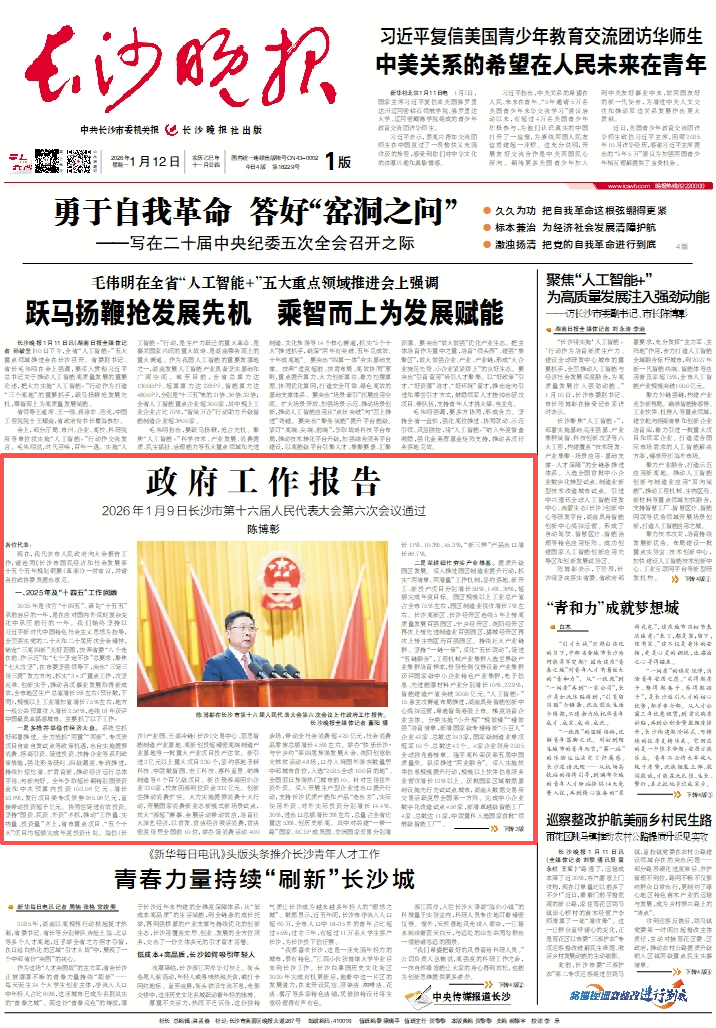
2026年政府工作报告
Chang Sha Wan Bao· 2026-01-12 02:30
Core Viewpoint - The report outlines the economic and social development achievements of Changsha during the "14th Five-Year Plan" period, emphasizing steady growth, industrial upgrades, and improvements in public services while setting ambitious goals for the "15th Five-Year Plan" period. Economic Performance - The GDP growth for the year is projected at around 5% with a 2.56% increase in local public budget revenue and a 7.5% rise in industrial added value [3][11] - The total retail sales of consumer goods are expected to grow by approximately 4.5% [12] - The total import and export volume is anticipated to increase by about 3% [12] Industrial Development - The report highlights the successful implementation of major industrial projects, including the establishment of significant manufacturing bases and the introduction of over 230 major projects with investments exceeding 2 billion [12][13] - The industrial output value from above-scale industries accounts for about 75% of the city's total, with a tax revenue growth of around 7% [13] Innovation and R&D - Total R&D expenditure reached 511.56 billion, marking an 8.2% increase, with a significant rise in the number of research institutions [14] - The city aims to enhance its status as a global R&D center, with plans to establish more national laboratories and innovation centers [14][21] Infrastructure and Urban Development - Key infrastructure projects, including transportation and urban renewal initiatives, are underway, with significant investments in public transport and urban facilities [17][23] - The report mentions the completion of various urban renewal projects, including the renovation of old residential areas and the construction of new public amenities [17][24] Social Welfare and Public Services - The report emphasizes the completion of 20 key public welfare projects, including job creation and healthcare improvements, with a focus on enhancing the quality of life for residents [18][24] - The city has achieved a significant increase in educational resources, with over 36,000 new educational placements created [24] Future Goals - For the "15th Five-Year Plan" period, the city aims for an average annual GDP growth of 5% to 5.5%, with a focus on high-tech manufacturing and innovation [29][30] - The strategic focus will include enhancing the integration of the Changsha-Zhuzhou-Xiangtan urban area and promoting cultural and technological synergies [31][32]

6个项目总投资超127亿元,豫东南高新区重大项目上新
He Nan Ri Bao· 2026-01-11 23:40
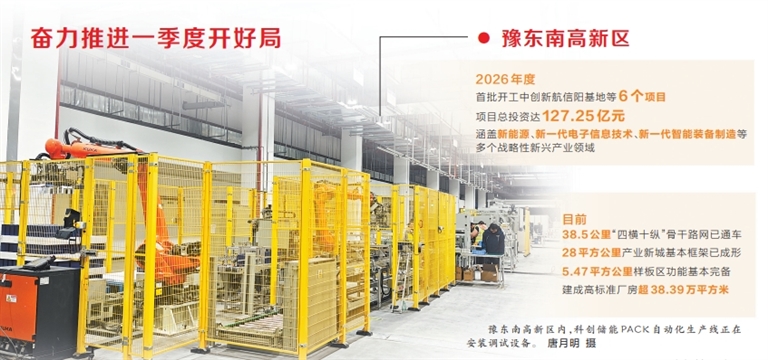
Core Viewpoint - The article highlights the commencement of key projects in the Yudongnan High-tech Industrial Development Zone, emphasizing the strategic importance of these developments in enhancing the local economy and attracting further investments in the renewable energy sector [3][4]. Group 1: Project Developments - Six major projects have been launched with a total investment of 12.725 billion yuan, covering strategic emerging industries such as new energy and advanced electronic information technology [3]. - The Zhongchuang Innovation Technology Group is establishing a 51GWh power and energy storage battery project in Xinyang, with a total investment of 9.63 billion yuan, expected to generate an annual output value of 12 billion yuan and create 3,000 jobs by 2028 [3][4]. Group 2: Economic Impact - The projects are anticipated to significantly contribute to the local economy, with the Zhongchuang Innovation project alone expected to generate 400 million yuan in tax revenue annually [3]. - The Yudongnan High-tech Zone aims to become a new growth pole for high-quality development in Xinyang, enhancing the regional economic transformation and upgrading [4]. Group 3: Infrastructure and Future Plans - The Yudongnan High-tech Zone has established a 38.5 km backbone road network and a basic framework for a 28 square kilometer industrial new city, with ongoing developments in various industrial parks [4]. - Future plans include focusing on green low-carbon development and building a modern industrial system, aligning with national high-tech zone standards and zero-carbon park initiatives [5].
重磅国家方案发布,激发数十万亿增长新动能
Di Yi Cai Jing· 2026-01-11 23:37
Core Insights - The article discusses the implementation of the "Artificial Intelligence + Manufacturing" initiative by eight departments, aiming to accelerate the integration of AI with the manufacturing sector and promote intelligent transformation [2][4] - The Ministry of Industry and Information Technology (MIIT) emphasizes that developing AI is essential for achieving new industrialization, focusing on both technology supply and application empowerment [3] - The initiative outlines seven key tasks and 21 specific measures to enhance the intelligent, green, and integrated development of the manufacturing industry [4][5] Group 1: Key Tasks and Goals - The initiative aims to apply 3 to 5 general large models in manufacturing by 2027, create 100 high-quality industrial data sets, and promote 500 typical application scenarios [4] - It seeks to cultivate 2 to 3 globally influential leading enterprises and a number of specialized small and medium-sized enterprises, establishing a robust ecosystem for AI in manufacturing [4] - The goal is to build a globally leading open-source ecosystem and enhance security governance capabilities [4] Group 2: Industry-Specific Guidelines - The "Guidelines for Key Industry Transformation" provide direction for sectors such as raw materials, equipment manufacturing, consumer goods, electronics, and software services [6] - In the automotive sector, the guidelines emphasize accelerating the intelligent upgrade of the entire supply chain, including the development of automotive large models for design optimization [6] - The integration of AI in manufacturing is seen as a critical factor for driving innovation in research and design, improving production efficiency, and optimizing supply chain management [6][11] Group 3: Industrial Internet and AI Integration - The integration of industrial internet and AI is highlighted as a key driver for new industrialization, with plans to enhance the level of integration by 2028 [7][8] - The initiative includes expanding new industrial networks to meet the demands of AI applications and improving data governance and sharing systems [7] - The focus is on creating a collaborative ecosystem that promotes the application of AI and industrial internet across various key industries [7][8] Group 4: Local Initiatives and Developments - Various local governments are launching their own "AI+" initiatives to drive high-quality development, with specific action plans and targets [9][10] - For instance, Shanghai aims to add 100 manufacturing enterprises with over 1 billion yuan in annual output by 2028 [9] - The establishment of dedicated AI development agencies in cities like Guangzhou and Zhuhai reflects a growing commitment to fostering AI innovation at the local level [10]

重磅国家方案发布,激发数十万亿增长新动能
第一财经· 2026-01-11 23:36
Core Viewpoint - The article discusses the implementation of the "Artificial Intelligence + Manufacturing" initiative by the Ministry of Industry and Information Technology (MIIT) and other departments, aiming to accelerate the integration of AI with the manufacturing sector and promote intelligent transformation in the industry [3]. Group 1: Key Tasks and Goals - The initiative outlines seven key tasks including innovation foundation, intelligent upgrade, product breakthroughs, entity cultivation, ecological expansion, safety protection, and international cooperation, with 21 specific measures to enhance the intelligent, green, and integrated development of manufacturing [5]. - By 2027, the goal is to promote the deep application of 3 to 5 general large models in manufacturing, create 100 high-quality industrial data sets, and establish 500 typical application scenarios [5]. Group 2: Industry Transformation Guidelines - The "Guidelines for Key Industry Transformation Empowered by AI" provide direction for sectors such as raw materials, equipment manufacturing, consumer goods, electronic information, and software services [6]. - In the automotive sector, the guidelines emphasize accelerating the intelligent upgrade of the entire supply chain, including the development of automotive large models for design and optimization [6]. Group 3: Industrial Internet and AI Integration - The integration of industrial internet and AI is highlighted as a crucial aspect of the initiative, with plans to enhance the level of integration by 2028, including the deployment of new industrial networks in over 50,000 enterprises [9]. - The article notes that AI is transitioning from being an auxiliary tool to becoming a core engine for industrial internet, enhancing capabilities such as real-time optimization and intelligent scheduling [10]. Group 4: Local Initiatives and Developments - Various local governments are actively promoting AI initiatives, with Shanghai aiming to add 100 manufacturing enterprises with over 1 billion yuan in annual output by 2028 [12]. - The establishment of dedicated AI development agencies in cities like Guangzhou and Zhuhai reflects a growing commitment to fostering AI innovation and integration within local industries [13].

奋力推进一季度开好局丨6个项目总投资超127亿元 豫东南高新区重大项目上新
He Nan Ri Bao· 2026-01-11 23:28
Group 1 - The core focus of the news is the commencement of six key projects in the Yudongnan High-tech Industrial Development Zone, with a total investment of 12.725 billion yuan, covering strategic emerging industries such as new energy and advanced electronic information technology [1][2] - The Zhongchuang Innovation Technology Group is establishing a lithium-ion battery production line in the Yudongnan High-tech Zone, with a planned capacity of 51GWh for power and energy storage batteries, ensuring long-term upgrade capabilities [1][2] - The Yudongnan High-tech Zone aims to become a new growth pole for high-quality development in Xinyang, serving as a demonstration area for innovation-driven and green development, and a testing ground for development zone reforms in Henan Province [2][3] Group 2 - Zhongchuang Innovation has a 5.4% market share in the global power battery market and is expected to generate an annual output value of 12 billion yuan and create 3,000 jobs upon full production by January 2028 [2] - The Yudongnan High-tech Zone has established a robust infrastructure, including a 38.5 km road network and a 28 square km industrial new city framework, with significant investments in various sectors totaling 19.736 billion yuan [3] - The zone's development strategy focuses on green low-carbon growth and aims to align with national high-tech zone standards, promoting a modern industrial system and supporting high-quality development [3]
权威发布丨长沙市《政府工作报告》(全文)
Chang Sha Wan Bao· 2026-01-11 23:22
Core Viewpoint - The report outlines the achievements and future goals of Changsha's economic and social development, emphasizing the city's commitment to high-quality growth and innovation while addressing challenges in various sectors. Group 1: Economic Performance - The GDP growth for the city is projected at around 5% for the year, with industrial output increasing by approximately 7.5% and local public budget revenue growing by 2.56% [13][14] - The city has secured over 102.06 billion yuan in special national debt funding, marking a 52.6% increase, and issued project-specific bonds totaling 265.96 billion yuan, driving investments exceeding 100 billion yuan [13][14] - The total import and export volume increased by about 3%, with actual foreign investment rising by 14.4% [14] Group 2: Industrial Development - The city has made significant strides in industrial upgrades, with a 7% increase in tax revenue from industrial parks, which account for approximately 75% of the city's industrial output [15] - New projects in key sectors have been initiated, with a 59% increase in signed projects and a 36% increase in newly operational projects [15] - The city has cultivated three national advanced manufacturing clusters, leading to a ranking of 5th among advanced manufacturing cities in China [25] Group 3: Innovation and R&D - Total R&D expenditure reached 511.56 billion yuan, reflecting an 8.2% increase, with the number of research institutions doubling to 4,336 [16] - The city has established a comprehensive innovation ecosystem, with over 100 major scientific research achievements produced in recent years [16] - Changsha has been recognized as a global R&D center, with significant investments in technology and innovation infrastructure [26] Group 4: Urban Development and Infrastructure - The city has completed major infrastructure projects, including the construction of new transportation hubs and the expansion of public transport networks [20][28] - Urban renewal initiatives have led to the renovation of 40 old residential communities and the construction of new public facilities [20] - Changsha has been selected for national urban renewal initiatives, enhancing its urban landscape and livability [20] Group 5: Social Welfare and Quality of Life - The city has implemented various social welfare programs, achieving a significant increase in employment and public service quality [21][29] - The urban unemployment rate has been maintained below 5.5%, with substantial investments in healthcare and education [21] - Changsha has been recognized as one of the most livable cities in China, with ongoing efforts to enhance public safety and community well-being [21][29] Group 6: Future Goals and Strategic Focus - The city aims for an average GDP growth of 5% to 5.5% over the next five years, with a focus on high-tech manufacturing and innovation [33] - Plans include enhancing the integration of the Changsha-Zhuzhou-Xiangtan urban area and promoting cultural and technological synergies [35][36] - The city is committed to expanding its role in the national market and improving its overall competitiveness through strategic reforms and investments [37]
“AI+制造”国家方案发布 激发数十万亿增长新动能
Xin Lang Cai Jing· 2026-01-11 17:16
Core Viewpoint - The Chinese government is accelerating the integration of artificial intelligence (AI) with the manufacturing sector to promote intelligent transformation and drive economic growth through the issuance of the "AI + Manufacturing" implementation opinions and the "Industrial Internet and AI Integration Empowerment Action Plan" [1][2]. Group 1: Key Tasks and Goals - The "Opinions" outline seven key tasks including innovation foundation, intelligence upgrade, product breakthroughs, entity cultivation, ecological expansion, safety protection, and international cooperation, with 21 specific measures to enhance the intelligent, green, and integrated development of manufacturing [2][3]. - By 2027, the plan aims to implement 3 to 5 general large models in manufacturing, create 100 high-quality industrial data sets, and promote 500 typical application scenarios [2][3]. Group 2: Industry Focus and Applications - The focus industries for AI integration include raw materials, equipment manufacturing, consumer goods, electronic information, and software services, with specific guidance provided for each sector [3][4]. - In the automotive sector, the plan emphasizes the intelligent upgrade of the entire supply chain, including the development of large models for automatic design and optimization of vehicle parameters [3][4]. Group 3: Infrastructure and Support - The "Action Plan" emphasizes the need for new industrial networks to support AI applications, targeting the deployment of these networks in over 50,000 enterprises by 2028 [6][7]. - The plan also aims to enhance the quality of industrial data collection and sharing in 20 key industries, establishing a robust data governance framework [6][7]. Group 4: Local Initiatives - Various local governments are launching their own AI initiatives, such as Shanghai's three-year action plan to support advanced manufacturing and Beijing's plan to establish itself as an AI innovation hub [8][9]. - The establishment of dedicated AI development agencies in regions like Guangzhou and Zhuhai signifies a growing commitment to fostering AI-driven economic growth [9].
“AI+制造”国家方案发布,激发数十万亿增长新动能
Di Yi Cai Jing· 2026-01-11 13:05
Group 1 - The core viewpoint of the news is the promotion of the integration of artificial intelligence (AI) with the manufacturing industry, aiming to accelerate the intelligent transformation of manufacturing and enhance economic growth through AI technology [1][2][4]. - The Ministry of Industry and Information Technology (MIIT) and eight other departments have issued the "Implementation Opinions on the Special Action of 'AI + Manufacturing'," which outlines seven key tasks to promote the dual empowerment of AI technology and manufacturing applications [1][2]. - By 2028, the goal is to have at least 50,000 enterprises implement "AI + Industrial Internet" upgrades, significantly improving the integration level of industrial internet and AI [1][6]. Group 2 - The "Implementation Opinions" aim to drive the deep application of 3 to 5 general large models in manufacturing by 2027, creating specialized industry models and promoting 500 typical application scenarios [2][3]. - The focus is on fostering 2 to 3 globally influential leading enterprises and a batch of specialized small and medium-sized enterprises, while establishing a global leading open-source ecosystem [2][3]. - Specific measures include promoting the development of intelligent chips, supporting breakthroughs in key technologies, and enhancing the safety governance capabilities of AI [3][4]. Group 3 - The industrial internet is identified as a crucial carrier for the integration of AI and manufacturing, with plans to expand new industrial networks to meet the demands of AI applications [6][7]. - The MIIT emphasizes that AI is transitioning from being an auxiliary tool to becoming a core engine for industrial internet, enhancing real-time optimization and intelligent scheduling capabilities [7][8]. - Local governments are actively formulating their own "AI +" plans to drive high-quality development across various industries, with specific targets for manufacturing enterprises and AI core industry growth [8][9].
年涨 180%!从首饰到战略王牌,白银凭啥能成大国博弈的核心筹码?
Sou Hu Cai Jing· 2026-01-10 16:17
Core Viewpoint - The recent tightening of silver export controls by China has transformed silver from a secondary precious metal into a critical strategic resource, impacting global supply chains and market dynamics [1][5]. Group 1: Export Control Changes - Starting January 1, 2026, silver exports from China will transition from a quota system to a licensing management model, requiring detailed reporting of buyer identities and end-use of goods [3]. - Only 44 companies have been granted export qualifications, effectively excluding smaller enterprises with annual production below 80 tons from the export market [3][21]. Group 2: Silver's Strategic Importance - Silver has become essential in high-tech industries, with the photovoltaic sector consuming 55% of global silver production, highlighting its critical role in solar energy conversion [7][9]. - The metal is also vital for electric vehicle control modules, 5G base station components, and AI server parts, making it irreplaceable in several strategic industries [9]. Group 3: Supply and Demand Dynamics - The global silver market has faced a supply-demand imbalance for five consecutive years, with a supply gap of 3,660 tons in 2025, expected to widen in 2026 [15]. - Current silver inventories in London are at a decade-low of 233 tons, indicating a critical shortage in available supply [15]. Group 4: China's Dominance in Refining - Although China only produces 13% of the world's silver, it dominates the refining sector, processing 60% to 70% of global silver into high-purity products necessary for industrial use [11][13]. - China's ability to refine silver from by-products of copper and lead-zinc mining gives it a significant advantage in controlling the global silver supply chain [13]. Group 5: Market Reactions and Future Outlook - Following the new export policy, silver prices experienced extreme volatility, with futures prices nearing historical highs before a sharp decline, reflecting market anxiety over supply shortages [19]. - The new regulations have led to a significant reshaping of the silver export landscape, with 90% of small traders being excluded, resulting in a more regulated market environment [21]. Group 6: Implications for Global Trade - Europe, heavily reliant on Chinese silver for photovoltaic applications, faces increased procurement costs or the need to develop alternative technologies, which may take years to implement [23]. - In contrast, China's domestic market is prioritizing supply for high-tech industries, with policies in place to ensure the availability of silver for critical sectors [25]. Group 7: Long-term Strategic Shifts - The tightening of silver export controls is part of a broader strategy by China to assert its influence in global resource markets, moving from a passive participant to an active rule-maker [31][33]. - The ongoing demand for silver in emerging technologies positions it as a key asset in the global resource competition, with implications for future market dynamics and pricing strategies [29][33].
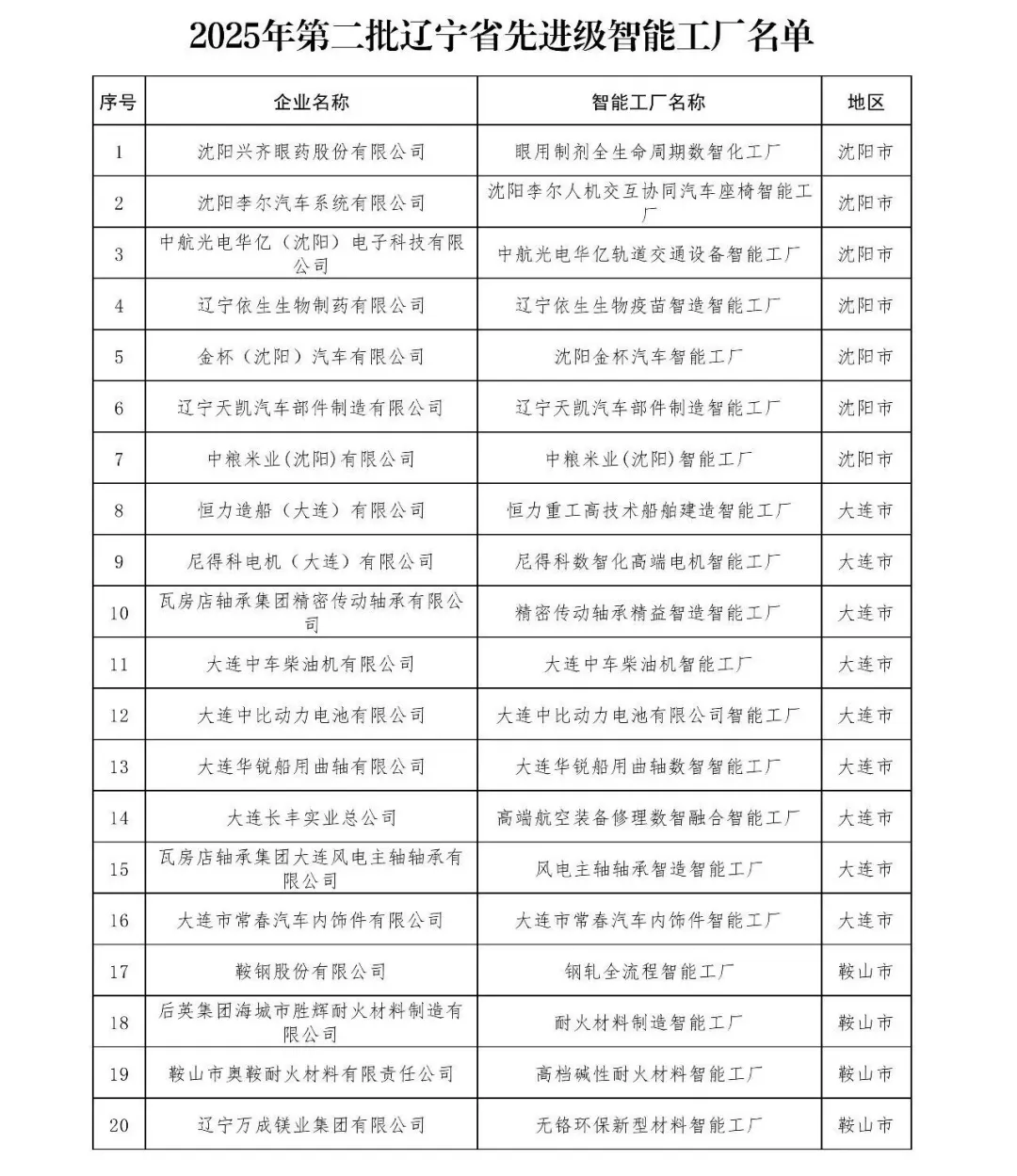
2025年第二批辽宁省先进级智能工厂名单公布,35家企业入选
Xin Lang Cai Jing· 2026-01-10 15:26
Core Insights - The Liaoning Provincial Department of Industry and Information Technology has announced the second batch of advanced intelligent factories for 2025, with 35 companies selected, covering various sectors including biomedicine, automotive parts manufacturing, equipment manufacturing, electronic information, and new metallurgical materials [1] - The total number of advanced intelligent factories in the province has reached 273 [1] - Advanced intelligent factories focus on digital transformation and networked collaboration, aiming to establish industry-leading benchmarks [1] Group 1: Intelligent Factory Development - The intelligent factories are categorized into four levels: basic, advanced, excellent, and leading [1] - The Dalian Zhongbi Power Battery Co., Ltd. is highlighted for its intelligent battery production base, achieving significant results in automation and smart management [1] - The production line at Dalian Zhongbi has a 100% automation rate for key processes such as winding, baking, and liquid injection, with a smart control center enabling full process visualization and traceability [1] Group 2: Future Plans - The province plans to implement a gradient construction action for intelligent factories, promoting the upgrade of production processes and the establishment of advanced-level factories [2] - The goal is to add over 80 advanced and above intelligent factories by 2026 [2]