锂电池

Search documents
天赐材料20万吨电解液项目投产!
鑫椤锂电· 2026-01-26 08:55
ICC 鑫椤资讯年终盘点: | 2025年碳酸锂市场盘点: | | --- | | 2025年电解液市场盘点: | | 2025年铜箔市场盘点: | | 2025年钴酸锂市场盘点: | | 2025年三元材料市场盘点: | | 2025年磷酸铁锂市场盘点: | | 2025年三元前驱体市场盘点: | | 2025年六氟磷酸锂市场盘点: | | 2025年磷酸铁市场盘点: | | 2025年添加剂VC市场盘点: | | 2025年钠离子电池市场盘点: | | 2025年新型锂盐LIFSI市场盘点: | | 2025年隔膜市场盘点: | | 2025年锂电池市场盘点: | | 2025年铝箔市场盘点: | | 2025年储能电池市场盘点: | | 2025年储能系统市场盘点: | 据"投资江门"消息,近日, 天赐材料投资12亿元建设年产20万吨锂电池电解液及10万吨锂电池回收项目竣工投产, 进一步完善广东省江门市新能源电池 产业链。 据了解,该项目 位于广东江门新会区, 于2022年12月正式动工,根据规划,总用地面积约190亩,全面建成并稳定运营后,预计年产值可达57亿元。 关注公众号,点击公众号主页右上角" ...


2025年磷酸锰铁锂市场盘点:产量2.85万吨,激增206.5%
鑫椤锂电· 2026-01-26 08:03
Core Viewpoint - The article highlights the significant growth potential of manganese iron phosphate production, projecting a production increase from 28,500 tons in 2025 to over 500,000 tons by 2030, driven by advancements in electric vehicle technology and increasing demand in various sectors [2][5]. Group 1: Production Growth - The production of manganese iron phosphate is expected to reach 28,500 tons in 2025, representing a year-on-year growth of 206.5% [2]. - By 2026, production is anticipated to rise to 70,000 tons, and by 2030, it is projected to exceed 500,000 tons [2]. Group 2: Key Drivers of Growth - The price increase of cobalt raw materials has led to a surge in the prices of ternary cathode materials, enhancing the price competitiveness of manganese iron phosphate [5]. - Trade frictions have prompted significant stocking and export actions in overseas digital markets, resulting in increased shipments of manganese iron phosphate [5]. - Technological improvements, such as element doping and carbon coating, have addressed issues related to manganese leaching, low conductivity, low packing density, and low specific capacity [5]. Group 3: End-Use Applications - In the power sector, Guoxuan High-Tech's "Qicheng Second Generation Cell" achieves an energy density of 240 Wh/kg and supports 5C fast charging, allowing a 60 kWh battery to charge to 80% in just 12 minutes [6]. - In the two- and three-wheeled electric vehicle market, Star Power has successfully industrialized manganese iron phosphate batteries, with major domestic brands using these batteries in 70% of their products, achieving over 10 million units sold globally [6]. - In consumer electronics, Henan Hengyi Lithium Energy's new battery, utilizing manganese iron phosphate and nano-silicon carbon, boasts double the capacity, a 30% increase in lifespan, and improved charging efficiency [6]. Group 4: Competitive Landscape - Leading companies in the manganese iron phosphate sector include Hanchuang Nano, Rongbai Science and Technology, Times Rui Xiang, Defang Nano, and Zhiliang New Materials [7]. - Hanchuang Nano has a stable production line of 15,000 tons and is accelerating a 30,000-ton expansion project [8]. - Rongbai Science and Technology has seen its manganese iron phosphate product shipments in the first half of 2025 exceed the total for 2024, with a 103% year-on-year increase in Q3 2025 [8]. - Times Rui Xiang's 20,000-ton manganese iron phosphate project was completed and began production in April 2025, achieving industry-leading performance [8].

破局小动力锂电池难题:星恒电源推出GT-Force高导超距技术
Huan Qiu Wang Zi Xun· 2026-01-26 07:28
Group 1 - The small power lithium battery market is rapidly expanding from a "billion-level" to a "trillion-level" due to increased user demand for short-distance transportation tools, accelerated "oil-to-electric" transitions in Southeast Asia, and policies promoting carbon neutrality [1] - Star Power has launched the Polaris high-capacity battery and FAR Ranger series electric motorcycle lithium batteries, addressing challenges in range, safety, and cost faced by the electric two-wheeler and three-wheeler market [1][2] - The prevalence of low-quality "knockoff lithium batteries" poses safety risks and threatens the industry's reputation, highlighting the need for standardized, safe, and affordable lithium batteries [2] Group 2 - The Polaris high-capacity battery features advanced precursor material systems and "high-conductivity ultra-distance technology," aiming to provide high-performance power solutions with a range of 100 kilometers for electric motorcycles and three-wheelers [2] - Star Power is actively involved in drafting national mandatory standards (GB-36672) for lithium batteries used in electric motorcycles and three-wheelers, which aims to eliminate unsafe non-standard products and promote healthy industry development [2] - China has become the largest producer and consumer of lithium batteries globally, with a competitive industry chain, and the small power lithium battery sector is seen as a "second growth curve" for China's lithium battery industry as it expands internationally [2]
零碳工厂:工业领域落实“双碳”目标的关键抓手
中国能源报· 2026-01-26 04:24
Core Viewpoint - The article discusses the issuance of the "Guiding Opinions on the Construction of Zero Carbon Factories" by five departments including the Ministry of Industry and Information Technology, marking a significant step in promoting zero carbon factory construction as a national strategic action aimed at achieving carbon neutrality in the industrial sector [1][3]. Summary by Sections Zero Carbon Factory Definition and Goals - A zero carbon factory prioritizes the use of green electricity and energy-saving modifications to reduce carbon emissions, aiming for net-zero emissions through carbon offsetting via green trading [1]. - The construction of zero carbon factories is set to be included in government work reports by 2025, indicating its elevation from industry exploration to a national strategy [1]. Key Tasks and Industry Focus - The "Guiding Opinions" outline three clear aspects: construction objects, goals, and pathways, focusing on key industries such as automotive, lithium batteries, photovoltaics, steel, non-ferrous metals, and petrochemicals, which together account for over 65% of the industrial added value and approximately 50% of total carbon emissions in China [3][4]. Development Goals and Phased Approach - The document sets clear, phased development goals, emphasizing the need to establish low-carbon competitive advantages in sensitive international trade sectors by 2027, particularly in automotive and electronics [4]. - By 2030, the focus will shift to consolidating low-carbon achievements in foundational materials and consumer goods, promoting collaborative carbon reduction across supply chains [4]. Construction Pathways and Mechanisms - The "Guiding Opinions" propose a comprehensive lifecycle approach to carbon reduction, including scientific carbon accounting, source reduction, process reduction, consumption carbon fixation, intelligent carbon control, and efficient carbon management [5]. - It emphasizes the need for differentiated deployment of tasks among various stakeholders, including local authorities, enterprises, industry associations, and research institutions, to create a multi-faceted governance structure for zero carbon factory construction [5]. Four Guiding Principles - The article outlines four guiding principles for zero carbon factory construction: 1. **Prudent Development**: Tailoring strategies to industry characteristics and ensuring steady carbon reduction without compromising economic growth [7]. 2. **Systematic Advancement**: Integrating energy optimization, resource recycling, and supply chain collaboration into a comprehensive carbon reduction strategy [8]. 3. **Soft and Hard Integration**: Combining physical measures with robust carbon management systems to enhance overall carbon management capabilities [9]. 4. **International Leadership**: Establishing standards and databases that reflect China's characteristics and actively participating in international standard-setting [9]. Recommendations for Stakeholders - Local authorities are advised to implement science-based policies that consider regional industrial characteristics and avoid sacrificing normal operations for short-term emission reductions [12]. - Enterprises should focus on enhancing their green competitiveness by aligning with ESG disclosure requirements and establishing effective carbon management systems [12]. - Research institutions are encouraged to innovate standards and frameworks that support zero carbon factory construction, ensuring alignment with international practices [13]. Conclusion - The "Guiding Opinions" serve as a clear action guide and institutional framework, marking a solid step towards zero carbon development in China's industry, with the potential to set a global benchmark for industrial green transformation [13].
太空能源打开应用场景-光伏及锂电迎产业新机遇
2026-01-26 02:49
Summary of Key Points from Conference Call Industry Overview - The space energy sector is expected to benefit from breakthroughs in reusable rocket technology and ITU frequency allocation rules, leading to a projected 30%-50% growth in global rocket and satellite launches over the next 3 to 5 years, with annual satellite launches potentially exceeding 10,000 by 2027 or 2028 [1][5] Core Insights and Arguments - **Rocket Launch Projections**: By 2025, global rocket launches are expected to reach 392, a 25% increase year-over-year, while satellite launches are projected to hit 4,522, marking a 58% increase. China's satellite launches are anticipated to reach 371, a 40% increase [2] - **Reusable Rocket Technology**: 2026 is expected to be a pivotal year for China's reusable liquid rocket technology, with multiple test flights planned for the Long March 12A. Other companies are also expected to launch their reusable rockets, significantly reducing satellite launch costs [3] - **SpaceX Developments**: SpaceX's Starship is projected to conduct four launches in 2026, each carrying 60 V3 satellites, which will increase demand for solar wings due to their enhanced power output of 50-60 kW [4] - **ITU Frequency Allocation**: China has applied for 203,000 satellite frequency resources, with a total of 250,000 applications. These resources must be deployed within 14 years, leading to exponential growth in deployment rates [5] Important but Overlooked Content - **Solar Wing and Battery Market**: The space energy system constitutes 20%-30% of satellite value, with solar wings being the most valuable component, accounting for over half of the cost. The cost of P-type crystalline silicon has significantly decreased, while the high cost of triple-junction gallium arsenide remains a barrier [6][7] - **Investment Opportunities**: Companies such as Maiwei, Jiejia Weichuang, and Aotwei are positioned to benefit from the growth in the photovoltaic industry. In the solar wing and space photovoltaic battery sector, recommended companies include Dongfang Risheng, Junda Co., and Mingyang Smart Energy [10][11] - **Lithium Battery Applications**: Lithium batteries are crucial for rocket and satellite operations, providing high power for flight control systems and emergency backup power for navigation systems [12] - **Market Opportunities for Lithium Batteries**: As the market expands, companies like Weilan Lithium and Yiwei are well-positioned to capture supply chain opportunities, with Weilan collaborating with Taiwan Energy, a direct supplier to SpaceX [13]
碳酸锂:高位强势运行,关注供需边际变化成材,重心下移偏弱运行
Hua Bao Qi Huo· 2026-01-26 02:49
Group 1: Report Industry Investment Rating - No relevant content provided Group 2: Core View of the Report - The report believes that lithium carbonate will operate strongly at a high level, and attention should be focused on cost and marginal changes in supply and demand [2][4] Group 3: Summary According to Related Catalogs Lithium Carbonate Futures and Spot Market - Last week, the main contract of lithium carbonate futures closed at 181,520 yuan/ton. The net short position of the main funds continued, the long - short ratio decreased month - on - month, and the warehouse receipts decreased slightly by 730 tons to 28,156 tons. The average price of SMM electric carbon was 171,000 yuan/ton. The trading market was active last week. In the spot market, upstream producers were more willing to sell, with some still holding back supply. Downstream buyers had a mix of inventory building and waiting, and scattered purchases slowed down after the price increase. Overall, transactions were mainly based on demand [2] Supply and Demand Fundamentals - **Supply side**: Last week, the raw material market showed a differentiated trend. Overseas lithium spodumene remained stable with a slight increase, while domestic spot lithium ore prices generally declined. The total weekly operating rate of SMM lithium carbonate was 50.99% (- 1.7%), and the operating rate of each process route decreased month - on - month due to maintenance plans. The total output was 22,217 tons (- 388 tons), with a slight decrease in supply [3] - **Demand side**: There was a significant structural differentiation. Last week, the output of SMM lithium iron phosphate and ternary materials decreased slightly month - on - month, and inventories were reduced. The output of SMM power cells decreased slightly. As of January 18, the penetration rate of new energy vehicle sales increased to 55.6%, and the production schedule of energy - storage cells increased slightly to support demand [3] - **Inventory**: Last week, the social inventory of the four - place sample of SMM increased by 2% (+ 860 tons) month - on - month, the sample weekly inventory decreased slightly by 0.7% (- 783 tons) month - on - month, and the total inventory days were 27.8 days. The inventory days of the upstream and downstream increased to 5.1 days and 9.6 days respectively, and the inventory days of other links decreased to 13.1 days, showing a significant differentiation in the inventory structure [3] Macro - policy Level - **Demand side**: Multiple incentives such as subsidies for car trade - ins and battery export tax rebates stimulate terminal consumption and improve macro - liquidity - **Supply side**: On January 15, the National Development and Reform Commission proposed to introduce management measures for the comprehensive utilization of new energy vehicle power batteries, which will improve the recycling threshold and eliminate backward production capacity, optimize the domestic supply structure in the long term, and raise the cost support center - **Industrial planning**: The industrial plan for Qinghai Salt Lake, the key points of the "15th Five - Year Plan" for energy storage, and a series of deployments at the Central Economic Work Conference have formed synergistic benefits to support long - term supply - demand balance. The central bank's structural interest rate cut indirectly strengthens the long - term macro - positive atmosphere [4]
把稳比较优势
Xin Lang Cai Jing· 2026-01-25 22:24
Core Viewpoint - Guizhou is implementing a strategy to enhance its comparative advantages during the 14th Five-Year Plan period, focusing on transforming its mineral, ecological, cultural, digital, and human resources into industrial strengths, thereby driving economic growth and innovation [6][9]. Group 1: Mineral Resources - Guizhou has a significant advantage in mineral resources, with the number of strategic mineral types increasing from 49 in 2022 to 67 in 2024, and over 1.3 billion tons of new strategic mineral resources added during the 14th Five-Year Plan [7]. - The Chuan Yan Cave mine, with a resource reserve of 879.52 million tons, is the largest modern open-pit phosphate mine in China, with a planned annual output exceeding 4 million tons by 2025 [6][8]. - The phosphate chemical industry park in Fuquan and Wengan has surpassed a total output value of 68 billion yuan, aiming for a trillion-yuan target [6]. Group 2: New Industries and Technological Innovation - New industries such as lithium batteries, electric vehicles, and photovoltaic glass are emerging, leveraging Guizhou's natural resource advantages and contributing to the optimization of the regional industrial structure [8][9]. - The province is focusing on deep processing of mineral resources and developing new production capabilities, with a particular emphasis on the lithium and phosphate sectors due to the growing demand in the electric vehicle market [9][11]. - Guizhou plans to invest 304 million yuan by 2026 to enhance its digital infrastructure, supporting the integration of technology and industry [10]. Group 3: Ecological and Cultural Resources - Guizhou is enhancing its ecological competitiveness, with initiatives like the Tongren "Ecological Account" converting green resources into financial products, benefiting local communities [10]. - The province aims to develop its cultural tourism industry, capitalizing on its rich natural and cultural heritage to create new economic opportunities [9][10]. - The integration of ecological advantages with mineral resources is seen as a key strategy for expanding into the renewable energy sector, with significant exports expected in lithium batteries and electric vehicles [11].
万华化学,再成立一新材料公司!
DT新材料· 2026-01-25 16:05
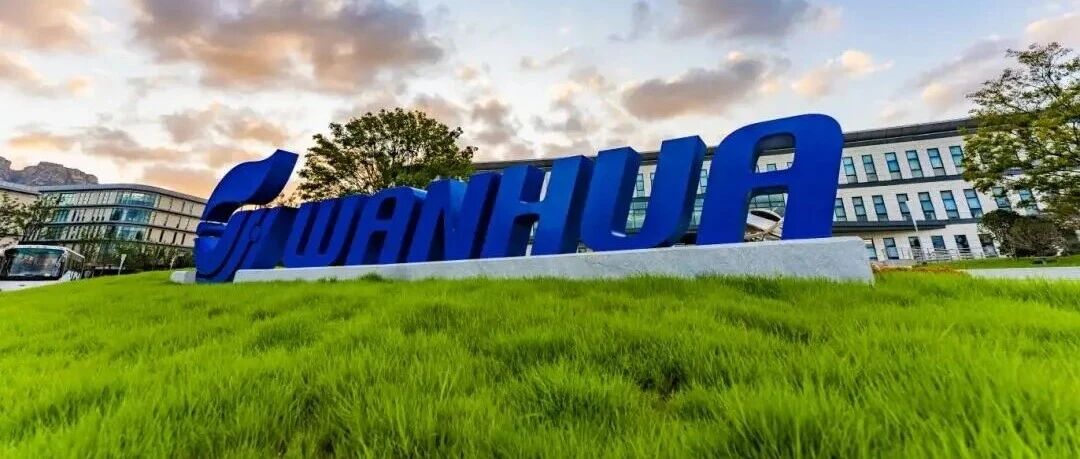
Core Viewpoint - Major chemical companies have historically overlooked the lithium battery sector, but with the increasing demand for electric vehicles and energy storage, they are now focusing on battery materials, particularly solid-state batteries and lithium iron phosphate [1][2]. Group 1: Market Dynamics - The global demand for lithium iron phosphate (LFP) has surged, with major battery manufacturers like CATL, BYD, and others collectively ordering 6 million tons of LFP materials, amounting to over 240 billion yuan [2]. - Wanhu Chemical is aggressively entering the lithium battery market, establishing a new subsidiary with a registered capital of 740 million yuan, aiming to produce specialized materials for batteries [1][2]. Group 2: Production Capacity - Wanhu Chemical plans to achieve a production capacity of 1 million tons of lithium iron phosphate by 2027, with multiple projects underway, including a 650,000-ton LFP project and two additional projects of 200,000 tons each [2]. - The company is positioning itself to meet the high demand for LFP materials, which is currently outpacing supply, leading to intense competition among manufacturers [2]. Group 3: Strategic Partnerships and Investments - Wanhu Chemical has formed various partnerships and joint ventures in the lithium battery supply chain, including upstream mining and downstream battery production, enhancing its market presence [3]. - The company is also investing in clean energy initiatives, including a joint venture with a state-owned energy company, indicating a broader strategy beyond just battery materials [3][4]. Group 4: Future Outlook - The commercial investment in controlled nuclear fusion in China is accelerating, with significant funding and support from government entities, positioning it as a potential future energy solution [4]. - Wanhu Chemical's diversification into new energy sectors, including nuclear energy, suggests a strategic shift towards sustainable energy solutions, aligning with global trends [4].

2025年云南对东盟进出口1320.8亿元 创历史新高
Xin Lang Cai Jing· 2026-01-25 15:08
Core Insights - In 2025, Yunnan's import and export volume with ASEAN reached 132.08 billion yuan, marking a historical high with a year-on-year growth of 20.8% [1] - During the 14th Five-Year Plan period, Yunnan's total import and export volume reached 1.39 trillion yuan, an increase of 40.8% compared to the 13th Five-Year Plan [1] - Yunnan's trade partners have expanded to 193 countries and regions, with 146 of them experiencing growth in import and export activities [1] Trade Performance - In 2025, Yunnan's total goods trade import and export volume was 273.74 billion yuan, growing by 10.2%, which is 6.4 percentage points faster than the national average [1] - The import and export volume with Belt and Road countries was 235.86 billion yuan, reflecting a growth of 16.1% [1] - Trade with the Middle East, Latin America, and Africa saw significant increases of 3.7%, 51.1%, and 75.6% respectively, collectively accounting for 33.4% of Yunnan's total import and export value [1] Cross-Border Trade Developments - The cross-border freight volume on the China-Laos Railway increased by 13.9%, with the value growing by 42.9% [1] - Yunnan has implemented a pilot project for the smart import of Lao cement at the first land port in the country [1] - Nine new categories of high-quality agricultural and food products from neighboring countries have been approved for import [1] Agricultural Exports - Yunnan has taken the lead in batch inspection and quarantine reforms in the country, with agricultural exports reaching 19.79 billion yuan in 2025, accounting for 21% of total exports [2] - The export scale of fresh-cut flowers and coffee ranks first in the country, while vegetables and fruits rank third [2] - Exports of "new three items" such as photovoltaic products and lithium batteries reached 3.35 billion yuan, increasing by 140% [2] - Tin ingot exports also saw a significant rise to 5.04 billion yuan, reflecting a growth of 140% [2]
114.96%!2025成渝地区双城经济圈重大项目建设交“答卷”
Xin Lang Cai Jing· 2026-01-25 15:08
Core Viewpoint - The construction of the Chengdu-Chongqing economic circle is progressing well, with 181 major projects completing a total investment of 296.144 billion yuan, achieving an annual investment completion rate of 114.96% [2] Group 1: Infrastructure Network - Modern infrastructure projects completed an investment of 136.586 billion yuan, with an annual investment completion rate of 104.77% [3] - Key transportation projects include the successful completion of the Yuwan High-speed Railway tunnel and the opening of the highway from Hechuan to Bicheng to Jiangjin, significantly improving travel efficiency [3] - Energy and water resource projects have also advanced, including the completion of the Hami-Chongqing ±800 kV UHVDC project and the full water supply of the Western Water Resource Allocation Project, benefiting nearly ten million people [3] Group 2: Modern Industrial System - Modern industrial projects achieved an investment of 62.624 billion yuan, with an annual investment completion rate of 143.68% [4] - Significant advancements in advanced manufacturing include the trial operation of a 6-inch IGBT power semiconductor production line and the completion of the main plant for the fiberglass and high-performance composite materials base [4] - The new energy sector is thriving, with the completion of a lightweight chassis for smart connected vehicles and the acceleration of lithium battery separator production, filling a regional capacity gap [4] Group 3: Technological Innovation and Open Cooperation - Investment in technology innovation and open projects reached 17.271 billion yuan, with an annual investment completion rate of 125.43% [5] - The construction of innovation platforms is progressing, including the establishment of the Zhangjiang Laboratory in Chongqing and advancements in neutron technology for scientific applications [5] - The Western Land-Sea New Corridor is being developed, with key logistics nodes like the Chongqing South Comprehensive Logistics Park taking shape [5] Group 4: Ecology, Consumption, and Livelihood - Projects focused on ecology, consumption, and livelihood completed an investment of 79.663 billion yuan, with an annual investment completion rate of 114.01% [6] - Ecological restoration projects, such as the Longxi River ecological restoration, have achieved stable water quality standards [7] - The transformation of the Jiefangbei-Chaotianmen area has enhanced its appeal as an international consumption destination, while healthcare facilities are being improved to better serve the community [7]