
零售

Search documents
雷军称十五五小米将重点攻坚芯片等底层核心技术 猫眼娱乐去年净利同比增超190%
Xin Lang Cai Jing· 2026-02-24 23:26
Group 1: Company Developments - Xiaomi plans to focus on core technologies such as chips, AI, and operating systems over the next five years to become a global hard-tech company [1] - Meta has reached an AI device procurement agreement with AMD, involving the deployment of 6 gigawatts of AMD GPUs and a potential sale of AI chips worth up to $60 billion [1] - Cat's Eye Entertainment expects revenue of 4.6 to 4.7 billion yuan for FY2025, representing a year-on-year growth of approximately 12.7% to 15.1%, with net profit projected at 540 to 590 million yuan, a year-on-year increase of about 196.9% to 224.4% [5] - Green Tea Group anticipates a net profit of 460 to 508 million yuan for 2025, reflecting a year-on-year increase of approximately 31.4% to 45.1% [6] - Baosheng Group forecasts total operating revenue of 3.698 billion yuan for 2025, a year-on-year decrease of 0.8%, with same-store sales expected to decline by 16.6% [7] - Haizhi Technology Group has entered into a strategic cooperation framework agreement with Zhiyu to collaborate on model training and application scenarios [8] Group 2: Market Performance - The Nasdaq China Golden Dragon Index rose by 1.37%, with notable performances from Alibaba (up 0.22%), Pinduoduo (up 1.06%), and JD.com (up 1.07%) [3] - The Hang Seng Index fell by 1.82% to 26,590.32 points, with the technology index down 2.13% [4] - The S&P 500 Index increased by 0.77% to 6,890.07 points, while the Nasdaq Composite Index rose by 1.04% to 22,863.68 points [2]


274家北京老字号去年营收约2500亿元,超九成入驻三大电商平台
Sou Hu Cai Jing· 2026-02-24 23:22
Core Insights - The report highlights the transformation of Beijing's time-honored brands (老字号) into modern consumer attractions and competitive industry players, emphasizing their cultural and commercial value [1] - The "14th Five-Year Plan" period is identified as a rapid growth phase for these brands, with significant expansion into various industries beyond traditional commerce [2] - A multi-layered policy support system has been established since 2017, facilitating the upgrade of these brands from mere commercial entities to important cultural and urban service carriers [3] Industry Growth - The number of Beijing's time-honored brands has reached 274, with 77 new brands recognized from 2021 to 2025, marking a significant increase [2] - Revenue for these brands is projected to grow from 135.5 billion yuan in 2021 to approximately 251 billion yuan by 2024, reflecting a compound annual growth rate of 22.8% [2] - The brands have expanded their operational reach to cover all 16 administrative districts in Beijing, integrating deeply into urban development and citizen life [2] Policy Support - A comprehensive policy framework has been developed, including national and local guidelines that support innovation, brand protection, and industry integration [3] - The policy support has enabled the development of time-honored brands across 14 industries, enhancing their innovative capabilities and market presence [3] - The top eight brands contribute 67.7% of the total revenue, showcasing the effectiveness of brand clustering and value reconstruction [3] Innovation and Experience - Brands are leveraging innovation to create immersive cultural experiences, such as integrating traditional products with modern retail formats [4][5] - Digitalization is crucial for connecting with younger consumers, with over 90% of brands having an online presence on major e-commerce platforms [4] - The transformation of traditional stores into multifunctional cultural spaces enhances public cultural offerings and urban cultural landscapes [5] Talent and Challenges - The workforce in the industry has decreased from 46,935 in 2018 to 40,289 in 2023, indicating a challenge in talent retention and acquisition [6] - The current talent structure shows a significant gap in digital and innovative skills, with only 1% of the workforce being digital technology professionals [6][7] - Efforts are being made to address these gaps through talent recruitment and project collaborations [7] Intellectual Property and Ecosystem - The protection of intellectual property is evolving from a focus on rights enforcement to building a comprehensive ecosystem for brand protection [7] - The establishment of cross-regional coordination mechanisms signifies a shift towards collaborative efforts in safeguarding these brands [7] - The development of Beijing's time-honored brands serves as a model for revitalizing similar brands across the country, contributing to the construction of an international consumption center [7]
常州市56家重点监测商贸企业 春节假期销售额同比增5.5%
Jiang Nan Shi Bao· 2026-02-24 23:11
Core Insights - The article highlights the efforts of Changzhou city to promote consumption, ensure supply, and maintain safety during the Spring Festival, resulting in a prosperous and orderly market [1] Group 1: Sales Performance - From February 15 to 23, sales revenue of 56 monitored comprehensive and retail catering enterprises in Changzhou reached 790 million yuan, representing a 5.5% increase compared to the same period last year [1] Group 2: Promotional Activities - Changzhou implemented "trade-in" programs for automobiles and home appliances, along with personal new car purchase subsidies, to stimulate sales [1] - Between February 15 and 22, the automobile scrapping and replacement subsidy amounted to 970,000 yuan, driving sales of 15.24 million yuan; the home appliance trade-in subsidy reached 8.87 million yuan, leading to sales of 71.07 million yuan [1] - Over 5 million yuan in dining consumption vouchers were distributed, alongside the introduction of promotional meal sets to enhance the overall consumer experience [1]
春节期间重要民生商品量足价稳
Zhen Jiang Ri Bao· 2026-02-24 23:08
Group 1 - The core viewpoint of the articles highlights that the supply of essential goods during the Spring Festival is sufficient, with overall market prices showing a stable trend, contributing to a favorable consumption environment for citizens [1][2] Group 2 - The city’s main food market operated smoothly during the holiday, with stable prices for grains and oils, while prices for fresh beef and lamb decreased by 2.4% and 10.1% respectively compared to pre-holiday levels [1] - The average price of 15 monitored vegetable types dropped by 2.8% before the holiday, with significant declines in prices for radishes, cabbages, and tomatoes, enhancing the festive dining experience for citizens [1] - The efficient operation of the supply network from wholesale markets to retail stores ensured adequate supply, with notable increases in the volume of vegetables, pork, and fruits compared to the same period last year [1] Group 3 - The city’s price regulation committee collaborated with 19 price control units to conduct a special Spring Festival sales event, increasing discounts on over half of the daily discount vegetable items by 20% [2] - During the first eight days of the holiday, the total sales volume of discounted goods reached 41,000 kilograms, with a total discount amount of approximately 90,000 yuan, and an overall discount rate of 20.1% [2] - The average discount on vegetables reached 25.2%, with local supermarket chains actively engaging with local farms to maintain price stability through initiatives like the "2 yuan vegetables" program [2]
消费行业日均销售收入同比增长13.7%
Sou Hu Cai Jing· 2026-02-24 22:30
Group 1 - The core viewpoint of the articles highlights a significant increase in consumer spending during the 2026 Spring Festival holiday, with a daily average sales revenue growth of 13.7% compared to the previous year, indicating a vibrant consumption market driven by various factors [1][3] Group 2 - The tourism sector experienced a robust performance, with tourism-related service sales revenue increasing by 39.6% year-on-year during the holiday, particularly in ice and snow tourism regions, which saw a 62.4% increase [2] - Hainan's tourism and shopping services surged, with sales revenue increasing by 70.9% as it welcomed a large number of visitors during the first long holiday after its customs closure [2] - The integration of traditional culture with modern consumption led to a rise in digital cultural services and performances, with sales revenue for digital cultural services and art performance venues increasing by 38.8% and 136.6% respectively [2] Group 3 - The restaurant sector saw a significant increase in consumer spending, with overall restaurant revenue growing by 31.2%, driven by family gatherings and local specialty offerings [2] - Retail sales also showed strong growth, with department store sales increasing by 39.3% and online retail growing by 10.4% year-on-year, providing convenience for holiday shopping [2] Group 4 - The increase in consumer spending is attributed to three main factors: the extended holiday period boosting consumer enthusiasm, the effectiveness of the "old for new" policy, and the implementation of a prize invoice pilot program in 50 cities to stimulate consumption [3] - The strong consumption data during the holiday reflects the vitality and potential of the Chinese consumer market, laying a foundation for sustained economic stability and growth [3]
“最长春节假期”激活内需潜力
Xin Lang Cai Jing· 2026-02-24 22:23
Group 1 - The core viewpoint of the article highlights the strong domestic consumption and investment activity during the extended Spring Festival holiday, indicating a robust recovery in the economy [1][2][4]. - Key retail and catering enterprises experienced a daily sales increase of 5.7% compared to the 2025 Spring Festival holiday, with over 28 billion people traveling across regions [1]. - Domestic travel reached 596 million person-times, with total spending amounting to 803.483 billion yuan during the holiday [1]. Group 2 - The optimization of the holiday system has released time dividends, further stimulating consumer activity, particularly in the tourism sector, where the average travel days per person increased by 1.1 days to 5.9 days compared to the previous year [2]. - The report from the China Travel Service Association and Tuniu indicates that long-distance travel orders (over 5 days) accounted for 59.6% of total orders, reflecting a shift towards longer vacations [2]. - New consumption scenarios, such as the "movie + market" concept in Changsha, have emerged, enhancing the holiday experience and driving sales across various sectors [3]. Group 3 - Government policies have been implemented to boost consumer welfare and market vitality, including a total of 625 billion yuan allocated for consumer goods replacement subsidies and 20.5 billion yuan for direct consumer incentives during the holiday [4]. - Key monitored pedestrian streets and business districts saw a 6.7% increase in foot traffic and a 7.5% increase in sales compared to the previous Spring Festival [4]. - Sales in the catering sector rose by 5.2%, while sales of smart glasses and intelligent robots surged by 47.3% and 32.7%, respectively, compared to last year's holiday [4]. Group 4 - The introduction of visa-free policies for travelers from Canada and the UK has led to a significant increase in inbound tourism, with 460,000 foreign visitors entering under the visa exemption policy, marking a 28.5% daily increase compared to the previous year [5][6]. - The construction of major projects continues to progress, with significant investments planned, such as over 3 billion yuan for the first quarter by the Southern Power Grid [6]. - The Spring Festival period serves as a critical time for attracting investment, with numerous projects signed during the holiday, including 43 projects in Hubei and 20 projects in Fuzhou, covering key sectors like chips and new materials [6].
精准监管维护公平竞争市场秩序
Xin Lang Cai Jing· 2026-02-24 22:23
Group 1 - The core viewpoint emphasizes the importance of antitrust enforcement and maintaining fair competition, with a notable increase in the number of reviewed concentration cases in 2025, totaling 706, which is a 9.8% year-on-year growth [1] - The State Administration for Market Regulation (SAMR) has implemented a five-day notification system to expedite the approval process for investment and merger projects, achieving an average case acceptance time of 17.9 days and an average review time of 26.8 days [1] - The SAMR has issued guidelines for non-horizontal concentration reviews and has transitioned pilot local reviews into formal delegations, enhancing the operational efficiency of antitrust business systems [1] Group 2 - Since 2025, the SAMR has initiated investigations into 13 illegal concentration cases, imposing administrative penalties on 5 cases with a total fine of 8.7 million yuan [2] - The investigated cases involve various types of enterprises, including state-owned, private, and foreign companies, across sectors such as retail, construction, and semiconductors [2] - The penalties for the public cases were generally below 5 million yuan, with some cases receiving reduced fines due to cooperation and compliance efforts [2] Group 3 - The SAMR emphasizes that the goal of enforcement is to encourage companies to comply with legal obligations and maintain fair competition, highlighting three compliance requirements for businesses [3] - Companies must report all concentrations that meet the reporting threshold and must not implement concentrations without prior approval [3] - Businesses are also advised to adhere to commitments made during the approval process and to comply with local antitrust laws when operating internationally [3]
这个春节 成都吸睛又吸金
Xin Lang Cai Jing· 2026-02-24 22:23
Core Insights - Chengdu's consumer market experienced a strong start post-Spring Festival, with total online and offline consumption reaching 631.7 billion yuan, a year-on-year increase of 10.3% [3] Group 1: Consumer Market Performance - All shopping districts in Chengdu reported increases in both foot traffic and sales during the Spring Festival, with the total foot traffic in 11 monitored districts reaching 20.9 million and total sales amounting to 4.88 billion yuan [4] - The iconic Chunxi Road shopping area attracted over 10 million visitors and generated sales of 2.68 billion yuan, driven by the "Spring Six Treasures" event that combined traditional customs with modern technology [4] - Chengdu's 215 featured commercial streets attracted 37.875 million visitors and achieved sales of 6.51 billion yuan during the nine-day holiday [4] Group 2: Events and Activities - Over 600 events were organized during the Spring Festival, with 45 key activities attracting 14.569 million visitors and generating 1.1 billion yuan in consumption [5] - Notable events included the "New Year Theme Activity" at Jiezi Ancient Town, which drove 400 million yuan in consumption, and the "Chess Encounter" event at Times Outlet, contributing 130 million yuan [5] Group 3: Policy Support - The "old-for-new" vehicle and appliance replacement policies significantly boosted consumer activity, with applications for vehicle replacements reaching 25,600 and appliance replacements totaling 1.181 million, driving consumption of 4.396 billion yuan and 4.53 billion yuan respectively [6] - Chengdu's new energy vehicle purchase subsidies and the expansion of the appliance replacement policy to include additional categories are expected to further stimulate consumer spending [6] - A prize invoice initiative attracted over 1.139 million participants, with a total fund of 21 million yuan allocated for the program, enhancing consumer engagement [7]
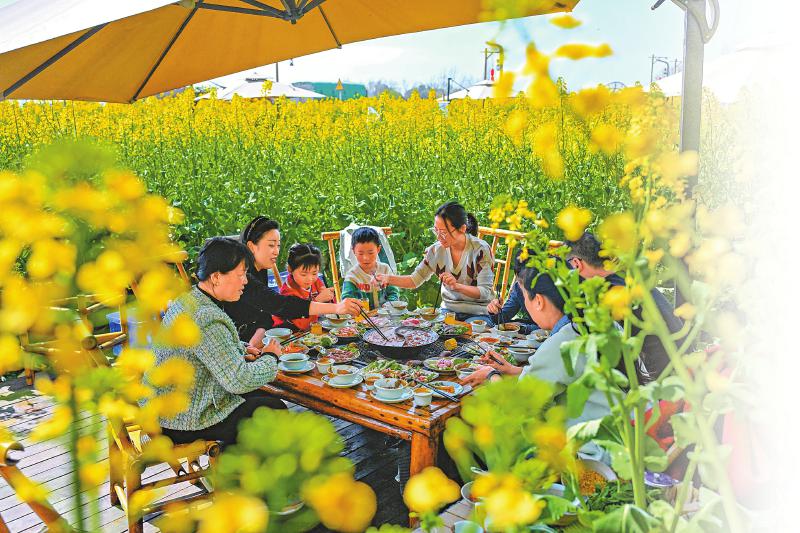
2025年经营者集中案件审结数量同比增长9.8%——精准监管维护公平竞争市场秩序
Jing Ji Ri Bao· 2026-02-24 22:08
Core Viewpoint - The article emphasizes the importance of antitrust enforcement in maintaining fair competition and highlights the efficiency of China's merger review process, which has seen a significant increase in case resolutions and supports healthy development across various ownership types in the economy [1]. Group 1: Merger Review Statistics - In 2025, the State Administration for Market Regulation (SAMR) concluded 706 merger cases, marking a 9.8% year-on-year increase, indicating a robust competitive market [1]. - The average acceptance time for cases was 17.9 days, and the average review time was 26.8 days, showcasing the efficiency of the review process [1]. - Unconditional approvals were granted for 244 transactions involving private enterprises, 379 involving state-owned enterprises, and 297 involving foreign enterprises, reflecting support for diverse ownership structures [1]. Group 2: Enforcement Actions - Since 2025, SAMR has initiated investigations into 13 illegal merger cases, with 5 cases resulting in public administrative penalties totaling 8.7 million yuan [2]. - The cases involved various sectors, including retail, construction, semiconductors, and human resources, with penalties primarily under 5 million yuan [2]. - Violations included failure to report mergers that met the reporting threshold and proceeding with mergers without approval during the review phase [2]. Group 3: Compliance Requirements - Companies are urged to fulfill reporting obligations for mergers that meet the reporting criteria and to comply with any conditional commitments made during the review process [3]. - Violations of conditional approvals will lead to legal consequences, emphasizing the need for adherence to antitrust regulations [3]. - Companies operating internationally must also comply with local antitrust laws when engaging in overseas markets [3].
“稳定健康、不断进步的中国经济值得看好”——外国媒体和国际人士热议中国春节经济
Ren Min Ri Bao· 2026-02-24 22:04
Core Viewpoint - The prolonged Spring Festival holiday has significantly boosted China's economic vitality, showcasing the resilience and potential of the country's vast market, while also providing opportunities for global economic growth [1][6]. Group 1: Consumer Market Performance - During the Spring Festival holiday, China's consumer market exhibited strong demand across various sectors, including tourism, retail, and entertainment, with notable sales growth [2]. - In Sichuan, monitored retail sales reached 2.78 billion yuan, a year-on-year increase of 10.9%, while Guangdong welcomed 86.59 million tourists, generating 84.89 billion yuan in tourism revenue, up 8.1% and 13.9% respectively compared to last year [2]. - The overall cross-regional movement of people during the Spring Festival is expected to reach 9.5 billion, with railway and civil aviation passenger volumes projected at 540 million and 95 million respectively [2]. Group 2: Consumption Trends and Innovations - The consumption structure in China is continuously optimizing, with new growth points emerging, such as smart devices and organic foods becoming popular choices for the holiday [3]. - Su Ning's report indicated a 78% increase in foot traffic at its stores, with smart watches and smart glasses sales rising by 62% [3]. - Various local governments have implemented measures like issuing consumption vouchers and promoting trade-in programs to stabilize consumer expectations, indicating a shift towards high-quality growth driven by domestic demand [3]. Group 3: External Economic Impact - The "spillover effect" of the Spring Festival economy is increasingly evident, benefiting international suppliers and enhancing trade relationships, particularly with countries like Peru, which is seeing a surge in blueberry exports to China [4]. - The influx of foreign products, such as chocolates and cosmetics, into the Chinese market is contributing to the development of local industries in exporting countries [4]. - Statistics show that 17.8 million people crossed borders during the holiday, with a daily average increase of 10.1% compared to last year, and foreign tourist flight bookings to China increased over fourfold [4]. Group 4: Global Economic Outlook - The Spring Festival economy is seen as a catalyst for global economic growth, enhancing trade and tourism while fostering deeper economic ties among nations [6]. - The positive performance during the holiday sets a strong foundation for China's economic development throughout the year, reflecting the country's comprehensive development advantages and robust supply capabilities [6]. - The ongoing release of domestic demand and continuous reform measures are expected to lead China towards higher quality and more sustainable economic growth [6].