人力资源服务

Search documents
北京人力涨2.01%,成交额3398.76万元,主力资金净流出97.93万元
Xin Lang Cai Jing· 2025-11-24 05:48
Core Viewpoint - Beijing Human Capital Group's stock has shown a slight increase of 2.01% on November 24, with a current price of 18.82 CNY per share, reflecting a market capitalization of 10.654 billion CNY [1] Financial Performance - For the period from January to September 2025, Beijing Human Capital reported a revenue of 33.807 billion CNY, representing a year-on-year growth of 1.89%. The net profit attributable to shareholders was 1.007 billion CNY, marking a significant increase of 57.02% compared to the previous year [2] Shareholder Information - As of September 30, 2025, the number of shareholders for Beijing Human Capital increased by 6.59% to 16,300. The average circulating shares per person decreased by 6.18% to 22,521 shares [2] Dividend Distribution - Since its A-share listing, Beijing Human Capital has distributed a total of 1.468 billion CNY in dividends, with 670 million CNY distributed over the past three years [3] Institutional Holdings - As of September 30, 2025, the top ten circulating shareholders include notable entities such as China Europe Mixed Fund A, which holds 10.8348 million shares, a decrease of 2.8823 million shares from the previous period. Hong Kong Central Clearing Limited increased its holdings by 452,400 shares to 9.1158 million shares [3]

人力资源市场首颁行政法规 公共服务机构提供8类服务不得收费
Mei Ri Jing Ji Xin Wen· 2025-11-24 04:09
每经记者|李彪 每经编辑|陈旭 你是否遭遇过求职难?你是否遭遇过职业介绍的黑中介? 中国是全球第一人口大国,仅在去年,我国举办的现场招聘会、交流会就有22万多场,参会求职人员超 过1亿多人次。 为了规范人力资源服务,日前,李克强总理签署国务院令,颁布《人力资源市场暂行条例》(以下简称 《条例》),自2018年10月1日起施行。 《条例》中要求,用人单位发布或者向人力资源服务机构提供的单位基本情况、招聘人数、招聘条件、 工作内容、工作地点、基本劳动报酬等招聘信息,应当真实、合法,不得含有民族、种族、性别、宗教 信仰等方面的歧视性内容。 招聘信息不得含性别等歧视性内容 7月17日,在国新办举行的政策吹风会上,人社部副部长张义珍介绍,《条例》是改革开放以来,我国 人力资源要素市场领域第一部行政法规,对健全完善人力资源市场体系,推动人力资源服务业健康发 展,促进人力资源自由有序流动和优化配置,更好服务就业创业和高质量发展,具有重要意义。 《条例》共七章四十八条,对人力资源市场管理体制、人力资源市场培育和建设、人力资源服务机构、 人力资源市场活动规范、人力资源市场监督管理等方面作了系统规定。 《条例》规定,国家引导和促 ...


健全就业促进机制 构建就业友好型发展方式
Jing Ji Ri Bao· 2025-11-24 01:52
人社部人力资源流动管理司负责人表示,下一步将结合国家和区域重大发展战略,把人力资源服务业与 制造业融合发展纳入"十五五"经济社会发展规划,通过加强顶层设计、强化政策支持、创新供给方式, 统筹谋划推动试点任务落到实处、取得实效。 "十五五"时期,我国经济长期向好的支撑条件和基本趋势没有改变,为稳定就业提供了坚实基础,但就 业总量压力依然存在,结构性就业矛盾更为突出,外部环境变化也将带来新情况新问题。在此背景下, 《建议》明确提出,深入实施就业优先战略,健全就业促进机制,构建就业友好型发展方式。 首都经济贸易大学中国新就业形态研究中心主任张成刚表示:"构建就业友好型社会,应把产业结构优 化升级作为创造高质量岗位的核心抓手。"他建议,依托数字平台和"AI+就业"降低就业摩擦,提升服务 业就业吸纳能力;通过大规模职业教育和技能培训提升就业质量、应对技术变革;把完善就业服务体系 作为重点群体就业保障的重要支撑,将优化劳动者权益保障与就业生态作为就业友好的制度性抓手。 为打造更利于就业的发展模式,相关部门将进一步加强产业发展和就业工作的协同配合,支持企业稳定 现有岗位、扩大招聘规模;在数字经济、高端制造、现代服务等领域培 ...
华创证券:社服行业整体营收平稳增长 旅游零售显现企稳迹象
Zhi Tong Cai Jing· 2025-11-21 08:09
Group 1: Overall Industry Performance - The social service industry achieved a revenue of 178.43 billion yuan in the first three quarters of 2025, with a year-on-year growth of 1.2% and a 16.6% increase compared to the same period in 2019 [1] - The net profit attributable to shareholders was 10.09 billion yuan, reflecting a year-on-year decline of 14.4% and a 24.5% decrease compared to 2019 [1] - The overall gross profit margin was 23.8%, down by 2.0 percentage points year-on-year, while the net profit margin was 5.7%, down by 1.0 percentage points year-on-year [1] Group 2: Hotel Sector - In Q3 2025, hotel group operations improved on a quarter-on-quarter basis, primarily driven by room prices, although occupancy rates remained weak due to supply-demand dynamics [2] - The RevPAR for Jinjiang and Shouqi (excluding light management) recovered to 101.1% and 94.3% of the 2019 levels, respectively, with quarter-on-quarter recovery rates improving [2] Group 3: Tourism and Scenic Areas - In Q3 2025, performance among tourism scenic areas showed significant differentiation, with 8 out of 23 companies reporting year-on-year net profit growth [3] - The highest net profit growth was recorded by *ST Zhanggu (405%), while the lowest was by Qujiang Cultural Tourism (-277%) [3] Group 4: Restaurant Sector - The restaurant sector's revenue growth was significantly lower than the overall retail growth, facing pressure from policies, but the banquet market is gradually recovering [4] - Some leading companies with strong fundamentals and brand advantages demonstrated resilience through product innovation and operational optimization [4] Group 5: Tourism Retail - The tourism retail sector showed signs of stabilization after adjustments, with China Duty Free's Q3 revenue decline narrowing to -0.38% [5] - The monthly sales of Hainan's offshore duty-free shops achieved positive growth for the first time in 18 months, indicating a positive bottoming signal [5] Group 6: Human Resources Services - The human resources service industry in China continued to experience high growth, with the market size expected to exceed 3 trillion yuan, driven by increased demand for flexible employment and digital transformation [6] Group 7: Exhibition Industry - The domestic exhibition market continued to recover steadily in 2025, benefiting from economic recovery and increased policy support [8] - The hybrid exhibition model combining online and offline formats is becoming mainstream, with AI technology applications accelerating in the industry [8]
科锐国际股价跌5.05%,国投瑞银基金旗下1只基金重仓,持有21.96万股浮亏损失30.74万元
Xin Lang Cai Jing· 2025-11-21 03:06
Group 1 - The core point of the news is that Keri International's stock price has dropped by 5.05%, currently trading at 26.32 CNY per share, with a total market capitalization of 5.18 billion CNY [1] - Keri International, established on December 5, 2005, and listed on June 8, 2017, is a technology-driven human resources solution provider, with its main business revenue composition being 95.22% from flexible employment, 2.77% from high-end talent search, 0.84% from other services, 0.64% from recruitment process outsourcing, and 0.54% from technical services [1] Group 2 - From the perspective of fund holdings, Keri International is a significant investment for the Guotou Ruijin Fund, which holds 219,600 shares, accounting for 3.12% of the fund's net value, making it the ninth largest holding [2] - The Guotou Ruijin Fund has a total asset size of 201 million CNY and has achieved a year-to-date return of 10.29%, ranking 5577 out of 8136 in its category [2]

Maharah Human Resources Co. announces signing Brand License Agreement with ManpowerGroup®
English.Mubasher.Info· 2025-11-20 05:07
Core Insights - Maharah Human Resources Company has signed a Brand License Agreement with ManpowerGroup for five years, aiming to enhance its professional workforce recruitment and outsourcing capabilities [1][2] Group 1: Strategic Alignment - The Brand License Agreement (BLA) aligns with Maharah's growth strategy "NMOU" and focuses on expanding into professional workforce recruitment and outsourcing [1][2] - The BLA is designed to strengthen Maharah's competitive position in the human resources services market through value-added activities [2] Group 2: Financial Impact - The financial impact of the BLA on Maharah is expected to be realized in 2026, with no related parties involved in the agreement [3] Group 3: Operational Goals - The BLA will utilize Manpower's global brand and presence to provide employment and human resources services in Saudi Arabia, adhering to international standards [4] - The agreement emphasizes the transfer of global expertise and enhancement of local capabilities, supporting national value through localization programs and empowerment of national talents, in line with Saudi Vision 2030 [4] Group 4: ManpowerGroup Overview - ManpowerGroup is a leading workforce solutions company, publicly listed on the New York Stock Exchange, with over 2,100 branches in 75 countries and territories, and recorded revenues of approximately USD 18 billion in 2024 [5] - The BLA will enable comprehensive human resources solutions for local Saudi companies and foreign investors entering the Saudi market [5]


科锐国际跌2.01%,成交额2800.30万元,主力资金净流出110.45万元
Xin Lang Cai Jing· 2025-11-20 02:34
Core Viewpoint - The stock of Core International has experienced fluctuations, with a year-to-date increase of 32.82% but a recent decline of 4.77% over the past five trading days [1] Financial Performance - For the period from January to September 2025, Core International achieved a revenue of 10.755 billion yuan, representing a year-on-year growth of 26.29%, and a net profit attributable to shareholders of 220 million yuan, which is a 62.46% increase compared to the previous year [2] Shareholder Information - As of November 10, 2025, the number of shareholders of Core International is 14,600, a decrease of 0.29% from the previous period, with an average of 13,401 circulating shares per shareholder, which is an increase of 0.29% [2] - The company has distributed a total of 199 million yuan in dividends since its A-share listing, with 70.26 million yuan distributed over the past three years [3] Stock Performance and Market Activity - As of November 20, 2025, Core International's stock price is 27.76 yuan per share, with a market capitalization of 5.463 billion yuan. The stock has seen a trading volume of 28.003 million yuan and a turnover rate of 0.51% [1] - The main capital flow indicates a net outflow of 1.1045 million yuan, with large orders accounting for 6.58% of purchases and 10.53% of sales [1] Business Overview - Core International, established on December 5, 2005, and listed on June 8, 2017, is based in Beijing and specializes in technology-driven human resource solutions. Its main business revenue composition includes flexible employment (95.22%), mid-to-high-end talent search (2.77%), and other services [1]
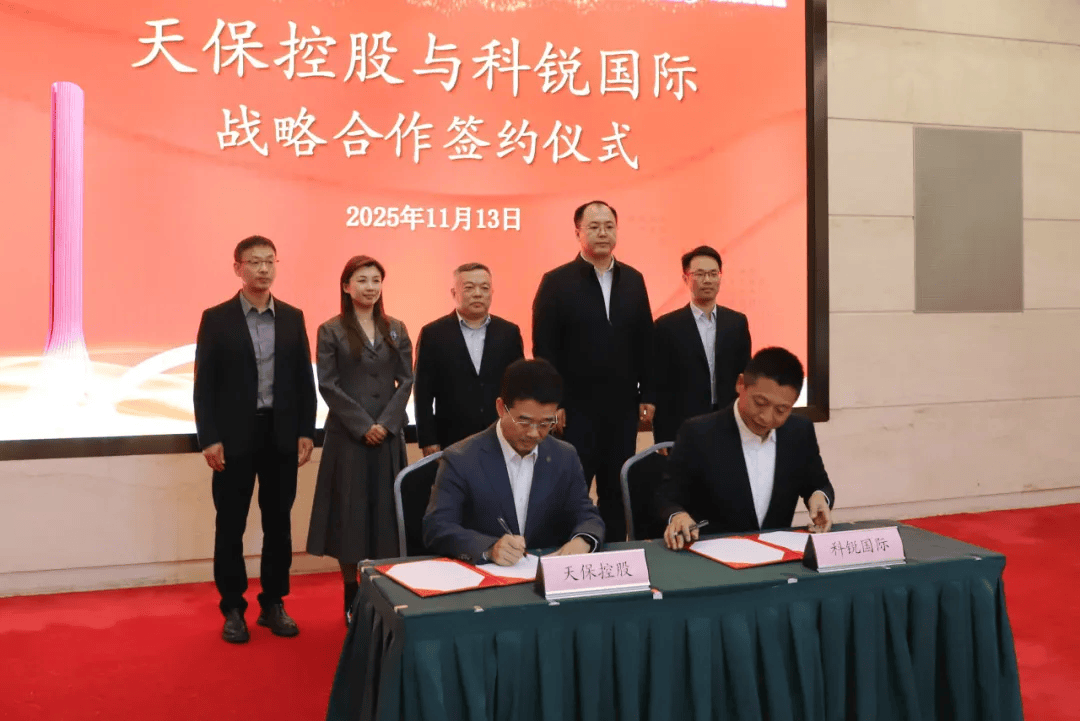
天保控股与科锐国际深化战略合作
Sou Hu Cai Jing· 2025-11-19 12:34
Core Insights - Tianjin Tianbao Holdings Co., Ltd. has signed a strategic cooperation agreement with Beijing Keri International Human Resources Co., Ltd. to enhance human resource service business model innovation and explore new market opportunities [1][3] Group 1: Strategic Cooperation - The cooperation follows Tianbao Holdings' acquisition of a 55% stake in Tianjin Zhirui, a subsidiary of Keri International, marking a significant upgrade in their partnership [3] - This collaboration represents a formal implementation of the "regional state-owned enterprise resources + listed platform advantages" model [3] Group 2: Company Profiles - Tianbao Holdings is a large state-owned enterprise in Tianjin, ranking 336th among China's top 500 service companies, with subsidiaries in construction, energy, and human resources [4] - Keri International is the first publicly listed human resources company in A-shares, serving over 6,000 clients and operating more than 100 branches globally [4] Group 3: Collaborative Framework - The partnership aims to establish a three-dimensional cooperation system focusing on resource integration, market expansion, and technological empowerment [5] - Tianbao Holdings will leverage its industrial resources while Keri International will utilize its global talent network and technological capabilities to optimize the regional talent supply chain [5] Group 4: Strategic Goals - The collaboration is part of Tianbao Holdings' efforts to implement the "industry collaboration" strategy, integrating regional resource advantages with Keri International's global service capabilities [6] - The partnership aims to enhance regional talent aggregation and industrial transformation, contributing to high-quality regional development [6]

Korn Ferry (NYSE:KFY) FY Conference Transcript
2025-11-18 22:32
Korn Ferry (NYSE: KFY) FY Conference Summary Company Overview - Korn Ferry has transformed from a $700 million business in 2012, primarily focused on executive search, to a nearly $3 billion organization today, offering a wide range of services related to employee engagement and talent management [3][4][5] Core Capabilities - The company has developed capabilities in organizational strategy, talent acquisition, leadership development, and total rewards consulting, making it unique in the industry [4][5] - Korn Ferry is the largest assessment house globally, utilizing psychometric assessments developed by a team of 25 I/O psychologists [4][5] Talent Suite Launch - Korn Ferry recently launched its Talent Suite, a single technology platform designed to integrate data, intellectual property, and behavioral science to enhance service delivery [6][30] - The Talent Suite aims to improve efficiency and effectiveness in utilizing the company's extensive data assets, which include assessments of 110 million people and 25 million paid data points [6][30] Go-to-Market Strategy - The primary go-to-market strategy focuses on marquee and diamond accounts, which represent the top 350 clients and account for approximately 40% of total fee revenue [13][14] - The company aims to increase cross-selling opportunities, with 25-26% of fee revenues currently generated from referrals between different service areas [14] Impact of AI - Korn Ferry recognizes the significant impact of AI on the talent marketplace and is actively integrating AI into its services to enhance client offerings [15][16] - The company is helping clients redesign their organizations to leverage AI effectively, focusing on talent readiness and development [17][22] Financial Performance - Korn Ferry has achieved an adjusted EBITDA margin of around 17%, with a revenue run rate between $2.8 billion and $2.9 billion, maintaining the same workforce of 9,000 employees [61][62] - The company has reduced its real estate footprint by 35% and cut business development costs significantly, contributing to improved profitability [62][63] Digital Business Growth - The digital business has grown to approximately $360 million-$370 million, with subscription and license revenue making up about 40% of that total [41][42] - Korn Ferry aims to increase the subscription and license portion of its digital business to 60-65% through the Talent Suite [42] Capital Allocation and M&A Strategy - Korn Ferry adopts a disciplined approach to M&A, focusing on strategic alignment with human capital and ensuring financial viability [66][67] - The company prioritizes reinvesting in its business, including technology and talent development, while also returning capital to shareholders through dividends and buybacks [68][69] Future Outlook - The company is optimistic about the future, particularly with the rollout of the Talent Suite and the potential for further integration of AI into its services [70][72] - Korn Ferry aims to break down internal silos and position itself as a comprehensive talent partner for clients, enhancing its value proposition [72][73]

倒计时10天!第三届全国人力资源服务业发展大会聚力引才聚才
Di Yi Cai Jing· 2025-11-18 12:26
全行业年均为3亿人次劳动者提供就业、择业和流动服务。 11月28日~11月29日,人力资源和社会保障部、湖北省人民政府将在湖北省武汉市举办第三届全国人力资源服务业发展大会。 人力资源服务业是现代生产性服务业重要门类,为劳动者求职和职业发展、为用人单位招聘和人力资源管理开发提供专业服务。 自2021年以来,人社部先后在重庆市、广东省深圳市举办两届全国人力资源服务业发展大会,共吸引上千家人力资源服务企业参会交流,400余个优质项目 合作洽谈,200余个创新产品路演宣讲,全方位展示了行业发展成就,全要素呈现了人力资源市场化配置的各个领域,全覆盖分享了各业态经验做法,得到 了广泛关注。 人力资源流动管理司二级巡视员薄世媛在人社部第三季度新闻发布会上表示,第三届大会以"塑造现代化人力资源 促进高质量充分就业"为主题,设置"研、 会、才、聘"四个专项活动。 "研"就是开展人力资源服务业高质量发展研讨,聚焦促进高质量充分就业、强化现代化建设人才支撑和人力资源服务业创新发展等主题,开展对话交 流。"会"就是举行人力资源服务供需洽谈会,聚焦现代化产业体系协同发展和构建"双循环"格局进行洽谈合作。"才"就是开展港澳引才聚才活动, ...