数字经济

Search documents
四川泸州发布339项“智改数转”清单 推动制造业供需精准匹配
Sou Hu Cai Jing· 2025-11-07 15:46
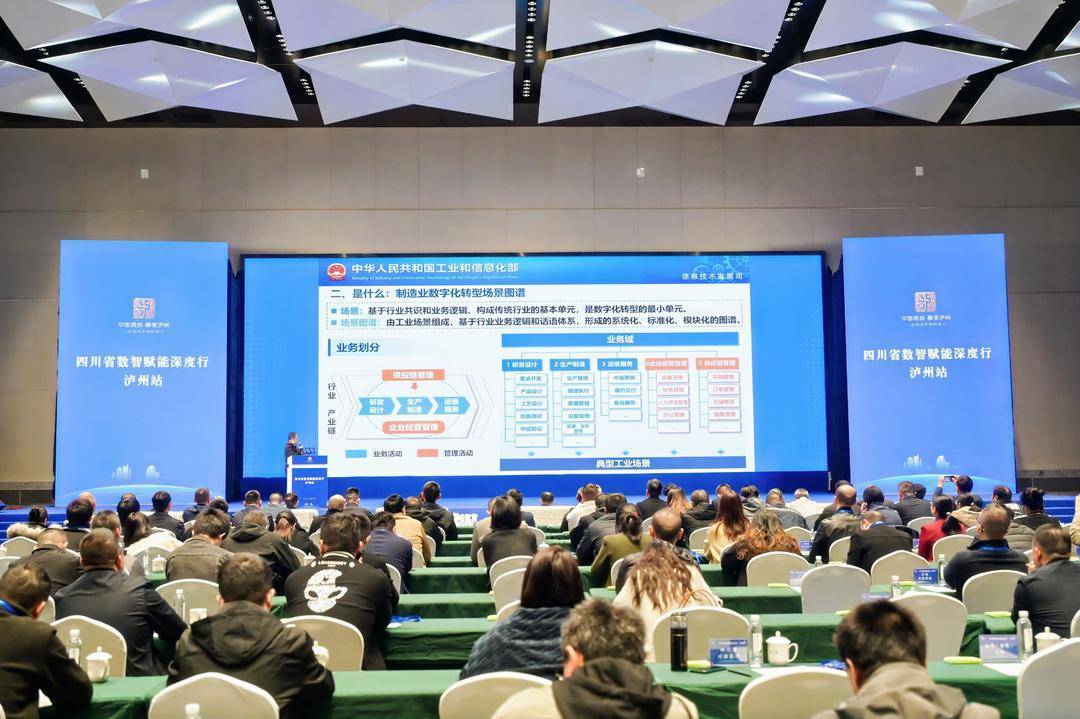
Core Insights - The event "Sichuan Province Smart Empowerment Deep Dive - Luzhou Station" aims to promote the transformation of industries through digitalization and intelligence, moving from policy guidance to practical implementation [1][3] Group 1: Event Overview - The event featured the release of the "Luzhou City Smart Transformation Supply and Demand Scenario List," which includes 339 items of supply and demand information [3] - The demand scenarios cover 159 items across key industries such as liquor, energy, new chemical materials, equipment manufacturing, healthcare, bamboo industry, digital economy, and food [3] - The supply scenarios consist of 180 items, encompassing critical processes like production operations, research and design, quality control, and logistics [3] Group 2: Implementation and Achievements - Luzhou has established a closed-loop mechanism for "list management, precise matching, and tracking services," with regular updates to supply and demand information [3] - The city has provided free diagnostic services to 307 enterprises, customizing transformation plans, and has implemented 276 digital transformation projects, creating over 20 benchmark scenarios [3] - Luzhou has two projects recognized as provincial key projects and 48 projects as provincial funding projects, receiving over 150 million yuan in subsidies [3] Group 3: Partnerships and Future Goals - Local suppliers Luzhou Development Zhihui Technology Co., Ltd. and Hongtu Intelligent Logistics Co., Ltd. signed cooperation agreements with Chengdu Industrial Investment Group to accelerate the smart transformation process [4] - The event included a supply-demand matching area for face-to-face discussions between service providers and enterprises, with benchmark companies sharing transformation experiences [4] - By 2027, Luzhou aims for full digital transformation coverage among large-scale manufacturing enterprises, positioning itself as a leader in digitalization within Sichuan Province [4]


广东点评“十四五”成绩单 深圳综改创60多个“全国第一”
Shen Zhen Shang Bao· 2025-11-07 14:45
Economic Performance - Guangdong's economic strength has continuously improved, with GDP reaching 14.16 trillion yuan in 2024, maintaining the top position in the country for 36 consecutive years, and an average growth rate of 4.7% during the first four years of the "14th Five-Year Plan" [1] - The local general public budget revenue is projected to reach 1.35 trillion yuan in 2024, also ranking first nationally for 34 years [1] - The industrial revenue from above-scale industries reached 19.41 trillion yuan, while the service sector's added value was 8.14 trillion yuan, both leading the nation [1] Innovation and Technology - Guangdong has anchored its new positioning in the "One Point, Two Places" strategy, significantly advancing the Guangdong-Hong Kong-Macao Greater Bay Area construction, with the "Shenzhen-Hong Kong-Guangzhou" innovation cluster ranking first globally in innovation index [2] - The region has maintained its top position in national innovation capabilities for eight consecutive years, with R&D expenditure, high-value invention patents, and the number of high-tech enterprises all ranking first in the country [3] - The scale of the core AI industry in Guangdong is expected to exceed 220 billion yuan in 2024, accounting for about one-third of the national total [3] Infrastructure and Connectivity - Infrastructure connectivity in the Greater Bay Area is accelerating, with the "Bay Area on Tracks" initiative taking shape and cross-river and cross-sea passageways being developed [2] - Major cooperation platforms such as Hengqin, Qianhai, Nansha, and He Tao have been established, enhancing the integration of Guangdong and Hong Kong-Macao development [2] Foreign Investment and Trade - Guangdong's "friend circle" is expanding, with actual foreign investment reaching 626.26 billion yuan over the past four years [4] - The province's total import and export volume is expected to exceed 9 trillion yuan in 2024, maintaining the top position in the country for 39 consecutive years [4]
(第八届进博会)华侨华人与进博共成长:从“单向引进”到“双向奔赴”
Zhong Guo Xin Wen Wang· 2025-11-07 13:46
Core Insights - The China International Import Expo (CIIE) has evolved from a "one-way import" model to a "two-way engagement" trade framework, facilitating mutual growth between Chinese and global businesses [1][2] Group 1: Event Overview - The eighth CIIE featured a themed event titled "Overseas Chinese Connect the World: Opportunities with China" held on November 7 at the National Exhibition and Convention Center in Shanghai [1] - The event was organized by the China Federation of Returned Overseas Chinese, with participation from over 200 overseas Chinese leaders, business representatives, and professionals [2] Group 2: Role of Overseas Chinese - Overseas Chinese serve as a natural bridge connecting China with the world, playing a crucial role in economic and trade relations [1] - The event highlighted the importance of overseas Chinese businesses in leveraging China's rapid development opportunities while participating in the CIIE [1] Group 3: Industry Collaboration - There is a continuous deepening of cooperation in supply chains and investments between Malaysia and China, particularly in high-value sectors such as manufacturing, digital economy, and sustainable investments [1] - The event emphasized the unique advantages of overseas Chinese in cross-cultural communication and resource integration, which are essential for promoting Sino-foreign cooperation [1] Group 4: New Business Models - The Italian Qingtian Chamber of Commerce's honorary president, Zhou Yong, transitioned from participant to organizer and buyer, showcasing a shift towards a more interactive trade model [2] - The establishment of a Chinese product showroom in Italy aims to facilitate the entry of Chinese brands into the European market, reflecting the new trade dynamics [2]
数字经济板块11月7日跌1.56%,粤传媒领跌,主力资金净流出104.85亿元
Sou Hu Cai Jing· 2025-11-07 08:59
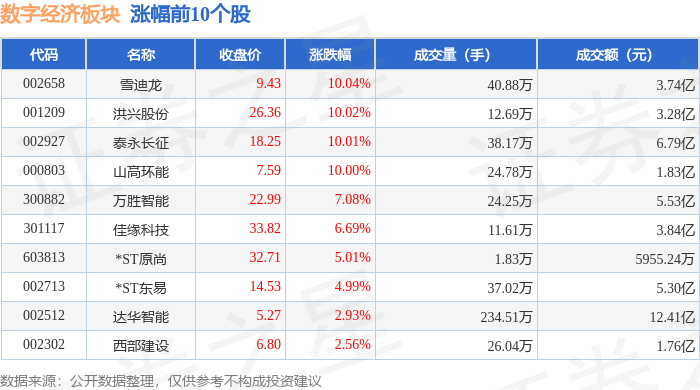
证券之星消息,11月7日数字经济板块较上一交易日下跌1.56%,粤 传 媒领跌。当日上证指数报收于 3997.56,下跌0.25%。深证成指报收于13404.06,下跌0.36%。数字经济板块个股涨跌见下表: | 代码 | 名称 | 主力净流入(元) | 主力净占比 游资净流入 (元) | | 游资净占比 散户净流入 (元) | | 散户净占比 | | --- | --- | --- | --- | --- | --- | --- | --- | | 002927 | 泰永长征 | 1.92 Z | 28.31% | -1.11 Z | -16.34% | -8116.83万 | -11.96% | | 002658 | 雪迪龙 | 1.48 Z | 39.49% | -7238.55万 | -19.34% | -7542.72万 | -20.15% | | 002512 达华智能 | | 8755.09万 | 7.06% | -2397.10万 | -1.93% | -6357.99万 | -5.12% | | 000034 | 神州数码 | 8392.23万 | 4.77% | 1065.01万 | 0. ...

广东“十四五”成绩单出炉 各项指标任务顺利推进 多项数据位居全国首位
Nan Fang Ri Bao Wang Luo Ban· 2025-11-07 02:11
Economic Performance - Guangdong's GDP is projected to reach 14.16 trillion yuan in 2024, maintaining its position as the largest economy in China for 36 consecutive years, with an average annual growth rate of 4.7% during the "14th Five-Year Plan" period [1] - The local general public budget revenue is expected to reach 1.35 trillion yuan, ranking first in the country for 34 years [1] Technological Innovation and Industry Development - Guangdong has established itself as a leader in technological innovation, with R&D expenditure, high-value invention patents, and the number of high-tech enterprises all ranking first in the nation [3] - The province has cultivated nine trillion-yuan industrial clusters, with the core AI industry exceeding 220 billion yuan, accounting for one-third of the national total [3] - Guangdong's production of new energy vehicles reached 3.618 million units, representing 25% of the national output, and industrial robot production was 247,000 units, accounting for 43.5% of the national total [3] Infrastructure and Regional Integration - The Guangdong-Hong Kong-Macao Greater Bay Area has seen significant progress, with the "Shenzhen-Hong Kong-Guangzhou" innovation cluster ranking first globally in innovation index [2] - Major cooperation platforms such as Hengqin, Qianhai, Nansha, and He Tao have been established to deepen integration and expand development space for Hong Kong and Macao [2] Reform and Open Economy - Guangdong has implemented comprehensive reforms, with over 60 national firsts achieved through the Shenzhen comprehensive reform pilot [4] - The province's total import and export volume exceeded 9 trillion yuan, maintaining the top position in the country for 39 consecutive years [4] - Actual foreign investment reached 626.26 billion yuan over four years, while outbound investment totaled 83.939 billion USD [4] Social Development and Quality of Life - The income disparity between urban and rural residents has narrowed, with the ratio decreasing from 2.49 in 2020 to 2.31 in 2024 [5] - The province has created over 6 million new urban jobs, maintaining an urban unemployment rate below 5.5% [6] - Guangdong's healthcare system includes 66,100 medical institutions, with a 100% compliance rate for county-level hospitals meeting national standards [6] Safety and Stability - Guangdong has effectively managed natural disasters and maintained social stability, enhancing food and energy security [7] - The province has implemented measures to prevent financial and real estate risks, ensuring systemic risk is kept at bay [7]
这里,是蓬勃向上的海南自贸港
Hai Nan Ri Bao· 2025-11-07 01:50
Core Insights - Hainan Free Trade Port is demonstrating robust growth through high-quality development, focusing on five key areas: industrial system, infrastructure, coordinated development, public welfare, and security [2][4]. Economic Performance - On the first day of the new duty-free shopping policy, sales reached 78.549 million yuan, a 6.1% increase from the previous day [2]. - Over the past year, Hainan has seen over 2 million inbound and outbound travelers, marking a 22.4% year-on-year increase [2]. - The total economic output of the Sanya Economic Circle is projected to rise from 109.511 billion yuan in 2019 to 164.452 billion yuan by 2024, reflecting a 50.17% growth [11]. Industrial Development - Hainan is focusing on upgrading its four leading industries: tourism, modern services, high-tech industries, and tropical agriculture, which together account for nearly 70% of the province's GDP [6]. - The province has signed 110 projects during the 2025 China Industrial Transfer Development Docking Event, indicating a strong commitment to industrial growth [3]. Innovation and Talent - Hainan's R&D expenditure growth has been the highest in the country for three consecutive years, driving significant advancements in technological innovation [10]. - The "Million Talents into Hainan" initiative aims to attract 1 million talents over five years, enhancing the province's human resources [9]. Infrastructure Development - Major infrastructure projects, including the expansion of airports and the construction of a comprehensive transportation network, are underway to support regional integration and economic growth [13][12]. - The urbanization rate in Hainan has reached 63.08%, with over 1,800 beautiful rural communities established [13]. Social Welfare - Hainan is implementing various measures to improve public welfare, including enhanced elderly care services and educational resources, contributing to the overall happiness and well-being of its residents [14][19]. - The province has created a governance framework to ensure safety and stability, aiming to be one of the safest regions in the country [20].
为推动构建开放型世界经济贡献智慧力量
Ren Min Ri Bao· 2025-11-06 22:11
Core Viewpoint - The eighth China International Import Expo (CIIE) is being held in Shanghai, featuring the Hongqiao International Economic Forum, which focuses on "open cooperation for new opportunities and shared futures" and aims to contribute to the reform of the global economic governance system [1][2]. Group 1: Global Economic Openness - The flagship report "World Openness Report 2025" was released, indicating a slight decline in the global openness index for 2024 to 0.7545, with developed economies decreasing by 0.25% and emerging markets increasing by 0.42% [2]. - China's openness index has risen from 0.5891 in 1990 to 0.7634 in 2024, marking a nearly 30% increase over 35 years, positioning China as a leader in global openness [2]. Group 2: Multilateral Cooperation - The forum emphasizes "revitalizing multilateral cooperation," focusing on global trade restructuring, supply chain resilience, and deepening cooperation among developing countries [6]. - The United Nations Industrial Development Organization commended China's efforts in expanding trade with developing countries and providing zero-tariff policies for the least developed nations [6]. Group 3: Innovation and Technology - The forum discusses the importance of innovation as a primary driver of development, addressing trends in artificial intelligence, green trade, and sustainable development [8]. - Experts highlight the need for collaboration in AI development to ensure safety and ethical standards, with China recognized for its leadership in advanced manufacturing and electric vehicle technology [9].
宿迁加快构建现代服务业高质量发展新体系
Xin Hua Ri Bao· 2025-11-06 21:56
Core Insights - The establishment of the Suqian Bonded Logistics Center (Type B) marks a significant step in supporting local enterprises to expand into international markets and reduce logistics costs, reflecting the city's commitment to high-quality service industry development since the 14th Five-Year Plan [1] Group 1: Service Industry Development - Suqian has prioritized service industry development as a key driver for economic transformation, implementing a three-year action plan for high-quality modern service industry development [2] - The service industry added value surpassed 200 billion yuan for the first time in 2023, reaching 206.66 billion yuan, with projections for 2024 to achieve 235.22 billion yuan, ahead of the 14th Five-Year Plan targets [2] - By the first half of 2025, the service industry's added value accounted for 51.9% of GDP, solidifying its role as a critical force in promoting synchronized development [2] Group 2: Market Vitality and Business Growth - Suqian focuses on cultivating business entities to enhance market vitality, with a significant increase in the number of scale service enterprises, reaching 756 by August 2025, a 2.6-fold increase from the end of the 13th Five-Year Plan [3] - In the first nine months of 2025, 123 new scale service enterprises were added, a year-on-year increase of 25.5%, indicating robust market activity [3] Group 3: Project Development and Investment - The city emphasizes the "project first" philosophy, attracting high-quality service industry projects that drive effective investment and enhance development momentum [4] - Notable projects include the Suqian Digital Economy Center, expected to generate annual revenues of 20 billion yuan and create 20,000 jobs upon full completion [5] - By September 2025, 47 major service industry projects had completed investments of 12.58 billion yuan, achieving 73.2% of the annual plan [5] Group 4: Policy Support and Future Outlook - Suqian's modern service industry development is supported by comprehensive policy measures and financial incentives, contributing to a 3.96-fold increase in revenue for scale service enterprises by 2024 [7] - The city aims to continue enhancing the service industry's supply-side structural reforms, focusing on improving the industrial system, expanding business entities, advancing project construction, and optimizing the development environment [7]

社评:用“创造增量”思维解决中美“存量问题”
Sou Hu Cai Jing· 2025-11-06 16:27
Group 1 - The core viewpoint emphasizes the potential for China and the U.S. to transition from "consumptive competition" to "cooperative growth," focusing on creating new opportunities rather than merely adjusting existing trade measures [1][2] - The bilateral trade between China and the U.S. accounts for approximately one-fifth of global trade, indicating the need for both countries to innovate and expand cooperation to ensure sustainable economic relations [1][2] - China is advancing high-level opening-up policies and aligning with international trade standards, which provides broader opportunities for U.S. businesses, while the U.S. should also create a fair business environment for Chinese enterprises [2][3] Group 2 - The shift from a zero-sum game to a collaborative approach in international relations is crucial, as it emphasizes problem-solving and shared responsibilities rather than power struggles [3][4] - The global economy is at a critical juncture, and focusing on collaborative efforts in high-risk, high-reward fields like AI and climate change is essential for sustainable growth [4] - The resilience and inherent dynamics of China-U.S. relations suggest that a broader perspective and mature handling of conflicts can lead to mutual growth and tangible benefits for both nations and the global economy [4]
会长话封关:“海南自贸港必将在‘十五五’时期迎来更大发展机遇”
Sou Hu Cai Jing· 2025-11-06 11:51
Core Viewpoint - The Hainan Free Trade Port is expected to experience significant development opportunities during the "14th Five-Year Plan" period, as expressed by Cai Guanshen, President of the Hong Kong Chinese General Chamber of Commerce and Chairman of Xinhua Group [1][3]. Group 1: Hainan Free Trade Port Development - The Hainan Free Trade Port is set to initiate full island closure operations, with high-standard construction included in the "14th Five-Year Plan" recommendations [3]. - The policies of "one line open, two lines controlled, and free movement within the island" along with zero tariffs, low tax rates, and simplified tax systems provide greater space for enterprise development [3][4]. - Over 80 countries' personnel can enter Hainan visa-free, enhancing the convenience of the flow of people, logistics, capital, and data [3][4]. Group 2: Hong Kong and Hainan Cooperation - Hong Kong's status as an international financial center, ranked third globally and first in Asia, complements Hainan's development, creating vast opportunities for cooperation [3][4]. - The establishment of the International Mediation Centre in Hong Kong further solidifies its position as a center for international legal and dispute resolution services [3][4]. - The collaboration model of "Hong Kong R&D + Hainan Manufacturing" is proposed to leverage Hainan's tax policies to support the import of research equipment and the transformation of scientific achievements [4][5]. Group 3: Investment Opportunities - Hainan is focusing on developing high-value-added industries such as biomedicine, digital economy, and medical tourism, which align well with Hong Kong's leading industries [4][5]. - The "Sanya Xinhua Hong Kong City" project aims to integrate modern services from Hong Kong with local culture and international brands, creating a new consumption landmark in Hainan [5]. - The "World Chinese Business Youth Leaders Alliance" initiative is being promoted to attract talented young overseas Chinese to innovate and start businesses in Hainan [5].