科技股

Search documents
日经早盘跌破5万点,跌幅达4.65%
日经中文网· 2025-11-05 02:54
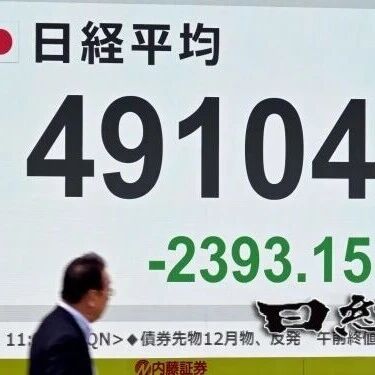
美国高盛集团首席执行官(CEO)戴维·所罗门(David Solomon)4日在香港演讲时表 示:"科技股的估值过高,未来12到24个月内股市有很高概率下跌10%到20%"。 日经平均股指在10月一个月内上涨7478点(涨幅17%),月末首次突破5万2000点。冈三证 券首席策略师松本史雄指出:"过于迅猛的上涨使市场过热情绪变得容易被察觉"。 版权声明:日本经济新闻社版权所有,未经授权不得转载或部分复制,违者必究。 值过高,未来12到24个月内股市有很高概率下跌10%到20%…… 日经中文网 https://cn.nikkei.com 11月5日的东京股市,日经平均股指大幅下跌,早盘跌破5万点,报收于49104,跌2393 点,跌幅达4.65%。。此番下跌主要承接了前一日美股市场科技股调整的走势,同时也是此 前股价急速上涨后的反动。上周,日经平均股指指数曾首次突破5万2000点关口,创下历史 新高。 此前强力推高日经指数的个股,如软银集团(SBG)和Advantest,卖压明显增强。SBG一度 下跌13%,Advantest也一度下跌10%,两只股票合计一度令日经指数下挫逾1200点。 美国高盛集团首席执行官 ...

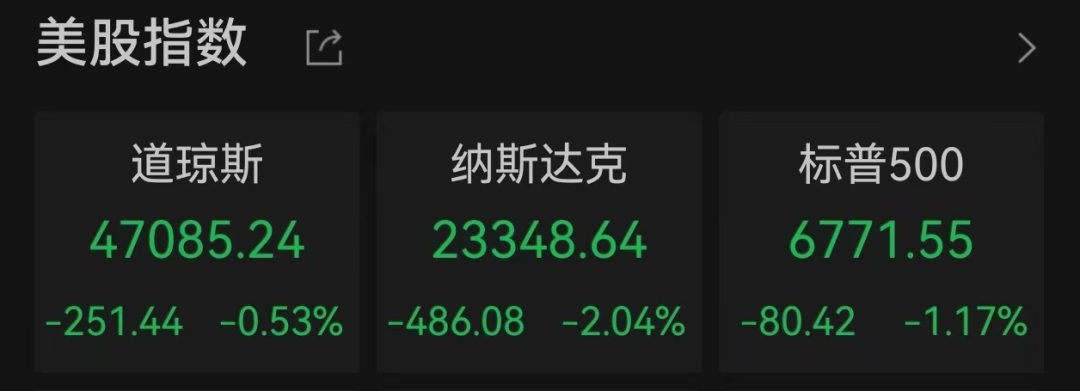
4日美国三大股指集体收跌
Sou Hu Cai Jing· 2025-11-05 00:59
Core Points - The U.S. federal government shutdown has reached its 35th day, matching the longest shutdown record from President Trump's first term [1] - To maintain the operation of key government departments, the U.S. Treasury has issued a significant amount of short-term debt, leading to tighter liquidity in financial markets [1] - Uncertainty regarding the Federal Reserve's future interest rate cuts has made investors increasingly cautious about high-valuation AI stocks in the U.S. stock market [1] - Executives from major Wall Street investment banks, Goldman Sachs and Morgan Stanley, have warned of significant downside risks for U.S. stocks [1] - Multiple factors are intensifying downward pressure on the stock market, with technology and semiconductor stocks leading the decline [1] - All three major U.S. stock indices closed lower, with the Dow Jones down 0.53%, the S&P 500 down 1.17%, and the Nasdaq down 2.04% [1]
美政府“停摆”将破纪录!纳指跌近500点,英伟达市值一夜蒸发1.4万亿元,比特币跌破10万美元超40万人爆仓
Mei Ri Jing Ji Xin Wen· 2025-11-05 00:58
Group 1 - The U.S. Senate failed to pass a temporary funding bill, leading to a prolonged government shutdown that may break the previous record of 35 days set in late 2018 to early 2019 [1][4] - The main contention between the Democratic and Republican parties revolves around healthcare spending, particularly related to the Affordable Care Act, which has resulted in significant premium increases for insurance plans [3][4] - Approximately 1.3 million air traffic controllers and 50,000 airport security personnel are working without pay due to the shutdown, raising concerns about air safety and potential airspace closures [8] Group 2 - Major U.S. stock indices experienced declines, with the Nasdaq dropping 486.08 points (2.04%), reflecting investor concerns over high valuations in the tech sector [8][9] - Notable declines in large tech stocks included a more than 6% drop in Intel and over 5% in Tesla, which saw a market value loss of $80.2 billion (approximately 571.8 billion RMB) [9] - The Nasdaq China Golden Dragon Index fell by 2.05%, with significant drops in various Chinese concept stocks, indicating a broader market sell-off [12]


美股遭重挫!六巨头一夜蒸发3.2万亿
Zhong Guo Zheng Quan Bao· 2025-11-04 23:09
Market Overview - On November 4, US stock indices experienced a broad decline, with the Nasdaq dropping over 2% and the Dow Jones, S&P 500 falling by 0.53% and 1.17% respectively [2][4] - The total market capitalization of six major tech giants decreased by approximately $450 billion, equivalent to about 32 trillion RMB [4] Technology Sector - The US Technology Seven Index fell nearly 2%, with Tesla down over 5%, Nvidia nearly 4%, and other major companies like Google, Amazon, META, and Microsoft also declining [4] - Apple was the only major tech stock to close in the green [4] Commodity Market - International gold and oil prices saw a collective decline, with gold futures and spot prices both dropping over 1%, falling below $4000 per ounce [5][6] - NYMEX crude oil futures and ICE Brent crude oil futures decreased by 1.10% and 0.94% respectively [5][6] Future Outlook - Analysts from Huatai Securities suggest that the recent performance of US stocks indicates a critical juncture, with a focus on high-quality large-cap stocks amid concerns of market bubble [4] - The outlook for gold prices suggests a potential phase of consolidation due to a lack of clear upward factors, while oil prices may face downward pressure if supply reduction expectations are not met [7]




美股涨势尴尬真相:除了七巨头,其他493只股票“深陷困境”
Hua Er Jie Jian Wen· 2025-11-04 13:25
美股表面繁荣背后隐藏着尴尬的结构性分化:标普500指数的涨势几乎完全依赖七大科技巨头,而其余 493只成分股表现远远落后。但华尔街策略师们认为,只要大型科技公司的盈利增长势头不减,就没有 理由与这一趋势对抗。 11月4日,据报道,彭博汇编的数据显示,"七巨头"(苹果、英伟达、微软、亚马逊、特斯拉、Meta、 Alphabet)科技公司第三季度盈利增长率预计达27%,约为此前预期的两倍,成为支撑市场的关键力 量。相比之下,剔除这七家公司后,标普500成分股的利润增幅从13%骤降至8.8%。 同时,据Jefferies数据显示,标普500等权重指数——反映基准指数中普通股票表现的指标——相对标普 500指数的折价已超过25%。但华尔街策略师普遍认为,只要大型科技公司的盈利机器继续运转,就没 有理由对抗这种趋势。 报道指出,尽管市场集中度引发泡沫隐忧,但投资者对人工智能技术的乐观情绪以及科技巨头持续强劲 的盈利表现,令多数华尔街人士选择继续押注少数赢家,而非等待市场广度改善。 七巨头盈利表现撑起整体市场 "七巨头"科技股的强劲财报表现成为当前市场集中式上涨的关键支撑。苹果和亚马逊等公司最近公布的 财报进一步加强了投 ...


专访霸菱马丁·霍恩:中国科技股成全球配置热门,将继续加大投资
Di Yi Cai Jing Zi Xun· 2025-11-04 09:13
Core Viewpoint - The Chinese market presents significant investment opportunities, particularly in technology stocks, consumer sectors, and renewable energy, as highlighted by Barings' increased asset allocation in these areas [1][3][5]. Group 1: Investment Opportunities - Barings has identified two main investment opportunities in the Chinese market: gold and technology stocks, with a notable increase in asset allocation towards Chinese technology companies [1][3]. - The Chinese technology sector is recognized for its strong manufacturing and R&D capabilities, supported by government policies that foster technological development [3][4]. - Consumer demand in China is on the rise, driven by policy support aimed at enhancing domestic consumption and reducing reliance on foreign markets [5]. Group 2: Market Dynamics - External factors, such as tariff policies, have previously caused market volatility, but Barings believes that the impact of these tariffs will diminish over time as trade structures are adjusted [6][7]. - The ongoing negotiations regarding tariffs are expected to lead to a more pragmatic agreement that balances the interests of both the U.S. and China, reducing extreme tariff scenarios [7][8]. - The global financial market's uncertainty is increasing the demand for diversified investments, with emerging market funds and gold gaining attention as safe-haven assets [8]. Group 3: Future Outlook - Barings anticipates that by 2026, the influence of tariff issues on global markets will gradually decrease, allowing for a more stable investment environment [8]. - The firm emphasizes the importance of AI leaders in the market, predicting that these companies will significantly drive market development and attract investment [4].

狂欢下的暗涌:2025年10月全球资产分化与回调真相
Sou Hu Cai Jing· 2025-11-03 11:49
Core Insights - The global asset bull market narrative since 2025 has reached a critical juncture in October [1] - Despite significant year-to-date gains in silver (64.73%) and gold (52.53%), October revealed market fragility with declines in major indices [2] - The divergence in performance between US and Asian markets highlights a stark contrast, with US indices reaching new highs while Asian markets, particularly Hong Kong and Chinese stocks, faced significant pullbacks [3][4] Market Performance - US stock markets showed strong performance in October, with the Nasdaq index rising 4.70% to close at 23,724.96 points, and the S&P 500 index increasing by 2.27% to 6,840.20 points [3][6] - In contrast, the Hang Seng Index fell by 3.53% to 25,906.65 points, and the Nasdaq China Golden Dragon Index dropped by 4.19% [3][6] - The A-share market also exhibited mixed results, with the Shanghai Composite Index up 1.85% and the Shenzhen Component Index down 1.10% [3][6] Precious Metals - The precious metals market experienced volatility, with silver peaking at $54.142 per ounce before retreating to $48.85, while gold reached $4,355.685 before falling to $4,018.52 [7][8] - Year-to-date performance for gold and silver remains strong, with gold up 52.53% and silver up 68.44% [8] Energy and Currency - The US dollar index strengthened in October, rising from 97.82 to 99.73, which exerted pressure on dollar-denominated assets [9] - Oil prices faced downward pressure, with WTI crude oil falling 2.23% to $60.98 per barrel and Brent crude down 1.91% to $64.77 per barrel [9] Market Dynamics - The October pullback in Chinese stocks is attributed to multiple pressures, including increased IPO activity and ongoing US-China trade tensions, leading to reduced risk appetite [10] - The divergence in performance is also linked to the relative strength of the US economy and the liquidity environment, which continues to support US equities [11] Future Outlook - The medium-term bullish outlook for precious metals remains intact, supported by central bank gold purchases and geopolitical uncertainties [12] - The performance of US stocks is heavily reliant on large technology companies, which have shown strong earnings growth and market dominance [12] - Concerns about potential valuation bubbles in the tech sector are emerging, particularly regarding AI investments, which could impact future market stability [12][13]

【广发宏观陈礼清】如何量化“叙事”对资产定价的影响
郭磊宏观茶座· 2025-11-03 03:35
Core Viewpoint - The article discusses the impact of "narrative trading" on asset pricing, emphasizing that asset pricing is influenced not only by fundamentals but also by popular narratives such as the restructuring of the dollar credit system and the new technological revolution [1][12]. Group 1: Narrative Economics - The influence of narratives on economic phenomena consists of a series of elements: a popular, easily spread story, public behavior, and an epidemiological model for macro-level dissemination [2][16]. - The concept of "herding behavior" is used to illustrate how narratives affect micro-level decision-making, with varying strengths across different phases of narrative development [2][18]. Group 2: Herding Effect in Asset Allocation - Traditional studies of herding behavior focus on individual stocks and short-term market sentiment, but the current narrative-driven environment poses challenges for asset allocation due to the breakdown of continuity in global fiscal, monetary, and trade environments [3][20]. - The article suggests that the herding effect can be quantified and applied to investment portfolio optimization and asset timing strategies [3][20]. Group 3: Measurement of Herding Effect - Four common indicators of herding behavior are identified: Cross-Sectional Absolute Deviation (CSAD), the quadratic coefficient of return dispersion, standard deviation of beta coefficients, and cross-correlation [4][23]. - The CSAD index, which measures the deviation of asset returns from the average, indicates the presence of herding behavior when returns cluster around a certain average level [4][23]. Group 4: Current State of Herding Effect - The CSAD index for major asset classes shows a right-skewed distribution, indicating a tendency for extreme herding behavior, with a mean-reverting characteristic suggesting that extreme trends are difficult to maintain [5][28]. - Since May 2025, the CSAD has decreased significantly, indicating a rapid herding effect, but has started to rebound slightly, suggesting a potential shift towards more balanced asset performance [5][28]. Group 5: Strategy Integration - The article proposes integrating the herding factor into a macro risk parity framework, which has shown superior annualized returns compared to traditional models [6][34]. - The new framework suggests increasing allocations to equities and commodities while reducing bond exposure, indicating a shift in investment strategy based on herding behavior [6][34]. Group 6: Domestic Equity Market Analysis - The herding effect in the domestic equity market, as measured by the CSAD, has shown a decline in right-skewness, indicating lower dispersion compared to historical levels [7][40]. - The herding effect has gone through phases of fermentation, intensification, and now a slight loosening, suggesting a gradual return to individual rationality among investors [7][40].

高盛:看好中国股市迈入增长周期 预计A、H股至2027年底取得约30%潜在回报
Zhi Tong Cai Jing· 2025-11-03 02:21
Core Viewpoint - The Chinese stock market is entering a new growth cycle driven by artificial intelligence (AI), the "anti-involution" trend, and the expansion of Chinese companies overseas [1] Group 1: Market Predictions - Goldman Sachs predicts a potential return of approximately 30% for A-shares and H-shares by the end of 2027, based on a 12% annual compound earnings growth rate and a price-to-earnings (PE) expansion of 5% to 10% [1] Group 2: Sector Performance - Chinese technology stocks have seen significant gains this year, particularly in AI-related sectors, driven by improved market expectations and sentiment-led valuation increases [1] - The overall valuation of the technology sector remains attractive, but the focus may shift from sentiment and expectations to actual corporate performance in the coming year [1] Group 3: Future Outlook - The ability for valuations to rise further will depend on the realization of actual earnings [1]
央行买国债、美联储降息!别喊放水,这波操作藏未来5年财富密码
Sou Hu Cai Jing· 2025-11-02 09:43
Core Viewpoint - The recent actions by the central bank are not about "massive liquidity injection" but rather a "precise temperature adjustment" in the economy, focusing on targeted interventions rather than broad monetary easing [1][3]. Group 1: Central Bank Operations - The central bank's recent decision to buy government bonds is a secondary market operation, which means it will not lead to hyperinflation as it cannot directly purchase newly issued bonds from the treasury [1][3]. - The central bank's strategy is to manage liquidity by buying bonds when funds are scarce and selling when there is excess liquidity, akin to providing a "gas pedal and brake" for the economy [3][4]. - The timing of the bond purchases is strategic, coinciding with significant maturities of MLF and reverse repos, indicating a substantial liquidity gap that needs to be addressed [3][4]. Group 2: Economic Stability and Policy Coordination - The central bank's bond-buying is part of a broader shift in the monetary issuance mechanism, moving from reliance on foreign exchange reserves to using government bonds as a stable asset for currency issuance [4][6]. - This transition aims to reduce dependency on external factors, particularly fluctuations in the US dollar, thereby enhancing domestic economic stability [6][10]. - The collaboration between fiscal and monetary policies is emphasized, where the central bank's actions support government bond issuance, potentially leading to significant increases in loans and economic activity [6][10]. Group 3: Market Reactions and Investment Opportunities - The bond market reacted positively to the news, with a decrease in the yield of 10-year government bonds, indicating that the market understands this as a normal adjustment rather than a strong stimulus [3][10]. - Foreign capital has shown interest in the Chinese market, with significant net inflows observed, particularly in technology stocks, suggesting that smart money is aligning with policy directions [10][11]. - The shift in the pricing power of assets is highlighted, where the yield curve of government bonds will serve as a benchmark for valuing other assets, leading to a clearer distinction between high-quality and low-quality investments [11][12].