连锁餐饮

Search documents
【立方早知道】巴奴递表港交所/创新药赛道迎重磅利好/最高100亿元!美的集团再抛回购方案
Sou Hu Cai Jing· 2025-06-17 00:36
Group 1: Company Developments - Banu International Holdings Limited submitted its listing application to the Hong Kong Stock Exchange, reporting revenues of 5.639 billion RMB in Q1 2024 and 7.087 billion RMB in Q1 2025, with adjusted net profits of 575 million RMB and 767 million RMB respectively [1] - Midea Group announced a share repurchase plan with a maximum amount of 10 billion RMB and a minimum of 5 billion RMB, aiming to repurchase up to 1 billion shares, which is approximately 1.30% of the total issued shares [6] - *ST Zhongdi plans to transfer its real estate development assets and liabilities to its controlling shareholder for 1 RMB, focusing on property services and asset management for strategic transformation [7] - Muyuan Foods announced that its application for H-share issuance has been accepted by the China Securities Regulatory Commission [8] - *ST Jiuyou's stock will be delisted, with the Shanghai Stock Exchange initiating the delisting process due to significant reporting violations, including a fine of 8.5 million RMB [10] - Weir Shares will change its name to Haowei Group, effective June 20, 2025 [11] - Three squirrels terminated the acquisition of Hunan Ailing Food Technology due to failure to reach agreement on core terms [12] - Bohai Automobile plans to acquire stakes in four automotive parts companies through a combination of share issuance and cash payments [13] - Zhujiang Beer elected a new chairman, Huang Wensheng, following the retirement of the previous chairman [14] Group 2: Industry Trends - The National Medical Products Administration announced measures to support innovative drug development, including a 30-day review process for clinical trial applications [3] - Guangdong Province aims to cultivate 3-5 leading enterprises in the nuclear medicine industry by 2030, enhancing innovation capabilities and establishing a competitive industry cluster [5] - The National Radio and Television Administration is implementing regulations to improve user experience in internet television services, addressing issues related to automatic renewal and user complaints [4] - Shanshui Technology plans to invest 6 billion RMB in a new chemical materials project, expected to generate an annual output value of 8 billion RMB upon completion [19]




月薪三万都嫌贵的西贝,最大金主是「两脚吞金兽」
36氪· 2025-06-15 13:30
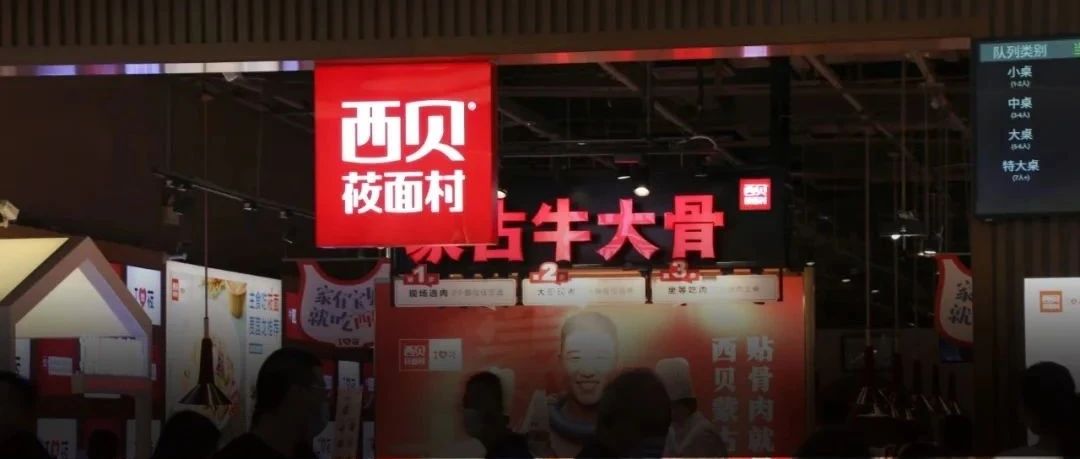
Core Viewpoint - The article explores the transformation of Xibei into a children's restaurant, highlighting its appeal to families and the strategies it employs to attract young diners and their parents [3][12][39]. Group 1: Target Audience - Xibei's primary audience is preschool children, with its children's meals being highly favored by kids aged 1-8 [5][6]. - Parents often find themselves compelled to bring their children to Xibei, as kids express a strong preference for the restaurant [7][8]. - The restaurant's new slogan aims to establish a benchmark in the children's meal industry, indicating a shift in its core identity [8][12]. Group 2: Dining Experience - The dining experience at Xibei is designed to be child-centric, with a focus on providing entertainment and engagement for children [17][21]. - Staff members are trained to cater to children's needs, creating an environment that feels more like a playground than a traditional restaurant [17][30]. - Xibei offers various activities, such as DIY cooking classes and birthday celebrations, enhancing the overall experience for families [25][26]. Group 3: Menu and Pricing - Xibei's children's menu has seen significant growth, with a reported 415% increase in revenue from 2019 to 2022 [40]. - The restaurant has introduced specialized children's meals, which are marketed as "professional children's meals," emphasizing health and quality [33][39]. - Despite the focus on children's meals, there are concerns about the quality and portion sizes, with some items being criticized for being overpriced and not meeting expectations [10][35][60]. Group 4: Market Positioning - Xibei has repositioned itself from a traditional Northwestern cuisine restaurant to a family-oriented dining establishment, targeting families with an annual income of 400,000 yuan [42]. - The restaurant's strategy includes a dedicated team for children's meal development, reflecting its commitment to this market segment [42]. - Xibei's success in the children's meal sector is indicative of a broader trend in the restaurant industry, where children's meals are becoming a lucrative niche [50][52].

月薪三万都嫌贵的西贝,最大金主是「两脚吞金兽」
36氪· 2025-06-15 10:40
Core Viewpoint - The article explores the transformation of Xibei into a children's restaurant, highlighting its appeal to families and the strategies it employs to attract young diners and their parents [3][12][39]. Group 1: Target Audience - Xibei's primary audience is preschool children, with the restaurant being perceived as a top choice for kids aged 1-8 [5][6]. - Parents often find themselves compelled to visit Xibei due to their children's preferences, indicating a shift in dining dynamics where children influence family dining choices [7][16]. Group 2: Business Strategy - Xibei has rebranded itself as a "family gathering restaurant," targeting families with an annual income of 400,000 yuan and positioning itself as a premium dining option [42]. - The restaurant has invested significantly in its children's menu, with a dedicated team developing specialized items, resulting in a 415% revenue growth in children's meals from 2019 to 2022 [40][43]. Group 3: Customer Experience - The dining experience at Xibei is designed to be child-friendly, featuring activities like balloon modeling and interactive menus that engage children while providing a comfortable environment for parents [17][21][22]. - Xibei offers various family-oriented activities, such as DIY cooking classes, which enhance the overall experience and create a sense of community among families [25][26]. Group 4: Product Offering - The children's menu at Xibei is marketed as "professional children's meals," emphasizing health and nutrition, although there are concerns about the quality and portion sizes of the food [33][35]. - Xibei's children's meals have seen price increases, with new items being introduced that cater to both children and health-conscious adults, blurring the lines between children's and adult meals [36][60]. Group 5: Market Position - Xibei's focus on children's dining reflects a broader trend in the restaurant industry, where children's meals are becoming a lucrative segment, appealing to both parents and children [50][52]. - The restaurant's success in this niche is attributed to its ability to meet high expectations for quality and safety, which resonates with parents seeking reliable dining options for their children [58][60].
每经品牌100指数成分股“换血”,科技、消费“纳新”助力稳增长
Mei Ri Jing Ji Xin Wen· 2025-06-15 06:33
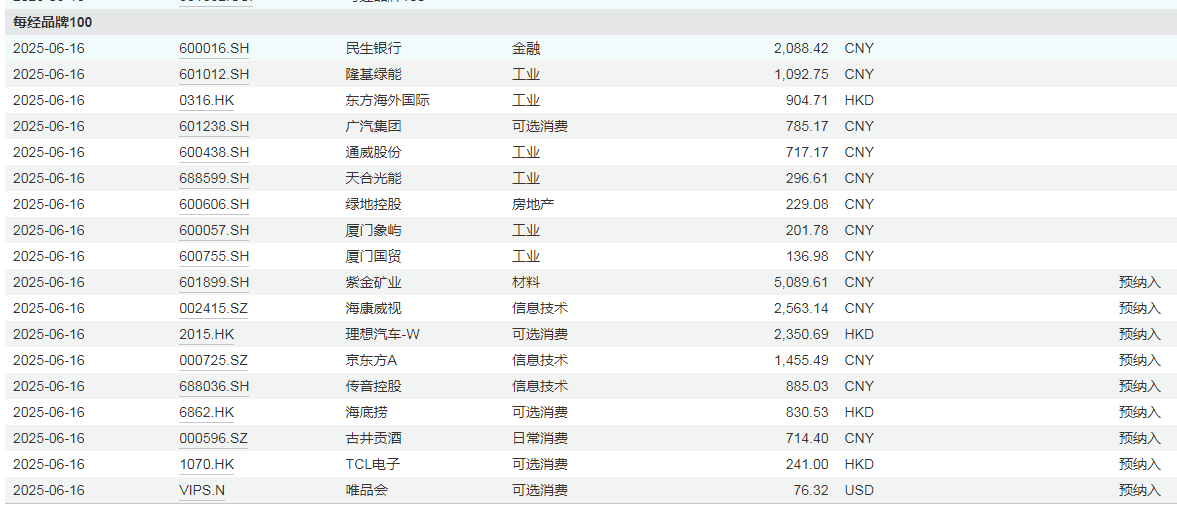
Core Viewpoint - The recent adjustment of the "Everyday Brand 100 Index" reflects a significant shift in its constituent stocks, with nine new companies being added, which is expected to support the index's continued growth [1][6]. Group 1: Index Performance - The "Everyday Brand 100 Index" has shown strong performance, achieving a 17.37% increase from May 9, 2024, to May 7, 2025, outperforming major A-share indices such as the Shanghai Composite Index and the Shenzhen Component Index [2]. - The index has consistently reached new highs, indicating strong investment elasticity and resilience against risks [2]. Group 2: Valuation Metrics - As of June 13, the index's price-to-earnings (P/E) ratio stands at 11.5 times, and the price-to-book (P/B) ratio is 1.25 times, which is competitive compared to benchmark indices like the Shanghai 50 and CSI 100 [3]. - The index's valuation is notably lower than the Hang Seng Technology Index, which has a P/E ratio of 20 times, highlighting its valuation advantage [3]. Group 3: Brand Value Performance - The total brand value of the top 100 Chinese listed companies reached 20.46 trillion CNY, marking a year-on-year increase of 14.9% [4]. - Notably, 24 Chinese companies made it to the global brand value top 100 list, with a combined brand value of 17,775.29 billion USD, reflecting a 28.4% increase from the previous year [4]. Group 4: New Constituent Stocks - The nine new companies added to the index include Zijin Mining, Hikvision, Li Auto, BOE Technology Group, Transsion Holdings, Haidilao, Gujing Distillery, TCL Electronics, and Vipshop, primarily from the consumer, information technology, and mineral resources sectors [6]. - The average revenue and net profit of the new constituent stocks are 398.19 billion CNY and 43.49 billion CNY, respectively, with revenue showing a year-on-year decline of 2.73% and net profit increasing by 8.95% [6]. Group 5: Financial Performance - The average revenue of the constituent stocks is 30.03 times that of the A-share market, and the average net profit is 42.10 times higher, indicating strong competitive and profitability capabilities [8]. - The return on assets (ROA) and return on equity (ROE) for the constituent stocks are 5.96% and 13.61%, respectively, both significantly higher than the A-share market averages [8].


从8元奶茶到校园火锅,餐饮品牌争夺高校餐桌
第一财经· 2025-06-14 12:46
Core Viewpoint - The article discusses the growing competition among food and beverage brands in the university market, highlighting the significant market potential and the strategies companies are employing to capture the young consumer base [1][6]. Group 1: Market Overview - The Chinese university dining market reached a scale of 483.28 billion yuan in 2023, with a compound annual growth rate (CAGR) of 31.6%. It is expected to grow to 544 billion yuan in 2024 and surpass 600 billion yuan in 2025 [7]. - The market is characterized by a coexistence of on-campus dining (55.5%) and off-campus social dining (44.5%), indicating a competitive yet complementary landscape [10]. Group 2: Company Strategies - Brands like Bawang Tea and Haidilao are entering university campuses to establish a presence, with Bawang Tea's first campus store at Tsinghua University selling over 2,200 cups on its opening day [7]. - Nova Coffee is adapting to seasonal trends and consumer preferences by offering innovative coffee products and exploring partnerships with universities for low-investment, high-return business models [5]. Group 3: Consumer Behavior - University students are seen as a stable consumer base, with brands aiming to "occupy the mind" of young consumers to convert them into long-term customers [12][13]. - The shift in consumer behavior is evident as students transition from parental purchasing decisions to independent choices, with increased disposable income allowing for higher-quality brand selections [13]. Group 4: Challenges and Considerations - While there is potential for brands to convert university students into long-term customers, challenges include the limited spending power of students and the influence of trends and social factors on their preferences [14]. - Brands must continuously innovate their products and services to maintain relevance and avoid losing consumer interest once the novelty wears off [14].
从8元奶茶到校园火锅,餐饮品牌争夺高校餐桌
第一财经· 2025-06-14 11:52
Core Viewpoint - The article discusses the growing competition among food and beverage brands in the university market, highlighting the potential for significant revenue generation and brand loyalty among young consumers [1][5][11]. Market Overview - The Chinese university dining market reached a scale of 483.28 billion yuan in 2023, with a compound annual growth rate (CAGR) of 31.6%. It is expected to grow to 544 billion yuan in 2024 and surpass 600 billion yuan in 2025 [6][8]. - The market is characterized by a coexistence of on-campus dining services (55.5%) and off-campus social dining (44.5%), indicating a competitive yet complementary landscape [8]. Consumer Behavior - University students are increasingly drawn to innovative food and beverage options, with brands like Nova Coffee and Haidilao adapting their offerings to cater to this demographic [4][7]. - The campus environment serves as a "third space" for students, combining dining with social interaction, which enhances brand engagement [7][10]. Brand Strategy - Brands view universities as critical venues for "mind share" acquisition, aiming to convert students into long-term customers. The transition from student to professional consumer is seen as a key opportunity [11][12]. - The coffee market is particularly targeted, with 90s and 00s generations showing a strong inclination towards coffee consumption, making campuses a strategic focus for brands [11]. Challenges and Considerations - While there is potential for long-term customer conversion, brands face challenges such as limited student purchasing power and shifting consumer preferences influenced by trends and social factors [12]. - Continuous innovation in products and services is essential for brands to maintain relevance and avoid losing student interest [12].

商业秘密|从8元奶茶到校园火锅,品牌争夺高校餐桌6000亿元市场
Di Yi Cai Jing· 2025-06-13 11:40
Core Insights - The competition in the beverage sector has entered campuses, with major chains targeting the lucrative market of college students, which is valued at 600 billion yuan and has a compound annual growth rate (CAGR) exceeding 30% [1][6] - Brands aim to establish a "third space" in campuses to capture the minds of young consumers, turning today's students into tomorrow's loyal customers [1][12] Market Overview - The Chinese college dining market is projected to grow to 544 billion yuan in 2024 and is expected to surpass 600 billion yuan by 2025, with a CAGR of 31.6% [6] - The market consists of on-campus dining (55.5%) and off-campus dining (44.5%), indicating a competitive landscape where both segments coexist and complement each other [9] Consumer Behavior - College students are increasingly favoring innovative beverage products, with brands like Nuo Wa Coffee adapting their offerings to seasonal trends and preferences [5] - The student demographic is seen as a key target for brands, as they are in a critical phase of brand recognition and are more likely to develop long-term consumption habits if engaged effectively [12][13] Strategic Initiatives - Companies like Bawang Tea and Haidilao are expanding into campus dining, with Haidilao incorporating unique dining experiences to attract students [7][8] - Nuo Wa Coffee plans to collaborate with various retail scenarios within campuses to create low-investment, high-return business models [5] Challenges and Considerations - While there is potential for brands to convert college students into long-term customers, challenges include the limited purchasing power of students and the need for continuous innovation to maintain interest [13] - The transition from campus consumption to long-term loyalty requires brands to adapt their marketing strategies and product offerings to align with the evolving lifestyles of graduates [13]
萨莉亚将在粤设中国总公司,日企深耕广东看中了什么?
2 1 Shi Ji Jing Ji Bao Dao· 2025-06-13 00:43
Core Insights - Guangdong is a leading investment destination in China, with over 19 million market entities and a strong foreign investment presence, totaling nearly $600 billion [1] - In the first four months of this year, Guangdong saw a 24.2% increase in newly established foreign-invested enterprises and an 8.9% rise in actual foreign capital utilization [1] - The province has implemented various policies to support foreign investment, including a new round of foreign investment incentive policies set to launch in 2024 [2][3] Group 1: Foreign Investment and Economic Environment - Guangdong has established over 35,000 foreign-invested enterprises, reflecting strong confidence from foreign businesses [1] - The province's actual utilization of Japanese foreign capital increased by over 48% in the same period, indicating a favorable business environment for Japanese companies [2] - The Guangdong government has introduced 12 specific measures to stimulate market vitality and support both domestic and foreign enterprises [3] Group 2: Industry Opportunities and Consumer Demand - Japanese companies have significant advantages in manufacturing technology, supply chain optimization, and market potential, particularly in the food and beverage sector [5] - The demand for high-quality and fresh products in Guangdong is strong, with local Japanese restaurants growing at an annual rate of 18% [5] - There is a notable opportunity for collaboration between Japanese enterprises and local businesses to meet the rising demand for premium ingredients and innovative product offerings [5][6] Group 3: E-commerce and Market Integration - Guangdong's e-commerce market is characterized by large scale, solid supply chains, and diversified channels, with online retail accounting for 20% of the national total [6] - The integration of online convenience and offline experience has made Guangdong's e-commerce landscape particularly vibrant, with over 40% of food orders placed online [6] - Japanese companies can leverage Guangdong's dual-channel sales strategy through online marketplaces and physical stores to enhance market penetration and reduce logistics costs [6]
“月薪三万都嫌贵的西贝受众到底是谁”,多少打工人是被逼着一个月连吃四次?
3 6 Ke· 2025-06-09 08:26
Core Insights - The article discusses the unique positioning of Xibei restaurant as a children's dining establishment, despite its initial branding as a Northwest cuisine restaurant [4][29] - Xibei has successfully attracted families, particularly those with young children, by offering a child-friendly environment and specialized children's meals [8][20] - The restaurant's strategy includes emotional engagement with children through activities and services, which enhances the dining experience for families [12][22] Group 1: Target Audience and Market Positioning - Xibei's primary audience is preschool children, with parents often compelled to visit due to their children's preferences [4][8] - The restaurant has redefined its market positioning from a traditional dining establishment to a "family gathering restaurant," targeting families with an annual income of 400,000 yuan [29] - In 2024, Xibei is expected to have nearly 400 locations and an average spending of 98 yuan per customer [8] Group 2: Children's Menu and Offerings - Xibei's children's menu has seen a significant increase in revenue, with a 415% growth from 2019 to 2022, indicating a strong market demand [29] - The restaurant offers specialized children's meals that are marketed as "professional children's meals," focusing on health and nutrition [24][27] - Xibei has developed a dedicated team for children's meal research and has introduced 11 unique items in its children's menu [29] Group 3: Customer Experience and Engagement - The restaurant provides a playful atmosphere for children, including balloon animals and interactive activities, which keeps children entertained while dining [12][20] - Xibei organizes regular parent-child activities, enhancing the overall experience and encouraging repeat visits [19][20] - Staff members are trained in various skills beyond food service, such as magic and singing, to create a more engaging environment for children [22] Group 4: Pricing Strategy and Market Trends - Xibei's pricing strategy reflects a premium positioning, with children's meals priced comparably to adult meals, appealing to both families and health-conscious consumers [26][27] - The restaurant's children's meals are marketed as healthy options, attracting a demographic of working adults seeking nutritious meals [39][44] - The trend of children's dining is growing, with Xibei capitalizing on the limited competition in the market for high-quality children's meals [36][37]
网红餐厅“祖师爷”,靠预制菜拿下38亿
新消费智库· 2025-06-06 11:54
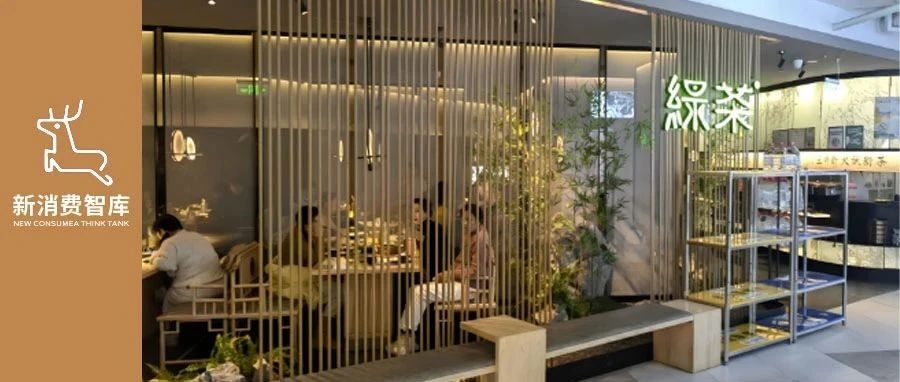
Core Viewpoint - Green Tea Restaurant, despite being labeled as "sick" upon its IPO, is acutely aware of its challenges and has made significant efforts to innovate and expand its business model [13][58]. Group 1: Company Overview - Green Tea Restaurant has attempted to go public five times over four years, finally achieving its IPO, which is seen as a significant milestone for the brand [4][6]. - The restaurant chain plans to open 47, 89, and 120 new locations in 2022, 2023, and 2024 respectively, indicating an aggressive expansion strategy [8]. - The brand has faced intense competition and imitation, with many counterfeit versions of its restaurants emerging across China [15][16]. Group 2: Business Model and Strategy - Green Tea Restaurant has adopted a fast-fashion approach similar to brands like Zara, frequently updating its menu to attract younger consumers [27][30]. - The average revenue of Green Tea Restaurant exceeded 3.8 billion yuan in a year, ranking it third and fourth among Chinese casual dining brands [34]. - The restaurant has implemented a standardized food preparation process, relying heavily on pre-prepared ingredients to maintain efficiency and speed in service [41][44]. Group 3: Challenges and Criticism - The reliance on pre-prepared dishes has led to accusations of quality compromise, with customers expressing dissatisfaction over the lack of transparency regarding the use of pre-packaged ingredients [47][50]. - Customer traffic has significantly declined, with average daily visitors dropping from 809 in 2018 to 477 in 2024, indicating a potential loss of brand appeal [58]. - Despite the introduction of numerous new dishes, many of the top-selling items remain older menu staples, suggesting a struggle to innovate effectively [70]. Group 4: Market Position and Future Outlook - The restaurant faces increasing pressure from competitors who are lowering prices to attract budget-conscious consumers, challenging Green Tea's previous value proposition [66]. - The brand's attempts to create unique dining experiences, such as themed dining environments, have not yet translated into sustained customer loyalty [61][64]. - The future of Green Tea Restaurant's business model remains uncertain, as the balance between industrialized food preparation and maintaining authentic dining experiences is critical for long-term success [69][72].