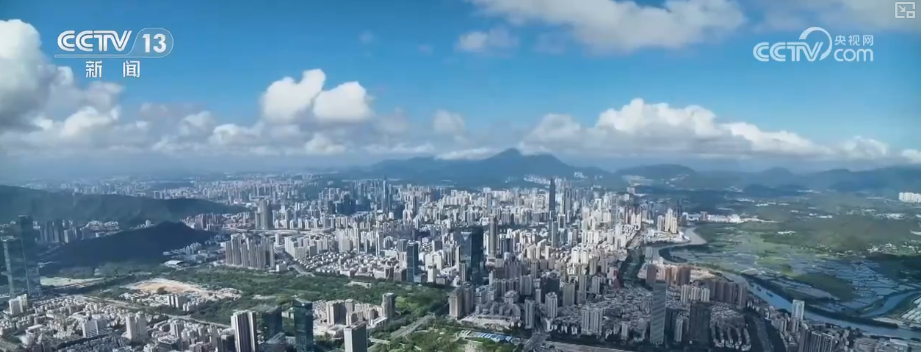
先进制造业

Search documents
万联晨会-20251027
Wanlian Securities· 2025-10-27 01:04
Market Overview - The A-share market saw all three major indices rise last Friday, with the Shanghai Composite Index up by 0.71%, the Shenzhen Component Index up by 2.02%, and the ChiNext Index up by 3.57%. The total trading volume in the Shanghai and Shenzhen markets reached 19,740.21 billion [1][7] - In terms of industry performance, the telecommunications, electronics, and defense sectors led the gains, while the oil, coal, and food and beverage sectors lagged behind. Concept sectors such as storage chips and state-owned enterprise reforms saw significant increases, while coal and rental rights concepts experienced declines [1][7] - The Hong Kong market also saw the Hang Seng Index rise by 0.74%, while the Hang Seng Technology Index remained unchanged. In overseas markets, all three major US indices rose, with the Dow Jones up by 1.01%, the S&P 500 up by 0.79%, and the Nasdaq up by 1.15% [1][7] Important News - Recent US-China trade talks took place in Kuala Lumpur, focusing on key economic issues such as maritime logistics, tariff extensions, and agricultural trade. Both sides reached a basic consensus on addressing mutual concerns and agreed to further define specific details [2][8] - The Ministry of Science and Technology emphasized the importance of strengthening strategic planning and innovation to seize opportunities in the new technological revolution and industrial transformation [2][8] Industry Insights - The recent Fourth Plenary Session of the 20th Central Committee outlined a blueprint for future economic development, emphasizing high-quality growth and structural reforms during the 14th Five-Year Plan period. The focus will be on developing new productive forces to drive economic transformation [9][10] - The session highlighted the need to build a modern industrial system, with advanced manufacturing as a backbone, and to accelerate the transition of traditional industries towards high-end, intelligent, and green development [10][11] - There is a strong emphasis on enhancing domestic demand and consumption to strengthen the domestic economic cycle, with plans to cultivate a complete domestic demand system [12] - The session also called for market-oriented reforms to improve resource allocation efficiency and expand high-level openness, aiming to break down barriers to the construction of a unified national market [12] Gaming Industry Update - In October, a total of 166 game licenses were approved, including 159 domestic games and 7 imported games. This high volume of approvals indicates a continued recovery in the gaming industry [13][14] - Notable games such as "Arknights" by Eagle Horn Network have been approved, which is expected to strengthen its position in the market. The game has seen significant success since its launch, with high download rates and positive reviews [14][15] - The overall trend in game license approvals suggests a normalization in the regulatory environment, which is expected to benefit leading companies with diverse product offerings and strong R&D capabilities [15]
让金融“活水”精准滴灌“产业之树”
Jin Rong Shi Bao· 2025-10-27 00:36
Group 1 - The core message emphasizes the importance of high-quality development as a guiding principle for China's economic and social progress over the next five years, as outlined in the 14th Five-Year Plan [1] - The focus is on transforming the high-quality development blueprint into actionable steps, including setting clear targets, addressing issues, and fostering collaboration [1] - Key strategies include promoting innovation, coordination, green development, openness, and shared benefits, while strengthening the real economy [1] Group 2 - The financial sector is highlighted as essential for supporting the real economy, with significant growth in loans to technology-driven SMEs and green financing during the 14th Five-Year Plan, averaging over 20% annual growth [2] - Financial institutions provided a total of 170 trillion yuan in new funds to the real economy, demonstrating their role in stabilizing supply chains and supporting strategic national initiatives [2] - Looking ahead, the financial sector aims to provide targeted support for the construction of a modern industrial system, ensuring sustainable high-quality development [2] Group 3 - Strengthening institutional mechanisms is crucial for aligning financial services with industrial needs, including the development of specialized financial service frameworks and risk assessment mechanisms [3] - Financial and industrial policies must work in tandem to ensure resources are effectively allocated, with differentiated credit policies tailored to specific industries and growth stages [3] - Clear guidance on technology and industry development paths is necessary to help financial institutions identify quality projects and reduce service costs [3] Group 4 - Resources should be directed towards emerging productive forces and weak links in industrial development, focusing on areas like artificial intelligence and aerospace [4] - Financial support for technology research and development, as well as risk compensation for small and micro enterprises in manufacturing, is essential for fostering growth [4] - The goal is to create a robust modern industrial system by ensuring that financial resources flow into advanced manufacturing and green sectors [4][5]
郑永年看“十五五”:以“中国人经济”拓展经济外延
21世纪经济报道· 2025-10-26 14:33
Core Viewpoint - The article emphasizes the importance of enhancing technological self-reliance and independence as a key goal for China's economic and social development during the "14th Five-Year Plan" period, with a focus on building a modern industrial system and boosting consumption through the development of the real economy [1][3][4]. Summary by Sections Economic Goals and Strategies - The "14th Five-Year Plan" aims for significant improvements in economic strength, technological capabilities, national defense, and overall national power by 2035, with a target of achieving a per capita GDP comparable to that of moderately developed countries [1][5]. - Key strategies include building a modern industrial system, strengthening the real economy, and accelerating high-level technological self-reliance to lead new productive forces [1][4]. Technological Self-Reliance - The concept of "technological self-reliance" reflects a shift in China's approach to technology, moving from merely acquiring technology from international markets to focusing on qualitative breakthroughs in technology development [3][4]. - The article highlights the need for increased investment in technology and research and development to adapt to complex external conditions, particularly in light of challenges such as trade wars and the COVID-19 pandemic [3][4]. Manufacturing and Consumption - The article stresses the critical role of manufacturing in enhancing consumption levels, arguing that simply providing financial incentives is insufficient; instead, a robust manufacturing sector is essential for creating wealth and improving overall consumption [6][7]. - It notes that China's current per capita GDP of over $13,400 must grow to approximately $30,000 within ten years to reach the target set for moderately developed countries, emphasizing the need for a strong manufacturing base to achieve this goal [5][6]. Investment in People - The article discusses the shift from investing in physical infrastructure to investing in human capital, highlighting the importance of education, technology, and talent development as central to economic and technological advancement [8][9]. - It argues that the ultimate goal of economic and technological development is to improve people's livelihoods, making "investment in people" a crucial aspect of the development strategy [8][9]. Global Economic Engagement - The article introduces the concept of "Chinese people’s economy," which encompasses the global economic activities of Chinese individuals and businesses, suggesting that both domestic and international economic strategies are essential for comprehensive economic development [9][10]. - It emphasizes the need for Chinese enterprises to engage in international markets while simultaneously strengthening the domestic economy [9].


郑永年看“十五五”:以“中国人经济”拓展经济外延
2 1 Shi Ji Jing Ji Bao Dao· 2025-10-26 14:24
近日,党的二十届四中全会在北京举行。全会提出了"十五五"时期经济社会发展的主要目标,其中之一 是"科技自立自强水平大幅提高"。 全会还提出,到2035年实现我国经济实力、科技实力、国防实力、综合国力和国际影响力大幅跃升,人 均国内生产总值达到中等发达国家水平,人民生活更加幸福美好,基本实现社会主义现代化。 围绕上述目标,全会提出了"建设现代化产业体系,巩固壮大实体经济根基""加快高水平科技自立自 强,引领发展新质生产力"等战略任务。 如何理解"十五五"时期经济社会发展的主要目标?现代化产业体系建设、科技自立自强、大力提振消 费、加大改善民生力度等战略任务之间,存在哪些内在关联,如何协同推进?为此,21世纪经济报道对 香港中文大学(深圳)前海国际事务研究院院长郑永年进行了专访。 郑永年认为,"十五五"时期要提振消费、提高消费率,并不能简单依靠发钱,关键还是要通过发展实体 经济、发展制造业,来提高全社会消费水平。在他看来,一切经济和科技发展的落脚点都在民生,在于 能否更好地"投资于人",这也是讨论"十五五"发展的重要视角。 "十四五"期间,我国在科技领域实现了很多突破,这为我国的经济发展带来了很大的信心,也为"十 ...
多部门详解“十五五”规划建议,国资将向新兴产业集中
Di Yi Cai Jing· 2025-10-26 13:30
Core Viewpoint - The article emphasizes the importance of building a modern industrial system and strengthening the foundation of the real economy as a primary task in China's 14th Five-Year Plan, with a focus on high-quality development and innovation-driven growth [2][3]. Group 1: Modern Industrial System - The construction of a modern industrial system is prioritized in the 14th Five-Year Plan, with a focus on solidifying and expanding the real economy [2][3]. - Key tasks include upgrading traditional industries, fostering new and future industries, and enhancing the quality and efficiency of the manufacturing sector [3][5]. - The manufacturing sector is projected to contribute significantly to global manufacturing growth, with an expected increase in value added from 26.6 trillion yuan to 33.6 trillion yuan during the 14th Five-Year Plan [4]. Group 2: Traditional Industries - Traditional industries account for approximately 80% of the manufacturing sector's value added, serving as the foundation of China's industrial system [5]. - The government aims to enhance the competitiveness of key traditional industries such as chemicals, machinery, and shipbuilding, with an estimated market space increase of around 10 trillion yuan over the next five years [5]. Group 3: Emerging Industries - The plan includes the development of strategic emerging industries such as new energy, new materials, and aerospace, which are expected to create several trillion-yuan markets [7]. - The focus on innovation and reform is crucial for the growth of emerging industries, which currently represent only about 13.4% of GDP compared to traditional industries [8]. Group 4: State-Owned Enterprises - Central enterprises have invested approximately 8.6 trillion yuan in strategic emerging industries since the beginning of the 14th Five-Year Plan, with a projected revenue of over 11 trillion yuan in 2024 [9]. - The government encourages state-owned enterprises to concentrate capital in emerging industries to enhance competitiveness and ensure strategic security in critical areas [10][11].
私募基金:全会为投资提供重要指导,关注科技创新、扩大内需等主线
Zhong Guo Ji Jin Bao· 2025-10-26 12:15
【导读】私募基金解读党的二十届四中全会精神:为投资提供重要指导,关注科技创新、扩大内需等主 线 10月20日至23日,党的二十届四中全会在北京举行,全会审议通过了《中共中央关于制定国民经济和社 会发展第十五个五年规划的建议》。10月23日,党的二十届四中全会公报(以下简称公报)发布。 紫阁投资表示,今年前三季度GDP增速为5.2%,超过了年初设定值。不过,相对于上半年5.3%的增 速,三季度经济增速下滑,四季度经济增长依然面临压力。因此,市场期待后续在稳增长、稳就业等方 面出台政策,加大促进经济企稳的力度。 星石投资副总经理、高级合伙人方磊表示,全会提出要"构建以先进制造业为骨干的现代化产业体系", 后续制造业增加值占GDP比重可能是重要指标;公报提出"加快建设制造强国、质量强国、航天强国、 交通强国、网络强国",为"十五五"产业政策指明方向;全会提出要"抓住新一轮科技革命和产业变革历 史机遇",显示科技创新可能逐渐成为新的经济增长逻辑和主要动力,科技领域蕴含中长期机会;此 外,对内需的重视程度明显提升,加大在需求端的发力力度并着力培育新的消费增长点,中期视角下消 费的投资机会有望增加。 世诚投资表示,"十五 ...
固定收益策略报告:从“十五五”方向看利率趋势-20251026
SINOLINK SECURITIES· 2025-10-26 10:22
1. Report Industry Investment Rating No relevant content provided. 2. Core Views of the Report - Long - term: Multiple policy goals and strategic directions in the announcement will have a profound impact on the medium - and long - term interest rate center. Maintaining a relatively stable manufacturing proportion can reduce the downward traction on the interest rate center, and the growth of total factor productivity brought by technological innovation can hedge the decline of the demographic dividend [5][28] - Short - term: The implementation of the "15th Five - Year Plan" has a positive reaction on risk assets, suppressing the bond market on the emotional level. The previous rebound of the bond market may be coming to an end, and it is advisable to consider phased defense after the market sentiment returns to the neutral range [6][28] 3. Summary by Relevant Catalogs 3.1 Strategy Thinking: Interest Rate Trends from the "15th Five - Year Plan" Direction Question 1: Impact of "Manufacturing Proportion" on the Medium - and Long - Term Interest Rate Center - There is a positive correlation between manufacturing proportion and the long - term interest rate center, which is reflected in both domestic and overseas markets. In China, from 2006 - 2013, the manufacturing proportion was stable above 30%, and the interest rate showed a box - shaped shock. After 2013, the manufacturing proportion declined, and the interest rate trended downward. Overseas, similar relationships can be observed in the data of the US, Japan, India, and Thailand [2][8][9] - The reasons for the correlation include changes in capital demand, productivity growth rate, and the balance of savings and investment. A decline in the manufacturing proportion may lead to a slowdown in capital demand, a slowdown in productivity growth, and an imbalance in savings and investment [3][9] - According to historical data regression, for every 1 - percentage - point decrease in the manufacturing proportion, the interest rate center in China, Japan, and the US will decline by about 20, 50 - 60, and 50 - 100 basis points respectively. If the manufacturing proportion remains stable during the "15th Five - Year Plan", the downward traction on the interest rate may weaken [18] Question 2: Impact of the Development of the Technology Industry on the Interest Rate Center - The development of the technology industry generally has an upward - pushing effect on the interest rate center. Using the "proportion of high - tech exports in the total value of manufactured goods exports" as a proxy variable, a positive correlation can be found between the high - tech product export proportion and the interest rate center in China, the US, and Japan. The development of the technology industry can improve total factor productivity, hedge the demographic dividend, and promote the potential economic growth rate [4][22] Question 3: Implicit Growth Target of the 2035 Vision Plan - Given that the per - capita GDP in 2024 was $13,400, assuming an average nominal growth rate of 5%, 5.5%, or 6% by 2035, the per - capita GDP will reach $23,000, $24,000, and $25,000 respectively, meeting the "medium - developed country level". It is speculated that the target growth rate during the "15th Five - Year Plan" may be set at around 5% [5][25] 3.2 Transaction Review: Upward Shift of the Yield Curve - **Funding Situation**: The central bank made a small - scale net injection of funds this week, with a total net injection of 78.1 billion yuan. The central bank will conduct a 900 - billion - yuan 1 - year MLF operation next Monday, with a net injection of 200 billion yuan after the maturity of 700 billion yuan of MLF. The funding situation remained stable, with the operating centers of DR001, DR007, and DR014 moving slightly or significantly upward [29] - **Yield Curve**: The yields of treasury bonds of all maturities increased this week. The 1 - year and 10 - year treasury bond yields increased by 3bp and 2bp to 1.47% and 1.85% respectively, and the 10 - 1 term spread remained basically flat at 38bp. The bond market trend was "up - and - down", affected by various factors such as Sino - US talks, market easing expectations, and the Fourth Plenary Session of the 20th CPC Central Committee [35] - **Duration and Indicator Signals**: From October 20th to 24th, the median duration of public funds continued to rise slightly to 2.76 years, and the duration divergence index rose slightly to 0.57. Among the ten interest rate synchronization indicators this week, "positive" and "negative" signals each accounted for 5/10, and the copper - gold ratio sent a "negative" signal [41][43]
21专访|郑永年看“十五五”:以“中国人经济”拓展经济外延
2 1 Shi Ji Jing Ji Bao Dao· 2025-10-26 07:04
Group 1 - The core objective of the 14th Five-Year Plan is to significantly enhance the level of technological self-reliance and strength, which is crucial for China's economic development amidst external challenges such as trade wars and the pandemic [3][4]. - The concept of "new quality productivity" has been introduced in the 15th Five-Year Plan, reflecting a shift in China's modernization strategy and emphasizing the need for greater breakthroughs in technology [4][5]. - The goal of achieving a per capita GDP of approximately $30,000 by 2035 requires substantial efforts, as current per capita GDP is over $13,400, indicating a significant gap to close [5][6]. Group 2 - The emphasis on maintaining a reasonable proportion of manufacturing is critical, as advanced manufacturing is seen as the backbone of a modern industrial system, which is essential for economic stability and growth [5][6]. - The development of the manufacturing sector is identified as a key step to enhance overall consumption levels, as economic growth and consumption are closely linked [6][7]. - The shift from "investing in things" to "investing in people" highlights a transformation in development strategy, focusing on human capital and its connection to technological innovation [7][8]. Group 3 - The concept of "Chinese people economy" emphasizes the importance of both domestic and international economic activities, suggesting that Chinese enterprises should engage globally while strengthening local economies [9]. - The integration of "Chinese people economy" into the broader economic strategy reflects a recognition of globalization and the need for Chinese businesses to expand their reach [9].
专家谈·“十五五”关键部署绘蓝图 诸多重要提法释放哪些信号?梳理解读↓
Yang Shi Wang· 2025-10-26 03:59
Group 1 - The core objective of the "15th Five-Year Plan" is to achieve significant results in high-quality development, which aligns with the primary task of Chinese-style modernization [3][5] - The plan emphasizes the importance of maintaining a reasonable proportion of the manufacturing industry and constructing a modern industrial system centered on advanced manufacturing [8] - The focus of the "15th Five-Year Plan" is on economic construction, with key areas including technology, new industrial chains, domestic markets, consumption, and people's livelihoods [10] Group 2 - The "15th Five-Year Plan" outlines strategic and innovative measures to build a strong domestic market, accelerate agricultural modernization, enhance social welfare, and promote a comprehensive green transition [12] - The plan highlights the need to combine investments in physical assets and human capital, emphasizing that expanding domestic demand and investing in people are two sides of the same coin [15][17] - The future five years will see a push for high-level opening-up, encouraging high-quality enterprises to enter China while supporting Chinese companies in forming their own industrial chains [20][22] Group 3 - The plan aims to accelerate self-reliance in high-level technology and lead the development of new quality productivity, seizing opportunities from the new round of technological revolution and industrial transformation [30] - It stresses the importance of original innovation and tackling key core technologies, promoting deep integration of technological and industrial innovation [32] - The plan calls for breaking down barriers to market flow and optimizing resource allocation to create a virtuous cycle of demand and supply [39] Group 4 - The plan identifies key areas for technological breakthroughs, particularly in artificial intelligence, quantum computing, and advanced nuclear energy technologies, which are expected to see explosive growth in the next five years [45][49]
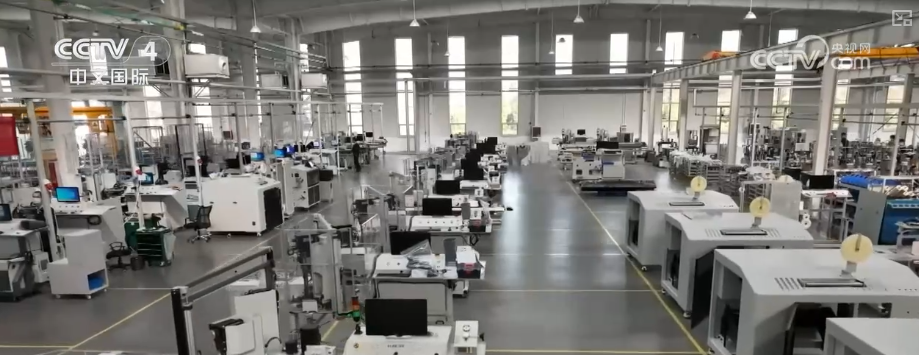
“十五五”字里行间藏着发展机会 看懂就能搭上政策“顺风车”!
Yang Shi Wang· 2025-10-26 03:58
Group 1 - The primary goal of the "15th Five-Year Plan" is to achieve significant results in high-quality development, which is aligned with the modernization of China [5][7] - The plan emphasizes the importance of maintaining a reasonable proportion of the manufacturing industry and building a modern industrial system centered on advanced manufacturing [10][12] - The focus is on economic construction, with key areas including strengthening the domestic market, accelerating agricultural modernization, and enhancing the quality of life [13][15] Group 2 - The plan outlines a significant market opportunity in advanced manufacturing, estimating a potential market scale of 10 trillion yuan over the next five years [20] - There is a growing demand for skilled professionals across various sectors, from upstream components to downstream services, creating numerous job opportunities [21] - Strategic emerging industries such as new energy, new materials, and aerospace are expected to generate trillion-level markets, with additional opportunities in quantum technology and biomanufacturing [23] Group 3 - The health and welfare sectors are highlighted as areas of growth, with an expected increase in life expectancy to 80 years, leading to a substantial market for elderly care services [27] - The service industry is set to expand and improve, integrating with manufacturing and agriculture, thus creating new opportunities for traditional service providers [25][29] - Overall, the economic landscape presents various entry points for individuals and businesses to align with national policies and capitalize on emerging trends [29]