军工

Search documents
军工ETF(512660)盘中涨超1.5%,行业发展为三轮驱动新发展格局
Mei Ri Jing Ji Xin Wen· 2026-01-21 04:35
Group 1 - The core viewpoint is that China's military industry has evolved from relying solely on domestic demand to a new development pattern driven by three engines: domestic demand, foreign trade expansion, and civilian-military integration [1] - The first curve focuses on domestic military demand, emphasizing "preparation for combat" and equipment modernization, supported by stable growth in defense budgets and equipment upgrades [1] - The second curve represents military trade expansion, where China's military trade share continues to rise due to cost-effectiveness, systematic combat capabilities, and geopolitical strategic cooperation [1] - The third curve illustrates the civilian application of military technology, leading to the emergence of new trillion-level industries such as commercial aerospace, low-altitude economy, future energy, deep-sea technology, and large aircraft [1] Group 2 - The military ETF (512660) tracks the CSI Military Index (399967), which selects the top ten military groups and representative companies related to the military industry from the Shanghai and Shenzhen markets [2] - The index is biased towards small and mid-cap stocks, with a focus on aerospace equipment and military electronics, covering various military fields such as aerospace, weaponry, and military electronics [2]
两融资金下降!一些情绪指标开始回落了
Sou Hu Cai Jing· 2026-01-21 02:12
Market Overview - The Shanghai Composite Index closed slightly down by 0.01%, with a notable intraday fluctuation, reaching a low of 0.82% [1] - The primary reason for the intraday low was a centralized cooling effect, which led to some funds following suit, indicating signs of a sell-off [3] Market Sentiment and Financing - Fortunately, the cooling effect began to ease, and financial heavyweight stocks such as banks and brokerages started to rise, helping the market recover significantly [5] - The market sentiment has reached a threshold due to the cooling, with a net sell-off in financing balances recorded at 8.5 billion on January 19, indicating a shift from net buying to high-level fluctuations [5] Sector Adjustments - The commercial aerospace and AI applications have also seen adjustments from their highs, reflecting a decrease in speculative market sentiment, which signifies the effectiveness of the cooling measures [7] Arbitrage Opportunities - The silver LOF has been sold off, achieving a return of approximately 39%, with a cumulative return of 817% for a single account, translating to around 1,671 yuan [9] - The premium rate for silver LOF has approached 40%, indicating a bubble as the market price is 40% higher than the actual net value [12] - The exchange has listed the silver LOF as a key focus, warning of trading risks and potential self-regulatory measures for abnormal trading behaviors [12] Trading Strategies - The grid trading strategy triggered transactions in eight varieties, while no transactions were triggered in the grid combination [14] - Current trends in selected broad-based indices such as the Sci-Tech Innovation and AI indices indicate positive momentum [16] - The stock-bond yield spread stands at 5.23%, suggesting that the overall market's cost-effectiveness is higher than 53.5% of the time [16]

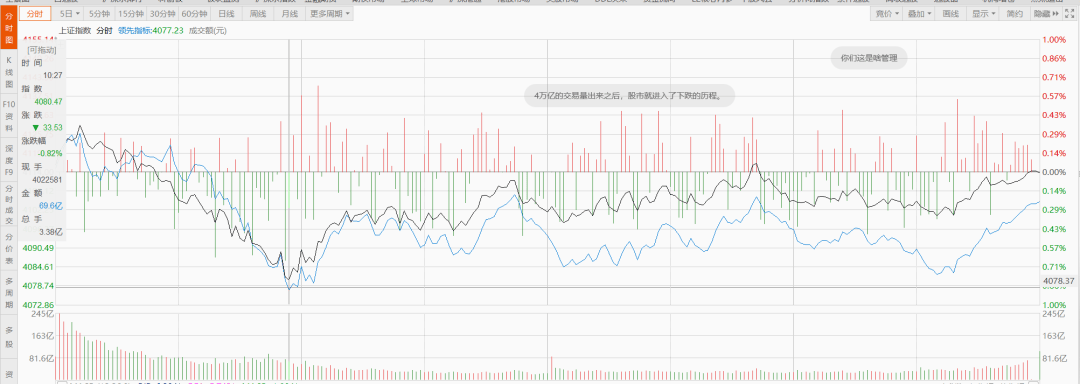
【机构策略】短期A股市场仍将震荡整理 中长期上行趋势仍在
Zheng Quan Shi Bao Wang· 2026-01-21 01:20
Group 1 - The A-share market is experiencing a significant style shift, indicating a strong willingness for funds to switch between high and low sectors amid adjustments in high-position themes and individual stocks [1] - The overall market trading volume remained stable compared to the previous trading day, with active trading levels not declining further; if the market can maintain above 2.5 trillion yuan, there will be more opportunities [1] - The market is likely to gradually shift towards a trend focused on fundamental improvements, especially during the annual report forecast period, suggesting investors should pay attention to sectors with good fundamentals that have lagged behind [1] Group 2 - The A-share major indices continued to adjust, with market volume remaining active, indicating a healthy adjustment process; approximately 60% of individual stocks experienced declines, particularly those that had previously seen significant gains [2] - Geopolitical tensions have led to rising precious metal prices, while the chemical sector is receiving ongoing attention due to recent oil price increases, with some stocks entering accelerated trends [2] - The A-share index is currently in a phase of oscillation and adjustment, with a long-term upward trend still in place; a reduction in high-risk preferences is more beneficial for a sustainable bull market [2]
大连理工大学实践团走进辽沈集团探寻产业升级密码
Xin Lang Cai Jing· 2026-01-20 21:54
Core Viewpoint - The article highlights the transformation of China North Industries Group Corporation (Liaoning Industrial Group) from traditional manufacturing to intelligent manufacturing, emphasizing the importance of technological innovation and collaboration with educational institutions in revitalizing the old industrial base [1]. Group 1: Company Transformation - Liaoning Industrial Group is actively transitioning from a manufacturing-oriented enterprise to a technology-oriented one, adapting to the diverse requirements of military transformation and mission tasks [1]. - The company is focusing on core tasks that involve shifting from traditional manufacturing to intelligent manufacturing [1]. Group 2: Educational Collaboration - A practical team from Dalian University of Technology visited Liaoning Industrial Group to explore the company's transformation path and gain insights into the integration of traditional and intelligent manufacturing [1]. - The team engaged in discussions on topics such as traditional industry, intelligent manufacturing, talent cultivation, and school-enterprise cooperation [1]. Group 3: Innovation and Impact - The practical team expressed that Liaoning Industrial Group's technological innovations have challenged the stereotype that old industries are inefficient, showcasing new vitality in traditional manufacturing [1]. - The team plans to disseminate the revitalization concepts learned during their visit, aiming to inspire youth involvement in the revitalization of Northeast China [1].
格陵兰风起云涌、日本债惨遭抛售 华尔街的宁静开局不堪一击
Xin Lang Cai Jing· 2026-01-20 20:14
Market Overview - The recent weeks have seen an unusual downturn in Wall Street, primarily due to President Trump's aggressive stance on international relations, particularly regarding Greenland, which has created chaos among US and European allies [2][9] - Following the market opening on Tuesday, there was a strong return of "sell America" trades, leading to declines in US Treasury bonds and the dollar, with the S&P 500 and Nasdaq 100 indices dropping by 2%, erasing all gains made this year [2][9] - The VIX index, a measure of market volatility, reached its highest level since November of the previous year, while gold prices surged to over $4,700 per ounce, setting a new record [2][9] Investor Sentiment - Investors had previously shown indifference to Trump's actions, but recent market fluctuations indicate a shift in sentiment, with growing anxiety over potential worst-case scenarios such as NATO disintegration and a full-blown trade war [2][9] - The baseline scenario suggests that severity will ultimately be controlled, as investors are betting on some form of compromise, although if the situation escalates, the impact could be severe and long-lasting, particularly for the dollar [3][10] Bond Market Dynamics - Over the past month, volatility in US bonds, stocks, and the dollar had dropped to the lowest levels since at least 1990, as traders learned to disregard Trump's rhetoric, betting that his most severe threats would not materialize [5][12] - The sell-off in the market was initially triggered by domestic issues in Japan, where concerns over the Prime Minister's tax cuts and increased spending led to a rise of over 25 basis points in Japan's 30-year bond yield, affecting global bond yields [5][12] - The US Treasury market experienced significant pressure, with the yield on 30-year bonds rising by 7 basis points to 4.9%, impacting Trump's goal of lowering interest rates [5][13] Institutional Responses - The Danish pension fund AkademikerPension announced plans to exit its US Treasury positions by the end of the month, citing significant credit risks created by the Trump administration [6][14] - Despite expectations of a diplomatic resolution to the Greenland issue, the chaotic negotiation style of the White House has dampened market confidence [6][14] Sector Implications - The escalating geopolitical tensions are expected to benefit sectors such as defense, finance, and gold, with investment portfolios increasingly focused on these areas [7][15] - Market participants are wary of how far Trump might escalate new threats, although historically, he has often resorted to negotiations rather than imposing extreme tariffs [7][16]

从大涨到大跌,军工坐上“过山车”!商业航天再杀跌,军工ETF华宝(512810)放量巨震6%,调整到位了吗?
Xin Lang Cai Jing· 2026-01-20 11:32
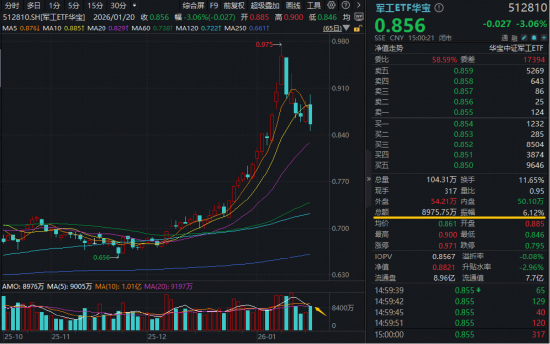
Core Viewpoint - The market experienced a collective decline on January 20, with a shift in investment style from high-valuation growth sectors to value sectors, leading to significant volatility in the military industry, particularly in the aerospace and low-altitude economy themes [1][5]. Military Industry Performance - The military ETF Huabao (512810) saw a trading range of 6.12% throughout the day, closing down 3.06%, erasing previous gains, with a trading volume of 89.76 million yuan [1][5]. - Leading stocks in the military ETF, particularly in commercial aerospace, faced significant declines, with Zhenlei Technology dropping nearly 9% and China Satellite Communications falling 7%, while several others dropped over 6% [3][13]. Market Analysis - Analysts attribute the volatility in the military sector to cautious liquidity expectations ahead of the Spring Festival and institutional portfolio adjustments, which have heightened risk aversion [5][15]. - The military sector is characterized by high growth potential, with small-cap stocks (market cap below 50 billion yuan) making up 56.47% of the military ETF's index, indicating high elasticity and volatility [5][15]. Investment Opportunities - The military sector is viewed as having high configuration value, with potential for investment during price dips, driven by historical opportunities in military trade, new quality-driven growth, and key timing catalysts [6][16]. - The global arms race is intensifying, with conflicts like India-Pakistan showcasing China's advanced equipment manufacturing capabilities, suggesting a historical opportunity for military trade to become a second growth curve for the industry [6][17]. - The new quality of combat power, characterized by intelligence, systematization, and informatization, is becoming a critical factor in strategic competition among major powers, with new production capabilities in commercial aerospace and low-altitude economy expected to further enhance military growth [7][16]. Future Outlook - The year 2026 marks the beginning of the "14th Five-Year Plan" and is a critical year for achieving the centenary goals of the military, indicating a potential new upward cycle for the military industry [6][17]. - The traditional military sector is expected to benefit from advantageous positioning, event catalysts, and improving fundamentals, presenting a significant opportunity for investment [7][17].


兴业证券:A股业绩预告即将进入披露高峰 关注哪些方向?
智通财经网· 2026-01-20 10:56
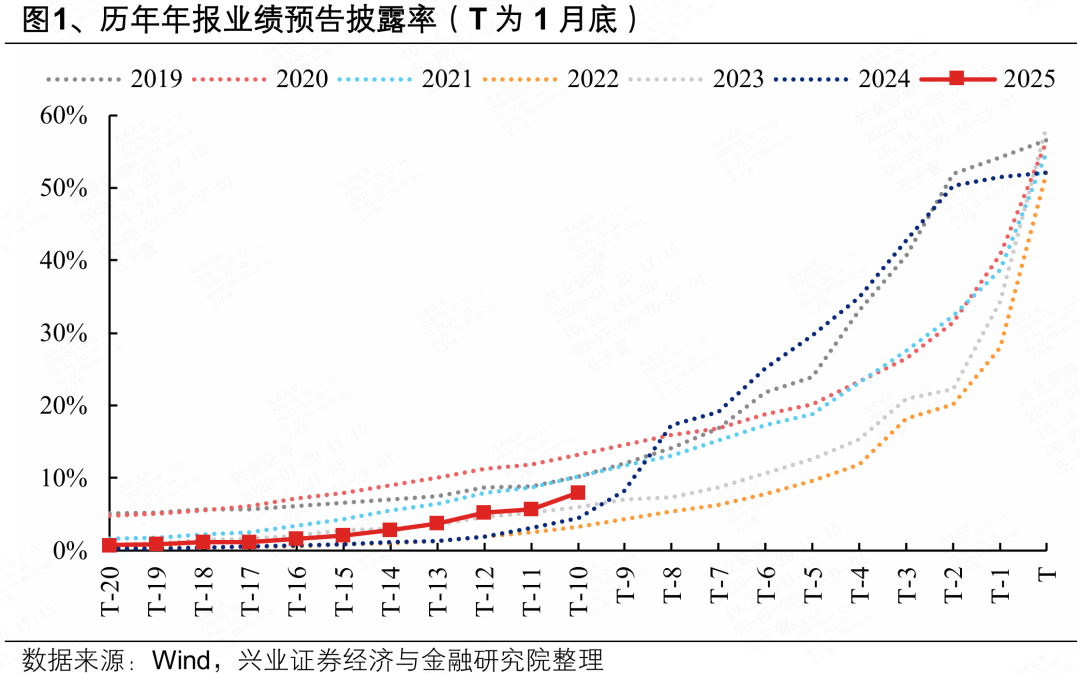
Core Viewpoint - As of January 19, the disclosure rate of annual performance forecasts for A-shares is 7.98%, with a peak expected in late January, where the final disclosure rate may reach around 55% [2][5]. Group 1: Performance Forecasts - The performance forecasts indicate that companies with significant net profit growth are primarily in sectors such as computing power, new energy, chemicals, pharmaceuticals, non-ferrous metals, and computers [6][10]. - By January 19, 447 A-share companies have released annual performance forecasts, with 144 companies expecting net profit growth exceeding 50%, mainly in computing power (semiconductors, communication equipment), new energy (batteries, photovoltaics), and chemicals [6][10]. Group 2: Market Reactions - As the performance forecasts enter their peak disclosure period, the correlation between stock prices and performance is expected to increase significantly in the latter half of January, with market sentiment returning to rationality [5]. - The market is likely to undergo a structural adjustment based on fundamentals, with previous hot sectors facing performance validation, while some low-performing but high-quality sectors may attract new capital inflows [5]. Group 3: Industry Insights - The sectors with upward revisions in profit forecasts since November include technology (especially in upstream computing hardware and downstream applications like consumer electronics and software), advanced manufacturing (new energy, military, automotive), and cyclical industries (building materials, non-ferrous metals, coal, steel) [12][13]. - The industries with lower performance growth since the last market rally include AI computing power, new energy, pharmaceuticals, and cyclical sectors like steel and glass fiber [14].

高层会议圈重点,一个赛道或有修复行情
Hu Xiu· 2026-01-20 10:44
Group 1 - The core viewpoint of the article indicates that there is a potential for recovery in a specific sector, despite recent market adjustments [1][3] - The domestic market indices have experienced significant adjustments, particularly in sectors that were previously heavily speculated, such as the commercial aerospace sector, which has seen a continued decline [3][4] - Regulatory signals since January 15 have indicated a "de-leveraging" approach, leading to a decline in high-risk speculative sectors that were previously driven by leveraged funds [3][4] Group 2 - Official media continues to guide market sentiment, with publications warning against excessive speculation in the commercial aerospace sector and emphasizing the need for caution in previously high-performing speculative areas [4]
多股涨停!黄金概念,午后爆发!
Xin Lang Cai Jing· 2026-01-20 09:09
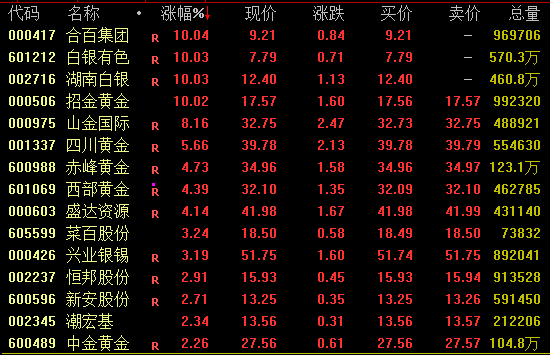
Market Overview - The spot gold price surpassed $4,700 per ounce, setting a new historical high, which led to a surge in gold-related stocks [1][3][13] - On January 20, the Shanghai Composite Index slightly declined, while the ChiNext and Northbound 50 indices showed weak performance; the Hang Seng Technology Index also fell over 1% [1][14] - The total trading volume in the Shanghai, Shenzhen, and Northbound markets reached approximately 2.8 trillion yuan, an increase of over 70 billion yuan compared to the previous day [1][14] Gold Sector - The gold sector saw significant gains, with stocks such as He Bai Group (000417), Silver Industry (601212), Hunan Silver (002716), and Zhaojin Gold (000506) hitting the daily limit [3][16] - Specific stock performances included He Bai Group rising by 10.04% to 9.21 yuan, Silver Industry up 10.03% to 7.79 yuan, and Hunan Silver increasing by 10.03% to 12.40 yuan [4][17] - Analysts expect continued price increases for gold and silver due to easing dollar liquidity and escalating global geopolitical conflicts [4][18] Semiconductor Sector - The semiconductor sector experienced strong upward movement, with stocks like Zhongwei Semiconductor (688380) hitting the daily limit with a 20% increase, and Bawei Storage (688525) rising nearly 9% to surpass 190 yuan [6][19] - Zhongwei Semiconductor announced the upcoming launch of its first non-volatile memory chip, which is expected to fill a product gap in its portfolio [21] Military and Aerospace Sector - The military and aerospace sector faced a collective downturn, with stocks such as Xicai Testing (301306) dropping over 12% and Shenjian Co. (002361) hitting the daily limit for four consecutive trading days [9][23] - Aerospace Dynamics (600343) also faced a decline, with its business primarily involving pump systems and not directly related to commercial aerospace, which has contributed to its recent performance [11][25] TSMC Performance - TSMC is projected to achieve a record revenue of $122 billion in 2025, driven by strong demand for AI computing and advanced process technologies, with a gross margin nearing 60% [8][22] - The company anticipates that its advanced process revenue will account for 77% of total revenue, with 3nm and 5nm processes contributing significantly [8][22]



多股涨停!黄金概念,午后爆发!
证券时报· 2026-01-20 09:05
Core Viewpoint - The article highlights the significant rise in gold prices, with spot gold surpassing $4700 per ounce, reaching a historical high, which has positively impacted gold-related stocks [1][7]. Gold Sector - Spot gold prices have reached a new high of over $4700 per ounce, driven by factors such as marginal easing of dollar liquidity and escalating global geopolitical conflicts [7]. - Major gold-related stocks, including Heiba Group, Silver Holdings, Hunan Silver, and Zhaojin Gold, have seen strong performance, with several hitting the daily limit up [5][6]. - Analysts from Guotai Junan Securities suggest that the rising uncertainty in global geopolitical situations and continued central bank purchases of gold will support long-term gold price stability [8]. Semiconductor Sector - The semiconductor sector has shown strong performance, with stocks like Zhongwei Semiconductor and Blue Arrow Electronics experiencing significant gains, including a 20% limit up for Zhongwei [10]. - Zhongwei Semiconductor announced the upcoming launch of its first non-volatile memory chip, marking a significant step into the storage field [12]. - TSMC is projected to achieve record revenue of $122 billion in 2025, driven by strong demand for AI computing and advanced process technologies, indicating a robust growth outlook for the semiconductor industry [13]. Military Industry - The military sector, particularly satellite navigation and commercial aerospace stocks, has faced a downturn, with several companies experiencing significant declines, including Xicai Testing and Superjet Shares [15][16]. - Shenjian Shares has seen a continuous drop for four trading days, with the company stating that there have been no significant changes in its operational environment [17].