外贸

Search documents
从“被动调整”到“主动预判”
Ren Min Ri Bao· 2025-08-11 02:38
从圣奥的例子来看,企业通过引入大数据模型,优化库存周转,实现从"被动调整"到"主动预判"。破局 的关键,在于构建"数据驱动+政策协同"新生态。 上半年,我国货物贸易进出口21.79万亿元,创历史同期新高;其中,民营企业进出口12.48万亿元,占 我国外贸比重达57.3%。然而,在关税政策等因素的影响下,一些企业供应链调整滞后、库存管理承 压。 7月30日召开的中共中央政治局会议强调,帮助受冲击较大的外贸企业,强化融资支持,促进内外贸一 体化发展。一系列重要部署旨在为外贸企业营造可预期、更优质的营商环境。 (作者为浙江省委党校经济学教研部副主任、副教授,本报记者刘军国采访整理) (责任编辑:谭梦桐) 企业方面,仅靠经验判断或单一平台数据,已难以应对复杂局面,要深度挖掘平台数据与自有运营数据 的融合价值,借助人工智能,整合行业总体数据,提升政策敏感度和需求预测精准度,帮助解决营销、 合规、售后问题。 政府部门加强政策协同、完善服务体系,进一步释放跨境电商综试区的政策红利,帮助企业打通支付、 物流、合规等全链条堵点。多方合力,外贸企业就能在国际市场筑牢韧性根基,实现从"规模扩 张"到"质量提升"的跨越。 ...
从“被动调整”到“主动预判”(专家点评)
Ren Min Ri Bao· 2025-08-10 21:48
上半年,我国货物贸易进出口21.79万亿元,创历史同期新高;其中,民营企业进出口12.48万亿元,占 我国外贸比重达57.3%。然而,在关税政策等因素的影响下,一些企业供应链调整滞后、库存管理承 压。 7月30日召开的中共中央政治局会议强调,帮助受冲击较大的外贸企业,强化融资支持,促进内外贸一 体化发展。一系列重要部署旨在为外贸企业营造可预期、更优质的营商环境。 政府部门加强政策协同、完善服务体系,进一步释放跨境电商综试区的政策红利,帮助企业打通支付、 物流、合规等全链条堵点。多方合力,外贸企业就能在国际市场筑牢韧性根基,实现从"规模扩 张"到"质量提升"的跨越。 (文章来源:人民日报) 从圣奥的例子来看,企业通过引入大数据模型,优化库存周转,实现从"被动调整"到"主动预判"。破局 的关键,在于构建"数据驱动+政策协同"新生态。 企业方面,仅靠经验判断或单一平台数据,已难以应对复杂局面,要深度挖掘平台数据与自有运营数据 的融合价值,借助人工智能,整合行业总体数据,提升政策敏感度和需求预测精准度,帮助解决营销、 合规、售后问题。 ...
陕西前6个月落实科技制造业税惠290亿元
Sou Hu Cai Jing· 2025-08-09 23:57
Core Insights - In the first half of the year, Shaanxi Province implemented tax reductions and refunds totaling 29 billion yuan, with 15.1% directed towards supporting high-tech enterprises and emerging industries [1][2] Tax Incentives and Innovation - Shaanxi's tax authority utilized tax policies to stimulate technological innovation and the transformation of results, achieving a total of 29 billion yuan in tax reductions and refunds from January to June [2] - Over 15% of these funds were specifically allocated to nurture high-tech enterprises and emerging industries [2] - The tax policies also encouraged talent development, with 75,000 individuals benefiting from personal income tax deductions for continuing education, amounting to 140 million yuan [2] Trade and Market Activation - The tax authority fully implemented the "reverse invoicing" policy for resource recovery enterprises, achieving a 100% qualification and invoicing rate [3] - The export tax refund reached 6.71 billion yuan in the first half of the year, reflecting a year-on-year increase of 9.1%, contributing to a favorable foreign trade environment [3] Employment and Social Welfare - The tax authority collaborated with seven departments to provide differentiated support to 14,000 small and micro enterprises, with over 559 million small businesses benefiting from tax reductions exceeding 10 billion yuan [4] - Approximately 15,000 small businesses received over 100 billion yuan in "silver-tax interaction" loans [4] - Personal income tax deductions benefited 3.51 million individuals, resulting in a tax reduction of 8.4 billion yuan, with the number of beneficiaries increasing by 8.7% year-on-year [4] Regulatory Environment and Compliance - The tax authority integrated tax governance into grassroots management, significantly reducing tax-related complaints by 92.9% compared to the previous year [5] - The enforcement approach focused on avoiding redundant checks and ensuring precise regulation, minimizing unnecessary disruptions to businesses [5]
上半年省属企业营收2193亿元江苏国企稳进提质 夯实经济压舱石
Xin Hua Ri Bao· 2025-08-09 23:42
Group 1: Economic Performance of State-Owned Enterprises - In the first half of the year, state-owned enterprises under provincial and municipal supervision achieved a total operating revenue of 632.9 billion yuan, with provincial enterprises contributing 219.3 billion yuan and a profit total of 28.32 billion yuan, indicating positive growth in both revenue and profit [1] - The provincial energy investment entity, facing challenges from declining power generation and grid prices, reported a profit total exceeding 4 billion yuan, maintaining year-on-year growth [2] - Jiangsu's traffic infrastructure investment reached 23.368 billion yuan in the first half of the year, with several major projects completed and operational [3] Group 2: Strategic Developments and Innovations - The provincial planning and design group focused on emerging sectors, capturing nearly 400 business opportunities and achieving a year-on-year growth of 5.6% in western region business [4] - The high investment group successfully launched multiple funds, with the second batch of 22 funds totaling 40.8 billion yuan and a third batch of 5 funds starting at 15.5 billion yuan, significantly expanding its investment scope [5] - The Jiangsu International Group is transitioning towards green manufacturing, with a 36.7% increase in new international engineering contracts and a 23% rise in total import and export volume [6] Group 3: Industry-Specific Developments - The provincial salt industry group is optimizing its salt and alkali circular economy, achieving an operating revenue of 2.493 billion yuan and a profit total of 424 million yuan, with production of salt chemical products reaching 4.8588 million tons [7] - The agricultural group reported a 10% increase in summer grain purchases and a 49.2% revenue growth from reserve replenishment activities, indicating strong performance in the agricultural sector [7]
7月进出口数据点评:涨价提振进一步显现
Huachuang Securities· 2025-08-08 08:11
1. Report Industry Investment Rating No relevant content provided. 2. Core Viewpoints - China's export in July increased by 7.2% year-on-year, and import increased by 4.1%. The "rush to export" and price increase supported the export to exceed expectations, while the price increase was the main driver for the import growth [3]. - In the short term, the "rush to export" logic may be weakening, and the export in August may decline. In the medium term, the uncertainty of tariff policies may decrease, and the support from quantity and price to export may decline, with the pressure of export slowdown gradually emerging [3]. - For imports, the CRB increase in August is still at a high level, which is expected to support the import reading. Attention should be paid to the repair elasticity of domestic demand, import volume, and price [4]. 3. Summary by Directory 3.1 Export: The re - warming of entrepot trade in July under the uncertainty of tariff negotiations - **Overall situation**: In July, the export growth rate was +7.2%, rising for two consecutive months. The "rush to export" logic was strong due to the uncertainty of tariff negotiations, and the export price increase also contributed to the high export growth from June to July. However, the "rush to export" logic is weakening, and the export may decline in August [3][20]. - **By commodity type** - Labor - intensive consumer goods: The year - on - year export declined to - 3.1%. The reasons may be the pre - Christmas rush to export in June and the "price - for - volume" strategy [1][22]. - Intermediate goods: The export growth rate continued to rise, with a combined year - on - year increase of 18.6% for five types, driving the export growth by 2.1 percentage points. It is expected to remain the main support for exports [1][26]. - Electronic products: The drag on export increased. The combined year - on - year decline of mobile phones and laptops was - 1.3%, and the contribution to export was - 18.1% [29]. - Automobiles: The driving effect on export remained high, with a year - on - year increase of 18.6% in export value, driving the export growth by 0.6 percentage points [29]. - **By country** - Developed economies: The year - on - year export growth rates to the US, EU, and Japan were - 21.7%, +9.3%, and +2.5% respectively. The EU's export weight continued to be higher than the same period, showing a substitution effect [2][34]. - ASEAN: The export share decreased, with a year - on - year increase of 16.6% in July, a slight slowdown of 0.4 pct [2][34]. - Latin America: The proportion rebounded, with a year - on - year increase of 7.7% in export in July ( - 2.1% in June), and the share rose to 8.3%, reaching a new high since August 2024. Entrepot trade heated up [2][34]. 3.2 Import: Price increase drives the further upward movement of imports - **Overall situation**: In July, the import amount increased by 4.1% year - on - year, rising further after turning positive in June. The price increase was the main driving force, and the CRB spot index had a good synchronicity with the import amount growth rate [2][38]. - **By commodity type** - Upstream bulk commodities: The import drag narrowed, with a combined year - on - year decline of 7.9% in the import amount of five types of upstream bulk commodities, which was 3.5 pct higher than that in June [39]. - Intermediate goods: The growth rate continued to rise, with a combined year - on - year increase of 9.5% in the import of four types, driving the import growth by 1.9% [39]. - Downstream consumer goods: The drag also narrowed, with a combined year - on - year decline of - 15.6% in the import of three types of consumer goods ( - 21.0% in June) [39].
以变应变,不断增强外贸韧性
Zhong Guo Jing Ji Wang· 2025-08-07 23:11
韧性体现在量的强有力支撑上。无论是从"长焦"还是"短焦"的时间镜头来看,中国外贸都展现出了强劲 的韧性。今年上半年,我国货物贸易进出口21.79万亿元,同比增长2.9%。其中,出口13万亿元,增长 7.2%。"十四五"期间,中国货物贸易规模连续跨过5万亿美元、6万亿美元两个台阶,稳居全球第一;服 务贸易规模首破1万亿美元,位居全球第二;出口、进口国际市场份额稳定在14%和10%以上。一组组 鲜活、亮眼的数据,既是韧性与底气的有力支撑,也是优势与活力的生动诠释。 增强外贸韧性,在于AI等技术赋能的提质增效。在浙江义乌,中国小商品城(600415)的商户们积极 利用AI等工具辅助翻译,不仅可以与外商直接交流,还能对海外市场需求做出智能分析、精准匹配, 并进行产品研发设计。外需订单的持续增长让品牌出海之路更顺畅。 增强外贸韧性,在于开拓海外新市场的步履不停。为了更好应对外部冲击,许多外贸企业不等不靠,主 动寻找新航道,果断开拓新市场。服贸会、消博会、进博会、广交会、链博会等一系列重要展会提供的 平台和机遇,以及共建"一带一路"、《区域全面经济伙伴关系协定》(RCEP)等释放的制度红利,则 持续为外贸企业扬帆出海助力 ...
粤港澳大湾区首趟进藏集装箱班列启程
Zhong Guo Xin Wen Wang· 2025-08-07 14:40
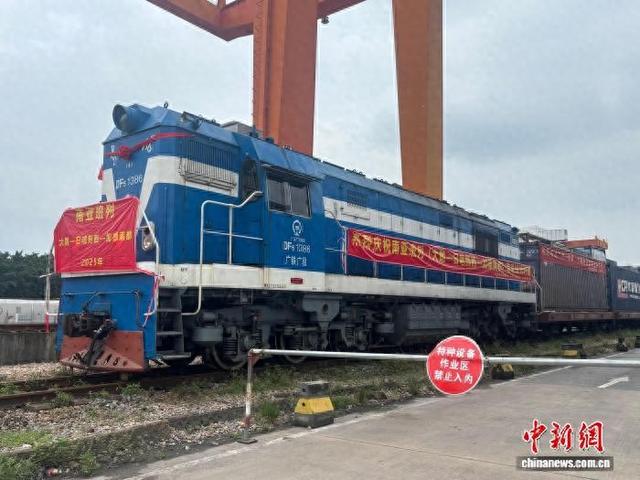
Core Points - The first container train from the Guangdong-Hong Kong-Macao Greater Bay Area to Tibet has been launched, marking a significant improvement in logistics between the two regions and opening a new land route to the South Asian market [1][3][4] Group 1: Logistics and Transportation - The train, designated X80056, is expected to run for 137 hours and 39 minutes, transporting goods such as daily necessities, textiles, and home appliances from Guangzhou to Tibet [1][3] - The logistics center of Guangzhou Railway Group has conducted systematic market research, revealing strong demand for freight transport to Tibet [3] - The train operates on a point-to-point direct transport model, which is crucial for export companies to avoid delays and maintain competitiveness in foreign trade [3] Group 2: Economic Impact - The core client for this train service, Xiaoyuan (Shigatse) Industrial Co., Ltd., has quickly become one of the largest foreign trade enterprises in Tibet, with an export value exceeding 2 billion RMB since its establishment in 2023 [3] - The goods transported will primarily be exported to countries like Nepal, effectively connecting the manufacturing capacity of the Greater Bay Area with the market demands of South Asia [4] - The new logistics channel is expected to stabilize and enhance the efficiency of trade for Guangdong's advantageous products, including textiles and handicrafts [4]

外贸企业出口退税申报错误,该怎么办?
蓝色柳林财税室· 2025-08-05 15:24
Group 1 - The article discusses the procedures for foreign trade enterprises to handle errors in export tax refund applications based on different scenarios [1][3][11] - Scenario one involves unsubmitted data, where enterprises can directly edit the details in the electronic tax bureau [1][2] - Scenario two addresses submitted data that has not yet been approved by the tax authority, requiring a withdrawal application before making corrections [3][6][9] - Scenario three pertains to submitted data that has been approved, allowing enterprises to make adjustments through the "Foreign Trade Enterprise Adjustment Declaration" function [11][12][14] Group 2 - The article outlines the specific steps for each scenario, including logging into the electronic tax bureau and navigating to the appropriate sections for editing or withdrawing applications [1][3][11] - For scenario two, it details the need to fill out a withdrawal form with specific information such as the reason for withdrawal and the original declaration details [5][6] - In scenario three, it emphasizes the importance of verifying information before submitting the adjustment declaration [13][14]

江苏十三市半年报:苏州GDP超1.3万亿,淮安增速继续领跑
Xin Hua Ri Bao· 2025-08-05 11:42
Economic Overview - The province achieved a GDP of 66,967.8 billion yuan in the first half of the year, reflecting a year-on-year growth of 5.7% at constant prices [1] - Five cities surpassed a GDP of 5,000 billion yuan, indicating stable economic development [1] - Seven cities exceeded the provincial growth rate of 5.7%, while three cities maintained this growth rate [1] Leading Cities - Suzhou led the province with a GDP of 13,002.35 billion yuan, the only city to exceed 10,000 billion yuan in the first half [1] - Nanjing followed with a GDP of 9,179.18 billion yuan, ranking second [1] - Wuxi ranked third with a GDP of 7,735.15 billion yuan [1] Economic Strategies - Suzhou's industrial development focused on both quantity and quality, maintaining stable internal and external demand [1] - The city implemented the "1030" industrial system and "1840" service system, along with the "Suzhou Intelligent Manufacturing Ten Actions" [1] - Industrial added value in Suzhou grew by 8.0% year-on-year, consistently maintaining above 8% growth [1] Foreign Trade Performance - Suzhou's foreign trade reached 12,958.8 billion yuan, marking a historical high with a growth of 5.7% [2] Other Notable Cities - Nantong and Changzhou also exceeded 5,000 billion yuan in GDP, with figures of 6,581.19 billion yuan and 5,079.13 billion yuan, respectively [3] - Xuzhou's GDP reached 4,509.30 billion yuan, positioning it as a potential "trillion city" [3] Growth Leaders - Huai'an led the province with a growth rate of 6.8%, continuing its first-quarter position [3] - Xuzhou and Suqian followed with growth rates of 6.2% and 6.1%, respectively [3] Huai'an's Economic Performance - Huai'an's industrial production saw significant growth, with industrial added value increasing by 8.9% [4] - The city achieved a revenue of 2,062.58 billion yuan from industrial enterprises, reflecting an 8.1% year-on-year increase [4] - Fixed asset investment in Huai'an grew by 5.3%, with industrial investment rising by 17.2% [4]
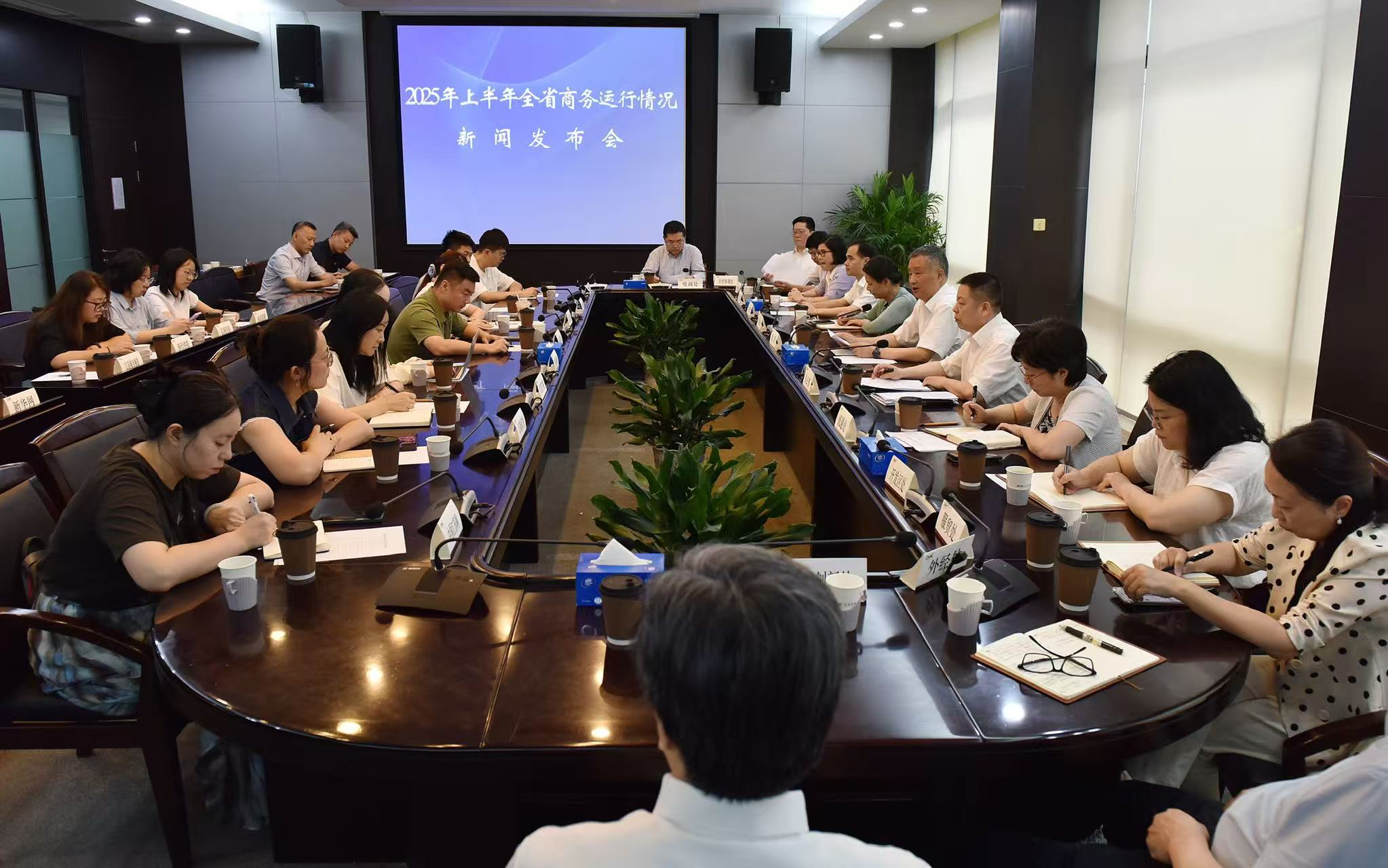
江苏商务半年报:消费领跑全国,外贸外资彰显韧性
Zhong Guo Fa Zhan Wang· 2025-08-04 12:24
Group 1: Consumer Market Performance - Jiangsu's social retail sales reached 2.39 trillion yuan, a year-on-year increase of 5%, ranking first in the nation [3] - The "old for new" policy for major consumer goods contributed 3.7 percentage points to growth, with retail sales of covered goods reaching 384.7 billion yuan [3] - Online retail sales grew by 7.9% to 636.24 billion yuan, ranking third nationally [3] - The top 100 retail enterprises achieved sales of 294.85 billion yuan, with a growth rate of 14.8% [3] Group 2: Foreign Trade Resilience - Jiangsu's total import and export value reached 2.81 trillion yuan, a year-on-year increase of 5.2%, surpassing the national average [6] - Exports amounted to 1.88 trillion yuan, growing by 9.4% [6] - Trade with Belt and Road countries reached 1.39 trillion yuan, a growth of 9.5%, accounting for nearly half of the total [6] - ASEAN became the largest export market with a growth rate of 28.4% [6] Group 3: Foreign Investment Growth - Actual foreign investment in Jiangsu reached 11.54 billion USD, accounting for 19.5% of the national total, with a year-on-year increase of 0.8 percentage points [7] - The service sector's foreign investment share increased by 0.8 percentage points [7] - Significant growth in foreign investment from Germany (+107.4%), Luxembourg (+222.5%), and Japan (+165.4%) [7] Group 4: International Cooperation and Investment - Jiangsu's outbound investment projects increased by 806, with actual investment of 4.29 billion USD, a growth of 8.1% [8] - 62.3% of projects and 65.2% of investment were directed towards Belt and Road countries [8] - The establishment of the "China-Central Asia Trade Cooperation Platform" enhances regional trade [8] Group 5: Open Platforms and Economic Zones - Jiangsu has 124 provincial-level economic development zones, leading the nation [9] - The implementation of "50 measures for institutional opening" has resulted in over 450 innovative outcomes [9] - The construction of 18 international cooperation parks is accelerating, fostering significant industrial clusters [9] Group 6: Future Initiatives - Plans to organize over 180 overseas exhibitions to expand international markets [10] - Continued efforts to implement the "22 measures" to stabilize foreign investment [10] - Initiatives to enhance night economy through 50 night consumption zones [10]