
工业机器人

Search documents
非凡五年,广东把“逆风局”打成“高端局”
21世纪经济报道· 2025-12-09 00:34
Core Viewpoint - The article discusses how Guangdong province has managed to maintain economic growth and resilience despite facing significant challenges over the past five years, including the pandemic and global trade tensions. The province's GDP has consistently surpassed key milestones, demonstrating its ability to adapt and innovate in a changing economic landscape [3][4]. Economic Performance - Guangdong's total economic output has crossed the thresholds of 12 trillion, 13 trillion, and 14 trillion yuan, maintaining its position as the largest economy in China for 36 consecutive years [3]. - The average annual GDP growth rate for Guangdong during the first four years of the 14th Five-Year Plan is 4.7%, which, while seemingly modest, represents a significant marginal increase compared to previous decades [6]. Industrial Transformation - The province is focusing on transforming traditional industries and fostering emerging sectors, having initiated digital transformation for over 44,000 industrial enterprises [7]. - Guangdong produces a quarter of the country's new energy vehicles and over a third of industrial robots, with its core AI industry accounting for one-third of the national total [9]. Technological Innovation - More than one-third of provincial funding for technological innovation has been directed towards basic research, leading to Guangdong's top ranking in regional innovation capabilities [10]. - Key technological breakthroughs include advancements in high-end chips and surgical robots, showcasing the province's commitment to innovation [10]. Reform and Openness - Guangdong leads in several indicators of private sector development and has been recognized for its favorable business environment for four consecutive years [10]. - The province's total import and export volume has exceeded 9 trillion yuan, with a diverse range of international trade partnerships [10]. Regional Development and Sustainability - Guangdong is implementing a "full map development" strategy to promote balanced regional growth, transferring over 300 manufacturing projects to less developed areas [12]. - The province has achieved significant improvements in environmental quality, with record levels of air quality and water quality [12]. Social Welfare - Over 6 million new urban jobs have been created in Guangdong during the 14th Five-Year Plan, with a 4.9% average annual increase in per capita disposable income [12]. - The province has achieved near-complete coverage of pension insurance and has facilitated educational access for children of migrant workers [12].

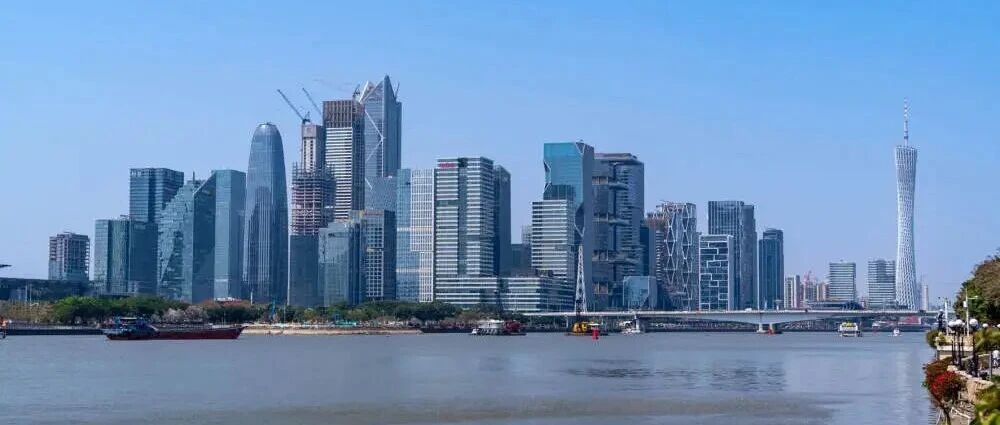
109次提及“产业” 广东谋划“十五五”产业发展新蓝图
2 1 Shi Ji Jing Ji Bao Dao· 2025-12-08 23:08
"十五五"时期是基本实现社会主义现代化承上启下的关键攻坚期。 尤其在国际环境复杂多变、国际规则深度重塑的大背景下,"十五五"规划建议的制定与实施,对于引领未来五年乃至更长远的经济社会发展方 向,有着无可替代的关键作用。 12月8日,《中共广东省委关于制定广东省国民经济和社会发展第十五个五年规划的建议》(以下简称"规划建议")正式印发。规划建议系统 总结了"十四五"时期广东发展取得的重大成就,并对未来5年发展作出顶层设计和战略擘画。 面向"十五五",广东列出了一份详实的"任务清单"。下一个五年,经济总量连续36年位居全国首位的广东站在了"要和自己比"的新节点上,提 出了内需拉动经济增长主动力作用持续增强、全面融入全国统一大市场、科技创新和产业创新深度融合等一系列目标。 南方财经记者梳理发现,在规划建议中,"产业"一词被提及多达109次,体现出产业建设在广东未来五年发展规划重点的核心地位。值得注意 的是,规划建议还首设8大"专栏",鼓励发展低空经济、智能经济、首发经济、湾区经济、绿色经济、人文经济、体育经济、银发经济等八大 新经济业态。 打造三大核心动力源 "十四五"期间,广东地区生产总值突破14万亿元,区域创新 ...
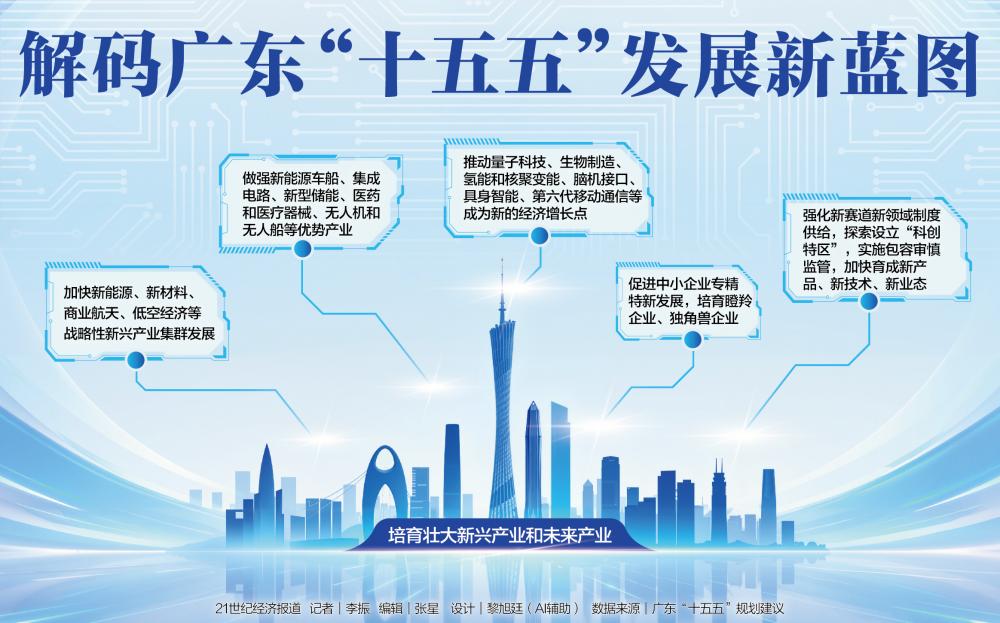
109次提及“产业”,广东谋划“十五五”产业发展新蓝图
2 1 Shi Ji Jing Ji Bao Dao· 2025-12-08 13:24
南方财经记者李振 广州报道 "十五五"时期是基本实现社会主义现代化承上启下的关键攻坚期。 尤其在国际环境复杂多变、国际规则深度重塑的大背景下,"十五五"规划建议的制定与实施,对于引领 未来五年乃至更长远的经济社会发展方向,有着无可替代的关键作用。 12月8日,《中共广东省委关于制定广东省国民经济和社会发展第十五个五年规划的建议》(以下简 称"规划建议")正式印发。规划建议系统总结了"十四五"时期广东发展取得的重大成就,并对未来5年 发展作出顶层设计和战略擘画。 面向"十五五",广东列出了一份详实的"任务清单"。下一个五年,经济总量连续36年位居全国首位的广 东站在了"要和自己比"的新节点上,提出了内需拉动经济增长主动力作用持续增强、全面融入全国统一 大市场、科技创新和产业创新深度融合等一系列目标。 南方财经记者梳理发现,在规划建议中,"产业"一词被提及多达109次,体现出产业建设在广东未来五 年发展规划重点的核心地位。值得注意的是,规划建议还首设8大"专栏",鼓励发展低空经济、智能经 济、首发经济、湾区经济、绿色经济、人文经济、体育经济、银发经济等八大新经济业态。 而在各地"十五五"规划建议中,均提出要扩大内 ...

非凡五年,广东把“逆风局”打成“高端局”
2 1 Shi Ji Jing Ji Bao Dao· 2025-12-08 08:15
Core Insights - Guangdong has successfully navigated a challenging economic environment over the past five years, achieving significant economic milestones despite difficulties such as the pandemic and global trade tensions [3][5][12] Economic Performance - Guangdong's total economic output has consistently surpassed 12 trillion, 13 trillion, and 14 trillion yuan, maintaining its position as the largest economy in China for 36 consecutive years, surpassing developed countries like South Korea and Australia [3][5] - The average annual GDP growth rate during the first four years of the 14th Five-Year Plan was 4.7%, which, while modest, represents a significant marginal increase compared to previous years [5][6] Industrial Transformation - The province has initiated a transformation of traditional industries and fostered emerging sectors, with over 44,000 industrial enterprises undergoing digital transformation [6][8] - Guangdong produced a quarter of the country's new energy vehicles and over a third of industrial robots, with its core AI industry accounting for one-third of the national scale [8][9] Technological Innovation - More than one-third of provincial science and technology innovation funds have been allocated to basic research, leading to Guangdong's top ranking in regional innovation capabilities [9][11] - Key technological breakthroughs include advancements in high-end chips and surgical robots, supported by the establishment of major research facilities [9][11] Reform and Openness - Guangdong has maintained a leading position in various indicators of private economy and has been recognized for its favorable business environment for four consecutive years [9][11] - The province's total import and export volume exceeded 9 trillion yuan, with a diverse range of international trade connections [9][11] Social and Environmental Development - The province has focused on balanced and green development, with significant improvements in air and water quality, and a commitment to social welfare [11][12] - By 2024, the per capita disposable income of urban and rural residents is projected to show a notable increase, reflecting improved living standards [11][12] Future Outlook - As Guangdong enters the 15th Five-Year Plan, the focus will be on transforming individual breakthroughs into systemic advantages to better navigate future uncertainties [12]
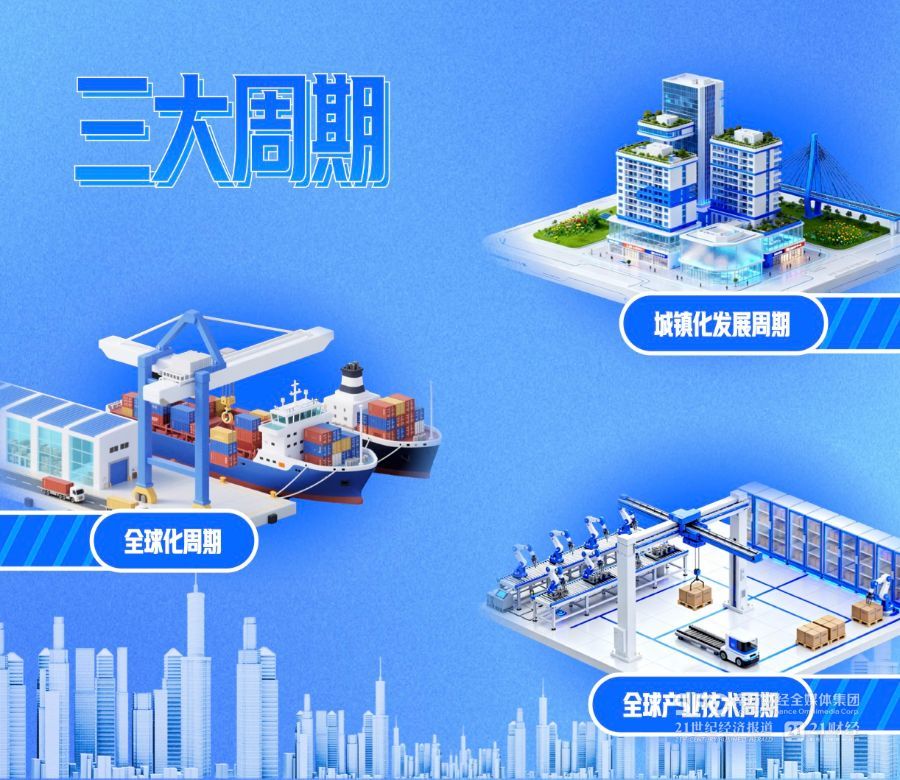
经济大省挑大梁丨非凡五年,广东把“逆风局”打成“高端局”
2 1 Shi Ji Jing Ji Bao Dao· 2025-12-08 08:04
Core Viewpoint - Guangdong has successfully navigated a challenging economic environment over the past five years, achieving significant growth and laying a solid foundation for future development during the "14th Five-Year Plan" period [1][3]. Economic Performance - Guangdong's total economic output has consistently crossed the thresholds of 12 trillion, 13 trillion, and 14 trillion yuan, maintaining its position as the top economy in China for 36 consecutive years, surpassing developed countries like South Korea and Australia [3]. - The average annual GDP growth rate for Guangdong during the first four years of the "14th Five-Year Plan" is 4.7%, which, while seemingly modest, represents a significant marginal increase compared to previous years [5]. Industrial Transformation - Guangdong is focusing on transforming traditional industries and nurturing emerging sectors, having promoted digital transformation for over 44,000 industrial enterprises [6]. - The province aims to establish nine trillion-yuan industrial clusters by 2024, contributing to its industrial diversification [6]. Technological Innovation - Over one-third of provincial technology innovation funds have been allocated to basic research, with Guangdong leading the nation in regional innovation capabilities [8]. - Key technological breakthroughs include advancements in high-end chips, nuclear magnetic resonance equipment, and surgical robots [8]. Reform and Openness - Guangdong has maintained a leading position in various indicators of private economy and has been recognized for four consecutive years as having the best business environment in China [9]. - The province's total import and export volume has exceeded 9 trillion yuan, with connections established with over 230 ports globally [9]. Regional Development and Environmental Sustainability - Guangdong is implementing a "full map development" strategy to promote industrial transfer to less developed areas, with over 300 projects and an investment exceeding 110 billion yuan in the "Yuexi North" region [11]. - The province has achieved significant improvements in environmental quality, with the best air quality recorded and a high water quality rate of 93.2% across national monitoring sites [11]. Social Welfare - Over 6 million new urban jobs have been created in Guangdong during the "14th Five-Year Plan," with a real annual growth of 4.9% in per capita disposable income [12]. - The province has achieved near-complete coverage of pension insurance and ensured that over 90% of migrant workers' children can attend public schools [12].

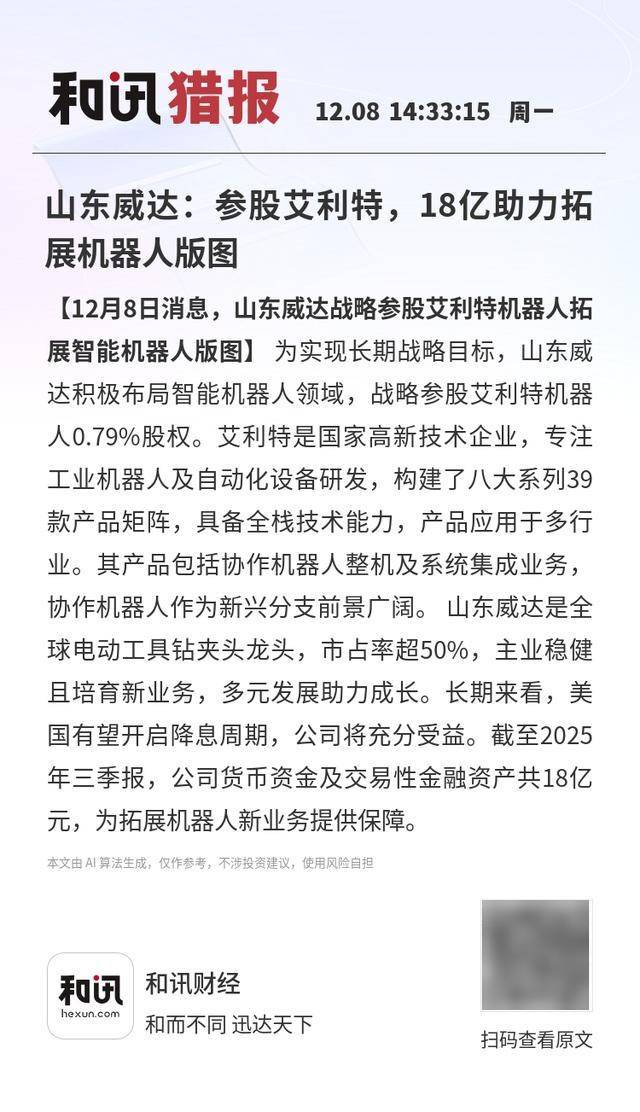
山东威达:参股艾利特,18亿助力拓展机器人版图
Sou Hu Cai Jing· 2025-12-08 07:39
【12月8日消息,山东威达战略参股艾利特机器人拓展智能机器人版图】为实现长期战略目标,山东威 达积极布局智能机器人领域,战略参股艾利特机器人0.79%股权。艾利特是国家高新技术企业,专注工 业机器人及自动化设备研发,构建了八大系列39款产品矩阵,具备全栈技术能力,产品应用于多行业。 其产品包括协作机器人整机及系统集成业务,协作机器人作为新兴分支前景广阔。 山东威达是全球电 动工具钻夹头龙头,市占率超50%,主业稳健且培育新业务,多元发展助力成长。长期来看,美国有望 开启降息周期,公司将充分受益。截至2025年三季报,公司货币资金及交易性金融资产共18亿元,为拓 展机器人新业务提供保障。 本文由 Al 算法生成,仅作参考,不涉投资建议,使用风险自担 本文由 AI 算法生成,仅作参考,不涉投资建议,使用风险自担 和讯财经 FOL hexun.con 和而不同 迅达天下 扫码查看原文 ...

从“看资产”到“押未来”——南京银行镇江分行“投贷联动”破题科技企业融资难
Jiang Nan Shi Bao· 2025-12-08 03:24
Group 1 - The core concept of the "Investment-Loan Linkage" model is to provide not just funding but also deep empowerment for technology companies, exemplified by the experience of Botent Robotics, which views its banking partner as a collaborator in innovation rather than just a financial provider [1][2] - Botent Robotics has established stable partnerships with over 400 leading domestic and international companies, applying its products across various industries including food, daily chemicals, electronics, automotive, and new energy [1] - The "Investment-Loan Linkage" service from Nanjing Bank has alleviated immediate funding needs for Botent Robotics and integrated it into a "Science and Technology Enterprise Ecosystem," offering industry connections and policy insights [1][2] Group 2 - The "Investment-Loan Linkage" model is a comprehensive financial solution tailored for technology enterprises, focusing on long-term value rather than short-term financial performance, allowing companies to concentrate on research and market exploration [2] - Nanjing Bank's initiative aims to shift the focus from traditional asset-based evaluations to knowledge-based assessments, recognizing that many tech companies' most valuable assets are talent, technology, and intellectual property [3] - The model combines bank credit and equity investment functions, collaborating with government parks, venture capital institutions, and industry funds to provide a comprehensive financing solution for technology companies at various development stages [3] Group 3 - A local medical technology company exemplifies the effectiveness of the "Investment-Loan Linkage" model, having received critical product testing reports that serve as a "pass" for clinical application, despite initially lacking mature products or revenue [4] - Nanjing Bank's assessment process for this company relied on "soft information" such as team background, technological barriers, and market prospects rather than traditional hard assets, leading to a supportive financing solution [4] - Since the launch of the "Investment-Loan Linkage" service in Zhenjiang, Nanjing Bank has hosted 52 events, served over 650 technology enterprises, and disbursed nearly 13 billion yuan in technology loans, effectively broadening financing channels for innovation-driven companies [4] Group 4 - Nanjing Bank aims to continue its mission of being a close partner to technology enterprises, focusing on innovative financial services to support the cultivation of new productive forces and contribute to high-quality local economic development [5]

12月A股:政策+资金双轮驱动,震荡中孕育结构性机会
Sou Hu Cai Jing· 2025-12-08 00:26
Market Overview - The market has shown a "first decline then rise" trend since December, with the Shanghai Composite Index rebounding strongly on December 5, recovering the 3900-point mark, and significant gains in the Shenzhen and ChiNext indices [1] - The trading volume on December 5 reached 1.73 trillion yuan, an increase of 176.8 billion yuan from the previous day, indicating a return of bullish sentiment [1] Monetary Policy and Financial Regulation - The central bank's report emphasizes maintaining "reasonable liquidity" and has initiated 300 billion yuan in 7-day reverse repos in December to stabilize market funding costs [4] - The financial regulatory authority's notification adjusts investment risk factors for certain stocks, potentially releasing over 500 billion yuan in incremental funds into the market [4] Sector Analysis Technology Sector - The AI chip sector's current PE ratio is 42.6, below the historical average of 51.3, indicating a potential for valuation recovery [5] - The domestic substitution process is accelerating, with significant improvements in production efficiency for companies like SMIC [5] High-end Manufacturing - The industrial robot sector's PE ratio is 38.2, lower than the historical average of 45.7, suggesting room for growth as automation subsidies increase [6] Consumer Sector - The essential consumer sector's PE ratio is 25.3, below the historical average of 29.8, while the discretionary consumer sector's PE ratio is 28.7, also below its historical average [6] New Energy Sector - The photovoltaic sector's PE ratio is 18.6, significantly lower than the historical average of 26.3, indicating a recovery trend as silicon material prices stabilize [6] Core Assets - The PE ratio for the CSI 300 index is 10.8, and the PB ratio is 1.2, both below the historical averages, making them attractive for long-term investment [7] Technical Analysis - The Shanghai Composite Index is at a critical breakout point, with potential upward movement if it can maintain above 3900 points [7] - The ChiNext index has shown strong performance, breaking through key resistance levels, indicating further upward momentum [7]
2025年中国国际进口博览会媒体舆情传播报告
Sou Hu Cai Jing· 2025-12-07 03:00
Core Insights - The 2025 China International Import Expo (CIIE) successfully concluded with a theme of "New Era, Shared Future," attracting 4,108 overseas exhibitors from 155 countries and regions, covering an exhibition area of over 430,000 square meters. The total number of attendees reached 922,000, with an intended transaction amount of $83.49 billion, representing a 4.4% increase from the previous year [1][30]. Group 1: Event Overview - The CIIE serves as a significant platform for high-level international trade and innovation, showcasing China's commitment to opening up its market [1][30]. - The event featured over 400 new products, technologies, and services making their global or Asian debuts, highlighting advancements in various sectors including medical devices, industrial robotics, and smart agriculture [3][16]. Group 2: Technological Integration - The expo emphasized "technology empowerment" with the introduction of humanoid interactive robots as "AI volunteers" for guiding and consulting, enhancing the visitor experience [2][12]. - A comprehensive media ecosystem was established, integrating large screens, small screens, and outdoor displays to maximize outreach and engagement [2][15]. Group 3: Innovation and Sustainability - Green and low-carbon technologies were prominently featured, with GE Vernova showcasing a 100% hydrogen-powered generator and Schneider Electric presenting energy efficiency solutions, aligning with China's dual carbon goals [3][20]. - The event also highlighted products targeting the aging population, with companies like Boston Scientific and Omron presenting innovations in health monitoring and rehabilitation [3][28]. Group 4: Cultural Exchange and Global Collaboration - The expo included unique cultural exchange activities, such as the "Twin City Exhibition," which promoted deep integration of products and regional cultures [4][23]. - Participation from countries along the Belt and Road Initiative increased by 23.1%, reflecting enhanced global economic resilience discussions [4][25]. Group 5: Sector-Specific Highlights - The medical device sector focused on comprehensive health management, with major companies like Medtronic and Pfizer showcasing their latest products [5][34]. - The consumer goods sector emphasized personalization and sustainability, featuring brands like L'Oréal and Uniqlo [5][34]. - The automotive sector presented innovations in localized R&D, including self-developed chips and autonomous driving technologies from companies like Volkswagen and Toyota [5][34].
从“男儿当自强”到“科技自立自强”!佛山城市精神唤醒
2 1 Shi Ji Jing Ji Bao Dao· 2025-12-06 12:25
第二把箭,新兴产业做大做强,佛山现在大力发展工业机器人、新型材料、低空经济、装备制造等新兴 产业,尤其是在工业机器人领域,佛山已形成完整产业链,现有机器人企业3000家,以一城之力贡献全 国6%的工业机器人。 第三把箭,未来产业更是敢想敢干,氢能汽车上路试跑、生物实验室 "种" 出新材料、人形机器人参与 日常生活……这些科幻场面,佛山正在想办法让它们变成现实。 以氢能产业为例,佛山自2009年起,现已集聚氢能产业链企业超170家,建成加氢站数量居全国第一, 实现了从制氢、储运到应用的全链条布局。 特约撰稿孙不熟 每每听到《男儿当自强》这首热血的歌曲时,都会情不自禁地想起黄飞鸿,想起珠江三角洲,想起佛山 这座拼搏进取、自立自强的热血之城。 如今,这座曾以武术而著称的热血之城,正在迎来新的时代命题。 今年召开的四中全会,中央提出"科技自立自强",工业大市佛山将如何破题? 作为中国工业第四城,佛山今年提出一个产业突围的策略,叫做三箭齐发:传统产业转型升级,是新兴 产业做大做强、未来产业培育布局。先看第一把箭,传统制造是佛山的立市之本,但面对"大象转身"的 挑战,佛山没有简单否定传统产业,而是因地制宜嫁接新质生产力, ...