
茶叶

Search documents
新股消息 | 八马茶业通过港交所聆讯 公司系高端中国茶全国销量第一
智通财经网· 2025-10-12 12:37
Core Viewpoint - Eight Horses Tea Industry is preparing for a listing on the Hong Kong Stock Exchange, with a strong market position in China's high-end tea sector and significant growth in revenue and profit projected over the coming years [1][3][4]. Industry Overview - The high-end tea market in China is experiencing rapid growth, with the market size expected to increase from approximately RMB 89 billion in 2020 to about RMB 103.1 billion by 2024, representing a compound annual growth rate (CAGR) of approximately 3.7%. By 2029, the market is projected to reach around RMB 135.3 billion, with a CAGR of about 5.6% from 2024 to 2029 [3]. Company Overview - Eight Horses Tea Industry is recognized as a leading supplier of tea in China, offering a comprehensive range of products that include six major categories of tea, tea utensils, and tea snacks [3]. - The company has established a strong market position as the "number one in national sales of high-end Chinese tea" due to its advantages in brand value, tea-making skills, product development, operational scale, channel management, regional expansion, supply chain management, digital sales platforms, and talent [3]. Financial Performance - Revenue for Eight Horses Tea increased from approximately RMB 1.818 billion for the year ending December 31, 2022, to about RMB 2.122 billion for the year ending December 31, 2023, and is projected to grow slightly to RMB 2.143 billion for the year ending December 31, 2024 [3][4]. - The company's profit and total comprehensive income rose from approximately RMB 166 million for the year ending December 31, 2022, to about RMB 206 million for the year ending December 31, 2023, with a further increase to RMB 224 million expected for the year ending December 31, 2024 [4][6]. - The operating profit is projected to grow from RMB 238 million in 2022 to RMB 295 million in 2023, and further to RMB 318 million in 2024 [6].

凤庆县许凤娟茶叶店(个体工商户)成立 注册资本10万人民币
Sou Hu Cai Jing· 2025-10-11 13:12
天眼查App显示,近日,凤庆县许凤娟茶叶店(个体工商户)成立,法定代表人为段娟,注册资本10万 人民币,经营范围为许可项目:食品销售;食品互联网销售(依法须经批准的项目,经相关部门批准后 方可开展经营活动,具体经营项目以相关部门批准文件或许可证件为准) 一般项目:食用农产品批 发;食用农产品零售;食用农产品初加工;初级农产品收购;农副产品销售;互联网销售(除销售需要 许可的商品);未经加工的坚果、干果销售;茶具销售(除依法须经批准的项目外,凭营业执照依法自 主开展经营活动)。 ...
三江为何独钟情大湾区?一杯茶、一幅农民画里的山海协作密码
Nan Fang Nong Cun Bao· 2025-10-11 07:06
Core Viewpoint - The collaboration between Guangxi's Sanjiang Dong Autonomous County and Guangdong's Wuchuan City is enhancing the market presence of Sanjiang's unique agricultural products, particularly tea and local art, in the Greater Bay Area, showcasing a successful model of regional cooperation and cultural exchange [11][79]. Group 1: Agricultural Products and Market Integration - The upcoming promotional event for Sanjiang's agricultural products in Guangzhou highlights the ongoing collaboration between Guangdong and Guangxi, which has established a regular mechanism for product integration into the Bay Area market [5][7]. - Sanjiang's tea, particularly the high-altitude varieties, is gaining popularity in the Bay Area, with local enterprises leveraging cold chain logistics to ensure freshness and quality [21][40]. - The collaboration has significantly improved the sales channels for Sanjiang's oil tea, with products now available in Guangzhou supermarkets, marking a shift from local sales to broader market access [23][24]. Group 2: Cultural and Artistic Promotion - Sanjiang's unique cultural products, such as the local farmer paintings, are being showcased as part of the promotional efforts, emphasizing the region's rich cultural heritage and its appeal to Bay Area consumers [62][68]. - The integration of traditional art forms with modern marketing strategies is helping to attract tourists and consumers, thereby boosting local economies and cultural appreciation [72][73]. - The cultural resonance of Sanjiang's art is transforming consumer perceptions, where buyers are increasingly interested in the lifestyle and cultural narratives behind the products [74][75]. Group 3: Economic Impact and Future Prospects - The collaboration framework has allocated over 65% of funding towards industrial development, facilitating infrastructure upgrades and enhancing product quality standards [32][76]. - The Greater Bay Area's consumer market, with a population of 70 million and a rising disposable income, presents significant opportunities for Sanjiang's agricultural products [43][44]. - The successful integration of Sanjiang's products into broader markets is not only increasing sales but also contributing to rural revitalization and sustainable development in the region [78][79].

精彩茶人之家 龙井茶艺传香
Hang Zhou Ri Bao· 2025-10-10 02:28
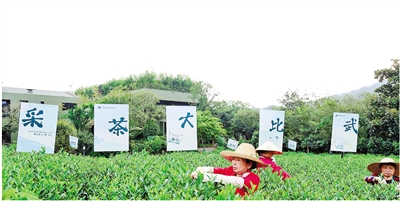
Core Insights - The 2025 West Lake Longjing Tea Core Production Area competition has entered its second phase, focusing on tea farmers' families and emphasizing the entire industry chain from tea garden to tea cup [1] - The competition aims to promote the vision of "every village has a tea window, every family has a tea master," contributing to the "livable and beautiful countryside" development in the West Lake scenic area [1] Group 1: Competition Overview - The "Double-Handed Picking" competition showcased participants using "one bud and one leaf" or "one bud and two leaves" picking techniques, highlighting the skill and experience of both veteran tea farmers and younger generations [2] - Judges evaluated contestants based on picking techniques, leaf quality, and weight, with Sun Qiuzhen's team from Maojiabu Village winning first place [2] - The event also featured tea ceremony design and brewing demonstrations by family teams at the China Tea Museum, showcasing the cultural significance and personal stories behind the tea [2] Group 2: Cultural and Community Impact - The competition reflects the deep understanding and love for West Lake Longjing tea among participating families, as well as the emotional bonds within families [3] - Zhang Luyin's family from Yangmeiling Village won with their work "One Leaf Common Prosperity," symbolizing respect for the land and the tea farmers' journey towards shared prosperity [3] - Since last year, the West Lake scenic area has introduced innovative services for the entire lifecycle of Longjing tea, aiming to enhance tea farmers' skills and entrepreneurship, with the competition serving as a new initiative to foster traditional skills and modern perspectives among tea practitioners [3]
你在日本喝的抹茶,很可能来自贵州这个小县城
3 6 Ke· 2025-10-09 02:15
Core Insights - Japan has become a popular destination for outbound tourism during long holidays, with many tourists eager to try matcha, a specialty that surprisingly originates from Jiangkou County in Tongren, Guizhou [1] - Jiangkou County has transformed its matcha industry in less than a decade, achieving a production volume of 1,300 tons and a value exceeding 300 million yuan in 2024 [1] Group 1: Industry Growth and Development - Jiangkou County is now a significant player in the global matcha market, with approximately one in every seven cups of matcha consumed worldwide originating from this region [2] - The county, previously known for its poverty, has built a "world matcha super factory" with an investment of 600 million yuan, boasting the largest single matcha workshop globally with an annual capacity of 4,000 tons [4][10] - The factory's size is equivalent to 31 football fields, showcasing the scale of production [5] Group 2: Unique Production Methods - The matcha production process is intricate, involving steps such as leaf cutting, steaming, rapid cooling, and secondary drying to preserve flavor and nutrients [8] - Jiangkou County employs an ecological planting model that prohibits chemical pesticides, ensuring high-quality matcha production [19][21] Group 3: Strategic Decisions and Market Positioning - The decision to focus on matcha was strategic, allowing Jiangkou to avoid competition in the saturated traditional tea market [13] - The entry of Guicha Group in 2017 marked a turning point, providing significant investment and establishing a modern supply chain for matcha production [20][26] Group 4: Future Aspirations and Branding - Jiangkou aims to elevate its matcha brand beyond being a mere supplier, seeking to create a recognizable brand identity for "Fanjing Matcha" [30] - The county is exploring product diversification, including matcha-infused items like chocolate, beer, and noodles, to expand its market presence [32][34] - Plans for a "matcha town" and cultural tourism initiatives are underway to enhance consumer engagement and brand experience [34]

2025年8月中国茶叶出口数量和出口金额分别为3.54万吨和1.41亿美元
Chan Ye Xin Xi Wang· 2025-10-08 00:49
Core Insights - The report by Zhiyan Consulting highlights the competitive landscape and investment recommendations for the Chinese tea industry from 2025 to 2031 [1] Export Data Summary - In August 2025, China's tea export volume was 35,400 tons, representing a year-on-year decrease of 1.4% [1] - The export value for the same period was $14.1 million, showing a year-on-year increase of 1.7% [1] Company Profile - Zhiyan Consulting is recognized as a leading industry consulting firm in China, specializing in in-depth industry research reports, business plans, feasibility studies, and customized services [1] - The company has over a decade of experience in the industry research field, providing comprehensive industry solutions to empower investment decisions [1]

一朵茉莉,兴一座城
Xin Hua Wang· 2025-10-07 08:04
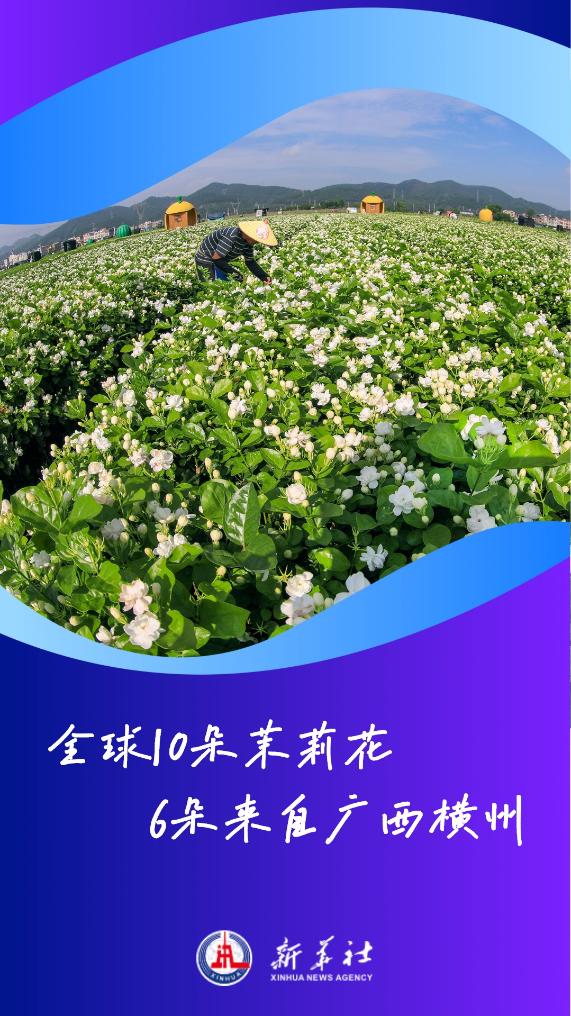
Core Insights - The article highlights the flourishing jasmine flower industry in Hengxian, Guangxi, which is experiencing a significant transformation driven by technology and market demand for jasmine tea [6][10][12]. Industry Overview - Hengxian is renowned as the "Hometown of Jasmine" and "World Capital of Jasmine," with jasmine flower and jasmine tea production accounting for over 80% of China's total output and more than 60% globally [10]. - The total area for jasmine cultivation in Hengxian is approximately 200,000 acres, with over 340,000 farmers involved in the industry [10]. - The production of fresh jasmine flowers exceeds 130,000 tons, while jasmine tea production surpasses 110,000 tons, contributing to a total industry output value exceeding 18 billion yuan [10]. Technological Advancements - The integration of AI and automation in jasmine flower harvesting and processing is enhancing efficiency, with robots and drones being utilized for picking and transporting flowers [6]. - The jasmine tea processing has become fully automated, improving the aroma concentration by 20%, which is increasingly appealing to both fresh tea and bottled tea markets [8]. Market Dynamics - The domestic market for jasmine tea is growing, driven by the rising popularity of new-style tea drinks and health-conscious consumer trends [12]. - In 2024, the national processing volume of jasmine tea is projected to reach nearly 140,000 tons, with an industrial output value of approximately 22.2 billion yuan [8]. Investment and Development - The local government is fostering brand development and attracting leading enterprises to invest in the jasmine industry, with over 300 processing trade companies established in Hengxian [10]. - New product lines, including jasmine essential oils, skincare products, and food items, are being developed alongside traditional tea processing [10]. Export Potential - Jasmine tea from Hengxian has found markets in countries such as Japan, Malaysia, Iran, Germany, and France, with annual export sales exceeding 3,000 tons [13].
把法庭设在田间地头 最高法案例展现涉农纠纷多元化解新举措
Xin Hua She· 2025-10-05 07:50
Core Viewpoint - The Supreme People's Court has released a series of agricultural dispute resolution cases, showcasing specific measures taken by local courts to prevent and resolve frequent disputes in the agricultural sector [1] Group 1: Judicial Services in Agriculture - The Jingzhi People's Court in Anqiu, Shandong Province, has established a "Legal Clinic" at a cherry wholesale market to provide on-site guidance and mediation for common legal issues related to product sales and transportation, facilitating immediate resolution [1] - The Liku People's Court in Qimen, Anhui Province, has set up a "Tea Protection Mobile Point" during the spring tea picking season, allowing for on-site adjudication of wage disputes and contract issues, with an average case resolution time of only 8 days [1] - The Aima People's Court in Namuqin, Tibet, focuses on supporting the local potato industry by promoting the "Aima Potato" brand, providing judicial services to enhance industry development and increase farmers' income [1]
双节探产业:上过太空的茶 藏着航天育种的科技密码
2 1 Shi Ji Jing Ji Bao Dao· 2025-10-04 11:14
Core Insights - Yingde Black Tea has topped the national black tea category for the first time with a brand value of 5.178 billion yuan in the 2025 China Tea Regional Public Brand Value List [1][8] - The brand's success is attributed to its multi-dimensional exploration from market to source, integrating consumption and innovation [1][8] - The core variety, Yinghong No. 9, has undergone significant evolution, becoming a model for the commercialization of agricultural science in China [1][4] Industry Developments - The tea industry is likened to a "chip," with the iteration speed of quality varieties directly impacting the industry's ceiling [2] - In 2016, a space breeding experiment was conducted to address the weaknesses of Yinghong No. 9, leading to the successful cultivation of a unique space tea mother tree [2][3] - The mother tree has been propagated to over 2,000 plants, establishing a foundation for high-end seed sources in Yingde Black Tea [3] Technological Advancements - The integration of traditional and modern breeding methods has optimized the genetic resources of Yinghong No. 9, enhancing its core competitiveness [4] - The breeding cycle has been significantly reduced from 10-15 years to 3-5 years through molecular-assisted breeding techniques [4] - Ongoing research aims to shorten the breeding cycle further and establish a foundation for biotechnological applications [4] Market Expansion - Yingde Black Tea has achieved high premium capabilities due to its unique raw material scarcity and complex production processes [6] - The brand has successfully expanded its consumer base through collaborations, such as the "Yinghong Cheese Sticky" series with Heytea, achieving sales of 800,000 cups in a single day [6][5] - The total tea plantation area in Yingde is projected to reach 181,600 acres by the end of 2024, with an annual dry tea output of 18,000 tons and a comprehensive output value of 9.045 billion yuan [5][7] Economic Impact - The establishment of a national modern agricultural industrial park and multiple provincial parks has connected 880 tea enterprises and 180 cooperatives, creating a robust employment ecosystem [7] - The rapid expansion of the Yingde Black Tea industry has significantly enhanced brand value and positioned it as a key driver for regional economic growth and rural revitalization [7][8] - The brand's value has increased by 8.5%, reinforcing its market position and supporting product premiumization and market expansion [8]
今米房集团(08300) - 自愿性公佈收购目标公司52%股权
2025-10-02 10:10
香港交 易及結算 所有限公司 及香港聯 合交易所 有限公司(「聯交所」)對本公 佈 的 內容 概 不 負 責 ,對 其 準 確 性或 完 整 性 亦 不發 表 任 何 聲 明, 並 明 確 表示 概 不 就因 本 公 佈 全 部或 任 何 部 分內 容 而 產 生 或因 依 賴 該 等 內容 而 引 致 的任 何損失承擔任何責任。 JIN MI FANG GROUP HOLDINGS LIMITED 今 米 房 集 團 控 股 有 限 公 司 ( 於開曼群島註冊成立的有限公司) (股份代號:8300) 自願性公佈 收購目標公司52% 股權 本 公 佈 由 今 米 房 集 團 控 股 有 限 公 司(「 本 公 司 」, 連 同 其 附 屬 公 司 , 統 稱 為 「本集團」)自願作出,旨在讓本公司股東(「股東」)及潛在投資者知悉本集團 的最新業務發展。 自二零二五年八月起,本集團一直發展其茶葉業務銷售與市場推廣。 收購事項 本公司董事(「董事」)會(「董事會」)欣然宣佈,本集團已於近期訂立股權轉 讓協議,以透過本公司全資附屬公司Fulton Asia Investment Limited(「Fulton As ...