调味品

Search documents
涪陵榨菜:公司常务副总经理代富荣离任
Mei Ri Jing Ji Xin Wen· 2026-01-05 23:55
Group 1 - Fuling Zhacai announced the resignation of its Executive Vice President, Dai Furong, effective from January 5, 2026, due to personal reasons [1] - Following his resignation, Dai Furong will no longer hold any position within the company [1] Group 2 - The automotive market is experiencing a surge at the beginning of 2026, with BMW's original guide price of 349,900 yuan now at 225,000 yuan, and multiple car manufacturers offering subsidies for purchase taxes [1] - Sales activity in the automotive sector is reported to be extremely busy, with sales personnel working continuously without breaks [1]

恒顺醋业:恒顺集团累计增持公司股份约1249万股,增持计划实施完毕
Mei Ri Jing Ji Xin Wen· 2026-01-05 08:39
Group 1 - The core point of the article is that Hengshun Vinegar Industry announced a share buyback plan, where Hengshun Group will increase its stake in the company by approximately 12.49 million shares, representing 1.13% of the total share capital, with a total investment of around RMB 99 million [1]. Group 2 - The share buyback will take place between May 24, 2025, and December 31, 2025, and the plan has been successfully implemented [1].

恒顺醋业(600305.SH):恒顺集团累计增持1.13%公司股份
Ge Long Hui A P P· 2026-01-05 08:36
格隆汇1月5日丨恒顺醋业(600305.SH)公布,恒顺集团于2025年5月24日至2025年12月31日期间,通过上 海证券交易所系统以集中竞价方式累计增持公司股份1249.35万股,占公司总股本的1.13%,累计增持金 额为人民币9899.86万元(不含交易费用),本次增持计划实施完毕。 ...
食品饮料行业周报:茅台调整线上渠道,落实市场化转型-20260104
Shenwan Hongyuan Securities· 2026-01-04 15:13
Investment Rating - The report maintains a positive outlook on the food and beverage industry, particularly on the liquor sector, with a focus on high-quality companies for long-term investment [3][7]. Core Insights - The report emphasizes the importance of domestic demand, which has been highlighted by authoritative media and government officials since mid-December 2025. It notes that the high-end liquor prices have recently declined, indicating a market shift towards finding a balance between volume and price [3][7]. - For 2026, the report anticipates a double-digit decline in sales volume in Q1, with a potential stabilization in Q2 and a turning point in fundamentals by Q3. If the fundamentals recover as expected, a dual boost in valuation and performance is anticipated towards the end of 2026 and into 2027 [3][7]. - The report recommends several key liquor companies, including Luzhou Laojiao, Shanxi Fenjiu, Guizhou Moutai, and Wuliangye, while also suggesting attention to other brands like Yingjia Gongjiu and Jinhuijiu [3][7]. - In the consumer goods sector, the report highlights opportunities in the supply chain related to condiments, frozen foods, and dairy products, recommending companies such as Anjijia, Yili, and Qianhe Flavoring [3][10]. Summary by Sections 1. Food and Beverage Weekly Insights - The food and beverage sector experienced a decline of 2.26% last week, with liquor down 2.79%, underperforming the broader market [6][33]. - The report notes that the liquor sector's performance is closely tied to the upcoming Spring Festival, with expectations of improved market conditions compared to the previous months [11]. 2. Market Performance of Food and Beverage Sectors - The report indicates that the food and beverage industry underperformed the Shenwan A index by 1.95 percentage points, with the liquor sector lagging behind by 2.48 percentage points [33][34]. 3. Key Company Updates - Guizhou Moutai announced a significant adjustment to its online sales strategy, which is expected to have a profound impact on both the company and the industry. The adjustment includes a new product matrix aimed at better consumer engagement and market pricing [8][11]. - The report also mentions that Moutai's product prices have seen a decline, with the retail price for its flagship product dropping to 1490 yuan per bottle, reflecting a broader trend in the high-end liquor market [8][19].





中国必选消费品12月需求报告:短期数据略有改善
Haitong Securities International· 2026-01-04 11:50
Investment Rating - The investment rating for the essential consumer goods sector in China is "Outperform" for multiple companies including Kweichow Moutai, Wuliangye, and Yili [1]. Core Insights - In December 2025, four out of eight monitored essential consumer sectors showed positive growth, while four experienced negative growth. The growing sectors included condiments, frozen foods, soft drinks, and catering services, while the declining sectors comprised mid-to-high-end baijiu, mass-market baijiu, dairy products, and beer. The overall performance indicates a slight improvement in growth rates for most sectors, driven by policy support and changing consumer preferences [27]. Revenue Forecasts - The revenue for mid-to-high-end baijiu in December was 28.4 billion yuan, down 17.0% year-on-year, with a cumulative revenue of 377.6 billion yuan for the year, reflecting a 7.1% decline [28]. - The mass-market baijiu sector generated 25.2 billion yuan in December, a 3.1% year-on-year decline, with a total revenue of 206.1 billion yuan for the year, down 7.9% [29]. - The beer industry reported revenue of 8.2 billion yuan in December, a decrease of 5.7% year-on-year, with a cumulative revenue of 170.5 billion yuan for the year, down 0.3% [30]. - The condiments sector achieved revenue of 41.1 billion yuan in December, up 1.4% year-on-year, with a total of 453.9 billion yuan for the year, reflecting a 1.3% increase [31]. - Dairy products generated 31 billion yuan in December, down 3.4% year-on-year, with a cumulative revenue of 450 billion yuan for the year, down 2.3% [32]. - The frozen food sector's revenue reached 9.57 billion yuan in December, up 4.0% year-on-year, with a total of 106 billion yuan for the year, a 2.3% increase [33]. - The soft drink industry reported revenue of 40.2 billion yuan in December, up 3.6% year-on-year, with a cumulative revenue of 698.5 billion yuan for the year, a 4.1% increase [35]. - The catering sector recorded revenue of 13.9 billion yuan in December, up 0.7% year-on-year, with a total of 174.6 billion yuan for the year, down 0.6% [36]. Subsector Performance - The mid-to-high-end baijiu market showed a pattern of initial growth followed by a downturn, with significant price corrections observed at the end of December [28]. - The mass-market baijiu segment remained resilient, supported by government policies and year-end holiday spending [29]. - Beer consumption faced challenges due to cold weather and seasonal factors, impacting outdoor consumption scenarios [30]. - The condiments sector benefited from promotional activities and a slight recovery in catering demand, although profitability remains under pressure [31]. - Dairy products continued to experience weak demand, with increased discounting observed in retail channels [32]. - The frozen food sector maintained robust consumer demand, with stable growth in customized orders [33]. - The soft drink sector saw a narrowing of discount margins, indicating reduced competition during the off-season [35]. - The catering industry showed signs of stabilization, although mid-to-high-end dining demand remains sluggish [36].
佳隆股份控股股东信披违规受罚 业绩下滑凸显转型困局
Xin Lang Cai Jing· 2026-01-04 10:41
Core Viewpoint - The company Jia Long Co., Ltd. faces regulatory scrutiny due to information disclosure violations by its controlling shareholder, Lin Changchun, which may undermine investor trust and is compounded by declining financial performance [1][2]. Group 1: Regulatory Issues - Lin Changchun, the controlling shareholder, received an administrative sanction from the Guangdong Securities Regulatory Bureau for failing to disclose stock holdings and trading activities related to the company [1]. - The regulatory body has mandated that Lin rectify the situation within 10 trading days and submit a report within 30 days [1]. Group 2: Financial Performance - For the first three quarters of 2025, the company's revenue decreased by 4.48% year-on-year to 177 million yuan, while net profit attributable to shareholders fell by 29.92% to 11.14 million yuan [2]. - In Q3 2025, revenue dropped by 15.23% to 56.82 million yuan, and net profit plummeted by 77.71% to 1.72 million yuan, indicating significant pressure on profitability [2]. - The decline in performance is primarily attributed to a slowdown in sales of core products, with chicken essence and chicken powder sales volumes down by 19.58% and 13.72% respectively [2]. Group 3: Market Challenges - The company launched new soy sauce products in August 2025 but faced challenges in market penetration, leading to increased financial burdens [3]. - The soy sauce market is dominated by leading brands like Haitian Flavoring & Food Co., which leverage brand recognition and distribution advantages, making it difficult for new entrants [3]. - The ongoing stagnation in revenue since 2019 highlights the company's struggles within the competitive landscape of the seasoning industry, reflecting broader challenges faced by small to medium-sized enterprises [3].

嘉宾热议:“十五五” 时期,中国经济转型升级与科技突围如何协同推进? | 2025财联社投资年会
Xin Lang Cai Jing· 2026-01-04 09:45
Group 1: Economic Transformation and Technological Innovation - The core of China's economic transformation during the "14th Five-Year Plan" period is driven by new productivity, emphasizing the need for technological innovation to overcome development bottlenecks and activate growth momentum [1] - The "2025 Zhitong Finance 8th Investment Annual Conference" focused on the theme of economic transformation and technological breakthroughs, featuring discussions on cross-industry transformation and value investment [1] Group 2: Company Strategies and Innovations - Lianhua Holdings has transitioned from a well-known seasoning brand to the intelligent computing sector, establishing a dual-driven model of "consumption + technology" [3] - The company has launched new products in its seasoning business while also entering the computing rental and AI sectors, achieving nearly 100 million yuan in revenue from its computing rental business by Q3 2025 [3] - Lianhua's strategy includes attracting industry elites and implementing incentive mechanisms to stabilize traditional business while fostering innovation in new sectors [3] Group 3: Industry Challenges and Opportunities - Zero Gravity Aircraft Industry faces challenges in commercializing low-altitude economy due to insufficient airspace resources and infrastructure, with only 512 general airports in China compared to nearly 20,000 in the U.S. [4] - The company advocates for the "green aviation camp" business model to promote low-altitude tourism, utilizing electric new energy aircraft [4] Group 4: Infrastructure and Urban Development - Pacific Construction is evolving from a traditional builder to a city operator, focusing on integrating physical space with cutting-edge industries [5] - The company has initiated projects like a zero-carbon digital economy industrial park in Hebei, showcasing a comprehensive service model from investment to operation [6] Group 5: Financial Innovations and Support for Technology - There is a gap between traditional financial systems and emerging tech companies, as banks typically assess past performance rather than future potential [6] - Banks are adapting by restructuring credit data and incorporating external data to enhance risk control, with digital RMB smart contracts potentially reshaping financial logic [6][7] - The application of digital RMB smart contracts could create a better market environment for hard tech companies and enable precise funding allocation for R&D [7] Group 6: Investment Perspectives - The compatibility of technological originality with industry chain integration is crucial for hard tech survival, with a focus on the ability to transform technology into cost-effective products [8] - The role of the investment institution is to empower rather than take over, fostering trust and collaboration with invested companies and local governments [8]


榨菜的「难兄难弟」,被年轻人推下餐桌
36氪· 2026-01-04 09:10
Core Viewpoint - The article discusses the significant decline in the popularity of fermented bean curd (腐乳) among younger consumers, contrasting it with the resurgence of other traditional food products like Lao Gan Ma and Wujiang pickled vegetables, highlighting a need for innovation and adaptation in the industry [4][6][11]. Group 1: Market Performance - Lao Gan Ma has returned to peak revenue of 5.4 billion, showcasing a unique development style [6]. - Wujiang pickled vegetables have found success in overseas markets, selling over 8 million units in East Asia and Southeast Asia [7]. - In contrast, the fermented bean curd industry is facing declining sales, with the leading company Zhu Lao Liu reporting a 1.45% drop in revenue for the first half of 2025, and another company, Xianheng, seeing a 2.78% decline [10]. Group 2: Consumer Preferences - Younger consumers are increasingly rejecting fermented bean curd, with one supermarket employee noting that sales are primarily driven by older customers [21]. - A survey indicates that only 23% of young consumers repurchase new flavors of fermented bean curd, compared to 48% for traditional flavors, indicating a significant shift in taste preferences [25][26]. - The perception of fermented bean curd as "old-fashioned" and "unhealthy" is prevalent among younger demographics, leading to a decline in its market presence [23][30]. Group 3: Industry Challenges - The fermented bean curd industry faces three major challenges: health concerns due to high salt content, limited consumer awareness, and strong regional brand competition [28][30][35]. - The high salt content of traditional fermented bean curd (8%-15%) poses health risks, contributing to its declining popularity among health-conscious consumers [28]. - The industry is fragmented, with regional brands dominating, making it difficult to establish a national presence and leading to price wars and market saturation [36][38]. Group 4: Future Opportunities - The industry is projected to exceed 10 billion in scale by 2026, suggesting potential for growth if brands adapt to changing consumer preferences [42]. - Innovations such as low-salt and functional fermented bean curd products are emerging, with some companies developing new flavors and packaging to attract younger consumers [52][54]. - The article emphasizes the need for brands to evolve from being merely a side dish to offering diverse culinary applications, such as incorporating fermented bean curd into baked goods and other modern food trends [46][50].
美国“辣酱”在中国潜伏30年,一年捞金370亿,一直被误认成国货
Sou Hu Cai Jing· 2026-01-04 07:42
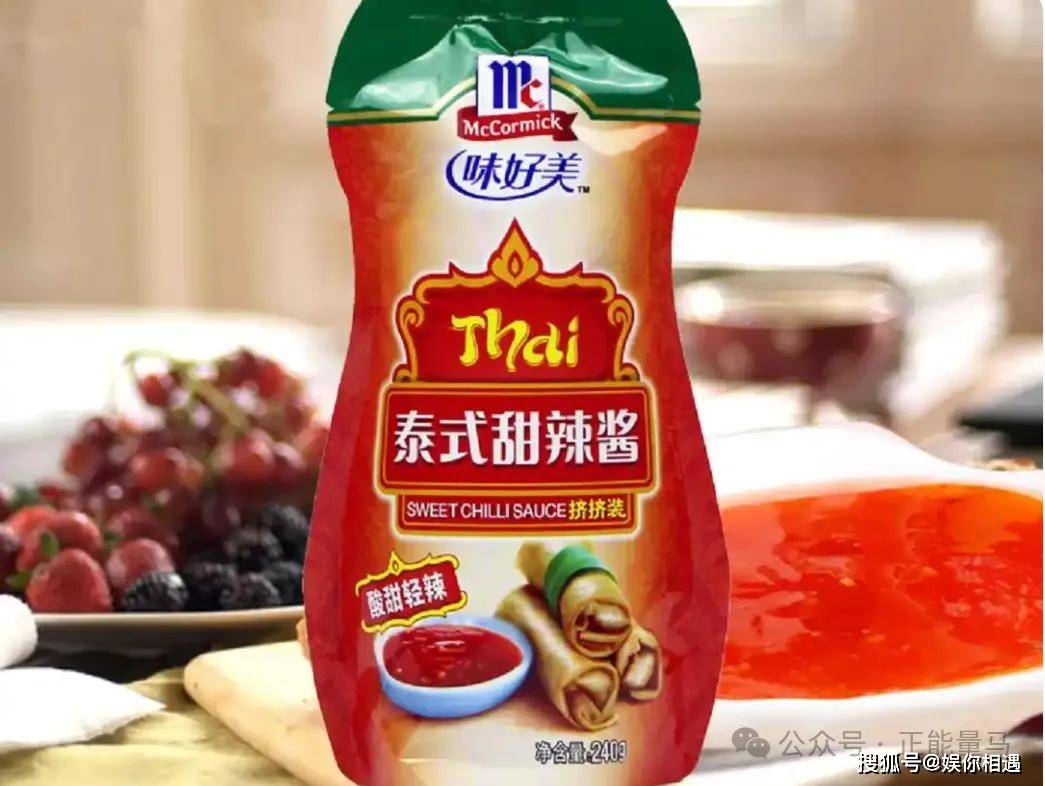
Core Insights - The article discusses the rise and fall of the Chinese chili sauce brand Lao Gan Ma, highlighting its past success and current struggles against competitors like the American brand, McCormick, which earns 37 billion annually in China [3][7][10]. Group 1: Lao Gan Ma's Legacy - Lao Gan Ma, founded by Tao Huabi, became a household name in China, known for its unique flavor and quality, achieving annual sales of over 4 billion [4][5]. - The brand's success was attributed to its commitment to quality, avoiding external financing, and focusing on product integrity [4][5]. Group 2: Current Challenges - Lao Gan Ma has faced declining sales and reputation due to perceived changes in flavor and quality, leading to a loss of loyal customers [5][6]. - Management issues arose after the founder's son took over, resulting in cost-cutting measures that compromised product quality and led to negative publicity [6][11]. Group 3: Competitor Analysis - McCormick, an American brand, has successfully penetrated the Chinese market by targeting B2B partnerships with major fast-food chains, achieving sales six times higher than Lao Gan Ma at 37 billion [7][12]. - The brand's marketing strategy focuses on subtle integration into consumer habits through partnerships rather than traditional advertising [8][12]. Group 4: Industry Dynamics - The chili sauce market in China has become increasingly competitive, with numerous brands entering the space since 2017, leading to aggressive marketing and product innovation [9][10]. - The market size reached 32 billion in 2018, growing at a rate of 7% annually, indicating a lucrative opportunity for both established and new players [10][15]. Group 5: Strategic Insights - Lao Gan Ma's decline is attributed to a lack of product innovation and poor management practices, while McCormick's success stems from effective market positioning and supply chain management [11][12]. - The article suggests that competition from foreign brands can drive domestic brands to improve quality and innovate, benefiting the overall industry [13][15]. Group 6: Future Outlook - There is hope for Lao Gan Ma to recover if it addresses quality control, management issues, and product innovation, potentially regaining consumer trust [14][15]. - The article emphasizes the importance of maintaining product quality and adapting to consumer preferences for the survival of domestic brands in a competitive market [16].

加加食品集团营销中心2026年工作会议顺利召开
Jin Tou Wang· 2026-01-04 06:27
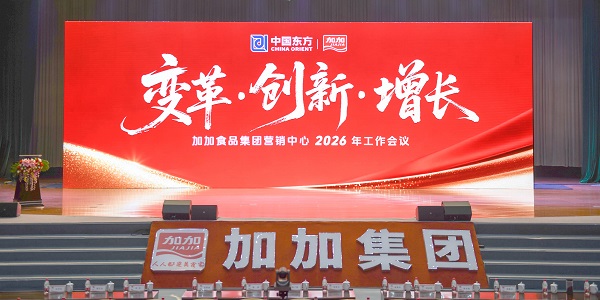
为总结过去一年的工作成果及明确2026年营销战役的核心目标,加加食品集团于2025年12月30日在总部 召开"变革.创新.增长"主题营销工作会议。 加加食品集团公司董事长兼总经理周建文、非独立董事谢子敬、非独立董事姚迪、集团副总经理兼粮油 事业部负责人杨衡山、以及东方资产领导、集团公司各部门负责人、销售公司全体将士齐聚一堂。 会议伊始,该集团销售公司副总经理周利平围绕品牌定位、目标规划、团队建设及销售方向四大核心展 开研讨与部署。她指出2026年营销工作将锚定核心品牌定位,从产品端、渠道端、价格端同步发力,精 准施策,聚焦终端动销,多方位激活市场活力,为加加食品腾飞注入强劲动力。 加加食品集团副总经理兼粮油事业部负责人杨衡山分享了2025年"三大战役"的经验成果,并明确了新一 轮战役战略方向。2026年粮油事业部将以"提升销量、重塑品牌、保障利润"为核心全力出击,推动盘中 餐在市场竞争中实现突围与增长。 随后,该集团调味品事业部湖南市场副经理刘俊讲述自身公开竞聘经历,他坦言,我真切感受到了"公 平、公正、公开"这六字的含金量。 面向2026年,董事长周建文明确提出"我们必须以主动求变的魄力、真抓实干的行动,从 ...