
信息技术

Search documents
券商1月金股出炉:这些股获力挺,看好商业航天等方向
Xin Lang Cai Jing· 2026-01-02 10:05
Core Viewpoint - The A-share market showed a strong upward trend in December 2025, with the Shanghai Composite Index rising by 2.06%, the Shenzhen Component Index by 4.17%, and the ChiNext Index by 4.93%. Analysts are looking for investment opportunities in January 2026 as multiple brokerages have released their monthly investment portfolios across various sectors [2][10]. Brokerage Recommendations - Donghai Securities recommends stocks including Aikedi, Hengli Petrochemical, Hengxuan Technology, and others [3][11]. - Everbright Securities suggests Industrial and Commercial Bank of China, Haier Smart Home, and others [3][11]. - Guotai Junan recommends stocks like Guotai Haitong, Hengli Hydraulic, and others [3][11]. - Guolian Zhansheng includes stocks such as Industrial Fulian, Guangwei Composite, and others [3][11]. - The most frequently recommended stock is Zhongji Xuchuang, receiving endorsements from five brokerages, while China Zhongmian and Zijin Mining received four recommendations each [6][12]. Stock Performance - Zijin Mining had the highest increase in December 2025, with a rise of over 20%, closing at 34.47 yuan [5][13]. - Zhongji Xuchuang closed at 610.00 yuan with a market cap of 67.78 billion yuan, showing an 18.56% increase [6][14]. - China Zhongmian closed at 94.56 yuan with a market cap of 192.91 billion yuan, increasing by 20.03% [6][14]. - China Taibao closed at 41.91 yuan with a market cap of 37.51 billion yuan, rising by 20.60% [6][14]. Preferred Sectors - Brokerages suggest that the A-share market may continue its "spring excitement" trend, with a likely upward movement. Key sectors to focus on include commercial aerospace, non-ferrous metals, and semiconductors [7][15]. - Focusing on offensive and elastic stocks in sectors like non-ferrous metals, commercial aerospace, and semiconductor chips is recommended [7][15]. - Analysts from various firms emphasize the importance of cyclical opportunities and thematic rotations, particularly in basic chemicals and non-ferrous metals [7][15]. - The ongoing policy support and liquidity easing are expected to create favorable conditions for the market [7][15].

以史为鉴
付鹏的财经世界· 2026-01-02 08:14
Core Viewpoint - The article discusses the concept of "war metals," highlighting the historical price trends of metals such as chromium, manganese, tungsten, titanium, uranium, silver, and tin, and draws parallels between the current geopolitical climate and that of the 1970s and 1980s [1][3][4]. Group 1: Historical Context and Comparisons - The current era shares significant similarities with the 1970s and 1980s, characterized by geopolitical tensions and technological advancements that drive demand for certain metals [3][4]. - The period from the 1960s to the 1980s saw a stagnation in productivity in the U.S., similar to the current global trend of de-globalization and rising geopolitical tensions [3][4]. - The article emphasizes that the dual attributes of metals—strategic and productivity-related—are crucial in understanding their price volatility [7][10]. Group 2: Price Volatility and Market Dynamics - The price of strategic metals experienced extreme fluctuations during the 1970s and 1980s due to geopolitical factors, with examples such as cobalt rising from approximately $5.62 per pound in 1977 to a peak of $32.83 per pound in 1979 [9][10]. - The article notes that after 1980, despite technological advancements in sectors like computing and semiconductors, metal prices generally declined, indicating that new industrial demand does not always correlate with sustained price increases [10][11]. - The current market dynamics are influenced by financial derivatives and leverage, making the discussion of strategic metals relevant to a broader audience compared to past decades [8][10]. Group 3: Geopolitical Influences - Historical geopolitical tensions, such as the Cold War, significantly impacted the supply and demand of strategic metals, with the Soviet Union and the U.S. engaging in strategic stockpiling and market manipulation [12][13]. - The article highlights that geopolitical conflicts often lead to panic buying and supply shortages, which exacerbate price volatility in the metals market [14][15]. - The potential for a shift in geopolitical relations, akin to the thawing of U.S.-Soviet tensions in the 1980s, could significantly alter the current market landscape for these metals [19].

2025年度创业板排行榜
Wind万得· 2026-01-01 22:38
1.2 总市值变动 2025年 度 末, 创业板总市值为17.83万亿元,较2024年末增长43.0%,增幅高于沪深证主板。 1.3 成交额对比 2 025年 度 创业板总成交额达114.22万亿元,单只个股平均成交额819.97亿元,高于上证主板、科创板和北证A股。 | | | 各板块平均成交额对比 | | | --- | --- | --- | --- | | 板块 | 个股数量 | 期间总成交额 (万亿元) | 平均成交额 (亿元) | | 深证主板 | 1490 | 127.09 | 852.93 | | 创业板 | 1393 | 114.22 | 819.97 | | 上证主板 | 1699 | 134.28 | 790.33 | | 科创板 | 600 | 37.79 | 629.82 | | 北证A股 | 288 | 6.49 | 225.23 | | 数据来源: Wind | | | | 1.4 日均换手率对比 市场板块篇 1.1 50指数涨跌对比 2025年 度创业板50指数大涨57.45%,强于各板块50指数。 1.6 市净率对比 2 025年 度 末, 创业板市净率为4.35倍,高于沪深 ...

分水岭时刻:2025年,A股表现跑赢美股!
Hua Er Jie Jian Wen· 2026-01-01 11:14
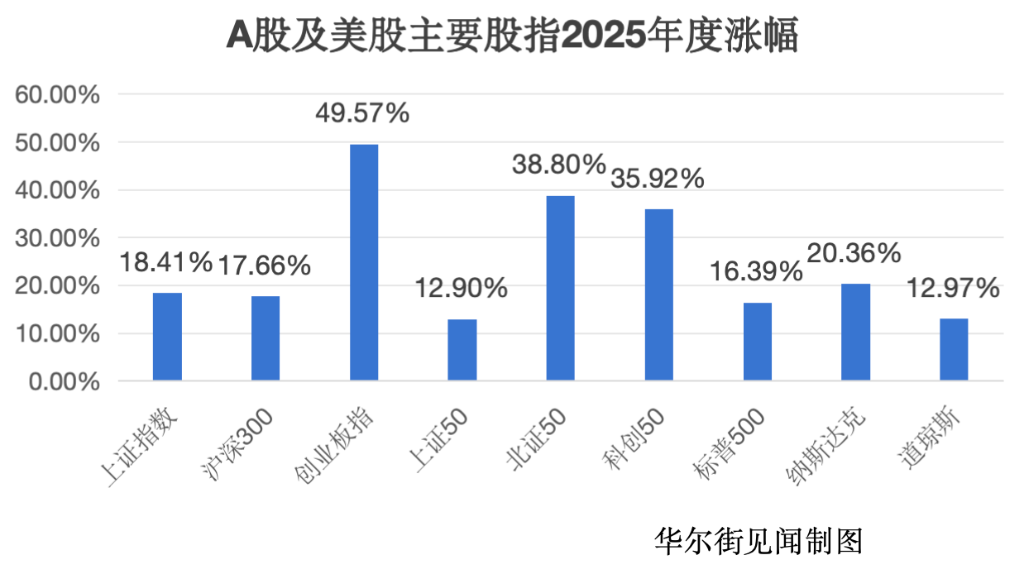
Market Performance - A-shares major indices showed strong performance in 2025, with the CSI 300 index rising by 17.66%, the ChiNext index by 49.57%, and the SSE 50 index by 12.9% [1] - The North Stock 50 index increased by 38.8%, and the Sci-Tech 50 index rose by 35.92%, with the Shanghai Composite Index surpassing 4000 points for the first time in nearly a decade on October 28 [1] - In comparison, the S&P 500 index in the US recorded a 16.39% annual increase, while the Nasdaq managed a 20.36% rise, and the Dow Jones increased by 12.97% [2] Comparative Analysis - A-shares outperformed US benchmarks in 2025, with the CSI 300 index slightly exceeding the S&P 500 index, while indices focused on technology and growth, such as ChiNext and Sci-Tech 50, significantly outperformed the Nasdaq [5] - The A-share market exhibited a more balanced and diversified growth pattern, driven by multiple sectors including materials (+57.67%), information technology (+47.18%), and industrials (+30.03%) [8] Sector Dynamics - The A-share market's growth is characterized by a dual-engine structure focusing on advanced manufacturing and critical resource supply chains, contrasting with the US market's heavy reliance on a few tech giants [9] - The US market's growth is primarily driven by major tech companies, with the "Magnificent Seven" accounting for nearly 40% of the S&P 500's total market capitalization, indicating a concentrated market structure that poses risks [6] Notable Stocks - In 2025, two stocks in the A-share market achieved over tenfold increases, with Shangwei New Materials leading at 1689.13% and Tianpu Co. at 1645.4% [12] - Shangwei New Materials' surge was attributed to its transformation from traditional chemicals to humanoid robots, supported by a change in control to Zhiyuan Robotics [13] US Market Trends - The US tech sector saw significant differentiation among the "Magnificent Seven," with Google and Nvidia outperforming the market, while other giants like Microsoft and Meta lagged behind [21] - Data storage companies emerged as major winners in the S&P 500, with top performers like Western Digital and Micron benefiting from increased AI infrastructure investments [18] Investment Themes - The investment narrative in the US shifted from potential AI concepts to profit realization capabilities, impacting the valuation of tech companies based on their ability to demonstrate revenue growth and cost advantages [22] - Nvidia's strong performance is attributed to its dominant position in the AI computing supply chain, with consistent quarterly earnings exceeding market expectations [23]


2025年度中资企业IPO排行榜
Wind万得· 2025-12-31 22:50
2025年,中资企业全球IPO市场显著回暖,发行数量与募资规模双双实现大幅增长。全年共有290家中资企业在全球主要资本市场完成上市,较2024年增 加61家;累计募资规模达3663.55亿元,同比大幅增长123.04%。从市场结构看,港股已成为中资企业最主要的融资平台,募资规模显著领先;A股市场 IPO节奏回暖,融资功能明显修复;海外市场发行数量保持稳定,但募资规模有所回落。整体来看,2025年中资企业IPO呈现数量回升、结构优化、港股 领跑的显著特征。 中资企业上市全景 1.1 中资企业全球IPO数量 Wind数据显示,2025年,中资企业全球市场共完成IPO上市290起(A股按网上发行日期,港股及美股市场按首发上市日期,下同),数量较2024年上升 61起。 1.2 中资企业全球IPO募资金额 2025年,中资企业全球IPO募资规模合计约3663.55亿元(人民币,下同),较2024年回升123.04%。 1.3 中资企业分市场 IPO 数量 2025 年,具体到各市场来看, A 股市场 IPO 上市 112 起,较 2024 年上升 10 起;港股市场 IPO 上市 110 起,较 2024 年上升 4 ...

恒丰银行枣庄分行成功举办女企业家私行尊享荟活动
Sou Hu Cai Jing· 2025-12-31 11:46
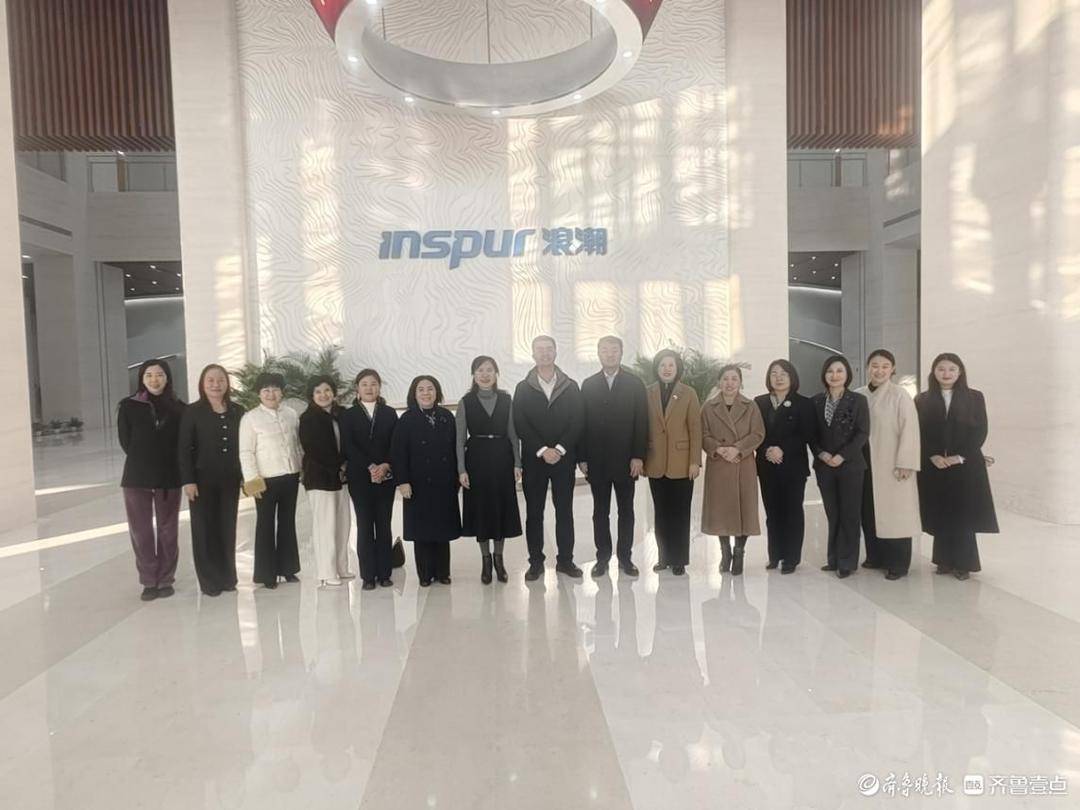
Core Insights - The event "Lunan Women Gathering · Hengfeng Wealth Prosperity" was organized by Hengfeng Bank Zaozhuang Branch in collaboration with the Zaozhuang Women Entrepreneurs Association, focusing on high-end exchanges that integrate digital transformation insights and cultural experiences [1][3] Group 1: Event Overview - The event included visits to Inspur Group's exhibition hall and the National Small and Medium Enterprises Digital Transformation Promotion Center, allowing participants to experience cutting-edge digital technology and understand its role in business transformation [3] - Dr. Gao Jiang from the Private Banking Department of Hengfeng Bank provided a specialized presentation on family wealth inheritance and trust planning, aimed at assisting women entrepreneurs in achieving stable wealth transfer and appreciation [3] Group 2: Cultural Experience - Participants visited the Hongjitang Traditional Chinese Medicine Cultural Park, where they experienced the unique charm of thousand-year-old Chinese medicine culture, highlighting the integration of traditional culture with modern life [3] Group 3: Outcomes and Future Plans - The event received high recognition from women entrepreneurs regarding Hengfeng Bank's professional service capabilities and achieved positive results in collaboration with the Zaozhuang Women Entrepreneurs Association, strengthening the foundation for development and trust [3] - Hengfeng Bank Zaozhuang Branch plans to deepen collaboration with the Zaozhuang Women Entrepreneurs Association, integrate service resources, and expand its retail business to enhance the influence and reputation of the "Hengfeng Service" brand [3]
华为擎云公布2025成绩单:五大关键领域规模化落地 开启领航新周期
Xin Lang Cai Jing· 2025-12-31 06:33
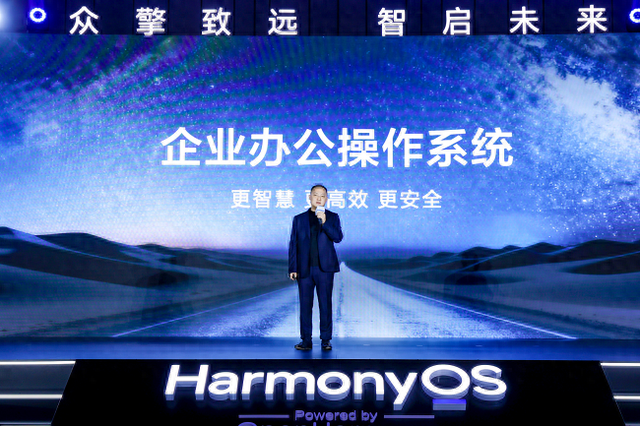
Core Insights - Huawei Qingtian has officially served over 100,000 industry clients and has implemented commercial terminals and solutions across five major industries, marking a significant brand evolution [1][2] - The brand transformation includes a name change to "Huawei Qingtian," reflecting a deep integration of touchpoints, image, and brand core [1] - The company plans to leverage its fully autonomous leading technology to drive the transformation of China's commercial office industry and achieve a digital future in collaboration with clients [1][5] Industry Impact - Huawei Qingtian has established itself as a key player in digital transformation for government and enterprise clients, having collaborated with over 200 partners and implemented more than 90 scenario-based solutions [2] - In the education sector, Huawei Qingtian's C5 ranked first in a report by Deben Consulting, serving over 110,000 educational institutions [2] - The company has partnered with over 1,000 financial institutions, including more than 300 banks and 100 insurance companies, showcasing its innovative financial digital infrastructure [2][3] Technological Advancements - Huawei Qingtian has introduced the Harmony commercial computer and the Harmony enterprise version operating system, which redefines production relationships in commercial office settings [5] - The enterprise version features a dual-space design that separates corporate and personal data, enhancing security while improving user experience [5] - The company aims to alleviate digital transformation anxieties for government and enterprise clients through a "technology + ecosystem" dual-drive approach [5][7] Strategic Initiatives - The "Qingtian Star River Plan" invites industry-leading clients for joint innovation, positioning Huawei Qingtian as an incubator and connector for industry innovation [7] - The brand's commitment to quality, innovation, openness, and human-centric values will guide its efforts to accelerate the Harmony transformation in government and enterprise offices [7] - Huawei Qingtian aims to provide a robust digital foundation for various industries, ensuring maximum certainty in an uncertain era [7]
电科数字:柏飞电子主要提供信息信号处理系统等产品
Zheng Quan Ri Bao Wang· 2025-12-30 13:14
Group 1 - The core viewpoint of the article is that Electric Science Digital (600850) has a diverse range of products and serves multiple industries, indicating a strong market presence [1] Group 2 - Electric Science Digital's subsidiary, Baifei Electronics, primarily offers information signal processing systems, embedded computing modules, recording storage systems, intelligent computing platforms, industrial control platforms, rail transit control systems, commercial aviation avionics systems, and unmanned platform control systems [1] - The main customers of Baifei Electronics include leading enterprises and overall units in industries such as aviation, aerospace, shipping, electronics, power, and transportation [1]

2025.12.22-2025.12.28:港股市场回购统计周报-20251230
Zhe Shang Guo Ji Jin Rong Kong Gu· 2025-12-30 06:06
Group 1: Weekly Buyback Statistics - The total buyback amount for the week was HKD 3.067 billion, a decrease of HKD 1.954 billion from the previous week[10] - A total of 66 companies conducted buybacks this week, down by 9 companies compared to last week[10] - Tencent Holdings (0700.HK) led the buybacks with an amount of HKD 1.907 billion, followed by Xiaomi Group-W (1810.HK) with HKD 445 million[10] Group 2: Industry Analysis - The information technology sector accounted for the majority of buyback amounts, totaling HKD 2.684 billion[13] - The healthcare sector had the second-highest number of companies participating in buybacks, with 10 companies involved[13] - The consumer discretionary sector ranked third, also with 10 companies conducting buybacks[13] Group 3: Company-Specific Data - Kuaishou-W (1024.HK) had a buyback amount of HKD 234.35 million, representing 0.08% of its total share capital[14] - China Merchants Industry Holdings (1919.HK) repurchased shares worth HKD 149.31 million, accounting for 0.07% of its total share capital[14] - Kingsoft Corporation (3888.HK) executed a buyback of HKD 39.99 million, which is 0.10% of its total share capital[14] Group 4: Buyback Significance - Share buybacks are defined as companies repurchasing their own shares from the secondary market, often signaling that the stock is undervalued[23] - Large-scale buyback trends typically occur during bear markets, indicating companies' confidence in their stock's intrinsic value[23] - Historical data shows that the Hong Kong market has experienced five buyback waves since 2008, all coinciding with subsequent market uptrends[23]
全球股市立体投资策略周报 12 月第 4 期:圣诞行情下全球周期板块领涨-20251230
GUOTAI HAITONG SECURITIES· 2025-12-30 06:05
Market Performance - Emerging markets showed stronger performance last week, with MSCI Global up by 1.2%, MSCI Developed Markets up by 1.1%, and MSCI Emerging Markets up by 1.7% [9][12] - Among developed markets, the Taiwan Weighted Index had the best performance at +3.1%, while the French CAC40 Index was the weakest at -0.6% [9] - In the emerging markets, the ChiNext Index performed the best at +3.9%, while the Indian Sensex30 was the weakest at +0.1% [9] Trading Sentiment - Trading volume in the US and Europe decreased due to the Christmas holiday, with the Hang Seng Index's volatility continuing to decline [23] - The Shanghai Composite Index's trading volume increased to 2.51 billion shares and $564.5 billion, while the Hang Seng Index's trading volume decreased to 5.8 billion shares and $24.4 billion [23] - Investor sentiment in Hong Kong improved, with short-selling ratios decreasing to 15.1%, while North American sentiment remained high with the NAAIM Manager Index at 95.1% [23][26] Earnings Expectations - The global energy sector's earnings expectations were significantly revised upwards, while the Hong Kong market's earnings expectations were revised downwards [72] - The Hang Seng Index's 2025 EPS earnings expectation was adjusted from 2063 to 2062, with the energy sector seeing the largest upward revision of +7.1 [72] - In the US market, the S&P 500 Index's 2025 EPS earnings expectation remained stable at 273, with the energy sector also seeing a slight upward revision of +0.4 [72] Economic Expectations - Economic indicators in the US and Europe showed marginal improvement, with the Citigroup US Economic Surprise Index returning to positive territory [72] - The European Economic Surprise Index also saw a slight increase, supported by stable ECB rate policies and reduced geopolitical tensions [72] - In contrast, the Citigroup China Economic Surprise Index declined, influenced by weak industrial profit growth and fluctuating policy expectations [72] Fund Flows - The Federal Reserve's stance on interest rate cuts for 2026 remains divided, with hawkish officials advocating for caution due to inflation concerns [55] - Market expectations indicate that the Fed may cut rates approximately twice in 2026, unchanged from the previous week [55] - Global liquidity trends showed significant inflows into China, the US, South Korea, India, and Europe, with Hong Kong experiencing accelerated capital inflows [66][67]